Search results
Search for "signal-to-noise ratio" in Full Text gives 179 result(s) in Beilstein Journal of Nanotechnology.
Upcycling agroindustrial waste into graphene oxide supports for gold nanoparticles: toward sustainable nanomaterials
Beilstein J. Nanotechnol. 2026, 17, 489–504, doi:10.3762/bjnano.17.32
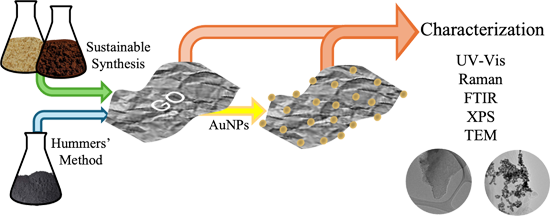
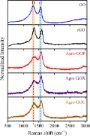
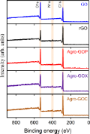
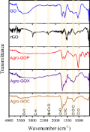
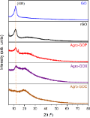
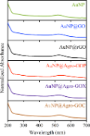
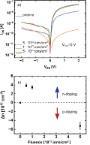
- network. The loss of C–O, C=O, and –COOH species reduces the number and intensity of IR-active vibrational modes, resulting in lower overall absorbance and a lower signal-to-noise ratio. The Agro-GO samples, however, display more heterogeneous and precursor-dependent profiles: Agro-GOP is dominated by



Defects and defect-mediated engineering of two-dimensional materials: challenges and open questions
Beilstein J. Nanotechnol. 2026, 17, 454–488, doi:10.3762/bjnano.17.31
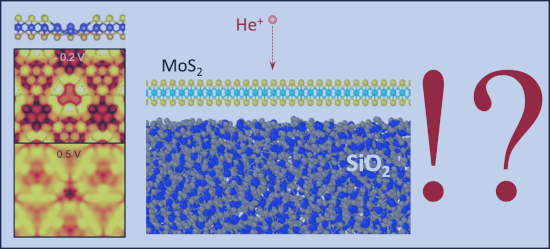
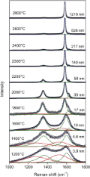
- can, in principle, emerge due to defects [90][91], in practice they are rarely observed owing to the low concentration of defects and low signal-to-noise ratio, which becomes particularly pertinent with 2D materials due the small volume for scattering. In most cases, one observes changes in the Raman





Multilayered hyperbolic Au/TiO2 nanostructures for enhancing the nonlinear response around the epsilon-near-zero point
Beilstein J. Nanotechnol. 2026, 17, 251–261, doi:10.3762/bjnano.17.17
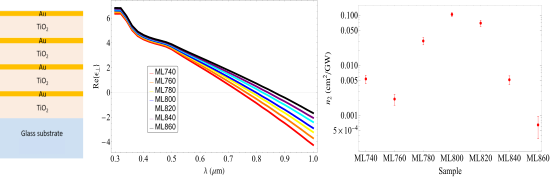
- both gold and titanium dioxide, we could not see a signal. This could mean that our system lacks the power output to excite the nonlinear response or that, even at our highest irradiance, the response was below the signal-to-noise ratio. Considering that, for 800 nm, our system has a minimum resolution


Terahertz-range on-chip local oscillator based on Josephson junction arrays for superconducting quantum-limited receivers
Beilstein J. Nanotechnol. 2025, 16, 2296–2305, doi:10.3762/bjnano.16.158
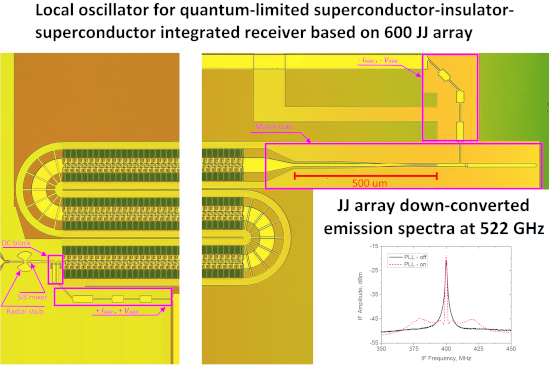
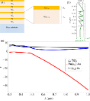
- -locking to the external stable synthesizer is crucial [16]. Figure 9 shows the radiation IF spectrum of the JJ array at a frequency of 522 GHz. The linewidth of the free-running array is less than 0.5 MHz, while the signal-to-noise ratio is approx. 30 dB. The calculation using the Rogovin–Scalapino [40
- . IF spectra of the 600 JJ arrays at 522 GHz. The free-running radiation linewidth is ≈0.5 MHz with a signal-to-noise ratio of ≈30 dB; the spectral ratio is 92% in case if the array operates in PLL mode. JJ array IVCs with (pink hollow circles) and without PLL (black squares). The PLL-induced step is


Improving magnetic properties of Mn- and Zn-doped core–shell iron oxide nanoparticles by tuning their size
Beilstein J. Nanotechnol. 2025, 16, 2285–2295, doi:10.3762/bjnano.16.157
- spectra were acquired from 400 to 4000 cm−1 with a spectral resolution of 4 cm−1. Reference spectra were acquired before each measurement to determine the absorption spectra under ambient conditions. Each measurement was averaged over 200 scans in continuous mode to improve the signal-to-noise ratio



Visualizing nanostructures in supramolecular hydrogels: a correlative study using confocal and cryogenic scanning electron microscopy
Beilstein J. Nanotechnol. 2025, 16, 2274–2284, doi:10.3762/bjnano.16.156
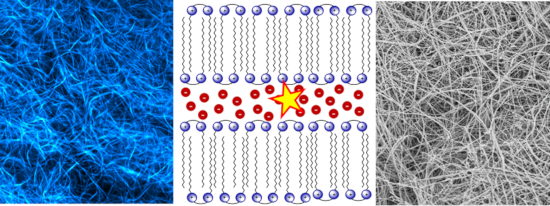
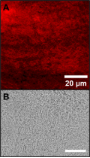
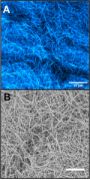
- even then, excitation laser intensities had to be operated at or near their maximum fluence to obtain images with good signal-to-noise ratio. This elevated laser power then contributed to a certain extent of fluorophore bleaching, making effective imaging even more challenging. Despite these measures
- only necessitated the application of high excitation powers but also required physical compression of the gel sample to reduce path length and thus improve the signal-to-noise ratio. However, this approach introduced the evident result of mechanical artefacts, such as gel network disruption or the
- significant limitations. Despite relatively high fluorophore loadings, the low fluorescence quantum yield of ZnPc resulted in poor signal-to-noise ratio and relatively unresolved fibre features. Only regions of the gel that were broken or compressed allowed for partial visualization of fibrous domains. This



Quantum circuits with SINIS structures
Beilstein J. Nanotechnol. 2025, 16, 1931–1941, doi:10.3762/bjnano.16.134
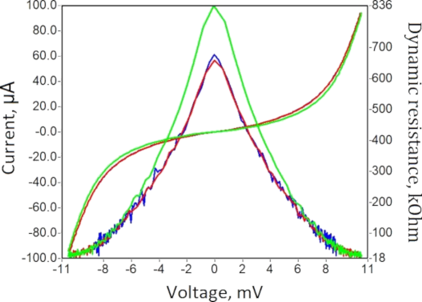
- external noise and increase the signal-to-noise ratio, the NIS junctions are connected in series arrays (Figure 3). The temperature dependency of the resistance ratio for aluminum SIN junctions is shown in Figure 4. Electron coolers The tunneling current, when biased near the energy gap, carries hot
- the BTA and can be measured with a signal-to-noise ratio greater than unity by the described receiver even without diagram. Approximate estimates for observing Jupiter and other planets are made and compared with figures from [42] (central frequency fc = 100 GHz, bandwidth 10%, Δf = 10 GHz. The


Ambient pressure XPS at MAX IV
Beilstein J. Nanotechnol. 2025, 16, 1677–1694, doi:10.3762/bjnano.16.118
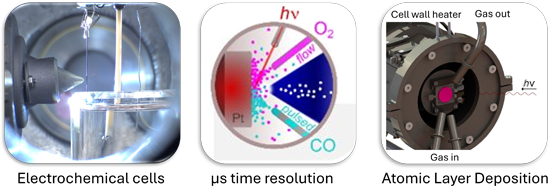
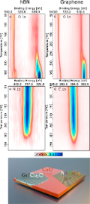
- near ambient pressure. Fourth-generation synchrotron light sources, characterized by their unprecedented photon flux, provide a key advantage for APXPS, enabling rapid data acquisition with low signal-to-noise ratio and facilitating the study of transient phenomena. This capability is essential for





Nanotechnology-based approaches for the removal of microplastics from wastewater: a comprehensive review
Beilstein J. Nanotechnol. 2025, 16, 1607–1632, doi:10.3762/bjnano.16.114

- calorimetry, pyrolysis gas chromatography mass spectrometry, and thermal extraction desorption gas chromatography are useful in identifying the chemical composition of MPs but are destructive analytical techniques [132][133]. Spectroscopic analysis like Raman spectroscopy often suffers from a poor signal-to
- -noise ratio and is affected by surface fluorescence from the samples, making careful sample preparation essential before analysis [134]. In recent years, advancements in MPs research have led to the development of innovative analytical tools for their detection, such as digital holography, scanning


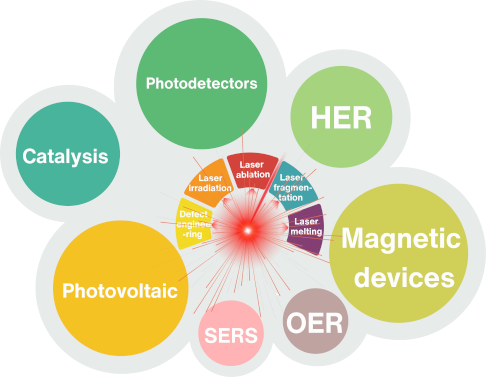
Laser processing in liquids: insights into nanocolloid generation and thin film integration for energy, photonic, and sensing applications
Beilstein J. Nanotechnol. 2025, 16, 1428–1498, doi:10.3762/bjnano.16.104






Parylene-coated platinum nanowire electrodes for biomolecular sensing applications
Beilstein J. Nanotechnol. 2025, 16, 1392–1400, doi:10.3762/bjnano.16.101
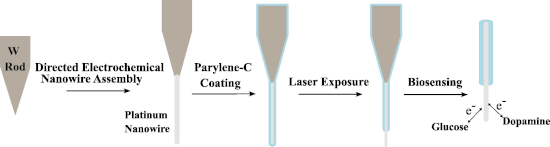
- , and enhanced signal-to-noise ratio besides high-resolution scanning applications [4][5]. These properties have made nanoscale electrodes the preferred choice in the biosensing industry, particularly for point-of-care applications. As this market continues to expand, there is a growing demand for more


Deep-learning recognition and tracking of individual nanotubes in low-contrast microscopy videos
Beilstein J. Nanotechnol. 2025, 16, 1316–1324, doi:10.3762/bjnano.16.96
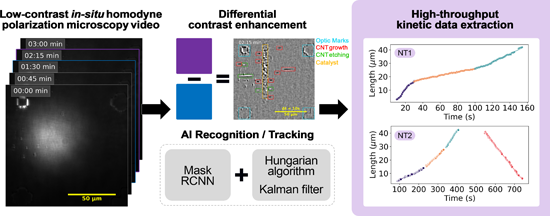
- initial frame rate, typically between 40 and 25 fps, was reduced by averaging frames to one frame per second. This operation boosts further analysis and improves signal-to-noise ratio without compromising kinetic data quality, as the nanotube growth rate is typically of the order of 0.5 µm·s−1 and the


Deep learning for enhancement of low-resolution and noisy scanning probe microscopy images
Beilstein J. Nanotechnol. 2025, 16, 1129–1140, doi:10.3762/bjnano.16.83
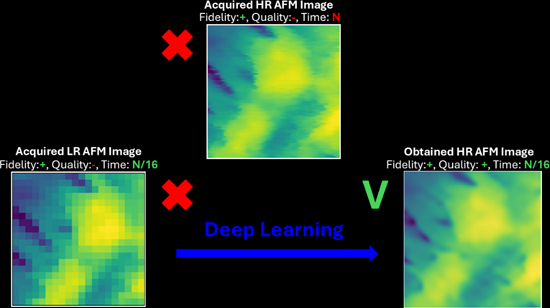
- -resolution AFM images. In those studies, fidelity metrics were applied to quantify the quality of the reconstructed images. The most common fidelity metrics include peak-signal-to-noise-ratio (PSNR), which is based on pixel-to-pixel differences of the reference and reconstructed images and structural
- assessments, a blind and subjective evaluation was conducted, polling AFM experts for their opinions on both image fidelity and image quality. Reference metrics The first comparison of the SR images to the GT references was to take the peak-signal-to-noise ratio (PSNR). This is done by taking the logarithm of


Time-resolved probing of laser-induced nanostructuring processes in liquids
Beilstein J. Nanotechnol. 2025, 16, 968–1002, doi:10.3762/bjnano.16.74
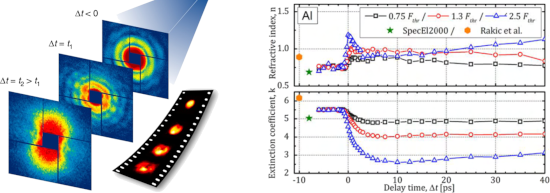
- particularly advantageous for visualizing structural changes in single particles. Although technical challenges remain in achieving sufficient signal-to-noise ratio, single-particle imaging uniquely resolves local fluctuations that are otherwise averaged out in ensemble measurements. Recognizing that


Tendency in tip polarity changes in non-contact atomic force microscopy imaging on a fluorite surface
Beilstein J. Nanotechnol. 2025, 16, 944–950, doi:10.3762/bjnano.16.72
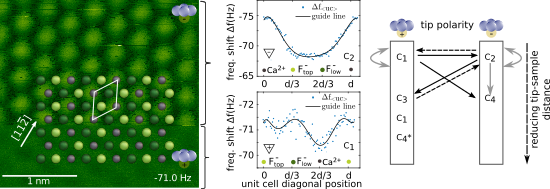
- ) reconstructed unit cell from STM imaging [33]. With the surface orientation established, the sublattices can be identified through a distance-dependent analysis of NC-AFM images [10], and corresponding model drawings of the CaF2(111) surface geometry are superimposed on the image data. To improve the signal-to
- -noise ratio of the Δf data in the RT experiments, unit cell averaging is performed as described in [10]. From the unit-cell averaged data, contrast profile lines Δf⟨uc⟩ are extracted along the diagonal of the unit cell in the direction, with the resulting data included as traces next to the respective


Colloidal few layered graphene–tannic acid preserves the biocompatibility of periodontal ligament cells
Beilstein J. Nanotechnol. 2025, 16, 664–677, doi:10.3762/bjnano.16.51
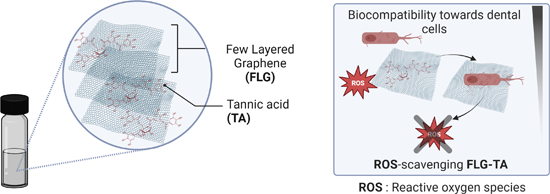
- containing 2 μM Calcein AM and 0.25 μM SYTOX Deep Red for 30 min. After the cells were washed with PBS to optimize signal-to-noise ratio, they were imaged using epifluorescence microscopy with FITC filter set for live cells (green fluorescence) and deep red filter set for dead cells (red fluorescence




Nanoscale capacitance spectroscopy based on multifrequency electrostatic force microscopy
Beilstein J. Nanotechnol. 2025, 16, 637–651, doi:10.3762/bjnano.16.49

- or heterodyne Kelvin probe force microscopy (KPFM) [18][26][79]. The second harmonic signals are proportional to the local capacitance gradients, providing information about the local tip–sample capacitance. To ensure a sufficient signal-to-noise ratio, the resulting frequencies should coincide with
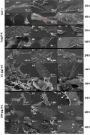
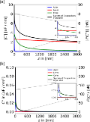
- . Thus, the improved lateral resolution comes at the price of a reduced signal-to-noise ratio. To reproduce these findings experimentally, we performed force–distance spectroscopy on the etched microcapacitors shown in Figure 2. The resulting curves of the C′ and C″ signals qualitatively reproduced the




Functionalized gold nanoflowers on carbon screen-printed electrodes: an electrochemical platform for biosensing hemagglutinin protein of influenza A H1N1 virus
Beilstein J. Nanotechnol. 2025, 16, 540–550, doi:10.3762/bjnano.16.42
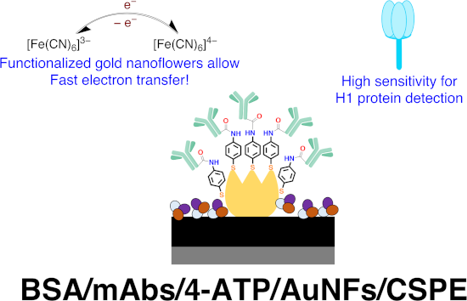
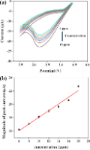
- antigen load because a good signal-to-noise ratio response was observed, making this detection a rapid and accurate process. Under the optimal parameters (pulse amplitude = 86 mV, potential increment = 4 mV, and scan rate = 100 mV/s), the negative control and four different concentrations (10, 100, 1,000


Quantification of lead through rod-shaped silver-doped zinc oxide nanoparticles using an electrochemical approach
Beilstein J. Nanotechnol. 2025, 16, 422–434, doi:10.3762/bjnano.16.33
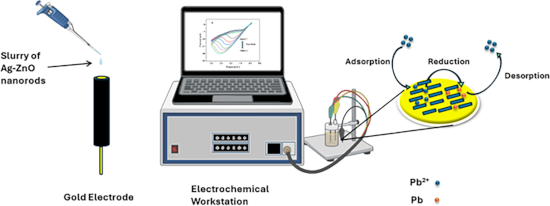
- electrochemical process. The higher impedance of the modified Ag@ZnO NRs electrode improved signal-to-noise ratio, which means that the electrode can better distinguish the electrochemical signal of the analyte from background noise, resulting in more accurate results. Furthermore, a higher impedance of the





ReactorAFM/STM – dynamic reactions on surfaces at elevated temperature and atmospheric pressure
Beilstein J. Nanotechnol. 2025, 16, 397–406, doi:10.3762/bjnano.16.30
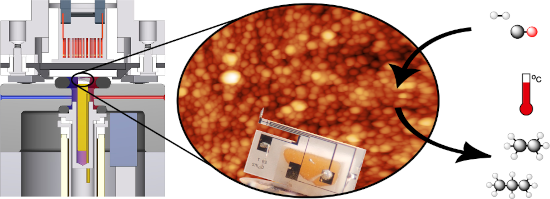
- increasing (and decreasing [23]) temperatures, the slope is steeper; hence, it becomes more important to have a stable temperature while scanning. The data in this graph were collected under UHV conditions; increasing the pressure will affect the Q-factor [19] and, in turn, the signal-to-noise ratio. To


Investigation of Hf/Ti bilayers for the development of transition-edge sensor microcalorimeters
Beilstein J. Nanotechnol. 2024, 15, 1353–1361, doi:10.3762/bjnano.15.108

- generally also means a shorter thermal response time, allowing the detector to respond more quickly to small temperature changes. Second, the active area is reduced, which allows for a more efficient detection of a useful signal because of the higher energy density and, therefore, a higher signal-to-noise
- ratio. In addition to the volume, the shape of the TES can also alter the transition width and sensitivity. Comparing sample A1 (Figure 3a) with sample B1 (Figure 4, black dots), one can see that the superconducting transition is much sharper in the square geometry (A1) despite the larger volume of the


Realizing active targeting in cancer nanomedicine with ultrasmall nanoparticles
Beilstein J. Nanotechnol. 2024, 15, 1208–1226, doi:10.3762/bjnano.15.98
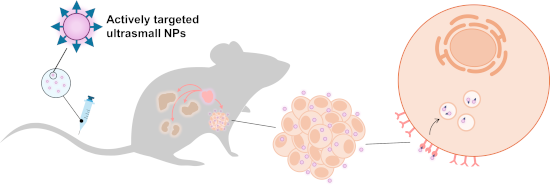
- further investigation. Quantification of Gd uptake in the tumor tissue at 30 min p.i. revealed 4.1% ID/g for targeted usNPs against 0.11% ID/g for the non-targeted particles. The rapid tumor uptake of the targeted usNPs, combined with their efficient renal clearance, resulted in an enhanced MRI signal-to
- -noise ratio for MM detection, surpassing levels achievable with other clinically approved imaging modalities. As early as 30 min post-administration, animals treated with the targeted usNPs demonstrated a ≈3-fold improvement in SNR for plasmacytomas in the spine. Song et al. synthesized AuNCs protected


AFM-IR investigation of thin PECVD SiOx films on a polypropylene substrate in the surface-sensitive mode
Beilstein J. Nanotechnol. 2024, 15, 603–611, doi:10.3762/bjnano.15.51
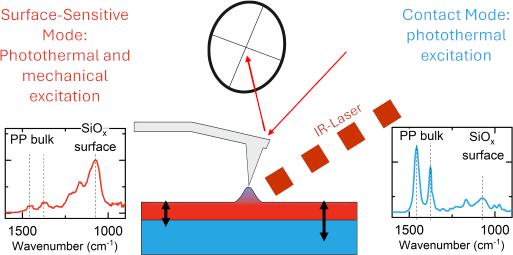
- deeper bulk phase of the substrate and more information of the near-surface region. In samples with a thicker layer of SiOx, this results in an improved signal-to-noise ratio. Even though the spectra of the sample with a low SiOx thickness still show sizable peaks originating from the substrate


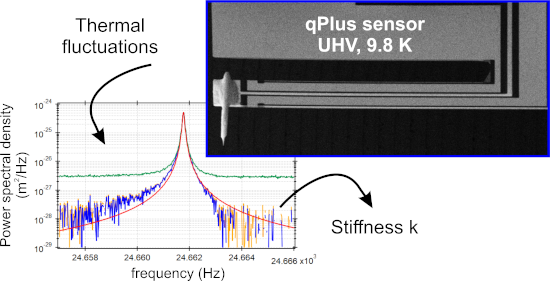
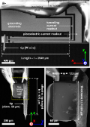
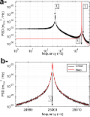
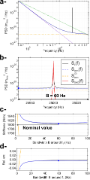
Stiffness calibration of qPlus sensors at low temperature through thermal noise measurements
Beilstein J. Nanotechnol. 2024, 15, 580–602, doi:10.3762/bjnano.15.50

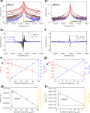
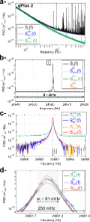
Design, fabrication, and characterization of kinetic-inductive force sensors for scanning probe applications
Beilstein J. Nanotechnol. 2024, 15, 242–255, doi:10.3762/bjnano.15.23
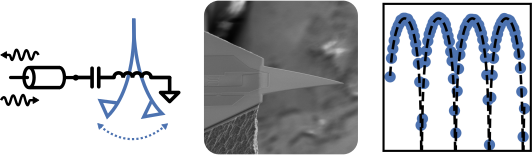
- power spectral density of fluctuations in force (force noise) SFF(ω), which sets a minimum detectable force (signal-to-noise ratio equals one) in a given measurement bandwidth, that is, signal integration time. The fluctuation–dissipation theorem applied to the harmonic oscillator gives where Tm is the