


Search results
Search for "staining" in Full Text gives 142 result(s) in Beilstein Journal of Nanotechnology.
Ultrasonic irradiation in the synthesis of nanohydroxyapatite: a chemically friendly technique for improving hemocompatibility and antibiofilm applications
Beilstein J. Nanotechnol. 2026, 17, 991–1015, doi:10.3762/bjnano.17.68
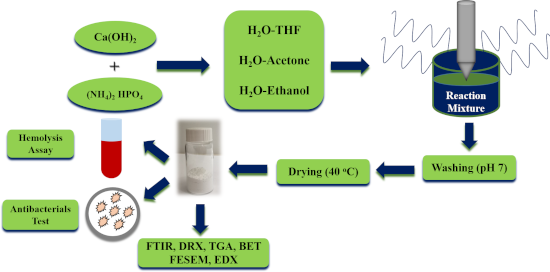
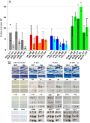
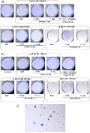
- hemostasis (platelet activation). Antibiofilm properties of nHA samples This research evaluated the capability of the nHA samples to reduce the risk of P. aeruginosa ATCC 10145 attachment or biofilm formation, tested by crystal violet staining. This method allows for biomass quantification, which is the




Restorative potential of laser-synthesized silver nanoparticles with Salvia officinalis for periodontal disease treatment: an in vitro study
Beilstein J. Nanotechnol. 2026, 17, 781–795, doi:10.3762/bjnano.17.55
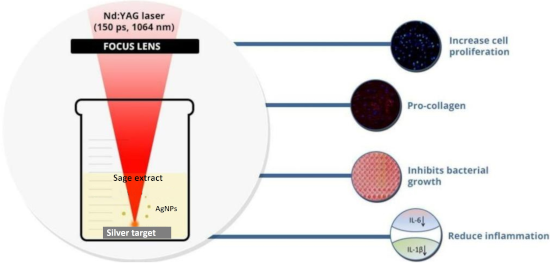
- × MIC for 24 and 48 h. Absorbance was measured at 470 nm on a microplate reader (Sunrise, Tecan Group Ltd., Switzerland). The results are presented as the percentage of viable cells compared to the untreated control (100% of viable cells). Cell proliferation assay Ki-67 immunofluorescent staining was
- 1000 cells per treatment were analyzed. Assessment of collagen production The collagen production rate was monitored by immunofluorescent staining of type-I collagen and colorimetric detection of the total collagen content (TCC). Type-I collagen immunofluorescent staining was performed on the GFCs
- concentration-dependent decrease in cell viability (Figure 2a). Considering the cytotoxic effects of the 1 × MIC concentration of dwAgNPs6mJ, the potential of SageAgNPs6mJ to accelerate the proliferation of GFCs was examined only for SageAgNPs6mJ by applying Ki-67 immunofluorescent staining. Concentrations of



Interface-engineered Caco-2 cell culture on a collagen-coated liquid–liquid interface in a microfluidic device
Beilstein J. Nanotechnol. 2026, 17, 760–768, doi:10.3762/bjnano.17.53
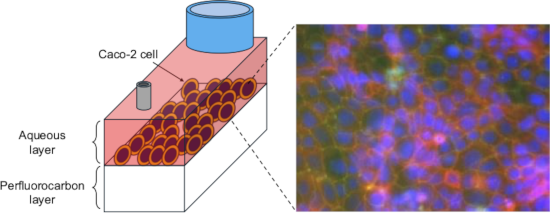
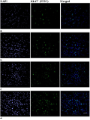
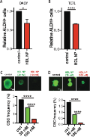
- that is sufficiently robust to support cell adhesion. Caco-2 cells monolayer maturation Immunofluorescence staining was performed to observe the characteristics of cultured Caco-2 cells as an intestinal epithelial model. Figure 6 shows a comparison of immunofluorescence images of ZO-1, F-actin, and


Biomimetic nanoparticles in cancer photodynamic therapy: a review of targeted delivery systems and therapeutic outcomes
Beilstein J. Nanotechnol. 2026, 17, 396–422, doi:10.3762/bjnano.17.27
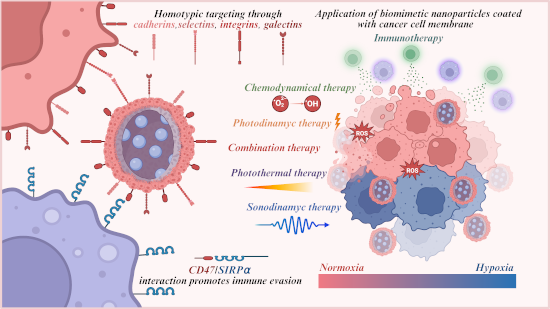
- with perfluorotributylamine (PFTBA) as an oxygen carrier. The nanoparticles were further coated with a 4T1 CCM to enable targeting. Direct oxygen delivery to the tumor via PFTBA resulted in a significant reduction of hypoxia, and immunofluorescence staining revealed a tenfold decrease in hypoxic
- tumor hypoxia, as demonstrated by photoacoustic imaging showing increased oxygenated hemoglobin levels; also, immunofluorescence staining revealed decreased HIF-1α expression compared to the control group. By day 27 after treatment initiation, the relative tumor volume was 100 times smaller compared to


Polycatecholamine nanocoatings on stainless steel: the effect on attachment of human fibroblasts and platelets
Beilstein J. Nanotechnol. 2026, 17, 365–380, doi:10.3762/bjnano.17.25
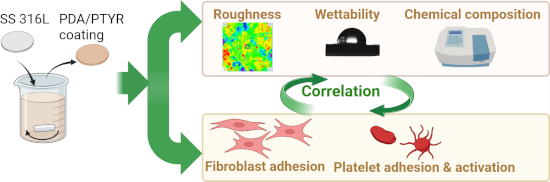
- was applied overnight. Following the washing process, Alexa Fluor 647-conjugated goat anti-rabbit secondary antibody (dilution 1:250, Invitrogen, ThermoFisher, USA) was applied for 1 h. Nuclei and F-actin staining were performed as described above. Samples were visualized using a fluorescence




Influence of surface characteristics on the in vitro stability and cell uptake of nanoliposomes for brain delivery
Beilstein J. Nanotechnol. 2026, 17, 139–158, doi:10.3762/bjnano.17.9
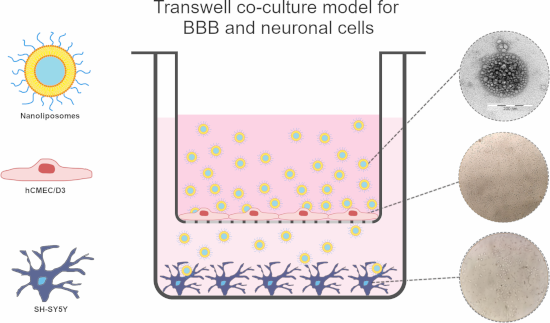
- Phalloidin 488 green (6.6 μM) in 1% bovine serum albumin (10 min, 37 °C), followed by nuclear staining with Hoechst (hCMEC/D3), for 5 min at room temperature. Before microscopic visualization, the Vectashield mounting medium was added to maintain and preserve the fluorescent dye. Images were processed using




Functional surface engineering for cultural heritage protection: the role of superhydrophobic and superoleophobic coatings – a comprehensive review
Beilstein J. Nanotechnol. 2026, 17, 63–96, doi:10.3762/bjnano.17.6
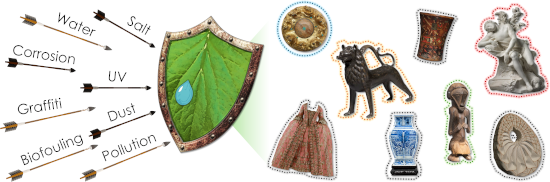
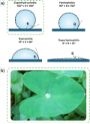
- porous stones like Lecce stone, commonly used in cultural heritage structures (mainly constituted by calcite). This coating effectively reduces water absorption and resists graffiti staining, helping to preserve the material from environmental and human-induced damage. Importantly, it does so without




Ultrathin water layers on mannosylated gold nanoparticles
Beilstein J. Nanotechnol. 2025, 16, 2183–2198, doi:10.3762/bjnano.16.151
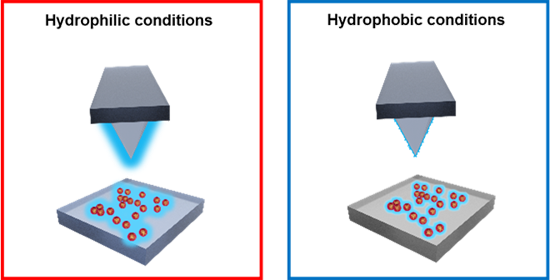
- , Section S1). We used heavy metal staining in STEM on the nanometer scale, to distinguish the organic ligand shell from the gold core. The main method, however, was “noncontact” (AC mode) AFM. Its advantage lies in obtaining a very detailed surface topography through height images. This also includes
- negative staining, 0.35 µL of dimanno-AuNPs (1.9 × 10¹³ particles/mL) were deposited on glow-discharged carbon TEM grids (air flow, 20 mA, 4 min). Then, 0.35 µL uranyl acetate (0.5% w/w) was deposited and dried on the sample. AFM imaging AFM topography images were recorded with an Agilent 5500 AFM



Rapid synthesis of highly monodisperse AgSbS2 nanocrystals: unveiling multifaceted activities in cancer therapy, antibacterial strategies, and antioxidant defense
Beilstein J. Nanotechnol. 2025, 16, 2105–2115, doi:10.3762/bjnano.16.145
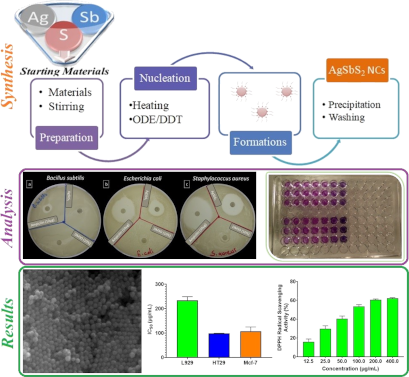
- direct ROS measurement and apoptosis marker assays (e.g., Annexin V/PI staining, caspase-3 activation) will be crucial for validating and further elucidating these mechanistic pathways. The surface charge and zeta potential of AgSbS2 NCs, which strongly influence their colloidal stability and cellular


Self-assembly and adhesive properties of Pollicipes pollicipes barnacle cement protein cp19k: influence of pH and ionic strength
Beilstein J. Nanotechnol. 2025, 16, 1863–1872, doi:10.3762/bjnano.16.129
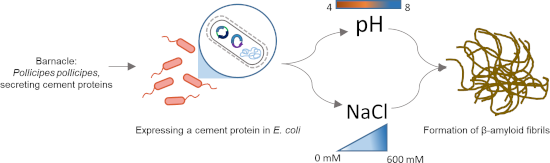
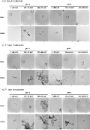
- day) demonstrated relatively homogeneous staining on both hydrophilic and hydrophobic materials, indicating adhesion to the relevant surfaces (Figure 4a,b). Staining was noticeably more intense for protein samples incubated at pH 4.0 and 150 mM NaCl, followed by samples incubated at pH 8.0 and 0 mM
- NaCl (Figure 4a,b). Additionally, denser staining in a heterogenous, granulated pattern, thought to correspond to clusters of aggregated proteins, was observed to occur on both surfaces in samples that had been incubated for 21 days at pH 4.0, 150 mM NaCl (Figure 4c), whereas these were not evident in
- either pH 8.0 environment. No significant change in staining was observed when samples that had been incubated for 21 days at pH 4.0, 150 mM NaCl to allow fibres to form were switched to pH 8.0, 600 mM NaCl (to mimic seawater) prior to carrying out the adhesion analysis (Figure 4a,b). Discussion This


Advances of aptamers in esophageal cancer diagnosis, treatment and drug delivery
Beilstein J. Nanotechnol. 2025, 16, 1734–1750, doi:10.3762/bjnano.16.121
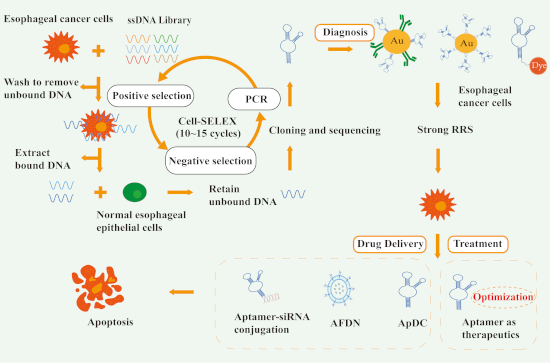
- aptamers. After Cy3 staining, the results showed that the two staining results were similar. The imaging method of the aptamer is simpler, indicating that the aptamer SYL3C can be used as a molecular diagnostic tool instead of antibody. Although there are many potential biomarkers for ESCC, and noninvasive


Multifunctional anionic nanoemulsion with linseed oil and lecithin: a preliminary approach for dry eye disease
Beilstein J. Nanotechnol. 2025, 16, 1711–1733, doi:10.3762/bjnano.16.120



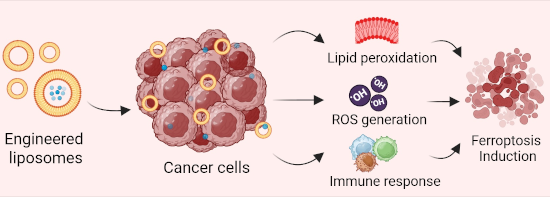
Ferroptosis induction by engineered liposomes for enhanced tumor therapy
Beilstein J. Nanotechnol. 2025, 16, 1325–1349, doi:10.3762/bjnano.16.97


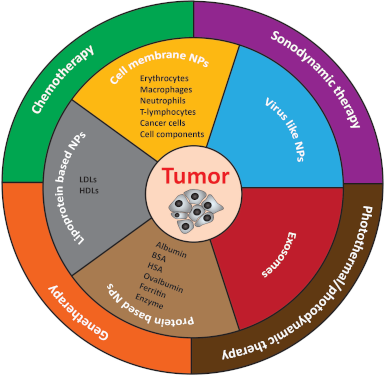
Better together: biomimetic nanomedicines for high performance tumor therapy
Beilstein J. Nanotechnol. 2025, 16, 1246–1276, doi:10.3762/bjnano.16.92






Piezoelectricity of hexagonal boron nitrides improves bone tissue generation as tested on osteoblasts
Beilstein J. Nanotechnol. 2025, 16, 1068–1081, doi:10.3762/bjnano.16.78
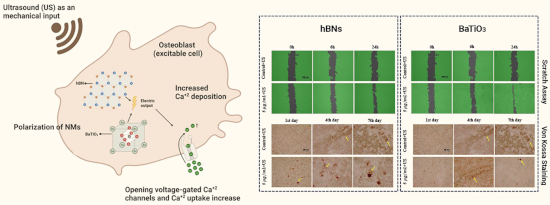
- osteoblast cell activity, the HOb cell line (cell line no. 406-05a, European Collection of Cell Cultures, UK) was chosen due to its sensitivity to mechanical and electric stimuli. Cell viability, reactive oxygen species (ROS) detection, cellular uptake, scratch, and von Kossa staining assays (Abcam, UK) were
- inverted light microscope to observe the scratch closure (cellular migration). These images were analyzed using the Wound Healing Image Analysis Platform (Wimasis) and the ImageJ software, and the percent scratch closure was calculated. Von Kossa staining assay To estimate the influence of NMs and US
- stimulation on osteoblastic differentiation, calcium depositions as an osteoblastic end differentiation marker was detected via the von Kossa staining procedure. Coloring is based on the conversion of calcium salts into silver salts. The calcium ions bound to the phosphates are replaced by the silver ions in


Shape, membrane morphology, and morphodynamic response of metabolically active human mitochondria revealed by scanning ion conductance microscopy
Beilstein J. Nanotechnol. 2025, 16, 951–967, doi:10.3762/bjnano.16.73
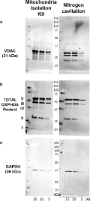
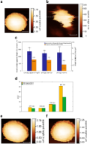
- Fisher Scientific Inc., USA) for 30 min at 37 °C, followed by staining with 5 mmol·L−1 TMRE (Molecular Probes Invitrogen Detection Technologies, Thermo Fisher Scientific Inc., USA) for 30 min at 37 °C. The samples were analysed using a Fluoview FV10i confocal microscope (Olympus, Germany). Oxygen



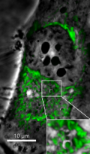
Serum heat inactivation diminishes ApoE-mediated uptake of D-Lin-MC3-DMA lipid nanoparticles
Beilstein J. Nanotechnol. 2025, 16, 740–748, doi:10.3762/bjnano.16.57
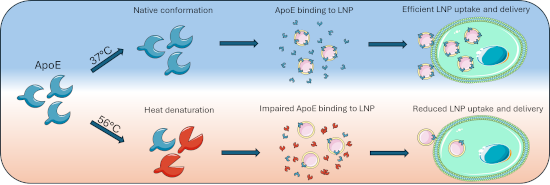
- ns = non-significant, * = p ≤ 0.05, ** = p ≤ 0.01, *** = p ≤ 0.001 and **** = p ≤ 0.0001. Schematic representation of the heat treatment and ThT staining of ApoE. Binding of ThT to misfolded or aggregated proteins greatly enhances its fluorescence (A). The fluorescence of solutions containing ApoE3
- or BSA following ThT staining as determined by spectrophotometry, after a 30 min incubation at room temperature (rt), 37, 56 and 75 °C (n = 3) (B). Differences were considered statistically significant at p < 0.05 and were annotated as ns = non-significant, * = p ≤ 0.05, ** = p ≤ 0.01, *** = p
- 1.725 pmol per well and uptake was measured after 4 h (n = 3). The fluorescence of HMEC-1 cells after uptake of LNPs in medium supplemented with HI or NHI ApoE (B). Schematic representation of the bead capture and staining of ApoE bound LNPs (C). The fluorescence of ApoE3 bound to LNPs that are captured


Colloidal few layered graphene–tannic acid preserves the biocompatibility of periodontal ligament cells
Beilstein J. Nanotechnol. 2025, 16, 664–677, doi:10.3762/bjnano.16.51
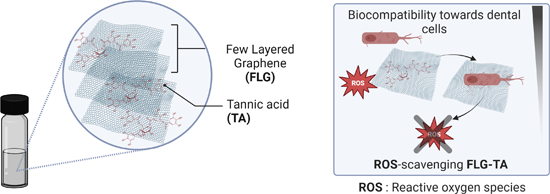
- metabolic activity. The maintenance of F-actin structural integrity, as visualized via phalloidin staining (red), offers compelling evidence supporting the biocompatibility of the material through sustained cytoskeletal organization. Figure S8, Supporting Information File 1, provides additional
- compared to control (Ctrl+), determined by Tukey's post-hoc test. Reactive oxygen species (ROS) production in cells treated with FLG–TA. Confocal fluorescence images showing ROS levels after staining with CellROX (green) and Hoechst 33258 (blue). Scale bar: 20 µm (A). Quantification of ROS production




Development of a mucoadhesive drug delivery system and its interaction with gastric cells
Beilstein J. Nanotechnol. 2025, 16, 371–384, doi:10.3762/bjnano.16.28

- nanoparticles before and after mucin interaction. Supporting Information Supporting Information File 6: Coating of alginate nanoparticles by Eudragit RS100 polymer. Supporting Information File 7: Properties of FAM-labeled peptide. Supporting Information File 8: Periodic acid–Schiff staining of cells


Graphene oxide–chloroquine conjugate induces DNA damage in A549 lung cancer cells through autophagy modulation
Beilstein J. Nanotechnol. 2025, 16, 316–332, doi:10.3762/bjnano.16.24
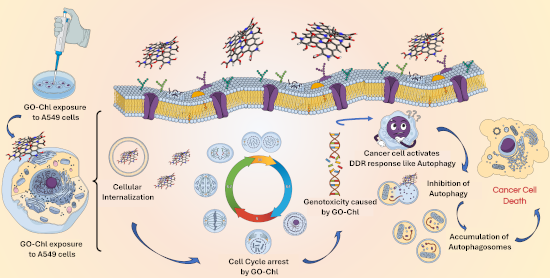
- by embedding the samples in pure resin followed by curing at 60 °C for 24 h. The blocks were then subjected to a Leica UC7 ultramicrotome (Wetzlar, Germany) to make ultrathin (60 nm) sections followed by staining with uranyl acetate and lead citrate. The sections were allowed to air dry before
- monodansylcadaverine staining Fluorescent monodansylcadaverine selectively accumulates in acidic vacuoles and has been used as a tracer for autophagic vacuoles [34]. Briefly, A549 cells were plated onto 20 mm round glass coverslips and allowed to adhere overnight. On the next day, cells were exposed to 25 μg/mL of the
- with 1× PBS. The cells were then fixed in 4% paraformaldehyde at 4 °C for 30 min, counterstained with DAPI for nuclear staining, mounted using antifade, and analyzed using confocal microscopy. Immunoblot analysis The expression level of various autophagy-related proteins was analyzed using



Synthesis and the impact of hydroxyapatite nanoparticles on the viability and activity of rhizobacteria
Beilstein J. Nanotechnol. 2025, 16, 216–228, doi:10.3762/bjnano.16.17
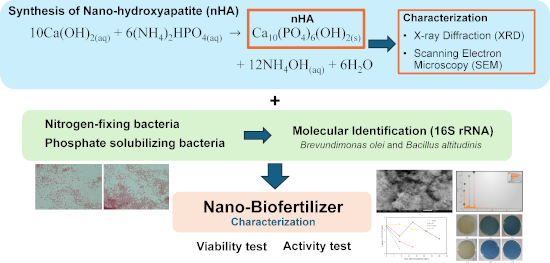
- considered to have a similarity greater than 97%, with matching identification if the similarity exceeds 99%. A similarity lower than 97% might suggest the presence of a novel species, as indicated by Stackebrandt and Goebel [39]. Staining revealed that both Brevundimonas olei (Pd) and Bacillus altitudinis


Recent advances in photothermal nanomaterials for ophthalmic applications
Beilstein J. Nanotechnol. 2025, 16, 195–215, doi:10.3762/bjnano.16.16
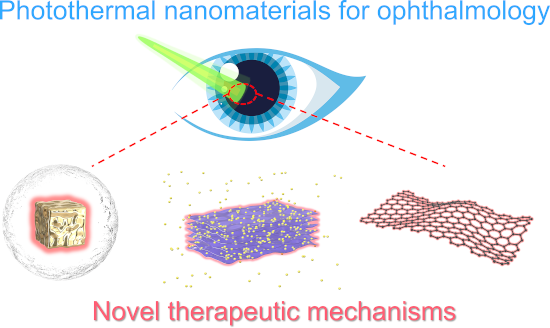
- , and polypyrrole) with a broad light absorption spectrum and efficient photothermal conversion capabilities (see below in Figure 2e) [58][59][60]. In addition to polymer-based photothermal nanomaterials, organic small molecule dyes that are often used for tissue staining can also be used as
- for clinical ILM staining, is better suited for generating VNBs on the ILM, and the high NIR absorbance of ICG is beneficial in the in vivo environment. Karen Peynshaert’s team [169] demonstrated that ICG can bind to the ILM and generate VNBs upon pulsed laser irradiation, thereby disrupting the


Characterization of ZnO nanoparticles synthesized using probiotic Lactiplantibacillus plantarum GP258
Beilstein J. Nanotechnol. 2025, 16, 78–89, doi:10.3762/bjnano.16.8
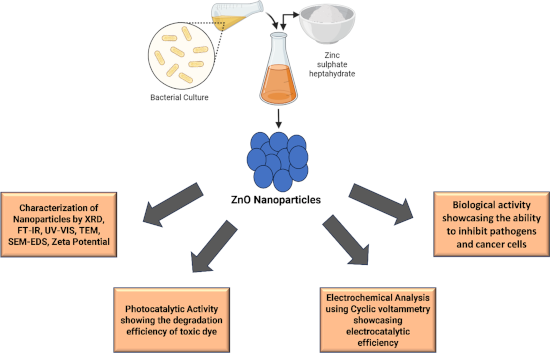
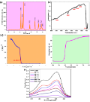
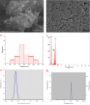
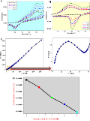
- . Later, bacterial colonies were screened, and pure cultures were maintained at 4 °C. A comprehensive analytical scheme was adopted to identify the most promising bacterial isolates, that is, Gram’s reaction, morphology, catalase activity, endospore staining, and carbohydrate fermentation profiling using



Attempts to preserve and visualize protein corona on the surface of biological nanoparticles in blood serum using photomodification
Beilstein J. Nanotechnol. 2024, 15, 1654–1666, doi:10.3762/bjnano.15.130

- in their study since this method is the only method for direct visualization of submicrometer structures. We used negative staining of bio-NP samples, which allows one to see the particles and study their structure, as well as to assess the degree of contamination of the sample with impurities. The
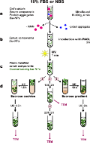
- photomodified and native FBS and NBS plus samples of sucrose fractions without sera (additional control), and (4) samples of bio-NPs isolated from photomodified and native FBS and NBS. Negative staining with 0.5% aqueous uranyl acetate solution was performed identically for all samples, using pre-prepared
- visualized in TEM. Representative images of bio-NPs isolated from 10% FBS by single (top row) or double (bottom row) UC. (a,e,f) LPs; circles show high-density LPs (≤10 nm). (a,e) Minute spherical particles are shown with arrows. (b,c,g,h) EVs. (d) Structureless serum components. TEM, negative staining with



Natural nanofibers embedded in the seed mucilage envelope: composite hydrogels with specific adhesive and frictional properties
Beilstein J. Nanotechnol. 2024, 15, 1603–1618, doi:10.3762/bjnano.15.126
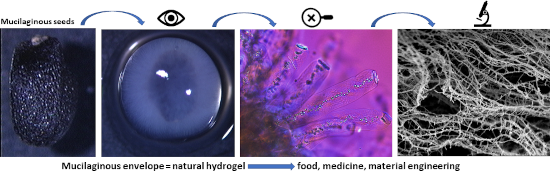
- -linking polysaccharides) are the cross-linkers. This structure is typical of diverse taxa from different plant groups and represents a characteristic 3D netlike architecture of a hydrogel. Staining of basic mucilage components. (a) Artemisia annua – pectins stained with ruthenium red. Delicate cellulose
- fibrils are visible stretching radially from the seed surface. (b) Capsella bursa-pastoris – pectins stained with alcian blue. (c) Plantago ovata mucilage is rich in hemicelluloses but comprises also pectins – staining with crystal violet. (d) Artemisia annua – magnification of the mucilage envelope





