Search results
Search for "technology" in Full Text gives 1463 result(s) in Beilstein Journal of Nanotechnology. Showing first 200.
Nanoglasses: a trail towards uncharted regions of vitreous materials and their properties?
Beilstein J. Nanotechnol. 2026, 17, 1047–1062, doi:10.3762/bjnano.17.72

- Way Tucson, AZ 85719, United States Institute of Nanotechnology, Karlsruhe Institute of Technology, Kaiserstr. 12, 76131 Karlsruhe, Germany 10.3762/bjnano.17.72 Abstract Nanoglasses are a class of non-crystalline materials composed of nanoscale glass regions separated by glass–glass interfaces that


Ultrasonic irradiation in the synthesis of nanohydroxyapatite: a chemically friendly technique for improving hemocompatibility and antibiofilm applications
Beilstein J. Nanotechnol. 2026, 17, 991–1015, doi:10.3762/bjnano.17.68
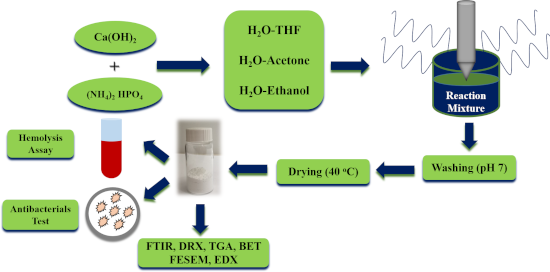
- chemistry by employing a highly energy-efficient technology that uses aqueous mixtures as the reaction medium, thereby reducing the use of toxic reagents, simplifying purification stages, and establishing a sustainable synthesis process. Although the method was effective across all three evaluated systems




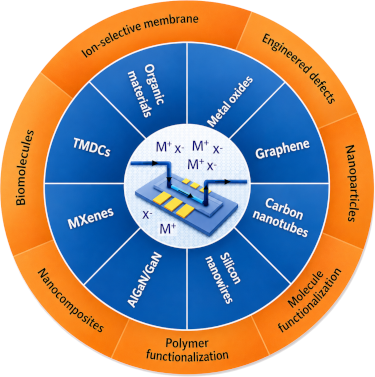
Materials challenges in solid-state sensors for continuous monitoring of ions in water
Beilstein J. Nanotechnol. 2026, 17, 935–973, doi:10.3762/bjnano.17.66


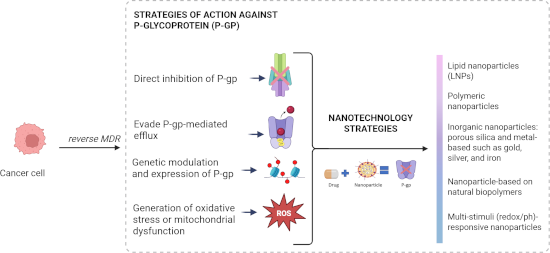
Nanocarrier strategies to overcome P-glycoprotein-mediated drug resistance in cancer therapy
Beilstein J. Nanotechnol. 2026, 17, 882–921, doi:10.3762/bjnano.17.64


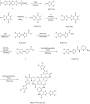
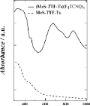
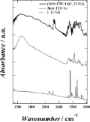
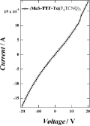
Supramolecular one-dimensional conducting nanofibers from a C3-symmetric tetrathiafulvalene derivative
Beilstein J. Nanotechnol. 2026, 17, 872–881, doi:10.3762/bjnano.17.63
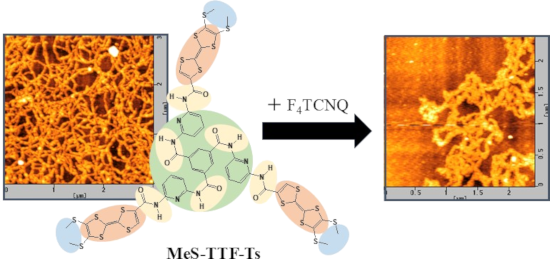
- Yoko Tatewaki Fumiya Hirose Sadafumi Nishihara Tomoyuki Akutagawa Takayoshi Nakamura Tsuyoshi Minami Department of Applied Chemistry, Tokyo University of Agriculture and Technology, 2-24-16 Nakacho, Koganei-shi, Tokyo, 184-8588 Japan Graduate School of Advanced Science and Engineering, Hiroshima


Light-driven ammonia electrooxidation via carbon nitride–ruthenium molecular interfaces
Beilstein J. Nanotechnol. 2026, 17, 854–862, doi:10.3762/bjnano.17.61
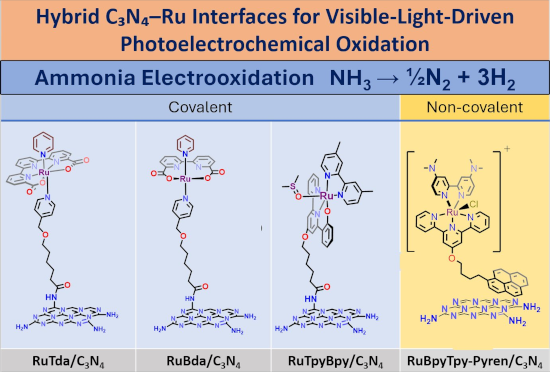
- Jan Holub Pablo Jimenez-Calvo Group of Coordination Chemistry, University of Chemistry and Technology, Prague (UCT, Prague); Department of Inorganic Chemistry, Technická 5, 166 28, Prague, Czech Republic Chemistry of Thin Film Materials, Materials Chemistry Section, Friedrich-Alexander-Universität


Cross-scale design of chemosensor arrays: from molecular self-assembly in water to paper-based devices for metal ion detection
Beilstein J. Nanotechnol. 2026, 17, 828–838, doi:10.3762/bjnano.17.59
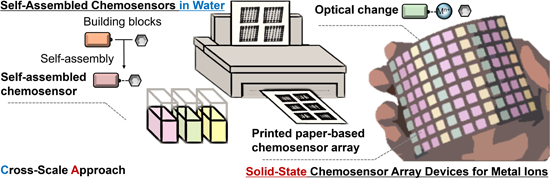
- Yui Sasaki Tsuyoshi Minami Research Center for Advanced Science and Technology, The University of Tokyo, 4-6-1, Komaba, Meguro-ku, Tokyo 153-8904, Japan JST PRESTO, 4-1-8 Honcho, Kawaguchi, Saitama 332-0012, Japan, Institute of Industrial Science, The University of Tokyo, 4-6-1 Komaba, Meguro-ku


Sustainable fabrication of 2D-based devices through reuse of substrates with microfabricated electrodes
Beilstein J. Nanotechnol. 2026, 17, 818–827, doi:10.3762/bjnano.17.58
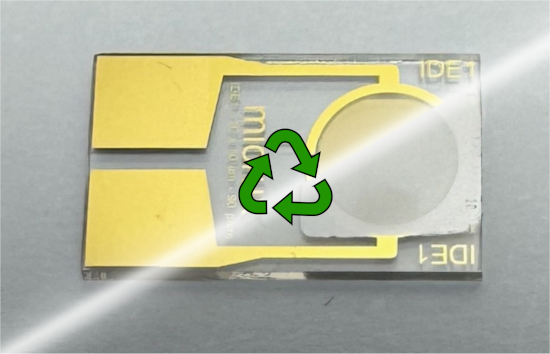
- , Spain Department of Inorganic Chemistry, University of Chemistry and Technology, Prague, Prague, Czech Republic School of Advanced Materials and Nanotechnology, Xidian University, 710071 Xi’an, China 10.3762/bjnano.17.58 Abstract Fabricating microelectronic devices for two-dimensional (2D) materials


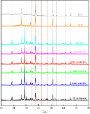
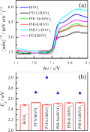
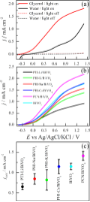
Glycerol photoelectrochemical oxidation reaction at carbon nitrides/BiVO4 materials
Beilstein J. Nanotechnol. 2026, 17, 806–817, doi:10.3762/bjnano.17.57
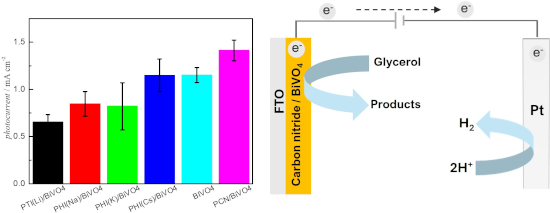
- water oxidation reaction, as well as the material stability at the anodes, must be overcome for this technology to be successfully transferred to end users [5]. To address these issues, several efforts have been made to develop efficient catalysts to improve the kinetics of the water oxidation reaction




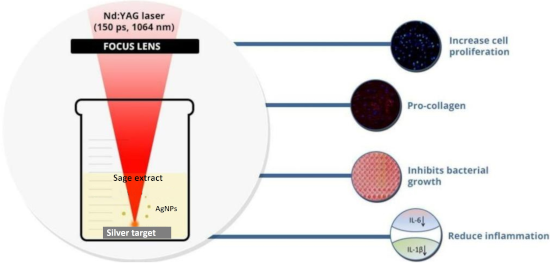
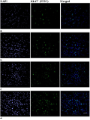
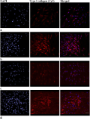
Restorative potential of laser-synthesized silver nanoparticles with Salvia officinalis for periodontal disease treatment: an in vitro study
Beilstein J. Nanotechnol. 2026, 17, 781–795, doi:10.3762/bjnano.17.55
- Porphyromonas gingivalis.a Funding This work was supported by the Ministry of Science, Technological Development and Innovation of the Republic of Serbia (Grant no. 451-03-33/2026-03/200017), and The Innovation Fund of the Republic of Serbia (program Proof of Concept, Grant no. 5490, program Technology



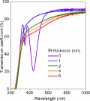
Tailoring Ag–Pt nanoalloys through solid-state dewetting: structural and optical insights
Beilstein J. Nanotechnol. 2026, 17, 748–759, doi:10.3762/bjnano.17.52

- Marcin Lapinski Piotr Okoczuk Blaz Grobisa Ewa Pawlikowska Amelia Rozwadowska Wojciech Sadowski Barbara Koscielska Institute of Nanotechnology and Materials Engineering, Advanced Materials Center, Gdansk University of Technology, ul. G. Narutowicza 11/12, 80-233 Gdańsk, Poland 10.3762/bjnano
- – Research University’, founding by Gdańsk University of Technology.




Superconducting artificial neural networks and quantum circuits
Beilstein J. Nanotechnol. 2026, 17, 744–747, doi:10.3762/bjnano.17.51
- dissipation; Research on artificial neural networks (ANNs) is currently one of the most rapidly developing areas of modern science and technology [1]. Neural networks have demonstrated high efficiency in solving problems of pattern recognition and classification, clustering, forecasting, approximation, and
- ; however, it enables significantly lower energy dissipation and higher computational speed compared to conventional von Neumann architectures. A representative example is the IBM TrueNorth processor implemented using standard complementary metal–oxide–semiconductor (CMOS) technology in 2014. This processor
- superconducting quantum circuits and superconducting digital technologies based on Josephson junctions. The energy consumption of a basic element of superconducting digital technology is on the order of 10−19 J, corresponding to up to seven orders of magnitude lower energy dissipation than that of semiconductor
Environmental applications of silver nanoparticles: state-of-the-art review and emerging trends
Beilstein J. Nanotechnol. 2026, 17, 697–736, doi:10.3762/bjnano.17.49
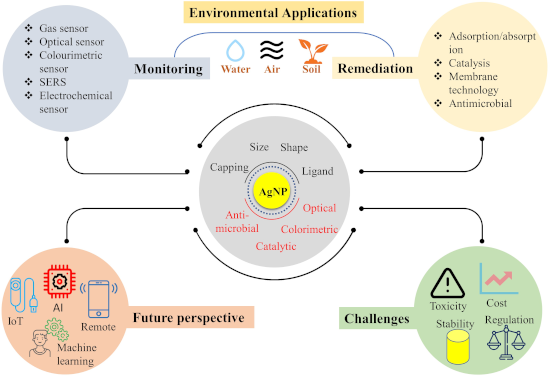
- population and their demand for advanced technology, healthcare, and household products. Therefore, monitoring and remediation of these contaminants from the environment is the need of the hour, with cost-effective, sensitive, and selective strategies or systems foremost. Indeed, various high-throughput
- , colourimetry, and fluorometry [18][19][20][21]. In addition, the enhanced antimicrobial activity of AgNPs can be used for water decontamination and is widely employed in membrane filtration technology [22]. AgNPs exhibited broad-spectrum antibacterial activity, encompassing both Gram-positive and Gram-negative
- technologies incorporating AgNPs. The advent of technological advancements aimed at providing safe water for individuals led to the incorporation of AgNPs into membrane technology, enabling sustained Ag release to remove pathogens and biofouling microorganisms in a continuous-flow system [22]. Nanosilver


Protein-based custom-designed molecular nanotraps for biomedical applications
Beilstein J. Nanotechnol. 2026, 17, 683–687, doi:10.3762/bjnano.17.47
- polymer matrices that closely mimic natural recognition entities [2]. MIP technology is a strategy specifically designed to mold selective binding sites in a material through a template-assisted synthesis [3]. The specific recognition is achieved through a polymer synthesis that occurs in the presence of

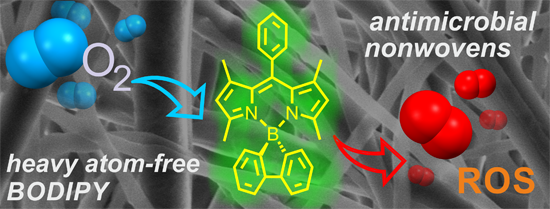
Decontamination from water pollutants and pathogens by electrospun nanofibers doped with heavy-atom-free borafluorene-BODIPY photosensitizers
Beilstein J. Nanotechnol. 2026, 17, 668–682, doi:10.3762/bjnano.17.46
- Sciences, Pawińskiego 5b St., 02-106 Warsaw, Poland Faculty of Chemistry, Warsaw University of Technology, Noakowskiego 3, 00-664 Warsaw, Poland Department of Nanobiotechnology, Institute of Biology, Warsaw University of Life Sciences (WULS-SGGW), 02-787 Warsaw, Poland Faculty of Chemistry, Silesian
- University of Technology, Strzody 9, 44-100 Gliwice, Poland Centre for Organic and Nanohybrid Electronics, Silesian University of Technology, Konarskiego 22B, 44-100 Gliwice, Poland 10.3762/bjnano.17.46 Abstract A heavy-atom-free and non-toxic spirocyclic C-BODIPY singlet oxygen photosensitizer was
- was supported by Demo Materials PW project (1820/44/Z01/POB5/2023) granted by Warsaw University of Technology under the program Excellence Initiative: Research University (ID-UB). This work was supported by the National Science Centre (Poland) within the framework of the project UMO-2020/39/B/ST4



Cellulose as a photocatalyst support material: extraction, structural features, and environmental applications
Beilstein J. Nanotechnol. 2026, 17, 635–652, doi:10.3762/bjnano.17.44
- Yee Teng Lim Nur Farhana Jaafar Azizul Hakim Lahuri Endang Tri Wahyuni School of Chemical Sciences, Universiti Sains Malaysia, 11800 USM Penang, Malaysia Department of Science and Technology, Universiti Putra Malaysia Bintulu Campus, Bintulu, Malaysia Chemistry Department, Faculty of Mathematic
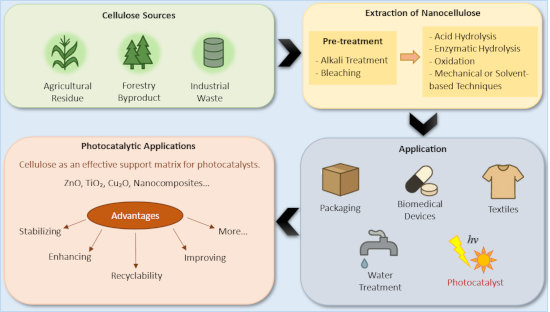
- technologies. Keywords: biomass waste; cellulose; green technology; photocatalysis; sustainable materials; Introduction The utilization of biomass has gained a lot of interest among researchers; biomass materials for extraction of biopolymers originate from plants, wood, and waste such as fruit peels and
- have become a central focus in advancing membrane technology for water treatment as conventional membranes, though vital for protecting aquatic life, often struggle to meet the rising environmental and social demands; one effective strategy to overcome these limitations is through membrane modification


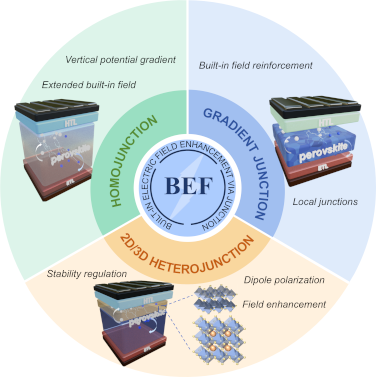
Recent progress in enhancing built-in electric fields of perovskite solar cells via junction engineering
Beilstein J. Nanotechnol. 2026, 17, 602–621, doi:10.3762/bjnano.17.42



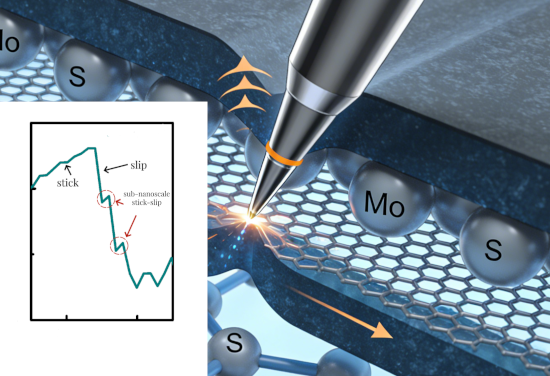
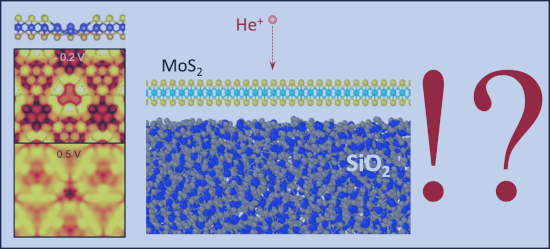
Probing tribological evolution in atomically thin MoS2 at different scales
Beilstein J. Nanotechnol. 2026, 17, 586–597, doi:10.3762/bjnano.17.40
- Foundation of Education Bureau of Hunan Province (Ggrant No. 24C0566); the Science and Technology Innovation Team in College of Hunan Province, grant numbers 2023-233 (Xiang Jiao Tong). Conflict of Interest The authors declare no competing financial interest.


Electrochemical determination of ciprofloxacin using a MIL-101/reduced graphene oxide-modified electrode
Beilstein J. Nanotechnol. 2026, 17, 541–554, doi:10.3762/bjnano.17.35
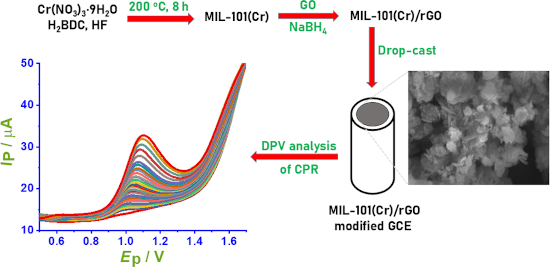
- Training, Hue City, 530000, Vietnam Institute of Materials Sciences, Vietnam Academy of Science and Technology, 18 Hoang Quoc Viet, Cau Giay, Hanoi City,100000, Vietnam University of Education, Hue University, 530000, Vietnam 10.3762/bjnano.17.35 Abstract An electrochemical sensor for the determination of


Defects and defect-mediated engineering of two-dimensional materials: challenges and open questions
Beilstein J. Nanotechnol. 2026, 17, 454–488, doi:10.3762/bjnano.17.31
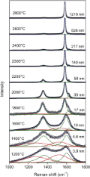
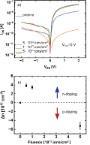
- atmospheric conditions further broadens its applicability, making it an invaluable tool for understanding and optimizing the properties of 2D materials. Continued advancements in XPS technology, including integration with in situ/operando capabilities, microscopy, and machine learning for data analysis





Nanocarrier-integrated multilayer films produced by 3D printing for improved skin adhesion and curcumin photostability
Beilstein J. Nanotechnol. 2026, 17, 440–453, doi:10.3762/bjnano.17.30
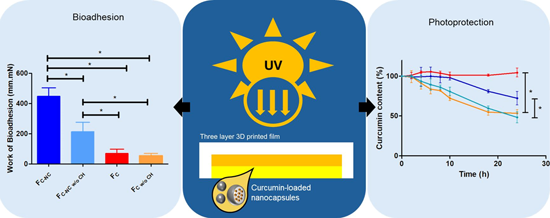
- prevented UVC-induced photodegradation, supporting our hypothesis. Furthermore, the presence of C-NCs in FC-NC films promoted higher bioadhesion. This proof-of-concept study demonstrates the feasibility of integrating nanocarriers with 3D printing technology to engineer multilayer polymeric films for
- ; nanocarriers; photostability; Introduction 3D printing is an innovative technology that is poised to transform personalised medicine and healthcare manufacturing. For the healthcare industry, the use of 3D printing provides several key advantages, including the ability to adapt dosages according to a
- thixotropic properties of the hydrogels (n = 3).a Supporting Information Supporting Information File 12: Additional Figure and Table. Funding The present study is part of the National Institute of Science and Technology in 3D printing and Advanced Materials Applied to Human and Veterinary Health - INCT_3D


Nanoinformatics: spanning scales, systems and solutions
Beilstein J. Nanotechnol. 2026, 17, 423–427, doi:10.3762/bjnano.17.28
- (CNPEM), Campinas, Sao Paulo, Brazil Drug Theoretics and Cheminformatics (DTC) Laboratory, Department of Pharmaceutical Technology, Jadavpur University, Kolkata 700032, India Division of Physical Sciences and Applications, Hellenic Military Academy, Vari 16672, Greece 10.3762/bjnano.17.28 Keywords

Biomimetic nanoparticles in cancer photodynamic therapy: a review of targeted delivery systems and therapeutic outcomes
Beilstein J. Nanotechnol. 2026, 17, 396–422, doi:10.3762/bjnano.17.27
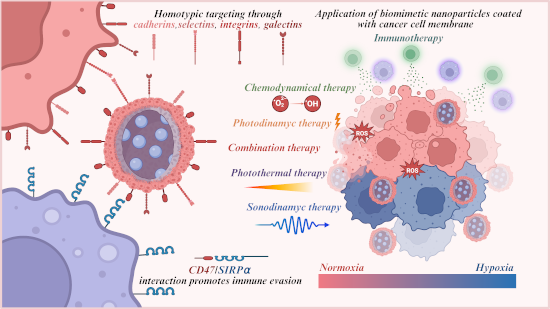
- Valentina I. Gorbacheva Alexey S. Grabovoy Polina S. Marukhina Anastasiia O. Syrocheva Ekaterina P. Kolesova Sirius University of Science and Technology, 1 Olympic Avenue, Sirius, Krasnodar Region, 354340, Russia 10.3762/bjnano.17.27 Abstract Photodynamic therapy (PDT) is a minimally invasive


Eco-efficient materials for agricultural crops based on a mineral rich in MOR- and HEU-type zeolites
Beilstein J. Nanotechnol. 2026, 17, 381–395, doi:10.3762/bjnano.17.26
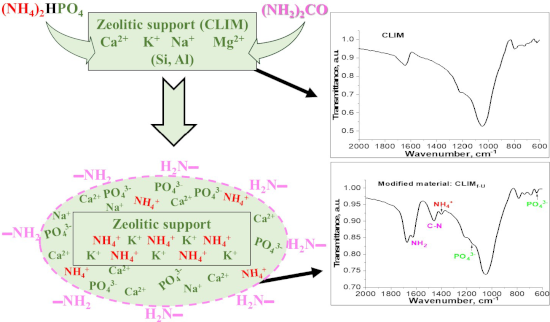
- Materials Science and Technology (IMRE) – University of Havana for the characterization of the samples.




Polycatecholamine nanocoatings on stainless steel: the effect on attachment of human fibroblasts and platelets
Beilstein J. Nanotechnol. 2026, 17, 365–380, doi:10.3762/bjnano.17.25
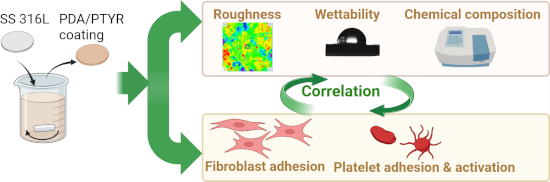
- Paulina Trzaskowska Ewa Rybak Maciej Trzaskowski Kamil Kopec Jakub Krzeminski Rafal Podgorski Hatice Genc Mehtap Civelek Iwona Cicha Centre for Advanced Materials and Technologies CEZAMAT, Warsaw University of Technology, Poleczki 19, 02-822 Warsaw, Poland Faculty of Chemical and Process
- Engineering, Warsaw University of Technology, Warynskiego 1, 00-645 Warsaw, Poland Section of Experimental Oncology and Nanomedicine, Department of Otorhinolaryngology, Head and Neck Surgery, Universitätsklinikum Erlangen, Glueckstraße 10a, 91054 Erlangen, Germany 10.3762/bjnano.17.25 Abstract Polydopamine
- methods and results. Acknowledgements The Graphical Abstract was created in BioRender. Trzaskowska, P. (2026) https://BioRender.com/e4r25zd This content is not subject to CC BY 4.0. Funding This study was funded by POB Biotechnology and Biomedical Engineering of Warsaw University of Technology within the