Search results
Search for "transfer" in Full Text gives 1093 result(s) in Beilstein Journal of Nanotechnology. Showing first 200.
Influence of an external electric field on the catalytic CO oxidation of nanoscaled CeO2 and its La3+ and Gd3+ congeners
Beilstein J. Nanotechnol. 2026, 17, 1028–1038, doi:10.3762/bjnano.17.70
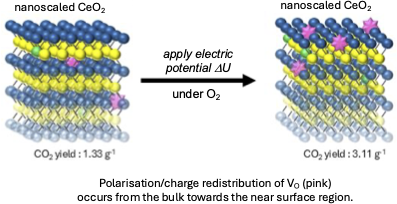
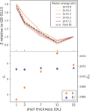
- separation and transport and influences heat transfer occurring in the bulk and at surfaces of dielectrics, piezoelectrics, and electrostrictive materials [5][6][7][8][9][10]. The electric-field-assisted catalytic decomposition over Pt/CeO2 enables the conversion of methanethiol to H2S even at low
- electric field. Grey spheres represent Ce3+/Ce4+ sites, red spheres represent O2− ions, and yellow spheres indicate VO. Small-polaron hopping is illustrated as electron transfer between neighbouring Ce3+/Ce4+ sites, while VO migration is shown schematically within the fcc lattice. Under an applied electric


Synthesis and characterization of RF-sputtered ZnTe/Cu2−xTe thin films for solar cell applications
Beilstein J. Nanotechnol. 2026, 17, 1016–1027, doi:10.3762/bjnano.17.69
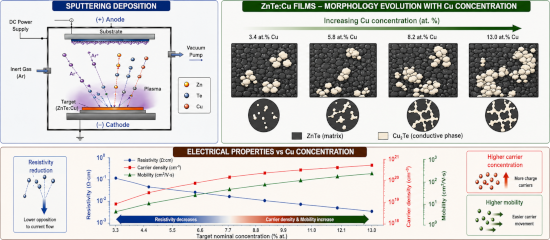
- temperatures of 300 and 350 °C. Energy-dispersive X-ray spectroscopy confirmed controlled compositional transfer from the target to the films. X-ray diffraction analysis revealed that all films are polycrystalline, exhibiting a coexistence of zinc blende and wurtzite ZnTe phases. Low dopant concentrations
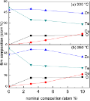
- nominal and measured Cu concentration is observed, suggesting good compositional transfer from target to films under selected sputtering conditions. Additionally, an increase in the [Zn]/[Te] ratio is observed in films grown at 350 °C compared to those grown at 300 °C. This behavior is attributed to



Ultrasonic irradiation in the synthesis of nanohydroxyapatite: a chemically friendly technique for improving hemocompatibility and antibiofilm applications
Beilstein J. Nanotechnol. 2026, 17, 991–1015, doi:10.3762/bjnano.17.68
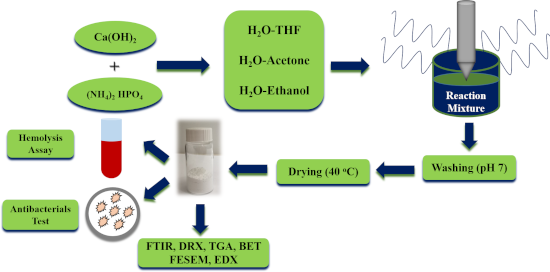
- phenomenon that efficiently concentrates diffuse sound energy and is much more powerful than common thermal energy transfer. When high-frequency sound waves pass through a liquid medium, a large number of microbubbles form, grow, and collapse within intervals as short as a few microseconds. According to




Materials challenges in solid-state sensors for continuous monitoring of ions in water
Beilstein J. Nanotechnol. 2026, 17, 935–973, doi:10.3762/bjnano.17.66
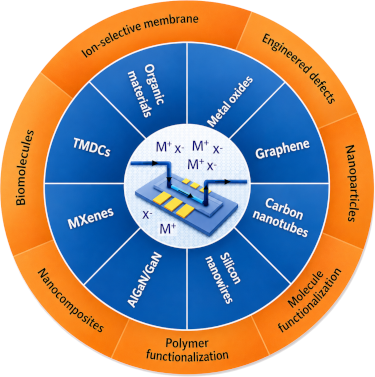
- widely used material, which provides a large interfacial capacitance and excellent potential stability. (2) Redox (faradaic) transduction uses redox-active materials in which reversible electron-transfer reactions buffer potential changes, for example ferrocene-doped conducting polymers whose Fe2+/Fe3
- and can be tuned or swept. Interactions between the analyte and the channel modify the electrostatic environment of the channel. This modification alters the channel conductance and changes its dependence on the applied gate voltage. Consequently, variations in the device transfer characteristics can
- structure, charge transfer in metal oxide semiconductor channels is strongly influenced by their defect chemistry, surface adsorbates, and polaronic transport behavior. Charges primarily transfer through defect-induced n-type conduction by a combination of band-like transport and polaron hopping. The charge



Enhanced erosion resistance and radiation stability of WC–WO3 nanocomposite films under 100 keV Kr+ ion irradiation
Beilstein J. Nanotechnol. 2026, 17, 922–934, doi:10.3762/bjnano.17.65
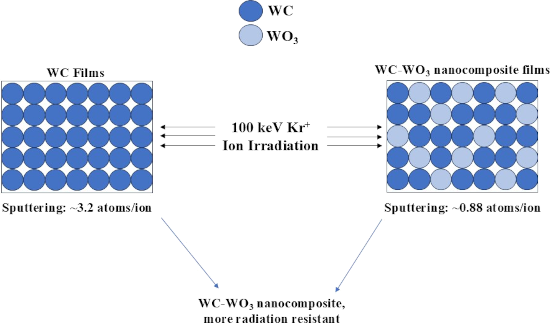
- , and E0 is the initial energy of the ions. The deviation between experimental and TRIM results for sputtering could be a result of non-linear effects. TRIM assumes a simplified energy transfer model, ignoring oscillatory variations in stopping power that arise due to the specific interaction between
- the ions (Z1) and the target atoms (Z2). The energy loss may be lower than the predicted TRIM values because energy transfer efficiency changes for certain Z1 and Z2 combinations where resonance-like effects are absent. This results in TRIM overestimating/understimating sputtering yields compared to
- the presence of heterointerfaces, which are better sinks for radiation-induced interstitials/vacancies than grain boundaries [33]. The transfer of energy from the incident ion(s) results in the displacement of the target atoms from their lattice sites in collison cascades, and may even ultimately lead



Supramolecular one-dimensional conducting nanofibers from a C3-symmetric tetrathiafulvalene derivative
Beilstein J. Nanotechnol. 2026, 17, 872–881, doi:10.3762/bjnano.17.63
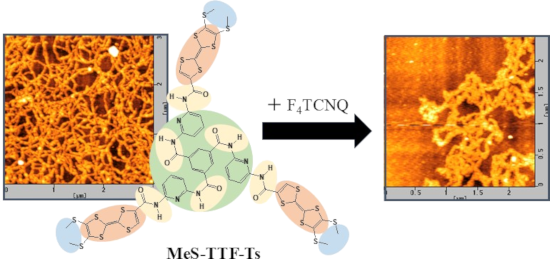
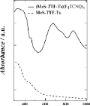
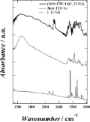
- resulting morphologies. Furthermore, MeS-TTF-Ts was combined with the strong electron acceptor F4TCNQ to form a charge-transfer complex, (MeS-TTF-Ts)(F4TCNQ)3, which yielded well-defined one-dimensional nanofibers. UV–vis and FTIR spectroscopic analyses confirmed substantial charge transfer from MeS-TTF-Ts
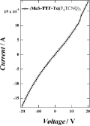
- S·cm−1. These findings demonstrate that rational molecular design combined with controlled supramolecular self-assembly provides an effective strategy for constructing one-dimensional conductive nanostructures based on organic charge-transfer systems. Keywords: charge-transfer complex; conducting
- (TTF) derivatives are representative redox-active molecules capable of forming charge-transfer complexes, and their charge-transfer salts have long been known to exhibit high electrical conductivity [11][12][13][14]. In recent years, TTF derivatives functionalized with amide groups or long alkyl chains


Light-driven ammonia electrooxidation via carbon nitride–ruthenium molecular interfaces
Beilstein J. Nanotechnol. 2026, 17, 854–862, doi:10.3762/bjnano.17.61
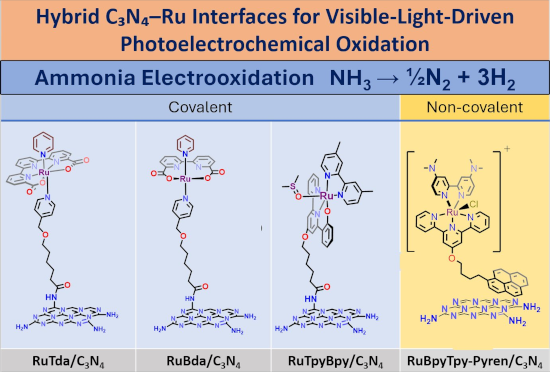
- dissolved in solution faces a fundamental limitation: Only a tiny fraction of dissolved molecules is ever close enough to an electrode surface to participate in electron transfer at any given moment. The rest drifts idly in solution, increasing precious metal loading without contributing to the reaction
- without releasing oxidized intermediates such as hydrazine or hydroxylamine. Second, ammonia is a strong σ-donor that coordinates readily to Ru(II), positioning the substrate in the inner coordination sphere for successive proton-coupled electron-transfer steps. Third, the ligand environment around Ru can
- mechanism proceeds when a water or ammonia molecule attacks a high-valence Ru=O or Ru=NH intermediate, generating peroxo or hydrazido species that subsequently release O2 or N2 via a series of proton-coupled electron-transfer steps. The bimolecular intermolecular mechanism based on the interaction of two


Nanoparticle delivery systems for HIV pre-exposure prophylaxis (PrEP): advances and challenges
Beilstein J. Nanotechnol. 2026, 17, 839–853, doi:10.3762/bjnano.17.60
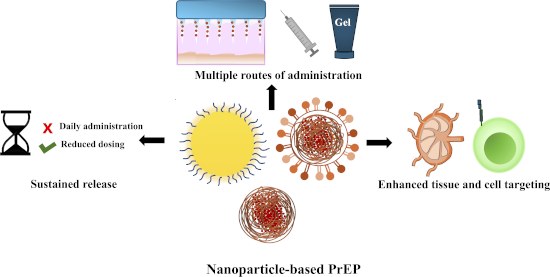
- (Siglec-1/CD169), which then transfer the virus to its actual CD4+ host cell in secondary lymphoid tissues [34][35][36]. Once the virus has bound to a host cell via the CD4 receptor, it goes through different stages of its infection cycle, including fusion, reverse transcription, integration, translation
- combination of TDF/FTC as nucleoside reverse transcriptase inhibitors (NRTIs) or long-acting injectable CAB as integrase strand transfer inhibitor (INSTI) [2][15][16]. Targeting cells relevant for both cis- and trans-infection through appropriate nanoparticle delivery strategies is of interest for enhancing
- solutions [55]. This effect may be attributed to mannose receptor-mediated uptake into macrophages, but the exact mechanism of blood–brain barrier (BBB) transfer has not been determined. Lipid-based nanoparticles LBNPs, including liposomes, LNPs, SLNs, and NLCs, represent a well-established class of


Sustainable fabrication of 2D-based devices through reuse of substrates with microfabricated electrodes
Beilstein J. Nanotechnol. 2026, 17, 818–827, doi:10.3762/bjnano.17.58
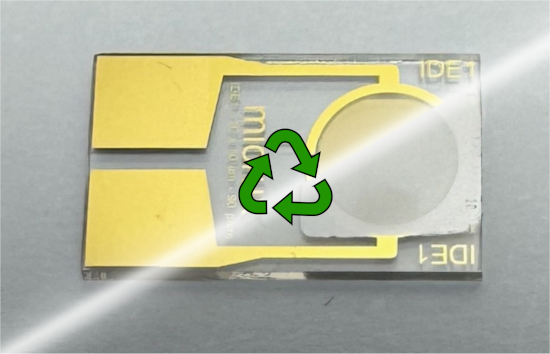
- /substrate interface. In liquid-phase exfoliation (LPE) [25][26], polar aprotic solvents such as NMP and dimethylformamide (DMF) [27] have long been recognized as effective solvents for layered materials [28][29]. In this work, both NMP and DMF deliver strong cleaning performance under our post-transfer
- for layered materials in LPE may also guide solvent selection for post-transfer cleaning. Accordingly, Cyrene represents an attractive greener candidate for future study, while NMP is adopted here as the representative solvent for systematic investigation of the cleaning protocol and substrate reuse
- strongly from this optimal range and therefore perform less effectively, especially for aged flakes. These observations suggest that solvent classes known to perform well for layered materials may also provide a useful basis for selecting cleaning solvents for post-transfer substrate reuse. Based on this


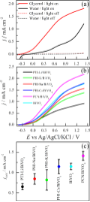
Glycerol photoelectrochemical oxidation reaction at carbon nitrides/BiVO4 materials
Beilstein J. Nanotechnol. 2026, 17, 806–817, doi:10.3762/bjnano.17.57
- [6]. These strategies include the synthesis of new photocatalysts, such as metal oxides, doped oxides, heterojunctions, and protective layers to enhance charge transfer at both interfaces and in the bulk, thereby lowering the activation energy barriers [7]. In this sense, bismuth vanadate (BiVO4) has
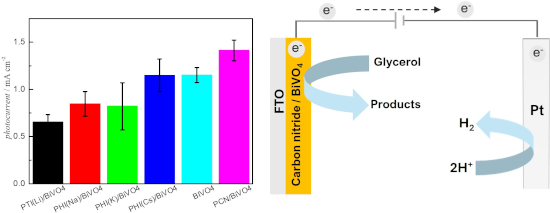
- occurs by the following pathway: (i) Photon absorption by BiVO4, (ii) electron–hole (e-–h+) separation, (iii) electron(s) transfer from glycerol molecule to h+, and (iv) glycerol deprotonation yielding oxidized products as shown in Equation 1. The products usually described in the literature for this
- -defined long-range order [15][16][39]. Although it was not possible to confirm these CN structural features by XRD analysis, the photoactivity toward glycerol oxidation follows this trend. In this scenario, the dependence of photoactivity with the CN type could arise from the charge transfer dynamics





Tuning the electronic properties of defect-rich MoS2
Beilstein J. Nanotechnol. 2026, 17, 796–805, doi:10.3762/bjnano.17.56
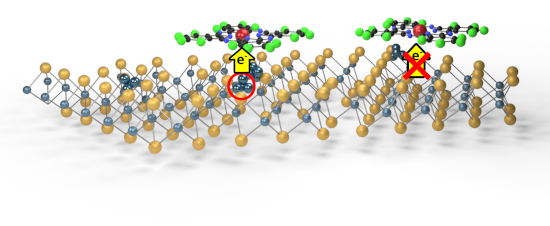
- Fermi energy in such defect-rich MoS2 can be tuned by the subsequent deposition of CoPcF16, which is verified by a shift in Fermi level for the Ne sputtered surface, under complex charge rearrangements including a charge transfer from all the substrates towards the cobalt atom of the organic molecule
- fabrication of ultrafast photodetectors [4][5]. To tune their electronic structure for such applications, the adsorption of organic molecules is a versatile strategy [6][7], resulting, for example, in dipole-induced doping or (complex) charge transfer [8]. Photoelectron spectroscopy (PES), X-ray absorption
- strong local interactions accompanied by (integer) charge transfer [9]. A convenient side effect of this heterostructure is the strong interaction of the central Co atom of CoPcF16 with many metals such as Au, Ag, Cu, or Ni [11][12][13][14][15][16] such that it can be used as a probe for PES studies of


Restorative potential of laser-synthesized silver nanoparticles with Salvia officinalis for periodontal disease treatment: an in vitro study
Beilstein J. Nanotechnol. 2026, 17, 781–795, doi:10.3762/bjnano.17.55
- Transfer, Grant no. 1121). Conflict of Interest The authors declare no conflicts of interest.



Substrate-dependent pore formation in molybdenum disulfide monolayers under ion irradiation
Beilstein J. Nanotechnol. 2026, 17, 769–780, doi:10.3762/bjnano.17.54
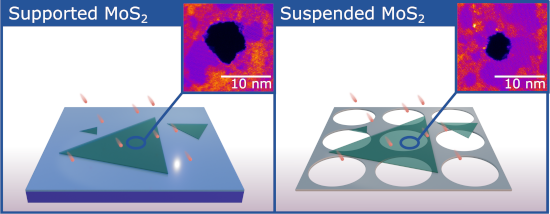
- surface [36][37], whereas SHIs deposit energy continuously along their trajectory via electronic stopping Se. Despite these differences, both ion types couple primarily to the electronic system of the target such that subsequent energy transfer to the lattice is governed by electron–phonon coupling [38
- ]. This may reduce sensitivity to atomic-scale impact parameter compared to the SHI impact. For HCI-irradiated supported samples, additional contributions arise from partial-area irradiation due to transfer-related misalignment (see Supporting Information File 1, Figure S3) and from the contamination
- systematic uncertainty and should therefore be interpreted with caution. These uncertainties arise from the fluence gradient across the beam spot, transfer-related misalignment (Supporting Information File 1, Figure S3) and fluence determination. An additional factor affecting the local efficiency may be


Superconducting artificial neural networks and quantum circuits
Beilstein J. Nanotechnol. 2026, 17, 744–747, doi:10.3762/bjnano.17.51

- of intensive research [14][15]. A superconducting Gaussian neuron implemented as a two-junction interferometer and a detailed analysis of its transfer function are presented in [16]. A promising design of a neuromorphic ANN based on superconducting elements is proposed in [17]. The superconducting
Environmental applications of silver nanoparticles: state-of-the-art review and emerging trends
Beilstein J. Nanotechnol. 2026, 17, 697–736, doi:10.3762/bjnano.17.49
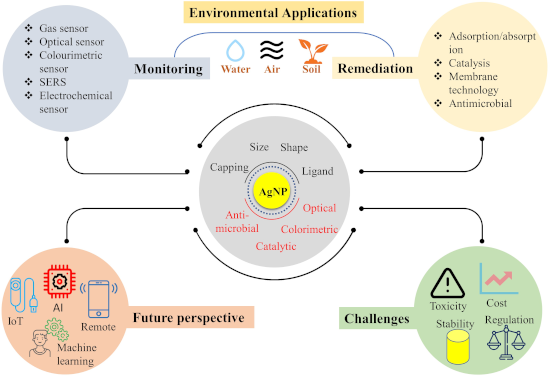
- , donating electrons that lower the activation energy barrier for hydride ion transfer to the substrate. This process follows pseudo-first-order kinetics, with smaller particle sizes (higher surface-to-volume ratio) and electron-rich surfaces (modulated by capping agents) yielding higher apparent rate


Decontamination from water pollutants and pathogens by electrospun nanofibers doped with heavy-atom-free borafluorene-BODIPY photosensitizers
Beilstein J. Nanotechnol. 2026, 17, 668–682, doi:10.3762/bjnano.17.46
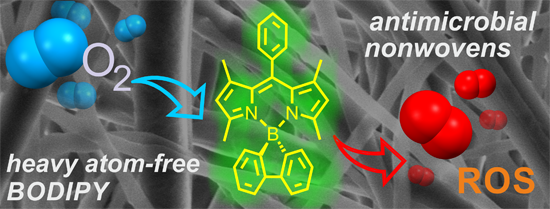
- ) and acceptor (dipyrromethene ligand) sites (Figure 1a) [32][33][34][35]. Importantly, the proposed systems produce triplet states via an alternative to the SOC-ISC mechanism, that is, through a spin–orbit charge transfer intersystem crossing (SOCT-ISC, Figure 1b) resulting from the electron hopping



Cellulose as a photocatalyst support material: extraction, structural features, and environmental applications
Beilstein J. Nanotechnol. 2026, 17, 635–652, doi:10.3762/bjnano.17.44
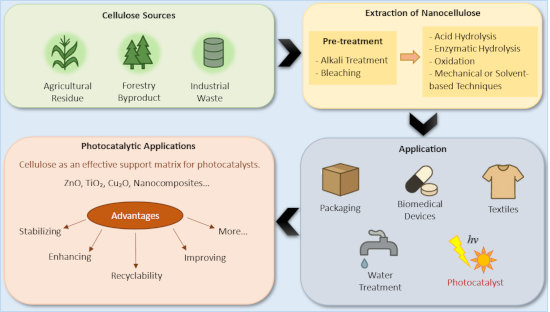
- enhancing charge-transfer dynamics [89]. Recently, nanocellulose has emerged as a promising support material for the synthesis of metal, metal oxide, and non-metallic nanoparticles, and when these components are combined, they often act synergistically to enhance photodegradation processes. Noble and
- photocatalytic nanoparticles, creating favorable conditions for efficient charge transfer and overall reaction performance [90]. In photocatalysis, raw photocatalysts are typically fine nanopowders. They are excellent at using light to degrade pollutants, but they suffer from three major functional flaws. They
- degradation of pollutants [19]. In addition, the optical properties of transparent cellulose-based thin films enhance photocatalytic efficiency as their ability to transmit UV or visible light ensures greater light penetration, which in turn improves electron distribution and transfer to the TiO2 surface


Two-step laser synthesis of Ag@TiO2 nanomaterials for the photocatalytic degradation of rhodamine B
Beilstein J. Nanotechnol. 2026, 17, 622–634, doi:10.3762/bjnano.17.43
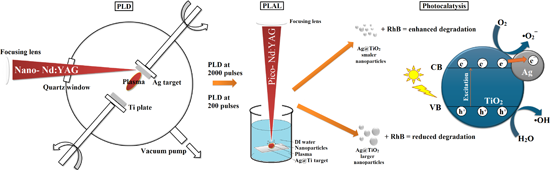
- -order model, which is more typical when the main process is controlled by light absorption and charge carrier transfer rather than surface adsorption. The smaller particle size and higher silver content in the 2000p sample improved electron–hole separation; hence, the reaction was mainly driven by


Recent progress in enhancing built-in electric fields of perovskite solar cells via junction engineering
Beilstein J. Nanotechnol. 2026, 17, 602–621, doi:10.3762/bjnano.17.42
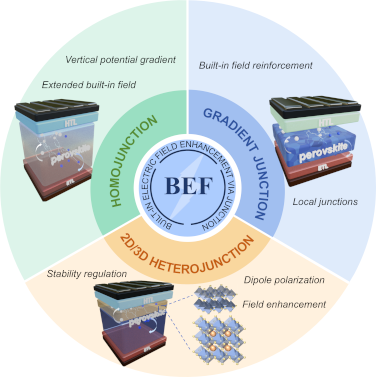
- heterostructures, such as solvent-induced erosion, interdiffusion of components, and interface mixing, recent strategies have focused on transfer-imprinting-assisted growth and hybrid deposition approaches [71][72][73]. Lee et al. [74] proposed a solid-state in-plane growth process, in which solid (BA)2PbBr4



Impacts of annealing on structural and photophysical properties of zinc phthalocyanine adsorbed on graphene
Beilstein J. Nanotechnol. 2026, 17, 576–585, doi:10.3762/bjnano.17.39
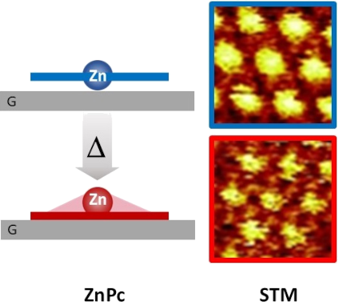
- treatments, as often shown for example with α and β phases of zinc phthalocyanines (ZnPc), with consequences on molecule orientations relative to the substrate and absorbance efficiency [21] or dynamics of charge migration and charge transfer to substrate [22]. Even inside a given phase, minute structural
- variations in phthalocyanine-based materials can strongly impact their absorption and luminescence spectra, in particular by allowing or not the formation of intermolecular Frenkel charge-transfer excitons [23]. 2D assemblies of self-organized adsorbed conjugated molecules on graphene has attracted


Synthesis of Cu–Mo/TiO2 and Co–Mo/TiO2 photocatalysts for the efficient degradation of organic pollutants in water
Beilstein J. Nanotechnol. 2026, 17, 559–570, doi:10.3762/bjnano.17.37
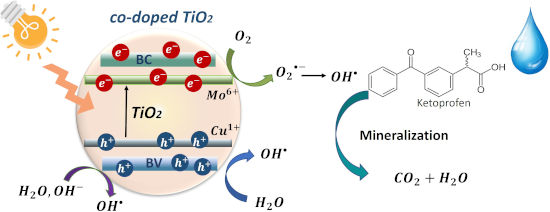
- -doping TiO2 with the high-valence Mo ions and the Cu or Co ions with low valence can be used to address the shortcomings of individual doping systems to optimize charge transfer and reduce recombination. Metal/metal co-doping has not received much attention; however, it is a promising alternative since
- properties were determined. Finally, the photocatalytic behavior of the materials was studied in the photocatalytic oxidation of ketoprofen (KTP) under UV irradiation, with the aim of studying the charge-transfer improvement. Ketoprofen degradation, adsorption, kinetics, and reaction pathways have been



Electrochemical determination of ciprofloxacin using a MIL-101/reduced graphene oxide-modified electrode
Beilstein J. Nanotechnol. 2026, 17, 541–554, doi:10.3762/bjnano.17.35
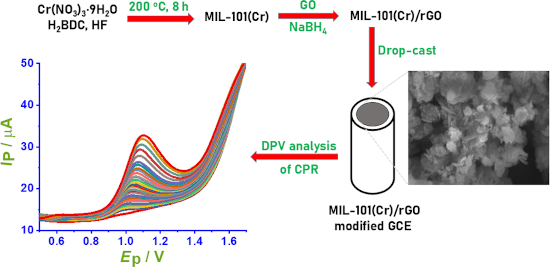
- strong π–π interactions with aromatic compounds like ciprofloxacin [14][15]. Integrating MIL-101 with rGO aims to combine the high surface area and adsorption capacity of MIL-101 with the excellent electrical conductivity and electron-transfer ability of rGO, creating a synergistic effect that boosts the
- electrochemical performance of the composite material. This combination can promote efficient analyte adsorption and fast charge transfer at the electrode interface. Consistent with this idea, Gu et al. reported that MIL-101/rGO composites exhibit enhanced electrocatalytic activity toward the reduction of
- results from both figures confirm the successful formation of MIL-101/rGO composites. This structural combination is beneficial for electrochemical applications because rGO improves electrical conductivity and promotes charge transfer. The Raman spectra of GO, rGO, MIL-101, and the MIL-101/rGO composites


Fractional shot noise of an SU(N) Kondo system
Beilstein J. Nanotechnol. 2026, 17, 515–540, doi:10.3762/bjnano.17.34
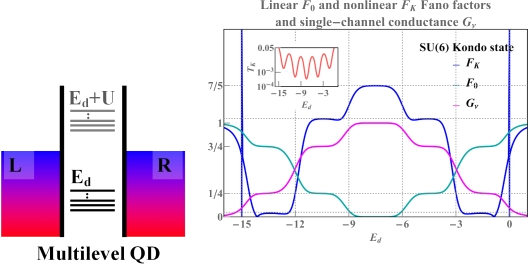
- , 15/8, 12/5, 35/12, …} and bN = {2, 1, 2/3, 1/2, 14/5, …}. is the quadratic Casimir operator in the free pseudospin momentum limit (t = 0). We see that, for Q = 1e, the inter-state charge transfer correlator is Qik = QiQk = 0. Correspondingly, successive values of N reach the numbers TχN ≈ aN. In


![[Graphic 127]](/bjnano/content/inline/2190-4286-17-34-i187.svg?max-width=637&scale=1.18182)

Probing internal continua and atomic ultrafast charge transfer within size-controlled nanoparticles by post-collision interaction in core-hole clock spectroscopy
Beilstein J. Nanotechnol. 2026, 17, 505–514, doi:10.3762/bjnano.17.33
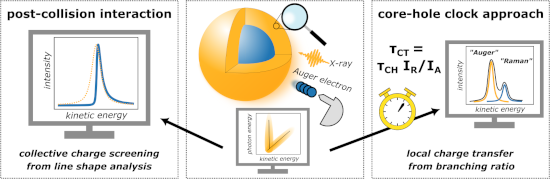
- local charge transfer dynamics and internal continuum states. We observe an acceleration of charge transfer times by almost one order of magnitude in thin-shell quantum dots, comprising only one or three double layers of ZnS, before reaching a size-independent limit. This size-dependence is governed by
- the existence of a faster charge transfer channel toward the CdSe core, only accessible for the inner-most shell layers, rather than a quantum confinement effect. By extending the traditional PCI model from free-electron systems to bound-state continua, we further establish a framework for
- -collision-interaction; quantum dots; resonant Auger spectroscopy; Introduction The interplay of electron localization, itinerance, and charge transfer is essential to functional nanoparticles and quantum dots (QDs) [1][2][3][4][5][6]. In terms of electronic structure properties, materials on the nanoscale



Upcycling agroindustrial waste into graphene oxide supports for gold nanoparticles: toward sustainable nanomaterials
Beilstein J. Nanotechnol. 2026, 17, 489–504, doi:10.3762/bjnano.17.32
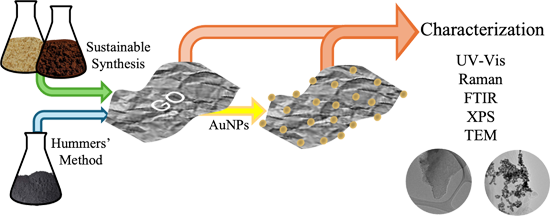
- organic pollutants, including nitroaromatic compounds and dye molecules, under mild reaction conditions [57][58][59]. The synergistic interaction between AuNPs and GO enhances electron transfer, enabling lower noble-metal loading while maintaining high catalytic performance. Furthermore, AuNPs@GO