


Search results
Search for "vibration" in Full Text gives 337 result(s) in Beilstein Journal of Nanotechnology. Showing first 200.
Vibration-induced dynamic structural superlubricity on MoS2/Au(111) under ultrahigh vacuum
Beilstein J. Nanotechnol. 2026, 17, 1039–1046, doi:10.3762/bjnano.17.71
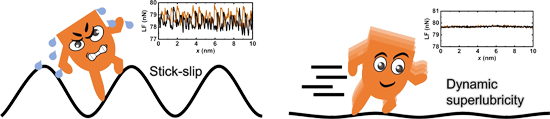
- further evidenced by the individual friction loops shown in the insets. While the lateral force fluctuations are prominent in the unexcited state, they decrease to the noise level when the vibration is active. Quantitatively, the root-mean-square of the lateral force is reduced from 0.5 to 0.06 nN
- , confirming the successful suppression of atomic-scale stick–slip. These results indicate that the external vibration provides sufficient energy for the tip to overcome the local potential barriers. As a result, the tip slides in a nearly continuous manner rather than by stick–slip jumps, marking the onset of
- a dynamic structural superlubricity state. To systematically investigate the frequency dependence of the dynamic structural superlubricity, a frequency sweep from 0 to 625 kHz was performed with 256 sampling points (Figure 2a). The recorded tip vibration amplitude during frequency sweep and the mean


Materials challenges in solid-state sensors for continuous monitoring of ions in water
Beilstein J. Nanotechnol. 2026, 17, 935–973, doi:10.3762/bjnano.17.66


Impacts of annealing on structural and photophysical properties of zinc phthalocyanine adsorbed on graphene
Beilstein J. Nanotechnol. 2026, 17, 576–585, doi:10.3762/bjnano.17.39
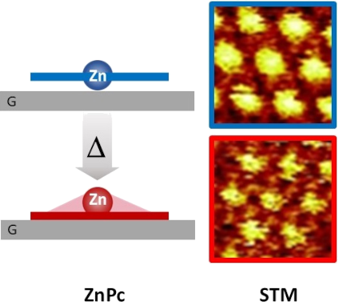
- experimental accuracy (±5 cm−1) limited by the widths of these peaks. However, the two highest-frequency peak intensities are markedly reduced by about 50%, as roughly estimated accounting for fluorescence baseline, whereas the intensity of the lowest-frequency peak remains unchanged. The vibration at 1543 cm
- −1 (B1G symmetry) and that at 1472 cm−1 (A1G symmetry) both involve out-of-plane stretching of C–N–C bonds of the Pc conjugated ring and out-of-plane bending of peripheral C–H [43]. In contrast, the vibration at 1374 cm−1 (B1G symmetry) corresponds to in-plane stretching of C–C bonds of the Pc


Electrochemical determination of ciprofloxacin using a MIL-101/reduced graphene oxide-modified electrode
Beilstein J. Nanotechnol. 2026, 17, 541–554, doi:10.3762/bjnano.17.35
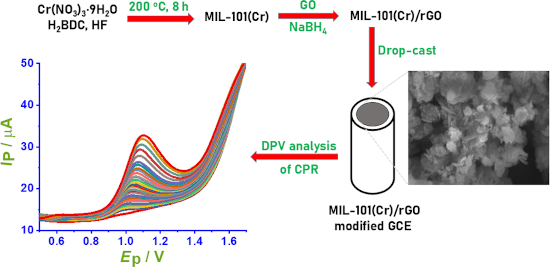
- are presented in Figure 1a,c. As shown in Figure 1c, GO exhibits two characteristic bands at ≈1345 cm−1 (D band) and ≈1599 cm−1 (G band), which are associated with structural defects/disorder and the in-plane vibration of sp2-bonded carbon atoms, respectively [23]. After chemical reduction, rGO shows


Eco-efficient materials for agricultural crops based on a mineral rich in MOR- and HEU-type zeolites
Beilstein J. Nanotechnol. 2026, 17, 381–395, doi:10.3762/bjnano.17.26
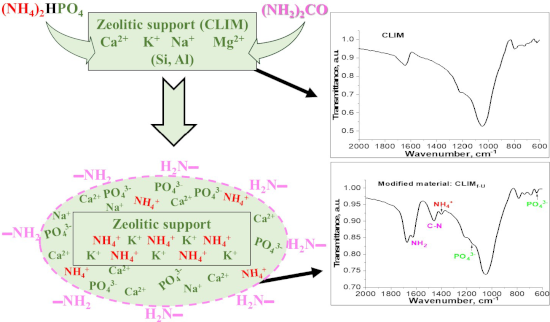
- bending vibration of ammonium ions, namely, a triplet with intense peaks in the 1350–1550 cm−1 range and a less intense doublet in the 1600–1800 cm−1 range, attributed to different types of hydrogen-bonded NH4+ complexes. Studies [20][21] of natural CLI from the Caimanes deposit, Cuba, and its nickel form
- (Ni2+-CLI) treated with ammonium solutions showed FTIR bands at about 1400 and 1443 cm−1, respectively, associated with the N–H bond bending vibration attributed to the NH4+ ion. Yadav et al. [22] studied natural CLI from the Amazon (Dolphin brand, FM-906) using FTIR and reported a high-intensity band
- around 1358 cm−1 associated with the deformation vibration of ammonium. De la Nuez Pantoja et al. [15] detected in the FTIR spectrum of natural clinoptilolite-heulandite (HEU) from the Tasajeras deposit (Cuba), exchanged with ammonium hydrogenhosphate ((NH4)2HPO4, DAP), the presence of a triplet of




Development and in vitro evaluation of liposomes and immunoliposomes containing 5-fluorouracil and R-phycoerythrin as a potential phototheranostic system for colorectal cancer
Beilstein J. Nanotechnol. 2026, 17, 97–121, doi:10.3762/bjnano.17.7
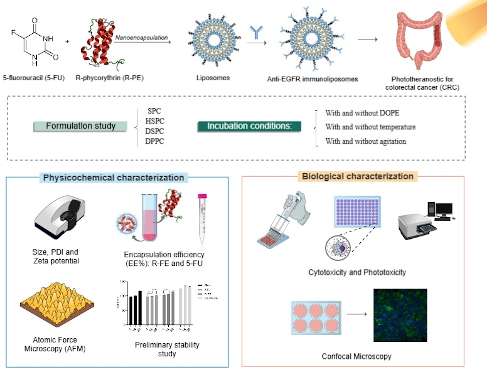
- the polypeptide backbone of the protein. For 5-FU, bands associated with C=O stretching (≈1670 cm−1), N–H stretching (≈3120 cm−1) [64][65][66], and the characteristic C–F vibration (≈1240 cm−1) were also detected [66]. When the spectra of the formulations were compared with those of the free molecules



Improving magnetic properties of Mn- and Zn-doped core–shell iron oxide nanoparticles by tuning their size
Beilstein J. Nanotechnol. 2025, 16, 2285–2295, doi:10.3762/bjnano.16.157
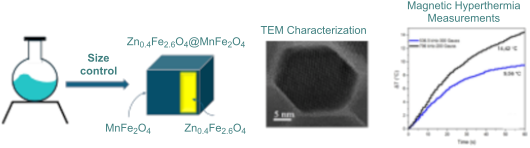
- ferrites, the strong absorption bands corresponding to the Fe–O bonds at tetrahedral and octahedral sites are significantly more intense than the Zn–O and Mn–O vibrational modes, which have lower dipole moment changes during vibration. As a result, the Fe–O vibrations dominate the FTIR spectrum



Rapid synthesis of highly monodisperse AgSbS2 nanocrystals: unveiling multifaceted activities in cancer therapy, antibacterial strategies, and antioxidant defense
Beilstein J. Nanotechnol. 2025, 16, 2105–2115, doi:10.3762/bjnano.16.145
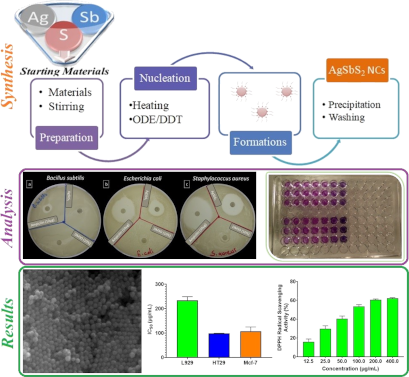
- addition, a weak peak centered around 1315 cm−1 corresponds to the C–H bending mode [36]. The characteristic peak around 1640 cm−1 was assigned to the O–H bending vibration, while the bands appearing in the 2800–3000 cm−1 range were attributed to the symmetric and asymmetric stretching vibrations of CH–H


Multifrequency AFM integrating PeakForce tapping and higher eigenmodes for heterogeneous surface characterization
Beilstein J. Nanotechnol. 2025, 16, 2077–2085, doi:10.3762/bjnano.16.142
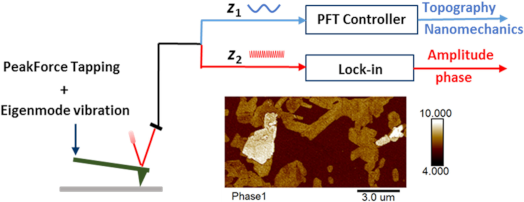
- mappings obtained via the PeakForce tapping method. Furthermore, the technique’s dual capability, that is, quantitative mechanics via quasi-static force curves and qualitative material-sensitive information via eigenmode vibration signals, facilitates effective compositional differentiation in
- the measurement points can be calculated using the contact mechanics models [18][22]. (ii) Concurrently, the piezoelectric actuator PD-II excites the probe at its higher eigenmode, inducing a minor vibration with an amplitude generally beneath 1 nm. This high-eigenmode oscillation amplitude remains
- record its thermal vibration power spectral density. A fit to the fundamental resonance peak, based on the equipartition theorem, yielded the spring constant. Characterization of higher eigenmodes The resonant frequencies of the higher eigenmodes were characterized by performing a frequency sweep using


Stereodiscrimination of guests in chiral organosilica aerogels studied by ESR spectroscopy
Beilstein J. Nanotechnol. 2025, 16, 2034–2054, doi:10.3762/bjnano.16.140
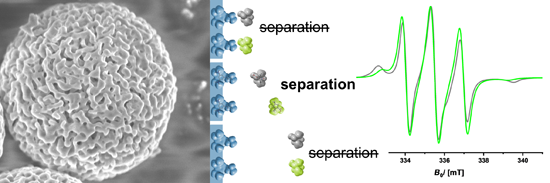
- Bruker Tensor with an ATR unit. All spectra were background-corrected and normalized to the Si–O–Si vibration. N2 physisorption measurements were performed with a Micromeritics Tristar 3020 at −196 °C. Prior to analysis, the samples were degassed at 60 °C for 12 h. Solid-state NMR spectra were recorded




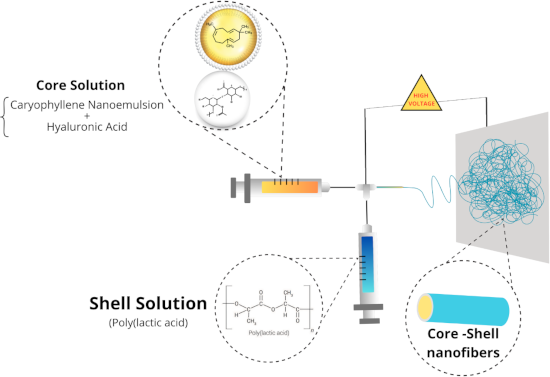
Beyond the shell: exploring polymer–lipid interfaces in core–shell nanofibers to carry hyaluronic acid and β-caryophyllene
Beilstein J. Nanotechnol. 2025, 16, 2015–2033, doi:10.3762/bjnano.16.139
- -PLA, NF-HA/PLA, and NF-HA+NE2/PLA) exhibited PLA-specific bands at 2995, 2946, 1759, and 1089 cm−1, corresponding to the asymmetric stretching vibration of –CH3, symmetric stretching of –CH3, and stretching vibrations of C=O and C–O, respectively [62]. The HA powder spectrum displayed bands at 3300




Low-temperature AFM with a microwave cavity optomechanical transducer
Beilstein J. Nanotechnol. 2025, 16, 1873–1882, doi:10.3762/bjnano.16.130
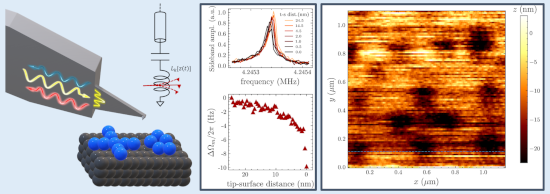
- can therefore be made light and compact, significantly reducing their susceptibility to external vibrations, the complexity of vibration isolation, and their thermal mass. For this prototype, we implement a rather simple vibration isolation which, as we will show, is sufficient to demonstrate imaging


Laser processing in liquids: insights into nanocolloid generation and thin film integration for energy, photonic, and sensing applications
Beilstein J. Nanotechnol. 2025, 16, 1428–1498, doi:10.3762/bjnano.16.104
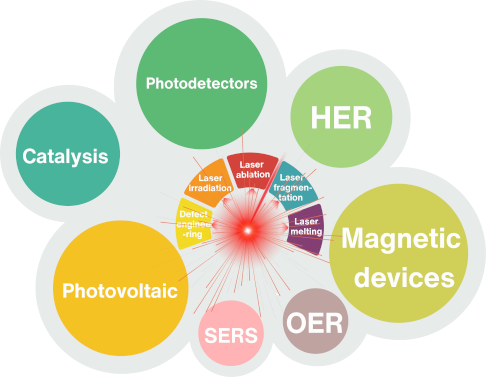
- achievable for conventional drop casting, making it less suitable for precision coating or device fabrication [121][122]. However, Eslamian et al. have reported substrate vibration-assisted drop casting, where drop casting combined with ultrasonic substrate vibration offers enhanced controllability. A small
- volume of precursor solution, characterized by low surface tension, is released from a capillary tube either by dripping with negligible initial velocity or by injection with an initial velocity. The droplet is then directed toward the substrate, where the ultrasonic vibration aids in controlling the






Photochemical synthesis of silver nanoprisms via green LED irradiation and evaluation of SERS activity
Beilstein J. Nanotechnol. 2025, 16, 1417–1427, doi:10.3762/bjnano.16.103
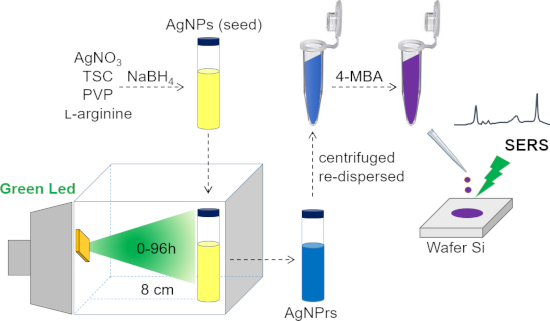
- (Figure 7a) displays two dominant peaks at 1088 and 1596 cm−1, corresponding to the stretching vibrations of the aromatic ring. Weaker peaks are observed at 1182 and 1292 cm−1, attributed to C–H stretching, and at 805 cm−1, corresponding to the bending vibration of the carboxylate group (COO−) [20][21


Piezoelectricity of hexagonal boron nitrides improves bone tissue generation as tested on osteoblasts
Beilstein J. Nanotechnol. 2025, 16, 1068–1081, doi:10.3762/bjnano.16.78
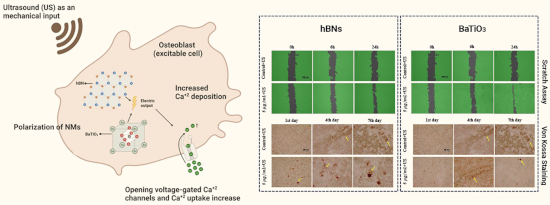
- morphology with varying sizes between 50–100 nm, consistent with the literature [42]. Three characteristic peaks of hBNs on the FTIR spectrum in Supporting Information File 1, Figure S3 (c) appeared at 1363, 785, and 661 cm−1, attributed to the in-plane B–N stretching vibration, B–N bonding, and B–N–B out-of
- -plane bending vibration, respectively [43]. The broad band at 3200 cm−1 could be attributed to stretching vibrations of hydroxyl groups (O–H) of hBNs or humidity. Supporting Information File 1, Figure S3 (d) displays the Raman spectrum of hBNs, which reveals a dominant peak at 1367 cm−1, in line with
- attributed to OH-stretching and OH-deformation vibrations due to moisture content, respectively [51]. The Raman spectrum, displayed in Supporting Information File 1, Figure S4 (b), revealed the presence of Raman active vibration modes of BaTiO3 in its tetragonal phase, indicating its polycrystalline nature


Shape, membrane morphology, and morphodynamic response of metabolically active human mitochondria revealed by scanning ion conductance microscopy
Beilstein J. Nanotechnol. 2025, 16, 951–967, doi:10.3762/bjnano.16.73
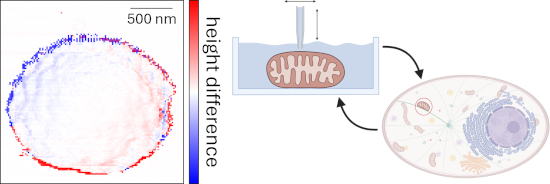
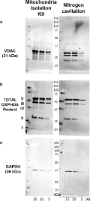
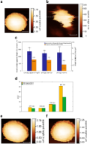
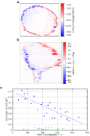
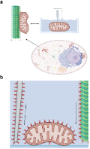
- metabolically driven vibration modes [47], ferroelectricity [48], resonant ionic conductance, and memristive behaviour [49]. Mitochondrial morphodynamics respond to the proximity and orientation of microtubules. Non-spherical mitochondria near microtubules align their long axes with those of the microtubules



Heat-induced transformation of nickel-coated polycrystalline diamond film studied in situ by XPS and NEXAFS
Beilstein J. Nanotechnol. 2025, 16, 887–898, doi:10.3762/bjnano.16.67
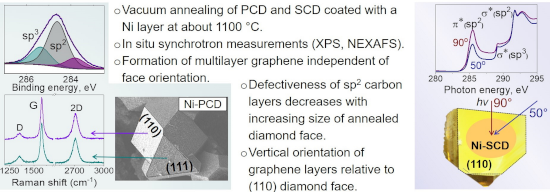
- D and 2D bands. The D band represents the disordered vibration modes of graphitic hexagonal layers, and the 2D band originates from the second-order double-resonant scattering process. In general, the quality of graphene layers can be evaluated by the ratio of the intensities of the D and G peaks


Supramolecular hydration structure of graphene-based hydrogels: density functional theory, green chemistry and interface application
Beilstein J. Nanotechnol. 2025, 16, 806–822, doi:10.3762/bjnano.16.61
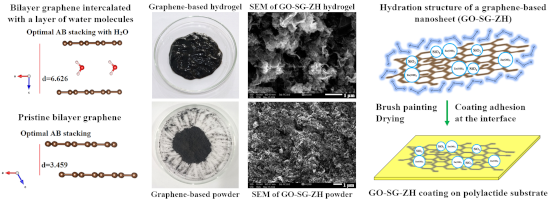
- of GO and SG nanomaterials had amorphous structures which did not give obvious peaks in the XRD pattern. Regarding the FTIR spectrum in Figure 6b, most of obvious peaks are attributed to functional groups of nanosilica. The vibration band at 3772.1 cm−1 is assigned to silanol groups on the nanosilica
- cm−1 is attributed to the bending vibration of Zn-O-Si bonds in the GO-SG-ZH nanocomposite [44]. Supramolecular systems with non-covalent interactions and reversible cross-links are recognized to provide extraordinary properties and applications [45][46][47]. Reversible self-assembly is an advantage


Changes of structural, magnetic and spectroscopic properties of microencapsulated iron sucrose nanoparticles in saline
Beilstein J. Nanotechnol. 2025, 16, 762–784, doi:10.3762/bjnano.16.59
- , FS0-related bands associated with COO− stretching modes were separated into asymmetric (1588 cm−1) and symmetric (1451 cm−1) stretching, C–O stretching vibration (1345 cm−1), and glycosidic ring breathing mode (1133 cm−1) [65]. After immersion in physiological salt (NaCl) solution, these bands were
- upshifted while the full width at half maximum simultaneously increased by approx. 5 cm−1 (Figure 10). Conversely, the Raman spectrum of FST featured asymmetric and symmetric COO−-related bands (1598, 1480 cm−1), C–O stretching vibration (1363 cm−1), and glycosidic ring breathing mode (1196 cm−1) [65]. One





Synthesis of a multicomponent cellulose-based adsorbent for tetracycline removal from aquaculture water
Beilstein J. Nanotechnol. 2025, 16, 728–739, doi:10.3762/bjnano.16.56
- characteristic of cellulose. These results are consistent with previous findings on commercial CMC [23][24]. Owing to lateral bonding, the characteristic peaks of CMC remain observable but exhibit shifts. For example, the alkyl group vibration peak shifts to 1424 cm−1, while the C‒O‒C stretching vibration peaks
- shift to 883 and 1105 cm−1. Meanwhile, the hydroxy group vibration peak becomes broader and less intense, shifting to the 3240‒3386 cm−1 region, suggesting the involvement of ‒OH groups in cross-linking. The intensity of the peak at 1325 cm−1 decreases significantly, while the peak at 1620 cm−1


The impact of tris(pentafluorophenyl)borane hole transport layer doping on interfacial charge extraction and recombination
Beilstein J. Nanotechnol. 2025, 16, 678–689, doi:10.3762/bjnano.16.52
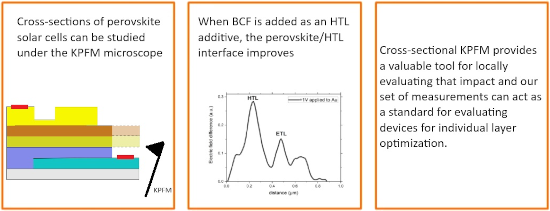
- , we employed heterodyne-KPFM [55], whereby we mechanically excited the cantilever at its first resonant frequency, f1, and electrically excited at a frequency of (f2–f1), where f2 is the second resonant frequency [56]. Frequency mixing between the mechanical vibration at f1 and the electrostatic force


Colloidal few layered graphene–tannic acid preserves the biocompatibility of periodontal ligament cells
Beilstein J. Nanotechnol. 2025, 16, 664–677, doi:10.3762/bjnano.16.51
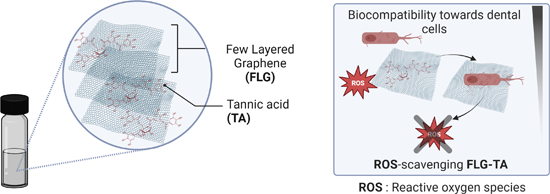
- S1B, Supporting Information File 1) shows that they are spherical and that they remodel into clusters on the surface. Raman spectra recorded for the initial graphite and the synthesized FLG–TA exhibits typical D, G, and 2D vibration bands centered at 1355, 1583, and 2720 cm−1, respectively. It is




Quantification of lead through rod-shaped silver-doped zinc oxide nanoparticles using an electrochemical approach
Beilstein J. Nanotechnol. 2025, 16, 422–434, doi:10.3762/bjnano.16.33
- 2854 cm−1 relate to the stretching vibration of carbon and hydrogen bonds. The peaks at 1030 and 1380 cm−1 are related to vibrational or in-plane bending of residual ethanol which was used for washing the nanoparticles and KBr pellet die set (used for pellet making for FTIR) [18][19]. Optical study of





ReactorAFM/STM – dynamic reactions on surfaces at elevated temperature and atmospheric pressure
Beilstein J. Nanotechnol. 2025, 16, 397–406, doi:10.3762/bjnano.16.30
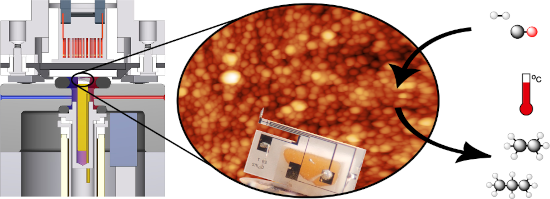
- damping for vibration isolation. The sample holder (highlighted in blue in Figure 2a is inserted by locking the spring mechanism with the locking bellow and then fixed to the microscope by inflating the “reactor” bellow. The substrate can be heated from behind by electron bombardment using a tungsten
- tip displacement and vibration modes that might occur for tip heights longer than 400 μm [22]. A Pt/Ir tip is chosen such that it does not oxidize in reaction conditions. Electronics and data acquisition The tunneling current is collected using a preamplifier (DLPCA-200 preamp, Femto Messtechnik GmbH
- assembly with vibration isolation, mounted on a CF-200 flange. Figure 2a was reproduced from [11], © 2014 C. T. Herbschieb et al., published by AIP Publishing, distributed under the terms of the Creative Commons Attribution 3.0 Generic License, https://creativecommons.org/licenses/by/3.0). (b) Detailed


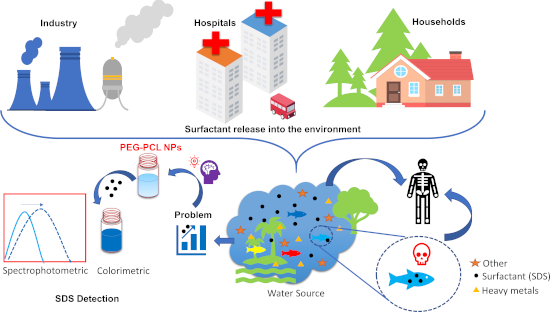
Engineered PEG–PCL nanoparticles enable sensitive and selective detection of sodium dodecyl sulfate: a qualitative and quantitative analysis
Beilstein J. Nanotechnol. 2025, 16, 385–396, doi:10.3762/bjnano.16.29
- PCL segments. The absorption band at 1628 cm−1 represents the characteristic C=O stretching vibration of the ester groups in PCL blocks. The peak at 1510 cm−1 can be assigned to the C–H bending vibrations of the methylene groups. The peaks at 1336 and 1273 cm−1 correspond to the C–O and C–C stretching





