Search results
Search for "DSC" in Full Text gives 72 result(s) in Beilstein Journal of Nanotechnology.
Sulfur-, nitrogen- and platinum-doped titania thin films with high catalytic efficiency under visible-light illumination
Beilstein J. Nanotechnol. 2018, 9, 1629–1640, doi:10.3762/bjnano.9.155
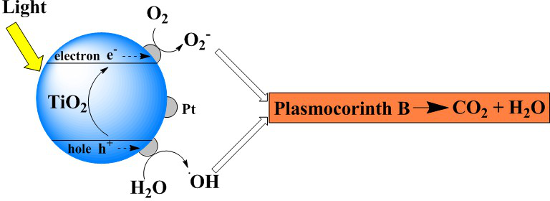
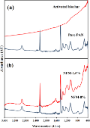
- (ammonium nitrate, urea), sulfur (thiourea) and platinum (chloroplatinic acid), coated onto glass substrates by dip-coating, and thermally treated in a muffle furnace to promote crystallization. The resulting thin films were then characterized by various techniques (i.e., TGA-DSC-MS, XRD, BET, XPS, SEM
- dispersions [45]. The prepared samples were analyzed using thermogravimetric analysis–differential scanning calorimetry–mass spectrometry (TGA-DSC-MS), X-ray diffraction spectroscopy (XRD), specific surface area measurements via Brunauer–Emmett–Teller method (BET), X-ray photoelectron spectroscopy (XPS
- determined by XPS measurements. The platinum in sample S3_N0.5+0.015 M Pt was added as the final layer in the form of chloroplatinic acid by dip-coating. The last number describes molar concentrations of the deposited solution. Thermal analysis The purpose of thermal analysis measurements (TGA-DSC-MS) was to


Closed polymer containers based on phenylboronic esters of resorcinarenes
Beilstein J. Nanotechnol. 2018, 9, 1594–1601, doi:10.3762/bjnano.9.151
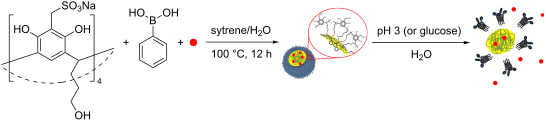
- ). The integrals of proton signals in the 1H NMR spectrum at 1.0–4.5 ppm indicate that p(SRA-B) contains one polystyrene unit per one SRA fragment, i.e., the polystyrene fraction is about 11 wt % of p(SRA-B). According to differential scanning calorimetry (DSC) data, p(SRA-B) is thermally more stable
- than SRA. The DSC curve of SRA exhibits two differential peaks at 100 and 310 °C. The first peak corresponds to water loss. The second one is the thermal decomposition of SRA. In contrast to SRA, the second small peak appears only at 400 °C in the DSC profile of p(SRA-B) (see Supporting Information
- pulsed gradient unit capable of producing magnetic-field pulse gradients in the z-direction of about 56 G/cm. D2O was used as solvent in all experiments. Chemical shifts were reported relative to H2O (δ = 4.7 ppm) as an internal standard. Measurements by the DSC and TGA methods were carried out with a


Induced smectic phase in binary mixtures of twist-bend nematogens
Beilstein J. Nanotechnol. 2018, 9, 1297–1307, doi:10.3762/bjnano.9.122
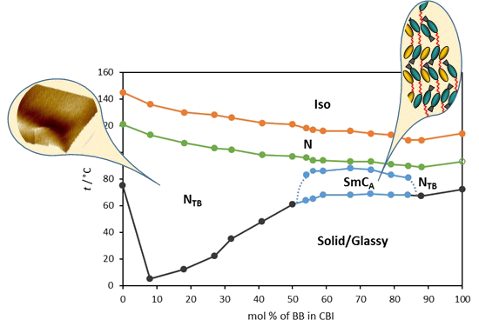
- , obtained by atomic force microscopy (AFM) imaging, is in the range of 6–7 nm. The induction of the smectic phase in the mixtures containing 55–80 mol % of BB was confirmed using polarising optical microscopy (POM), differential scanning calorimetry (DSC) and X-ray diffraction. The origin of the
- modulations in NTB phase is extremely short, just about 6–7 nm. Results and Discussion Mesogenic properties of the pure compounds CBI and BB are presented in Table 1. The transition temperatures are determined by differential scanning calorimetry (DSC) and correspond to the data reported previously [16][18
- compounds and their mixtures were taken from the second DSC cooling run. This resulted in a slight lowering of the transition temperatures for the pure compounds comparable to the data obtained during the heating cycle (Table 1). The nature of the phase in various mixtures was identified by its




Formation and development of nanometer-sized cybotactic clusters in bent-core nematic liquid crystalline compounds
Beilstein J. Nanotechnol. 2018, 9, 1288–1296, doi:10.3762/bjnano.9.121
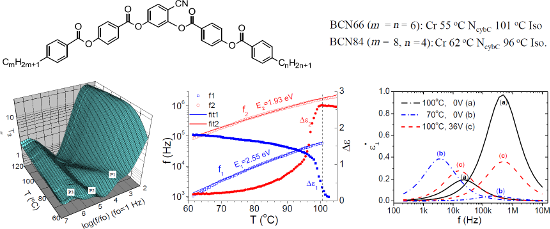
- cooling under quasi-equilibrium conditions at a rate of ≈1 K min−1, ΔH was taken from DSC upon cooling (10 K min−1). (a) Dielectric loss spectra (ε″) of a planar cell of cell thickness d = 7.8 µm in the frequency range 100 Hz–10 MHz and a temperature range of 60–120 °C. Measurements were carried out upon


P3HT:PCBM blend films phase diagram on the base of variable-temperature spectroscopic ellipsometry
Beilstein J. Nanotechnol. 2018, 9, 1108–1115, doi:10.3762/bjnano.9.102
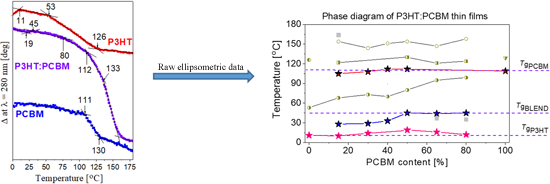
- temperatures using a DSC 2920 apparatus (TA Instruments, Newcastle, DE, USA), with aluminum sample pans. Thermal characteristics of the samples were obtained under nitrogen atmosphere (gas flow = 50 mL/min). The instrument was calibrated with high-purity indium and gallium standards. DSC measurements have been
- all those thermal transitions we have performed DSC studies on powder materials (P3HT and PCBM) and on the P3HT:PCBM (1:1) film scrapped off a glass substrate. The results of the calorimetric measurements with a constant heating rate of 20 °C/min are shown in Figure 5. A modest number of
- for PCBM show Tg at 124.03 °C and two peaks of exothermic crystallization processes with maxima at 191.08 °C and at 265.44 °C. Also, the subsequent melting endotherm with a sharp minimum at 284.53 °C is visible. Having determined phase transitions from the DSC measurements, we return to our


Synthesis and characterization of two new TiO2-containing benzothiazole-based imine composites for organic device applications
Beilstein J. Nanotechnol. 2018, 9, 721–739, doi:10.3762/bjnano.9.67
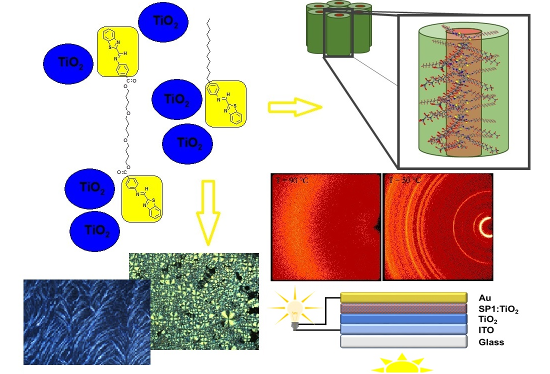
- leaving only a broad halo at 4.6 Å. Both compounds were widely investigated by differential scanning calorimetry (DSC) and polarizing optical microscopy (POM) to describe its thermal behavior taking into consideration the different symmetry of SP1 and SP2. POM images registered at heating and cooling for
- SP1 and SP2 are shown in Figure 5. Asymmetrical imine SP2 exhibited a higher melting point (mp 78.39 °C) than symmetrical SP1 (mp 66.31 °C). DSC curves of SP2 exhibited two peaks (see Figure 6), where the most intense one is attributed to the phase transition into isotropic liquid. However, the less
- intense peak at lower temperature is connected with the transition between two crystalline phases. For SP1 there is only one texture and one peak at 66.31 °C in the DSC curve on heating with the rate of 10 °C/min. Additionally, SP1 was measured during heating and cooling with increasing rates, because at






Photocatalytic and adsorption properties of TiO2-pillared montmorillonite obtained by hydrothermally activated intercalation of titanium polyhydroxo complexes
Beilstein J. Nanotechnol. 2018, 9, 364–378, doi:10.3762/bjnano.9.36
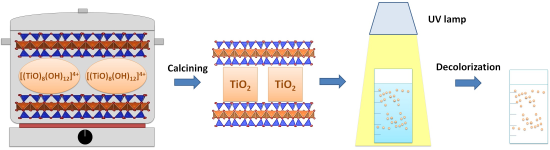
- close to the sol formation limit. The materials, produced at various annealing temperatures from the intercalated samples, were characterized by infrared spectroscopy, differential scanning calorimetry (DSC)/thermogravimetric analysis (TGA), X-ray diffraction, dynamic light scattering (DLS) measurements
- titanium dioxide. The results of a synchronous (thermogravimetric analysis (TGA) and differential scanning calorimetry (DSC)) thermal analysis of the samples are shown in Figure 4. As seen in Figure 4, the MM, Ti-MM and Ti-MMH samples yield similar thermogravimetric curves, in which the loss of mass for
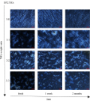
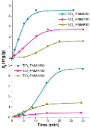
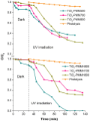
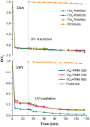
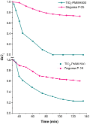
- analysis (TGA)/differential scanning calorimetry (DSC) curves of the raw MM, Ti-MM, and Ti-MMH. SEM images and EDS spectra of the surface of (a) TiO2-PMM500, and (b) TiO2-PMMH500. Nitrogen adsorption/desorption isotherms (а) and pore size distribution (b) of the raw MM, TiO2-PMMx, and TiO2-PMMHx. Kinetic






Design of polar self-assembling lactic acid derivatives possessing submicrometre helical pitch
Beilstein J. Nanotechnol. 2018, 9, 333–341, doi:10.3762/bjnano.9.33
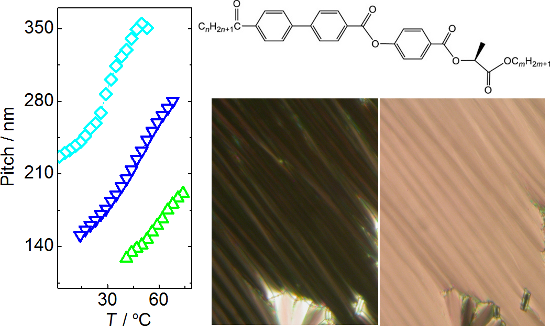
- studied compounds KL n/m are summarised in Table 1. The differential scanning calorimetry (DSC) heating/cooling runs of two selected compounds, as examples, are presented in Figure 1. All compounds exhibit broad temperature ranges of the orthogonal paraelectric SmA* (up to 100 K) and tilted ferroelectric
- improved by electric field action in the frequency range of 10–20 Hz and an amplitude of 40 kV·cm−1, applied for about 5–20 min while cooling from orthogonal to tilted smectic phase. The samples, hermetically sealed in aluminium pans of 3–5 mg, were used for DSC studies. Mesomorphic properties For all
- control, which enabled temperature stabilisation within ±0.1 K. The phase transition temperatures were checked by DSC (Perkin-Elmer DSC 8000) on cooling/heating runs at a rate of 5 K·min−1 in a nitrogen atmosphere. The temperature and enthalpy change values were calibrated on the extrapolated onset


Dielectric properties of a bisimidazolium salt with dodecyl sulfate anion doped with carbon nanotubes
Beilstein J. Nanotechnol. 2018, 9, 164–174, doi:10.3762/bjnano.9.19
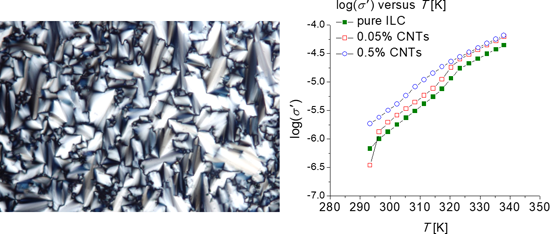
- characterized by 1H NMR, 13C NMR and IR spectroscopy. Its liquid crystalline properties were analyzed by polarizing optical microscopy (POM), differential scanning calorimetry (DSC) and powder X-ray diffraction (XRD) studies. The dielectric spectra of the ILC doped with different concentrations of carbon
- assignment of a SmA phase. ILCs are well known to exhibit predominantly lamellar phases, with the SmA phase being the most common phase for such materials, in particular due to electrostatic interactions and ion–ion stacking in ILCs. Differential scanning calorimetry (DSC) The transitions and their
- corresponding temperatures together with the enthalpy values associated to these processes are presented in Figure 3. The transitions of [bisC8ImC10][C12H25OSO3]2 between mesophase and isotropic state observed by DSC are broad, with Tonset = 321.15 K. The temperature range of the liquid crystalline phase is


One-step chemical vapor deposition synthesis and supercapacitor performance of nitrogen-doped porous carbon–carbon nanotube hybrids
Beilstein J. Nanotechnol. 2017, 8, 2669–2679, doi:10.3762/bjnano.8.267
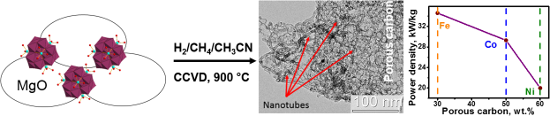
- in the differential scanning calorimetry (DSC) curves are indicative of a variety of carbon nanostructures. In the case of the sample produced using the Fe/Mo catalyst, the DSC curve showed two distinct exothermic peaks at 540 and 570 °С (Figure S5c in Supporting Information File 1), which could be


Synthesis of [{AgO2CCH2OMe(PPh3)}n] and theoretical study of its use in focused electron beam induced deposition
Beilstein J. Nanotechnol. 2017, 8, 2615–2624, doi:10.3762/bjnano.8.262
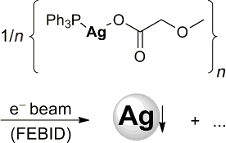
- O2CCH2OMe− is generated, further following the first fragmentation route. However, at 1.3 eV the initial step is decarboxylation giving [AgCH2OMe(PPh3)], followed by Ag–P and Ag–C bond cleavages. Keywords: DFT; DSC; FEBID; silver(I) carboxylate; solid-state structure; TGA; Introduction Focused electron
- system with a UMX1 balance. The TG, DSC and TG–MS experiments were performed with a Mettler Toledo TGA/DSC1 1600 system with a MX1 balance coupled with a Pfeiffer Vacuum MS Thermostar GSD 301 T2 mass spectrometer. EI and high-resolution ESI mass spectra were recorded with a Finnigan MAT 8230 SQ
- ), thermogravimetry-coupled mass-spectrometry (TG–MS) and by differential scanning calorimetry (DSC). The corresponding TG/DTG and DSC traces of 1 (argon, temperature range 100–500 °C, heating rate 10 °C min−1) are depicted in Figure 2. The decomposition of 1 occurs in consecutive steps, which were quantified with a


In situ controlled rapid growth of novel high activity TiB2/(TiB2–TiN) hierarchical/heterostructured nanocomposites
Beilstein J. Nanotechnol. 2017, 8, 2116–2125, doi:10.3762/bjnano.8.211
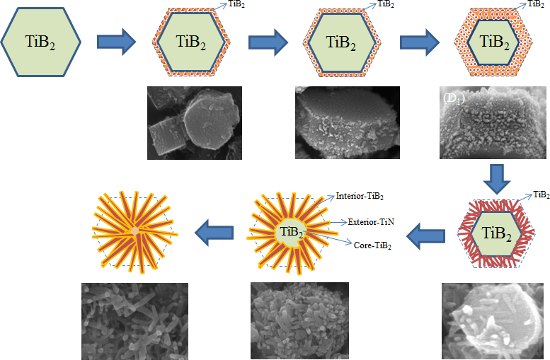
- and TiN, respectively. Additionally, a thermogravimetric and differential scanning calorimetry analyzer (TG-DSC) comparison analysis indicated that the as-synthesized samples presented better chemical activity than that of commercial TiB2 powders. Finally, the possible chemical reactions as well as
- /heterostructured nanocomposites, thermogravimetric and differential scanning calorimetry analyzer (TG-DSC) thermal analysis comparison experiments have been employed in flowing air. Figure 6a–c shows the TG-DSC results of three representative samples (#1 commercial high purity TiB2 powders with an average particle
- size of 5 μm, #2 TiB2/(TiB2–TiN) powders of 0% endothermic rate with an average particle size of 0.9 μm, #3 TiB2/(TiB2–TiN) powders of 40% endothermic rate with an average particle size of 0.15 μm). Table 1 also summarizes the major related TG-DSC results and the average particle sizes of the samples


Preparation and characterization of polycarbonate/multiwalled carbon nanotube nanocomposites
Beilstein J. Nanotechnol. 2017, 8, 2026–2031, doi:10.3762/bjnano.8.203
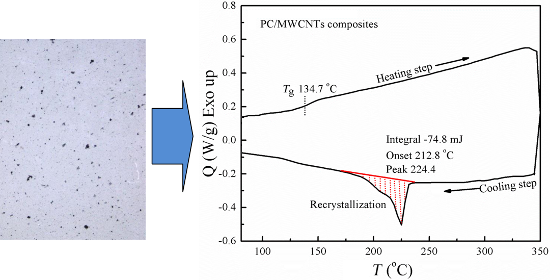
- of MWCNTs on the structure and properties of the composites. The nanocomposites were characterized by DSC, DTA, TGA, UV–vis, FTIR and Raman spectroscopy to evaluate the changes induced by the filler in the polymer matrix. UV–vis, FTIR and Raman spectroscopy measurements confirmed the presence of the
- dispersed phase in the composite films, while TGA and DSC analysis of the nanocomposites revealed enhanced thermal stability and decreased crystallinity, respectively, as compared to the neat polymer. The proposed composites can find application in a number of everyday products where polycarbonate is the
- . Instrument calibration was performed using silicon samples. To investigate the stability, purity and thermal resistance of the materials, thermogravimetric analysis (TGA) was used [11][12][13][14] (TGA/DSC-1, Mettler-Toledo, Italy). Simultaneous differential thermal analysis (DTA) was used to characterize


Luminescent supramolecular hydrogels from a tripeptide and nitrogen-doped carbon nanodots
Beilstein J. Nanotechnol. 2017, 8, 1553–1562, doi:10.3762/bjnano.8.157
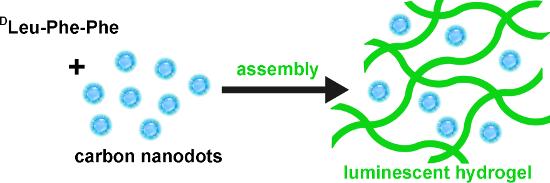
- by rheometry, fluorescence, circular dichroism (CD), FTIR spectroscopy, transmission electron microscopy (TEM), and differential scanning calorimetry (DSC). Given that this tripeptide is capable of forming a hydrogel with mild antimicrobial activity and a lack of cytotoxicity in vitro [26], this new
- –peptide hydrogels The NCND–peptide hydrogels were assessed for their thermal stability by means of differential scanning calorimetry (DSC) and circular dichroism (CD) with a heating ramp from room temperature up to complete disappearance of the CD signal (see Supporting Information File 1). DSC did not
- evaporation of residual buffer solution. It is worth noting that the DSC data of similar peptides and amyloids often display multiple minima that are not always discernible and result in wide, asymmetric endotherms; besides the gel-to-sol transition, other minima in the range of 80–85 °C can be ascribed to


Miniemulsion copolymerization of (meth)acrylates in the presence of functionalized multiwalled carbon nanotubes for reinforced coating applications
Beilstein J. Nanotechnol. 2017, 8, 1328–1337, doi:10.3762/bjnano.8.134
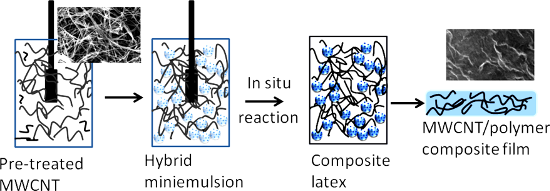
- microscopy (SEM) images were taken in a Hitachi S-4800. Differential scanning calorimetry (DSC) measurements of films cast from hybrid latexes and blends were carried out in a Q1000, TA Instruments apparatus. 5 mg of each sample were placed in standard aluminum DSC pans and analyzed in air atmosphere at a
- white arrows in Figure 3d, under higher magnification). In Table 3, the glass transition temperatures (Tg) of the neat polymer and the polymer composites determined by DSC are presented. The neat polymer and simple blends of the neat polymer and the air-sonicated MWCNTs were used as reference samples
- supported by the fact that aging did not vary the results of the DSC measurements, whereas for the neat polymer samples and blends, the 90 ºC peak disappeared through microphase mixing (Figure S2, Supporting Information File 1). Figure 4a shows that the addition of MWCNTs (0.5 wt %) to the polymer resulted


Atomic structure of Mg-based metallic glass investigated with neutron diffraction, reverse Monte Carlo modeling and electron microscopy
Beilstein J. Nanotechnol. 2017, 8, 1174–1182, doi:10.3762/bjnano.8.119
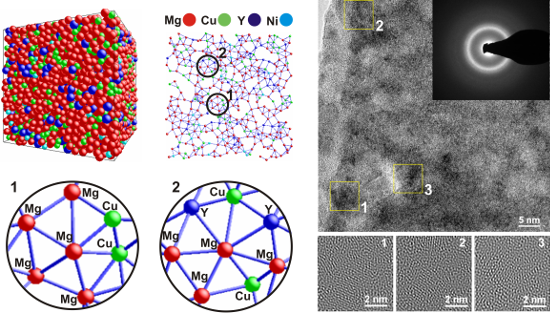
- ) temperatures of the studied samples were determined by differential scanning calorimetry (DSC) in the temperature range from 350 to 600 K at a constant heating rate of 20 K/min under argon atmosphere. The reverse Monte Carlo (RMC) calculations were carried out by fitting to the ND S(Q) function using the
- assumed as a representation of six-fold coordinated numbers, while the configuration shown in Figure 5d is characteristic for seven-fold coordination, which can also be found in the distribution of N exhibited in Figure 4. Figure 6 shows the DSC curve of the Mg65Cu20Y10Ni5 ribbon sample. The sample was
- . Figure 7 presents a high-resolution transmission electron microscope (HRTEM) image and corresponding selected area electron diffraction (SAED) patterns of a sample that was annealed at 473 K for 1 h. The annealing temperature was selected based on the results of the DSC measurements. The SAED image




Preparation of thick silica coatings on carbon fibers with fine-structured silica nanotubes induced by a self-assembly process
Beilstein J. Nanotechnol. 2017, 8, 1145–1155, doi:10.3762/bjnano.8.116
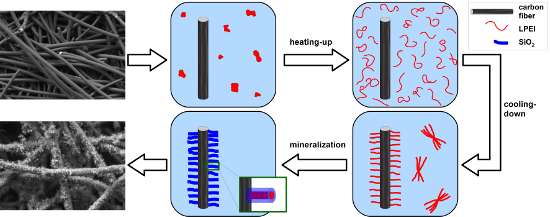
- , composed of bundled silica nanotubes and nanoribbons [17][18]. The diameter of these silica building units is restricted by the nature of LPEI, ranging from 30 to 150 nm [16]. It was deduced from DSC and XRD measurements that the linear LPEI aggregates consist of a crystalline core, which functions as a


Fully scalable one-pot method for the production of phosphonic graphene derivatives
Beilstein J. Nanotechnol. 2017, 8, 1094–1103, doi:10.3762/bjnano.8.111
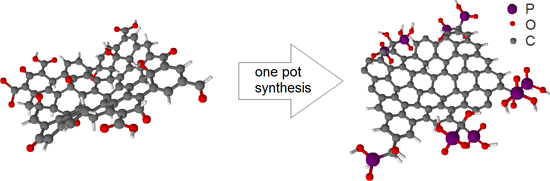
- hazardous waste. Finally, after ball milling for two days the resultant carbonaceous material is rather high-surface-area graphite than graphene. Thermogravimetric (TG) analysis with differential scanning calorimetry (DSC) provided information about thermal stability of GO and GO-P and allowed for an
- temperature range of 300–900 °C is similar for both samples, showing that after detachment of functional groups a similar decomposition of carbonaceous material occurs. The DSC analysis also revealed differences in thermal properties of the studied samples. The DSC profile of GO and functionalized GO is not
- frequently reported. Figure 9 shows the DSC and the DDSC (derivative of DSC) curves for both samples. This is the first time that a phosphonated graphene derivative is studied by DSC. For comparison, the DSC results of the GO sample are shown (Figure 9A). It should be noted that for both samples the peaks


First examples of organosilica-based ionogels: synthesis and electrochemical behavior
Beilstein J. Nanotechnol. 2017, 8, 736–751, doi:10.3762/bjnano.8.77
- . Simultaneous thermogravimetric analysis-differential thermal analysis (TGA-DTA) experiments were done on a Linseis L81 thermal balance and on a Linseis STA PT-1600 thermal balance in air from 20 to 900 °C with a heating rate of 10 °C/min. Differential scanning calorimetry (DSC) measurements were done on a
- Netzsch DSC 204. DSC traces were recorded from −150 to 200 °C using liquid nitrogen cooling and a heating rate of 10 °C/min. Isothermal times were 5 min. Samples of ca. 5 mg were placed in aluminum pans with pierced lids. To remove traces of water the samples were heated to 120 °C before the first cooling
- weight (not considering the contribution of the organic linker moiety in the organosilica host) and 10 to 15% of organosilica matrix. Figure 11 shows representative DSC traces of the neat IL and the samples TBA20IL to TBA60IL. The neat IL (grey line) exhibits a glass transition at Tg = −11.9 °C. No








Dispersion of single-wall carbon nanotubes with supramolecular Congo red – properties of the complexes and mechanism of the interaction
Beilstein J. Nanotechnol. 2017, 8, 636–648, doi:10.3762/bjnano.8.68
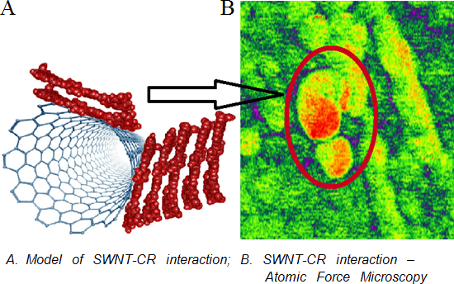
- . The aim of the study was to explain the mechanism of this interaction. The interaction of CR and carbon nanotubes was studied using spectral analysis of the SWNT–CR complex, dynamic light scattering (DLS), differential scanning calorimetry (DSC) and microscopic methods: atomic force microscopy (AFM
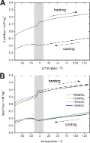
- the formation of a “network” created by interacting SWNTs and supramolecular CR (Figure 5B,C). SWNT–CR complex stability – DSC analysis Differential scanning calorimetry (DSC) analysis of heat flow changes for SWNT–CR complexes was performed in order to evaluate the stability of the complexes formed
- increasing temperature. Using DSC we can observe changes in the heat capacity that accompany heating or cooling of the sample, and thus analyse the melting or the formation of supramolecular structures for both free CR and CR attached to the carbon nanotube surface. We analysed heat capacity changes in two


Fiber optic sensors based on hybrid phenyl-silica xerogel films to detect n-hexane: determination of the isosteric enthalpy of adsorption
Beilstein J. Nanotechnol. 2017, 8, 475–484, doi:10.3762/bjnano.8.51
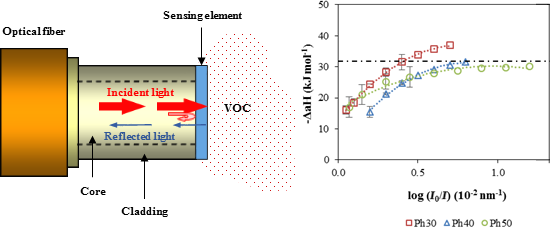
- Cantabria (Spain) for TGA–DSC analysis.






Effect of nanostructured carbon coatings on the electrochemical performance of Li1.4Ni0.5Mn0.5O2+x-based cathode materials
Beilstein J. Nanotechnol. 2016, 7, 1960–1970, doi:10.3762/bjnano.7.187
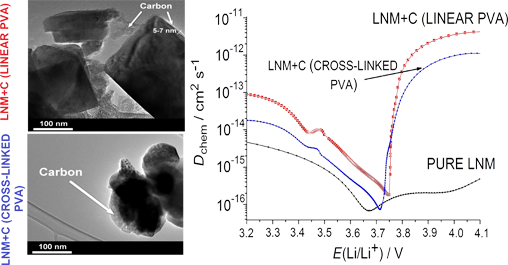
- intense pyrolysis of the linear PVA at 240–310 °C (Figure 2A) and the continuous decomposition process of the cross-linked PVA at 240–600 °C (Figure 2B). The latter shows a significantly higher thermal stability of the cross-linked polymer. The analysis of differential scanning calorimetry (DSC) curves
- allows one to identify a small “endo”-effect at 230 °C before the decomposition of the linear PVA (Figure 2A) that could be associated with its melting [32]. The corresponding effect is absent in the DSC curve of the cross-linked polymer (Figure 2B). The reasons for the different localization of carbon
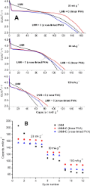
- for 15 min in argon. TG-DSC curves of the linear (A) and cross-linked (B) PVA in argon. XPS spectra of C 1s of the LNM/C composite samples derived from the linear (A) and cross-linked (B) PVA. CVA curves of pure Li1.4Ni0.5Mn0.5O2+x and LNM/C nanocomposites at the 1st cycle (A) and after galvanostatic



Controlled supramolecular structure of guanosine monophosphate in the interlayer space of layered double hydroxide
Beilstein J. Nanotechnol. 2016, 7, 1928–1935, doi:10.3762/bjnano.7.184
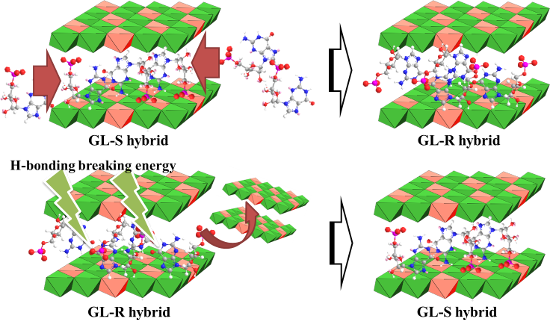
- occupies 22 Å2 (60 Å2 × 0.37) and 25 Å2 (60 Å2 × 0.42), respectively for GL-S and GL-R. Thus, the GMP moiety in GL-S could exist separately without effective intermolecular interaction by GMP, while GMPs in GL-R packs to form a ribbon-type supramolecular arrangement. Differential scanning calorimetry (DSC
- ) diagrams for both GL hybrids suggested the hydrogen bonding among GMP moiety in GL-R hybrid (Figure 5). For comparison, we carried out DSC measurements of GMP only, which showed 177.33 kJ/mol of endothermic enthalpy change at 191.28 °C, indicating strong hydrogen bonding among GMP molecules. Also, we
- verified that the DSC diagram of pristine LDH showed an endothermic peak at 216.23 °C with an enthalpy change of 39.9 kJ/mol, which exactly matches the calculated water evaporation energy (≈40 kJ/mol) of Mg2Al(OH)6(NO3)·H2O. Both hybrids showed a strong endothermic peak at around 200 °C, which was


Influence of hydrothermal synthesis parameters on the properties of hydroxyapatite nanoparticles
Beilstein J. Nanotechnol. 2016, 7, 1586–1601, doi:10.3762/bjnano.7.153
- particles were spherical and identical. where dBET is the average particle diameter calculated using the SSA value, SSA is the specific surface area calculated using the BET isotherm, and ρ is the material density. TG-DSC. TG-DSC analysis was carried out using an STA 449 F1 Jupiter by Netzsch. The analysis


Development of adsorptive membranes by confinement of activated biochar into electrospun nanofibers
Beilstein J. Nanotechnol. 2016, 7, 1556–1563, doi:10.3762/bjnano.7.149
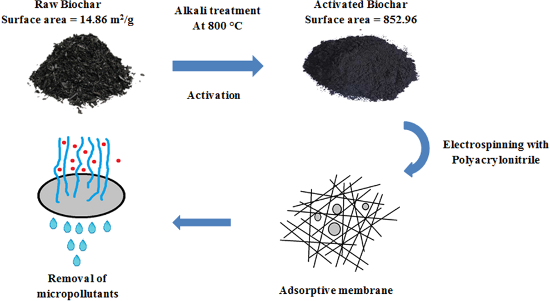
- (BET) specific surface areas were obtained from the N2 adsorption isotherms recorded at 77 K using an Autosorb-1 gas analyzer (Quantachrome Instruments, USA) in the relative pressure range from 0.05 to 1. Thermogravimetric analysis (TGA) and differential scanning calorimetry (DSC) were performed using
- behavior of electrospun PAN nanofibers During DSC PAN is heated in the presence of oxygen and begins to degrade near its melting point through an exothermic reaction that can obscure its endothermic melting. Therefore, the melting point cannot be observed for PAN. However, if DSC is conducted in N2
- atmosphere, the exothermic degradation is observed [30][31]. In Figure 6 the DSC thermograms of pure PAN powder, NFM-0% and NFM-1.5% are illustrated. The sharp peaks located at 291.48 °C, 289.15 °C and 303.67 °C are attributed to the nucleophilic attack at a nitrile and cyclization to an extended conjugated