Search results
Search for "UV" in Full Text gives 867 result(s) in Beilstein Journal of Nanotechnology. Showing first 200.
Chiral plasmonic nanostructures fabricated with circularly polarized light
Beilstein J. Nanotechnol. 2025, 16, 2245–2264, doi:10.3762/bjnano.16.154
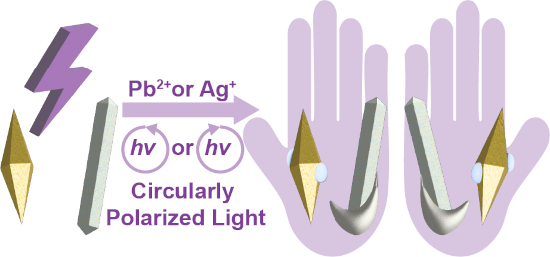
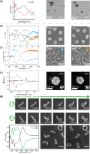
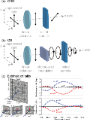
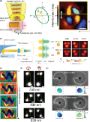
- system of AuNR and PbO2 that exhibited switchable chirality [168]. In their research, the PbO2 in left-handed AuNR/PbO2 heterostructures were dissolved through reductive reactions when exposed to UV illumination. Subsequently, the right-handed heterostructure could be fabricated using RCPL. Similar





Optical bio/chemical sensors for vitamin B12 analysis in food and pharmaceuticals: state of the art, challenges, and future outlooks
Beilstein J. Nanotechnol. 2025, 16, 2207–2244, doi:10.3762/bjnano.16.153
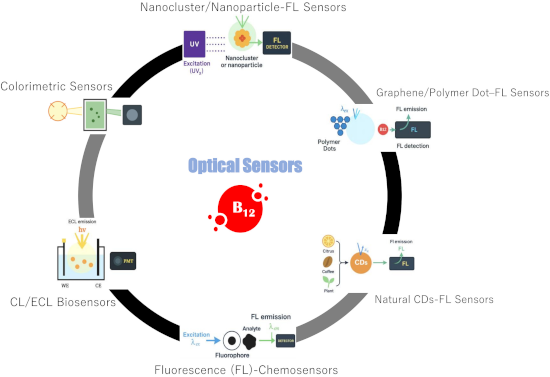
- purple. The sensor’s effectiveness was confirmed with a limit of detection (LOD) of 0.1 μg/mL and a recovery rate (RR) of 92.0–95.3% for VB12, equivalent in accuracy to ultraviolet–visible (UV–vis) spectrometry. Since the sensor’s LOD for VB12 was above the recommended dietary allowance level (0.02–0.03
- studies, Murillo Pulgarín et al. evaluated the chemiluminescent determination of VB12 [107][108]. First, a charge-coupled device (CCD) photodetector alongside UV persulfate oxidation within a streamlined continuous flow system was employed for the catalytic enhancement of Co2+ in the reaction between
- luminol and percarbonate (H2O2 source) in an alkaline setting, where Co2+ released from VB12 acted as the recognition element, luminol served as the indicator, and the CL emission intensity represented the sensing signal. UV irradiation in the persulfate environment led to the liberation of Co2+ from the


Ultrathin water layers on mannosylated gold nanoparticles
Beilstein J. Nanotechnol. 2025, 16, 2183–2198, doi:10.3762/bjnano.16.151
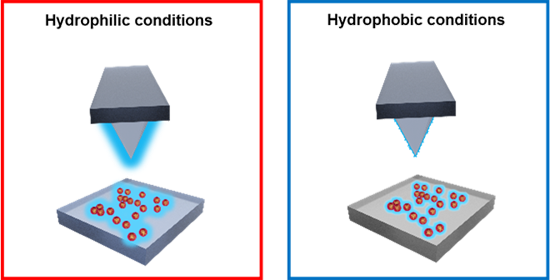
- sonication for 10 min. UV/ozone cleaning was applied to remove any possible hydrocarbon contamination, and the VSFG spectrum of washed gold was used as reference to normalize the non-flat infrared power distribution, similar to FTIR recording. About 10 µL of the sample was drop-cast on the surface and



Microplastic pollution in Himalayan lakes: assessment, risks, and sustainable remediation strategies
Beilstein J. Nanotechnol. 2025, 16, 2144–2167, doi:10.3762/bjnano.16.148
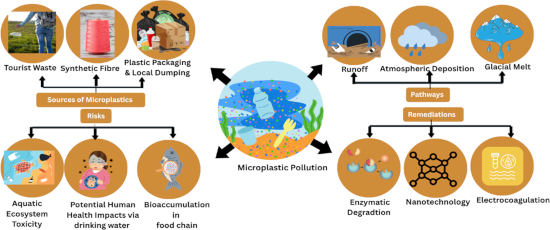
- application of nanomaterials for microplastic removal is elaborated in detail, and case studies validated their effectiveness, especially in cold environments with strong UV irradiation. In the face of increasing worldwide research into microplastic contamination, there remains a huge knowledge gap concerning
- is particularly problematic at high altitudes, including the Himalayas. Implementation of sophisticated analysis methods and sampling is limited due to extreme climatic conditions like below-freezing temperatures, strong UV irradiation, and poor infrastructure [31]. Portable and robust field-friendly
- most promising among them are photocatalytic processes that utilize titanium dioxide nanoparticles under UV radiation. These are very efficient degradation processes for degrading plastics to carbon dioxide (CO2) and water [43]. Fenton reactions, involving a mixture of hydrogen peroxide and iron


Toward clinical translation of carbon nanomaterials in anticancer drug delivery: the need for standardisation
Beilstein J. Nanotechnol. 2025, 16, 2092–2104, doi:10.3762/bjnano.16.144

- peroxidase, or UV-assisted photo-Fenton processes. Notably, oxidised CNOs degrade more readily than their pristine counterparts, due to their higher defect density and greater abundance of oxygen-containing functional groups [42]. These findings highlight that the biodegradability of CNMs strongly depends on




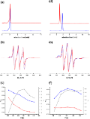
Stereodiscrimination of guests in chiral organosilica aerogels studied by ESR spectroscopy
Beilstein J. Nanotechnol. 2025, 16, 2034–2054, doi:10.3762/bjnano.16.140
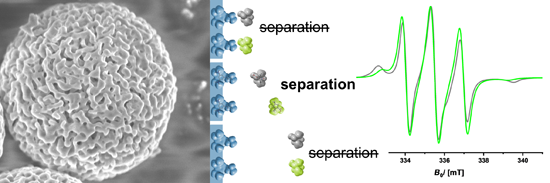
- washed with toluol for 3 d. ArFSH-FmocAlaNHzoSIL: SH-FmocAlaNHzoSIL is added to a degassed solution of pentafluorostyrene (0.312 g, 1.61 mmoL) and DMPA (5 mg, 0.04 mmol) in 10 mL of toluol. The material was infiltrated overnight. The material in solution was irradiated with UV light (λ = 365 nm) for 6 h
- performed on a Hitachi Regulus SU8200. UV–vis spectroscopy was performed on an Agilent UV–Vis Cary 4000. Supercritical drying was carried out using a SPI-DRY critical point dryer Jumbo. HPLC measurements were performed on a Hewlett Packard 1100 Series. ESR spectroscopy: ESR spectroscopy was performed on a




The cement of the tube-dwelling polychaete Sabellaria alveolata: a complex composite adhesive material
Beilstein J. Nanotechnol. 2025, 16, 1998–2014, doi:10.3762/bjnano.16.138
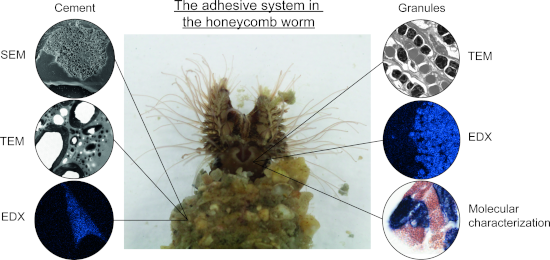
- parts of three honeycomb worms using TRIzolTM Reagent kit (Thermofisher). The parts selected were the head, parathoracic, abdominal, and caudal regions. Concentration and purity of the extracted RNA were measured with a UV–vis spectrophotometer (DENOVIX DS-11). A cDNA library was synthesized from the



On the road to sustainability – application of metallic nanoparticles obtained by green synthesis in dentistry: a scoping review
Beilstein J. Nanotechnol. 2025, 16, 1851–1862, doi:10.3762/bjnano.16.128
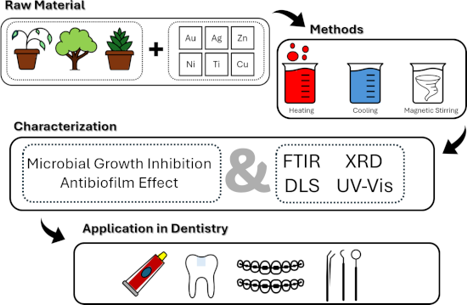
- [45][46]. Besides silver, zinc, copper, and nickel, other metals have been used to a lesser extent. The significant representation of ZnO-NPs, known for their biocompatibility, UV-blocking capacity, and antibacterial efficacy, aligns with their growing use in restorative and preventive dentistry
- = 36), ultraviolet–visible spectroscopy (UV–vis, 34.69%; n = 35), and X-ray diffraction (XRD, 25.48%; n = 27). They are among the most commonly used techniques for the characterization of metallic nanoparticles synthesized via green routes due to their complementary abilities to elucidate key
- structural, optical, and chemical properties. FTIR enables the identification of functional groups involved in the reduction and stabilization of nanoparticles, typically derived from phytochemicals in plant extracts used as reducing agents [52][56]. UV–vis spectroscopy is widely employed to monitor


Electrical, photocatalytic, and sensory properties of graphene oxide and polyimide implanted with low- and medium-energy silver ions
Beilstein J. Nanotechnol. 2025, 16, 1794–1811, doi:10.3762/bjnano.16.123
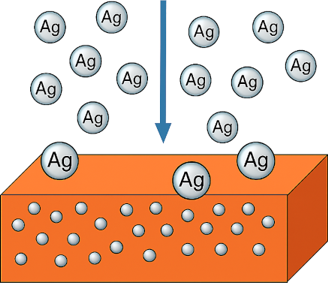
- atomic force microscopy. Electrical properties as a function of air humidity were evaluated using a two-point method, and photocatalytic activity was tested by monitoring the UV-induced decomposition of rhodamine B. The results demonstrate that ion implantation significantly reduces surface resistivity
- disintegration of rhodamine B using UV light. The experimental results clearly confirmed that silver ion implantation led to a significant reduction in the surface electrical resistance of both GO and PI. Simultaneously, an enhancement of photocatalytic activity was observed, demonstrated by a faster degradation
- at even higher energies. This is because the ion penetrates the solid, preventing dislocated atoms from reaching the surface. The ion gradually loses energy to the atoms and becomes trapped [32]. Photocatalytic properties The photocatalytic properties were tested in a dark chamber with UV light by


Multifunctional anionic nanoemulsion with linseed oil and lecithin: a preliminary approach for dry eye disease
Beilstein J. Nanotechnol. 2025, 16, 1711–1733, doi:10.3762/bjnano.16.120
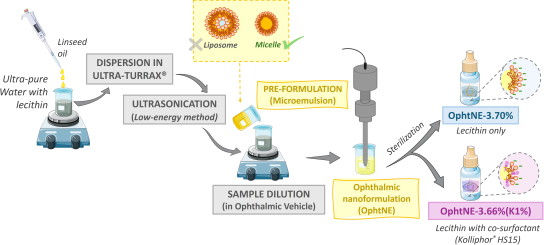
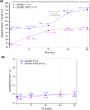
- from light. Absorbance was then measured at 518 nm using a Multiskan Go UV spectrophotometer (Thermo Fisher Scientific, FI). Ascorbic acid (3% w/v, prepared in the ophthalmic vehicle) was used as the positive control. The experiment was performed in quadruplicate, and antioxidant activity (DPPH radical



Beyond the bilayer: multilayered hygroscopic actuation in pine cone scales
Beilstein J. Nanotechnol. 2025, 16, 1695–1710, doi:10.3762/bjnano.16.119
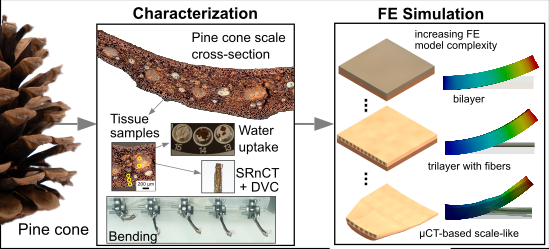
- , Hamburg, Germany) and a razor blade. One end of the pillars was then glued to special sample holders using a UV-cured liquid plastic welding system (Bondic BC4000, VIKO UG, Kranzberg, Germany). Each tissue sample was then imaged at a special synchrotron radiation-based nano-holotomography setup at the


Ambient pressure XPS at MAX IV
Beilstein J. Nanotechnol. 2025, 16, 1677–1694, doi:10.3762/bjnano.16.118
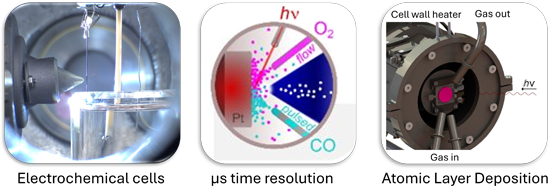
- additionally available, which allows for preparing sample surfaces before commencing the APXPS experiments. Both beamlines have other external light sources (e.g., to provide solar radiation or UV light) available to all users in order to perform photocatalysis experiments. HIPPIE offers also a catalytic
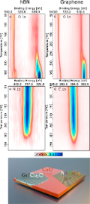
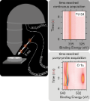
- under operando conditions. Additionally, the kinetics of charge transfer and the role of specific chemical species or components functioning as charge donors or acceptors during photocatalytic reactions can be clarified using APXPS. At MAX IV, external light sources (e.g., UV lamps or solar simulators





Prospects of nanotechnology and natural products for cancer and immunotherapy
Beilstein J. Nanotechnol. 2025, 16, 1644–1667, doi:10.3762/bjnano.16.116
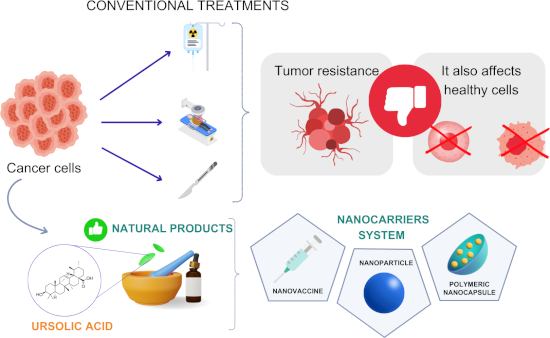
- scattering (DLS), and UV–visible (UV–vis) spectroscopy were used for characterization. The nanoparticles showed increased cellular uptake compared to free PD-L1, suppression of the NF-κB pathway as indicated by reduced PHO-P65 protein expression, and enhanced tumor inhibition due to immune activation and
- cell cycle arrest, regulate oxidative stress, enhance metabolic reprogramming, inhibit invasion and metastasis, and modulate immunity and inflammation [129]. The developed nanoparticles underwent physicochemical characterization by SEM, UV–vis spectroscopy, and encapsulation testing, in which the
- ]. The formulation includes temperature-responsive and non-temperature-responsive amphiphilic molecules (weight ratio of 7:3). UV–vis spectroscopy, TEM, and DLS experiments demonstrated that administration of 14.37 mg·kg−1 of the nanoparticles inhibited lung adenocarcinoma proliferation and migration


Nanotechnology-based approaches for the removal of microplastics from wastewater: a comprehensive review
Beilstein J. Nanotechnol. 2025, 16, 1607–1632, doi:10.3762/bjnano.16.114
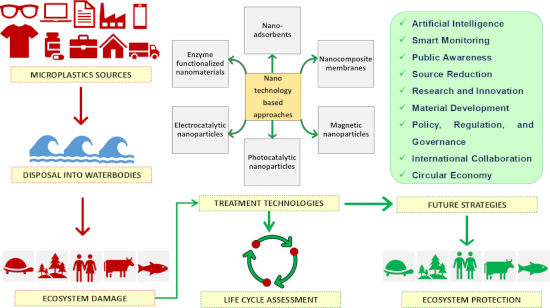
- generating highly reactive radicals through techniques such as Fenton and photo-Fenton reactions, UV/H2O2 systems, ozonation, TiO2, photocatalysis, and electrochemical oxidation [53]. These methods hold potential for breaking down MPs into smaller, less harmful by products, although optimization and
- include ultraviolet-induced oxidation, ozone-based oxidation, photocatalysis (activated by UV, solar, or visible light), electrochemical oxidation, and persulfate-activated oxidation [57]. In photocatalysis, photons excite the catalyst, generating electron–hole pairs that trigger redox reactions with the
- biological treatments aimed at removing organic contaminants [96]. In photocatalysis, under UV illumination, electron–hole pairs are generated. These pairs interact with water molecules and dissolved oxygen to generate reactive oxygen species, such as hydroxyl radicals and superoxide anions. These highly


Photocatalytic degradation of ofloxacin in water assisted by TiO2 nanowires on carbon cloth: contributions of H2O2 addition and substrate absorbability
Beilstein J. Nanotechnol. 2025, 16, 1567–1579, doi:10.3762/bjnano.16.111
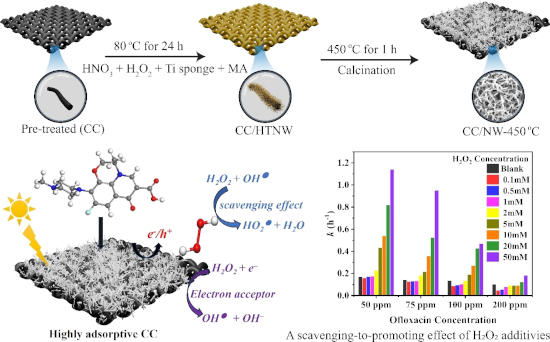
- turn, a superior photoactivity. Compared to TiO2 nanowire arrays grown on metallic Ti substrates, TiO2 nanowires supported on carbon cloth substrates demonstrate markedly superior efficiency in the photocatalytic degradation of ofloxacin (OFL) molecules in water when exposed to UV light. The TiO2
- nanowires remove 90–97% OFL in water with a high initial concentration of 50 ppm in 6 h under UV light irradiation for up to six cycles. The contributions of the hydrogen peroxide (H2O2) additive were also studied. An enhanced efficiency could be achieved only when the H2O2 in water reaches a critical
- controlled film thickness of 1.5–4.5 μm, on concurrently activated carbon cloth substrates. The composite film exhibited a high efficiency towards removal of rhodamine B and sulfosalicylic acid in water under UV light illumination, mainly thanks to the highly adsorptive substrate [16]. In the current


Transient electronics for sustainability: Emerging technologies and future directions
Beilstein J. Nanotechnol. 2025, 16, 1545–1556, doi:10.3762/bjnano.16.109
- . Funct. Mater., 24, 4427–4434 (2014), with permission from John Wiley and Sons. © 2014 WILEY-VCH Verlag GmbH & Co. KGaA, Weinheim. This content is not subject to CC BY 4.0. (f) PBTPA films, formed via capillary molding and UV curing, exhibit high flexibility and tunable wettability based on monomer


Influence of laser beam profile on morphology and optical properties of silicon nanoparticles formed by laser ablation in liquid
Beilstein J. Nanotechnol. 2025, 16, 1533–1544, doi:10.3762/bjnano.16.108
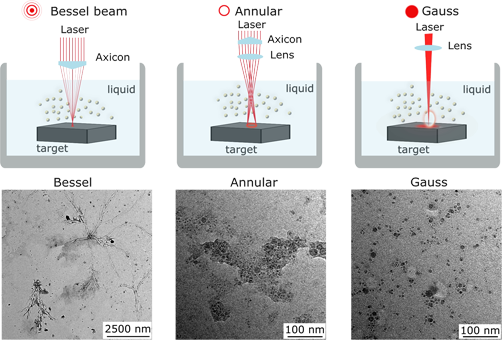
- structure of the formed NPs were analyzed by means of ultraviolet–visible (UV–vis) spectroscopy, high-resolution transmission electron microscopy (HRTEM), selected area electron diffraction (SAED), X-ray diffraction (XRD), and Raman and photoluminescence (PL) spectroscopies. Particle size and morphology
- ) operating at an accelerating voltage of 10 kV. For SEM and Raman measurements, the colloidal solution was deposited onto Al foil by drop casting and dried at room temperature. The Raman measurements were performed under 488 nm excitation using a micro-Raman system (“NanoFlex”, Solar LS, Belarus). The UV–vis
- . Optical characterization The optical properties of Si NPs dispersed in ethanol were investigated using Raman and UV–vis spectroscopy. Initially, Si NPs obtained using Bessel, annular, and Gaussian laser beams were characterized by Raman spectroscopy, and their Raman spectra (vibrational modes) were


Dendrimer-modified carbon nanotubes for the removal and recovery of heavy metal ions from water
Beilstein J. Nanotechnol. 2025, 16, 1522–1532, doi:10.3762/bjnano.16.107

- patterns were recorded on a Shimadzu 6100 X-ray diffractometer in a 2θ range of 10–80°, providing insights into the crystalline structure and phase composition of the CNTs before and after modification. UV–vis spectroscopy was used to monitor adsorption of metal ions by the interaction of dendrimerized


Cross-reactivities in conjugation reactions involving iron oxide nanoparticles
Beilstein J. Nanotechnol. 2025, 16, 1504–1521, doi:10.3762/bjnano.16.106
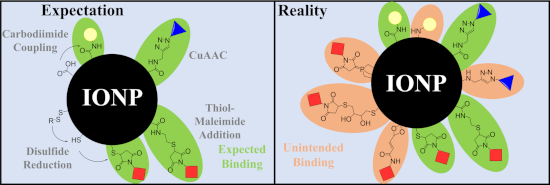
- using UV–vis spectroscopy. Following the CuAAC reaction with Cy5-azide, we immediately see a visible change in the color of the IONPs from brown to deep blue-green (Figure 3B, inset). The UV–vis spectrum of the IONP-PPA CuAAC product (Figure 3B.i) shows two broad peaks at ≈610 and 650 nm, which
- -substituted ring structures, thereby providing evidence against the formation of tetra-substituted rings, making quinone reactions unlikely. There is an important difference observed in the lineshapes of the post-CuAAC UV–vis spectra of IONP-PPA, and the EDC/NHS-free control (Figure 2B.i and 2C.i). Most
- bond formation with EDC activation, while no amides were detected in the EDC-free control, as expected. Our UV–vis results suggest a denser dye loading on IONP-PPA than the EDC-free control, which suggests more available binding sites (alkynes) on IONP-PPA. The C 1s XPS spectra also suggest the







Laser processing in liquids: insights into nanocolloid generation and thin film integration for energy, photonic, and sensing applications
Beilstein J. Nanotechnol. 2025, 16, 1428–1498, doi:10.3762/bjnano.16.104
- pulse excitation (532 nm). The morphological changes induced by thermal and photochemical effects were found to influence the optical properties of these particles. Another commonly reported semiconductor material by LFL is zinc oxide (ZnO) [33][34]. The optical properties, particularly the UV emission
- flake-like aggregated structures with an average particle size of 77 nm were observed [114]. ZnO NPs were prepared by laser ablation of metallic zinc powders suspended in water, and thin films were fabricated by drop casting [115]. Figure 11a represents the UV–vis emission intensity ratio of ZnO






Photochemical synthesis of silver nanoprisms via green LED irradiation and evaluation of SERS activity
Beilstein J. Nanotechnol. 2025, 16, 1417–1427, doi:10.3762/bjnano.16.103
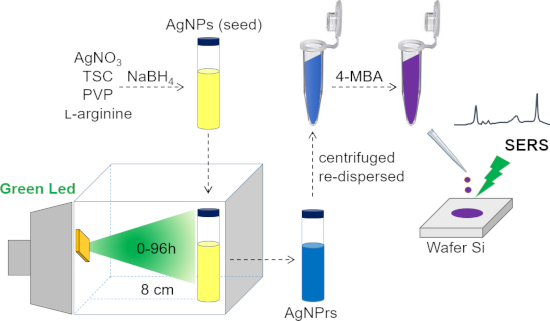
- , photochemical methods utilizing physical agents such as lasers [5], UV light [6], or LEDs [7][8][9] have gained attention due to their superior spatial and temporal control, high stability of the resulting AgNPrs and avoidance of environmentally unfriendly reducing agents [8][10]. The strong surface plasmon
- yield. The SERS performance of the synthesized AgNPrs, evaluated using 4-MBA as a probe molecule, demonstrated significantly enhanced Raman signals compared to the initial AgNPs seeds, highlighting their potential applicability in SERS-based sensors. Results and Discussion Synthesis of seeds The UV–vis
- distribution in the Figure 1b,c showed that the seed predominantly contained spherical silver nanoparticles with a size of approximately 10 nm, in agreement with the UV–vis spectrum result. Manufacturing of AgNPrs AgNPrs were synthesized in two steps, that is, (i) synthesis of AgNPs as seeds and (ii


Synthesis and antibacterial properties of nanosilver-modified cellulose triacetate membranes for seawater desalination
Beilstein J. Nanotechnol. 2025, 16, 1380–1391, doi:10.3762/bjnano.16.100
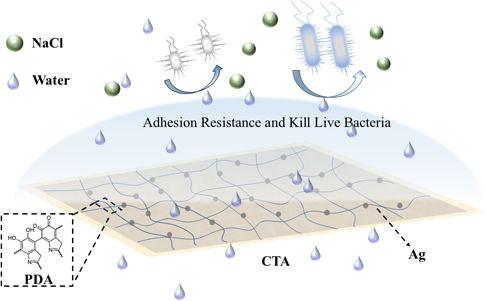
- ) membrane for water desalination. The TiO2-modified membrane demonstrated significant antibacterial activity against Escherichia coli. Under UV light, the survival ratio of bacterial cells reduced to 5% within 4 h; the membrane was completely sterilized within 5 h. This effect is attributed to the


Ferroptosis induction by engineered liposomes for enhanced tumor therapy
Beilstein J. Nanotechnol. 2025, 16, 1325–1349, doi:10.3762/bjnano.16.97


Enhancing the photoelectrochemical performance of BiOI-derived BiVO4 films by controlled-intensity current electrodeposition
Beilstein J. Nanotechnol. 2025, 16, 1289–1301, doi:10.3762/bjnano.16.94
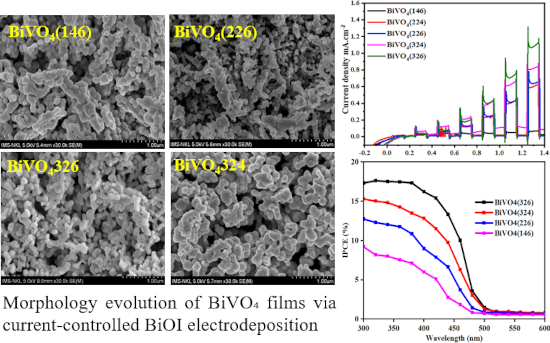
- . Characteristics of materials X-ray diffraction (XRD, Bruker D8 Advance) and Raman spectroscopy (LabRAM Odyssey Semiconductor) were used to analyze the crystal structures of photoanodes. UV–vis absorption spectra were obtained using a Cary 60 spectrophotometer. X-ray photoelectron spectroscopy (XPS, VG ESCALAB250
- performance owing to improved charge transport and enhanced surface reaction sites. Optical properties (UV–vis) UV–vis absorption spectroscopy (Figure 3) showed that BiVO4 samples absorb visible light, with absorption edges between 502 and 541 nm and optical bandgaps between 2.46 and 2.30 eV (Figure 3b
- , as well as the reduced electron–hole recombination rates observed in the Raman and UV–vis analyses. The long-term photoelectrochemical stability of the optimized BiVO4(326) photoanode was evaluated using chronoamperometry under continuous AM1.5G illumination at 1.23 V vs RHE in 0.50 M Na2SO4



Functional bio-packaging enhanced with nanocellulose from rice straw and cinnamon essential oil Pickering emulsion for fruit preservation
Beilstein J. Nanotechnol. 2025, 16, 1234–1245, doi:10.3762/bjnano.16.91
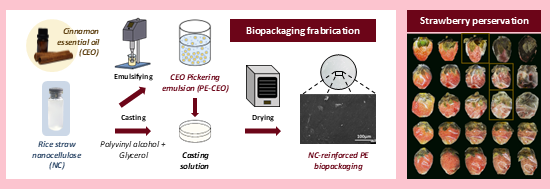
- exhibits good heat-resistance, mechanical, and water-barrier properties. At an emulsion concentration as low as 10% (v/w) in the casting solution, high UV absorbance capacity (up to 100% UVC), high antibacterial activity (92.4% Escherichia coli inhibition), and good antioxidative properties (up to 43% DPPH
- significantly in the UV region (300–400 nm) (Figure 4b), demonstrating strong UV blocking capability [49]. The transmittance even dropped to near zero in the UVC range (280–315 nm). Above 400 nm, the transmittance was higher but remained below 100%, highlighting the dual function of PE-CEO in absorbing harmful
- UV rays while partially limiting visible light transmission (Figure 4d). This makes rCBP ideal for preserving light-sensitive products such as fruits and vegetables, protecting them from photodegradation and extending their shelf life [24]. This effect can be attributed to the presence of