


Search results
Search for "X-ray diffraction (XRD)" in Full Text gives 379 result(s) in Beilstein Journal of Nanotechnology. Showing first 200.
Zeolite materials with Ni and Co: synthesis and catalytic potential in the selective hydrogenation of citral
Beilstein J. Nanotechnol. 2025, 16, 520–529, doi:10.3762/bjnano.16.40
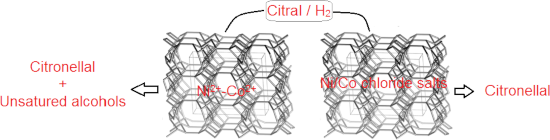
- nitrogen adsorption at 77 K. The initial natural zeolite samples were also examined via powder X-ray diffraction (XRD) and scanning electron microscopy (SEM). XRD patterns were recorded using a PW 1218 diffractometer (Philips, Almelo, Netherlands) equipped with a curved graphite monochromator and Cu Kα


N2+-implantation-induced tailoring of structural, morphological, optical, and electrical characteristics of sputtered molybdenum thin films
Beilstein J. Nanotechnol. 2025, 16, 495–509, doi:10.3762/bjnano.16.38
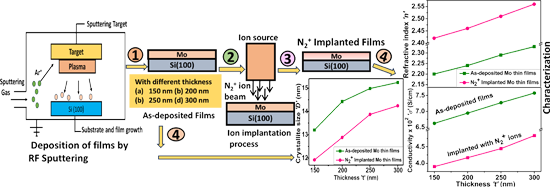
- implantation, the stress in the films changed from tensile to compressive, as illustrated in Figure 4. The X-ray diffraction (XRD) peak position shift provides further insight into these stress changes. In as-deposited films, the peaks are shifting to lower 2θ values, signifying an increase in interatomic


Size control of nanoparticles synthesized by pulsed laser ablation in liquids using donut-shaped beams
Beilstein J. Nanotechnol. 2025, 16, 407–417, doi:10.3762/bjnano.16.31
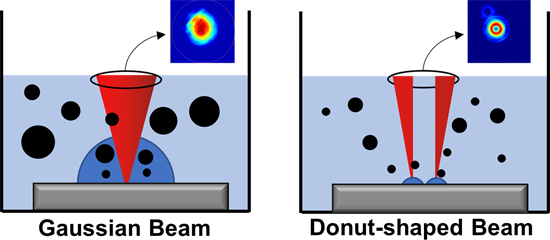
- crystal structure of the HEA NPs was determined by X-ray diffraction (XRD) using a Smartlab diffractometer (Rigaku, Japan). SEM was used to characterize the nanoparticle size distribution and to determine the beam shape influence while maintaining comparable PLAL parameters for both beams to minimize the


Pulsed laser in liquid grafting of gold nanoparticle–carbon support composites
Beilstein J. Nanotechnol. 2025, 16, 349–361, doi:10.3762/bjnano.16.26
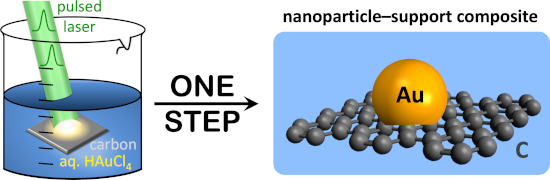
- gold nanoparticles) spectral signatures were not observable here. Pulsed laser grafting created nonequilibrium gold nanoparticle–carbon fiber paper composites, evident from powder X-ray diffraction (XRD) data (Figure 5A). We normalized the XRD patterns to the (111) peak and found that the (200) or (311
- ) using instrument-specific atomic sensitivity factors. X-ray diffraction (XRD) measurements were conducted at the Chemical Analysis Lab at the Rochester Institute of Technology using a Bruker D8 ADVANCE diffractometer with Cu Kα radiation (40 kV and 40 mA). The configuration included a 0.6 mm primary


Synthesis and the impact of hydroxyapatite nanoparticles on the viability and activity of rhizobacteria
Beilstein J. Nanotechnol. 2025, 16, 216–228, doi:10.3762/bjnano.16.17
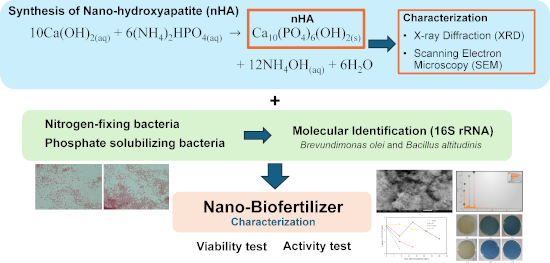
- gradually through a solvothermal reaction, driven by the chemical transformation represented by the following equation: Nanohydroxyapatite characterization The structural analysis of nHA was performed using X-ray diffraction (XRD). The diffraction pattern of nHA standard is given in Figure 1, while that of
- Novella and coworkers [26]. Nanohydroxyapatite characterization Structural assessment of the synthesized nHA was conducted using X-ray diffraction (XRD) with the PANalytical AERIS system and OriginLab 8.5.1 software. Further examination of the sample’s morphology was carried out using a scanning electron


A review of metal-organic frameworks and polymers in mixed matrix membranes for CO2 capture
Beilstein J. Nanotechnol. 2025, 16, 155–186, doi:10.3762/bjnano.16.14
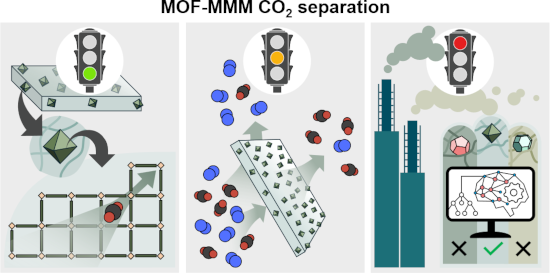
- , and X-ray diffraction (XRD) provide information about the bulk MOF-based MMM [140][141][142]. FTIR yields information about the functional groups within the sample [140], and will differ between the pristine MOF, polymer membrane, and MOF-based MMM [118][121][122][124][128][131]. In this way, it is




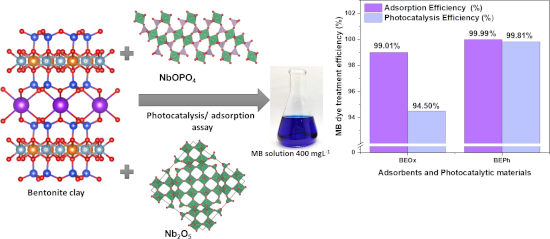
Clays enhanced with niobium: potential in wastewater treatment and reuse as pigment with antibacterial activity
Beilstein J. Nanotechnol. 2025, 16, 141–154, doi:10.3762/bjnano.16.13
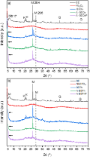
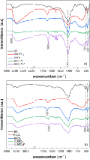
- dye with the enzyme succinate dehydrogenase (present in the mitochondria), leading to the formation of a salt called Formazan with a pink-reddish color. Characterization X-ray diffraction (XRD) measurements of the powder were conducted using a Rigaku BEartLab SE 3 kW diffractometer equipped with Cu Kα



TiO2 immobilized on 2D mordenite: effect of hydrolysis conditions on structural, textural, and optical characteristics of the nanocomposites
Beilstein J. Nanotechnol. 2025, 16, 128–140, doi:10.3762/bjnano.16.12
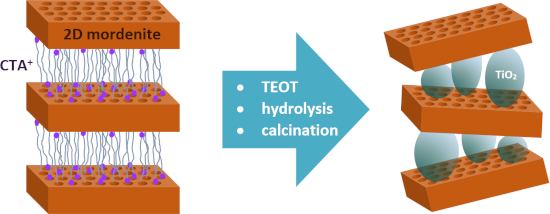
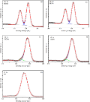
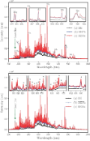
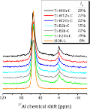
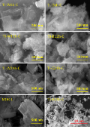
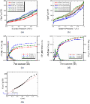
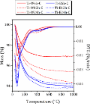
- -angle and full X-ray diffraction (XRD) patterns, respectively, for the samples containing hydrolyzed forms of Ti after hydrolysis of TEOT. The full XRD patterns of the hydrolyzed samples after calcination are shown in Figure 1c. For comparison, the corresponding patterns for the parent compound MOR-L



Fabrication of hafnium-based nanoparticles and nanostructures using picosecond laser ablation
Beilstein J. Nanotechnol. 2024, 15, 1639–1653, doi:10.3762/bjnano.15.129
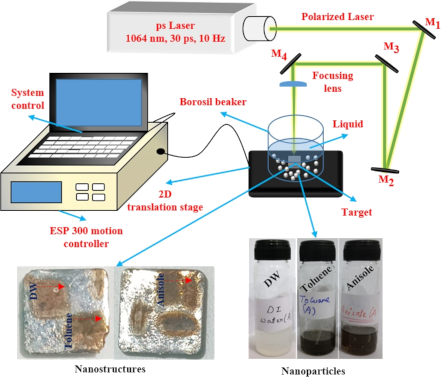
- . These Hf sponges, cut and polished to 10 mm × 10 mm × 2 mm, were used as ablation targets. The pristine target had the crystal structure of hexagonal HfO0.25, as confirmed by X-ray diffraction (XRD) data (see Figure 1a). The elemental composition (Hf: 73.68%, O: 26.32%) was determined by energy




Facile synthesis of size-tunable L-carnosine-capped silver nanoparticles and their role in metal ion sensing and catalytic degradation of p-nitrophenol
Beilstein J. Nanotechnol. 2024, 15, 1576–1592, doi:10.3762/bjnano.15.124
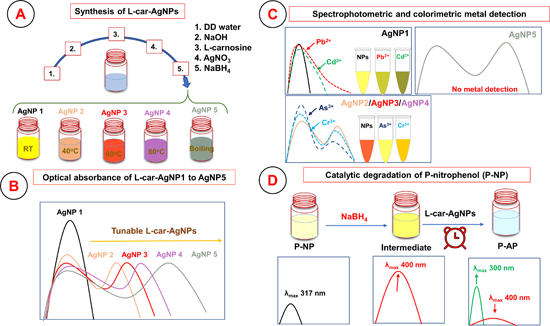
- , Netherlands) for a detailed examination of size and morphology. The crystalline structure of ʟ-car-AgNP1 was determined using X-ray diffraction (XRD, Rigaku Smartlab, Japan) within a 2θ range of 35° to 80°. Nanoparticle solutions were air-dried, and the obtained nanopowders (20 mg) were used for measurements




Mn-doped ZnO nanopowders prepared by sol–gel and microwave-assisted sol–gel methods and their photocatalytic properties
Beilstein J. Nanotechnol. 2024, 15, 1283–1296, doi:10.3762/bjnano.15.104
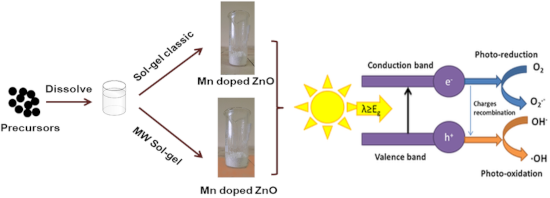
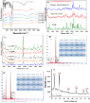
- using X-ray diffraction (XRD). The resulting XRD patterns, shown in Figure 6a, indicate that the samples are polycrystalline and single-phase. This single phase corresponds well to the data from ICDD file no. 36-1451 of zincite ZnO. ZnO has a wurtzite-type structure and crystallizes in the hexagonal P63
- 10 and 20 kV in high vacuum mode. X-ray diffraction (XRD) measurements were carried out using an Ultima IV diffractometer (Rigaku Corp., Japan) equipped with parallel beam optics, using Cu Kα radiation (λ = 1.5418 Å) at 40 kV and 30 mA over the 2θ range of 25–80° at a scanning rate of 2°/min with a


Intermixing of MoS2 and WS2 photocatalysts toward methylene blue photodegradation
Beilstein J. Nanotechnol. 2024, 15, 817–829, doi:10.3762/bjnano.15.68
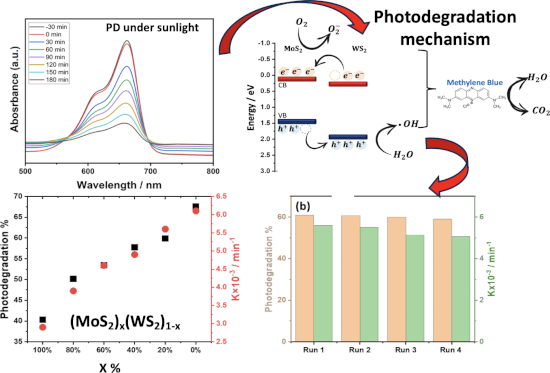
- , the positions of the E12g and A1g vibrational modes in the composite sample did not exhibit any noticeable shifts compared to the observed peaks in individual samples as reported in previous studies [26]. The X-ray diffraction (XRD) diagram shown in Figure 2a exhibits the diffraction peaks at 14.25


Elastic modulus of β-Ga2O3 nanowires measured by resonance and three-point bending techniques
Beilstein J. Nanotechnol. 2024, 15, 704–712, doi:10.3762/bjnano.15.58
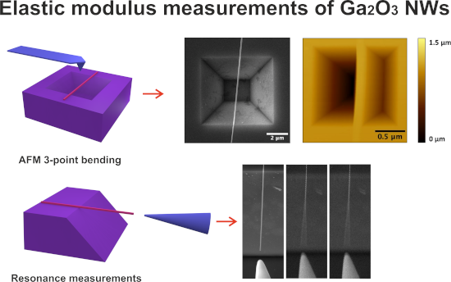
- -Ga2O3 NW synthesis methods and detailed post-examination of their mechanical properties before considering their application in future nanoscale devices. Results For structural analysis of the as-grown NW arrays on Si(100)/SiO2 substrates, X-ray diffraction (XRD) measurements were conducted. The marked


Gold nanomakura: nanoarchitectonics and their photothermal response in association with carrageenan hydrogels
Beilstein J. Nanotechnol. 2024, 15, 678–693, doi:10.3762/bjnano.15.56

- . Also, the photothermal responses of the nanoparticles in association with k-CG hydrogels were assessed, indicating their potential in biomedical applications. Furthermore, characterization such as zeta potential, crystallinity, and surface functionalization were investigated through ZetaSizer, X-ray
- diffraction (XRD), and FTIR, respectively, to establish physicochemical properties of the synthesized nanomaterials. Results Synthesis, optical spectroscopy, and zeta potential Anisotropic gold nanoparticles of makura shape were synthesized using seed-mediated approach as shown in Figure 1a. The Au seeds were




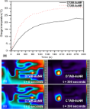


Exfoliation of titanium nitride using a non-thermal plasma process
Beilstein J. Nanotechnol. 2024, 15, 631–637, doi:10.3762/bjnano.15.53
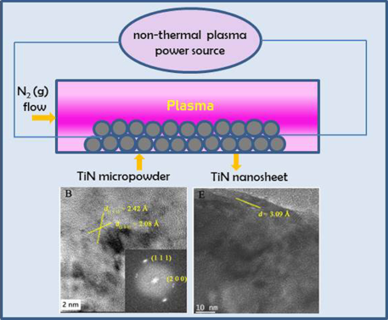
- microscope operating at 200 kV. X-ray diffraction (XRD) analysis was conducted using a diffractometer (Miniflex II) with Cu Kα radiation over a 2θ range of 20–90°, with a scan speed of 2° per minute. Furthermore, Raman spectra were obtained using a spectrometer (Horiba Scientific MacroRam Raman) equipped



Radiofrequency enhances drug release from responsive nanoflowers for hepatocellular carcinoma therapy
Beilstein J. Nanotechnol. 2024, 15, 569–579, doi:10.3762/bjnano.15.49
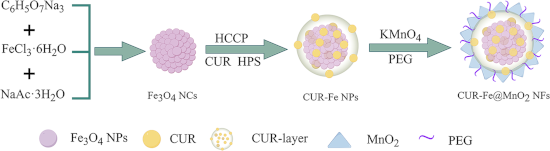
- substituted by O–H. Additionally, other characteristic absorption peaks of CUR and HPS were retained. These findings confirmed the successful synthesis of CUR-Fe@MnO2 NFs. According to the X-ray diffraction (XRD) pattern (Figure 2g), the 2θ diffraction peaks at 30.1° (220), 35.4° (311), 37.0° (222), 43.1


Aero-ZnS prepared by physical vapor transport on three-dimensional networks of sacrificial ZnO microtetrapods
Beilstein J. Nanotechnol. 2024, 15, 490–499, doi:10.3762/bjnano.15.44
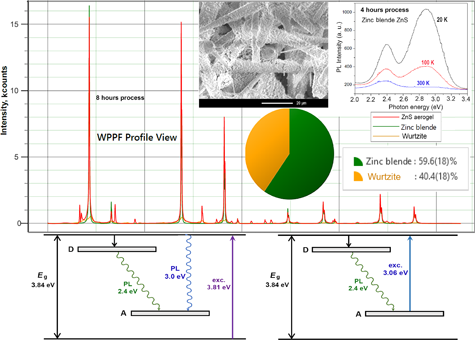
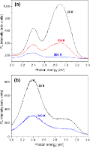
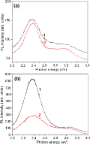
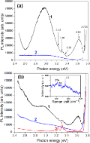
- produced material is investigated by scanning electron microscopy (SEM), while its crystalline and optical qualities are assessed by X-ray diffraction (XRD) analysis and photoluminescence (PL) spectroscopy, respectively. We demonstrate possibilities for controlling the composition and the crystallographic
- sensor applications. Keywords: aeromaterial; crystallographic structure; luminescence; physical vapor transport; scanning electron microscopy (SEM); X-ray diffraction (XRD); Introduction Porous materials represent a class of solid-state networks widely used in adsorptive and photocatalytic removal of



Photocatalytic degradation of methylene blue under visible light by cobalt ferrite nanoparticles/graphene quantum dots
Beilstein J. Nanotechnol. 2024, 15, 475–489, doi:10.3762/bjnano.15.43
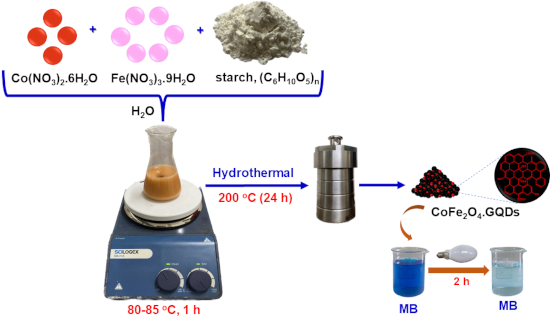
- benzoquinone (C6H4O2) was provided by Sigma-Aldrich, USA. Sodium hydroxide (NaOH, ≥96%) and hydrogen chloride (HCl, 38%) were purchased from Xilong, China. Instruments X-ray diffraction (XRD) patterns were recorded by using a D8 Advance (Bruker, Germany) with Cu Kα radiation (λ = 0.154 nm). Fourier-transform




Controllable physicochemical properties of WOx thin films grown under glancing angle
Beilstein J. Nanotechnol. 2024, 15, 350–359, doi:10.3762/bjnano.15.31
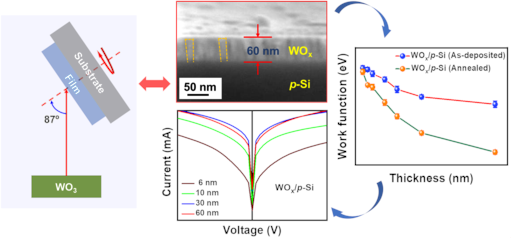
- bias voltage was applied to the p-Si substrates, whereas the WOx films were kept grounded. The crystallinity of the WOx films was examined using X-ray diffraction (XRD) (Bruker) under Bragg–Brentano geometry (θ–2θ) in an angular window of 2θ = 20° to 80°. The chemical composition of the WOx films was


Vinorelbine-loaded multifunctional magnetic nanoparticles as anticancer drug delivery systems: synthesis, characterization, and in vitro release study
Beilstein J. Nanotechnol. 2024, 15, 256–269, doi:10.3762/bjnano.15.24
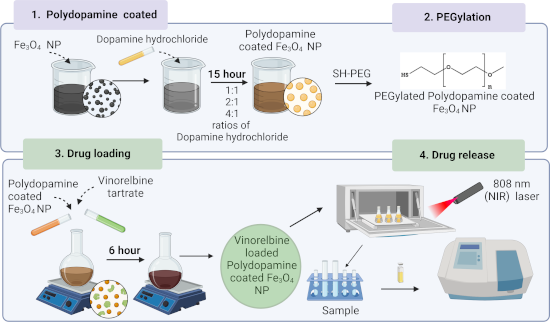
- -resolution analytical electron microscope (FE-SEM, Thermo Scientific, Apreo 2S LoVac) and a scanning transmission electron microscope (STEM, Phillips XL, 30 ESEM-FEG/EDAX) operating at 120 kV acceleration voltage. The structure of the nanoparticles was analyzed by X-ray diffraction (XRD, PANalytical, Xpert
- between peak broadening and particle size in X-ray analysis. In this equation, the symbols D, K, λ, β, and θ represent the particle size, Scherrer shape factor (here 0.89), X-ray wavelength (0.15418 nm), half-maximum width, and diffraction angle, respectively [43]. Using the X-ray diffraction (XRD


Modification of graphene oxide and its effect on properties of natural rubber/graphene oxide nanocomposites
Beilstein J. Nanotechnol. 2024, 15, 168–179, doi:10.3762/bjnano.15.16
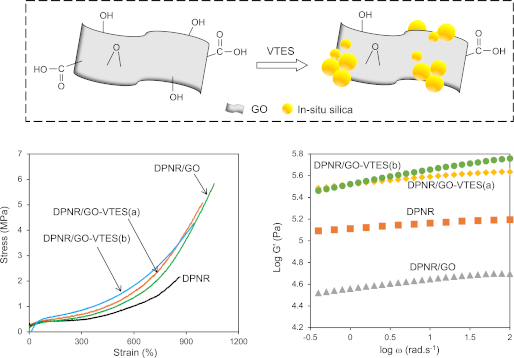
- characterized by X-ray diffraction (XRD), Fourier-transform infrared spectroscopy, contact angle, thermal gravimetric analysis, and scanning electron microscopy. The XRD results showed the appearance of an amorphous region of silica particles at a diffraction angle of 22°. The formation of silica was
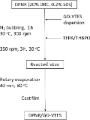
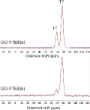
- conditions to determine the ideal condition to modify GO for grafting onto NR. The GO-VTES products were characterized using X-ray diffraction (XRD), contact angle, 29Si NMR, Fourier-transform infrared spectroscopy (FTIR), and morphology analysis. The GO-VTES was expected to improve the mechanical properties






Berberine-loaded polylactic acid nanofiber scaffold as a drug delivery system: The relationship between chemical characteristics, drug-release behavior, and antibacterial efficiency
Beilstein J. Nanotechnol. 2024, 15, 71–82, doi:10.3762/bjnano.15.7
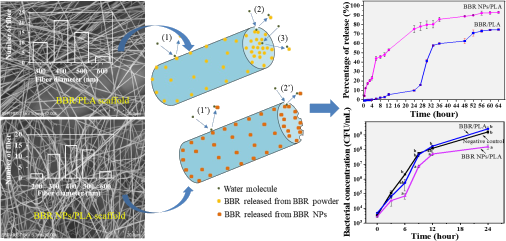
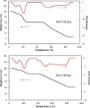
- separation during the electrospinning process [17][38][39], leading to the formation of a BBR-rich phase on the surface of nanofibers. The crystallinity of the PLA pellet and electrospun nanofiber scaffolds were examined by X-ray diffraction (XRD) analysis (Figure 3B). The XRD pattern of the PLA pellet shows


Experimental investigation of usage of POE lubricants with Al2O3, graphene or CNT nanoparticles in a refrigeration compressor
Beilstein J. Nanotechnol. 2023, 14, 1041–1058, doi:10.3762/bjnano.14.86
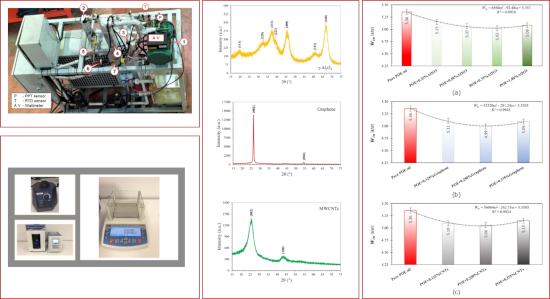
- nanoparticles is presented separately in the subsequent sections to verify the catalog information provided by the manufacturer. In the characterization of the nanoparticles used in the study, field-emission scanning electron microscopy (FE-SEM), energy-dispersive X-ray spectroscopy (EDS), and X-ray diffraction
- (XRD) analyses were performed. Characterization of Al2O3 nanoparticles The morphological features of the Al2O3 nanoparticles were investigated with the help of FE-SEM micrograph (Figure 2a). It is seen that the Al2O3 nanoparticles exhibit amorphous nature. Thus, it can be stated that the particle size




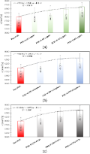

Exploring internal structures and properties of terpolymer fibers via real-space characterizations
Beilstein J. Nanotechnol. 2023, 14, 1004–1017, doi:10.3762/bjnano.14.83
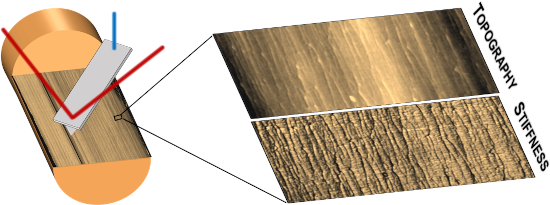
- , this distinction in fundamental chemistry has significant implications for the structures and properties of the resulting fibers. To date, structure–property characterizations of Technora® in the literature have primarily focused on (i) X-ray diffraction (XRD), (ii) nuclear magnetic resonance (NMR

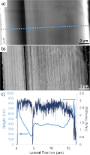


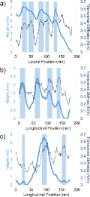



A wearable nanoscale heart sound sensor based on P(VDF-TrFE)/ZnO/GR and its application in cardiac disease detection
Beilstein J. Nanotechnol. 2023, 14, 819–833, doi:10.3762/bjnano.14.67
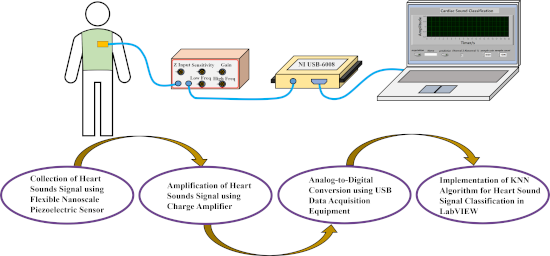
- underwent characterization through electron microscopy, X-ray diffraction (XRD), and piezoelectric performance testing. The results indicated that the piezoelectric film with a composition ratio of 12% P(VDF-TrFE) + 10% ZnO + 0.1% GR exhibited superior performance regarding various aspects. Consequently, in





