


Search results
Search for "activity" in Full Text gives 813 result(s) in Beilstein Journal of Nanotechnology. Showing first 200.
Functional surface engineering for cultural heritage protection: the role of superhydrophobic and superoleophobic coatings – a comprehensive review
Beilstein J. Nanotechnol. 2026, 17, 63–96, doi:10.3762/bjnano.17.6
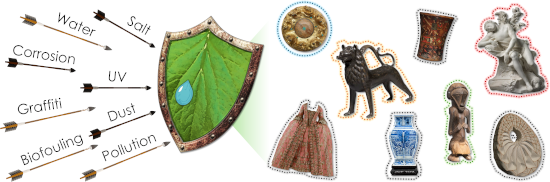
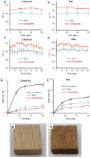
- ), to the initial mixture in order to reduce the wettability of the final coating. The formulation containing 2% of MCC enhanced with oregano essential oil (OEO) showed the lowest solubility, swelling, and wettability, along with strong antimicrobial activity against stone-deteriorating microorganisms
- . The tested microorganisms were three bacterial strains, that is, Staphylococcus aureus, Bacillus cereus, and Pseudomonas aeruginosa, one fungus strain (Penicillium chrysogenum) and one yeast strain (Rhodotorula spp.). Specifically, the microbial activity was reduced by 100% for Staphylococcus aureus
- activity under both UV-A and visible light. The TiO2/C-dot composites were synthesized via a green, hydrothermal method using citric acid and hydroxylamine, resulting in anatase-phase particles. Various C-dot loadings were tested; composites with moderate content (i.e., TC25 and TC50) demonstrated superior




Quantitative estimation of nanoparticle/substrate adhesion by atomic force microscopy
Beilstein J. Nanotechnol. 2026, 17, 1–14, doi:10.3762/bjnano.17.1

- are immobilized on supports like carbon-based materials or TiO2 to prevent aggregation and to maintain catalytic activity, strong adhesion is required [11]. To improve adhesion, Au NPs have been stabilized on SiO2 substrates by embedding them into an organometallic layer, effectively immobilizing the
- velocities, which also include a rapid and strong temperature increase upon impact. Thus, the validity range of the Weir and McGavin model, which does not include temperature effects, is exceeded. Such effects could include massive dislocation activity at the interface and formation of the Cu3Si



Internal 3D temperature mapping in biological systems using ratiometric light-sheet imaging and lipid-coated upconversion nanothermometers
Beilstein J. Nanotechnol. 2025, 16, 2306–2316, doi:10.3762/bjnano.16.159
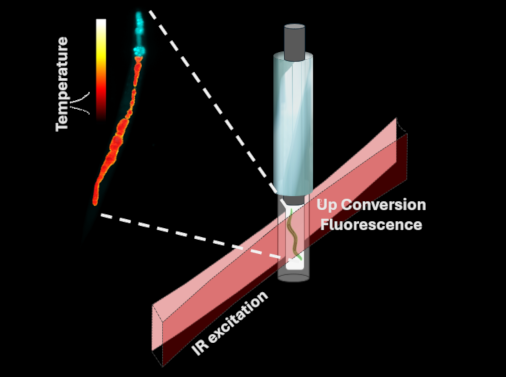
- lumen, which may be influenced by ingested material and microbial activity, rather than the metabolic heat production of the intestinal cells themselves. To probe intracellular temperatures, a surface coating engineered for active cellular uptake would be required. Conclusion We successfully


Chiral plasmonic nanostructures fabricated with circularly polarized light
Beilstein J. Nanotechnol. 2025, 16, 2245–2264, doi:10.3762/bjnano.16.154
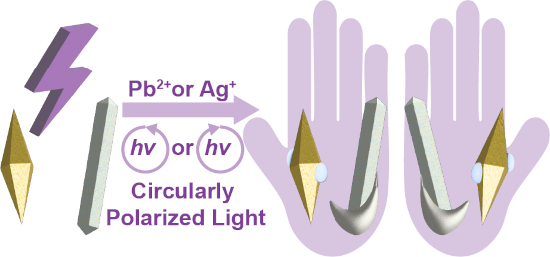
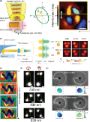
- to experimentally outline the importance of excitation wavelength in determining the resultant structural chirality and optical activity of chiral Au bipyramid (AuBP)/PbO2 nanostructures [56]. Pure metallic cPNSs constructed by CPL have also been reported [57][58][59]. This review’s primary focus are
- how the magnitude and even the sign of the hot spots’ EM profile dissymmetry factor depend on the excitation wavelength. Hence, broadband CPL produces cPNSs under a combined effect of different excitation wavelengths that can sometimes compromise structural chirality and optical activity. When
- structural chirality and optical activity of Au/PbO2 heterostructures. Similar wavelength-dependent chiroptic properties were obtained with chiral Au triangle prism/PbO2 nanostructures [92] (Figure 3e). The CD of the chiral Au/PbO2 nanostructures arises from PbO2 modifying the dielectric constant in the





Optical bio/chemical sensors for vitamin B12 analysis in food and pharmaceuticals: state of the art, challenges, and future outlooks
Beilstein J. Nanotechnol. 2025, 16, 2207–2244, doi:10.3762/bjnano.16.153
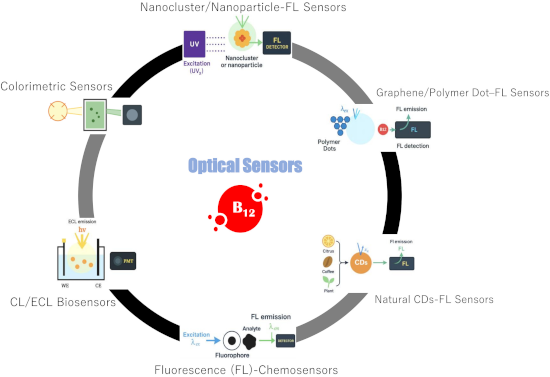
- out below the corrin ring’s plane. This particular arrangement allows the DMB base to act as a secondary ligand for the central cobalt ion (Co2+), playing a crucial role in the molecule’s structural integrity and biological activity. Within the structure of VB12, Co2+ is capable of binding to an upper
- ][104][105][106][107][108][109][110][111][112][113][114]. Qin et al. designed a CL sensor to detect VB12, incorporating flow injection analysis, where the catalytic activity of Co2+ released from the VB12 structure acted as the recognition element, luminol served as the indicator luminophore, and the


Microplastic pollution in Himalayan lakes: assessment, risks, and sustainable remediation strategies
Beilstein J. Nanotechnol. 2025, 16, 2144–2167, doi:10.3762/bjnano.16.148
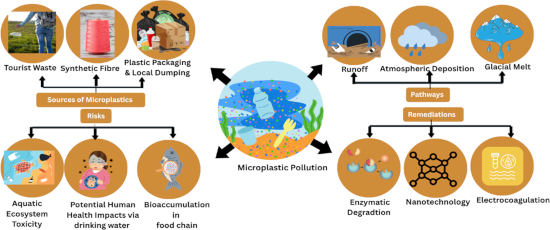
- deposition is outlined in Section 3. The harsh environmental conditions of the region, freeze–thaw weather, low microbial activity, and short hydrological retention times, make the degradation of MPs more difficult and these lakes to long-term sinks for plastic particles. Himalayan lakes are very susceptible
- emphasizes late-monsoon periods (August–September) due to the heightened runoff and peak tourism activity during these months. Sample collection both before and after the monsoons could potentially provide useful insight into variations in contamination levels generated due to runoff and anthropogenic
- they frequently demand substantial energy input and can produce secondary pollutants [47]. Biological processes can utilize the natural ability of microorganisms to degrade synthetic polymers. Microorganisms such as Pseudomonas and Bacillus, which have enzymatic activity, can degrade plastics into


Quality by design optimization of microemulsions for topical delivery of Passiflora setacea seed oil
Beilstein J. Nanotechnol. 2025, 16, 2116–2131, doi:10.3762/bjnano.16.146
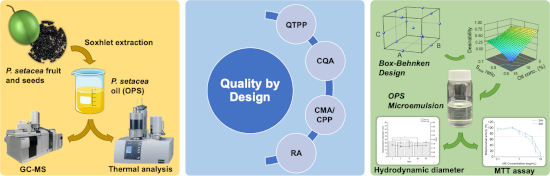
- . De Santana et al. (2015) [3] reported that this enhanced activity, reflected in both radical scavenging and oxygen radical absorption capacities, is associated with the elevated levels of tocopherol isomers and total phenolic compounds in P. setacea samples. Overall, the composition of OPS has been
- , and linoleic acids) are physiologically relevant to skin health. Oleic, palmitic, and stearic acids are the major components of the epidermal and dermal lipid matrix [15]. The balance among these fatty acids is associated with skin homeostasis, influencing the activity of enzymes that regulate
- keratinocyte and fibroblast proliferation [15][16]. Furthermore, linoleic acid and oleic acid serve as precursors to various lipid mediators, including prostaglandins, leukotrienes, and lipoxins, which are essential for modulating inflammatory responses and coordinating immune cell activity during wound


Rapid synthesis of highly monodisperse AgSbS2 nanocrystals: unveiling multifaceted activities in cancer therapy, antibacterial strategies, and antioxidant defense
Beilstein J. Nanotechnol. 2025, 16, 2105–2115, doi:10.3762/bjnano.16.145
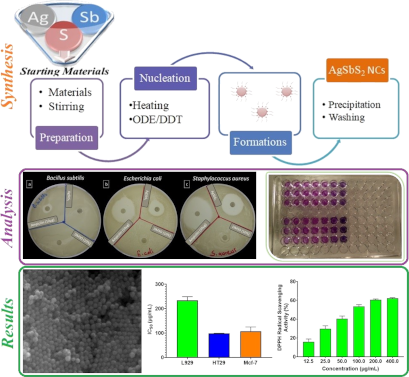
- effects by efficiently eliminating DPPH activity. This research highlights the potential of AgSbS2 NCs as versatile agents with applications in biomedical and environmental domains, including cancer therapy, antimicrobial strategies, and free radical neutralization. Keywords: AgSbS2 nanocrystals
- ; antibacterial activity; antioxidant activity; cytotoxic activity; Introduction Nanoscience serves as a unique platform to reveal new properties of substances through collaborative efforts with other fields (e.g., molecular chemistry, pharmaceutical science, applied health sciences, and engineering). In recent
- biological activity (e.g., antioxidant, antimicrobial, and anticancer) of nanomaterials has emerged as a crucial area of investigation in the field of nanoscience and nanotechnology. In many studies, chemically or biologically synthesized nanoparticles have a wide range of pharmacological activity ranging


Toward clinical translation of carbon nanomaterials in anticancer drug delivery: the need for standardisation
Beilstein J. Nanotechnol. 2025, 16, 2092–2104, doi:10.3762/bjnano.16.144

- result in carbon nanotubes with different structures, sizes, and surface chemistries, which can affect their biological activity, toxicity, and efficacy as drug delivery vehicles. Similarly, the characterisation of CNMs can be challenging due to their small size and complex structures. However, there is
- their surface chemistry and structure, emphasizing the need for systematic evaluation of their degradation pathways and by-products to ensure the safe design of nanomedicines. Moreover, CNMs can contain impurities that may impact their biological activity and safety. Therefore, it is important to assess




Stereodiscrimination of guests in chiral organosilica aerogels studied by ESR spectroscopy
Beilstein J. Nanotechnol. 2025, 16, 2034–2054, doi:10.3762/bjnano.16.140
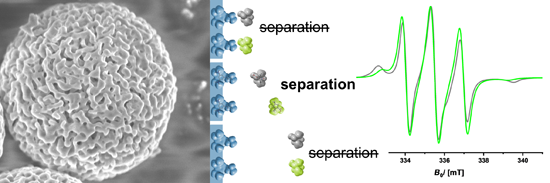
- Kotov and coworkers [4]. Chiral optical materials have unique optical activity, displaying phenomena such as circular dichroism and optical rotation. These characteristics are harnessed in applications like sensors, optical devices, and polarized materials. Material chirality can also lead to unusual




Beyond the shell: exploring polymer–lipid interfaces in core–shell nanofibers to carry hyaluronic acid and β-caryophyllene
Beilstein J. Nanotechnol. 2025, 16, 2015–2033, doi:10.3762/bjnano.16.139
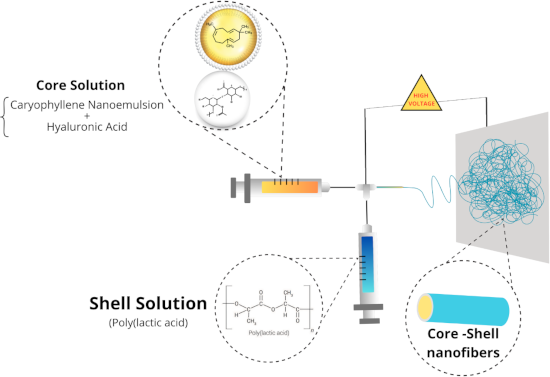
- innovative strategies to ensure their compatibility and sustained activity. This study addresses this critical challenge through the rational design and fabrication of hybrid core–shell nanofibers manufactured via coaxial electrospinning. Poly(lactic acid) (PLA) was used as an outer shell providing
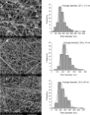
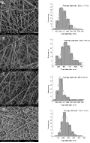
- observable beads, and a heterogeneous diameter distribution. Structural characterization of nanofibers Core–shell nanofibers create a protective environment for bioactive agents within the core, preserving their activity while enabling controlled release. By tailoring the shell architecture, the release




PEGylated lipids in lipid nanoparticle delivery dynamics and therapeutic innovation
Beilstein J. Nanotechnol. 2025, 16, 1914–1930, doi:10.3762/bjnano.16.133
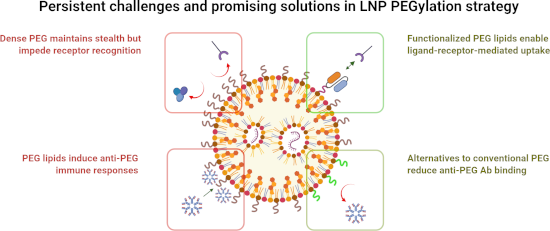
- activity of the LNP with 1.5% PEG but had no effect on the 5.0% PEG counterpart. More importantly, the reduced efficacy observed at higher PEG densities was recovered by incorporating an exogenous targeting ligand. The addition of 0.5 mol % DSG-PEG-GalNAc restored silencing activity in the 5.0% PEG LNP via
- that none of the PEOZ-LNPs exhibited detectable antibody binding. And after 38 weeks of storage at 4 °C, all nanoparticles were able to maintain their size, encapsulation efficiency, and transfection activity [83]. These data support that PEOZ has the potential to reduce immune activation while
- difference, PGE3-LNPs achieved comparable transgene expression, with luciferase activity levels in both liver and muscle tissues equivalent to those of PEG-LNPs after intravenous and intramuscular administration. After three weekly injections of hEPO mRNA at 0.05 mg·kg−1, PEG-LNPs showed a dramatic loss of


Targeting the vector of arboviruses Aedes aegypti with nanoemulsions based on essential oils: a review with focus on larvicidal and repellent properties
Beilstein J. Nanotechnol. 2025, 16, 1894–1913, doi:10.3762/bjnano.16.132
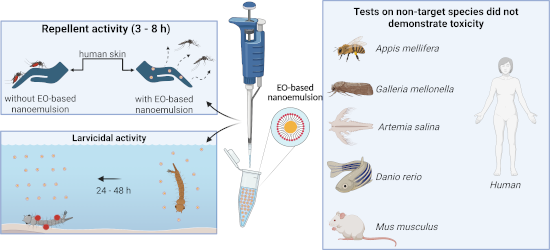
- compared to that of free EOs, in both activities. However, the repellent activity has been less explored, present in only three of the studies evaluated, in the last 10 years. Correlatingh with this, other aspects such as botanical species of EOs, mechanisms of action, composition, and characteristics of
- , pharmaceutical nanotechnology strategies such as nanoemulsions have been used as tools for vector control [79]. Numerous studies have shown that nanoemulsions can increase the solubility and prolong the larvicidal and/or repellent activity of essential oils, making them a promising solution to improve the
- . Against the Ae. aegypti vector, Duarte et al. (2024) developed NEs loaded with two monoterpenes, cymene and myrcene, and evaluated their larvicidal potential against L3 larvae [36]. The NEs showed significant lethality to Ae. aegypti larvae, with insecticidal activity equal to or greater than that of free


On the road to sustainability – application of metallic nanoparticles obtained by green synthesis in dentistry: a scoping review
Beilstein J. Nanotechnol. 2025, 16, 1851–1862, doi:10.3762/bjnano.16.128
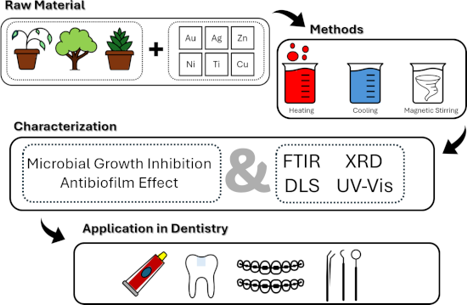
- activity and enhanced biocompatibility, achieved through phytochemically mediated synthesis. Conventional nanoparticle production often relies on toxic reagents and energy-intensive processes, posing environmental and clinical challenges. In contrast, green synthesis, using plant extracts, fungi, or
- demonstrated that these nanoparticles exhibit low toxicity, effectiveness against antibiotic-resistant microorganisms, and strong colloidal stability, ensuring long-term dispersion [26][27]. Additionally, they exhibit antioxidant activity and selective cytotoxic effects on tumor cells, including oral cancer
- morphology and size, which are crucial for optimizing biological activity [8][38]. The Myrtaceae family, particularly Syzygium aromaticum, is a well-established source of eugenol, a potent phenolic compound with known antimicrobial and antioxidant properties, enhancing the bioactivity of synthesized


Phytol-loaded soybean oil nanoemulsion as a promising alternative against Leishmania amazonensis
Beilstein J. Nanotechnol. 2025, 16, 1826–1836, doi:10.3762/bjnano.16.126

- exhibited significant time-dependent leishmanicidal activity against Leishmania amazonensis promastigotes, with lower IC50 values (up to five times lower at 48 hours) and up to 75% parasite death after 48 hours, showing greater antiparasitic activity compared to that of free phytol. Although the use of
- diterpenes exhibit promising antileishmanial activity while displaying low toxicity to host cells [13][14][15]. One such compound is a phytol, a highly lipophilic, acyclic monounsaturated diterpene alcohol derived from chlorophyll metabolism in plants [16], and has demonstrated promising antileishmanial
- potential. For example, da Silva and colleagues (2015) [17] showed that a phytol-rich fraction extracted from Lacistema pubescens exhibited potent activity against Leishmania amazonensis promastigotes and intracellular amastigotes. However, the high lipophilicity of the phytol significantly limits its


Piezoelectricity of layered double hydroxides: perspectives regarding piezocatalysis and nanogenerators
Beilstein J. Nanotechnol. 2025, 16, 1812–1817, doi:10.3762/bjnano.16.124

- /Al-LDHs. The crystal structure of LDHs is fairly flexible, enabling adjustment of their cationic composition. One widely used method for preparing LDH-based catalysts is cation doping further increasing their catalytic activity. A cobalt-doped Zn/Al-LDH (ZnCo/Al-LDH) piezoelectric catalyst was used
- of the base material. The main feature that distinguishes LDHs is their dual activity as both generators of their own piezoelectric field and charge-storing supercapacitors. Charge-balancing anions between the LDHs layers can also contribute to the overall electroactive performance. Overall, the
- ) to rigorously disentangle their respective contributions. As a result, similar activity enhancements are sometimes explained in fundamentally different ways. (3) Stability and reproducibility: For practical applications (energy harvesting, catalytic cycling, and device integration), long-term

Electrical, photocatalytic, and sensory properties of graphene oxide and polyimide implanted with low- and medium-energy silver ions
Beilstein J. Nanotechnol. 2025, 16, 1794–1811, doi:10.3762/bjnano.16.123
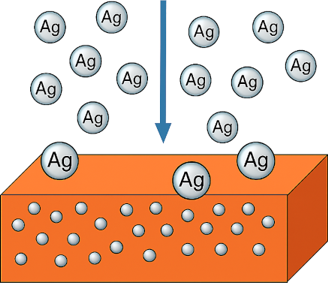
- activity in polymeric and carbon-based materials is essential for advancing technologies in environmental sensing, flexible electronics, and photocatalytic systems. Conventional chemical modification methods often lack spatial precision, introduce impurities, and risk structural degradation. Ion
- atomic force microscopy. Electrical properties as a function of air humidity were evaluated using a two-point method, and photocatalytic activity was tested by monitoring the UV-induced decomposition of rhodamine B. The results demonstrate that ion implantation significantly reduces surface resistivity
- and enhances both the photocatalytic activity and humidity sensitivity of GO and PI. The most pronounced improvements occurred at higher fluences, where defect generation and partial deoxygenation contributed to optimal performance. Ion implantation thus represents an effective approach for tuning the


Exploring the potential of polymers: advancements in oral nanocarrier technology
Beilstein J. Nanotechnol. 2025, 16, 1751–1793, doi:10.3762/bjnano.16.122
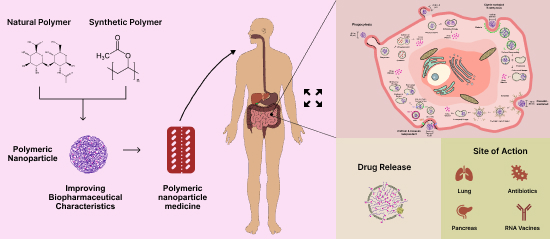
- response to internal signals (e.g., oxidation or reduction, enzymatic activity, or low acidity) or external stimuli such as light and temperature [26][27]. This delivery of active ingredients relies on differential biochemical changes, facilitating the development of more precise therapies with improved
- weight, as these exhibit a high elastic modulus, creating a deformable matrix that expands pores due to osmotic pressure [57]. This, in turn, influences the elimination, phagocytosis, and biological activity of PNs intended for oral administration. Another factor affecting the polymer’s physicochemical
- immunomodulatory activity, which plays a key role in antitumor therapy by inducing cell apoptosis [133]. Building on this, Imperiale et al. [114] evaluated the pharmacokinetic profile of chitosan NPs loaded with IFNα and analyzed the cellular compatibility of the NPs in intestinal epithelial cells (Caco-2) and the


Advances of aptamers in esophageal cancer diagnosis, treatment and drug delivery
Beilstein J. Nanotechnol. 2025, 16, 1734–1750, doi:10.3762/bjnano.16.121
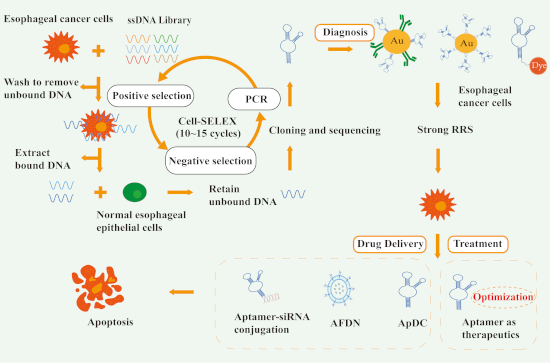
- , which can specifically block CDP/SOX2 interaction, was screened by BiFc assay. The antitumor activity of p58 aptamer was further analyzed in vitro and in mouse xenograft and zebrafish models, suggesting that peptide 58 could significantly inhibit the proliferation, migration, and invasion of KYSE450
- the same antitumor activity as free Dox in vivo. In order to further enhance the antitumor effect, the use of nanotechnology to improve the stability of SYL-6 is key. It is worth noting that the SYL-6 aptamer also yields strong fluorescence signals on colon cancer and other tissues, indicating that
- drugs from clearance, improve their accumulation at tumor sites, and potentially lead to more positive clinical feedback. Paclitaxel (PTX) was approved by the FDA in 1992 for the treatment of a variety of solid tumors. Poor water solubility is a major obstacle limiting its anticancer activity. PTX


Multifunctional anionic nanoemulsion with linseed oil and lecithin: a preliminary approach for dry eye disease
Beilstein J. Nanotechnol. 2025, 16, 1711–1733, doi:10.3762/bjnano.16.120
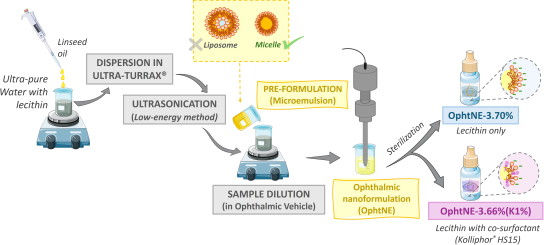
- triplicate to calculate the mean ± standard deviation. Antioxidant activity The antioxidant activity of the linseed oil-based nanoformulation was assessed using the 2,2-diphenyl-1-picrylhydrazyl (DPPH) free radical photocolorimetry method [55][56]. A 100 µL aliquot of DPPH solution (0.3 mmol·L−1 in 99
- from light. Absorbance was then measured at 518 nm using a Multiskan Go UV spectrophotometer (Thermo Fisher Scientific, FI). Ascorbic acid (3% w/v, prepared in the ophthalmic vehicle) was used as the positive control. The experiment was performed in quadruplicate, and antioxidant activity (DPPH radical
- inhibition percentage) was calculated using Equation 2 [57]. The IC50 (the concentration required to achieve 50% inhibition) of the radical scavenging activity was determined via linear regression analysis [58]. where Abscontrol, represents the absorbance of the DPPH radicals, Abssample, represents the



Ambient pressure XPS at MAX IV
Beilstein J. Nanotechnol. 2025, 16, 1677–1694, doi:10.3762/bjnano.16.118
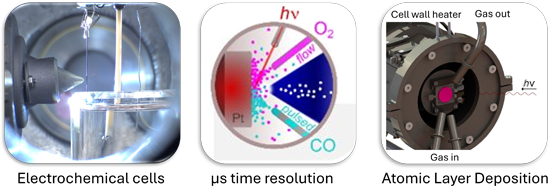
- -atom catalysts and progressing to confined catalysis, time-resolved measurements, photocatalysis, and atomic layer deposition. Single-atom catalysts Single-atom catalysts (SACs) have emerged as a frontier in (electro)catalysis, combining exceptional catalytic activity with optimal utilization of
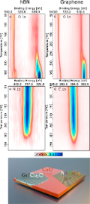
- here. Instead, we focus on a study by Vesselli and co-workers that directly addresses catalytic activity in a biomimetic SAC system [20][21]. In their work, a cobalt single-atom biomimetic model catalyst is based on a self-assembled monolayer of Co-porphyrins grown on an almost free-standing graphene
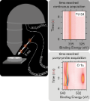
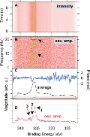
- of different reactant ratios and their effect on the product composition within one experiment, which makes them inherently comparable. Thus, this pump–probe acquisition mode enables structure–activity correlations with high time resolution. Ethylene oxidation (millisecond time-resolution, continuous





Prospects of nanotechnology and natural products for cancer and immunotherapy
Beilstein J. Nanotechnol. 2025, 16, 1644–1667, doi:10.3762/bjnano.16.116
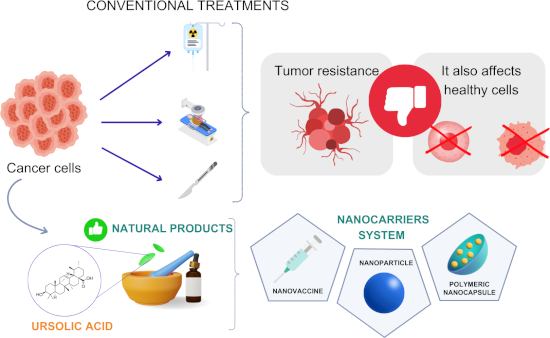
- to evade the immune system, such as expressing immunosuppressive molecules and creating a hostile tumor microenvironment that suppresses antitumor activity [7]. One of the most exploited mechanisms by tumors involves immune checkpoints, such as PD-L1 (programmed death-ligand 1) and CTLA-4 (cytotoxic
- (Figure 3B). The oldest selected patent was published by WO in November 2016, while the most recent was published by CN in 2024. China’s leadership in global patent activity is strongly supported by extensive public investment in research and innovation at both national and regional levels. The government
- ]. The use of natural products in cancer treatment and immunotherapy is mainly represented by the use of certain classes of compounds. Among them are saponins, which can remodel the tumor microenvironment, polysaccharides, such as lentinan, which increase immune cell activity, and polyphenols that can


Venom-loaded cationic-functionalized poly(lactic acid) nanoparticles for serum production against Tityus serrulatus scorpion
Beilstein J. Nanotechnol. 2025, 16, 1633–1643, doi:10.3762/bjnano.16.115
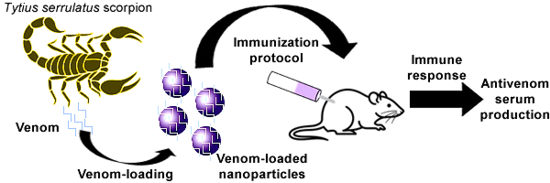
- improve safety but also effectively deliver complex venom proteins. The bioactive proteins that compound the Tityus serrulatus venom are complex molecules that should have the structural integrity preserved for the specific biological activity. The poor stability of these proteins, both in vivo and in
- shape, uniform aspects, and sizes compatible with the results obtained by dynamic light scattering. These morphological features are known to influence the biological activity of nanoparticles loaded with bioactive molecules, directly affecting their release. The release profile of a substance depends
- routes are very common for the administration of proteins with pharmacological activity and with particle sizes of around 200 nm [40]. Regarding stability, only minimal changes in physicochemical parameters were observed, indicating colloidal stability of the nanoparticle formulation. This is


Nanotechnology-based approaches for the removal of microplastics from wastewater: a comprehensive review
Beilstein J. Nanotechnol. 2025, 16, 1607–1632, doi:10.3762/bjnano.16.114
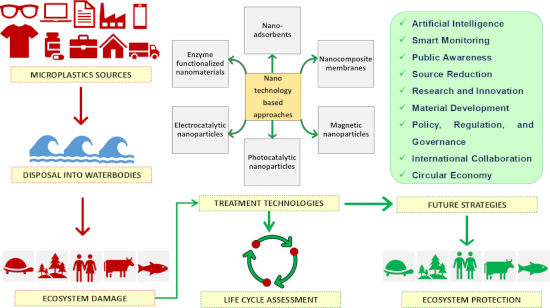
- wear, and microbial activity [3]. Common types of MPs found in ecosystems, particularly in freshwater and drinking water sources, include materials such as high-density polyethylene, polystyrene, polyvinyl chloride, and polypropylene [4]. Among the various contributors to MPs, residential households
- plankton development, lifespan and reproduction, and growth [45]. MPs function as carriers for heavy metals, resulting in their accumulation in the digestive systems of fish. This accumulation can negatively affect fish by impairing their activity, stunting growth, disrupting reproduction, and potentially
- of MP contamination [47]. In a study performed by Raza et al. [48], it was seen that, MPs, particularly polyacrylamide, pose significant risks to aquatic environments by accumulating in fish tissues, disrupting antioxidant enzyme activity, and altering blood parameters. Their presence leads to


Photocatalytic degradation of ofloxacin in water assisted by TiO2 nanowires on carbon cloth: contributions of H2O2 addition and substrate absorbability
Beilstein J. Nanotechnol. 2025, 16, 1567–1579, doi:10.3762/bjnano.16.111
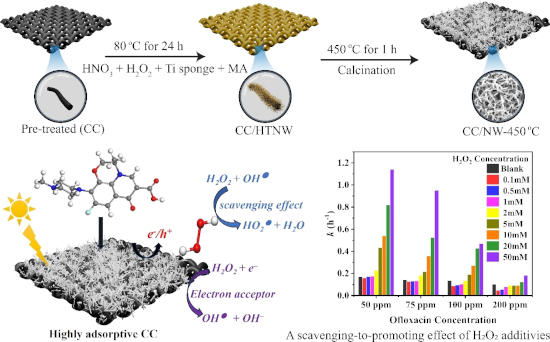
- performed at room temperature. A TOC-L CPH analyzer (SHIMADZU, Japan) was used to detect total organic carbon (TOC). Photocatalytic activity for OFL removal The photocatalytic activity was evaluated through the photodegradation of 50 mL aqueous solutions of OFL at initial concentrations of 50, 75, 100, and
- , the content of hydroxyl groups in CC/HTNW is evaluated to be ca. 52%, which reduced to approximately 16% after the final air calcination, suggesting abundant residual surface oxygen vacancies in CC/NW-450 °C. These vacancies are beneficial for enhancing photocatalytic activity [26][27]. Photocatalytic
- activity for OFL removal and materials durability The photocatalytic activities of the carbon cloth-supported TiO2 nanowires (CC/NW-450 °C) were assessed by monitoring the degradation of various concentrations of OFL aqueous solutions under UV light radiation, as shown in Figure 5a. The corresponding





