


Search results
Search for "analytical methods" in Full Text gives 37 result(s) in Beilstein Journal of Nanotechnology.
Green and energy-efficient methods for the production of metallic nanoparticles
Beilstein J. Nanotechnol. 2015, 6, 2354–2376, doi:10.3762/bjnano.6.243
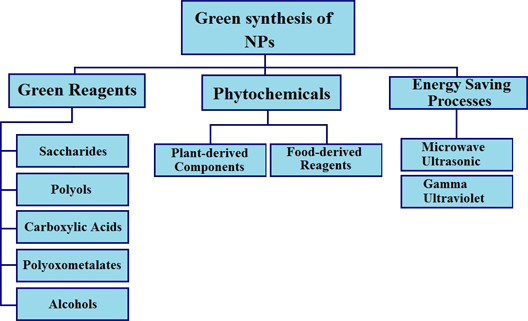
- by-products that may need further degradation steps. Conventional analytical methods involve pretreatment steps that generate waste and, therefore, green analytical chemistry can be defined as the use of measurements that generate less waste and are thus safer to the environment and to human health


Optimized design of a nanostructured SPCE-based multipurpose biosensing platform formed by ferrocene-tethered electrochemically-deposited cauliflower-shaped gold nanoparticles
Beilstein J. Nanotechnol. 2015, 6, 1840–1852, doi:10.3762/bjnano.6.187
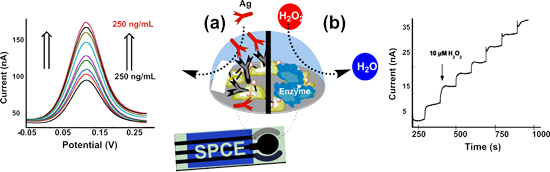
- ; nanotechnology; optimized design; screen-printed carbon electrode (SPCE) nanostructuration; Introduction Simplicity of design, cost-effectiveness and lightweight are among the most important requirements for the design of devices that can be used for the development of on-site analytical methods [1][2][3


Synthesis, characterization and in vitro effects of 7 nm alloyed silver–gold nanoparticles
Beilstein J. Nanotechnol. 2015, 6, 1212–1220, doi:10.3762/bjnano.6.124
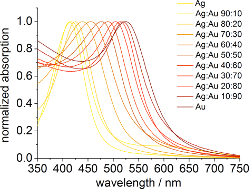
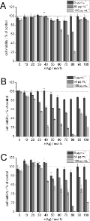
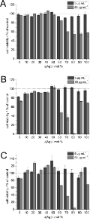
- analytical methods showed uniform particle sizes independent of the molar metal composition. Only nanoparticles with the highest silver content (Ag/Au 90:10) showed a slightly larger particle size. This can likely be attributed to the comparatively slow reduction process and the different standard potentials


From lithium to sodium: cell chemistry of room temperature sodium–air and sodium–sulfur batteries
Beilstein J. Nanotechnol. 2015, 6, 1016–1055, doi:10.3762/bjnano.6.105
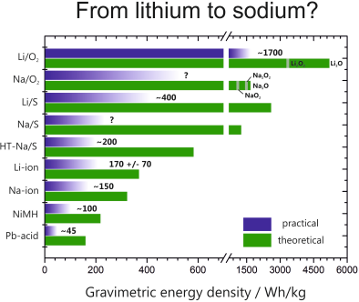
- are usually time demanding and require both a careful execution of experiments and the use of complex and often expensive analytical methods. 2.3.2 The sodium–oxygen (Na/O2) battery: The sodium–oxygen battery is based on the same cell concept as the lithium–oxygen battery, however, only very little


Overview about the localization of nanoparticles in tissue and cellular context by different imaging techniques
Beilstein J. Nanotechnol. 2015, 6, 263–280, doi:10.3762/bjnano.6.25
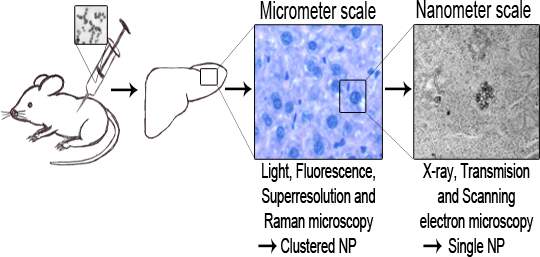
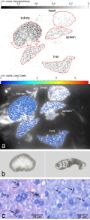
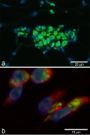
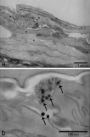
- secondary electrons [174]. SEM can be combined with a transmission electron detector for STEM or analytical methods, for example, EDX or EELS as described for TEM. For example, SEM with EDX analysis has been used to study the fate of silver NP and ions in an in vitro human gastrointestinal digestion model



Chemoselective silicification of synthetic peptides and polyamines
Beilstein J. Nanotechnol. 2015, 6, 103–110, doi:10.3762/bjnano.6.10
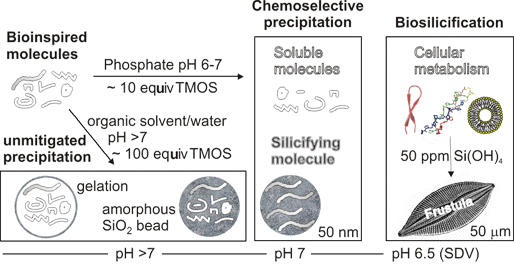
- it, and to weigh it. NMR is no substitute for other analytical methods but 1H NMR is a single technology that simultaneously monitors the pH value, viscosity, and amount of dissolved molecules. 1H NMR is advantageous for optimizing the experimental settings of silica precipitation process because of




Functionalized polystyrene nanoparticles as a platform for studying bio–nano interactions
Beilstein J. Nanotechnol. 2014, 5, 2403–2412, doi:10.3762/bjnano.5.250
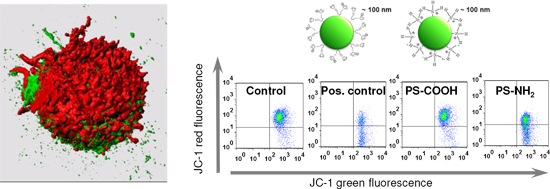
- temperatures below 200 °C, trace amounts of styrene, ethylbenzene, and cumene could be detected at this temperature by analytical methods. After exposure for 2 h at temperatures above 330 °C, styrene fully decomposes producing mainly styrene monomer [8]. When compared with other common natural and synthetic


Peak forces and lateral resolution in amplitude modulation force microscopy in liquid
Beilstein J. Nanotechnol. 2013, 4, 852–859, doi:10.3762/bjnano.4.96
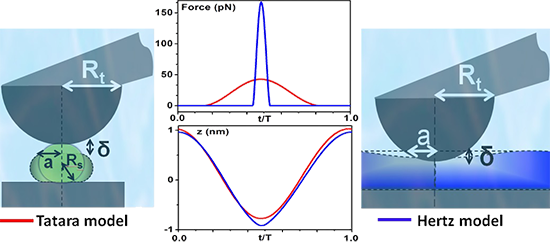
- mechanics and thus their application range is somehow limited. Numerical simulations have supported the development of AM-AFM by predicting several properties of the tip motion [25][26][27]. Those simulations provide the standards against which new experimental or analytical methods should be compared [28


Plasmonics-based detection of H2 and CO: discrimination between reducing gases facilitated by material control
Beilstein J. Nanotechnol. 2012, 3, 712–721, doi:10.3762/bjnano.3.81
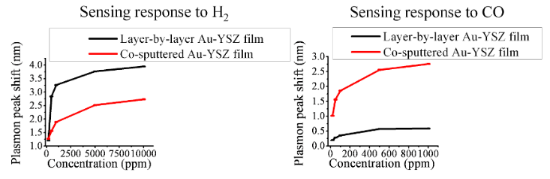
- in air) these reactions would induce a change in the dielectric function of the matrix. Such operando studies, combining chemical sensing measurements with analytical methods that simultaneously probe the reaction mechanism that induces the sensing response, remain a challenging experiment under



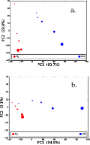


The morphology of silver nanoparticles prepared by enzyme-induced reduction
Beilstein J. Nanotechnol. 2012, 3, 404–414, doi:10.3762/bjnano.3.47
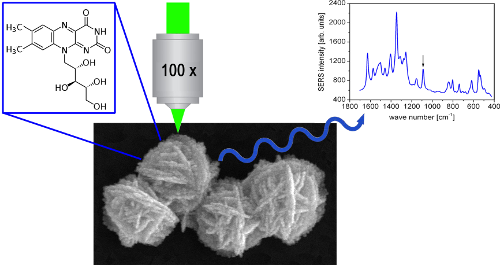
- contaminations. Therefore, the enzymatically grown silver nanoparticles were investigated by employing different microscopic techniques, namely scanning electron microscopy (SEM) and transmission electron microscopy (TEM), together with analytical methods, namely Rutherford backscattering spectrometry (RBS) and


Glassy carbon electrodes modified with multiwalled carbon nanotubes for the determination of ascorbic acid by square-wave voltammetry
Beilstein J. Nanotechnol. 2012, 3, 388–396, doi:10.3762/bjnano.3.45
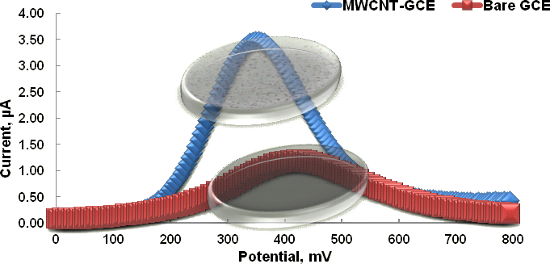
- by preventing oxidative deterioration [1][2][3]. The overall oxidation of AA is [2] The growing use of AA in the food, pharmaceutical and cosmetic industries and its significance in biomedical science require the development of reliable, rapid and preferably portable analytical methods to quantify AA


Variations in the structure and reactivity of thioester functionalized self-assembled monolayers and their use for controlled surface modification
Beilstein J. Nanotechnol. 2012, 3, 213–220, doi:10.3762/bjnano.3.24
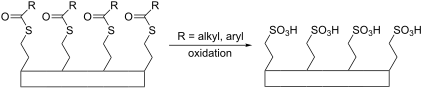
- obtained from Virginia Semiconductor (n-type; undoped, <100>, >1000 Ω·cm). Quartz substrates were obtained from Quarzschmelze Ilmenau. Analytical Methods Unless otherwise indicated, NMR spectra were obtained on a Bruker DPX 300 spectrometer (1H NMR at 300 MHz; 13C NMR at 75 MHz). Some were performed on a





