


Search results
Search for "annealing" in Full Text gives 502 result(s) in Beilstein Journal of Nanotechnology. Showing first 200.
Morphology and properties of pyrite nanoparticles obtained by pulsed laser ablation in liquid and thin films for photodetection
Beilstein J. Nanotechnol. 2025, 16, 785–805, doi:10.3762/bjnano.16.60
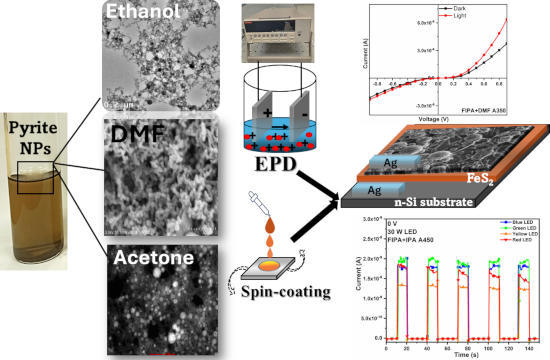
- nanocolloids. The structural, morphological and electrical characterizations of the films are also presented. By sulfurization of the films, phase-pure pyrite thin films are obtained. The photodetection range was up to 785 nm photocurrent in the order of 10−6 to 10−4 A for different annealing conditions and a
- presented. Photodiode configuration of n-Si/p-FeS2 is achieved using nanocolloids synthesized in IPA and DMF. Annealing of these structures is also done in vacuum at different temperatures to improve their film properties and device performance. The photodiodes prepared using thin films of these
- . The FIPA that was deposited by EPD and then spin coated with FeS2 NPs in DMF is indicated as "FIPA+DMF A350" in Figure 1. The as-prepared film is referred to as AP, and the annealing temperature is referred to as A350 and A450. A photodiode structure of p-FeS2/n-Si was successfully fabricated






The impact of tris(pentafluorophenyl)borane hole transport layer doping on interfacial charge extraction and recombination
Beilstein J. Nanotechnol. 2025, 16, 678–689, doi:10.3762/bjnano.16.52
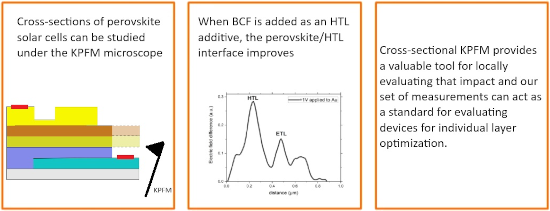
- deposition method (500 rpm for 10 s and 4000 rpm for 25 s). A volume of 150 μL of toluene was used as anti-solvent 10 s into the second step. The perovskite was crystalized during a 100 °C annealing step for 30 min. For the cells that incorporated spiro-OMeTAD, we used a solution containing 72.3 mg spiro


Retrieval of B1 phase from high-pressure B2 phase for CdO nanoparticles by electronic excitations in CdxZn1−xO composite thin films
Beilstein J. Nanotechnol. 2025, 16, 551–560, doi:10.3762/bjnano.16.43

- the B1 to B2 PT in CdxZn1−xO (x = 0.4) binary oxide thin films subjected to various annealing temperatures of 700, 800, 850, and 900 °C [1]. The data reveals the emergence of the B2 phase characterized by the (100) Bragg reflection in CdO nanoparticles as the annealing temperature increases. In
- evident; rather, distinct void regions are observed. Given that CdO has a melting temperature of ≈1000 °C, a portion of CdO may have melted during the annealing process at 900 °C, subsequently condensing in energetically favorable sites at the film surface. The whitish regions in the CZ900_Pris thin film
- electronic system, and where TD is the Debye temperature and na is the atomic number density. All the calculated values used in the simulation code are mentioned in Table 2. Discussion for retrieval of the B1 phase with O ion irradiation The thermal annealing at temperatures exceeding 800 °C induces atomic


N2+-implantation-induced tailoring of structural, morphological, optical, and electrical characteristics of sputtered molybdenum thin films
Beilstein J. Nanotechnol. 2025, 16, 495–509, doi:10.3762/bjnano.16.38
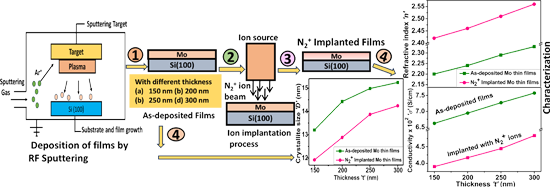
- tensile after annealing. Lee et al. [24] efficiently incorporated nitrogen ions into epitaxial Mo films, forming a buried superconducting layer. They deposited atomically flat epitaxial Mo(110) films on Al2O3(0001) substrates. Carreri et al. [25] investigated high-temperature (800–1200 °C) plasma-based


ReactorAFM/STM – dynamic reactions on surfaces at elevated temperature and atmospheric pressure
Beilstein J. Nanotechnol. 2025, 16, 397–406, doi:10.3762/bjnano.16.30
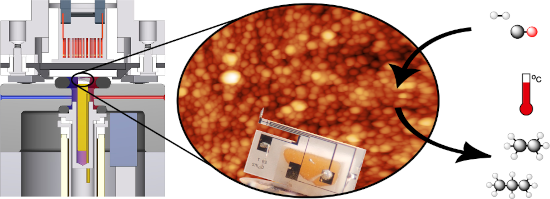
- sputtering (3 μA, 1 kV, 30 min) at room temperature followed by annealing at 1000 K for 5 min. In Figure 5a,c, taken at 450 K under UHV conditions, we recognize steps in the vertical direction, which correspond to the Pd(100) steps. In the current signal image, the same steps are visible and defined more
- annealing at 1000 K for 5 min. The oxide is deposited ex situ (in a nearby setup, transfer is done in air) by physical vapor deposition using an aluminum oxide sputter target and NiAl(110) as substrate. The deposition was performed at a 10−3 mbar argon pressure for a duration of 40 min. Once placed back in


Tailoring of physical properties of RF-sputtered ZnTe films: role of substrate temperature
Beilstein J. Nanotechnol. 2025, 16, 333–348, doi:10.3762/bjnano.16.25
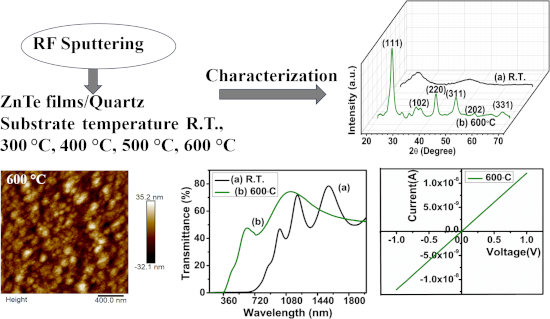
- . Rakhshani et al. [16] reported the impact of substrate temperature (35 and 305 °C), thermal annealing, and nitrogen doping on optoelectronic properties of ZnTe films and established an optimal doping concentration of nitrogen for lowering the resistivity of the grown films. Further, there are reports [17




Enhancing mechanical properties of chitosan/PVA electrospun nanofibers: a comprehensive review
Beilstein J. Nanotechnol. 2025, 16, 286–307, doi:10.3762/bjnano.16.22

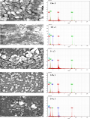
- methods are still predominantly used, even though combining two methods is more efficient. For instance, the combination of electrospinning with stretching and annealing treatments has been shown to produce ultrafine nanofibers [25]. Another issue with electrospun scaffolds is balancing their function of


Synthesis and the impact of hydroxyapatite nanoparticles on the viability and activity of rhizobacteria
Beilstein J. Nanotechnol. 2025, 16, 216–228, doi:10.3762/bjnano.16.17
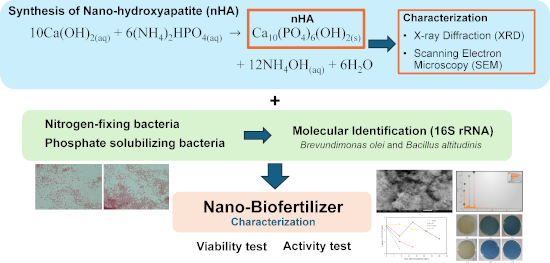
- cycles consisting of denaturation at 94 °C for 45 s, annealing at 52 °C for 1 min, and elongation at 72 °C for 1 min. After the final cycle, polymerization continued at 72 °C for 5 min. The PCR products were then analyzed by electrophoresis on a 1% agarose gel. Visualization was performed under UV light


A review of metal-organic frameworks and polymers in mixed matrix membranes for CO2 capture
Beilstein J. Nanotechnol. 2025, 16, 155–186, doi:10.3762/bjnano.16.14
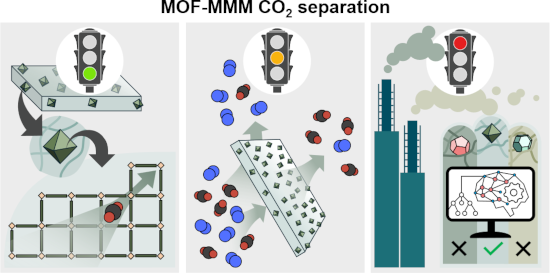
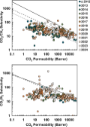
- functionalization, Figure 7c,d, reducing filler sizes, in situ MOF growth, or applying annealing treatments. Interfacial adhesion can also be improved using ionic liquids (Figure 7e). MOF functionalization is commonly employed in MMM research. For example, in the study by Katayama et al. [113] mentioned earlier
- between polymer and fillers has also been enhanced through annealing treatments. Although annealing of MOFs can cause partial decomposition of the structural framework by imposing local defects, such treatments have been shown to increase CO2 uptake capacity in MOFs [129] and improve CO2 capture
- performance of MOF-based MMM [130]. In a study by Lai et al. [130], ZIF-8 was annealed at 300 °C for 1 h before being mixed with a poly(styrene-co-butadiene) solution during MMM fabrication. For filler loadings of 10 to 30 wt %, annealing led to an increase in CO2 permeability and CO2/N2 selectivity due to




Orientation-dependent photonic bandgaps in gold-dust weevil scales and their titania bioreplicates
Beilstein J. Nanotechnol. 2025, 16, 1–10, doi:10.3762/bjnano.16.1
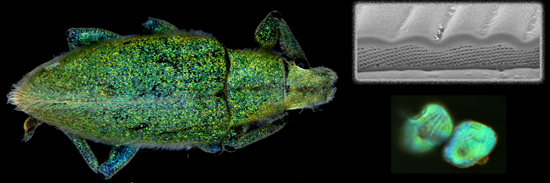
- the effective refractive index of titania thin films produced by sol–gel synthesis varies because of porosity, depending on the specific process, chemicals, and reaction conditions [41]. A higher annealing temperature seems to have a large influence on reducing the porosity of thin films, while


Effect of radiation-induced vacancy saturation on the first-order phase transformation in nanoparticles: insights from a model
Beilstein J. Nanotechnol. 2024, 15, 1453–1472, doi:10.3762/bjnano.15.117

- , changes in the structural properties of Ni nanostructures due to ion bombardment have been reported in [15]. Interestingly, certain types of radiation ions have shown a positive effect on the crystal structure, leading to an increase in the degree of crystallinity after the austenitic annealing of defects


Lithium niobate on insulator: an emerging nanophotonic crystal for optimized light control
Beilstein J. Nanotechnol. 2024, 15, 1415–1426, doi:10.3762/bjnano.15.114
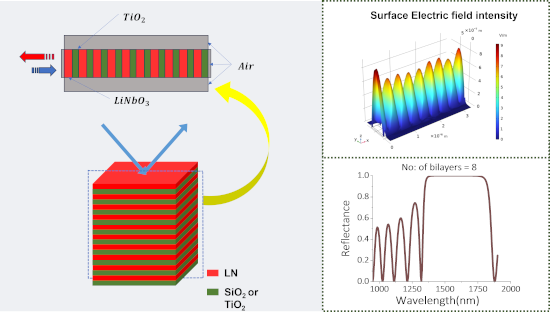
- implantation, the wafer is bonded to a SiO2 (or TiO2) substrate using direct bonding techniques, which involves bringing the surfaces into close contact and applying pressure or heat to form a strong bond. The wafer is then subjected to thermal annealing, which activates the splitting process along the


Various CVD-grown ZnO nanostructures for nanodevices and interdisciplinary applications
Beilstein J. Nanotechnol. 2024, 15, 1390–1399, doi:10.3762/bjnano.15.112
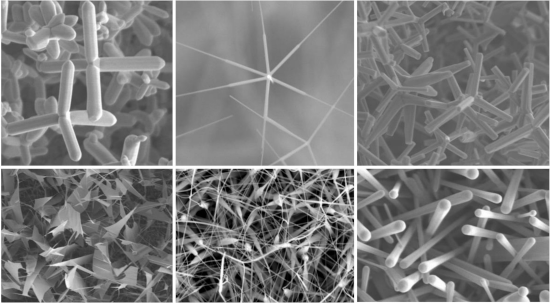
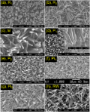
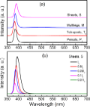
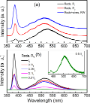
- annealing Zn powder under atmospheric pressure conditions, we collected nanocrystals with various morphologies, including rods, pencils, sheets, combs, tetrapods, and multilegs. Raman scattering study reveals that the samples are monophasic with a hexagonal structure, and fall into the P63mc space group



The role of a tantalum interlayer in enhancing the properties of Fe3O4 thin films
Beilstein J. Nanotechnol. 2024, 15, 1253–1259, doi:10.3762/bjnano.15.101

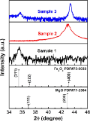
- process [14][15]. The impact of substrate temperature, annealing temperature, gas flow rate, and thickness on enhancing the characteristics of Fe3O4 thin films has been examined [15][16][17][18]. The substrates play a crucial role in directing the growth and enhancing the quality of the crystal, resulting


Local work function on graphene nanoribbons
Beilstein J. Nanotechnol. 2024, 15, 1125–1131, doi:10.3762/bjnano.15.91
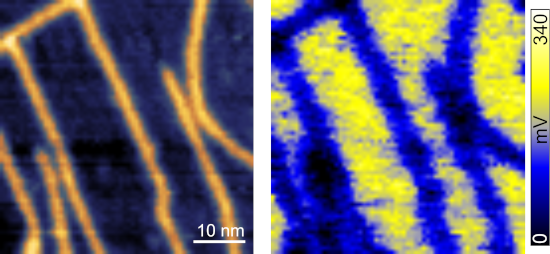
- -dependent measurements. Experimental The experiments were conducted in an Omicron VT-SFM system (base pressure 2 × 10⁻¹⁰ mbar). The Au(111) single crystal substrate (Mateck GmbH) was cleaned by repeated Ar ion sputtering–annealing cycles. The cleanliness of the samples was checked by SFM measurements. Then
- , 10,10′-dibromo-9,9′-bianthryl (DBBA) molecules were deposited by thermal evaporation (Kentax evaporator) onto the hot (Tsample = 470 K) sample surface for 10 min. The deposition rate was kept constant using a quartz crystal microbalance. Annealing up to 670 K for 10 min after deposition induced
- (f0 = 292 kHz, cL = 41 N/m) were used for imaging in the frequency modulation (FM) mode operated by a Nanonis electronic system. The tips were cleaned by sputtering (Ar pressure 5 × 10⁻³ Pa, energy 1 keV, 15 min) and annealing up to 375 K for 1–5 h (pressure below 1 × 10⁻⁷ Pa) prior to measurement

![[Graphic 1]](/bjnano/content/inline/2190-4286-15-91-i4.svg?max-width=637&scale=1.18182)
Effect of repeating hydrothermal growth processes and rapid thermal annealing on CuO thin film properties
Beilstein J. Nanotechnol. 2024, 15, 743–754, doi:10.3762/bjnano.15.62
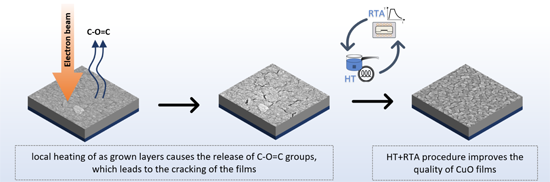
- and Technology, Wybrzeze Wyspiańskiego 27, 50–370 Wroclaw, Poland 10.3762/bjnano.15.62 Abstract This paper presents an investigation into the influence of repeating cycles of hydrothermal growth processes and rapid thermal annealing (HT+RTA) on the properties of CuO thin films. An innovative
- devices. Keywords: CuO; hydrothermal method; rapid thermal annealing; thin films; Introduction Copper(II) oxide is a p-type semiconductor possessing a narrow bandgap, along with many beneficial electrical, optical, and magnetic properties. Particularly at the nanoscale, these properties set themselves
- focuses on hydrothermally grown CuO films. There are only a few reports in the literature indicating the use of this method for the growth of CuO films. An example of a multistep method of producing CuO films has been described in [43]. It combines the hydrothermal process, annealing, and spin coating




Directed growth of quinacridone chains on the vicinal Ag(35 1 1) surface
Beilstein J. Nanotechnol. 2024, 15, 556–568, doi:10.3762/bjnano.15.48
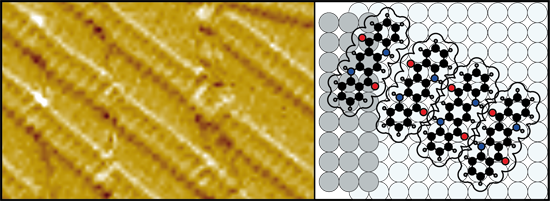
- from Pfeiffer Vacuum. The vicinal Ag(35 1 1) crystal was obtained from MaTecK and cleaned by repeated cycles of sputtering and subsequent annealing at 700 K for 45 min. We tested whether a variation of the annealing temperatures between 500 and 800 K has an influence on the step distribution of the
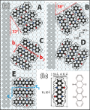
- are more stable than the single chains with the same orientations B and D of the α-phase because of their commensurate nature. Hence, they do not completely transform into the domains of orientations A and C. One might also ask whether annealing the sample at 500 K for a longer time, or several
- consecutive annealing steps at 500 K, might further change the ratio in favor of orientations A and C. This was not the case. We observed the same intensity ratio between the stronger and weaker spots in the LEED pattern after every preparation and several consecutive annealing cycles. This can be explained


Electron-induced deposition using Fe(CO)4MA and Fe(CO)5 – effect of MA ligand and process conditions
Beilstein J. Nanotechnol. 2024, 15, 500–516, doi:10.3762/bjnano.15.45
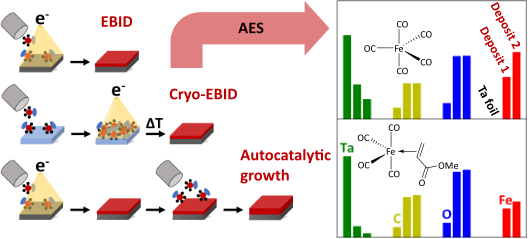
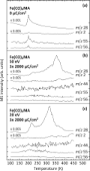
- with more than 90 atom % Fe were obtained [19], presumably related to electron beam heating effects. However, attempts to purify deposits with initial Fe contents of only 40 atom % by annealing up to 700 °C led to phase segregation into a highly pure and crystalline Fe phase and a carbonaceous material
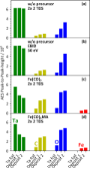
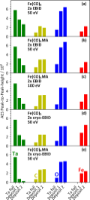
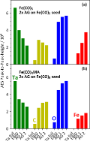
- irradiation. In cryo-EBID experiments, the precursor was condensed on the Ta substrate held at 100 K, after which electron irradiation was performed. After each deposition step, the remaining volatile species were removed by a TDS run followed by annealing. AES was again measured after sputter cleaning the Ta
- . Considering, however, the low volatility of the MA ligand at 100 K and the absence of signals of MA in ESD (see section Electron-stimulated desorption from condensed Fe(CO)4MA), it is likely that the ligand either desorbs during thermal annealing after electron irradiation or is decomposed to smaller and more



Unveiling the nature of atomic defects in graphene on a metal surface
Beilstein J. Nanotechnol. 2024, 15, 416–425, doi:10.3762/bjnano.15.37
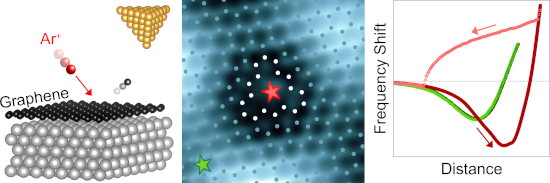
- of defects. Experimental A combined STM-AFM was operated in ultrahigh vacuum (5 × 10⁻⁹ Pa) and at low temperature (5 K). Surfaces of Ir(111) were cleaned by Ar+ ion bombardement and annealing. The epitaxial growth of graphene proceeded by exposing the heated (1300 K) Ir(111) surface to the gaseous
- molecular precursor C2H4 (purity: 99.9%) at a partial pressure of 10−5 Pa for 120 s [25][26]. Atomic-scale defects were created by bombarding graphene-covered Ir(111) with low-energy (140 eV) Ar+ ions (purity of the Ar gas: 99.999%) [27][28][29][30] at room temperature for 5 s followed by annealing (900 K


Controllable physicochemical properties of WOx thin films grown under glancing angle
Beilstein J. Nanotechnol. 2024, 15, 350–359, doi:10.3762/bjnano.15.31
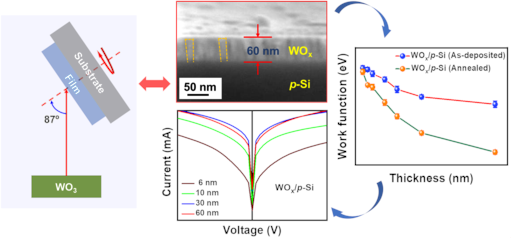
- sputtering for optoelectronic applications. A glancing angle of 87° is employed to grow films of different thicknesses, which are then exposed to post-growth annealing. Detailed local probe analyses in terms of morphology and work function of WOx films are carried out to investigate thickness-dependent
- fabricating WOx-based optoelectronic devices, including photovoltaic cells. Keywords: annealing; glancing angle sputter deposition; heterojunction; tungsten oxide; work function; Introduction Tungsten oxide (WOx; x ≤ 3) is a popular transition-metal oxide for various optoelectronic devices because of its
- structural, optical, and electrical properties of glancing angle-deposited NS-WOx thin films, where NS-WOx films of different thicknesses (6–60 nm) are prepared by rf sputtering and exposed to post-growth annealing at 673 K in vacuum (2 × 10⁻⁷ mbar). The role of increased oxygen vacancy concentration (OV) on


In situ optical sub-wavelength thickness control of porous anodic aluminum oxide
Beilstein J. Nanotechnol. 2024, 15, 126–133, doi:10.3762/bjnano.15.12
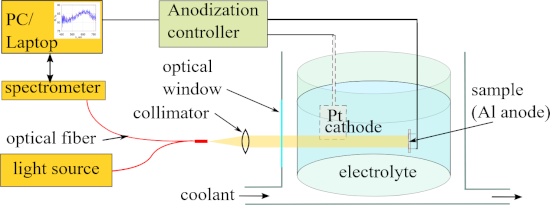
- materials in phase 2. A simulated annealing fitting algorithm was employed. The PAAO structure (Figure 1a) was confirmed using field-emission scanning electron microscopy (FE-SEM-4800, Hitachi, Tokyo, Japan). The relationship between thickness measurements using SEM and optical interferometry has been


A bifunctional superconducting cell as flux qubit and neuron
Beilstein J. Nanotechnol. 2023, 14, 1116–1126, doi:10.3762/bjnano.14.92
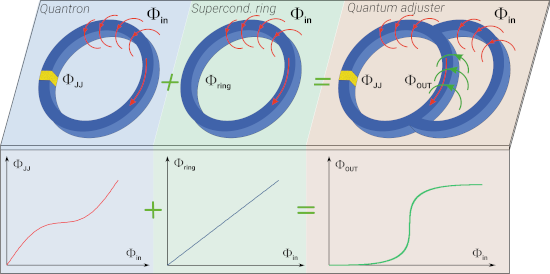
- on the principle of quantum annealing and contains a superconducting chip with 128,472 Josephson junctions, 75 percent of which were dedicated to superconducting digital electronics for controlling the processor and reading out the result. The rest was used either for qubit junctions or for

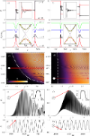


Density functional theory study of Au-fcc/Ge and Au-hcp/Ge interfaces
Beilstein J. Nanotechnol. 2023, 14, 1093–1105, doi:10.3762/bjnano.14.90
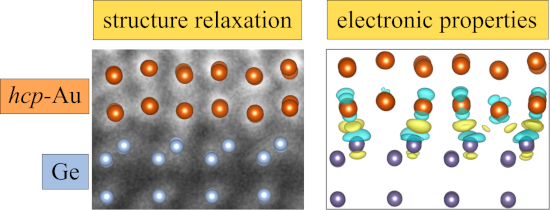
- , stable hcp nanoislands were obtained under controlled annealing conditions on the germanium substrate [23]. After initial crystallization of the fcc gold phase, the hcp phase grows from the eutectic Au/Ge liquid. The atomically resolved STEM-HAADF measurements as well as electron backscatter diffraction
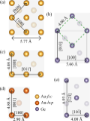
- hcp phase of Au, formed during specific processes of annealing and cooling of gold and germanium, is characterized by the P63/mmc space group with lattice constants aAu−hcp = 2.90 Å and cAu−hcp = 4.88 Å [23]. These structural parameters are well reproduced in our DFT calculations. The obtained cubic





A visible-light photodetector based on heterojunctions between CuO nanoparticles and ZnO nanorods
Beilstein J. Nanotechnol. 2023, 14, 1018–1027, doi:10.3762/bjnano.14.84
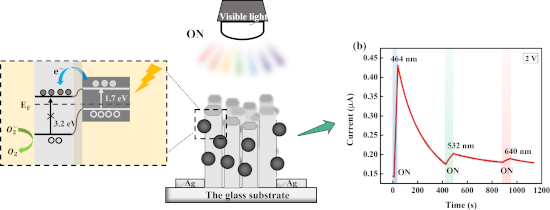
- ., temperature, concentrations of chemicals, and annealing time). ZnO nanorods and nanowires have attracted great interest in photodetectors because their chemical and physical properties are exceptional for electronics applications, and their fabrication strategies are more facile than those of other structures
- temperature. Then, 1 mL HNO3 solution was added dropwise into this mixture under vigorous magnetic stirring. After annealing at 180 °C for 18 h, the black precipitate was washed several times and centrifuged (Supporting Information File 1, Figure S2). The formation of nanoparticles was observed through the


Isolation of cubic Si3P4 in the form of nanocrystals
Beilstein J. Nanotechnol. 2023, 14, 971–979, doi:10.3762/bjnano.14.80
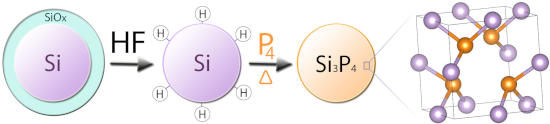
- nanoparticles with a defective zinc blende structure under mild conditions through thermal annealing of hydrogenated silicon nanoparticles with red phosphorus. The synthesized Si3P4 nanoparticles were analyzed using FTIR, XRD, electron diffraction, EDX, TEM, Raman spectroscopy, X-ray fluorescence spectrometry
- precursor for diffusion doping of wafers and as anode material for Li-ion batteries. A similar method with a hydrogenation step offers the possibility to obtain other compounds, such as silicon selenides, arsenides, and sulfides. Keywords: ampoule annealing; defective zinc blende structure; DFT
- inclusions in Si wafers implanted with P+ ions and laser-annealed at temperatures of 450–850 °C [2]. Recently, NPs of elemental compositions close to SiP and SiP2 have been observed in thermal annealing products of non-stoichiometric silicon oxide containing high amounts of phosphorus introduced during the





