


Search results
Search for "antimicrobial" in Full Text gives 135 result(s) in Beilstein Journal of Nanotechnology.
Enhancing the therapeutical potential of metalloantibiotics using nano-based delivery systems
Beilstein J. Nanotechnol. 2025, 16, 1350–1366, doi:10.3762/bjnano.16.98
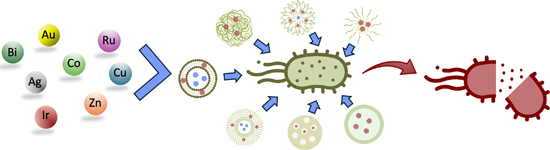
- enabling their precise, localized release. Recent reviews have outlined the key design parameters and clinical translation challenges associated with nanocarrier-based antimicrobial therapies, underscoring their relevance in overcoming bacterial resistance mechanisms [Xie, Y.; Liu, H.; Teng, Z.; Ma, J
- .; Liu, G. Nanoscale 2025, 17, 5605–5628. doi:10.1039/D4NR04774E ]. This review explores the potential of encapsulated metalloantibiotics as a new frontier in antimicrobial therapy. We address the mechanisms by which drug delivery systems can stabilize and direct metalloantibiotics to their biological
- : antimicrobial resistance; biocompatibility; metalloantibiotics; nanocarriers; targeted delivery; Introduction Antimicrobial resistance (AMR), the condition that bacteria no longer respond to drugs used to treat infections, has become one of the biggest public health challenges of the 21st century. According to


Functional bio-packaging enhanced with nanocellulose from rice straw and cinnamon essential oil Pickering emulsion for fruit preservation
Beilstein J. Nanotechnol. 2025, 16, 1234–1245, doi:10.3762/bjnano.16.91
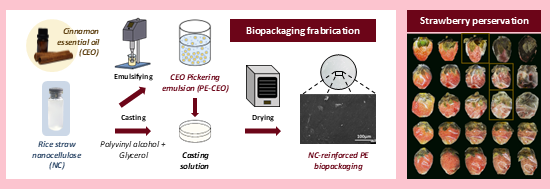
- antimicrobial and antioxidation properties that can offer extended shelf life [27][28][29]. Essential oils are great candidates and possess a variety of bioactive properties while maintaining a high biocompatibility [30]. Cinnamon essential oil (CEO) is one of the best-known essential oils with strong activity
- strong antimicrobial and enhanced DPPH inhibition properties [38]. This study represents the first attempt to integrate rice straw-derived nanocellulose both as a biopackaging reinforcing filler and as a carrier for cinnamon essential oil Pickering emulsions (PE-CEO) into a single biopackaging material
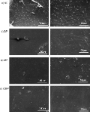
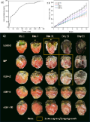
- cinnamaldehyde and other phenolic compounds in CEO, which act as natural UV absorbers [50]. The antimicrobial properties of the biopackaging were assessed by a time-kill assay against E. coli and S. aureus after 24 h of exposure (Figure 4c,e). rBP exhibited slight inhibitions of E. coli and S. aureus (<20



Hydrogels and nanogels: effectiveness in dermal applications
Beilstein J. Nanotechnol. 2025, 16, 1216–1233, doi:10.3762/bjnano.16.90
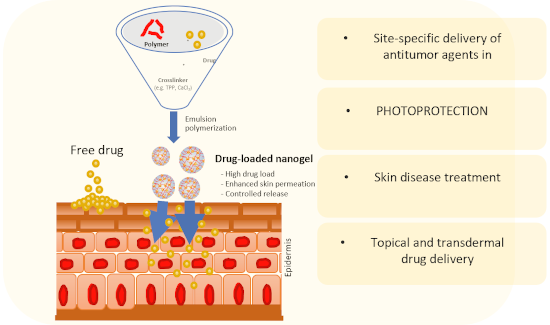
- through the oxidative coupling of catechol groups using a hydrogen peroxide/horseradish peroxidase (H2O2/HRP) catalytic system [41]. The addition of the antibiotic doxycycline provided the hydrogels with antimicrobial activity to treat infected full-thickness defect wounds. Flexible films composed of
- the extracellular matrix make them attractive drug delivery systems. Dermal applications include psoriasis treatment, antimicrobial activity, wound healing, and skin tumor remission. Understanding topical and transdermal drug delivery mechanisms is crucial. Hydrogels and nanogels, proven strategies to


Chitosan nanocomposite containing rotenoids: an alternative bioinsecticidal approach for the management of Aedes aegypti
Beilstein J. Nanotechnol. 2025, 16, 1197–1208, doi:10.3762/bjnano.16.88
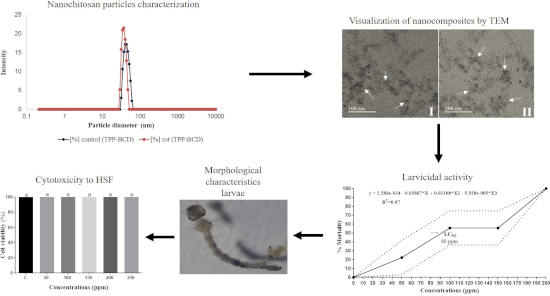
- impacts associated with traditional synthetic insecticides [9][10]. Chitosan nanoparticles, derived from a biodegradable and nontoxic polysaccharide, have proven effective in reducing post-harvest deterioration of fruits and vegetables, in addition to exhibiting well-documented antimicrobial properties



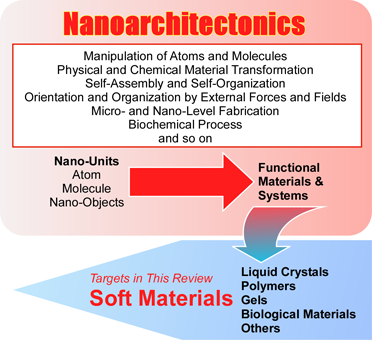
Soft materials nanoarchitectonics: liquid crystals, polymers, gels, biomaterials, and others
Beilstein J. Nanotechnol. 2025, 16, 1025–1067, doi:10.3762/bjnano.16.77






Efficiency of single-pulse laser fragmentation of organic nutraceutical dispersions in a circular jet flow-through reactor
Beilstein J. Nanotechnol. 2025, 16, 711–727, doi:10.3762/bjnano.16.55
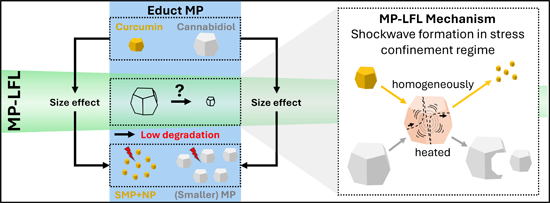
- that curcumin mostly functions as a radical scavenger at higher concentrations [63]. Further studies also report the photodegradation kinetics of phenolic compounds with antimicrobial properties to be inversely dependent on concentration [64]. For CBD with the same mass concentration of 0.1 wt % of


Polyurethane/silk fibroin-based electrospun membranes for wound healing and skin substitute applications
Beilstein J. Nanotechnol. 2025, 16, 591–612, doi:10.3762/bjnano.16.46
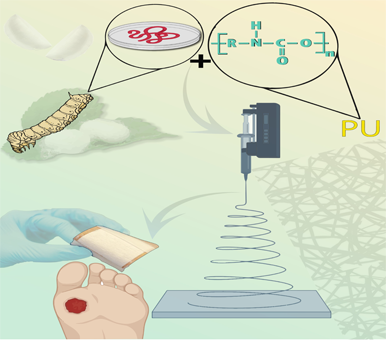
- , and cytokines regulate the leucocytes at the injury site. Neutrophils (leucocytes) remove pathogens and necrotic tissues by phagocytosis, antimicrobial peptides, and the release of active oxygen species, proteolytic enzymes, as well as eicosanoids [39]. Excessive and uncontrolled inflammation causes
- , environmental engineering, and green chemistry [59]. This method facilitates the creation of highly porous 3D structures with an extensive surface area and desirable chemical and physical properties, making the resulting nanofibers ideal for applications such as biosensors, antimicrobial surfaces, scaffolds
- movement and tissue regeneration, allow for neovascularization, accelerated re-epithelialization, and tissue development [109]. Without the need for a cross-linker, SF-based composites can be customized with a range of antimicrobial drugs, growth stimulants, and other bioactive substances [110]. Ren et al



Quantification of lead through rod-shaped silver-doped zinc oxide nanoparticles using an electrochemical approach
Beilstein J. Nanotechnol. 2025, 16, 422–434, doi:10.3762/bjnano.16.33
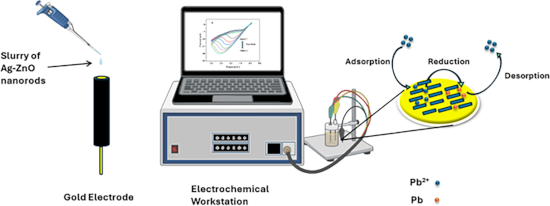
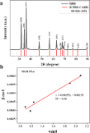
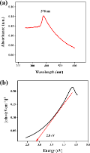
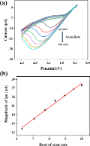
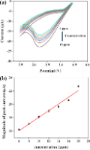
- , India Department of Physics, Punjab Engineering College (Deemed to be University), Chandigarh, 160012, India 10.3762/bjnano.16.33 Abstract Special features of zinc oxide nanoparticles have drawn a lot of interest due to their wide bandgap, high surface area, photocatalytic activity, antimicrobial





Fabrication and evaluation of BerNPs regarding the growth and development of Streptococcus mutans
Beilstein J. Nanotechnol. 2025, 16, 308–315, doi:10.3762/bjnano.16.23
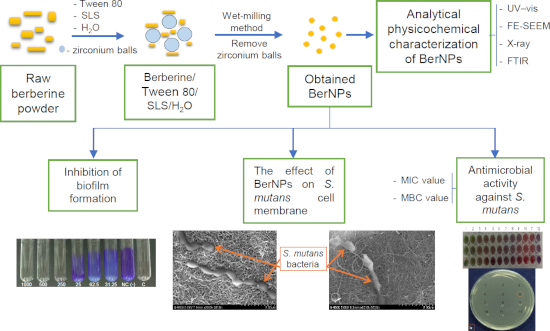
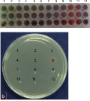
- -transform infrared spectroscopy. The broth dilution method was used to determine the antimicrobial activity of the BerNPs against Streptococcus mutans (S. mutans). The impact of the BerNPs on the cell surface of S. mutans was evaluated through FE-SEM analysis, focusing on its ability to inhibit biofilm
- is currently little information on its antimicrobial activity against S. mutans. Therefore, it is scientifically and economically important to clarify the mechanism and ability of BerNPs to inhibit the growth of S. mutans. The findings from such studies could serve as a foundation for developing




Enhancing mechanical properties of chitosan/PVA electrospun nanofibers: a comprehensive review
Beilstein J. Nanotechnol. 2025, 16, 286–307, doi:10.3762/bjnano.16.22

- improved the antimicrobial activity of the nanofibers against a wide range of bacteria [190]. In tissue engineering applications, aligned fibers are particularly effective as they better mimic the inductive environment, such as that of human tendon stem/progenitor cells, compared to random fibers [191


Emerging strategies in the sustainable removal of antibiotics using semiconductor-based photocatalysts
Beilstein J. Nanotechnol. 2025, 16, 264–285, doi:10.3762/bjnano.16.21
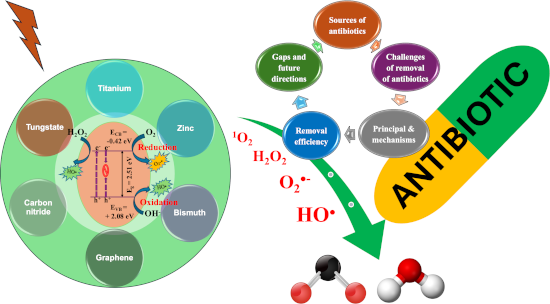
- health and ecological systems [11][12][13][14][15][16]. Alarming projections in the USA anticipated that antimicrobial resistance-related deaths exceeding the combined toll of cancer and diabetes, with approximately 23,000 deaths annually [17]. For the mitigation of environmental hazards caused by



Recent advances in photothermal nanomaterials for ophthalmic applications
Beilstein J. Nanotechnol. 2025, 16, 195–215, doi:10.3762/bjnano.16.16
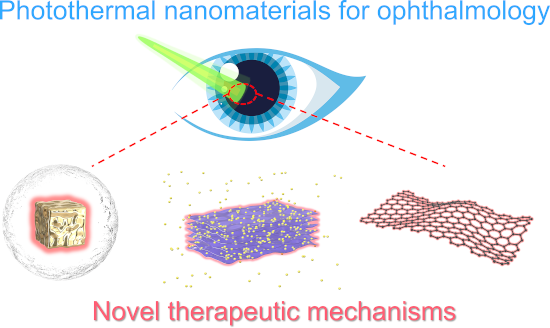
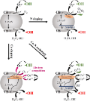
- vesicle leakage, bacterial endophthalmitis, and ocular hypotonia. Wang et al. developed a polyvinyl alcohol (PVA) hydrogel with enhanced photothermal, antimicrobial, and drug-delivery capabilities (PVA@rGO-Ag/5-Fu) [71]. Under NIR irradiation, the rGO-Ag component in the hydrogel effectively targets and


Clays enhanced with niobium: potential in wastewater treatment and reuse as pigment with antibacterial activity
Beilstein J. Nanotechnol. 2025, 16, 141–154, doi:10.3762/bjnano.16.13
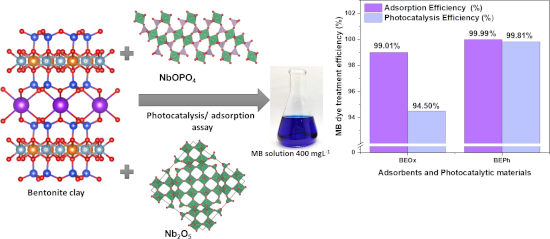
- characterized through colorimetric analysis (CIEL*a*b*) and UV–vis spectroscopy. Antimicrobial activity test The antimicrobial properties of the BEPh, BEOx, A-BEPh, A-BEOx, A-BEPhP, and A-BEOxP samples were investigated against the bacteria Bacillus cereus (ATCC 10876) (Gram-positive) and Proteus mirabilis
- inhibiting Gram-negative bacteria, which typically exhibit increased resistance due to the presence of an outer membrane that protects them from certain antimicrobial agents [29]. Therefore, the preliminary results indicate that bentonite clay modification with niobium oxide (BEOx) and niobium phosphate



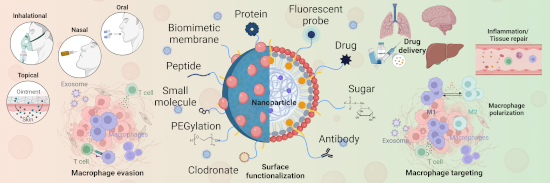
Nanocarriers and macrophage interaction: from a potential hurdle to an alternative therapeutic strategy
Beilstein J. Nanotechnol. 2025, 16, 97–118, doi:10.3762/bjnano.16.10


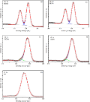
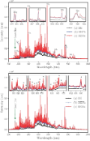
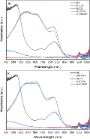
Characterization of ZnO nanoparticles synthesized using probiotic Lactiplantibacillus plantarum GP258
Beilstein J. Nanotechnol. 2025, 16, 78–89, doi:10.3762/bjnano.16.8
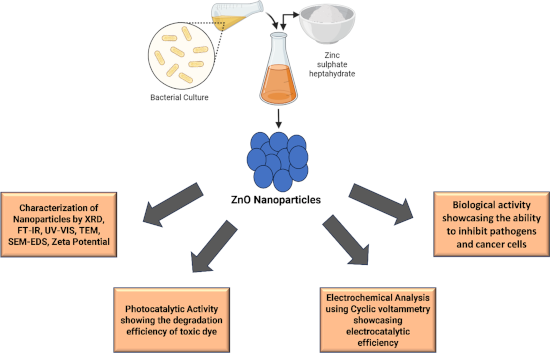
- -to-volume ratio, and magnetic, electrical, optical, antimicrobial and hardness properties give NPs distinct mechanical, thermal, and catalytic properties. As a result, nanotechnology has widespread applications across diverse domains and opened up new possibilities for innovation [1][2]. Particles
- . When ingested in sufficient quantities, they provide health advantages as they colonize the gut, and their metabolites generally show antimicrobial and health promotion activity to the host [6][7][8]. The thick peptidoglycan layers with crosslinks and the complex cell wall structures of Gram-positive
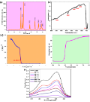
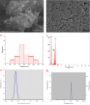
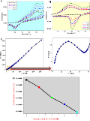
- semiconductors. Also, ZnO NPs exhibit antimicrobial activity, targeted drug delivery, catalytic activity, and antidiabetic, larvicidal, acaricidal and anticancer activity in addition to their usage in different medical devices and pharmaceuticals [11][12][13]. We report the ecologically safe production of ZnO



Mechanistic insights into endosomal escape by sodium oleate-modified liposomes
Beilstein J. Nanotechnol. 2024, 15, 1667–1685, doi:10.3762/bjnano.15.131
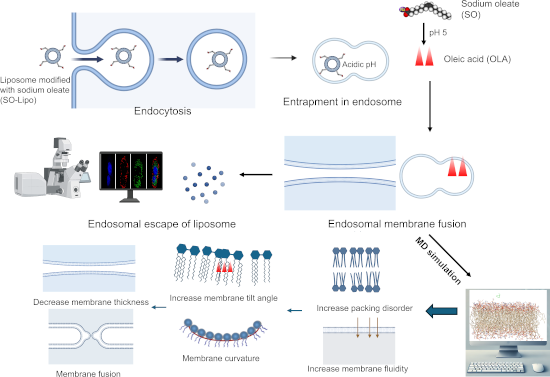
- endocytosis, likely due to membrane modulation by SO [18][19]. For AUR-Lipo (Figure 2c,f), amiloride significantly reduced fluorescence (p < 0.001), confirming that macropinocytosis is the primary pathway for AUR-Lipo. This is consistent with previous studies of cationic antimicrobial peptides using




Natural nanofibers embedded in the seed mucilage envelope: composite hydrogels with specific adhesive and frictional properties
Beilstein J. Nanotechnol. 2024, 15, 1603–1618, doi:10.3762/bjnano.15.126
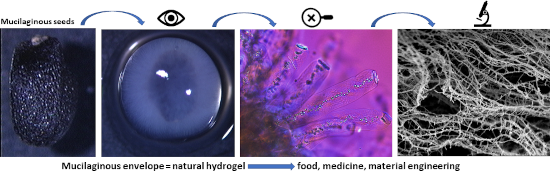
- friction better fulfil their biological role than mucilaginous seeds with just low friction, which was demonstrated in our experiment with pigeons (see below). Friction after chemical and thermal treatments The antimicrobial activity of seed mucilage was previously described for Linum usitatissimum [105
- encapsulation of medical substances. A very important advantage of diaspore mucilages are their antimicrobial properties [105][106][110][111]. Phenolic compounds are secondary plant metabolites, which demonstrate a wide range of structures, from simple molecules to polymeric compounds. They can be produced in
- phenolic molecules, which are concentrated on the mucilage surface, can be maximised [98]. Thus, we assume that increased concentration of phenolic compounds at the mucilage interface has an important antimicrobial function for the seed. The mucilage envelope supports the germination through speeding it up


Polymer lipid hybrid nanoparticles for phytochemical delivery: challenges, progress, and future prospects
Beilstein J. Nanotechnol. 2024, 15, 1473–1497, doi:10.3762/bjnano.15.118
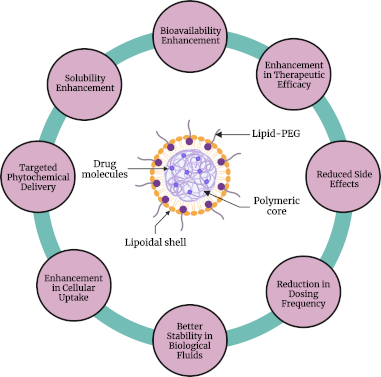
- wide range of therapeutic properties, including antioxidant, anti-inflammatory, anticancer, and antimicrobial activities. However, their clinical application is often hindered by poor water solubility, low bioavailability, rapid metabolism, and instability under physiological conditions. Polymer lipid
- in Ayurvedic and Chinese medicine because of its numerous health benefits. CUR is known for a wide range of therapeutic effects, which include anti-inflammatory, antioxidant, antimicrobial, anticancer, cardioprotective, neuroprotective, anti-diabetic, and anti-arthritic properties [77][78]. Despite
- anti-inflammatory, antioxidant, anticancer, antimicrobial, antidiabetic, and hepatoprotective activities [94][95]. THQ is a BCS class-II drug, characterized by its highly lipophilic characteristics with very poor water solubility [96]. Because of the high lipophilicity, THQ shows very poor dissolution


Hymenoptera and biomimetic surfaces: insights and innovations
Beilstein J. Nanotechnol. 2024, 15, 1333–1352, doi:10.3762/bjnano.15.107
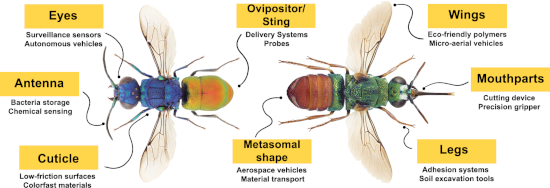
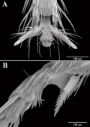
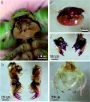
- devices. These devices can release antimicrobial agents or probiotics to prevent infections and promote healing. For example, catheters and implants can mimic the wasp structures to reduce the risk of infection and enhance the body’s natural healing processes. Mesosoma Wings: In order to fulfill their




Interaction of graphene oxide with tannic acid: computational modeling and toxicity mitigation in C. elegans
Beilstein J. Nanotechnol. 2024, 15, 1297–1311, doi:10.3762/bjnano.15.105
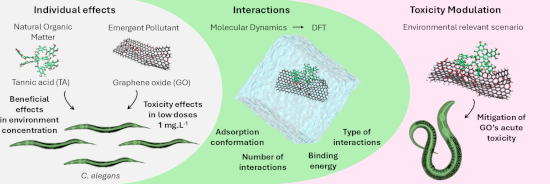
- presence of TA, GO still might cause long-term effects, which need to be subject of further investigations. Concomitantly, it is known that the polyphenols such as TA exhibit properties that are beneficial to health, such as antimicrobial, anti-inflammatory, and antioxidant capacities [61][62]. Saul et al


Functional morphology of cleaning devices in the damselfly Ischnura elegans (Odonata, Coenagrionidae)
Beilstein J. Nanotechnol. 2024, 15, 1260–1272, doi:10.3762/bjnano.15.102

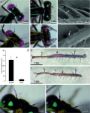
- behavior also plays a role in distributing substances across their bodies, such as antimicrobial compounds [10], brochosomes [11], and cuticular lipids [6][12]. Additionally, self-grooming is essential for flight, as it keeps the wings clean [13], and for movement on land, by ensuring the cleanliness of


Unveiling the potential of alginate-based nanomaterials in sensing technology and smart delivery applications
Beilstein J. Nanotechnol. 2024, 15, 1077–1104, doi:10.3762/bjnano.15.88
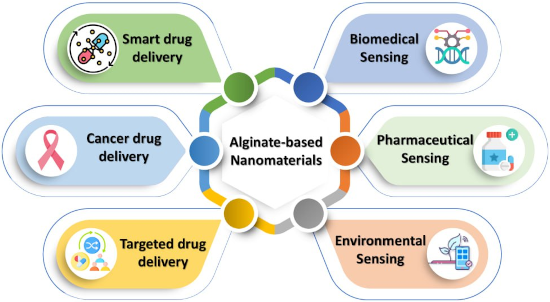
- body, as they are antimicrobial, biodegradable, and non-toxic [22]. Biopolymeric nanoparticles are a very effective material for producing biosensors. In today’s world, people need sensors to monitor various types of pollution. Food contamination with infectious microorganisms or air and water
- used to detect hydrogen peroxide using cyclic voltammetry and chronoamperometry, with a linear response and detection limits of 0.91 M and 0.02 M, respectively. In most sensing applications, sodium alginate is used as a capping agent, which binds molecules to show its compatibility and antimicrobial


Interface properties of nanostructured carbon-coated biological implants: an overview
Beilstein J. Nanotechnol. 2024, 15, 1041–1053, doi:10.3762/bjnano.15.85
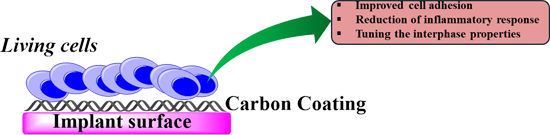
- implant surface using several routes [108][109], including the incorporation of nanostructured carbon species [101]. Graphene and graphene-related materials have been widely used as antimicrobial coatings for several kinds of implants to tune the surface hydrophobicity and to prevent bacteria adhesion



Electrospun nanofibers: building blocks for the repair of bone tissue
Beilstein J. Nanotechnol. 2024, 15, 941–953, doi:10.3762/bjnano.15.77
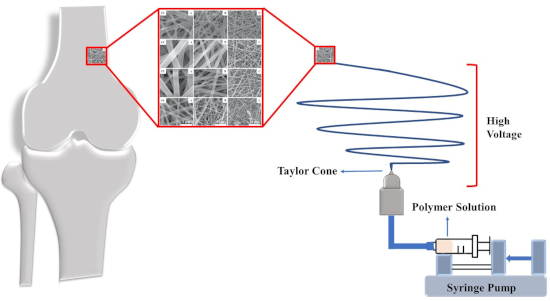
- , bone regeneration, dermal patches, antimicrobial wound care, and cardiovascular grafts. Many industrial-scale electrospinning apparatuses have been developed by different companies, such as NanospiderTM (Elmarco s.r.o.) [99], Nanospinner 416 (Inovenso) [100], and INFL8100 (Fanavaran Nano-Meghyas (FNM


Potential of a deep eutectic solvent in silver nanoparticle fabrication for antibiotic residue detection
Beilstein J. Nanotechnol. 2024, 15, 426–434, doi:10.3762/bjnano.15.38
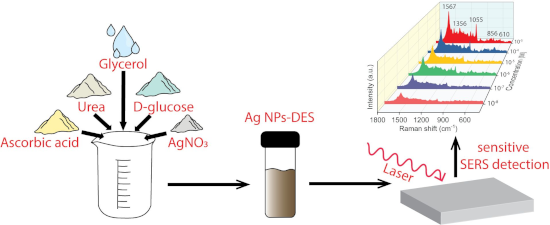
- of Ag NPs-DES substrate Another antibiotic commonly used in infectious disease treatment is sulfadiazine (SDZ). Both NFT and SDZ are effective antimicrobial substances, but their overuse statuses were reported to be hazardous as mentioned above. Since their molecular structures are partially





