Search results
Search for "branching" in Full Text gives 58 result(s) in Beilstein Journal of Nanotechnology.
Nanocomposites comprised of homogeneously dispersed magnetic iron-oxide nanoparticles and poly(methyl methacrylate)
Beilstein J. Nanotechnol. 2018, 9, 1613–1622, doi:10.3762/bjnano.9.153
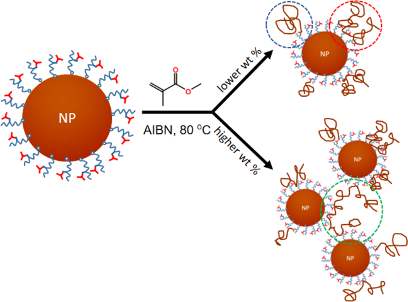
- together; however, the number of the individual NPs linked together is quite low. This indicates that branched structures with NPs acting as the branching points were most likely formed instead of a fully cross-linked gel. The fact that the hydrodynamic size of the NP-PMMA nanoparticles was still large in


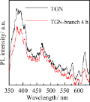
Sheet-on-belt branched TiO2(B)/rGO powders with enhanced photocatalytic activity
Beilstein J. Nanotechnol. 2018, 9, 1550–1557, doi:10.3762/bjnano.9.146
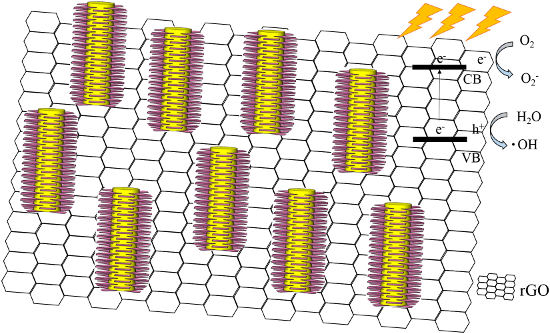
- nanobelts when compared with the pristine alkali-hydrothermal synthesized nanobelt. The incorporation of graphene and the branching tactic resulted in a significantly increased specific surface area. When utilized to assist photodegradation of phenol in water under UV light illumination, the reaction rate


Heterostuctures of 4-(chloromethyl)phenyltrichlorosilane and 5,10,15,20-tetra(4-pyridyl)-21H,23H-porphine prepared on Si(111) using particle lithography: Nanoscale characterization of the main steps of nanopatterning
Beilstein J. Nanotechnol. 2018, 9, 1211–1219, doi:10.3762/bjnano.9.112
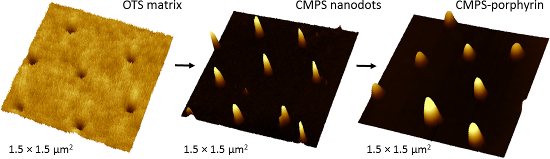
- nanodots. Proposed model for constructing heterostructures of CMPS and H2TPyP The reaction for producing CMPS nanodots is driven by hydrolysis and condensation reactions that promote the vertical growth of CMPS through crosslinking siloxane bonds [40]. We did not observe evidence of branching or growth in


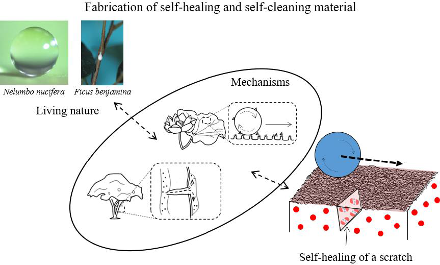
Bioinspired self-healing materials: lessons from nature
Beilstein J. Nanotechnol. 2018, 9, 907–935, doi:10.3762/bjnano.9.85
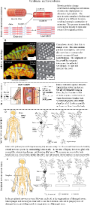
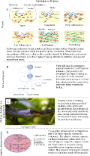
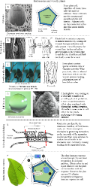
- processing/filtering sensory signals, introducing memories, and sending out an appropriate response. This highly complex sequence of events relies on nerve cells, or neurons, running throughout the body (Figure 2D,E). This branching network of nerves, where dendrite nerve cells gather into axons, connects
- peripheral nervous system (PNS) consists of the branching network of nerves that attaches to the receptors sending signals to the brain or sending signals to muscle from the brain (Figure 2E). Injuries to the PNS tend to have more restorative function after healing than in the CNS. The reason is the body’s







Electron interactions with the heteronuclear carbonyl precursor H2FeRu3(CO)13 and comparison with HFeCo3(CO)12: from fundamental gas phase and surface science studies to focused electron beam induced deposition
Beilstein J. Nanotechnol. 2018, 9, 555–579, doi:10.3762/bjnano.9.53
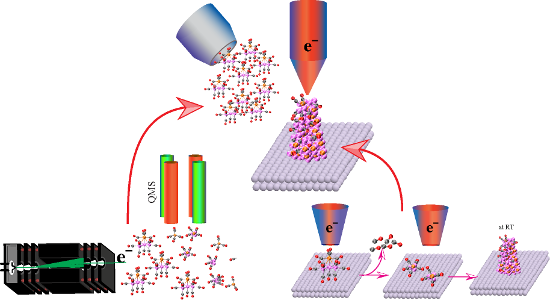
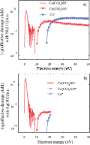
- different channels are opening up and the branching ratios are markedly different. Figure 8 shows DI spectra of H2FeRu3(CO)13 recorded at an impact energy of 70 eV. Panel (a) shows the m/z range from about 50 to 315 while panel (b) shows the m/z range from about 280 to 670. The fragmentation of H2FeRu3(CO


Optimal fractal tree-like microchannel networks with slip for laminar-flow-modified Murray’s law
Beilstein J. Nanotechnol. 2018, 9, 482–489, doi:10.3762/bjnano.9.46
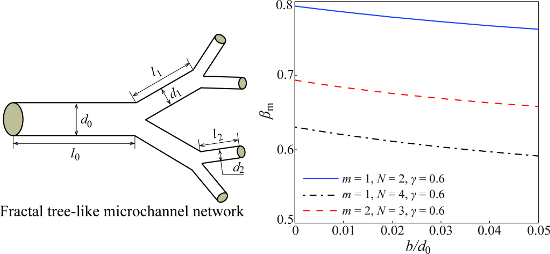
- channel and the parent channel and N is the branching number at every level), which is obtained under the assumption of no-slip conditions at the channel wall–liquid interface. However, at the microscale, the no-slip condition is not always reasonable; the slip condition should indeed be considered at
- the fractal tree-like microchannel network to achieve the minimum hydraulic resistance. The optimal diameter ratio to achieve minimum hydraulic resistance is not only dependent on the branching number, as stated by Murray’s law, but also dependent on the slip length, the level number, the length ratio
- ratio between the daughter channel and the parent channel, N is the branching number, Δ is a parameter relating to the different practical applications. It has been found that Δ = –1/3 for laminar flow and −7/3 for turbulent flow [12][14][15][16][17][18]. Although Murray’s law has been verified by


Advances and challenges in the field of plasma polymer nanoparticles
Beilstein J. Nanotechnol. 2017, 8, 2002–2014, doi:10.3762/bjnano.8.200
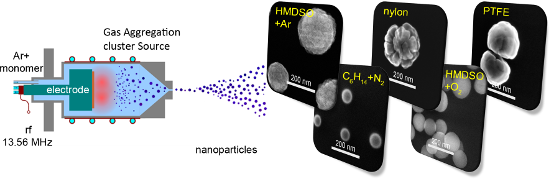
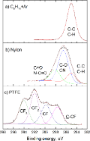
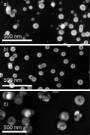
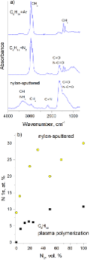
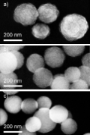
- plasma may be accompanied by radially directed changes in the material properties (cross-link density and branching) induced by temperature changes and resulting in the accumulation of mechanical stress. If the critical value of stress is achieved, the surface of a NP relaxes with the formation of the






Coexistence of strongly buckled germanene phases on Al(111)
Beilstein J. Nanotechnol. 2017, 8, 1946–1951, doi:10.3762/bjnano.8.195
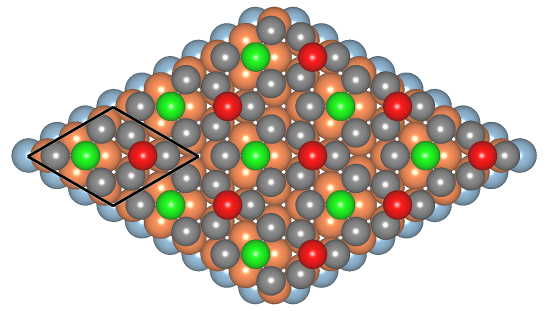
- emission. The dots are the experimental data and the fitting curve is the sum of the SC1 to SC4 components. The relative intensities of the four components are shown as a percentage of the total area in the figure. Fitting parameters: Spin-orbit split: 0.545 eV, Branching ratio: 0.67 for SC1 and SC2, 0.63


Application of visible-light photosensitization to form alkyl-radical-derived thin films on gold
Beilstein J. Nanotechnol. 2017, 8, 1863–1877, doi:10.3762/bjnano.8.187
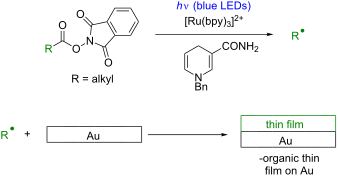
- may occur through disproportionation (12→15, Scheme 3) [44]. Au–C and CO2–Au bonds in addition to crosslinking would be expected to contribute to the mechanical stability of these films. Importantly, Scheme 3 is meant to merely provide “snapshots” of multilayer formation through branching



Spin-chemistry concepts for spintronics scientists
Beilstein J. Nanotechnol. 2017, 8, 1427–1445, doi:10.3762/bjnano.8.143
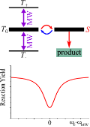
- experiment. For observing MFEs in steady-state experiments, it is necessary to have some “branching”, which makes the overall product yield dependent on the interconversion rate, i.e., on the external magnetic field strength. In the absence of such branching, all radical pairs would eventually recombine
- , leading to cancellation of potential MFEs. In the example given in Figure 5, branching is provided by the reactions, in which C is formed. MFEs can be obtained not only for recombining radicals but also in other cases where spin interconversion affects the reactivity. Such cases are the quenching of



Investigation of the photocatalytic efficiency of tantalum alkoxy carboxylate-derived Ta2O5 nanoparticles in rhodamine B removal
Beilstein J. Nanotechnol. 2017, 8, 604–613, doi:10.3762/bjnano.8.65
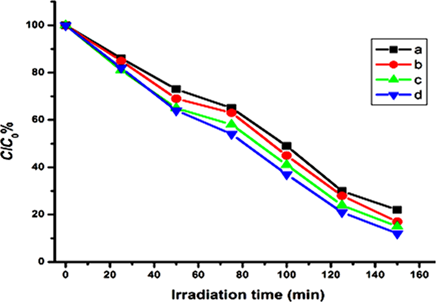
- sizes of 15 and 21 nm and are smaller than those obtained from Ta(On-Bu)5 (17 nm) and Ta(On-Bu)4(OOCCHCl2) (23 nm). It is well known that branching and increasing the length of alkyl group of alkoxy ligands in precursor alkoxide increases the gelation time and therefore, results in more crystalline


Structural and tribometric characterization of biomimetically inspired synthetic "insect adhesives"
Beilstein J. Nanotechnol. 2017, 8, 45–63, doi:10.3762/bjnano.8.6
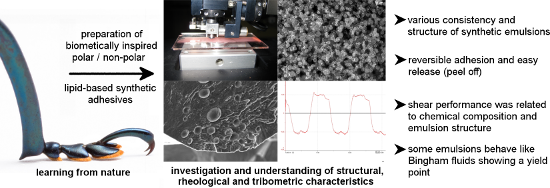
- was represented by microcrystalline wax or petrolatum (trademark Vaseline) consisting of hydrocarbons of various lengths (C30–C70) and branching positions. The aqueous polar phase was enriched by the water-soluble protein/peptide mixture gelatin or poly(vinyl alcohol), which is considered as a
- generally showed broader (more platykurtic) droplet size ranges with higher standard deviations compared with the second generation. This was certainly the result of the employment of less defined components such as petrolatum or waxes (consisting of hydrocarbons of various lengths and degrees of branching


Biomechanics of selected arborescent and shrubby monocotyledons
Beilstein J. Nanotechnol. 2016, 7, 1602–1619, doi:10.3762/bjnano.7.154
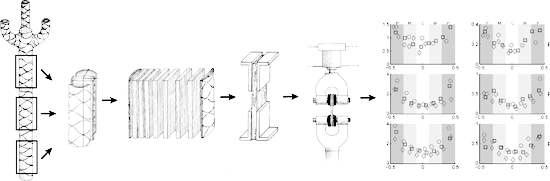
- investigations on the branching mechanics of “woody” monocots. In addition, these data can be incorporated in finite element models at cell and tissue level that mirror the anisotropy and the stress–strain behaviour of the investigated plants at stem level [6][7]. This allows for a deepened understanding of the
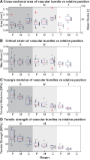
- and the “compactness” of the stem (i.e., many vascular bundles in the stem and a very distinct boundary between stem and branch) is higher in Freycinetia insignis, a plant with a branching morphology very similar to D. surculosa, than the stress at rupture and the “compactness” in D. reflexa. This
- Young’s modulus of the stems, and that this entails markedly smaller branching angles. We also hypothesize that the high values of the axial Young’s modulus of Dracaena surculosa in rather young ontogenetic stages (median of axial Young’s modulus: 2.5217 GPa) are similar to the comparatively high



Fabrication and characterization of branched carbon nanostructures
Beilstein J. Nanotechnol. 2016, 7, 1260–1266, doi:10.3762/bjnano.7.116
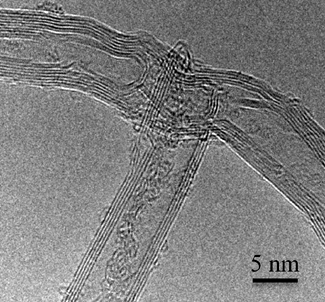
- recently, Masselter et al. have correlated the functional morphology of branching in plants with mechanical behavior and concluded that the concepts generated have a high potential for implementation in the development of branched fiber-reinforced technical composites [16]. With respect to electrical and


Functional diversity of resilin in Arthropoda
Beilstein J. Nanotechnol. 2016, 7, 1241–1259, doi:10.3762/bjnano.7.115
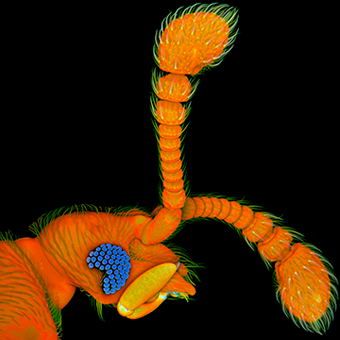
- . The smooth pads contain a relatively soft core, which is covered by a stiffer layer. Accordingly, the direction of the material gradient is opposite to that in the adhesive tarsal setae, which can be well explained by the different pad architecture. Smooth pads feature branching fibres (rods) that


Tunable longitudinal modes in extended silver nanoparticle assemblies
Beilstein J. Nanotechnol. 2016, 7, 1219–1228, doi:10.3762/bjnano.7.113
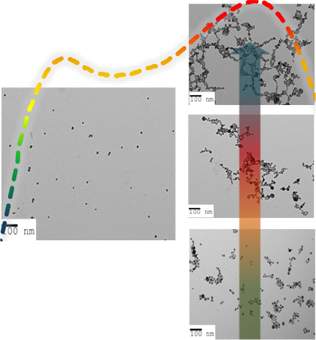
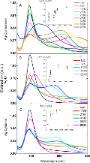
- before reaching a steady-state in less than 60 min. The spontaneity is likely enthalpy-driven due to dipole–dipole binding events that are exothermic. Although the assembly process is entropically not favourable, some entropy is regained through branching (Figure 3). Figure 3 shows the development of
- aggregate size upon increasing the ligand concentration. At lower ligand-to-nanoparticle ratios, short-chained segments are predominant, and a number of branching points are observed, which are believed to mediate the plasmon flux. Some closed loops are also present. It is clearly evident that for AgNP–DTT
- nanoparticles driven by the bigger size of the aggregates as well as the small inter-particle distance. The TEM images also show that AgNPs assembled by “heavy” cysteamine form aggregates which are more three-dimensional in nature, which means that branching starts to be omnidirectional. A very clear example of


Dielectrophoresis of gold nanoparticles conjugated to DNA origami structures
Beilstein J. Nanotechnol. 2016, 7, 948–956, doi:10.3762/bjnano.7.87
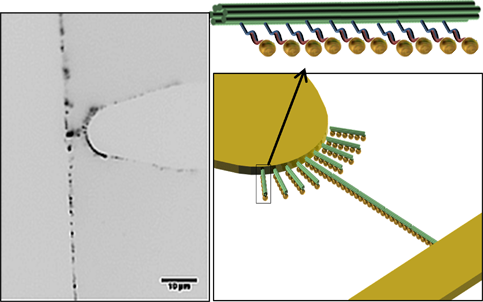
- , subject to disassembly in the absence of the electrical field [36]. In addition, we also did not observe branching of the assembled chains, which is typical for plain gold-nanoparticle chains, which is due to the simultaneous trapping of two gold nanoparticles at the tip of the growing chain. We found a


Rigid multipodal platforms for metal surfaces
Beilstein J. Nanotechnol. 2016, 7, 374–405, doi:10.3762/bjnano.7.34
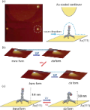
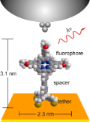
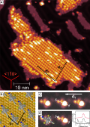
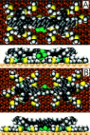
- ., tetraphenylmethanes) [35][39][72][73][74], a silicon atom (e.g., tetraphenylsilanes) [75][76][77][78][79][80], or adamantane [81][82][83][84][85][86][87] as the branching unit decorated with three identical sulfur-containing termini (thiol, thioacetate, sulfides), selenol-containing termini or pyridine have been










Hemolysin coregulated protein 1 as a molecular gluing unit for the assembly of nanoparticle hybrid structures
Beilstein J. Nanotechnol. 2016, 7, 351–363, doi:10.3762/bjnano.7.32
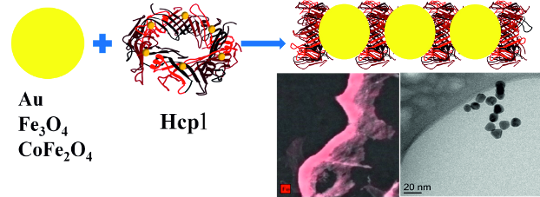
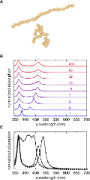
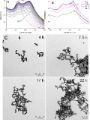
- shown in Figure 4. The formation kinetics observed by UV–vis and cryo-TEM correspond very well, showing short chains of Au NPs with a second peak around 617 nm. As the longitudinal peak shifts to 632 nm, longer chains of 500 nm length with the branching behavior can be observed. At the end, an open




The role of low-energy electrons in focused electron beam induced deposition: four case studies of representative precursors
Beilstein J. Nanotechnol. 2015, 6, 1904–1926, doi:10.3762/bjnano.6.194
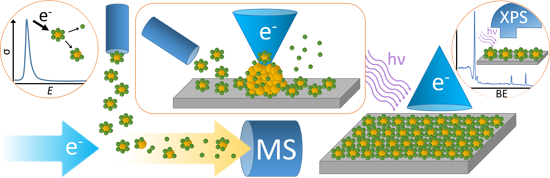
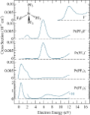
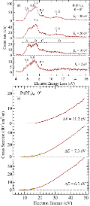
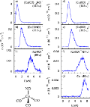
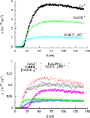
- has been verified both by simulations [11] and by experiments [12]. In recent years, it has motivated a number of gas phase studies focusing on the energy dependence of the branching ratios and cross sections for various low energy (0–100 eV) electron-induced reactions with organometallic precursors
- respective molecule, part of the “excess” energy can be transferred to the molecule. This will leave the parent cation in a vibrationally and/or electronically excited state, which often leads to fragmentation. In this case, the extent of the fragmentation and the branching ratios between different
- bond rupture. With increasing incident electron energy, however, the branching ratios shift more and more to favor multiple bond ruptures, while the total cross section approaches a maximum (typically at around 50–70 eV) before decreasing slowly again. At higher incident electron energies, the








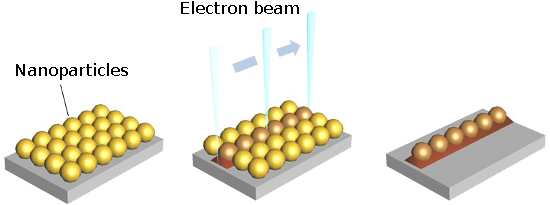
Patterning technique for gold nanoparticles on substrates using a focused electron beam
Beilstein J. Nanotechnol. 2015, 6, 1010–1015, doi:10.3762/bjnano.6.104
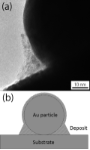
- plasmons in silver nanowires and the emission of photons at the end of the nanowires. Branching is considered necessary to make integrated photonic/plasmonic circuits. The plasmon propagation on branched silver nanowires was also experimentally demonstrated [4]. However, most of these experiments were




Synthesis, characterization, monolayer assembly and 2D lanthanide coordination of a linear terphenyl-di(propiolonitrile) linker on Ag(111)
Beilstein J. Nanotechnol. 2015, 6, 327–335, doi:10.3762/bjnano.6.31
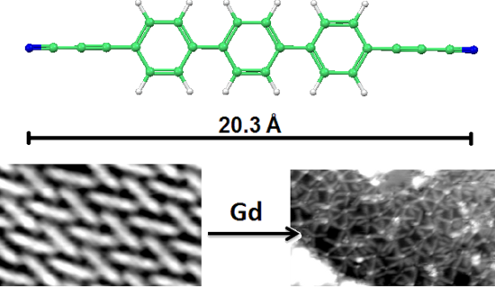
- butadiyne bridge formation via a homocoupling reaction, a clear tendency toward branching-side reactions involving three and four reacting monomers and leading to markedly reduced chemoselectivity is observed [25][26][27][28]. Interestingly, on a Au(111) substrate, the cyclotrimerisation of arylalkynes
- substrates can occur [35][36][37][38][39][40][41]. This was demonstrated by on-surface homo-coupling of alkynes on planar surfaces with a clear tendency towards branching side reactions [25][26][27][28][34]. Although in the presented work we could not deduce any changes of the –C≡C– bonds from the STM


Overview about the localization of nanoparticles in tissue and cellular context by different imaging techniques
Beilstein J. Nanotechnol. 2015, 6, 263–280, doi:10.3762/bjnano.6.25
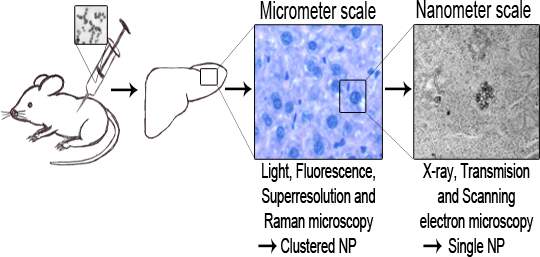
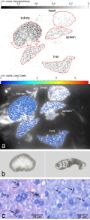
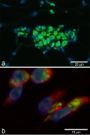
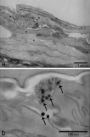
- mucins [52][53]. The organic dendritic polyglycerol sulfate (dPGS) NP possess a complex, branching structure of polyglycerol residues with such negatively charged sulfate groups in their shells [54]. Several studies have suggested promising therapeutic and diagnostic potential for dPGS, including anti



Multifunctional layered magnetic composites
Beilstein J. Nanotechnol. 2015, 6, 134–148, doi:10.3762/bjnano.6.13
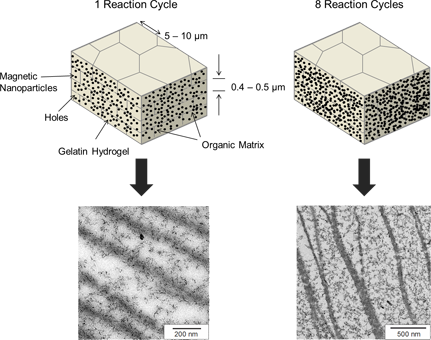
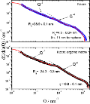
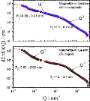
- about Rg = 0.58 μm. At larger Q (>0.1 nm−1) scattering is determined from individual magnetite nanoparticles of Rg 7.9 nm showing a Q−3 power law indicating a mass fractal structure (a structure containing branching and crosslinking to form a 3D network). The diameter D of the magnetite particles can





Localized surface plasmon resonances in nanostructures to enhance nonlinear vibrational spectroscopies: towards an astonishing molecular sensitivity
Beilstein J. Nanotechnol. 2014, 5, 2275–2292, doi:10.3762/bjnano.5.237
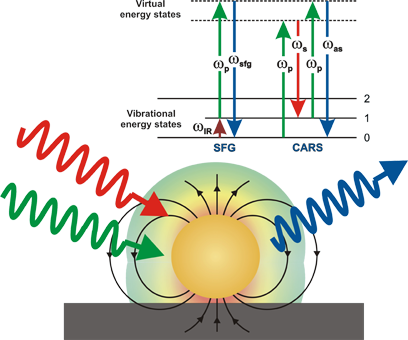
- anti-Stokes Raman scattering (SE-CARS). They can be considered as the nonlinear counterpart and/or combination of the linear surface-enhanced infrared absorption (SEIRA) and surface-enhanced Raman scattering (SERS) techniques, respectively, which are themselves a branching of the conventional IR and