Search results
Search for "catalysis" in Full Text gives 326 result(s) in Beilstein Journal of Nanotechnology. Showing first 200.
Impact of adsorbate–substrate interaction on nanostructured thin films growth during low-pressure condensation
Beilstein J. Nanotechnol. 2025, 16, 473–483, doi:10.3762/bjnano.16.36

- ], sensors [5], and catalysts [6][7][8]. Nanostructured thin films grown via low-pressure deposition methods have garnered significant attention because of their diverse applications in electronics, optics, catalysis, and sensors [9]. The ability to precisely control properties such as morphology


Synthetic-polymer-assisted antisense oligonucleotide delivery: targeted approaches for precision disease treatment
Beilstein J. Nanotechnol. 2025, 16, 435–463, doi:10.3762/bjnano.16.34

- activity and nucleic acid catalysis, effectively bridging the gap between short oligomers and functional RNAs under various environmental conditions. In addition to a delivery enhancer, PLL can be efficiently employed as an antisense oligonucleotide condenser. In their exploration of advanced drug delivery


Size control of nanoparticles synthesized by pulsed laser ablation in liquids using donut-shaped beams
Beilstein J. Nanotechnol. 2025, 16, 407–417, doi:10.3762/bjnano.16.31
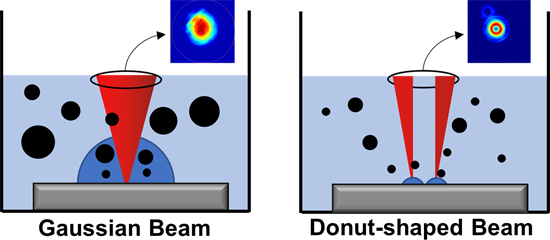
- nanoparticles (NPs) with defined particle sizes and narrow size distribution width is driven by the growing integration of nanomaterials into various industrial applications, such as medicine [1][2][3], catalysis [4][5], sensors [6][7], and additive manufacturing [8]. The performance of NPs typically depends on
- medicine for gold [9][29], strengthened ceramics and steels for high-temperature applications for Y2O3 [45][46][47], and catalysis and energy storage for HEAs [48][49]. The produced NPs are compared with those obtained with Gaussian beams. The evolution of the PLAL-generated cavitation bubble dynamics was


ReactorAFM/STM – dynamic reactions on surfaces at elevated temperature and atmospheric pressure
Beilstein J. Nanotechnol. 2025, 16, 397–406, doi:10.3762/bjnano.16.30
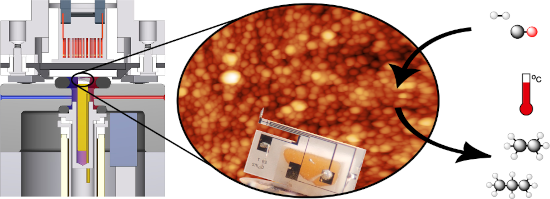
- AFM; model catalysts; nc-AFM; operando catalysis; qPlus tuning fork sensor; Introduction Operando catalysis is the field of research that monitors the structure, composition, and morphology of a catalyst while simultaneously investigating its activity, reactivity, and selectivity under industrially


Engineered PEG–PCL nanoparticles enable sensitive and selective detection of sodium dodecyl sulfate: a qualitative and quantitative analysis
Beilstein J. Nanotechnol. 2025, 16, 385–396, doi:10.3762/bjnano.16.29
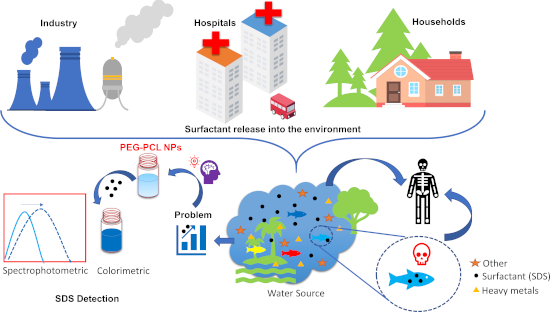
- widely used in household detergents, personal care products, emulsification, lubrication, catalysis, nanoparticles synthesis, plastic industry, and electroplating [1][2][3][4]. This organic compound exhibits an amphiphilic nature, consisting of a 12-carbon hydrocarbon tail covalently bonded to a polar


Pulsed laser in liquid grafting of gold nanoparticle–carbon support composites
Beilstein J. Nanotechnol. 2025, 16, 349–361, doi:10.3762/bjnano.16.26
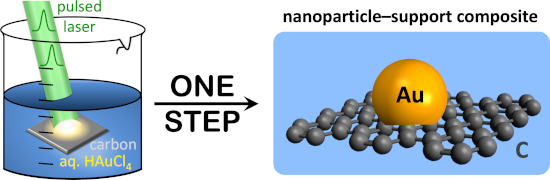
- electrocatalytic hydrogen evolution in aqueous bicarbonate reduction. Keywords: catalysis; composite; electroreduction; gold nanoparticles; impedance; Introduction The main challenge in the manufacturing of nanocatalyst-containing electrodes is the attachment of nanoparticles on electrode supports. Nanoparticles
- , catalysis, sensing, and biomedical fields. Conclusion Pulsed laser grafting of gold nanoparticle–carbon fiber paper composites presents a significant advancement in electrode design for electrocatalytic applications. Our novel one-step aqueous pulsed laser grafting process enables the fabrication of
- bicarbonate reduction to hydrogen. The efficiency of pulsed laser grafting of nanoparticles on supports and its applicability across various fields underscore its potential for sustainable manufacturing of electrodes for catalysis. Experimental All chemicals were used as received. Deionized water with a


Emerging strategies in the sustainable removal of antibiotics using semiconductor-based photocatalysts
Beilstein J. Nanotechnol. 2025, 16, 264–285, doi:10.3762/bjnano.16.21



Preferential enrichment and extraction of laser-synthesized nanoparticles in organic phases
Beilstein J. Nanotechnol. 2025, 16, 254–263, doi:10.3762/bjnano.16.20
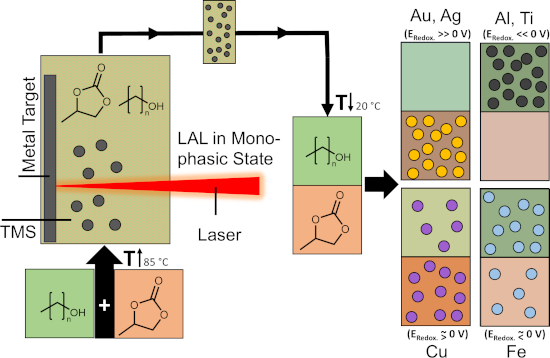
- ) was found to direct both the nanoparticles’ phase selectivity and recovery after cycling. The observed correlations provide potential guidelines for nanoparticle extraction and size separation, relevant for phase transfer and cycling during homogeneous catalysis. Keywords: catalysis; laser ablation
- from a biphasic to a monophasic state depending on the applied temperature and have been widely studied in homogeneous catalysis [38][39][40][41][42][43][44][45][46]. The TMSs used in this study consist of a propylene carbonate (PC) phase (bottom) and an alcohol phase (top) and convert between the
- both heterogeneous and homogeneous catalysis [49][50][51]; hence, we investigated their phase selectivity in more detail. The accumulated Cu or Fe concentration in both phases was quantified and the TMSs were cycled through mono- and biphasic states repetitively to investigate the stability of the




A review of metal-organic frameworks and polymers in mixed matrix membranes for CO2 capture
Beilstein J. Nanotechnol. 2025, 16, 155–186, doi:10.3762/bjnano.16.14
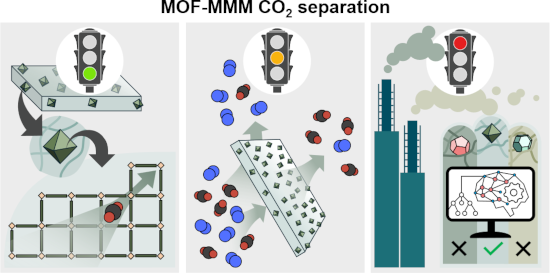
- synthesis [32]. The resulting constructions have pore sizes ranging from microporous (<2 nm) to mesoporous (2–50 nm) [30][36]. This simple strategy has led to substantial exploration of various MOFs with different structures and properties for various applications in heterogeneous catalysis, biomedicine




Characterization of ZnO nanoparticles synthesized using probiotic Lactiplantibacillus plantarum GP258
Beilstein J. Nanotechnol. 2025, 16, 78–89, doi:10.3762/bjnano.16.8
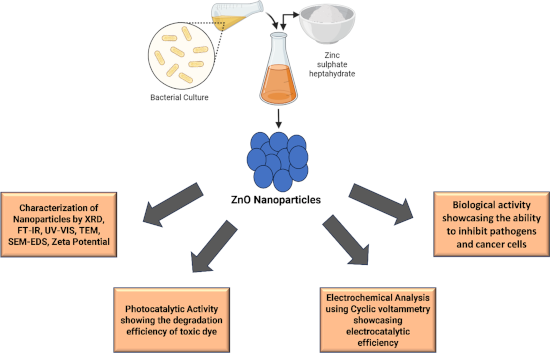
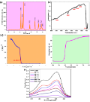
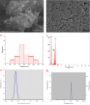
- studies underscored the efficacy of ZnO NPs in photocatalytic degradation and emphasized their potential applications in environmental remediation and catalysis. Because there is a lack of cyclic voltammetry studies using similar biological sources, we expanded our comparison to include ZnO NPs




Instance maps as an organising concept for complex experimental workflows as demonstrated for (nano)material safety research
Beilstein J. Nanotechnol. 2025, 16, 57–77, doi:10.3762/bjnano.16.7

- cases from their high surface reactivity, which results from their small size and large surface area. They include applications in catalysis [3][4] (e.g., as catalytic converters in engines and for energy capture and storage) and as sensors [5][6] (e.g., for bioremediation and environmental monitoring


Theoretical study of the electronic and optical properties of a composite formed by the zeolite NaA and a magnetite cluster
Beilstein J. Nanotechnol. 2025, 16, 44–53, doi:10.3762/bjnano.16.5
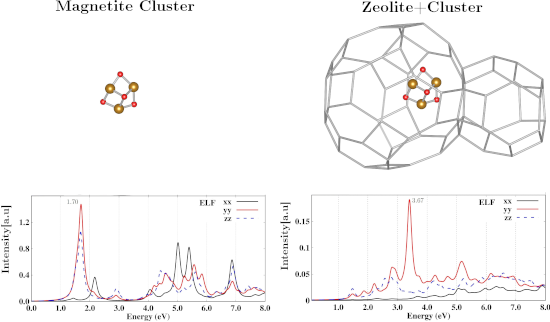
- ]. Because of the remarkable ion-exchange capacity of zeolites, their large surface area, and the well-organized porous systems with molecular sieve functionality, zeolites have long been fruitfully used in important industrial applications, mainly related to catalysis and wastewater treatment. The rapid




A nanocarrier containing carboxylic and histamine groups with dual action: acetylcholine hydrolysis and antidote atropine delivery
Beilstein J. Nanotechnol. 2025, 16, 11–24, doi:10.3762/bjnano.16.2

- calixarenes, have been extensively utilized in the creation of different smart systems [13][14]. Owing to their unique structural features, these macrocycles are employed in catalysis, such as in the breakdown of OPs [15][16][17][18], as carriers for drug delivery [19][20][21][22], and in the creation of


Facile synthesis of size-tunable L-carnosine-capped silver nanoparticles and their role in metal ion sensing and catalytic degradation of p-nitrophenol
Beilstein J. Nanotechnol. 2024, 15, 1576–1592, doi:10.3762/bjnano.15.124
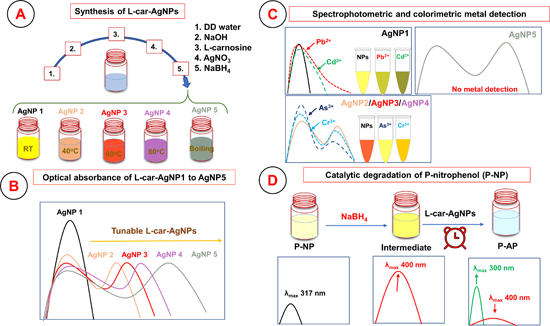
- with various contaminants. Keywords: catalysis; heavy metals; ʟ-carnosine; p-nitrophenol; silver nanoparticles; Introduction The persistent rise in environmental pollution, notably from heavy metal ions and organic pollutants, has propelled the development of innovative and efficient environmental
- -aminophenol (P-AP) in the presence of nanoparticle catalyst and NaBH4. All catalysis experiments were performed at RT in a 3.5 mL quartz cuvette. The reagents were introduced in the sequence of 2 mL P-NP (0.25 mM or 1 mM), 1 mL of NaBH4 (100 mM), and 50 μL of ʟ-carnosine-capped AgNPs (1 ± 0.2 OD). The




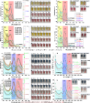
Nanoarchitectonics with cetrimonium bromide on metal nanoparticles for linker-free detection of toxic metal ions and catalytic degradation of 4-nitrophenol
Beilstein J. Nanotechnol. 2024, 15, 1312–1332, doi:10.3762/bjnano.15.106
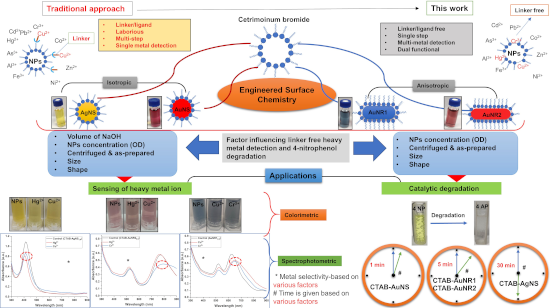
- protection. Keywords: catalysis; CTAB; heavy metal; nanoparticles; 4-nitrophenol; sensing; Introduction Metal nanoparticles are widely used for a great number of applications owing to their excellent optochemical properties and high surface-to-volume ratio in comparison to bulk materials. Noble metal (gold
- high strength to nanoparticles, the use of such nanoparticles is limited in sensing, catalysis, and biomedical applications because of post-synthesis functionalization, morphology, and toxicity [6][7][8]. CTAB is a resilient molecule on the nanoparticle surface because of its micellar structure and
- CTAB-capped gold and silver nanoparticles without linker/buffer for catalysis and detection heavy metals is a current need. In this work, we have developed a linker-free nanosensor with CTAB as capping agent on both isotropic and anisotropic gold and silver nanoparticles. The CTAB-capped metal




Enhanced catalytic reduction through in situ synthesized gold nanoparticles embedded in glucosamine/alginate nanocomposites
Beilstein J. Nanotechnol. 2024, 15, 1227–1237, doi:10.3762/bjnano.15.99
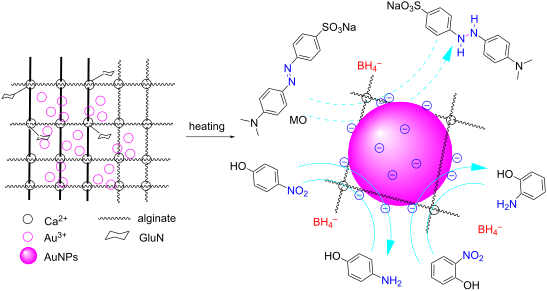
- nanocomposite as a versatile catalyst with promising applications across various industrial sectors. Keywords: catalysis; gold nanoparticles; organic dyes; organometallic nanocomposites; reduction; Introduction Gold nanoparticles (AuNPs) have garnered significant attention because of their exceptional



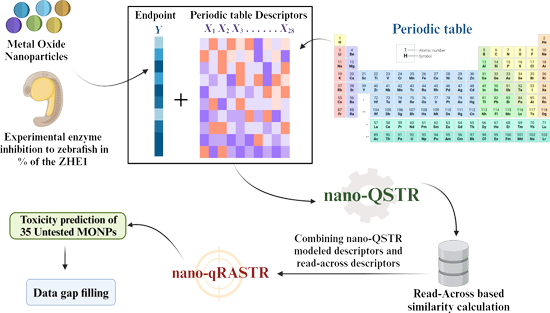
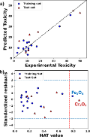
Introducing third-generation periodic table descriptors for nano-qRASTR modeling of zebrafish toxicity of metal oxide nanoparticles
Beilstein J. Nanotechnol. 2024, 15, 1142–1152, doi:10.3762/bjnano.15.93
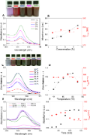
- ; Introduction Nanomaterials, which are defined as materials that fall in the range of 1–100 nanometers two-dimensionally, are commonly used in the fields of biomedicine, catalysis, and electricity because of their stable and unique performance, small size, and large surface area [1]. Nanomaterials encompass a


Photocatalytic methane oxidation over a TiO2/SiNWs p–n junction catalyst at room temperature
Beilstein J. Nanotechnol. 2024, 15, 1132–1141, doi:10.3762/bjnano.15.92
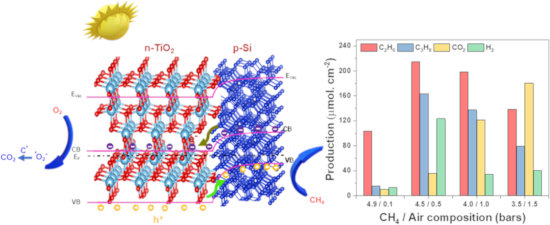
- electrons for reactions [25][26][27]. However, the generated electron affinity of metal NPs is sometimes insufficient and cannot prevent recombination or maintain electrons for further reactions. As an advanced solution for catalysis modification, p–n junction photocatalysts with an intrinsic electric field


Atomistic insights into the morphological dynamics of gold and platinum nanoparticles: MD simulations in vacuum and aqueous media
Beilstein J. Nanotechnol. 2024, 15, 995–1009, doi:10.3762/bjnano.15.81
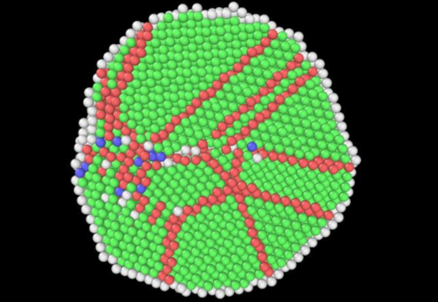
- category of engineered NPs is comprised of metal and metal oxide NPs, which rank among the highest in production volume. They have already found widespread applications in technological advancements such as photovoltaics, catalysis, gas sensors, fuel cells, and adsorbents [7][8]. This prevalence is


Synthesis of silver–palladium Janus nanoparticles using co-sputtering of independent sources: experimental and theorical study
Beilstein J. Nanotechnol. 2024, 15, 808–816, doi:10.3762/bjnano.15.67
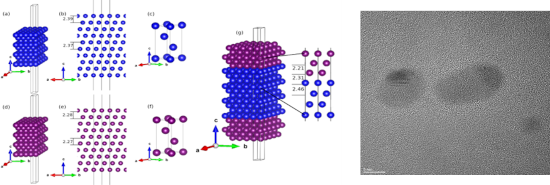
- delivery, catalysis, and sensors. The methodologies, developed for the first time in 1999 [1], for the production of bimetallic nanoparticles in the gas phase can be roughly classified as either simultaneous or sequential. In the first category, the materials that will be used to make the nanoparticles are
- their possible technological applications in catalysis and biosensors, and within materials science in general [3]. To date, most published articles on BNPs have focused on the synthesis of miscible metals, such as PtPd or CuPd; the literature on bimetallic nanoparticles of non-miscible metals, such as




Green synthesis of biomass-derived carbon quantum dots for photocatalytic degradation of methylene blue
Beilstein J. Nanotechnol. 2024, 15, 755–766, doi:10.3762/bjnano.15.63
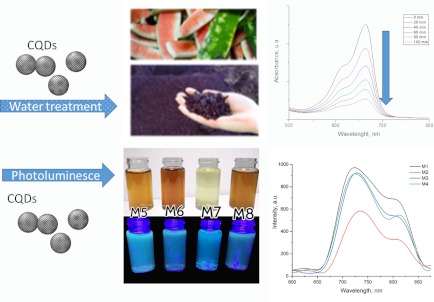
- -conversion luminescence. The results revealed effective photocatalytic degradation of methylene blue under sunlight, highlighting the potential for scalable production of these cost-effective catalytic nanomaterials for synthetic dye degradation. Keywords: biomass; carbon dots; catalysis; methylene blue


Simultaneous electrochemical determination of uric acid and hypoxanthine at a TiO2/graphene quantum dot-modified electrode
Beilstein J. Nanotechnol. 2024, 15, 719–732, doi:10.3762/bjnano.15.60
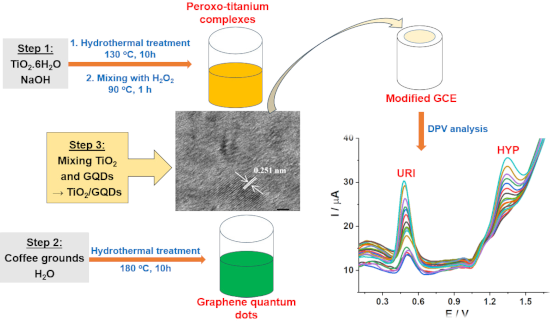
- and food waste) is a renewable resource for the preparation of high-value carbon materials. Among food wastes, coffee grounds are a promising precursor to prepare GQDs with new functionalities regarding a more sustainable materials industry [16]. Considering the fields of catalysis and


Enhancing higher-order modal response in multifrequency atomic force microscopy with a coupled cantilever system
Beilstein J. Nanotechnol. 2024, 15, 694–703, doi:10.3762/bjnano.15.57

- Wendong Sun Jianqiang Qian Yingzi Li Yanan Chen Zhipeng Dou Rui Lin Peng Cheng Xiaodong Gao Quan Yuan Yifan Hu School of Physics, Beihang University, Beijing 100191, P.R. China State Key Laboratory of Catalysis, CAS Center for Excellence in Nanoscience, Dalian Institute of Chemical Physics


Laser synthesis of nanoparticles in organic solvents – products, reactions, and perspectives
Beilstein J. Nanotechnol. 2024, 15, 638–663, doi:10.3762/bjnano.15.54
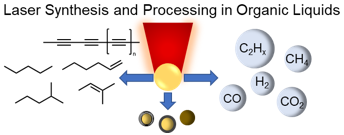
- the laser-generated nanoparticles in nanomedicine [60][61] and catalysis [13][54][62][63], including electro- and photocatalysis [13]. The liquid’s influence on the nanoparticle properties as well as its decomposition products, in contrast, have received significantly less attention. Some past reviews





Exfoliation of titanium nitride using a non-thermal plasma process
Beilstein J. Nanotechnol. 2024, 15, 631–637, doi:10.3762/bjnano.15.53
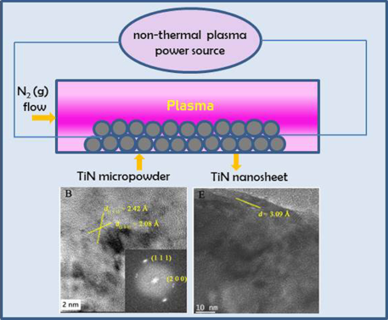
- composition of TiN were preserved, the crystallite size was reduced. These TiN nanosheets have a great potential for a range of cutting-edge applications in fields such as medicine, catalysis, and energy-related technologies. Hence, further exploration and development of these TiN nanosheets are expected to