Search results
Search for "cell proliferation" in Full Text gives 87 result(s) in Beilstein Journal of Nanotechnology.
In search of cytotoxic selectivity on cancer cells with biogenically synthesized Ag/AgCl nanoparticles
Beilstein J. Nanotechnol. 2022, 13, 1505–1519, doi:10.3762/bjnano.13.124
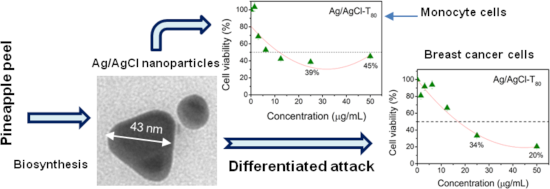
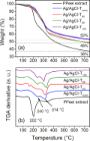
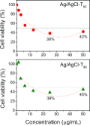
- % for AgNPs-T80. In other words, at concentrations close to 50 µg/mL, the cytotoxic action of the nanoparticles becomes selective. This result is possibly due to the fact that a higher content of nanoparticles prevents cell proliferation in neoplastic cells. MCF-7 cells are known to overexpress matrix





Hydroxyapatite–bioglass nanocomposites: Structural, mechanical, and biological aspects
Beilstein J. Nanotechnol. 2022, 13, 1490–1504, doi:10.3762/bjnano.13.123
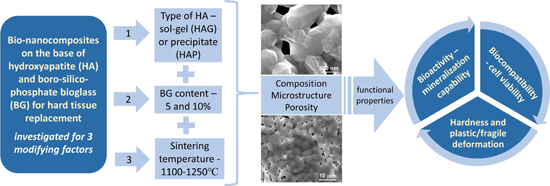
- favorable for bone cell proliferation, although a high pH value may be detrimental to optimal osteoblast metabolism [14]. It was shown, for example, that values of pH 7.0–7.5 were optimal for osteoclast differentiation and proliferation [57]. MTT assay and biocompatibility of composites Figure 9 shows the
- probably caused by the more porous structure and, as a result, higher dissolution rate of these composites, inducing an increased ion concentration in the surrounding biological environment, which may be detrimental for cell proliferation. It can be noticed that HAG-1200 ceramics without BG also exhibited
Facile preparation of Au- and BODIPY-grafted lipid nanoparticles for synergized photothermal therapy
Beilstein J. Nanotechnol. 2022, 13, 1432–1444, doi:10.3762/bjnano.13.118
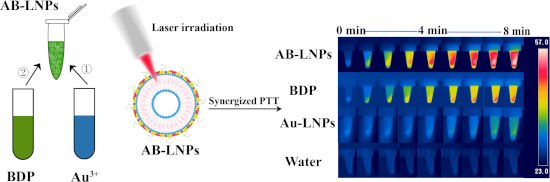
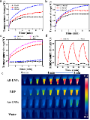
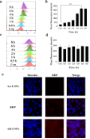
- -LNPs at the same concentration, indicating the synergistic effects of BDP and Au-LNPs (Figure 5c). Because of the photothermal effects of BDP and Au-LNPs, AB-LNPs with a BDP concentration of 30 μM and a Au concentration of 30 μM presented strong cell proliferation inhibitory effects (90.2%) in




Biomimetic chitosan with biocomposite nanomaterials for bone tissue repair and regeneration
Beilstein J. Nanotechnol. 2022, 13, 1051–1067, doi:10.3762/bjnano.13.92
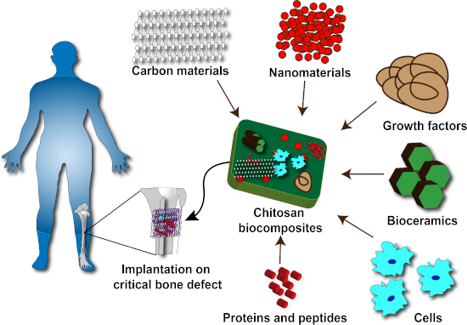
- tensile strength of ≈7.05 MPa. According to the findings in vitro, the combination of scaffolds promotes fast cell-to-cell contact, which boosts the regeneration impact on pre-osteoblast (MC3T3-E1) cell proliferation, growth, and differentiation [94]. The impact of a hybrid nanocomposite of poly(3
- al. (2013), composites of chitosan–multiwalled carbon nanotubes with hydroxyapatite have the potential to enhance the elastic modulus and compressive strength to 1089.1 MPa and 105.5 MPa, respectively. The cell proliferation of the nanocomposites was evaluated via the CCK-8 test. The results
- . Through cell viability, porosity measurements, in vitro degradation, and degradation tests, researchers determined that the composites showed increased biocompatibility and promoted cell proliferation and growth, in addition to having a steady degradation rate [61]. In addition, a layer-by-layer assembly
Bioselectivity of silk protein-based materials and their bio-inspired applications
Beilstein J. Nanotechnol. 2022, 13, 902–921, doi:10.3762/bjnano.13.81
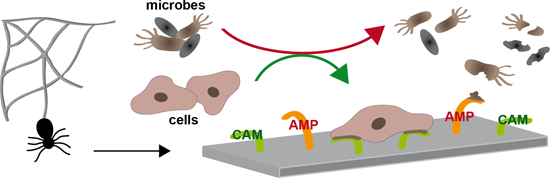
- materials using bioactive and bioadhesive molecules, such as full-length ECM proteins or functional peptide fragments thereof. These ligands interact with cell receptors for guiding cellular responses, such as cell proliferation or specific matrix degradation [31][32][33][34]. Compared to full-length


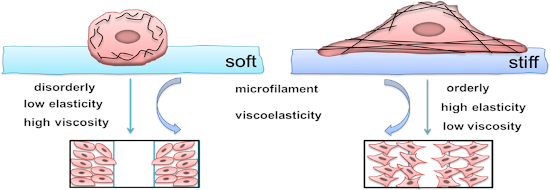
Effects of substrate stiffness on the viscoelasticity and migration of prostate cancer cells examined by atomic force microscopy
Beilstein J. Nanotechnol. 2022, 13, 560–569, doi:10.3762/bjnano.13.47
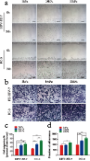
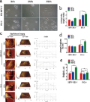
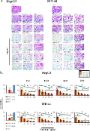
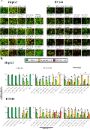
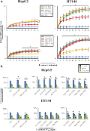
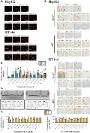
- migration capacity, and cells on soft substrates (3 kPa) had the lowest migration capacity (Figure 2c). Cell proliferation assays also revealed that both cell lines had a significantly greater ability to proliferate on stiff substrates, and that the proliferation of prostate cancer cells significantly
- min and then stained using crystal violet for 10 min. Images were obtained using an inverted optical microscope (Nikon ECLIPSE TS100, Japan). These data were quantified using the ImageJ software. Cell proliferation assay The proliferation of HPV-PZ-7 and PC-3 cells on substrates with different
- . Supporting Information Figure S1: The toxic effect of polyacrylamide hydrogel substrates on prostate cancer cells. Figure S2: The effect of substrate stiffness on cell proliferation. Figure S3: The effect of substrate stiffness on cell morphology. Figure S4: The effect of blebbistatin on PCa cytoskeleton



Micro- and nanotechnology in biomedical engineering for cartilage tissue regeneration in osteoarthritis
Beilstein J. Nanotechnol. 2022, 13, 363–389, doi:10.3762/bjnano.13.31
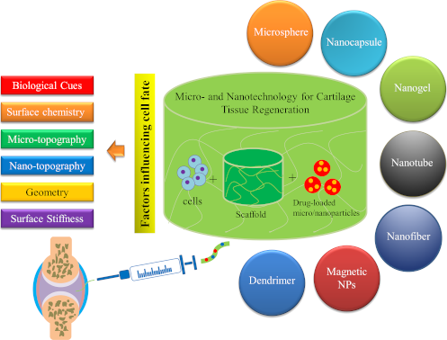
- ]. Although the results showed no appreciable difference between NMS and MS scaffolds in terms of inducing redifferentiation, nanoscale patterning of the microfibers influenced cell proliferation. In another study, similar results were obtained regarding the effect of poly(ʟ,ᴅ-lactide) (PLDLA) microfibers or
- -functionalized SWCNTs not only improved the mechanical properties and cell proliferation, but also had no cytotoxic effect on BMSCs. The experimental results of implanting the composite scaffold demonstrated that reasonable addition of SWCNTs is critical to repair the cartilage defects and the 0.5% group had the
- enhancing the ALP activity and mineralization, the scaffold showed improved cell proliferation. Khoshroo et al. fabricated a 3D PCL/TiO2 sintered microsphere scaffold, which improved the mechanical and biological properties for bone TE purposes [143]. Moreover, the results showed that the presence of TiO2


Theranostic potential of self-luminescent branched polyethyleneimine-coated superparamagnetic iron oxide nanoparticles
Beilstein J. Nanotechnol. 2022, 13, 82–95, doi:10.3762/bjnano.13.6
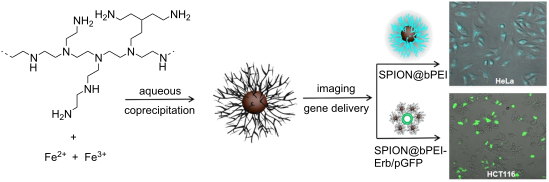
- -(4,5-dimethyl-2-thiazolyl)-2,5-diphenyl-2H-tetrazolium bromide (MTT) cell proliferation kit (Applichem) according to the instructions from the manufacturer. In each plate, the assay was repeated for the blank medium and untreated cells in medium as controls. Then, the MTT reagent was added to each well




Biocompatibility and cytotoxicity in vitro of surface-functionalized drug-loaded spinel ferrite nanoparticles
Beilstein J. Nanotechnol. 2021, 12, 1339–1364, doi:10.3762/bjnano.12.99
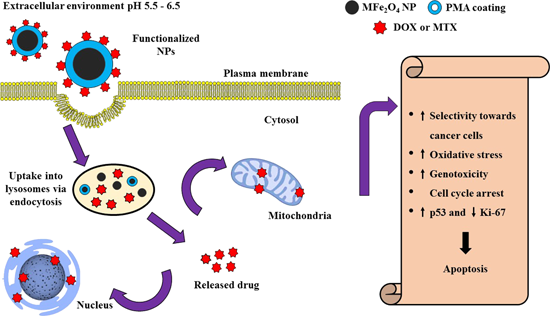
- studies; magnetic spinel ferrite nanoparticles; methotrexate; poly(isobutylene-alt-maleic anhydride); Introduction Cancer is the second leading cause of death and, as such, it is a global health concern [1]. It is caused by uncontrolled cell proliferation, reduced cell death rate, or both [2





Use of nanosystems to improve the anticancer effects of curcumin
Beilstein J. Nanotechnol. 2021, 12, 1047–1062, doi:10.3762/bjnano.12.78
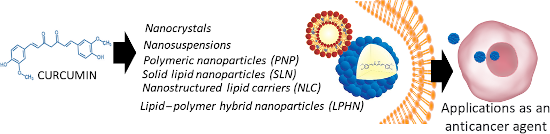
- nanoemulsion (25 µM-7 µM) inhibited cell proliferation by 50% via cell cycle arrest at the G2/M phase and induced apoptosis. In addition, a CUR nanoemulsion exerted a four-fold increase in caspase-3, in contrast to a six-fold increase exerted by co-administered CUR–PIP. Curcumin is also commonly co-loaded in
- advantages include high biocompatibility, safety, and flexibility (the latter can be modulated by the concentration of cholesterol in the lipid membrane) [40][73][74]. PEGylated long-circulating liposomes with co-encapsulated CUR–doxorubicin inhibited C26 (murine colon carcinoma) cell proliferation, in
- ), where a reduced cell proliferation was consequently obtained [135]. In another study, CUR-loaded MNP were significantly more effective in reducing tumor size (71.2%) in xenotransplanted mice (HPAF-II pancreatic cancer cells), as compared to F-CUR (35.9%). This suggests the need to take into account more


Comprehensive review on ultrasound-responsive theranostic nanomaterials: mechanisms, structures and medical applications
Beilstein J. Nanotechnol. 2021, 12, 808–862, doi:10.3762/bjnano.12.64
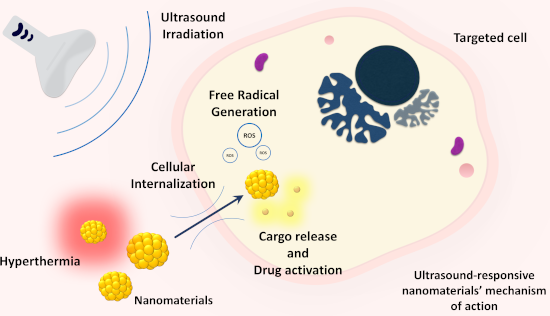
- . demonstrated enhanced proliferation and chondrogenic differentiation of human mesenchymal stem cells by applying lipid-coated MBs plus low-intensity pulsed US. After treatment, cell proliferation was increased by 40%, and the production of glycosaminoglycan and type II collagen was increased by 17% and 78


Silver nanoparticles induce the cardiomyogenic differentiation of bone marrow derived mesenchymal stem cells via telomere length extension
Beilstein J. Nanotechnol. 2021, 12, 786–797, doi:10.3762/bjnano.12.62
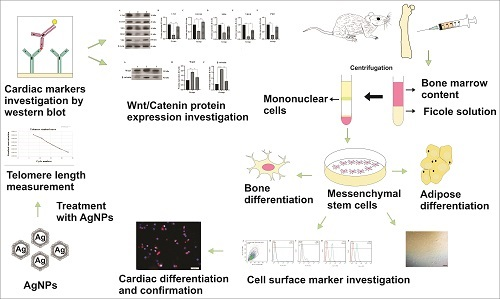
- that Ag-NPs induced mESCs cell cycle arrest at the G1 and S phases through inhibition of the hyperphosphorylation of Retinoblastoma protein [12]. Kalishwaralal et al. reported that Ag-NPs could inhibit cell proliferation, cell viability, and cell migration through activating caspase-3 and suppressing
- ) [15]. Previous reports have shown that telomerase activity diminished when cells are exposed to stimuli that inhibit cell proliferation and promote differentiation [16]. Studies on the role of telomeres and telomerase in cardiac cells, cardiac differentiation, and treatment of cardiovascular diseases
- cardiomyogenic differentiation was confirmed via immunocytochemistry (ICC). Briefly, as shown in Figure 3A–D, when the BM-MSCs were cultured in the cardiomyocyte differentiation medium for a period of 14 days, they exhibited the cardiac markers of α-actinin and desmin. Cell proliferation assay Cardiomyogenically


The impact of molecular tumor profiling on the design strategies for targeting myeloid leukemia and EGFR/CD44-positive solid tumors
Beilstein J. Nanotechnol. 2021, 12, 375–401, doi:10.3762/bjnano.12.31
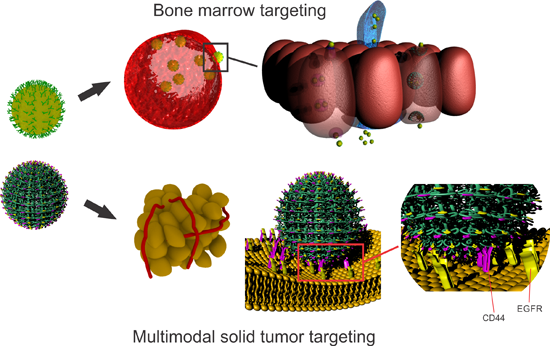
- internalization, the chemical sensitivity of the cancer cells, and the efficacy of the gold nanoparticles, using different types of EGFR-expressing NSCLC cancer cell lines. C225-AuNPs showed the largest inhibitory effect on cell growth and cell proliferation when the NSCLC cell line A549 with high EGFR expression
- was used. In addition, it was pointed out that the cell proliferation was inhibited due to the significantly increased rate of apoptosis in the A549 cell line, while no alteration of the cell cycle distribution was noticed. The effects in the H1299 cells with low EGFR expression were negligible. The


Differences in surface chemistry of iron oxide nanoparticles result in different routes of internalization
Beilstein J. Nanotechnol. 2021, 12, 270–281, doi:10.3762/bjnano.12.22
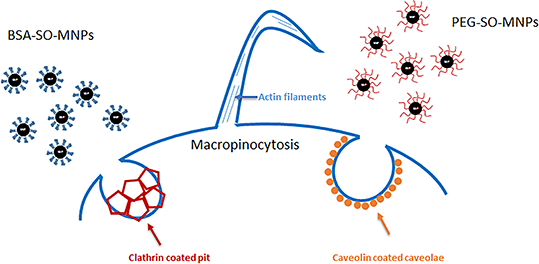
- , Figure S1A) and the mRNA level (Supporting Information File 1, Figure S1B). The expression of Dyn was analyzed only at the protein level. Our results demonstrated that A549 cells are proficient in both CME and CavME pathways. The effect of endocytic inhibitors on cell proliferation and morphology The
- exposure of cells to surface-modified MNPs and Noc affect substantially the cell proliferation and morphology. Noc affects microtubule formation, thus interfering with cytoskeleton structure and mitosis, leading to cell cycle arrest in G2/M [26]. As MNPs interfere with tubulin polymerization as well [27



Transient coating of γ-Fe2O3 nanoparticles with glutamate for its delivery to and removal from brain nerve terminals
Beilstein J. Nanotechnol. 2020, 11, 1381–1393, doi:10.3762/bjnano.11.122
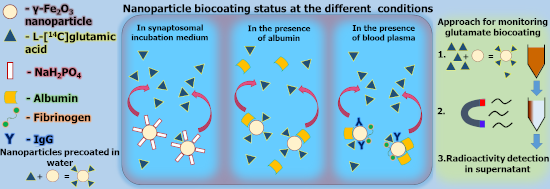
- extracellular glutamate concentrations in glioma cell lines in vitro was shown to be up to 500 µM, and glutamate stimulates glioma cell proliferation in vivo. Also, glial tumor cells ex vivo generate neurotoxic quantities of glutamate [3][4][5][6]. Excessive extracellular glutamate concentrations of 100 μM were


Examination of the relationship between viscoelastic properties and the invasion of ovarian cancer cells by atomic force microscopy
Beilstein J. Nanotechnol. 2020, 11, 568–582, doi:10.3762/bjnano.11.45
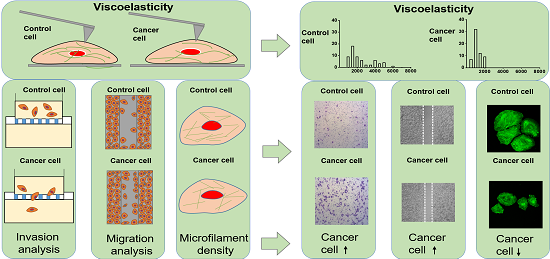
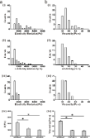
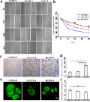
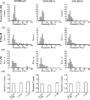
- and invasion [59]. Kinsella’s group showed that the main problem in the treatment of cancer may be the invasive behavior of cancer cells [60]. The present investigations indicate that chemotherapy drugs could alter the mechanical properties of malignant tumors cells to attenuate cell proliferation


Brome mosaic virus-like particles as siRNA nanocarriers for biomedical purposes
Beilstein J. Nanotechnol. 2020, 11, 372–382, doi:10.3762/bjnano.11.28
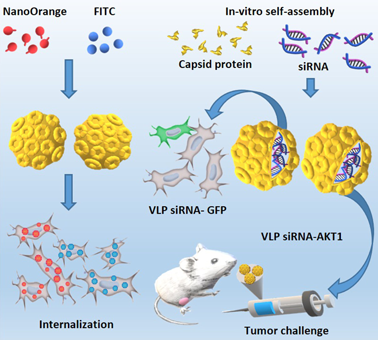
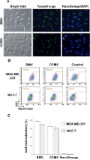
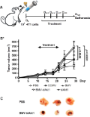
- (Figure 4C), corroborating the cargo release from BMV VLP inside tumor cells and gene silencing. BMV VLPs as siAkt1 nanocarriers The anti-cancer siRNA Akt1 (siAkt1) was also encapsidated in BVM-VLPs (Figure 4B). Akt1 is a kinase involved in the processes of cell proliferation, migration and transformation


Poly(1-vinylimidazole) polyplexes as novel therapeutic gene carriers for lung cancer therapy
Beilstein J. Nanotechnol. 2020, 11, 354–369, doi:10.3762/bjnano.11.26
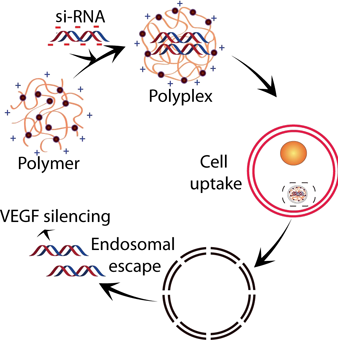
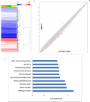
- -regulated. The role of TFF1 in cancer remains controversial but many reports have demonstrated that TFF1 serves as a tumor suppressor gene that inhibits cancer cell proliferation and migration in epithelial cancers such as gastric, breast and pancreatic cancer [36]. Recent experimental evidence has revealed


The different ways to chitosan/hyaluronic acid nanoparticles: templated vs direct complexation. Influence of particle preparation on morphology, cell uptake and silencing efficiency
Beilstein J. Nanotechnol. 2019, 10, 2594–2608, doi:10.3762/bjnano.10.250
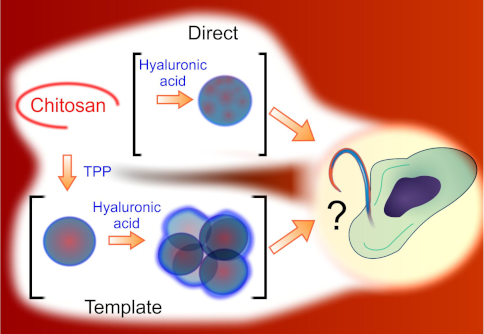
- plates and left to adhere overnight (5% v/v CO2 in air, 37 °C). Cells were then exposed to 0.25 mL of nanoparticle suspensions in full medium (concentration: 0.01–0.5 mg/mL) for 24 h, then determining viability using the CellTiter 96® AQueous One Solution Cell Proliferation Assay (MTS assay). Briefly



Fully amino acid-based hydrogel as potential scaffold for cell culturing and drug delivery
Beilstein J. Nanotechnol. 2019, 10, 2579–2593, doi:10.3762/bjnano.10.249
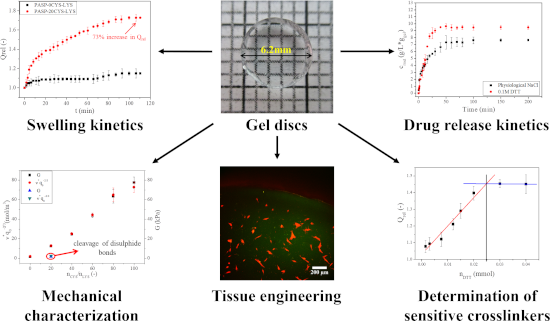
- established. Using metoprolol as a model drug, cell proliferation and drug release kinetics were studied at different LYS contents and in the presence of thiol groups. The optimal ratio of cross-linkers for the proliferation of periodontal ligament cells was found to be 60−80% LYS and 20−40% CYS. The
- day one, the cell viability index was lower for the 20CYS-LYS gel and the 40CYS-LYS gel than for the 100CYS-LYS gel. Still, for both gels, it had doubled after three days of cell growth suggesting that a lower CYS concentration favors cell proliferation. This result is presumably related to the
- role as a cross-linker. This function of LYS in scaffolds, which is related to cell proliferation, has not been investigated before. Nevertheless, the positive effect of LYS is highly concentration-dependent. According to the literature, a high amount of LYS has a cytotoxic effect, while a lower amount


Bombesin receptor-targeted liposomes for enhanced delivery to lung cancer cells
Beilstein J. Nanotechnol. 2019, 10, 2553–2562, doi:10.3762/bjnano.10.246
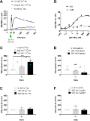
- (Figure 1c). In contrast, exposure to cystabn, reduced cell proliferation over a 5 day period (Figure 1d), thus confirming that the addition of an N terminal cysteine did not interfere with GRPR binding. Exposure of NCI-H82 cells to the Tyr4-Bn agonist (Figure 1e) and cystabn antagonist peptide (Figure 1f
- ) caused no change in cell growth. These cell proliferation studies were performed in serum-free conditions in line with previous studies [24][25] for two principle reasons. Firstly, the removal of serum from the culture medium depletes bovine bombesin-like peptides that could otherwise stimulate cell
- GRPR depleted NCI-H82 cells. In contrast to results from NCI-H345 cells, the addition of Tyr4-Bn to NCI-H82 caused no noticeable increase in cell proliferation and cystabn effected no reduction in proliferation. This demonstrated that cystabn functionally targeted GRPR expressing cells in a specific

Synthesis and potent cytotoxic activity of a novel diosgenin derivative and its phytosomes against lung cancer cells
Beilstein J. Nanotechnol. 2019, 10, 1933–1942, doi:10.3762/bjnano.10.189
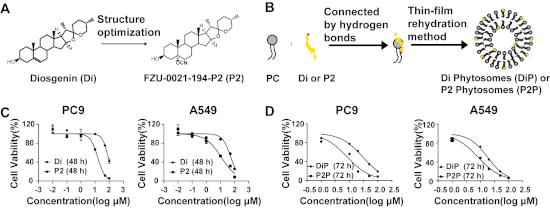
- or better antiproliferative effects after a 72 h incubation. The DiP and P2P were made up of drugs and phosphatidylcholine. The antiproliferative activities of DiP and P2P against A549 and PC9 cells originated from the drugs. Therefore, there is no huge difference in cell proliferation inhibition



Engineered superparamagnetic iron oxide nanoparticles (SPIONs) for dual-modality imaging of intracranial glioblastoma via EGFRvIII targeting
Beilstein J. Nanotechnol. 2019, 10, 1860–1872, doi:10.3762/bjnano.10.181
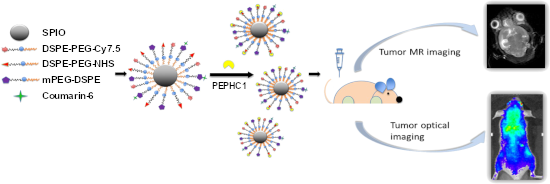
- Sigma (USA) and Cy7.5 NHS ester was purchased from Nanocs (USA). Fetal bovine serum (FBS), phosphate buffered saline (PBS), trypsin-EDTA (0.25%), high glucose Dulbecco’s modified Eagle’s medium (DMEM) and penicillin-streptomycin were purchased from Gibco (CA, USA). The MTT cell proliferation and




Nanoarchitectonics meets cell surface engineering: shape recognition of human cells by halloysite-doped silica cell imprints
Beilstein J. Nanotechnol. 2019, 10, 1818–1825, doi:10.3762/bjnano.10.176
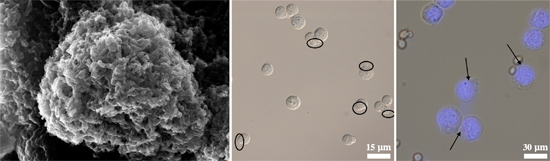
- occurs. However, flow cytometry-based cell proliferation monitoring performed with cells stained with 5(6)-carboxyfluorescein diacetate N-succinimidyl ester (CFSE) dye has confirmed that cells coated with pure silica or silica/halloysite display a similar cell proliferation pattern as intact HeLa cells


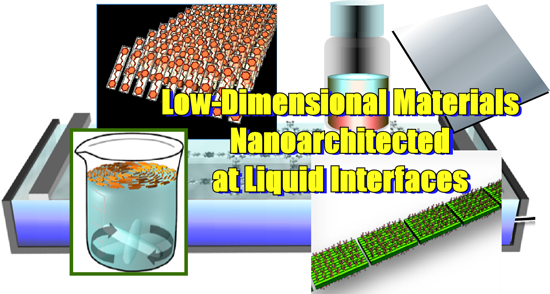
Materials nanoarchitectonics at two-dimensional liquid interfaces
Beilstein J. Nanotechnol. 2019, 10, 1559–1587, doi:10.3762/bjnano.10.153