


Search results
Search for "charge-transfer" in Full Text gives 374 result(s) in Beilstein Journal of Nanotechnology. Showing first 200.
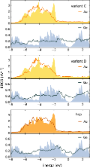
Insights into the electronic and atomic structures of cerium oxide-based ultrathin films and nanostructures using high-brilliance light sources
Beilstein J. Nanotechnol. 2025, 16, 860–871, doi:10.3762/bjnano.16.65

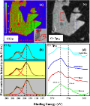
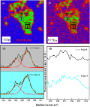
- photoemission, as compared to non-resonant photoemission. Synchrotron radiation-based resonant photoemission has facilitated an accurate determination of the dependence of Ce3+ concentration on dimensionality [23]. The technique has also provided an accurate description of the charge transfer processes and
- minimal changes with the same thermal treatments in vacuum [49]. The study allowed the authors to conclude that in 2 ML films vertical confinement and/or charge transfer from the platinum substrate, determine a higher reducibility than in 10 ML films [49]. This is evidenced by the greater Ce3
- supporting oxide was found to decrease with decreasing NP size [53], possibly due to a stronger interaction between Ag and cerium oxide in smaller NPs, resulting from a greater charge transfer per atom [54]. A further possibility offered by synchrotrons is to measure spatially resolved Ce M-edge absorption


Synchrotron X-ray photoelectron spectroscopy study of sodium adsorption on vertically arranged MoS2 layers coated with pyrolytic carbon
Beilstein J. Nanotechnol. 2025, 16, 847–859, doi:10.3762/bjnano.16.64
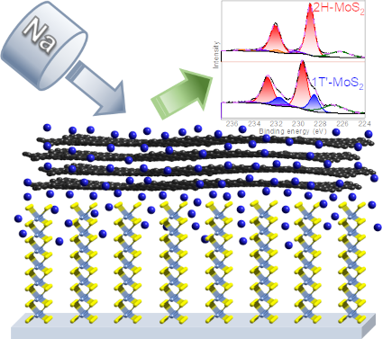
- of this component is lower in the PyC-MoS2 spectrum measured after the total 30 min sodiation process. This is due to the lower charge transfer from sodium to the PyC component in the hybrid film as compared to the free PyC film, caused by its diffusion into the MoS2 component. According to the XPS
- that the PyC films transferred onto the surface of the SiO2/Si substrate and the MoS2 film have the same structure. After sodium deposition on the PyC film for 10 min and then 20 min, the sp2 peak shifts by 0.5 and 0.6 eV, respectively, towards higher binding energies. This shift is due to the charge
- transfer from sodium to the carbon layers. For PyC-MoS2, the shifts of the C 1s line caused by sodium deposition are smaller. A new high-energy component (Na-sp2) appearing at 286 and 285 eV in the spectra of sodiated PyC and PyC-MoS2 films, respectively, is due to carbon bonding with sodium. The intensity


Facile one-step radio frequency magnetron sputtering of Ni/NiO on stainless steel for an efficient electrode for hydrogen evolution reaction
Beilstein J. Nanotechnol. 2025, 16, 837–846, doi:10.3762/bjnano.16.63
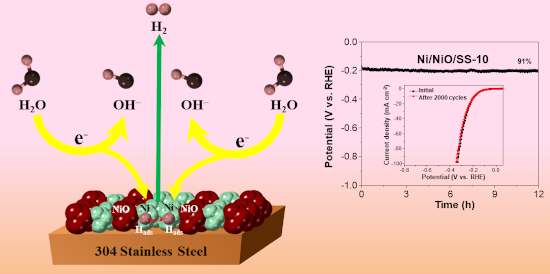
- spectroscopy (EIS) was carried out at a voltage of −200 mV to confirm the HER kinetics. Figure 6c shows the Nyquist plots of the various electrodes accompanied by an equivalent circuit (inset of Figure 6c). Ni/NiO/SS-10 has a charge transfer resistance (Rct) of 5.35 Ω, which is much smaller than that of SS


Morphology and properties of pyrite nanoparticles obtained by pulsed laser ablation in liquid and thin films for photodetection
Beilstein J. Nanotechnol. 2025, 16, 785–805, doi:10.3762/bjnano.16.60
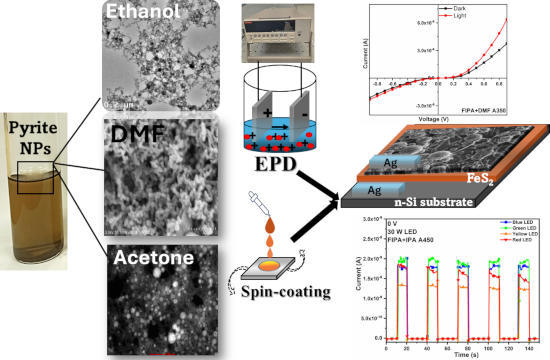
- phase, where the accumulation of minority carriers near the interface leads to recombination and electron flow into the surface. Over time, a steady state is reached when the rate of hole influx at the interface balances charge transfer and recombination, resulting in a stable photocurrent. When the
- light is turned off, the process stops, and only residual electron movement remains. As the electron flux decays, any leftover holes are consumed by recombination and charge transfer, causing the current to return to zero with a negative overshoot. This justification suggests that since both the






Thickness dependent oxidation in CrCl3: a scanning X-ray photoemission and Kelvin probe microscopies study
Beilstein J. Nanotechnol. 2025, 16, 749–761, doi:10.3762/bjnano.16.58
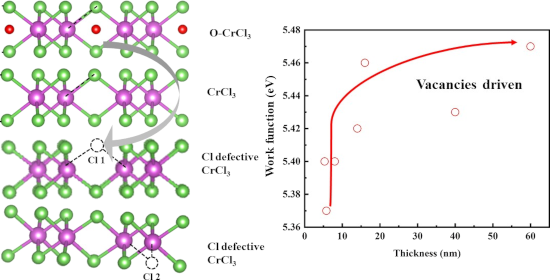
- showed that oxygen adsorption on cleaved surfaces facilitates the formation of a stable structure with charge transfer signatures, as identified by high-resolution photoemission spectroscopy [8]. It remains unclear whether similar effects occur in exfoliated thin flakes. Like in other materials, the
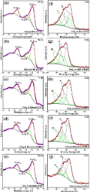
- at 576 eV appeared because of the presence of Cl vacancies and the subsequent formation of reactive sites for the dissociation [16] of molecular oxygen to induce a stable phase of Cr–O–Cl [8]. We realized that the low-binding-energy component in Cr 2p3/2 is arising because of charge transfer effects
- . This turns the system from a surface Mott–Hubbard insulator to a charge-transfer [8] one in spite of Cr being an early transition metal [32]. What can be presumed from the present study is that Cl–O exchange following Cl vacancy formation is limited in very thin layers because of the limited diffusion





Functionalized gold nanoflowers on carbon screen-printed electrodes: an electrochemical platform for biosensing hemagglutinin protein of influenza A H1N1 virus
Beilstein J. Nanotechnol. 2025, 16, 540–550, doi:10.3762/bjnano.16.42
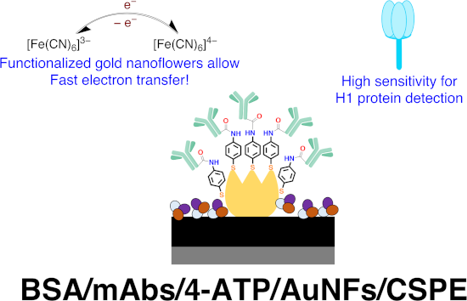
- was amplified by functionalization of the gold nanoflowers with 4-aminothiophenol, which resulted in a 100-fold decrease of the charge transfer resistance due to a tunneling effect. Subsequently, monoclonal antibodies against H1 were immobilized on the surface via covalent amide bond formation
- was coupled to an automated microfluidics system, and no significant decrease of the electrochemical signal was observed. Keywords: charge transfer; cyclic voltammetry; differential pulse voltammetry; electrochemical impedance spectroscopy; electrodeposition; Introduction Viral infections pose a
- electron charge transfer at the surface of the electrode. To the best of our knowledge, this is the first time that the charge transfer enhancement with 4-ATP, a small organic molecule with delocalized π-electron system, has been employed to improve the sensitivity of electrochemical biosensing of proteins


Water in nanoporous hexagonal boron nitride nanosheets: a first-principles study
Beilstein J. Nanotechnol. 2025, 16, 510–519, doi:10.3762/bjnano.16.39
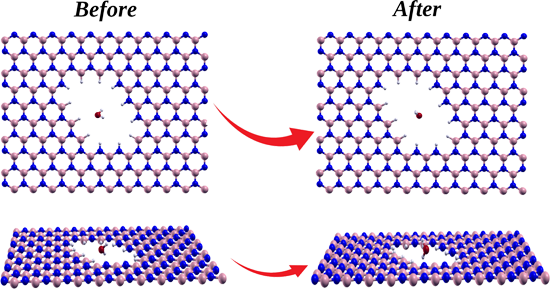
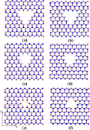
- the high binding energy observed between water and porous h-BN, despite Mulliken analysis indicating no significant charge transfer. The calculated O–-H bond lengths suggest the presence of hydrogen bonding, and a comparison of binding energies obtained using PBE and BH functionals indicates that van




Pulsed laser in liquid grafting of gold nanoparticle–carbon support composites
Beilstein J. Nanotechnol. 2025, 16, 349–361, doi:10.3762/bjnano.16.26
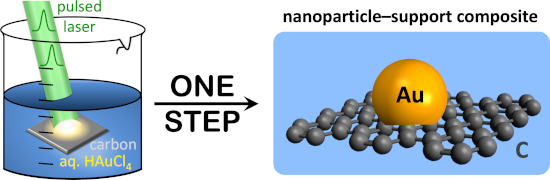
- fibers, taking advantage of the high internal surface area of carbon fiber paper. The pulsed laser-grafted composites exhibited zero measurable charge transfer resistance between gold nanoparticles and the carbon support, leading to superior cathode performance over conventionally prepared electrodes for
- resistances (R) and capacitances at all interfaces and the electrolyte. In our EIS measurements, the most relevant circuit element is the charge transfer resistance (Rct) between the gold nanoparticles and the graphitic carbon support, measured at open circuit potential so that electrochemical reactions do
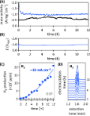
- -grafted gold nanoparticle–carbon fiber paper composites showed zero measurable charge transfer resistance (Figure 5B) and, therefore, excellent electrical contact. In contrast, chemically synthesized gold nanoparticles with citrate surfactants, electrostatically attached to hydrophilic carbon fiber paper


Emerging strategies in the sustainable removal of antibiotics using semiconductor-based photocatalysts
Beilstein J. Nanotechnol. 2025, 16, 264–285, doi:10.3762/bjnano.16.21
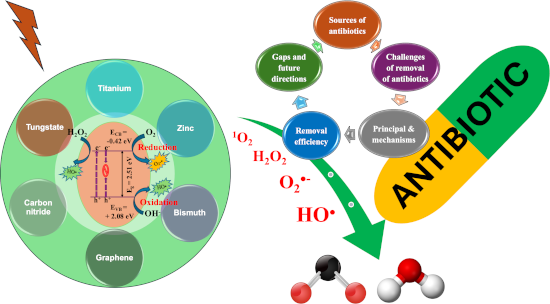
- generation of holes and electrons. Specifically, it contributed 70.1% of the holes and 29.9% of the electrons, in comparison to Co-doped TiO2 and N-doped TiO2 [60]. This can be attributed to the electron-trapping capabilities of Co ions, which enhance charge transfer and facilitate highly efficient electron
- potential difference is applied in heterojunction systems, electrons transfer from the conduction band (CB) of semiconductor 1 (SC1) to the CB of semiconductor 2 (SC2). At the same time, holes in the valence band (VB) of SC1 migrate to the VB of SC2. This charge transfer occurs in type-I heterojunctions, as
- heterojunctions are classified based on their charge transfer mechanism and the presence or absence of mediators. The direct Z-scheme relies on the direct electron transfer between photocatalysts; eliminating the electron mediator simplifies the design and enhances stability but may suffer from higher charge



Advanced atomic force microscopy techniques V
Beilstein J. Nanotechnol. 2025, 16, 54–56, doi:10.3762/bjnano.16.6

- carry out a more detailed characterization of the optoelectronic properties. Rothhardt et al. map the local work function on graphene nanoribbons [7]. They experimentally investigate the charge transfer between a gold substrate and graphene nanoribbons and compare that to DFT calculations. Indeed, the
Facile synthesis of size-tunable L-carnosine-capped silver nanoparticles and their role in metal ion sensing and catalytic degradation of p-nitrophenol
Beilstein J. Nanotechnol. 2024, 15, 1576–1592, doi:10.3762/bjnano.15.124
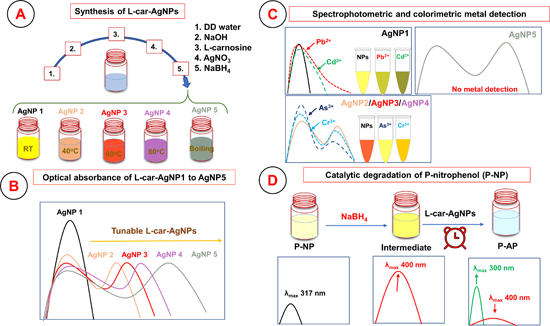
- pristine silver nanospheres upon interaction. The appearance of the redshifted peak might be due to charge transfer or aggregation [7]. An increased nanoparticle size leads to a further redshift of the plasmonic peak [26]. Hydrodynamic size, zeta potential, and morphology of the ʟ-car-AgNPs are shown in




Electrochemical nanostructured CuBTC/FeBTC MOF composite sensor for enrofloxacin detection
Beilstein J. Nanotechnol. 2024, 15, 1522–1535, doi:10.3762/bjnano.15.120
- sensors has some limitations associated with the low conductivity of MOFs. Therefore, the coupling with conducting materials, such as carbon-based materials, metal nanoparticles, and polymers, has been performed to enhance the electron charge transfer of MOFs [23][24]; single MOFs combined with carbon
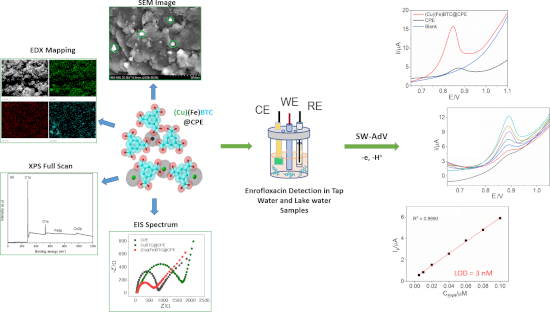
- in the electrode material. Electrochemical property The Nyquist diagrams in Figure 5 were obtained using electrochemical impedance spectroscopy (EIS) in a 0.1 M KCl solution containing 5 mM [Fe(CN)6]3−/4−. Based on the EIS analysis, the charge transfer resistances (Rct) of CPE, CuBTC@CPE, and (Cu)(Fe
- Ω and significantly better conductivity [37], to the (Cu)(Fe)BTC@CPE led to reduction to about a third in Rct. This reduction in charge transfer resistance is advantageous for the enhancement of electrochemical oxidation on the electrode surface. Electrochemical behaviour of enrofloxacin on the (Cu





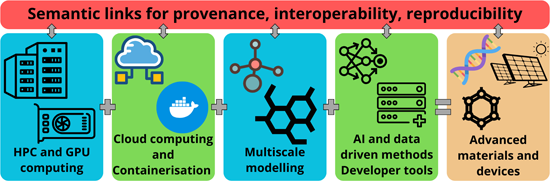
Integrating high-performance computing, machine learning, data management workflows, and infrastructures for multiscale simulations and nanomaterials technologies
Beilstein J. Nanotechnol. 2024, 15, 1498–1521, doi:10.3762/bjnano.15.119


Out-of-plane polarization induces a picosecond photoresponse in rhombohedral stacked bilayer WSe2
Beilstein J. Nanotechnol. 2024, 15, 1362–1368, doi:10.3762/bjnano.15.109
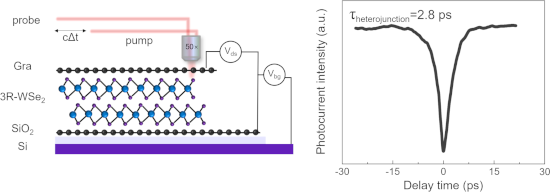
- stacking depicted in Figure 1a as AB, where the tungsten atoms (W, blue dots) are positioned directly above the selenium atoms (Se, purple dots). This arrangement leads to charge transfer from the lower layer to the upper layer, resulting in downward polarization [24] (as shown by the black arrow in Figure


Interaction of graphene oxide with tannic acid: computational modeling and toxicity mitigation in C. elegans
Beilstein J. Nanotechnol. 2024, 15, 1297–1311, doi:10.3762/bjnano.15.105
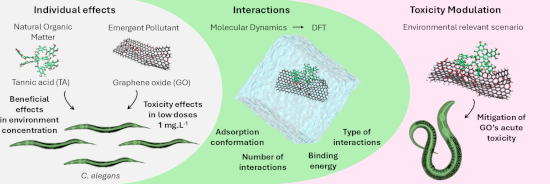
- , we calculated the charge transfer of the system using Bader charge analysis, which was 0.1e− from GO to TA. The low value of charge transfer indicates that van der Waals (vdW) interaction forces dominate the binding between GO and TA. This is confirmed by the unfavorable binding energy (i.e


Quantum-to-classical modeling of monolayer Ge2Se2 and its application in photovoltaic devices
Beilstein J. Nanotechnol. 2024, 15, 1153–1169, doi:10.3762/bjnano.15.94
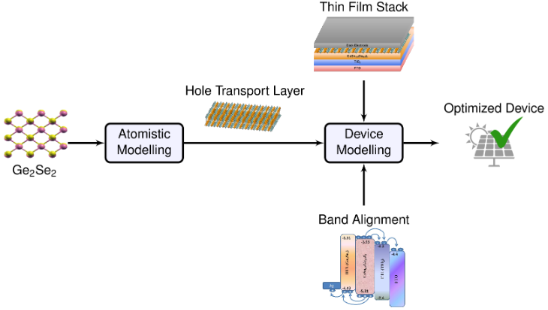
- carriers (for electrons and holes). To calculate the charge transfer and use it in the solar cell, it is required to know the electron affinity and work function of monolayer Ge2Se2. The electron affinity is calculated as EA = EVac − ELUMO, where EA is the electron affinity, EVac is the vacuum energy level
- using Ge2Se2 as HTL; (a) device setup consisting of stacked layers of FTO–TiO2–CsSn0.5Ge0.5I3–Ge2Se2–Ag; (b) band offset among different PSC layers, demonstrating the ease of charge-transfer from the active layers to the respective transport layers. PSC performance parameters as functions of (a) HTL




Local work function on graphene nanoribbons
Beilstein J. Nanotechnol. 2024, 15, 1125–1131, doi:10.3762/bjnano.15.91
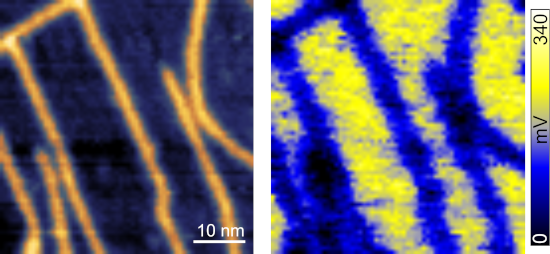
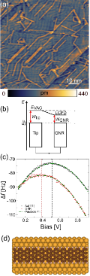
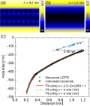
- difference (LCPD) between a probe tip and a surface, related to the work function. Here we use this technique to map the LCPD of graphene nanoribbons grown on a Au(111) substrate. The LCPD data shows charge transfer between the graphene nanoribbons and the gold substrate. Our results are corroborated with
- opening a size-dependent energy gap [6][9]. As in graphene, the Fermi level of GNRs is also strongly influenced by charge transfer between the substrate and the GNR [10], again related to differences in the work function. Here, we take the work function as a local property influenced by local charge, that
- electronic properties, a suitable method to study the charge transfer, that is, the local work function, between a GNR and a metal substrate at the atomic scale is needed. In general, as detailed above, the local work function can provide evidence for structural, electronic, and chemical variations at

![[Graphic 1]](/bjnano/content/inline/2190-4286-15-91-i4.svg?max-width=637&scale=1.18182)
Exploring surface charge dynamics: implications for AFM height measurements in 2D materials
Beilstein J. Nanotechnol. 2024, 15, 767–780, doi:10.3762/bjnano.15.64
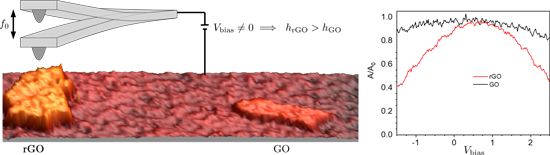
- apparent flake height seems to depend on both the tip–sample voltage and on the material, we explore these correlations on both GO and rGO flakes by biasing the tip with a DC voltage. To prevent any interaction between flakes arising from charge transfer through the substrate [79], we deliberately chose


Unveiling the nature of atomic defects in graphene on a metal surface
Beilstein J. Nanotechnol. 2024, 15, 416–425, doi:10.3762/bjnano.15.37
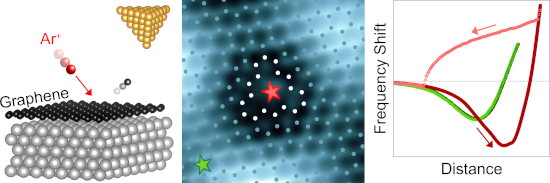
- from STS experiments [49][50][51], it is lower than the energy observed in photoemission experiments [52]. A possible rationale is the locally lifted graphene in the presence of the tip [53], which in turn decreases the charge transfer from graphene to the metal and reduces the p-doping [52] and


CdSe/ZnS quantum dots as a booster in the active layer of distributed ternary organic photovoltaics
Beilstein J. Nanotechnol. 2024, 15, 144–156, doi:10.3762/bjnano.15.14
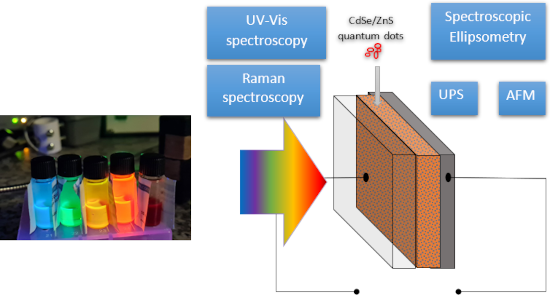
- equal to or greater than the binding energy of singlet and triplet excitons. The energy levels system of the considered devices with QDs determines the optimal photocurrent of dissociation for most singlet excitons, which require at least 0.07 eV energy [64]. The production of charge-transfer carrier




Influence of conductive carbon and MnCo2O4 on morphological and electrical properties of hydrogels for electrochemical energy conversion
Beilstein J. Nanotechnol. 2024, 15, 57–70, doi:10.3762/bjnano.15.6
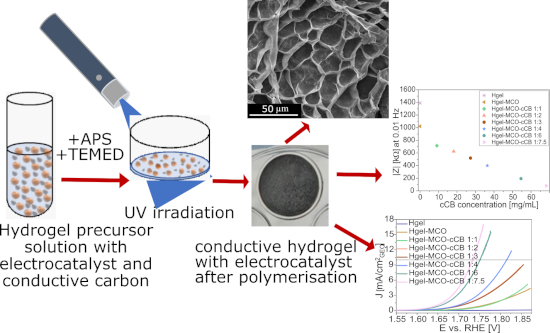
- Rs corresponds to solution resistance, Rct is related to charge transfer resistance at the interface of the solution and the electrode material, while CPE is a constant phase element, which represents capacitive performance of the electrode. The circuit parameters and their standard deviations were
- , the results indicate that microporosity, and thus the electroactive surface area of the electrode, increases with a higher content of cCB in the hydrogel-MCO film. A slightly different trend can be observed for the charge transfer resistance Rct at the solution–film interface. The highest Rct is
- electrode and the reference electrode, respectively. Linear sweep voltammetry (LSV) data was recorded from 1.1 to 2.0 V vs RHE with a 10 mV/s scan rate. The charge transfer resistance (Rct) was determined based on EIS measurements. The spectra were obtained in the frequency range from 10 kHz to 0.1 Hz at


Josephson dynamics and Shapiro steps at high transmissions: current bias regime
Beilstein J. Nanotechnol. 2024, 15, 51–56, doi:10.3762/bjnano.15.5
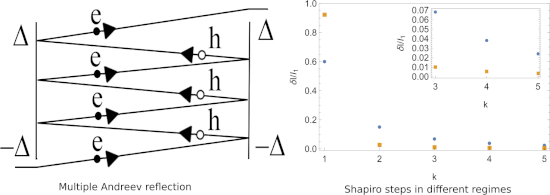
- T → 0 can flow across the junction. The situation becomes entirely different provided one goes beyond the tunneling limit and considers highly transparent superconducting weak links in which case the charge transfer is essentially controlled by the mechanism of multiple Andreev reflection [2]. This


Density functional theory study of Au-fcc/Ge and Au-hcp/Ge interfaces
Beilstein J. Nanotechnol. 2023, 14, 1093–1105, doi:10.3762/bjnano.14.90
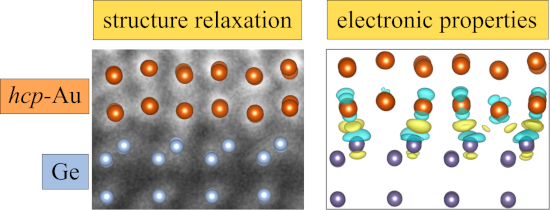
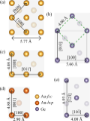
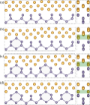
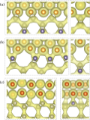
- atom forms two bonds with Au atoms in the Au-fcc/Ge structure and only one at the Au-hcp/Ge interface. The maps of charge density differences show charge transfer occurs both at the interface and in the adjacent germanium layer. Appendix A Surface energies The surface energies calculated for several
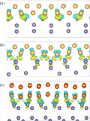
- 13 with yellow regions representing charge accumulation and light blue regions indicating charge depletion. For all heterostructures, the charge transfer from Au and Ge interfacial atoms leads to the electron accumulation at approximately half of their distance. At the presented isocharge surface





Dual-heterodyne Kelvin probe force microscopy
Beilstein J. Nanotechnol. 2023, 14, 1068–1084, doi:10.3762/bjnano.14.88
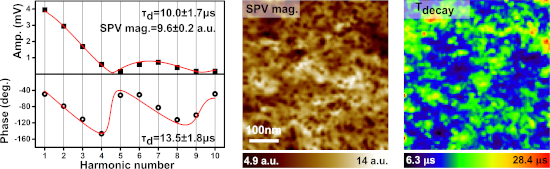
- organic blends, charge photogeneration can be understood, in a first approach, as the result of exciton dissociation into Coulomb bound charge transfer (CT) states at the donor–acceptor interfaces. This event is finally followed by the dissociation of the CT states into delocalized carriers of opposite




Ni, Co, Zn, and Cu metal-organic framework-based nanomaterials for electrochemical reduction of CO2: A review
Beilstein J. Nanotechnol. 2023, 14, 904–911, doi:10.3762/bjnano.14.74
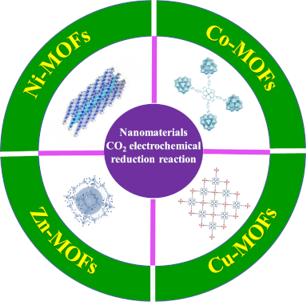
- presented. Finally, we present the potential pathways and current problems in progressing MOF-based nanomaterials for CO2 conversion. Review Mechanism of CO2RR The process of CO2 reduction consists of three steps. First, the CO2 molecules are adsorbed on the active sites of catalysts. Second, charge
- transfer processes take place to create intermediates such as *CHO, *CO, and *COO. The process could include many electrons attending in the electrochemical reaction, and orientate the formed products. Finally, these species are desorbed from the active sites of electrocatalysts to generate various





