Search results
Search for "clusters" in Full Text gives 469 result(s) in Beilstein Journal of Nanotechnology. Showing first 200.
Time-resolved probing of laser-induced nanostructuring processes in liquids
Beilstein J. Nanotechnol. 2025, 16, 968–1002, doi:10.3762/bjnano.16.74
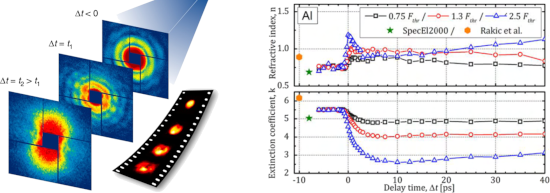
- exchanging energy and material with the excited loci. LSPC commonly encompasses laser ablation in liquid (LAL), which allows for producing NPs from a surface of virtually any solid [6][7][8][9], laser fragmentation in liquid (LFL) to further reduce dimensions of particles down to few-atom clusters [10][11
- cases deals with continuous cycling of a large ensemble of particles, which in contact with a liquid medium involves cooperative phenomena, such as heat dissipation, evaporation, creation of shock waves, or reorganization of formed products like fragmented clusters to new objects by ripening. Therefore
- further until the evaporation threshold is reached. Evaporation again requires additional energy to overcome heat of fusion. Only evaporation can lead to expulsion of material and formation of clusters in this context via condensation of the vapor. Further processes that will be described in the laser


Ar+ implantation-induced tailoring of RF-sputtered ZnO films: structural, morphological, and optical properties
Beilstein J. Nanotechnol. 2025, 16, 872–886, doi:10.3762/bjnano.16.66
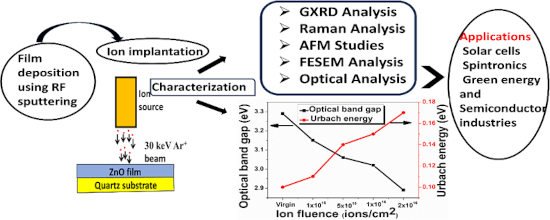
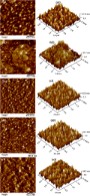
- in particle size and RMS roughness can be ascribed to the rearrangement of surface atoms due to the elastic collisions. This leads to the evolution of small ZnO particles due to the breaking of clusters by the transfer of energy from incident ions. Kahng et al. [31] presented a nonlinear theory that






Synthesis and magnetic transitions of rare-earth-free Fe–Mn–Ni–Si-based compositionally complex alloys at bulk and nanoscale
Beilstein J. Nanotechnol. 2025, 16, 823–836, doi:10.3762/bjnano.16.62
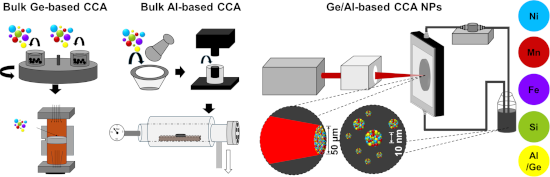
- region of the target decomposes into vapor, small clusters, and droplets, and large particles result from photomechanical spallation, leading to the ejection of larger droplets. The average particle size of the Al alloy NPs (xc = 18.4 ± 15.5 nm) is larger than that of Ge-based CCA NPs (xc = 13.4 ± 9.1 nm
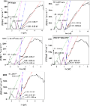
- synthesized via PLAL, where separate Mn-rich clusters formed due to elemental evaporation during synthesis. Additionally, the ionization potential influences the ablation plume dynamics. Notably, the Ge variation from the expected composition is lower than for Mn, contrasting with the bulk alloy’s surface


Morphology and properties of pyrite nanoparticles obtained by pulsed laser ablation in liquid and thin films for photodetection
Beilstein J. Nanotechnol. 2025, 16, 785–805, doi:10.3762/bjnano.16.60
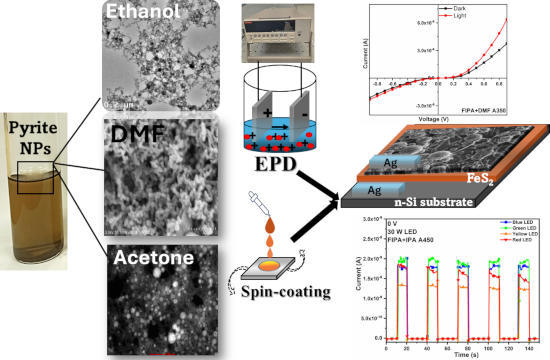
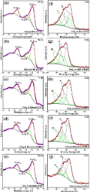
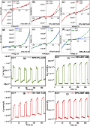
- of 13.41 nm, a few clusters were also observable and can be justified based on the bimodal size distribution of the particles (1 to 50 nm and from 80 to 85 nm) observed. The long rod-like particles in the SEM images (Figure 2g–i) are indicated by red oval shapes. The (210) and (211) planes that
- analyzed by XRD (Supporting Information File 1, Figure S3a). Ultrafine spherical nanoparticles as condensed clusters are observed in TEM (Figure 3a) and STEM (Figure 3d–f) images for FeS2 NPs in DMF (FDMF). In comparison to IPA, a completely different type of morphology is observed for NPs in DMF from SEM
- powders and thin films of iron sulfide from molecular precursors by spin coating technique [59], clusters of densely packed crystallites and spherical crystallites were observed. They concluded that morphology is influenced by temperature and precursor type. Furthermore, different morphologies such as






Changes of structural, magnetic and spectroscopic properties of microencapsulated iron sucrose nanoparticles in saline
Beilstein J. Nanotechnol. 2025, 16, 762–784, doi:10.3762/bjnano.16.59
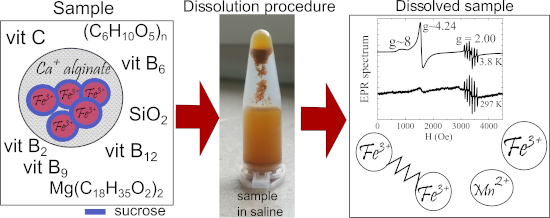
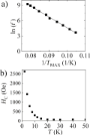
- the dissolution time. Electron paramagnetic resonance (EPR) studies performed on the completely dissolved sample revealed that some of the Fe3+ ions became paramagnetic, while the rest remained exchange coupled into clusters. The nonintentional manganese contamination was determined using EPR in the





Colloidal few layered graphene–tannic acid preserves the biocompatibility of periodontal ligament cells
Beilstein J. Nanotechnol. 2025, 16, 664–677, doi:10.3762/bjnano.16.51
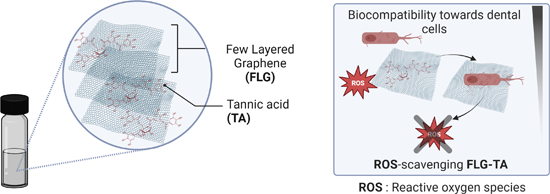
- S1B, Supporting Information File 1) shows that they are spherical and that they remodel into clusters on the surface. Raman spectra recorded for the initial graphite and the synthesized FLG–TA exhibits typical D, G, and 2D vibration bands centered at 1355, 1583, and 2720 cm−1, respectively. It is
- increases monotonically and significantly with rising FLG–TA concentration, reaching 43.7% at 200 µg·mL−1. The lateral particle size expands from 2 to 15 µm, indicating the formation of larger clusters on the cells’ surface. Representative confocal images of PDL cells following exposure to the FLG–TA




Impact of adsorbate–substrate interaction on nanostructured thin films growth during low-pressure condensation
Beilstein J. Nanotechnol. 2025, 16, 473–483, doi:10.3762/bjnano.16.36

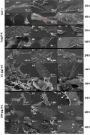
- , crystallinity, and surface chemistry of the films is crucial for optimizing performance in these applications. In adsorption–desorption processes, where materials are deposited from the gas phase, experimental techniques enable the study the formation of clusters or islands of adsorbed molecules/atoms, which
- well-defined islands or clusters. The strength and nature of these interactions play a pivotal role in determining whether the film growth follows layer-by-layer (Frank–van der Merwe) or island (Volmer–Weber) growth modes [22]. Therefore, central to achieving the control the type and size of surface
- , namely, the parabolic growth ⟨d⟩st(δ) ∝ δ2 at δ < δp and the linear dependence ⟨d⟩st(δ) ∝ δ at δ > δp. This critical value δ = δp relates to the formation of percolating cluster of adsorbate connecting opposite sides of the substrate (see Figure 7b). The number of percolating clusters increases with


Effect of additives on the synthesis efficiency of nanoparticles by laser-induced reduction
Beilstein J. Nanotechnol. 2025, 16, 464–472, doi:10.3762/bjnano.16.35
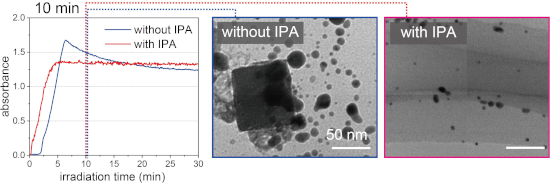
- electrons reduce metal ions and contribute to the formation of nanoparticles [25][26]. On the other hand, the standard electrode potential of the hydroxyl radical (•OH) is +2.7 V, and it is a strong oxidizing species [33], so it is thought that it oxidizes the reduced metal atoms and clusters, inhibiting


Size control of nanoparticles synthesized by pulsed laser ablation in liquids using donut-shaped beams
Beilstein J. Nanotechnol. 2025, 16, 407–417, doi:10.3762/bjnano.16.31
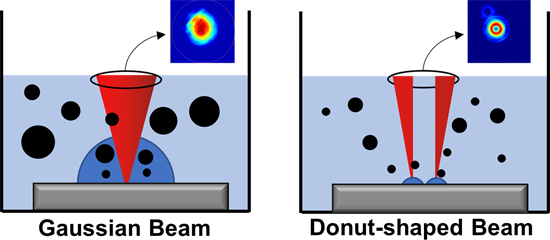
- reaches equilibrium with the outer pressure, achieving the bubble maximum size. The bubble then collapses, and the process can be repeated for several cycles. Ions, atoms, and clusters within the confined bubble nucleate and grow to form the NPs. The bubble collapse can induce shockwaves that break up the


Vortex lattices of layered HTSCs at different vortex–vortex interaction potentials
Beilstein J. Nanotechnol. 2025, 16, 362–370, doi:10.3762/bjnano.16.27
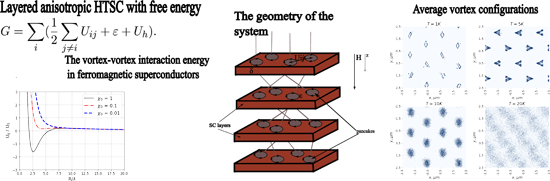
- observed in such a superconductor; however, the interaction of the vortices is characterized by short-range attraction and long-range repulsion [19][20][21]. This form of the potential is characterized by the formation of clusters containing several vortices up to several dozen vortices. In [19], a
- molecular dynamics simulation of a vortex system in a superconductor with was performed, and a phase B–T diagram was obtained (B is the magnetic field and T is the temperature of the vortex system), which contains regions of a hexagonal vortex lattice, a striped structure, and a lattice of vortex clusters
- distances greater than 10λ, repulsion is observed). In this work, the formation of vortex clusters and their motion under the action of the Lorentz force were investigated. Since their interaction potential is similar to intertype, our results are applicable to them. A description of the mechanism of the


Tailoring of physical properties of RF-sputtered ZnTe films: role of substrate temperature
Beilstein J. Nanotechnol. 2025, 16, 333–348, doi:10.3762/bjnano.16.25
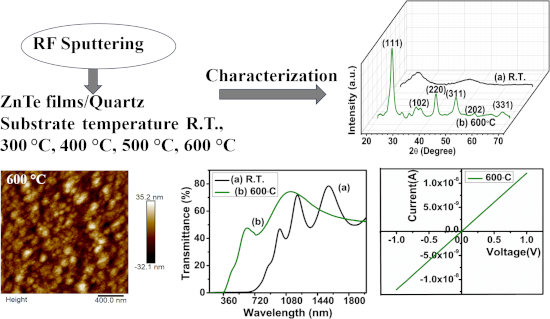
- of the substrate. A significant change in particle size along with a change in agglomerated particle density occurs with increasing substrate temperature. The surface is free from pinholes and voids, and clusters of particles can be seen. Quantitative analysis of the surface composition was carried




Radiosensitizing properties of dual-functionalized carbon nanostructures loaded with temozolomide
Beilstein J. Nanotechnol. 2025, 16, 229–251, doi:10.3762/bjnano.16.18
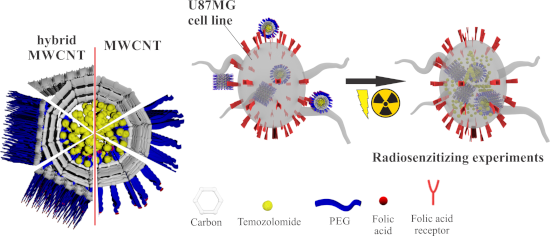
- , mitochondria, and endoplasmic reticulum), that NDs and CNTs aggregate in big clusters into the cells, and that some of these aggregates are wrapped by extended cell synapses. Although NDs and CNTs were taken up by the cells to a greater extent, the cell membranes remained intact in contrast to the ruptured




Recent advances in photothermal nanomaterials for ophthalmic applications
Beilstein J. Nanotechnol. 2025, 16, 195–215, doi:10.3762/bjnano.16.16
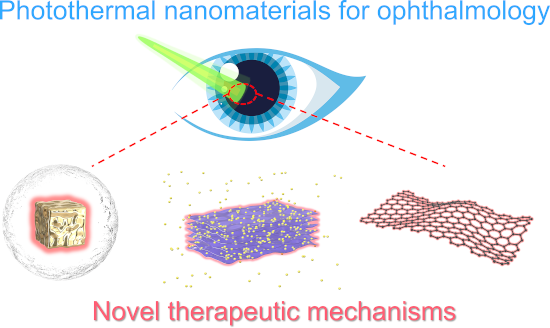
- PAI contrast agents [195][196]. Gold nanorods [197], gold nanostars [198], hollow gold nanocages [199], chains of gold nanoparticles [200], and ultraminiature chain-like gold nanoparticle clusters [201] have been used for the detection of ocular structures such as retinal blood vessels, choroidal


Probing the potential of rare earth elements in the development of new anticancer drugs: single molecule studies
Beilstein J. Nanotechnol. 2025, 16, 187–194, doi:10.3762/bjnano.16.15
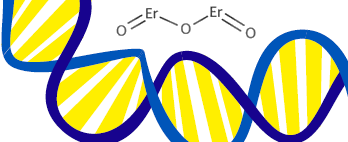
- mechanical properties of the DNA complexes formed with the ytterbium and neodymium is very similar to the one previously studied using europium [7]. In this work, we showed that europium binds outside the double helix in a cooperative way, forming clusters of about approx. three molecules and presenting an
- elements are good candidates for the development of drugs that have DNA as their target inside cells [7], for example, chemotherapeutic drugs. In addition, the Hill exponent n obtained for the two elements suggests that they bind in a positive cooperative way forming clusters of about two to three


A review of metal-organic frameworks and polymers in mixed matrix membranes for CO2 capture
Beilstein J. Nanotechnol. 2025, 16, 155–186, doi:10.3762/bjnano.16.14
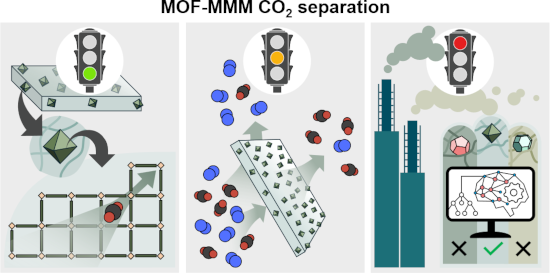
- article by Moore and Koros [78]. 3.5.4 MOF aggregates. Stochastic aggregation of MOF particles within the polymer matrix, as schematized in Figure 6e, can cause and facilitate other defects, such as polymer voids and rigidification. These aggregates may also introduce void space within the MOF clusters


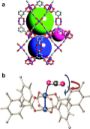
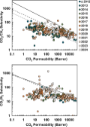


Theoretical study of the electronic and optical properties of a composite formed by the zeolite NaA and a magnetite cluster
Beilstein J. Nanotechnol. 2025, 16, 44–53, doi:10.3762/bjnano.16.5
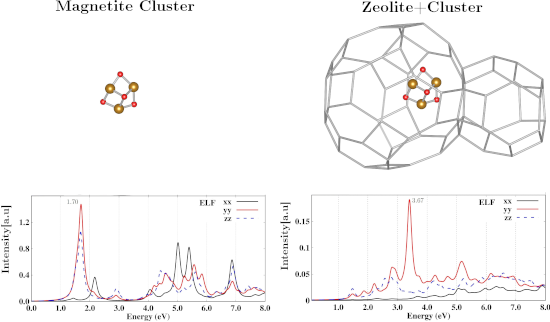
- because of the migration and coalescence of nanoparticles on the carrier material [21][22]. Such changes can significantly modify the physicochemical properties of the original nanomaterial. Also, the most interesting physicochemical properties are exhibited by clusters with subnanometer dimensions. For
- tackle these challenges is to utilize zeolites, which are frequently employed as inert support materials [27][28][29][30][31][32]. Zeolites are well suited for the hosting and confinement of molecular clusters with dimensions below 10 Å. This approach has the potential to stabilize these clusters and
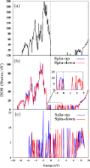
- Safe” [50] by the United States Food and Drug Administration [51]. Also, iron-based magnetic compounds have the advantage of being a widely available and relatively cheap material, as well as being biocompatible and environmentally friendly [52][53]. While the potential of magnetic clusters to impart




Bioinspired nanofilament coatings for scale reduction on steel
Beilstein J. Nanotechnol. 2025, 16, 25–34, doi:10.3762/bjnano.16.3

- only 4.0 ± 1.5 mg. This corresponds to a scale reduction of 75.5% by the SNF coating. Ostensibly, the non-wetting properties of the SNF films prevent attachment and growth of scale. Calcium carbonate scale formation starts with crystallization nuclei, small clusters of ions which can homogeneously form


Attempts to preserve and visualize protein corona on the surface of biological nanoparticles in blood serum using photomodification
Beilstein J. Nanotechnol. 2024, 15, 1654–1666, doi:10.3762/bjnano.15.130

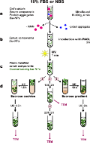
- particles of 40–80 nm as very low-density LPs (Figure 3a). Clusters of tiny spherical particles were often observed on the surface of many LPs (Figure 3a,e). The content of EVs in samples isolated from FBS by UC was incomparably lower than the content of LPs. The majority of EVs were 60–120 nm in size
- ), rounded in shape, and of medium electron density; most of them were arranged in spherical clusters (5–10 nm) with electron-transparent or electron-dense centers. In turn, the clusters were connected into chains, forming various shapes (Figure 5a,b). The structure of sucrose particles and clusters were the
- clusters were rare. The content of bio-NPs was low, and they were immersed in the serum components (Figure 5c–e). Thus, samples isolated in the 12% sucrose fraction were not suitable for TEM studies. The 30% sucrose fraction contained the largest number of bio-NPs and was virtually free of serum



Heterogeneous reactions in a HFCVD reactor: simulation using a 2D model
Beilstein J. Nanotechnol. 2024, 15, 1627–1638, doi:10.3762/bjnano.15.128
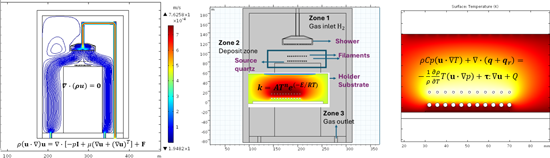
- . According to what was discussed above, the distance decreases the temperature, increases the size of the clusters, and decreases the diffusion of the species, resulting in powder formation. Heterogeneous nucleation on the substrate promotes the growth of SiOx films. The distance between the filaments and


Natural nanofibers embedded in the seed mucilage envelope: composite hydrogels with specific adhesive and frictional properties
Beilstein J. Nanotechnol. 2024, 15, 1603–1618, doi:10.3762/bjnano.15.126
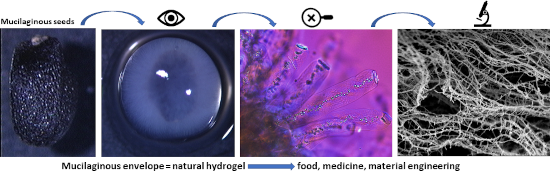
- 14.03 N, and the maximal measured value belongs to the tendrils of Campsis radicans, namely, 25.18 N [142]. The sea grass (Posidonia oceanica) root hairs can also generate strong adhesion under sea water conditions [143][144][145]. Attachment pads or roots are special organs organised in clusters and


The round-robin approach applied to nanoinformatics: consensus prediction of nanomaterials zeta potential
Beilstein J. Nanotechnol. 2024, 15, 1536–1553, doi:10.3762/bjnano.15.121
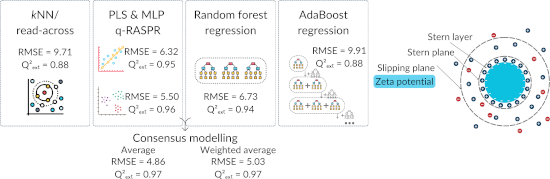
- space into distinct clusters of k neighbours that can subsequently be explored to identify patterns and similarities within the neighbourhood space, in accordance with the ECHA’s read-across framework. The EnaloskNN functionality offers the advantage of not only delivering predictive results but also


Electrochemical nanostructured CuBTC/FeBTC MOF composite sensor for enrofloxacin detection
Beilstein J. Nanotechnol. 2024, 15, 1522–1535, doi:10.3762/bjnano.15.120
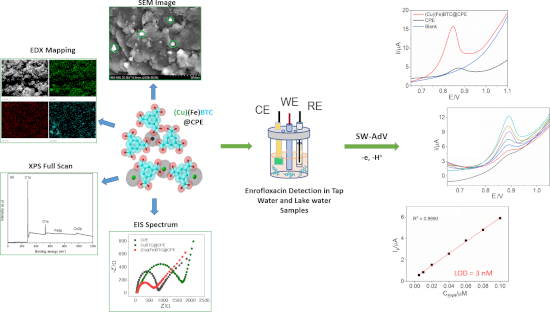
- sensor was presented by You et al. in 2002 [22]. MOFs are crystalline hybrid materials with network structures formed by the self-assembly of metal ions or metal clusters and organic ligands, which give them ultrahigh porosity and enormous internal surface area. However, using MOFs for electrochemical





Integrating high-performance computing, machine learning, data management workflows, and infrastructures for multiscale simulations and nanomaterials technologies
Beilstein J. Nanotechnol. 2024, 15, 1498–1521, doi:10.3762/bjnano.15.119



Effect of radiation-induced vacancy saturation on the first-order phase transformation in nanoparticles: insights from a model
Beilstein J. Nanotechnol. 2024, 15, 1453–1472, doi:10.3762/bjnano.15.117

- , and other emerging nanotechnologies. When HDCMs are exposed to radiation, such as ion bombardment or exposure to high-energy radiation sources, defects (vacancies, interstitials, point defect clusters, voids, and interstitial loops) are created in the crystal lattice because of the displacement of
- (dpa) (equivalent to 40 years of service). Under irradiation, the main point defects are vacancies and interstitials. Point defects can develop into clusters of dislocations, stacking faults, or voids. They can also relax onto existing sinks such as dislocation loops, grain boundaries, phase interfaces
- , and cavities [1][2]. Experimental studies on Pd have shown that the defect density generally increases with grain size; in grains smaller than 30 nm, no defects were observed [3], suggesting that large defects (clusters and dislocations) do not exist in small nanoparticles. One possible explanation is


Functional morphology of cleaning devices in the damselfly Ischnura elegans (Odonata, Coenagrionidae)
Beilstein J. Nanotechnol. 2024, 15, 1260–1272, doi:10.3762/bjnano.15.102

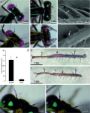
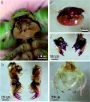
- are typically located on the legs and are associated with complex grooming behaviors that vary greatly across arthropods [20]. Numerous studies on flies [21][22], wasps [23], mantids [24], and crickets [25] indicate that grooming behavior often falls into two distinct clusters. The anterior cluster