


Search results
Search for "contact" in Full Text gives 1252 result(s) in Beilstein Journal of Nanotechnology. Showing first 200.
Advancing nanolithography: a comprehensive review of materials for local anodic oxidation with AFM
Beilstein J. Nanotechnol. 2026, 17, 275–291, doi:10.3762/bjnano.17.19
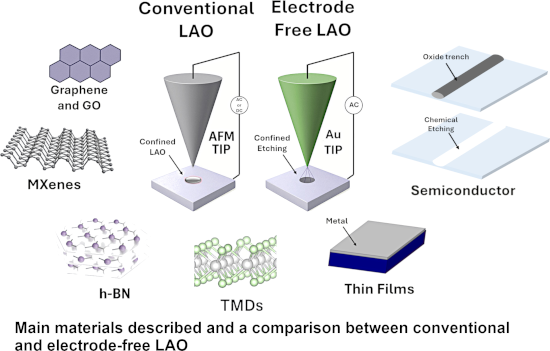
- preparation steps, LAO enables direct chemical modification, with precise control of the tip–sample separation during the writing process. This is typically achieved in contact mode, where the tip apex is in direct contact with the substrate, ensuring capillary condensation and the formation of a stable water
- contact-mode conditions with applied forces around 1500 nN, which may lead to tip coating wear if the ohmic contact is not facilitated by the presence of a water meniscus. Despite this, the authors demonstrate consistent and reproducible patterning over hundreds of micrometers, achieved at writing speeds
- nanopatterning of thick multilayer van der Waals (vdW) heterostructures [64]. This approach, which relies on applying a low-frequency (10 kHz) AC voltage between the AFM tip in contact mode and the grounded substrate, achieves high-resolution etching (down to ≈100 nm) without the need for a humid environment


Durable antimicrobial activity of fabrics functionalized with zeolite ion-exchanged nanomaterials against Staphylococcus aureus and Escherichia coli
Beilstein J. Nanotechnol. 2026, 17, 262–274, doi:10.3762/bjnano.17.18
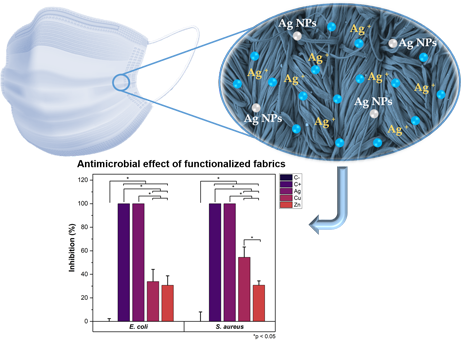
- inactivate a wide range of microorganisms. Today, both silver and copper are widely used in various medical and healthcare applications due to their effective antimicrobial activity. For example, copper was found to be 99.9% efficient in inactivating microorganisms within the first two hours of contact [13




Micro- and nanoscale effects in biological and bioinspired materials and surfaces
Beilstein J. Nanotechnol. 2026, 17, 214–217, doi:10.3762/bjnano.17.14

- adhesion. They combined molecular dynamics for the simulation of the adhesive contact between the gecko spatula and the substrate with finite element modeling of the mechanical behavior of the adhesive seta to understand key aspects of gecko seta adhesion across scales. Besides these studies, focusing on
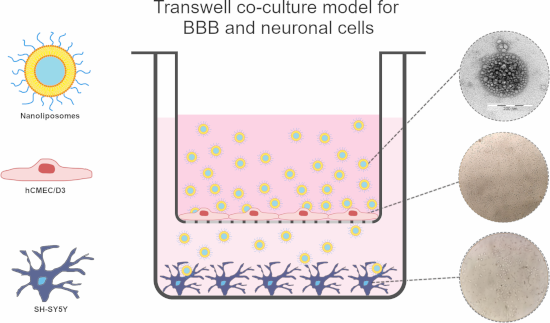
Influence of surface characteristics on the in vitro stability and cell uptake of nanoliposomes for brain delivery
Beilstein J. Nanotechnol. 2026, 17, 139–158, doi:10.3762/bjnano.17.9




Functional surface engineering for cultural heritage protection: the role of superhydrophobic and superoleophobic coatings – a comprehensive review
Beilstein J. Nanotechnol. 2026, 17, 63–96, doi:10.3762/bjnano.17.6
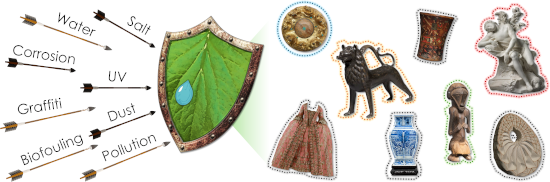
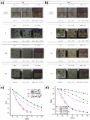
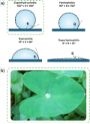
- more homogeneous AMF surface after prolonged UV exposure, which also contributed to maintaining a nearly constant, relatively high contact angle. Rather than organic polymers, inorganic polymers, also known as geopolymers, are often used with this class of artwork. This is due to the fact that
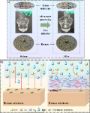
- coating density and physical barrier performance (ZIF-8 helps prevent Ti3C2Tx aggregation and chemically cross-links with WPU, enhancing mechanical integrity). The final cross-linked coating had a water contact angle of about 154°, indicating high water repellency and self-cleaning capabilities. More
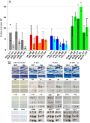
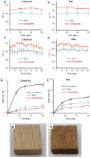
- .) and oak (Quercus robur) substrates. The addition of BC–MnO2 particles increased hydrophobicity across all formulations, with contact angles ranging from 97° to 121°, and further improvements were observed after aging due to increased surface roughness. It also provided superior color stability and




Subdigital integumentary microstructure in Cyrtodactylus (Squamata: Gekkota): do those lineages with incipiently expressed toepads exclusively exhibit adhesive setae?
Beilstein J. Nanotechnol. 2026, 17, 38–56, doi:10.3762/bjnano.17.4
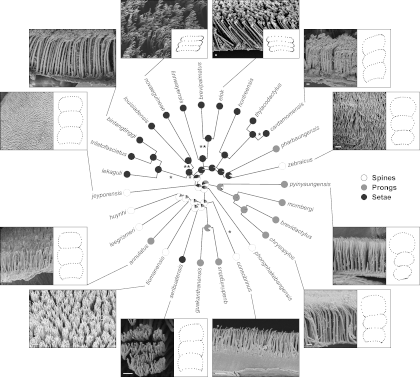
- adhesive contact by increasing real contact with the substratum through their arrangement in arrays and their heavily branched stalks and spatulate tips, thereby generating extensive van der Waals intermolecular forces [11][17][18][19][20]. Spines and prongs, which increase traction (as has been discussed
- requires strong adhesive capabilities or alternatively strong clinging forces via claws, and the hard, rocky surface increases the risk of injuries if individuals lose contact with the substrate and fall. Conclusion Although our dataset (27 species and 19 phylogenetic groups) comprises only a small subset


Quantitative estimation of nanoparticle/substrate adhesion by atomic force microscopy
Beilstein J. Nanotechnol. 2026, 17, 1–14, doi:10.3762/bjnano.17.1

- [5] and physicochemical properties [6]. Among these properties, particle adhesion (which is determined by the interaction between the NP and the substrate) and the interface formed between NPs and substrate [7][8] play a decisive role. Particularly when the contact area between NPs and the substrate
- [15][16][17]. However, achieving consistently accurate manipulation of NPs has inherent limitations due to limited knowledge of the exact geometry of the AFM tip as well as the complex interactions involving surface contact area and interfacial friction between the AFM tip, NPs, and the substrate [18
- utilized as a tool for the manipulation of the NPs in order to determine the adhesion forces. The NPs were pushed in normal direction to the AFM cantilever’s long axis by scanning the surface with the AFM tip in contact mode. The corresponding lateral forces necessary to move NPs were determined. The



Internal 3D temperature mapping in biological systems using ratiometric light-sheet imaging and lipid-coated upconversion nanothermometers
Beilstein J. Nanotechnol. 2025, 16, 2306–2316, doi:10.3762/bjnano.16.159
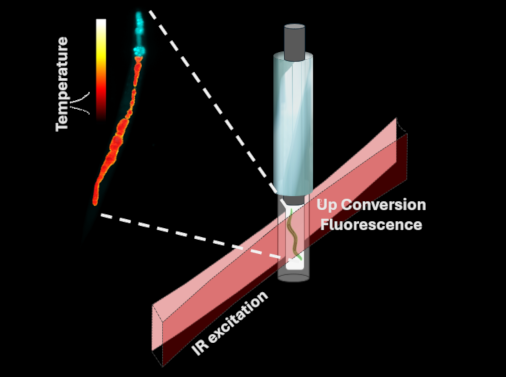
- devices with several disadvantages, including limited sensitivity and low accuracy, and are generally restricted to contact surface measurements [2]. Beyond fundamental processes, temperature also serves as a key biomarker for pathological conditions such as cancer. Localized hyperthermia often arises
- with a transmitted light source and thin tweezers. After the transfer, 50 µL of the UCNPs@lipids solution was carefully dropped onto the plate and spread to cover most of the plate. Before imaging, the nematodes were left in contact with the UCNPs@lipids solutions for approximately 17 h. Samples used


Visualizing nanostructures in supramolecular hydrogels: a correlative study using confocal and cryogenic scanning electron microscopy
Beilstein J. Nanotechnol. 2025, 16, 2274–2284, doi:10.3762/bjnano.16.156
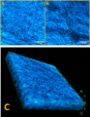
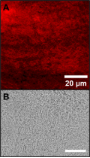
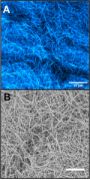
- bulk fibre morphology of DPP-BC@Gel. (B) Micrograph of the fibre morphology of DPP-BC@Gel where the gel sample is in contact with the glass coverslip. Imaging details: laser 561 nm, emission range 565–700 nm, laser power 30%. (C) Three-dimensional view of a z-stack of x–y slice images collected of DPP



Geometry-controlled engineering of the low-temperature proximity effect in normal metal–superconductor junctions
Beilstein J. Nanotechnol. 2025, 16, 2265–2273, doi:10.3762/bjnano.16.155
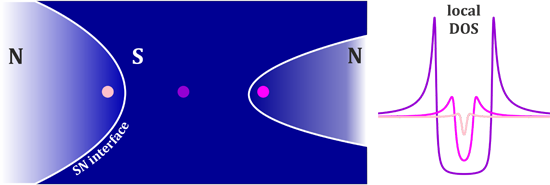
- Gennes equations; normal metal–superconductor junction; order parameter; proximity effect; superconductivity; Introduction When a superconductor (SC) is brought into contact with a normal metal (NM) or a ferromagnet (FM), Cooper pairs penetrate the adjacent material, imparting superconducting properties


Optical bio/chemical sensors for vitamin B12 analysis in food and pharmaceuticals: state of the art, challenges, and future outlooks
Beilstein J. Nanotechnol. 2025, 16, 2207–2244, doi:10.3762/bjnano.16.153


Ultrathin water layers on mannosylated gold nanoparticles
Beilstein J. Nanotechnol. 2025, 16, 2183–2198, doi:10.3762/bjnano.16.151
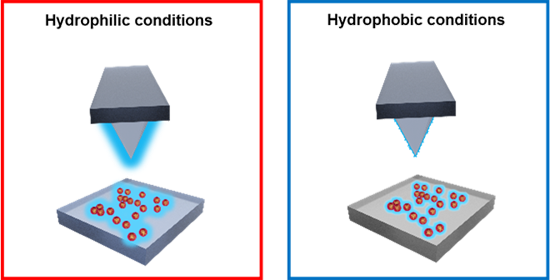
- vibrational bands are superimposed on a very broad signal from bulk gold, quasi-constant after normalization (like FTIR). In contrast to FTIR, the bands stem only from vibrations at interfaces, that is, from the NP surface in contact with air. Additionally, highly symmetric vibrations are forbidden (with very
- hydrophilic and hydrophobic surfaces We assessed with SEM and AFM the aggregation tendency of the particles after adsorption. To this end, we determined water contact angles. The hydrophilic APDMES silicon gave 66 ± 3º. In contrast, on the hydrophobic octadecyltrichlorosilane (OTS) silicon, it was 92 ± 2º
- dominant driver of particle motion, and strong particle–substrate interactions may lead to particle attachment before they are transported to the contact line, thereby preventing the formation of a “coffee ring” [34]. Detailed height measurements of adsorbed particles in water vapor AFM under variable RH



Calibration of piezo actuators and systems by dynamic interferometry
Beilstein J. Nanotechnol. 2025, 16, 2086–2091, doi:10.3762/bjnano.16.143
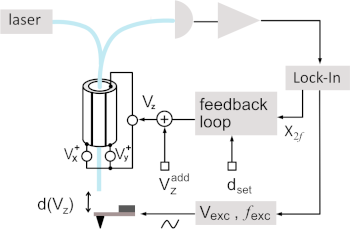
- Knarik Khachatryan Michael Reichling Institut für Physik, Universität Osnabrück, Barbarastr. 7, 49076 Osnabrück, Germany 10.3762/bjnano.16.143 Abstract To achieve precise measurements of small displacements in non-contact atomic force microscopy, it is crucial to control the position of moving
- oscillation amplitude calibration under conditions of various amounts of tube piezo contraction and extension. The merits and limits of accuracy for such type of calibration are discussed. Keywords: cantilever excitation; fiber interferometer; NC-AFM; piezo calibration; non-contact atomic force microscopy
- ; Introduction Interferometric displacement detection stands as a cornerstone in high-precision techniques employed in cantilever-based atomic force microscopy (AFM), since its early days [1][2][3][4][5][6]. This method of cantilever displacement detection is specifically well suited for non-contact atomic force


Multifrequency AFM integrating PeakForce tapping and higher eigenmodes for heterogeneous surface characterization
Beilstein J. Nanotechnol. 2025, 16, 2077–2085, doi:10.3762/bjnano.16.142
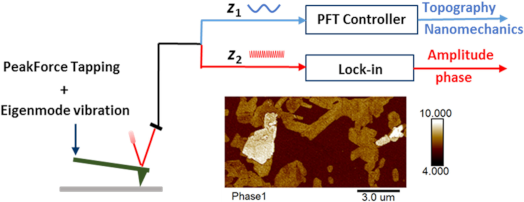
- factor (Q) cantilever dynamics amplify noise and demand meticulous parameter tuning [18]. To overcome these limitations, PeakForce tapping mode (PFT) was developed. It employs vertical probe oscillations at subresonant frequencies (0.5–8 kHz) to establish quasi-static tip–sample contact [18][19]. Unlike
- stiffness (k) matching, a critical requirement for accurate contact mechanics models [20]. The stiffness k should be neither too large (to ensure a sufficient deflection signal for accurate force measurement) nor too small (to achieve adequate sample indentation). For heterogeneous samples with modulus
- the measurement points can be calculated using the contact mechanics models [18][22]. (ii) Concurrently, the piezoelectric actuator PD-II excites the probe at its higher eigenmode, inducing a minor vibration with an amplitude generally beneath 1 nm. This high-eigenmode oscillation amplitude remains


Molecular and mechanical insights into gecko seta adhesion: multiscale simulations combining molecular dynamics and the finite element method
Beilstein J. Nanotechnol. 2025, 16, 2055–2076, doi:10.3762/bjnano.16.141
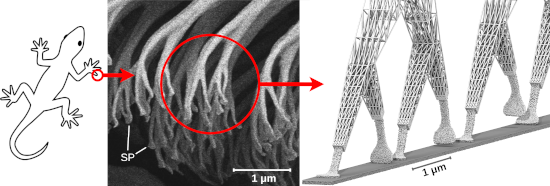
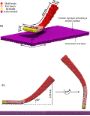
- . The model reproduces key aspects of spatula behavior during adhesion and detachment, showing that spatula–substrate contact evolves through a combination of bending, sliding, and peeling, depending on the spatula’s initial orientation. Our results further demonstrate that lateral sliding can delay
- model multiple spatulae in parallel, all connected to a larger setal shaft. Forces and displacements are exchanged at each iteration, ensuring that spatula-level phenomena (e.g., van der Waals contact, slight sliding at the substrate, and spatula bending) feed back into the global deformation. The
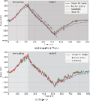
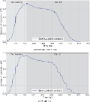
- , and hydrophobic substrate at a loading rate of 1.88 × 10¹² pN/s. We also examined adhesion forces and quantified spatula–substrate contacts, while comparing with qualitative and quantitative experimental results where available. We synchronously simulated 16 spatula–substrate contact sites via






Stereodiscrimination of guests in chiral organosilica aerogels studied by ESR spectroscopy
Beilstein J. Nanotechnol. 2025, 16, 2034–2054, doi:10.3762/bjnano.16.140
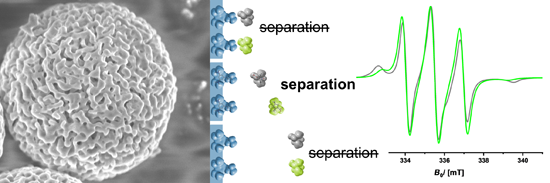
- of (+)- and (−)-3CP, and, as a result, the selectivity factor remains small (Figure 8c). One also sees that the fraction of the species interacting with the surfaces is small (<10%). Because ethanol predominantly interacts with 3CP, the contact of the spin probe with the chiral groups on the surface




Beyond the shell: exploring polymer–lipid interfaces in core–shell nanofibers to carry hyaluronic acid and β-caryophyllene
Beilstein J. Nanotechnol. 2025, 16, 2015–2033, doi:10.3762/bjnano.16.139
- surface distribution may compromise encapsulation efficiency and alter release kinetics [76]. Surface hydrophilicity The hydrophilicity of the membranes was evaluated through contact angle measurements. Figure 10 shows photographs of a water droplet in contact with the surface of the samples: (a
- ) monolithic PLA, (b) HA/PLA, and (c) HA+NE2/PLA. All samples exhibited a hydrophobic surface, with contact angles ranging between 90° and 150°, attributed to the PLA surface. This result corroborates other characterizations demonstrating that the shell effectively coats the hydrophilic core. As expected, the
- monolithic PLA nanofiber sample showed a contact angle of 117.1° ± 11.3°. For core–shell samples, contact angles of 126.9° ± 9.8° and 129.8° ± 1.3° were observed for the samples without NE (HA/PLA) and with NE (HA+NE2/PLA), respectively. The maintenance of surface hydrophobicity with the formation of the




Mechanical property measurements enabled by short-term Fourier-transform of atomic force microscopy thermal deflection analysis
Beilstein J. Nanotechnol. 2025, 16, 1952–1962, doi:10.3762/bjnano.16.136
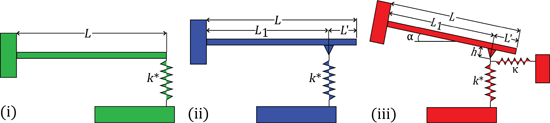
- Contact resonance atomic force microscopy (CR-AFM) has been used in many studies to characterize variations in the elastic and viscoelastic constants of materials along a heterogeneous surface. In almost all experimental work, the quantitative modulus of the surface is calculated in reference to a known
- dynamic mechanics models relating the contact stiffness of the tip/cantilever pressing into a surface with the oscillation frequency of the cantilever and show that they did not accurately model the experiment. Several material combinations of tip and sample were examined; tip size and cantilever
- model, improved matching the cantilever/sample stiffness to obtain a larger variation in contact stiffness with frequency, or investigating the use of higher-order modes that may achieve this improved match. Keywords: atomic force microscopy; contact resonance; highly oriented pyrolytic graphite (HOPG




Quantum circuits with SINIS structures
Beilstein J. Nanotechnol. 2025, 16, 1931–1941, doi:10.3762/bjnano.16.134
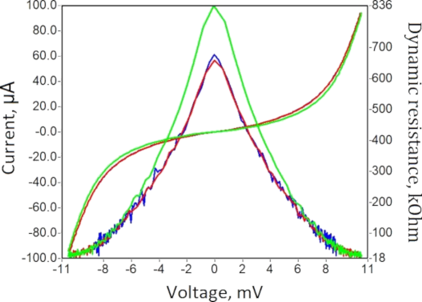
- contact. When tunneling from a normal metal into a superconductor, due to the presence of an energy gap (Δ), only electrons whose energy exceeds Δ can tunnel into the superconductor. Without applying an external voltage or in the case when eV < Δ (T = 0), tunneling does not occur. Accordingly, a tunnel


Targeting the vector of arboviruses Aedes aegypti with nanoemulsions based on essential oils: a review with focus on larvicidal and repellent properties
Beilstein J. Nanotechnol. 2025, 16, 1894–1913, doi:10.3762/bjnano.16.132
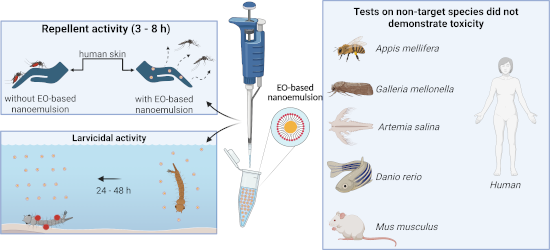
- as a mosquito, feeds on the blood of an infected host [1]. Thus, the virus undergoes a replication process in the midgut of the mosquito, being disseminated to different organs, mainly the salivary glands. Upon contact with a new host, the virus is inoculated through the bite of the vector
- female mosquitoes. These eggs are capable of surviving for a prolonged period in the absence of water and can withstand extreme environmental conditions, thereby persisting in aridand/or cold environments [20][48]. Upon contact with water, the eggs hatch, resulting in the hatching of larvae corresponding
- outbreaks in the Americas, being linked to severe complications such as congenital zika syndrome and Guillain–Barré syndrome [56]. In addition to mosquito transmission, ZIKV can spread through sexual contact [57], blood transfusions [58], and from mother to child [59]. Given the persistence and severity of


Low-temperature AFM with a microwave cavity optomechanical transducer
Beilstein J. Nanotechnol. 2025, 16, 1873–1882, doi:10.3762/bjnano.16.130
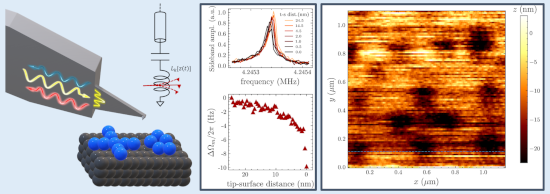
- stiffness values of the order of 100 N/m to avoid the tip jumping to contact and sticking to the surface [21]. Such a stiffness would necessitate seven orders of magnitude improvement in detector noise to achieve an equivalent force sensitivity. Reduction of detection noise is therefore critical for


Self-assembly and adhesive properties of Pollicipes pollicipes barnacle cement protein cp19k: influence of pH and ionic strength
Beilstein J. Nanotechnol. 2025, 16, 1863–1872, doi:10.3762/bjnano.16.129
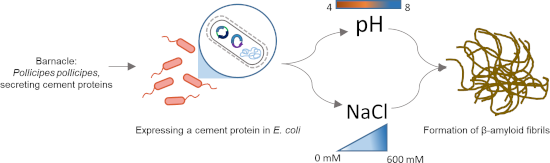
- fibrillar aggregates formed under gland-like conditions, though structurally robust, may offer less surface contact, resulting in the granular Coomassie staining. The curled fibres formed in low pH and low salt concentration conditions were also tested for surface adhesion, resulting in no homogenous or


Current status of using adsorbent nanomaterials for removing microplastics from water supply systems: a mini review
Beilstein J. Nanotechnol. 2025, 16, 1837–1850, doi:10.3762/bjnano.16.127
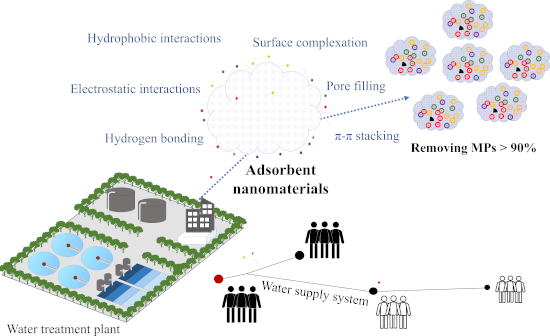
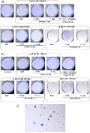
- and lakes) often contain higher levels of MPs because of direct contact with the environment, with concentrations ranging from 1473 to 3605 particles·L−1. After undergoing various treatment stages, these values decrease significantly, and MPs are still detected in treated water, with concentrations


Electrical, photocatalytic, and sensory properties of graphene oxide and polyimide implanted with low- and medium-energy silver ions
Beilstein J. Nanotechnol. 2025, 16, 1794–1811, doi:10.3762/bjnano.16.123
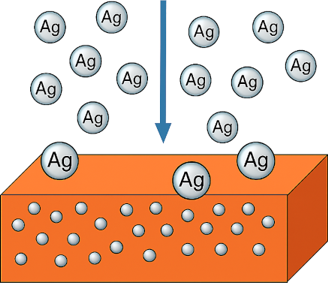
- Keithley 6317B electrometer. To quantify the sheet resistivity, two gold contacts, each with a thickness of 50 nm and a length of 10 mm, were deposited onto the surfaces of GO and PI thin films. The placement of these contacts adhered to a prescribed contact distance of 1 mm, ensuring a consistent and


Exploring the potential of polymers: advancements in oral nanocarrier technology
Beilstein J. Nanotechnol. 2025, 16, 1751–1793, doi:10.3762/bjnano.16.122
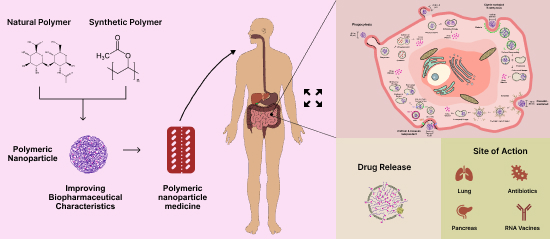
- , drug release from the polymer matrix can proceed through various mechanisms after in vivo administration. In this context, water is absorbed by the polymer, leading to pore formation, which results in the creation of degradation products that dissolve in the release medium. Increased contact with water





