Search results
Search for "cross section" in Full Text gives 525 result(s) in Beilstein Journal of Nanotechnology. Showing first 200.
Shape, membrane morphology, and morphodynamic response of metabolically active human mitochondria revealed by scanning ion conductance microscopy
Beilstein J. Nanotechnol. 2025, 16, 951–967, doi:10.3762/bjnano.16.73
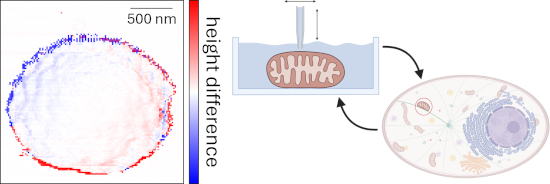
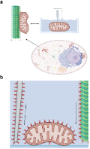
- drops sharply due to reduction of ion cross section. This decrease triggers the feedback system to stop the approach at a predefined setpoint current, effectively determining the z-position of the sample at that location. By scanning the sample pixel-by-pixel in hopping mode, a three-dimensional
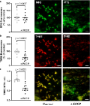



Focused ion beam-induced platinum deposition with a low-temperature cesium ion source
Beilstein J. Nanotechnol. 2025, 16, 910–920, doi:10.3762/bjnano.16.69
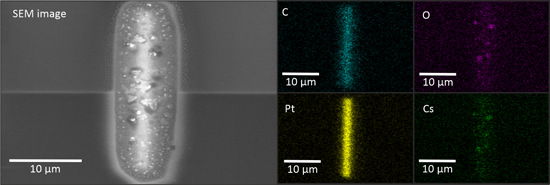
- of the ion beam is specified as ranging from 10 to 159 nm, changing with acceleration voltage (5, 8, 16, and 30 kV) and ion beam current. The actual thickness of each layer was measured with a standard cross section using the Ga+ FIB. All scanning electron microscopy (SEM) images were taken with the
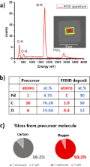
- . All deposition parameters are shown in Table 1. To calculate the resistivity of the deposits, the NanoLab 650 dual beam system was used to determine the length and the cross section of each deposited layer. The TEM lamellas were prepared with a JEOL JIB 4601F FIB-SEM MultiBeam system. The sample
- using the two upper contacts, while the resulting voltage was measured between the two lower contacts to evaluate the resistivity R in the same way as in [11]. After these measurements were done, the area A of the cross section was determined with a FIB cut and SEM image (see Figure 8b). The length l


Synchrotron X-ray photoelectron spectroscopy study of sodium adsorption on vertically arranged MoS2 layers coated with pyrolytic carbon
Beilstein J. Nanotechnol. 2025, 16, 847–859, doi:10.3762/bjnano.16.64
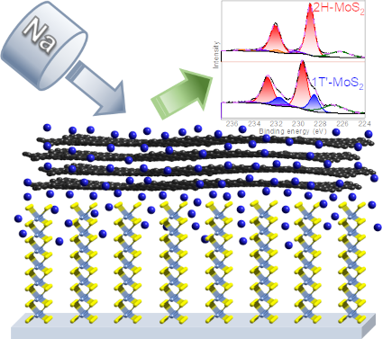
- on the surface of the MoS2 film annealed in a hydrogen atmosphere (Figure 1c). An attempt to measure the cross section of this film did not yield a contrast image because of the charging effect. Therefore, to estimate the thickness of the studied film, we used a thicker MoS2 film synthesized with a
- molybdenum layer sputtered for 90 s. Part of the film surface was covered with a protective Pt layer and a lamella was cut using a focused ion beam (FIB) system (see the Experimental section for details). Figure 1d shows the SEM image of the cross section of the lamella. The bright round spots on the film
- then dried under ambient conditions. Morphology of sample surfaces was examined by SEM with a CIQTEK SEM5000 (CIQTEK Ltd., Hefei, Anhui, PRC) microscope at an accelerating voltage of 15 kV. The cross section of MoS2 film was prepared using a gallium-ion column FIB system and a two-stage protective cap


Synthesis and magnetic transitions of rare-earth-free Fe–Mn–Ni–Si-based compositionally complex alloys at bulk and nanoscale
Beilstein J. Nanotechnol. 2025, 16, 823–836, doi:10.3762/bjnano.16.62
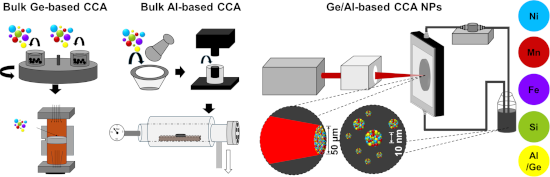
- -evaluated from both the surface and cross-section, confirming that the composition remains consistent throughout the surface and bulk of the CCA within the limits of experimental error (Figure S1 and Table S1, Supporting Information File 1). Figure 2b provides an overview of the alloy’s crystallographic


High-temperature epitaxial growth of tantalum nitride thin films on MgO: structural evolution and potential for SQUID applications
Beilstein J. Nanotechnol. 2025, 16, 690–699, doi:10.3762/bjnano.16.53
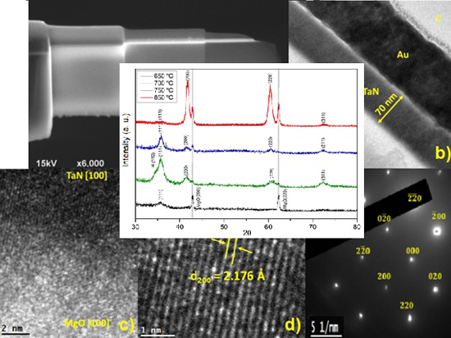
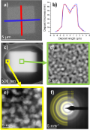
- mTorr as a function of the deposition temperature: (a) 650 °C, (b) 700 °C, (c) 750 °C, and (d) 850 °C. (a) SEM image of the cross section of a TaN thin film prepared with FIB. (b) TEM analysis of the lateral region of the TaN film deposited at T = 750 °C and pN2 = 90 mTorr. (c) TEM image at the


The impact of tris(pentafluorophenyl)borane hole transport layer doping on interfacial charge extraction and recombination
Beilstein J. Nanotechnol. 2025, 16, 678–689, doi:10.3762/bjnano.16.52
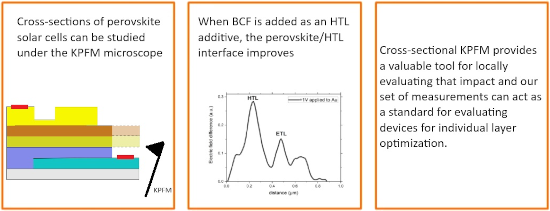
- (pentafluorophenyl)borane (BCF), we enhanced the hole extracting material/perovskite junction quality in spiro-OMeTAD and in PTAA based devices. Measurements under illumination show that the improvement is caused by a reduced recombination rate at the perovskite/hole transporter interface. Keywords: cross-section
- smooth cross-section. This is useful for getting stable KPFM images, without electrostatic cross-talk. At every step of this procedure, the current–voltage characteristics were being monitored, as shown in Figure 2. By carefully selecting the parameters of the ion milling, we can ensure that the exposed
- evaporated as a back contact under vacuum (Edwards FL 400 Au evaporator). The devices were characterized in terms of efficiency with a solar simulator (Abet Technologies, SunLite) under AM1.5 illumination. Cross-section preparation To create solar cells with exposed cross-sections, we mechanically cleaved


Electron beam-based direct writing of nanostructures using a palladium β-ketoesterate complex
Beilstein J. Nanotechnol. 2025, 16, 530–539, doi:10.3762/bjnano.16.41
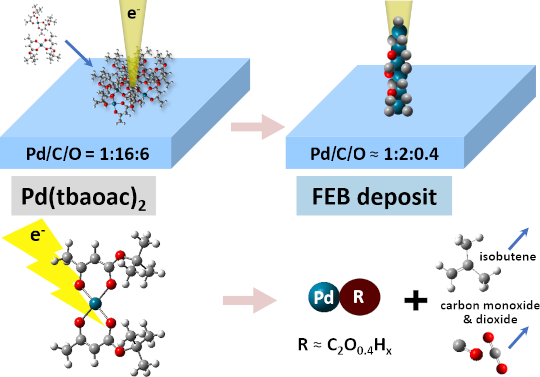
- complicated. In our case, considering the literature values for the electron interaction cross section, we tend to favor the DD regime conditions (please see details in Supporting Information File 1, section S2). However, in both regimes, molecular fragments will have enough time to desorb before being
- conducted with a field-emission gun and an electron energy of 1 keV. This lower electron energy increases the dissociation cross section and leads to greater heating of the deposit due to more energy deposited per unit trajectory length and, consequently, the small excitation volume where all the beam


Performance optimization of a microwave-coupled plasma-based ultralow-energy ECR ion source for silicon nanostructuring
Beilstein J. Nanotechnol. 2025, 16, 484–494, doi:10.3762/bjnano.16.37

- entire phenomenon can be summarized through the equation λ = (σ·n)−1, where λ is the mean free path of the ions, σ is the recombination cross section, and n is the density of the ions inside the plasma [32][33][34]. The mean free path of the ions, determined by the recombination cross section and density


ReactorAFM/STM – dynamic reactions on surfaces at elevated temperature and atmospheric pressure
Beilstein J. Nanotechnol. 2025, 16, 397–406, doi:10.3762/bjnano.16.30
- larger. The QTF’s resonance frequency depends on pressure according to the following equation: where μ is the added mass due to the interaction with surrounding gas molecules, ρ is the density of the quartz tuning fork, and A is the area of the cross section [19]. Basically, the pressure dependence is
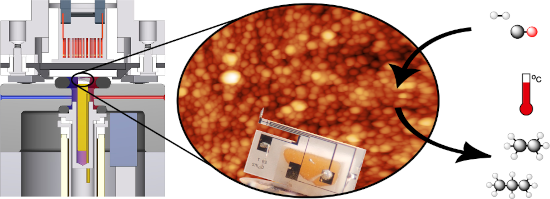
- heating filament. The qPlus sensor is mounted to a three-contact slider and controlled by a piezotube. The piezotube is outside of the reactor volume. Figure 2b shows a schematic cross section of the AFM/STM reactor together with the sample holder. For high-pressure experiments, the reactor volume needs
- schematic of the ReactorAFM/STM cross section. The qPlus sensor is contained within a small high-pressure volume in the reactor body. The sample forms one side of the reactor while the remaining reactor walls are chemically inert (Zerodur). High-temperature-resistant and inert Kalrez O-rings seal off the


Recent advances in photothermal nanomaterials for ophthalmic applications
Beilstein J. Nanotechnol. 2025, 16, 195–215, doi:10.3762/bjnano.16.16
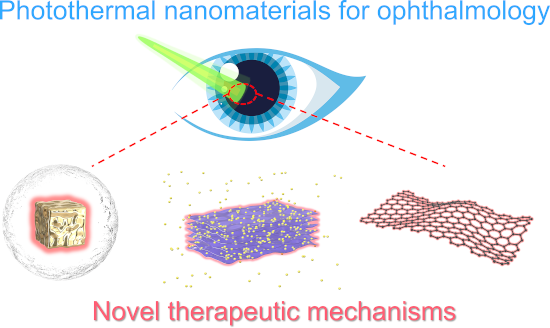
- efficient process with photothermal conversion nearing 100% efficiency (see below in Figure 2a) [45][46][47]. The specific absorption wavelength of these metals is closely linked to their extinction cross section and particle size and shape, which are greatly influenced by the chemical capping agents and


A review of metal-organic frameworks and polymers in mixed matrix membranes for CO2 capture
Beilstein J. Nanotechnol. 2025, 16, 155–186, doi:10.3762/bjnano.16.14
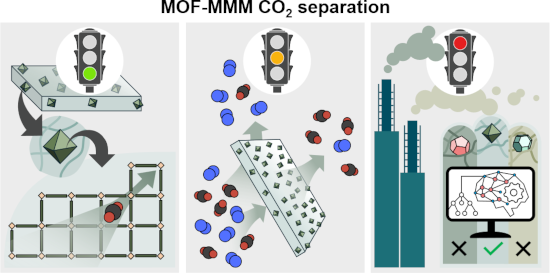
- provide information on the chemical composition of the outermost 1–3 µm of a material [144][145]. A visual and spectral representation of the chemical composition of a MOF-based MMM cross section may help identify the presence and type of defects within the membrane and simply verify the successful




Precursor sticking coefficient determination from indented deposits fabricated by electron beam induced deposition
Beilstein J. Nanotechnol. 2025, 16, 35–43, doi:10.3762/bjnano.16.4

- Fowlkes and Rack [6] where a value of 0.025 was reported for W(CO)6. In this work, a stationary pulsed beam was used to study the adsorption/desorption dynamics. A fit of the results to the continuum model was performed with an estimated value for the energy-integrated dissociation cross section in order
- density, τ is the average precursor residence time, σ is the energy-averaged dissociation cross section, and D is the surface diffusion coefficient. This rate equation makes up the balance between all processes that contribute to replenishment and depletion of precursor molecules. The electron beam is
- described by a Gaussian shape function: where f0 is the maximum electron flux at r = 0 and a is the standard deviation. The width of the Gaussian is defined as . The growth rate under electron irradiation is proportional to the local electron flux, the dissociation cross section, and the volume V of the


Ion-induced surface reactions and deposition from Pt(CO)2Cl2 and Pt(CO)2Br2
Beilstein J. Nanotechnol. 2024, 15, 1427–1439, doi:10.3762/bjnano.15.115

- a first-order kinetic process, we can extract a reaction cross section σ1 for each ion/precursor combination studied. This is illustrated in Figure S3 (Supporting Information File 1) by following the change in the relative intensity of the C 1s photoelectron peak as a function of ion dose. Results
- ions, increasing the likelihood of their collisions with the adsorbed precursor molecules [37][41]. These two factors are primarily responsible for the larger reaction cross section observed for Ar+ irradiation compared to He+ or H2+ (Table 1). Table 1 also shows that the σ1 value for CO desorption



Lithium niobate on insulator: an emerging nanophotonic crystal for optimized light control
Beilstein J. Nanotechnol. 2024, 15, 1415–1426, doi:10.3762/bjnano.15.114
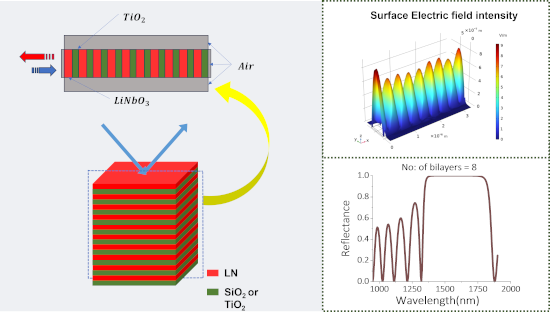
- , which are surrounded by air boundaries. Specifically, Figure 4a illustrates the electric field distribution over the 2D cross-section of LN/TiO2 PhC structures, while Figure 4c shows the distribution for LN/SiO2 PhC structures. On the light incident side, the partial standing wave pattern is formed due


Hymenoptera and biomimetic surfaces: insights and innovations
Beilstein J. Nanotechnol. 2024, 15, 1333–1352, doi:10.3762/bjnano.15.107
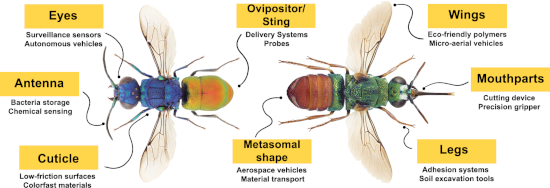
- morphology (triangular cross section with two corrugated surfaces) associated with a strong optical reflection in the visible and near-infrared (NIR) range, while maximizing heat emissivity in the mid-infrared (MIR). This allows the insects to maintain a lower thermal steady state and to cope with high




Functional morphology of cleaning devices in the damselfly Ischnura elegans (Odonata, Coenagrionidae)
Beilstein J. Nanotechnol. 2024, 15, 1260–1272, doi:10.3762/bjnano.15.102

- along its medially oriented side (Figure 1c–e). In the cross section, the asymmetrical and concave shape of the grooming structures was clearly visible, with a thin lamina originating from a robust seta (Figure 1f). Dirt particles tended to accumulate inside the flag-shaped structures in correspondence
- indicate the dirt particles accumulated inside the flag-shaped structures in correspondence of the concave cuticular lamina. S, socket. (e) Detail of the border of the cuticular lamina with indentations (arrows). (f) Cross section of a grooming device in its central portion. Note the hair (H) and the


A low-kiloelectronvolt focused ion beam strategy for processing low-thermal-conductance materials with nanoampere currents
Beilstein J. Nanotechnol. 2024, 15, 1197–1207, doi:10.3762/bjnano.15.97

- and a cross section through the middle of the ion beam spot for a simulated sample volume of 600 nm × 600 nm × 400 nm after an irradiation time of 990.0 ns is shown in Figure 3. The simulations for 5 keV in the nanoampere beam current range (Figure 3A) and picoampere beam current range (Figure 3B
- simulations and experimental data Cross sections were cut into collagen using 5 keV energy Ga ions to evaluate the results from the simulations and the proposed model. One cross section was cut with an acceleration voltage of 30 kV, beam current of 1 nA, 200 nm blur, and 20% overlap to assess the heat damage
- × 10 µm × 200 nm) were cut into the non-resin embedded collagen sample using the FEI Quanta 200 3D at the Queensland University of Technology, Brisbane, Australia. All cross-sections were processed using 5 keV ions. One cross-section was cut with 1.4 nA, 50% overlap to assess if reducing the ion energy



Local work function on graphene nanoribbons
Beilstein J. Nanotechnol. 2024, 15, 1125–1131, doi:10.3762/bjnano.15.91
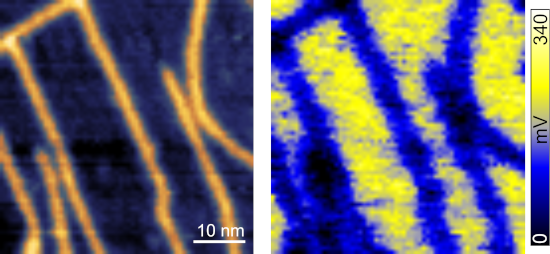
- irregularities such as kinks or defects at the edge are observed in the topography measurement. For example for the GNR where the cross section has been taken, marked by a black line, there is a kink associated with a darker region in the local work function, and in the topography image there are some small

![[Graphic 1]](/bjnano/content/inline/2190-4286-15-91-i4.svg?max-width=637&scale=1.18182)
Direct electron beam writing of silver using a β-diketonate precursor: first insights
Beilstein J. Nanotechnol. 2024, 15, 1117–1124, doi:10.3762/bjnano.15.90

- significantly larger after 6 months, when the cross section was prepared. This, again, hints toward incompletely dissociated precursor, which may have been further dissociated after the actual deposition process (cf. the section on deposit evolution in Supporting Information File 1 for more details). The cross
- parasitic co-deposition occurred below the actual helix wires caused by the residual primary electrons that penetrate the helix arms [39]. This can potentially be reduced by lowering the primary beam energy and, correspondingly, the interaction volume, while at the same time a more circular cross section of
- cut for the TEM sample preparation. (c) Transmission electron micrograph of the deposit cross-section with close-ups (d–f). Scanning electron micrographs of a spot deposit with 60 min continuous spot irradiation (a) with the corresponding close-ups of the halo regions. (b) High-resolution SEM image 6


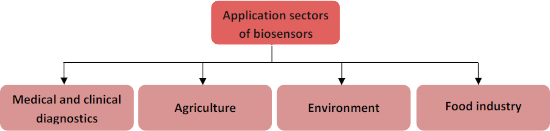
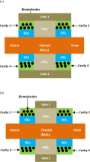
Recent progress on field-effect transistor-based biosensors: device perspective
Beilstein J. Nanotechnol. 2024, 15, 977–994, doi:10.3762/bjnano.15.80




Water-assisted purification during electron beam-induced deposition of platinum and gold
Beilstein J. Nanotechnol. 2024, 15, 884–896, doi:10.3762/bjnano.15.73
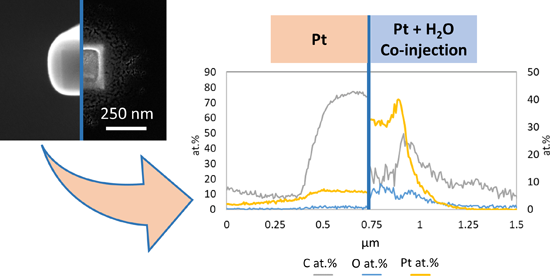
- purification of the deposits to compensate for the low electron-stimulated dissociation cross section of water on the substrate [37]. Deposits were made at increasing water flux, indicated by an increase of the total chamber pressure. The carbon and platinum contents were determined afterwards, and the C/Pt
- , isolated grains are visible. Also, several gaps are present in the lines, where the grains apparently did not connect to each other. A FIB cross section of the line revealed that the gaps extend down to the substrate surface. The gaps and the granularity may arise from the high mobility of Pt, and
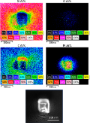
- patterned area ranges between −0.125 and 0.125 µm. The (a) carbon and (b) platinum contents are presented in atom %. The background Si signal was not excluded from the analysis. (a) High-resolution TEM image and (b) overlay of the HAADF image and the STEM-EDX map of the cross section of deposit 1g. Layers





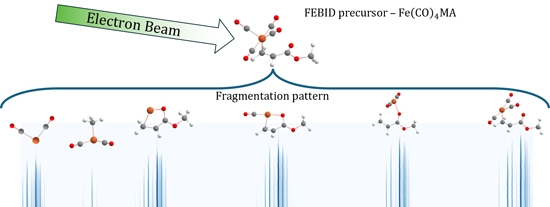
Electron-induced ligand loss from iron tetracarbonyl methyl acrylate
Beilstein J. Nanotechnol. 2024, 15, 797–807, doi:10.3762/bjnano.15.66
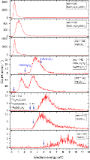
- dipole moment of 1.72 Debye. We thus presume that, also in the present case, the high DEA cross section close to 0 eV is mediated by long-range electron–precursor interactions to a large extent. For higher electron energies, the resonance structures in Fe(CO)5 and Fe(CO)4MA are very similar. There is the



Level set simulation of focused ion beam sputtering of a multilayer substrate
Beilstein J. Nanotechnol. 2024, 15, 733–742, doi:10.3762/bjnano.15.61
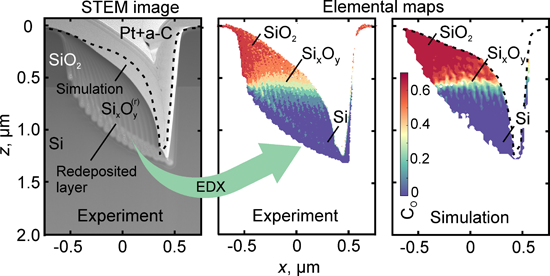
- cross section, the simulation can accurately predict the depth and shape of the structures, but there is some inaccuracy in reproducing the form of the left sidewall of the structure with a large amount of the redeposited material. To further validate the developed simulation approach and gain a better
- microscopy (SEM) image of the trenches with a superimposed line depicting the position of the prepared cross section. Figure 3b–d presents the corresponding cross-sectional STEM images of trenches, where the silicon dioxide is visualized as the dark layer. The shape of trenches was mainly determined by the
- structures to protect the surface. Cross section specimens for transmission electron microscopy investigation were prepared using in situ lift-out [39]. Final polishing was performed at the glancing incidence angles of the ion beam through the gradual decrease of the accelerating voltage from 30 to 2 kV. The

![[Graphic 55]](/bjnano/content/inline/2190-4286-15-61-i68.svg?max-width=637&scale=1.18182)


Elastic modulus of β-Ga2O3 nanowires measured by resonance and three-point bending techniques
Beilstein J. Nanotechnol. 2024, 15, 704–712, doi:10.3762/bjnano.15.58
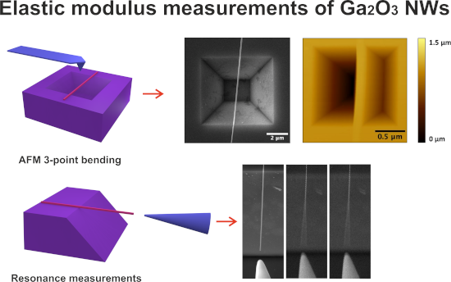
- deviations from rectangular cross-sections, e.g., trapezoid). Minimal and maximal values of possible geometry deviations are used for modelling elastic modulus variations. These cross-section errors are detailed in Table S4 and Table S5, along with Figure S4, available in Supporting Information File 1. These
- ]. This drastic difference from the bulk value is typically ascribed to a growth-direction-dependent concentration of stacking faults and point defects in NWs and NBs, which is correlated to the nanostructure cross-section aspect ratio (e.g., in ZnO nanostructures). Lower width-to-height ratio in NWs
- resulted in higher elastic modulus values, while NBs with higher width-to-height ratios showed a significant decrease in elastic modulus [22]. Although the variation of the cross-section geometry and the presence of different growth directions, related to the low symmetry of the monoclinic Ga2O3 phase and


Comparative analysis of the ultrastructure and adhesive secretion pathways of different smooth attachment pads of the stick insect Medauroidea extradentata (Phasmatodea)
Beilstein J. Nanotechnol. 2024, 15, 612–630, doi:10.3762/bjnano.15.52