Search results
Search for "deconvolution" in Full Text gives 95 result(s) in Beilstein Journal of Nanotechnology.
Determining amplitude and tilt of a lateral force microscopy sensor
Beilstein J. Nanotechnol. 2021, 12, 517–524, doi:10.3762/bjnano.12.42
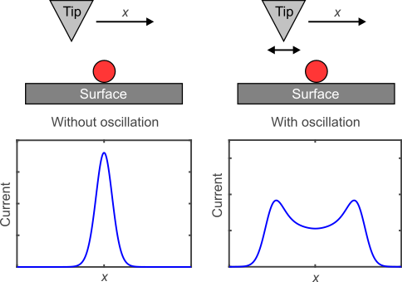
- sensor. The weighted average must also take into account the direction of the tip oscillation: where A is the oscillation amplitude. Extracting force and potential energy from the measured Δf is a complex inversion problem requiring deconvolution. Several deconvolution methods include a matrix inversion


Surface-enhanced Raman scattering of water in aqueous dispersions of silver nanoparticles
Beilstein J. Nanotechnol. 2021, 12, 497–506, doi:10.3762/bjnano.12.40
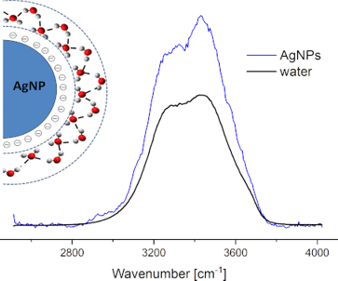
- –3800 cm−1 is a combination of a few overlapping components related to symmetric and antisymmetric H–O–H stretching, bending overtone, and free OH stretching vibrations [9]. Thus, a straight interpretation of the Raman spectrum of liquid water and its deconvolution is still a subject of discussion [9
- ][10][11][12]. The problem of the liquid water spectrum deconvolution is crucial, because the ratio of integral intensities of bands with maxima at approx. 3200 and 3400 cm−1 is regarded as a measure of the water supramolecular structure [13][14]. The component with a maximum at approx. 3200 cm−1 is


TiOx/Pt3Ti(111) surface-directed formation of electronically responsive supramolecular assemblies of tungsten oxide clusters
Beilstein J. Nanotechnol. 2021, 12, 203–212, doi:10.3762/bjnano.12.16
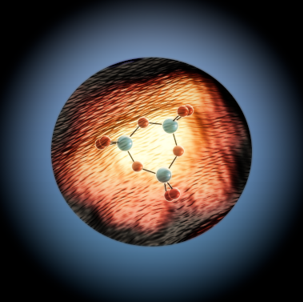
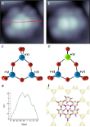
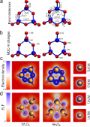
- cannot be fully excluded. By considering simple geometrical aspects, one supports the idea that in a closed packed hexagonal arrangement of W3O9 there is not enough space left for an additional cluster in the center without overlapping. In order to exclude possible tip–surface deconvolution effects (e.g



Bulk chemical composition contrast from attractive forces in AFM force spectroscopy
Beilstein J. Nanotechnol. 2021, 12, 58–71, doi:10.3762/bjnano.12.5
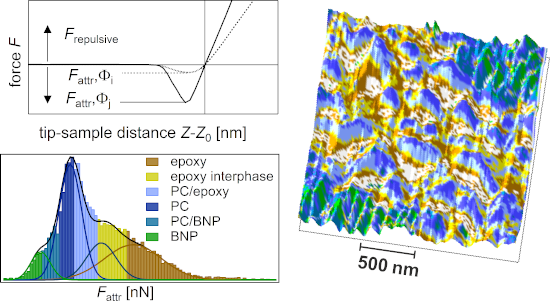
- interphase) cannot be distinguished, which was already reported by Cano Murillo and coworkers [19]. The histogram of Fattr at the bottom right of Figure 4d also shows two main peaks; however, an additional minor third peak emerges in between the main peaks. A deconvolution of the Fattr histogram with
- becomes even more evident when transferring the findings of the deconvolution of the Fattr histogram to the kr/Fattr diagram: epoxy (brown markers), int (light blue markers), PC (blue markers). As mentioned above, in this study we are only interested in the specificity of the parameter Fattr and
- , therefore, we accept the rather abrupt vertical divisions in the kr/Fattr diagram. By incorporating an additional deconvolution of the kr histogram this can be improved. In order to show these results in the spatial domain as a map (Figure 4e), the measuring points where Fattr did not provide unambiguous


ZnO and MXenes as electrode materials for supercapacitor devices
Beilstein J. Nanotechnol. 2021, 12, 49–57, doi:10.3762/bjnano.12.4
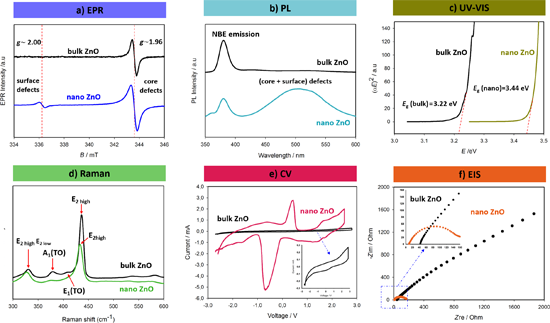
- . Therefore, the deconvolution of PL spectra cannot yield a unique defect emission model for ZnO. Second, the locations of defect structures are not easily distinguishable using PL spectroscopy. As a result, the combination of PL and EPR is a very powerful combination to get detailed information. Using EPR
Free and partially encapsulated manganese ferrite nanoparticles in multiwall carbon nanotubes
Beilstein J. Nanotechnol. 2020, 11, 1891–1904, doi:10.3762/bjnano.11.170
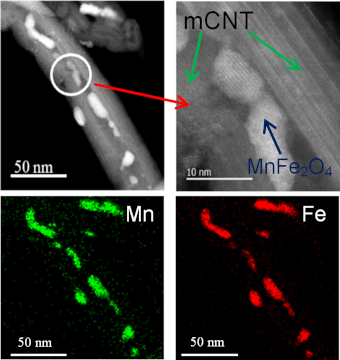
- core level spectrum of Fe 2p is presented in Figure 2b. On the deconvolution of Fe 2p3/2, peaks are observed at 710.4 and at 712.6 eV. The first peak can be attributed to Fe3+ in free MnFe2O4 nanoparticles, whereas the second peak corresponds to Fe3+ in FeOOH [23], resulting from the adapted
- preparation method. Similarly, on the deconvolution of Mn 2p3/2 the peak at 641.3 eV corresponds to the binding energy of Mn3+ in manganite (MnOOH) (Figure 2c). The deconvoluted Mn 2p3/2 peak at 643.7 eV can be assigned to Mn2+, in accordance with the binding energy of Mn2+ in MnO, which is generally found at
- 641.5 eV. Therefore, it can be concluded that manganese exists as Mn2+ and iron exists as Fe3+ in free MnFe2O4 nanoparticles. It is observed from the deconvolution of the O 1s peak (Figure 2d) that oxygen is present in three environments. The peak with the lower binding energy at 529.9 eV can be




Nickel nanoparticles supported on a covalent triazine framework as electrocatalyst for oxygen evolution reaction and oxygen reduction reactions
Beilstein J. Nanotechnol. 2020, 11, 770–781, doi:10.3762/bjnano.11.62
- instrument). Deconvolution of the N 1s XPS spectrum of Ni/CTF-1-600-22 reveals five peaks at about 398.5, 399.3, 400.6, 401.2 and 402.3 eV, which can be assigned pyridinic nitrogen, Ni-coordinated nitrogen, pyrrolic nitrogen, graphitic or quaternary nitrogen and oxidized nitrogen, respectively [26][48]. The


Soybean-derived blue photoluminescent carbon dots
Beilstein J. Nanotechnol. 2020, 11, 606–619, doi:10.3762/bjnano.11.48
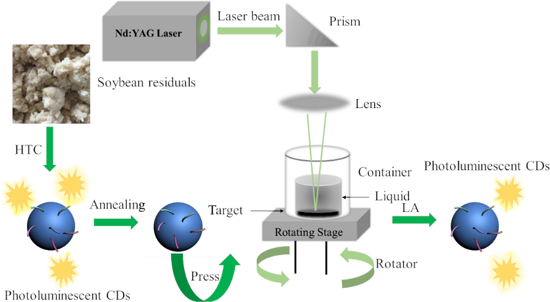
- %). Schematic of the bandgaps of CDs under 360 nm excitation and the deconvolution bands (fitted with a two-Gassian function). FTIR spectra of soybean-derived carbon nanoparticles. (a) XPS survey spectra, (b) deconvoluted high-resolution spectra of O 1s, (c) deconvoluted high-resolution spectra of N 1s; and


Size effects of graphene nanoplatelets on the properties of high-density polyethylene nanocomposites: morphological, thermal, electrical, and mechanical characterization
Beilstein J. Nanotechnol. 2020, 11, 167–179, doi:10.3762/bjnano.11.14
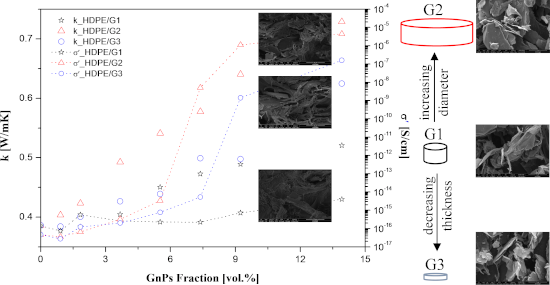
- to the existence of delocalized π electrons (conduction electrons) available for shake-up events following core electron photoemission (Thermo Fisher Scientific Avantage Data System 5.9904; Thermo Fisher XPS: Knowledge Base). In Table 1, the deconvolution fit for the C 1s and O 1s signals is also


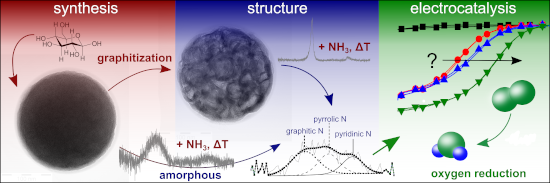
Synthesis of amorphous and graphitized porous nitrogen-doped carbon spheres as oxygen reduction reaction catalysts
Beilstein J. Nanotechnol. 2020, 11, 1–15, doi:10.3762/bjnano.11.1
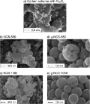
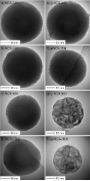
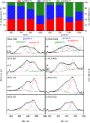
- support to the C 1s signal of the carbon-containing catalyst film. The spectra showed minor charging effects, which were compensated by a neutralizer (low-energy electron flood gun). The C 1s peak was set to 284.8 eV for binding energy calibration [50]. Evaluation and deconvolution of the measured signals




Synthesis of highly active ETS-10-based titanosilicate for heterogeneously catalyzed transesterification of triglycerides
Beilstein J. Nanotechnol. 2019, 10, 2039–2061, doi:10.3762/bjnano.10.200
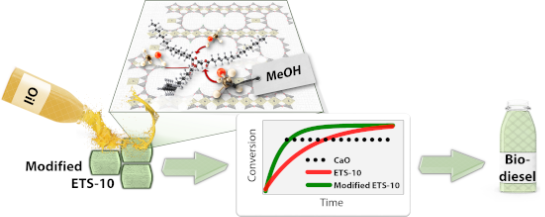
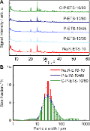
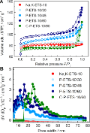
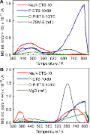
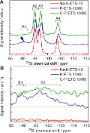
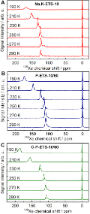
- ), −96.8 ppm (A3) and at −103.8 ppm (A4) with calculated relative peak areas after deconvolution of 40, 40 and 20%, respectively (see Table 3). This is consistent with the structural data provided for ETS-10 in [23]. The two resonances at −95.1 ppm and −96.8 ppm are assigned to the Si bonded via O atoms to








Fabrication and characterization of Si1−xGex nanocrystals in as-grown and annealed structures: a comparative study
Beilstein J. Nanotechnol. 2019, 10, 1873–1882, doi:10.3762/bjnano.10.182
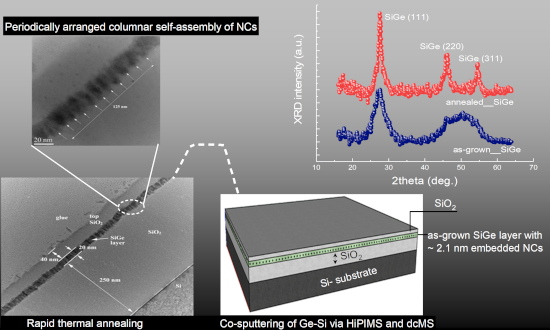
- as-grown structure. The first one corresponds to the (111) planes of SiGe and the second one to the (220) and (311) planes, which overlap indicating the presence of (nano)crystallites [22]. In Figure 1b, a deconvolution of diffractogram for the as-grown MLs was achieved using Origin software (ver
- photocurrent spectra of as-grown structure (SiGe via dcMS and HiPIMS) are shown in Figure 7a. Deconvolution was carried out to obtain the individual peaks. The observed peaks were assigned to interface related localized states (peak I), the photo effect from NCs (peak N) and capacitive coupling from Si


Synthesis of P- and N-doped carbon catalysts for the oxygen reduction reaction via controlled phosphoric acid treatment of folic acid
Beilstein J. Nanotechnol. 2019, 10, 1497–1510, doi:10.3762/bjnano.10.148
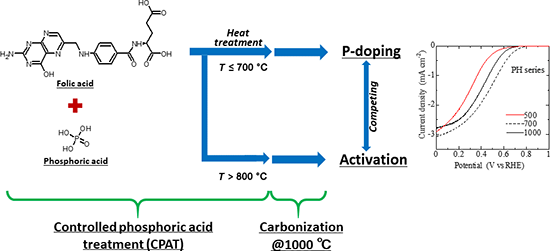
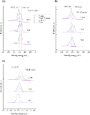
- spectra (Figure 3b) of P-series precursors prepared at 500 and 700 °C were assumed to be a superposition of several peaks; the results of its deconvolution are also presented in Figure 3a,b. For example, the spectrum of P-500 was deconvoluted into peaks at 398.5, 400.5, and 402.5 eV, while that of P-700
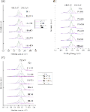
- results of peak deconvolution by assuming the presences of the five species given in the legend. The P-species varied with the CPAT temperature. The ORR voltammograms of the precursors are presented in Figure S4 (Supporting Information File 1). Both H-series and P-series precursors showed increased ORR
- -series carbon materials (closed circles). N 1s spectra of (a) H-series and (b) P-series precursors. (c) P 2p spectra of P-series precursors. Results of deconvolution are also presented. Correlations between (a) N/C ratios of HH-series carbon materials and those of H-series precursors, (b) N/C ratios of





Flexible freestanding MoS2-based composite paper for energy conversion and storage
Beilstein J. Nanotechnol. 2019, 10, 1488–1496, doi:10.3762/bjnano.10.147
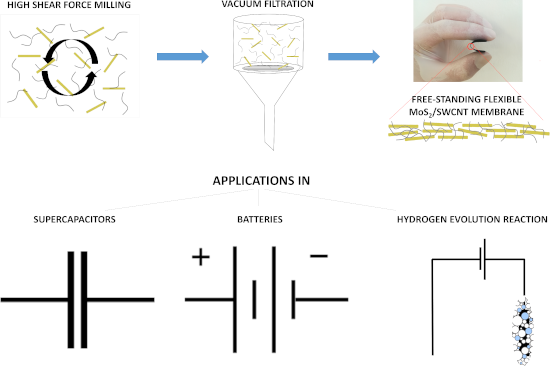
- of the MoS2 sheets. Components originating from MoS2 and MoO3 were identified in the core-level Mo 3d spectrum (Figure 3). The positions of the individual components are in agreement with previous reports for MoS2 and MoO3 [37][38]. The deconvolution revealed that the MoO3 content was about ≈12 atom


BiOCl/TiO2/diatomite composites with enhanced visible-light photocatalytic activity for the degradation of rhodamine B
Beilstein J. Nanotechnol. 2019, 10, 1412–1422, doi:10.3762/bjnano.10.139
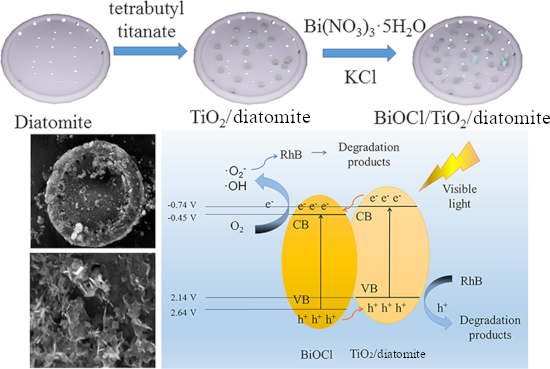
- (Figure 3c), the main peak at 103.47 eV is attributed to diatomite [29]. The Cl 2p spectrum (Figure 3d) shows peaks with a binding energy of 198.07 and 199.66 eV, which can be respectively ascribed to Cl 2p3/2 and Cl 2p1/2 [35]. The deconvolution of the O 1s spectrum (Figure 3e) shows four peaks located


Warped graphitic layers generated by oxidation of fullerene extraction residue and its oxygen reduction catalytic activity
Beilstein J. Nanotechnol. 2019, 10, 1391–1400, doi:10.3762/bjnano.10.137
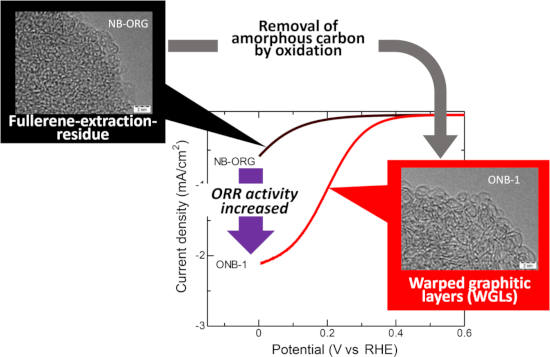
- series), and the blue line represents the heat-treated sample in a N2 stream (NNB). (c) Examples of the peak deconvolution of the 002 XRD profiles of the selected samples; ONB-3, ONB-1 and NB-ORG from top to bottom. The colors of the sub peaks indicate the differences of their origin. The green and blue



Alloyed Pt3M (M = Co, Ni) nanoparticles supported on S- and N-doped carbon nanotubes for the oxygen reduction reaction
Beilstein J. Nanotechnol. 2019, 10, 1251–1269, doi:10.3762/bjnano.10.125
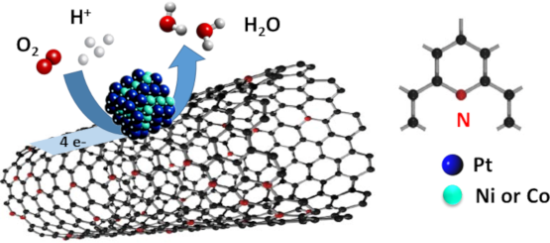
- deconvolution of the main N 1s peak: pyridinic nitrogen, pyrrolic nitrogen, quaternary nitrogen and nitrogen-oxidized species were identified (Table 2, and Supporting Information File 1, Figure S4). XPS analysis also showed the presence of sulfonic acid groups on the surface of N-doped CNTs (Supporting
- analysis performed on Pt3Ni/N-CNTHT revealed the species detailed in Table 6. The Pt 4f region of the XPS spectrum is shown in Supporting Information File 1, Figure S11a. The deconvolution shows three pairs of doublets (corresponding to Pt 4f7/2 and Pt 4f5/2). The first doublet at 71.2/74.4 eV corresponds







Glucose-derived carbon materials with tailored properties as electrocatalysts for the oxygen reduction reaction
Beilstein J. Nanotechnol. 2019, 10, 1089–1102, doi:10.3762/bjnano.10.109
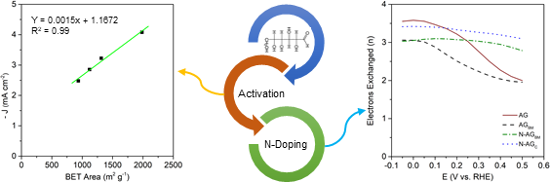
- , O 1s and N 1s regions were deconvoluted to identify the types of functionalities present in the surface of the carbon materials. The deconvolution of the C 1s spectra for undoped samples presents five main peaks (Supporting Information File 1, Figure S3), representing the following by increasing
- functionalities related to carbon bonds are presented, which is in agreement with those results obtained by the deconvolution of the C 1s spectra, especially for undoped ball-milled samples that exhibited a pronounced peak attributed to carboxylic acids. The O 1s spectra deconvolution does not clearly distinguish
- Figure 5, while the deconvolution of the profiles is shown in Figures S5, S6, S7 and S8 in Supporting Information File 1. The amount of CO2 and CO released from ball-milled samples is significantly higher than that of their original counterparts. Analyzing the CO2 profiles of activated samples three


Serum type and concentration both affect the protein-corona composition of PLGA nanoparticles
Beilstein J. Nanotechnol. 2019, 10, 1002–1015, doi:10.3762/bjnano.10.101
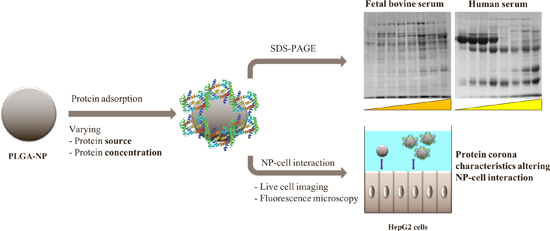
- deconvolution (Wiener filter) using cellSens Dimensions Software 1.8.1. Statistical methods All experiments were performed at least three times. The results are shown as average value with standard deviation. Significance tests were conducted with Sigma Plot 12.5 (Systat Software GmbH, Erkrath, Germany), using



Concurrent nanoscale surface etching and SnO2 loading of carbon fibers for vanadium ion redox enhancement
Beilstein J. Nanotechnol. 2019, 10, 985–992, doi:10.3762/bjnano.10.99
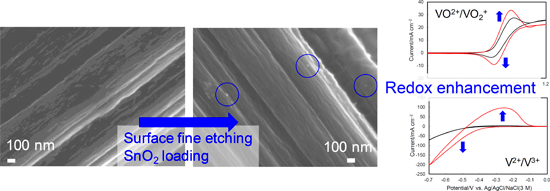
- using Microsoft Excel based on Gaussian functions was used for the Raman peak deconvolution and fitting. Energy-dispersive X-ray spectrometry was performed using a FESEM (JSM-7800F, JEOL) and EDX (Octane Elect Super, EDAX). X-ray photoelectron spectroscopy (XPS) was carried out using an AXIS ULTRA DLD



Hydrophilicity and carbon chain length effects on the gas sensing properties of chemoresistive, self-assembled monolayer carbon nanotube sensors
Beilstein J. Nanotechnol. 2019, 10, 565–577, doi:10.3762/bjnano.10.58
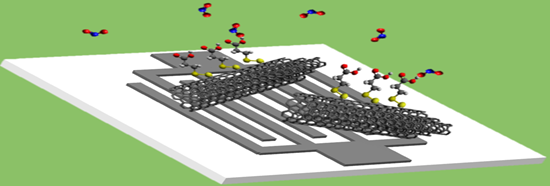
- MWCNTs. N/T: Not tested. Supporting Information The chemical structure of the different thiols tested. Representation of self-assembled monolayers. Raman spectroscopy of carbon nanotubes. Deconvolution of the C 1s core level peak for Au-MWCNTs using XPS. Table with the relative abundance (%) analyzed by


Widening of the electroactivity potential range by composite formation – capacitive properties of TiO2/BiVO4/PEDOT:PSS electrodes in contact with an aqueous electrolyte
Beilstein J. Nanotechnol. 2019, 10, 483–493, doi:10.3762/bjnano.10.49
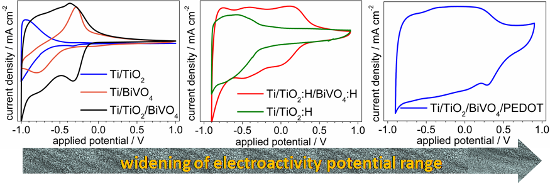
- TiO2/BiVO4 did not clearly affect the bottom layer of TiO2. The XPS spectrum of the Bi 4f region of the sample before hydrogenation is characteristic for Bi3+ (Figue 3b). Deconvolution of the Bi 4f spectrum of the sample after the hydrogenation process exhibited an additional lower-intensity doublet at




Improving control of carbide-derived carbon microstructure by immobilization of a transition-metal catalyst within the shell of carbide/carbon core–shell structures
Beilstein J. Nanotechnol. 2019, 10, 419–427, doi:10.3762/bjnano.10.41
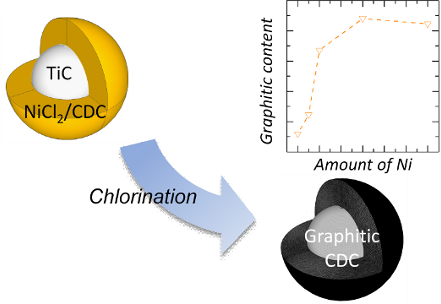
- effect of nickel loading to the crystallite dimension, the parallel and in-plane symmetry crystallite sizes corresponding to C(002) (2θ ≈ 26°) and C(100) (2θ ≈ 43°) were evaluated using the Scherrer equation (peak deconvolution, see Experimental section). It is noted that the Scherrer equation provides
- were recorded in a Netzsch STA 409 PC Luxx (Germany) under air flow. The method consisted of isothermal drying at 150 °C for 1 h followed by heating from 150 to 800 °C at a constant ramp rate of 2.5 °C·min−1. Peak deconvolution of the TPO curves was carried out with two bi-Gaussian functions. Raman
- spectra were taken using Jobin Yvon HR 800 with a HeNe laser (633 nm and 20 mW power). Peak deconvolution of Raman spectra was carried by peak fitting with four Lorentzian/Gaussian functions as described in [15]. Energy-dispersive spectroscopy (EDS) measurements were performed on a scanning electron


A Ni(OH)2 nanopetals network for high-performance supercapacitors synthesized by immersing Ni nanofoam in water
Beilstein J. Nanotechnol. 2019, 10, 281–293, doi:10.3762/bjnano.10.27
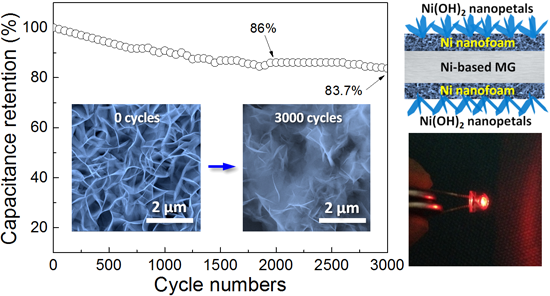
- peaks of Ni 2p and O 1s appear for both the as-dealloyed alloy and as-synthesized Ni(OH)2. It is found that the intensity of O 1s peak greatly increases for the as-dealloyed alloy immersed in deionized water for five and seven days. The deconvolution results of the Ti 2p and Zr 3d spectra measured for




Nanoporous water oxidation electrodes with a low loading of laser-deposited Ru/C exhibit enhanced corrosion stability
Beilstein J. Nanotechnol. 2019, 10, 157–167, doi:10.3762/bjnano.10.15
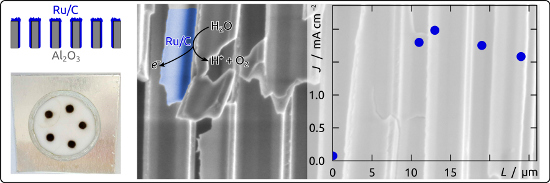
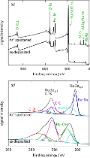
- (“bulk”). The overview XPS spectrum of an as-prepared nanostructured sample features only Ru, O and C (Figure 8a) from the Ru/C layer, whereas the Al2O3 substrate is completely covered and reveals no Al signal. Deconvolution of the Ru 3d region, which is superimposed with C 1s (Figure 8b), reveals two