


Search results
Search for "deposition" in Full Text gives 1162 result(s) in Beilstein Journal of Nanotechnology. Showing first 200.
Multilayered hyperbolic Au/TiO2 nanostructures for enhancing the nonlinear response around the epsilon-near-zero point
Beilstein J. Nanotechnol. 2026, 17, 251–261, doi:10.3762/bjnano.17.17
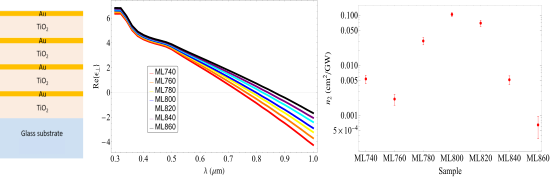
- the nonlinear response of a Ru/TiO2 multilayered structure as reported in [22]. This sample was designed to have an ENZ point at 800 nm and was fabricated using atomic layer deposition. During the linear characterization of the optical properties, spectral ellipsometry showed that the ENZ point
- electron beam and Au layers via Joule effect deposition, both at a deposition rate of 0.15 nm·s−1 and a base pressure of 2 µTorr. The target thickness for Au was 10 nm, while that of TiO2 was varied from 44 to 72 nm to achieve ENZ properties at or around the working wavelength of 800 nm. Every structure
- with some differences in the positions and values of the different maxima observed. This similitude tells us that no contamination occurred during the deposition process and that the deposited materials have almost identical properties. Also, with the measured thicknesses and permittivities of the


Gold nanoparticle-decorated reduced graphene oxide as a highly effective catalyst for the selective α,β-dehydrogenation of N-alkyl-4-piperidones
Beilstein J. Nanotechnol. 2026, 17, 218–238, doi:10.3762/bjnano.17.15
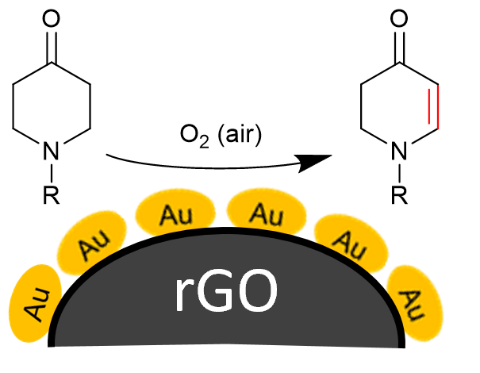
- environments, their tunable surface area and surface chemistry, and electrical conductivity [18][19]. To deposit metal NPs onto a carbon support, procedures such as adsorption or reduction–deposition (RD), co-precipitation, impregnation, and deposition precipitation (DP) are commonly employed [6][19]. Carbon
- complete discoloration of the dispersion to a clear solution with a black precipitate, indicating the successful deposition of AuNPs onto the carbon supports. This was further confirmed by spectrophotometric analysis of the filtrate, which showed the disappearance of the LSPR band (Figure 4a). Subsequently
- , the successful AuNP deposition on the carbon materials was validated through TEM imaging of Au-Cit/AC (Figure 5a), Au-Cit/rGO (Figure 5b), and Au-Cit/CB (Figure 5c). Upon deposition, the average AuNP particle sizes slightly grew to 13 nm within a range of 10–16 nm determined by TEM images and the


Time of flight secondary ion mass spectrometry imaging of contaminant species in chemical vapour deposited graphene on copper
Beilstein J. Nanotechnol. 2026, 17, 200–213, doi:10.3762/bjnano.17.13
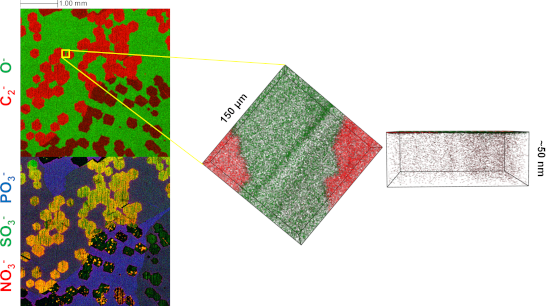
- Cambridge, Cambridge CB3 0FA, United Kingdom 10.3762/bjnano.17.13 Abstract Time of flight secondary ion mass spectrometry (ToF-SIMS) was used to probe the chemistry of graphene grown on copper foil substrates by chemical vapour deposition (CVD) under various growth conditions. The surface sensitivity, mass
- ; Introduction The development of high quality, high throughput, and highly consistent chemical vapour deposition (CVD) processes for the growth of graphene is one of the major milestones that need to be overcome before the potential properties of graphene can be fully realised for device purposes [1][2][3][4
- -SIMS. To confirm that P was coming from the Cu foil, a 200 nm layer of high-purity Cu was deposited on top of a sample of the same Cu foil used for graphene growth by physical vapour deposition (PVD). ToF-SIMS depth profile measurements were taken before and after annealing to the graphene growth





Capabilities of the 3D-MLSI software tool in superconducting neuron design
Beilstein J. Nanotechnol. 2026, 17, 122–138, doi:10.3762/bjnano.17.8

- thicknesses of the superconducting layers were 200, 250, and 350 nm for M1, M2, and M3, respectively. The SiO2 insulating layers had thicknesses of 200 nm (I1) and 300 nm (I2). Deposition of metallic layers was performed via magnetron sputtering in argon atmosphere, while insulating layers were thermally



Functional surface engineering for cultural heritage protection: the role of superhydrophobic and superoleophobic coatings – a comprehensive review
Beilstein J. Nanotechnol. 2026, 17, 63–96, doi:10.3762/bjnano.17.6
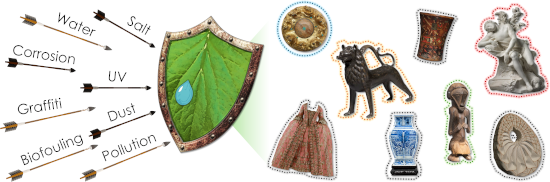
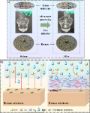
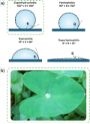
- exploring new and innovative approaches to preserving both movable and immovable historical heritage artworks. Review Coating materials and deposition The body of scientific literature and technological innovations concerning protective coatings (particularly those exhibiting superhydrophobic properties
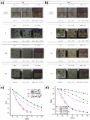
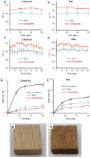
- different tile substrates were selected for the deposition of sol–gel thin coatings, namely, 1BW, 2W, 3TS, and 4MW. These tiles were chosen to represent a range of manufacturing techniques, including a hand-painted, blue and white earthenware tile (1BW), a semi-industrially produced stencil-decorated tile




Quantitative estimation of nanoparticle/substrate adhesion by atomic force microscopy
Beilstein J. Nanotechnol. 2026, 17, 1–14, doi:10.3762/bjnano.17.1

- acting during AFM nanomanipulation [24][25][26][27]. Thus, there is little information available on the adhesion forces involved, which is critical for understanding the correlation between NPs’ positional stability and deposition conditions. In this study, we have investigated the adhesion between Cu
- adhesion forces. Experimental Synthesis of Cu nanoparticles Before deposition, single-crystalline Si(100) wafer substrates, with a thickness of around 500 µm and covered by a native oxide, were cleaned in an ultrasonic bath for 10 min with ethanol, followed by rinsing with isopropanol. Then, the substrates
- were plasma-cleaned in a Diener electronic Tetra 30 system at a N2 pressure of 50 Pa for 20 min. Immediately after plasma cleaning, the substrates were loaded in the NP deposition chamber. The NP deposition experiments were conducted using DC magnetron sputter inert gas condensation in a Moorfield



Improving magnetic properties of Mn- and Zn-doped core–shell iron oxide nanoparticles by tuning their size
Beilstein J. Nanotechnol. 2025, 16, 2285–2295, doi:10.3762/bjnano.16.157
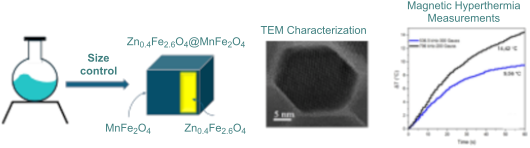
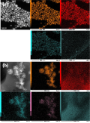
- Figure 3, Fe, Zn, and O are homogeneously distributed in the Zn0.4Fe2.6O4 NPs (Figure 3a). For Zn0.4Fe2.6O4@MnFe2O4 NPs (Figure 3b), a clear distinction is observed, where Mn is exclusively located in the shell. This confirms the successful deposition of the MnFe2O4 shell on the Zn0.4Fe2.6O4 core. Such
- shell formation has been reported in other studies on core–shell NPs, where the selective deposition of the shell material has been achieved through precise control of synthesis conditions [19]. FTIR analysis The FTIR analysis of Zn0.4Fe2.6O4@MnFe2O4 and Zn0.4Fe2.6O4 NPs provides valuable insights into



Chiral plasmonic nanostructures fabricated with circularly polarized light
Beilstein J. Nanotechnol. 2025, 16, 2245–2264, doi:10.3762/bjnano.16.154
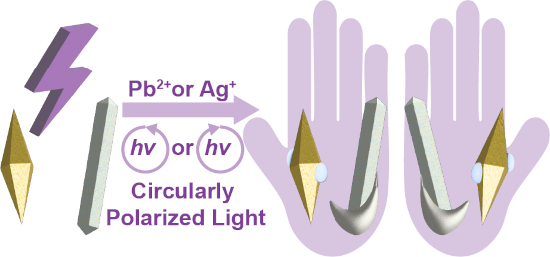
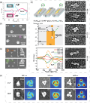
- ] and three-dimensional gold helices [27] (Figure 1a) are two representative cPNSs fabricated by nanolithography. Using arrays of plasmonic seeds patterned by nanolithography, versatile cPNSs were also constructed with glancing angle deposition [28] (Figure 1b). Up to now, nanofabrication has produced
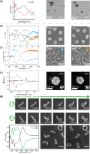
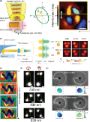
- that the sites of Au deposition ( reduction) are the locations of electrons from the nanoparticle transferred via PVP. Researchers made similar observations when electron beam lithography resist was exposed to hot electrons from AuNRs [86]. This study found hydrogen silsesquioxane underwent water
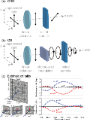
- distribution when exposed to CPL. Additionally, the local thermal effects that may lead to isotropic photochemical deposition on the achiral PNSs require further investigation and must be taken into account. Furthermore, the interactions between the achiral PNS seeds and the substrates on which they are





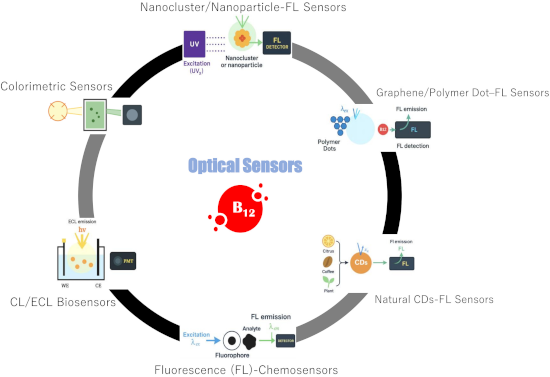
Optical bio/chemical sensors for vitamin B12 analysis in food and pharmaceuticals: state of the art, challenges, and future outlooks
Beilstein J. Nanotechnol. 2025, 16, 2207–2244, doi:10.3762/bjnano.16.153


Ultrathin water layers on mannosylated gold nanoparticles
Beilstein J. Nanotechnol. 2025, 16, 2183–2198, doi:10.3762/bjnano.16.151
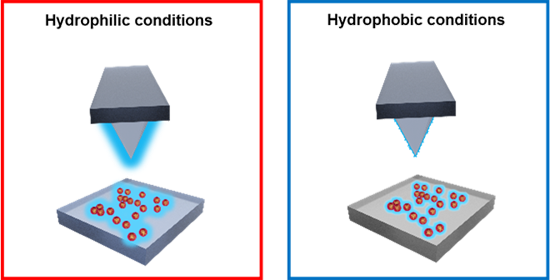
- scales of the liquid evaporation and the particle movement: The solvent evaporates so slowly that particles move over at least mesoscale distances, thus allowing for aggregation in the ring [33]. In our research, the deposition protocol may have influenced the observed phenomena. The hydrophilic APDMES
- of dimanno-AuNPs and PEG AuNPs was recorded in a broad-band VSFG system at Fritz-Haber-Institute (Max-Planck-Gesellschaft, Berlin, Germany). Gold thin films (200 nm on 10 nm Cr on glass) were used as surfaces. Prior to sample deposition, the surfaces were cleaned with ethanol and Milli-Q water under



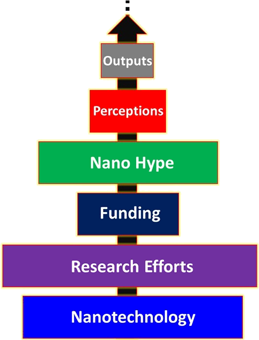
Missing links in nanomaterials research impacting productivity and perceptions
Beilstein J. Nanotechnol. 2025, 16, 2168–2176, doi:10.3762/bjnano.16.149
- [22]. Additionally, most nanomaterial fabrication methods are energy-intensive. Techniques such as combustion, arc deposition, solvothermal synthesis, chemical vapor deposition, mechanical milling, and wet chemical methods require high energy input and careful process control. The ultrahigh cost of
Microplastic pollution in Himalayan lakes: assessment, risks, and sustainable remediation strategies
Beilstein J. Nanotechnol. 2025, 16, 2144–2167, doi:10.3762/bjnano.16.148
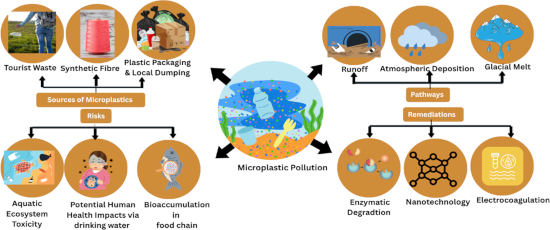
- in the ecologically sensitive Himalayan lakes, posing a threat to biodiversity, water quality, and human habitation. These high-altitude freshwater ecosystems are being increasingly polluted through human use, tourism, glacier melt, and atmospheric deposition. Microplastic quantification in such
- deposition is outlined in Section 3. The harsh environmental conditions of the region, freeze–thaw weather, low microbial activity, and short hydrological retention times, make the degradation of MPs more difficult and these lakes to long-term sinks for plastic particles. Himalayan lakes are very susceptible
- mechanisms and deposition of MPs into sensitive environments in perspective [18][19]. 3.1 Sources and pathways of microplastics in lakes MPs come from various sources and are carried to high-altitude lakes in the Himalayas through several routes. The major sources of pollution are improper disposal of


Electron transport through nanoscale multilayer graphene and hexagonal boron nitride junctions
Beilstein J. Nanotechnol. 2025, 16, 2132–2143, doi:10.3762/bjnano.16.147
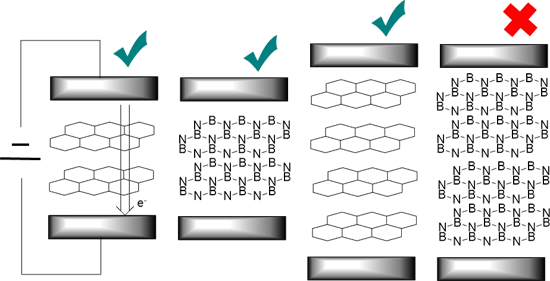
- in far-ultraviolet light-emitting devices. These applications leverage h-BN’s properties like high temperature stability, electrical insulation, and chemical resistance [18][20][21]. An interesting application of multilayer h-BN is its deposition on electrode surfaces as an electron blocking layer


Toward clinical translation of carbon nanomaterials in anticancer drug delivery: the need for standardisation
Beilstein J. Nanotechnol. 2025, 16, 2092–2104, doi:10.3762/bjnano.16.144

- affairs. Achieving these key milestones is critical to developing a safe and effective drug delivery system that can improve the treatment of cancer. The process begins with the synthesis of CNMs tailored to specific size and surface chemistry requirements, using methods such as chemical vapour deposition
- main issues is the wide variety of methods that can be used to synthesise CNMs, which can lead to variations in their properties and performance. For example, carbon nanotubes can be synthesised using arc discharge, laser ablation, and chemical vapour deposition, among others [30]. Each method can




Beyond the shell: exploring polymer–lipid interfaces in core–shell nanofibers to carry hyaluronic acid and β-caryophyllene
Beilstein J. Nanotechnol. 2025, 16, 2015–2033, doi:10.3762/bjnano.16.139
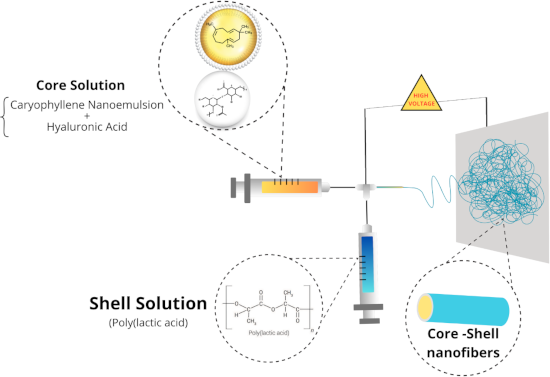
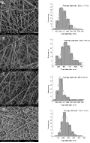
- evaluating the effects of electric field intensity, which is responsible for polymer chain stretching and the speed of fiber deposition, on fiber morphology. Specifically, the impact of varying the needle-to-collector distance (12 and 15 cm) and the applied voltage (15, 17, and 19 kV) was assessed. The
- the enhancement of the electric field strength at shorter distances, which accelerates fiber deposition and reduces the time available for jet elongation, ultimately leading to the formation of thicker fibers. Additionally, a stronger electric field may reduce Rayleigh instability and stabilize the
- production conditions. This evaluation allowed for the observation of the cross-sectional structure before and after core removal. The nanofibers were coated with approximately 10 nm of gold via sputter deposition for 1 min at 30 mA. Micrographs were acquired using an acceleration voltage of 2 kV and 0.21 nA




Laser ablation in liquids for shape-tailored synthesis of nanomaterials: status and challenges
Beilstein J. Nanotechnol. 2025, 16, 1963–1997, doi:10.3762/bjnano.16.137
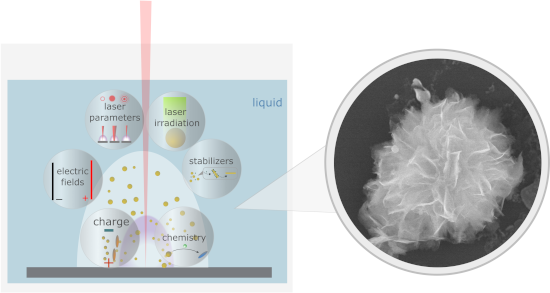
- formation and deposition of nanostructures. The method was successfully applied for the formation of nanoflakes [80], nanoflowers [81], and nanofibers [82][83]. In this method, the choice of the organic precursor influences the shape of the produced nanostructures. For example, the formation of Ag





Mechanical property measurements enabled by short-term Fourier-transform of atomic force microscopy thermal deflection analysis
Beilstein J. Nanotechnol. 2025, 16, 1952–1962, doi:10.3762/bjnano.16.136
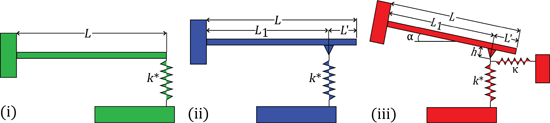
- their polymerization/deposition. The topography of the surface was measured before acquiring a force-versus-distance measurement to ensure that these measurements were acquired on clean and flat regions of the substrate. To observe how the resonant frequency of the AFM cantilever changes as the attached




Evaluating metal-organic precursors for focused ion beam-induced deposition through solid-layer decomposition analysis
Beilstein J. Nanotechnol. 2025, 16, 1942–1951, doi:10.3762/bjnano.16.135
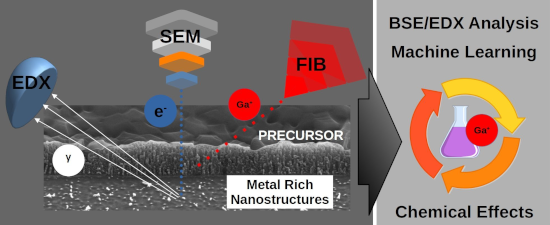
- Copernicus University in Toruń, Gagarina 7, 87-100 Toruń, Poland 10.3762/bjnano.16.135 Abstract The development of modern metal deposition techniques like focused ion/electron beam-induced deposition (FIBID/FEBID) relies heavily on the availability of metal-organic precursors of particular properties. To
- irradiation differs from gas-phase deposition, we think that our method can be employed to optimize pre-screen and score new potential precursors for FIB applications by significantly reducing the time required and conserving valuable resources. Keywords: backscattered electrons (BSE); carboxylates; energy
- -dispersive X-ray spectroscopy (EDX); focused ion beam (FIB); focused ion beam-induced deposition (FIBID); machine learning; scanning electron microscopy (SEM); Introduction A variety of nanomanufacturing techniques, such as optical and electron-beam lithography, nanoimprint lithography, atomic layer


Quantum circuits with SINIS structures
Beilstein J. Nanotechnol. 2025, 16, 1931–1941, doi:10.3762/bjnano.16.134
- deposition plants with thermal or e-beam evaporation. A much more available and simple deposition equipment is magnetron sputtering, but it provides only isotropic deposition, which is incompatible with anisotropic shadow evaporation. The practical solution for a magnetron sputtering is selective etching of


PEGylated lipids in lipid nanoparticle delivery dynamics and therapeutic innovation
Beilstein J. Nanotechnol. 2025, 16, 1914–1930, doi:10.3762/bjnano.16.133
- deposition of complement fragments and formation of the membrane attack complex [64]. A study showed that exposure of LNPs containing 5 mol % DSPE-PEG2k to anti-PEG IgM and complement-active serum induced up to 50.5% release of encapsulated mRNA payload. In the widely used LNP composition containing 1.5 mol
- [70]. Complement activation plays a central role in mediating PEG immunogenicity. When anti-PEG antibodies bind to PEGylated LNPs, they can activate the complement cascade via classical pathways. This mechanism leads to the deposition of complement proteins C3 and C5b-9 on the nanoparticle surface



Targeting the vector of arboviruses Aedes aegypti with nanoemulsions based on essential oils: a review with focus on larvicidal and repellent properties
Beilstein J. Nanotechnol. 2025, 16, 1894–1913, doi:10.3762/bjnano.16.132
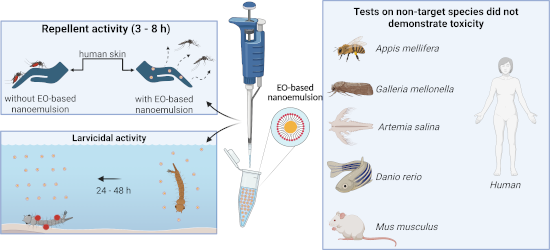
- environmental factors such as temperature, nutrient availability, water quality, and ecological interactions. Higher temperatures accelerate growth, while food scarcity and competition can prolong this phase [46][47][48]. The life cycle of Ae. aegypti (Figure 1) begins with the deposition of eggs by adult


Electrical, photocatalytic, and sensory properties of graphene oxide and polyimide implanted with low- and medium-energy silver ions
Beilstein J. Nanotechnol. 2025, 16, 1794–1811, doi:10.3762/bjnano.16.123
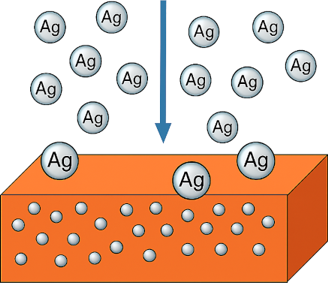
- simulations. Already at low fluence (3.75 × 1012 cm−2), a decrease in surface resistivity is seen, suggesting that deep energy deposition induces extensive fragmentation of the polymer skeleton, in particular cleavage of C–N, C–O, and C=C bonds and more efficient formation of conducting phases. As the fluence


Ambient pressure XPS at MAX IV
Beilstein J. Nanotechnol. 2025, 16, 1677–1694, doi:10.3762/bjnano.16.118
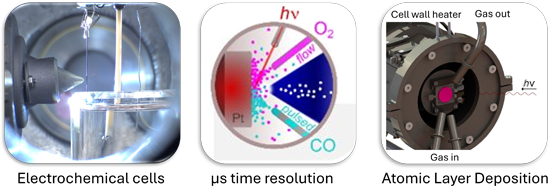
- representative studies at MAX IV, including investigations of single-atom catalysts, confined catalysis, time-resolved catalysis, atomic layer deposition, and electrochemical interfaces, showcasing the role of APXPS in advancing material and surface science. Keywords: 2D materials; atomic layer deposition
- environment, atomic layer deposition (ALD) is another field particularly developed at MAX IV. Also, the ultrahigh brightness of MAX IV ring, joined with in-house developments, make feasible in the soft X-ray regime, experiments accessing liquid layers and their interfaces with solids, opening up to completely
- fields of, among others, catalysis research, material characterization, and thin film deposition, utilizing dedicated cells. HIPPIE, on the 3 GeV ring, covers a wider photon energy range than SPECIES (250 to 2500 eV), also with variable polarization [10]. It has two branches, each with its own


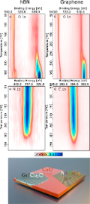



Bioinspired polypropylene-based functionally graded materials and metamaterials modeling the mistletoe–host interface
Beilstein J. Nanotechnol. 2025, 16, 1592–1606, doi:10.3762/bjnano.16.113
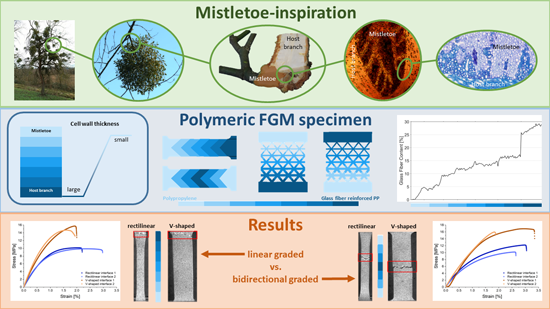
- colleagues have also structured the interfaces of the gradients in their work on bioinspired 3D-printed fused deposition modeling materials, incorporating different patterns such as collagen-like triple helices into their geometric design, resulting in a 50% toughness increase compared to the non-graded


Photocatalytic degradation of ofloxacin in water assisted by TiO2 nanowires on carbon cloth: contributions of H2O2 addition and substrate absorbability
Beilstein J. Nanotechnol. 2025, 16, 1567–1579, doi:10.3762/bjnano.16.111
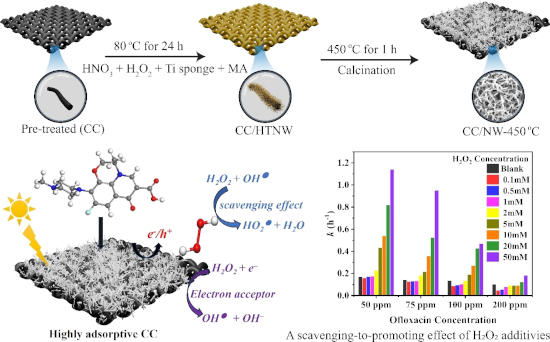
- deposition, electrophoretic deposition, and electrochemical deposition are extensively utilized for the synthesis of TiO2 nanowire arrays, owing to their advantageous physical properties and varied applications [14][15]. Our previous study accomplished the precipitation of TiO2 nanowire arrays, with





