Search results
Search for "electric field" in Full Text gives 398 result(s) in Beilstein Journal of Nanotechnology. Showing first 200.
Shape, membrane morphology, and morphodynamic response of metabolically active human mitochondria revealed by scanning ion conductance microscopy
Beilstein J. Nanotechnol. 2025, 16, 951–967, doi:10.3762/bjnano.16.73
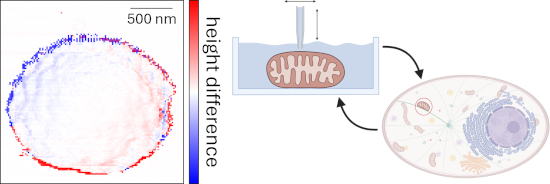
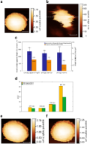
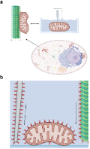
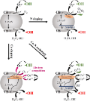
- cation layer on their surfaces, which is responsible for ionic conductivity in physiological media (Figure 8b). Microtubules align along direct current electric field lines and can be vibrationally excited at megahertz frequencies by electric dipole antennas [46]. Other relevant properties include
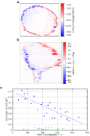
- a microtubule. As electric fields (and therefore the electric field originating from the ζ-potential, too) in physiological media are attenuated over short distances [27][51], a morphodynamic response would only occur when the nanopipette is within a few pipette diameters of the mitochondrion. The
- current flows, which generates an electric field (symbolised by the black arrow). The surface charges perform a relative movement due to the jittering of the microtubule. This also generates a current and an electric field from the point of observation of the mitochondrion (symbolised by the black arrow



Ar+ implantation-induced tailoring of RF-sputtered ZnO films: structural, morphological, and optical properties
Beilstein J. Nanotechnol. 2025, 16, 872–886, doi:10.3762/bjnano.16.66
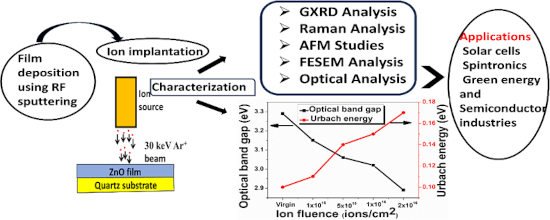
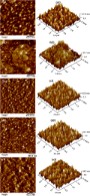
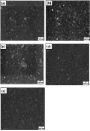
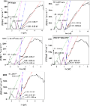
- at higher fluences. Moreover, AFM studies reveal grain size reduction leading to the enhancement in the density of grain boundaries. This generates an intrinsic electric field, which in turn evolves Raman optical modes [49]. Further, the fall in intensity of the E2 (high) mode is corroborated with






Insights into the electronic and atomic structures of cerium oxide-based ultrathin films and nanostructures using high-brilliance light sources
Beilstein J. Nanotechnol. 2025, 16, 860–871, doi:10.3762/bjnano.16.65

- model catalyst”, pages 8-13, Copyright (2019), with permission from Elsevier. This content is not subject to CC BY 4.0. (a) Ce–O interatomic distances for 2 ML and 10 ML CeO2 films evaluated by fitting Ce L3-edge EXAFS with the electric field parallel (dCe−O PAR) and perpendicular (dCe−O PER) to the


Morphology and properties of pyrite nanoparticles obtained by pulsed laser ablation in liquid and thin films for photodetection
Beilstein J. Nanotechnol. 2025, 16, 785–805, doi:10.3762/bjnano.16.60
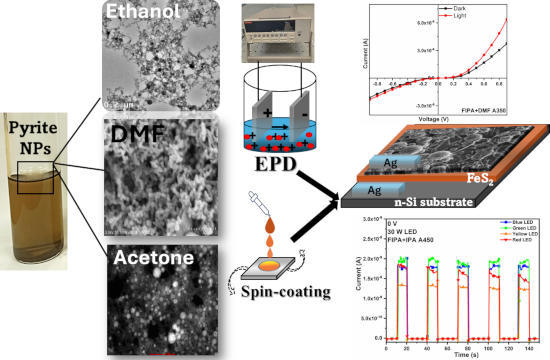
- carriers. In p-n junction photodetectors, an internal electric field further facilitates this separation, enhancing the response of the device [65]. The effect of light intensities at different wavelengths was also investigated while illuminating using 532 and 785 nm continuous laser source with variable






Thickness dependent oxidation in CrCl3: a scanning X-ray photoemission and Kelvin probe microscopies study
Beilstein J. Nanotechnol. 2025, 16, 749–761, doi:10.3762/bjnano.16.58
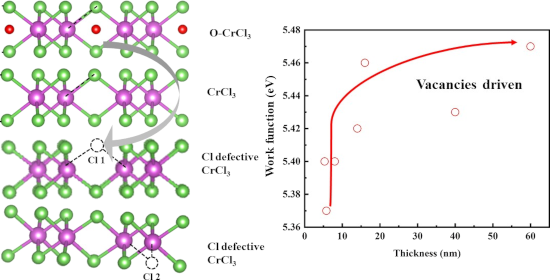
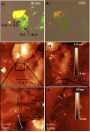
- cantilever coated with Pt at the resonance frequency of 68 kHz with an elastic constant of 1–5 N/m (AppNano) and doped diamond tips with 120 kHz and 8 N/m elastic constant (ADAMA). Kelvin probe force microscopy images were taken via double passage before and after applying an electric field by elevating the





The impact of tris(pentafluorophenyl)borane hole transport layer doping on interfacial charge extraction and recombination
Beilstein J. Nanotechnol. 2025, 16, 678–689, doi:10.3762/bjnano.16.52
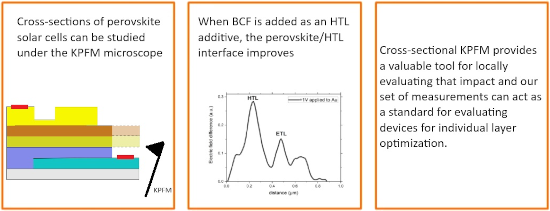
- accumulation at the perovskite junctions because of the applied bias (like the aforementioned defect-state and relative work function contributions). Consequently, we use these bias-induced potential profiles (that result from the aforementioned subtraction of CPD profiles) to plot electric field profiles
- (Figure 3i–l) that reflect the junction quality of the perovskite absorber with its adjacent transport layers. We chose to present the results as electric field differences and not as bias-induced voltage profiles, since the electric field peaks provide a more intuitive way of immediately identifying the
- position of the built-in fields that enable charge separation. These profiles that are being referred to as “electric field difference” are presented in Figure 3i–l. To extract the electric field difference profiles, we applied the following equation: Here, E is the electric field difference, V is the


Nanoscale capacitance spectroscopy based on multifrequency electrostatic force microscopy
Beilstein J. Nanotechnol. 2025, 16, 637–651, doi:10.3762/bjnano.16.49

- reliability of capacitors [10]. Similarly, in next-generation photovoltaic devices, the dielectric properties of absorber layers, such as lead-halide perovskites, affect carrier recombination and electric field distribution, thereby influencing power conversion efficiency [11]. At the nanoscale, the
- capacitors depends strongly on the local electric field distribution around tip apex, tip cone, and cantilever. Whereas the apex capacitance contains the desired local information, the stray capacitance from cone, lever, and cables produces a background signal that effectively reduces the lateral resolution




Polyurethane/silk fibroin-based electrospun membranes for wound healing and skin substitute applications
Beilstein J. Nanotechnol. 2025, 16, 591–612, doi:10.3762/bjnano.16.46
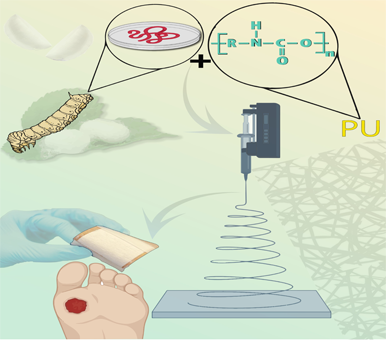
- electrospun polymer fibers is affected by electric field intensity, solution viscosity, charge density of the solution, and solution supply rate [56]. The size of the fibers also affects the performance of electrospun nanofiber composites [57]. Numerous polymers and precursors including polylactic acid, PU
- hemostatic agent for trauma treatment [107]. Patil et al. explored three types of silk forms, namely, regular film, lamellar porous film, and electrospun silk nanofibers for wound dressings. Factors such as solvent solution, electric field intensity, spinning distance, and SF concentration affected the



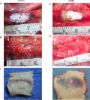
Performance optimization of a microwave-coupled plasma-based ultralow-energy ECR ion source for silicon nanostructuring
Beilstein J. Nanotechnol. 2025, 16, 484–494, doi:10.3762/bjnano.16.37

- a strong electric field generated in the cavity, the ECR-based ion sources equipped with microwave cavities neither contain any filament nor any type of electrode [26]. The high plasma density within a quartz cup is confined by solenoid magnets surrounding it, creating a multi-cusp magnetic field
- electric field generated by the magnetron induces gas breakdown (discharge), leading to the formation of a highly intense plasma. The produced plasma is confined and sustained by a permanent magnet positioned near the plasma cup. For the extraction and focusing of the beam, a gridded electrostatic einzel
- plasma are accelerated towards the sample with an energy approximately equal to the applied voltage. Grid 2 (extractor) This grid is employed to control the divergence of the ion beam. A negative voltage is applied to the extractor grid, creating an electric field that influences ion trajectories


Impact of adsorbate–substrate interaction on nanostructured thin films growth during low-pressure condensation
Beilstein J. Nanotechnol. 2025, 16, 473–483, doi:10.3762/bjnano.16.36

- reactions of adatoms between neighbor layers acts in the opposite manner to the adsorption coefficient [41]. An applied external electric field can affect the type and size of the surface structures [37][42][43]. Anisotropy of surface diffusion, induced by properties of the substrate, can lead to fractal


Enhancing mechanical properties of chitosan/PVA electrospun nanofibers: a comprehensive review
Beilstein J. Nanotechnol. 2025, 16, 286–307, doi:10.3762/bjnano.16.22

- . Thus, in a strong electric field, the tip of a polymer solution or melt extruded from a capillary changes from a spherical to a conical shape, the so-called Taylor cone [14]. The parameters involved in the electrospinning process can be divided into three categories, namely, electrospinning, solution
- , and environment. For electrospinning, factors such as applied electric field, distance between the needle and collector, flow rate, and needle diameter affect the fabrication of the nanofibrous sample. Solution parameters include the types of solvent, polymer concentration, viscosity, and solution
- , including irregular fluid jet movement, variations in surface tension, and sensitivity to external parameters such as temperature, humidity, and airflow. These factors can disrupt the uniformity of the fiber formation. When the fiber jets are drawn in the direction of the electric field force, the polymer


Emerging strategies in the sustainable removal of antibiotics using semiconductor-based photocatalysts
Beilstein J. Nanotechnol. 2025, 16, 264–285, doi:10.3762/bjnano.16.21
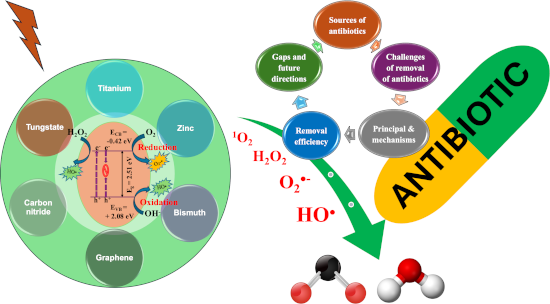
- mixing Bi(NO3)3 and Na2WO4 using different methods. The distinctive layered structure of this material creates gaps between the slabs that form an electric field. This electric field opposes the movement of electrons and holes. This effect decreases the recombination of charge carriers, leading to an
- g-C3N4 with other semiconductors with comparable band structures can take advantage of the differences in energy band structures while simultaneously combining the best features of both components. The result is an intrinsic electric field between the materials, which slows down the recombination of



Radiosensitizing properties of dual-functionalized carbon nanostructures loaded with temozolomide
Beilstein J. Nanotechnol. 2025, 16, 229–251, doi:10.3762/bjnano.16.18
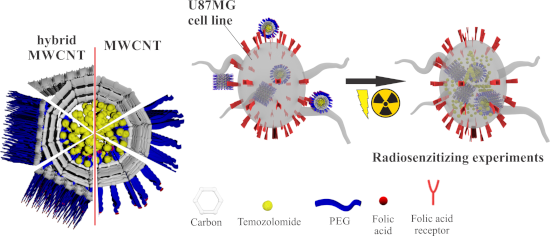
- reason for the National Comprehensive Cancer Network to recommend standard RT and adjuvant TMZ plus alternating electric field therapy for patients with GBM at ages up to 70 years with good performance status and having either a “methylated” or “indeterminate” MGMT promoter status [33]. However, the




Comparison of organic and inorganic hole transport layers in double perovskite material-based solar cell
Beilstein J. Nanotechnol. 2025, 16, 119–127, doi:10.3762/bjnano.16.11
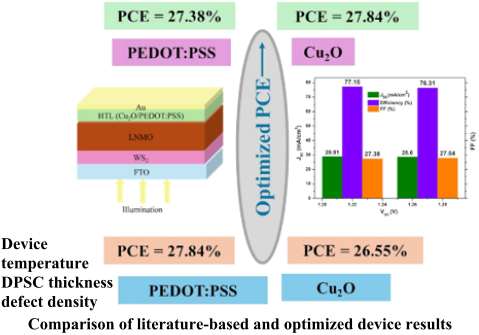
- ρn are, respectively, the free density distributions of holes and electrons. The Poisson equation explains the change in electric field with respect to charge densities. The continuity equations are [21]: where Jn and Jp are electron and hole density, respectively, G is the generation rate of free e


Biomimetic nanocarriers: integrating natural functions for advanced therapeutic applications
Beilstein J. Nanotechnol. 2024, 15, 1619–1626, doi:10.3762/bjnano.15.127

- temperature control [36][43]. However, due to vesicle fragmentation and reassembly, achieving uniform size can be challenging [44]. Electroporation involves exposing vesicles in a microfluidic device to an electric field, creating membrane pores for nanocarrier incorporation. Key parameters, including pulse


Lithium niobate on insulator: an emerging nanophotonic crystal for optimized light control
Beilstein J. Nanotechnol. 2024, 15, 1415–1426, doi:10.3762/bjnano.15.114
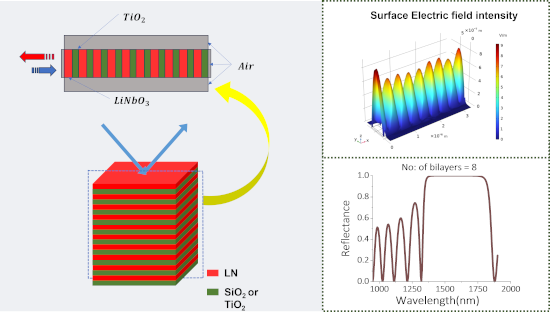
- wavelength can be tuned by changing the electric field without altering the reflectance values [32]. Shuai et al. introduce a bulk acoustic resonator (BAW) comprised of a sandwich-like structure with an LN film positioned between two aluminum electrodes. In this setup, acoustic waves are generated and
- approach takes the form Equation 8 [51]: where U(x) and S(x) are the quantities corresponding to the resultant electric field and phase, respectively. The power flow density across the structure also known as the Poynting vector S(x) is proportional to the square of new field intensity and the spatial
- derivative of phase (Equation 9): The solver solves for electric field E using Equation 6 and Equation 7 under the following boundary conditions iteratively within the error limits: Using the finite element method (FEM), the relevant partial differential equations will be solved on each discretized spatial


AI-assisted models to predict chemotherapy drugs modified with C60 fullerene derivatives
Beilstein J. Nanotechnol. 2024, 15, 1170–1188, doi:10.3762/bjnano.15.95
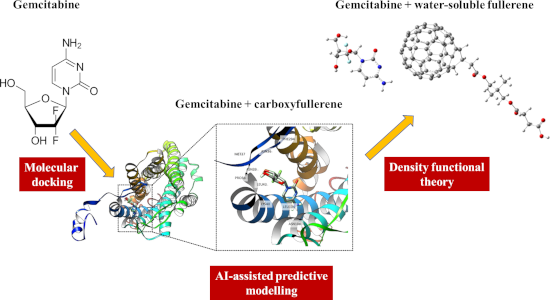
- given molecule to acquire an electric dipole moment in the presence of an external electric field were taken into account. The mentioned QSAR/QSPR descriptors were obtained from the Drugbank dataset (https://go.drugbank.com). Initial drug structures and connectivity were also obtained from the


Quantum-to-classical modeling of monolayer Ge2Se2 and its application in photovoltaic devices
Beilstein J. Nanotechnol. 2024, 15, 1153–1169, doi:10.3762/bjnano.15.94
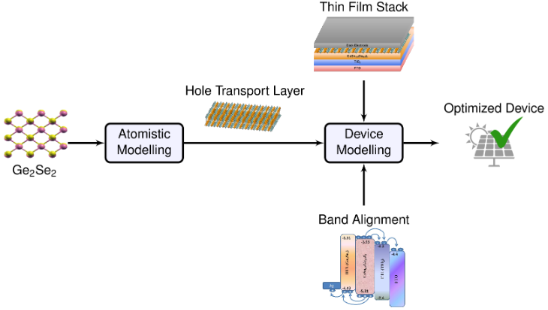
- because of the ultrathin layer and the strong electric field gradient from the active layer to the electrode. Finally, higher in-plane mobility of the monolayers can compensate the potential limitations of out-of-pane mobility for its prospective uses in solar cells, V-FETs, TFETs, and memristors [48]. In




Photocatalytic methane oxidation over a TiO2/SiNWs p–n junction catalyst at room temperature
Beilstein J. Nanotechnol. 2024, 15, 1132–1141, doi:10.3762/bjnano.15.92
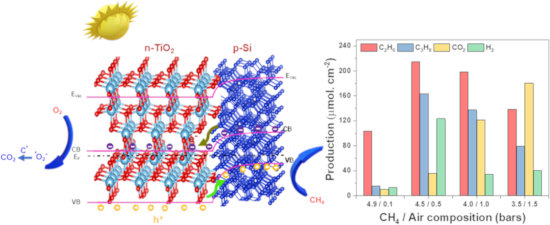
- electrons for reactions [25][26][27]. However, the generated electron affinity of metal NPs is sometimes insufficient and cannot prevent recombination or maintain electrons for further reactions. As an advanced solution for catalysis modification, p–n junction photocatalysts with an intrinsic electric field


Local work function on graphene nanoribbons
Beilstein J. Nanotechnol. 2024, 15, 1125–1131, doi:10.3762/bjnano.15.91
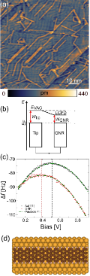
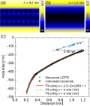
- electric field caused by the CPD is compensated. (c) Δf(V) measurements using a PtIr-coated tip along with their second-order polynomial fit measured on GNR and Au. The dashed vertical lines indicate the respective values of the CPD. (d) Scheme of the GNR on Au. (a) Topography of GNR’s and the Au(111

![[Graphic 1]](/bjnano/content/inline/2190-4286-15-91-i4.svg?max-width=637&scale=1.18182)
Signal generation in dynamic interferometric displacement detection
Beilstein J. Nanotechnol. 2024, 15, 1070–1076, doi:10.3762/bjnano.15.87
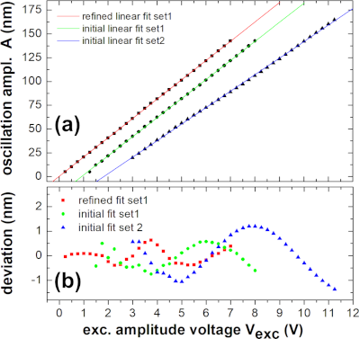
- regime characterized by a low Fabry–Pérot enhancement factor [12]. To obtain a model description of the interference light intensity at the detector, we virtually place the detector inside the fiber at its end and consider the electric field of the incident light beam Einc at this position, the electric
- field of the reference light beam Eref = rfEinc, and the electric field reflected from the cantilever and entering the fiber . As interference occurs in the fiber, the relevant transmissivity is , and it depends on the polarisation for (quasi) normal incidence. The a priori unknown function sloss(2d
- ) describes the loss of light in the gap between the fiber end and the cantilever due to beam divergence. The spatial variation of the electric field strength due to interference is governed by the path difference 2d determining the phase of the interference electric fields . Linear superposition of reference


Electrospun nanofibers: building blocks for the repair of bone tissue
Beilstein J. Nanotechnol. 2024, 15, 941–953, doi:10.3762/bjnano.15.77
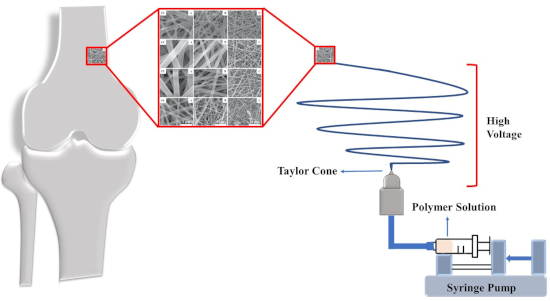
- an increasing electric field (1–30 kV) is supplied to the syringe tip [45]. A polymer jet exits the Taylor cone structure when the electric field applied to the polymer solution rises above a predetermined threshold. High-voltage-polarized polymer molecules travel in an erratic manner in the
- liquid accumulating at the needle tip above the stretching ability of the electric field strength; hence, polymer liquid may flow from the needle tip [49][52][55]. Generally, as the flow rate increases, thicker and more porous fibers with a wide distribution are formed [56][57]. When the flow rate is too
- distance [50]. A decrease in the distance causes an increase in the electric field strength and causes the fibers to gather on the collector plate without thinning and elongation; thus, larger nanofiber diameters are obtained [44][52][62]. Collector type (rotating/fixed) A collector rotating at a certain


Exploring surface charge dynamics: implications for AFM height measurements in 2D materials
Beilstein J. Nanotechnol. 2024, 15, 767–780, doi:10.3762/bjnano.15.64
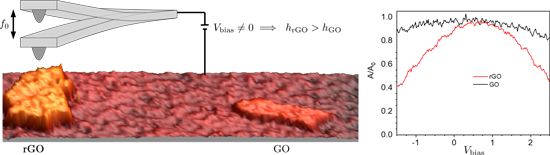
- generate a time-dependent electric field, which needs to be considered consistently. We think that our findings align well with this explanation, as a key difference between GO and rGO is their electrical conductivity. Moreover, the conduction mechanism in GO and rGO flakes is variable-range hopping [75
- field. The electric field is induced by both the presence of the tip (at voltage Vbias) and by the surface charge density. The electric field must then verify Maxwell’s first equation, ∇·E = ρ/ε, above and below the surface, whose general solution is where Vtip(x, y, z , t) is the potential generated by
- analytically in Fourier space. A first consequence in this case is that, as t→∞, there will be a surface charge density that will depend on the bulk conductivities and the surface conductivity, This equation shows that, initially, the tip generates an electric field that gives rise to currents at the surface


Reduced subthreshold swing in a vertical tunnel FET using a low-work-function live metal strip and a low-k material at the drain
Beilstein J. Nanotechnol. 2024, 15, 713–718, doi:10.3762/bjnano.15.59
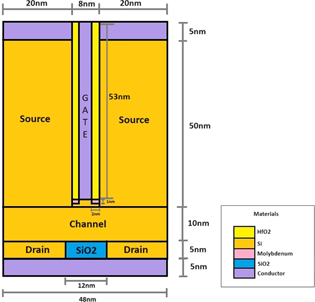
- capacitor is given by where q, ε0, A, and d are the charge on the plates, the vacuum permittivity, the area of the plates, and the distance between the plates, respectively. The electric field is influenced by voltage, charge, and capacitance. The gradient of voltage that characterizes the electric field
- for the simulations. The same models and experimental data have been used for the simulation of proposed structure, and the results are compared. Results and Discussion Electron concentration and electric field The electron concentration for a VTFET with dual low-work-function live strip and a low-k
- dielectric gate contains a molybdenum live strip, which raises the electron concentration at the source–channel junction because of its low work function. The rise in electron concentration creates an abrupt change in the source channel. Figure 3 presents the electric field of the VTFET with DLWLS + spacer


Classification and application of metal-based nanoantioxidants in medicine and healthcare
Beilstein J. Nanotechnol. 2024, 15, 396–415, doi:10.3762/bjnano.15.36
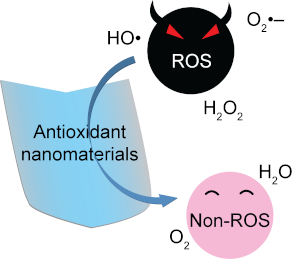
- ]. The heterostructures increase surface electron deficiency, redox couples, and oxygen vacancies through an intrinsic electric field and lattice mismatch at the metal–semiconductor interface. Thus, a high level of oxygen vacancies enhances the adsorption and activation of oxygen-containing ROS, that is