


Search results
Search for "energy distribution" in Full Text gives 48 result(s) in Beilstein Journal of Nanotechnology.
Electron interactions with the heteronuclear carbonyl precursor H2FeRu3(CO)13 and comparison with HFeCo3(CO)12: from fundamental gas phase and surface science studies to focused electron beam induced deposition
Beilstein J. Nanotechnol. 2018, 9, 555–579, doi:10.3762/bjnano.9.53
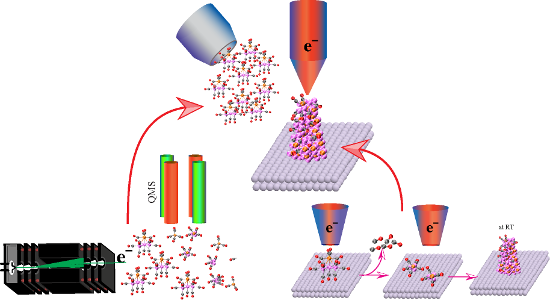
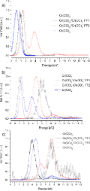
- 0 eV (Figure 4a). At the PBE0/ma-def2-TZVP level of theory the threshold for this channel is found to be 1.2 eV, and we thus attribute this low intensity contribution to the high energy tail of the Maxwell–Boltzmann inner energy distribution at the current experimental conditions, T = 338 to 343 K


Electron interaction with copper(II) carboxylate compounds
Beilstein J. Nanotechnol. 2018, 9, 384–398, doi:10.3762/bjnano.9.38
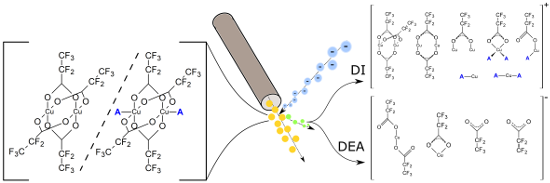
- electron ionization (EI), dissociative ionization (DI) [17][18][19] processes. Their kinetic energy is only a few eV, with energy distribution determined by the type of wafer and energy of primary beam [20][21]. Thorman et al. have compared gas phase and surface data on low energy electron interactions


Response under low-energy electron irradiation of a thin film of a potential copper precursor for focused electron beam induced deposition (FEBID)
Beilstein J. Nanotechnol. 2018, 9, 57–65, doi:10.3762/bjnano.9.8
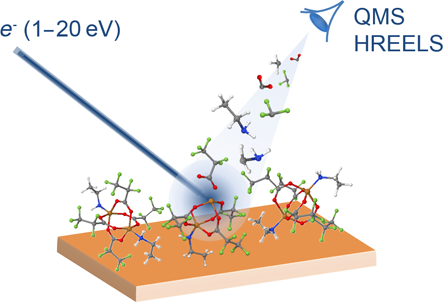
- dependence on the energy is more structured in condensed phase, with three maxima at 3, 5 and 9 eV for the F− desorption from condensed C2F6. Here, the 1.5 eV peak dominates the ESD curves for both CF3 and CF3CF2 desorption in the low-energy range. Considering the energy distribution of the secondary
- importance under FEBID conditions, considering that the energy distribution for secondary electrons emitted in the direct vicinity of the irradiation spot strongly peaks in the range of 1–5 eV, and can take part in the whole dissociation process. The effective cross section for CF3 release from the complex



Interactions of low-energy electrons with the FEBID precursor chromium hexacarbonyl (Cr(CO)6)
Beilstein J. Nanotechnol. 2017, 8, 2583–2590, doi:10.3762/bjnano.8.258
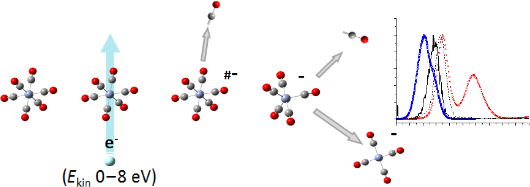
- the desired metal, with the formation of non-defined deposits on the surface. When high-energy electrons interact with the surface, a cascade of low-energy electrons (LEE) and backscattered electrons are generated. Many chemical reactions can be triggered by those secondary electrons with an energy
- distribution characterised by a substantial fraction close to the ionization energy of FEBID precursors, peaking well below 10 eV and extending with appreciable intensities down to 0 eV [4]. The quality of the formed nanostructures is controlled and influenced by the interactions of the secondary and



Amplified cross-linking efficiency of self-assembled monolayers through targeted dissociative electron attachment for the production of carbon nanomembranes
Beilstein J. Nanotechnol. 2017, 8, 2562–2571, doi:10.3762/bjnano.8.256
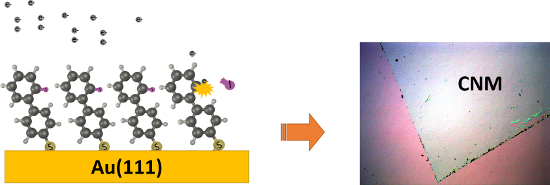
- ). The cross-linking may be induced directly by the primary electrons, where electron exposure is used in the cross-linking step. However, as mentioned above, backscattered and secondary electrons may also play a considerable role [18]. Typically, the energy distribution of such secondary electron peaks
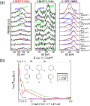
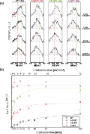
- (Figure 1), however, can be traced back to the internal energy distribution in these molecules at the experimental temperature, that is, the formation of Cl− and Br− below their thermochemical threshold is attributed to the high energy tail of the respective Maxwell–Boltzmann distribution of internal
- 1, must thus be attributed to the high energy tail of the internal energy distribution of the respective biphenyls at the current experimental temperature. Comparing the relative electron dose dependence of the dehalogenation process in the SAMs (Figure 2) and the relative cross sections for this


Electron beam induced deposition of silacyclohexane and dichlorosilacyclohexane: the role of dissociative ionization and dissociative electron attachment in the deposition process
Beilstein J. Nanotechnol. 2017, 8, 2376–2388, doi:10.3762/bjnano.8.237
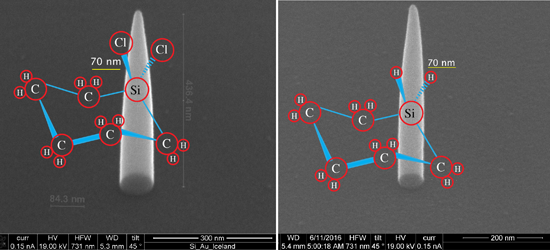
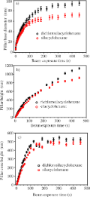
- , generating a flux of secondary electrons on the surface of objects with high aspect ratio as these are grown [8][9]. The energy distribution of the secondary electrons produced depends largely on the nature of the substrate [10][11], but also on the primary electron energy. However, it normally has similar





Comprehensive investigation of the electronic excitation of W(CO)6 by photoabsorption and theoretical analysis in the energy region from 3.9 to 10.8 eV
Beilstein J. Nanotechnol. 2017, 8, 2208–2218, doi:10.3762/bjnano.8.220
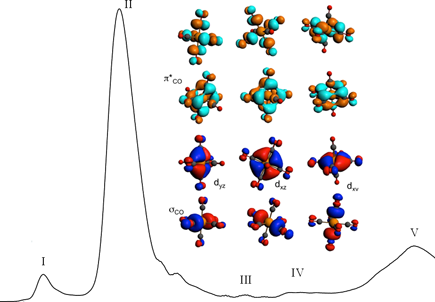
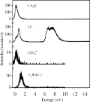
- statistical bond breaking, the former reminiscent of a repulsive dissociation character by the translational energy distribution of the first CO ligand, the latter correctly modelled by statistical product energy distributions [33]. High-resolution VUV photoabsorption spectrum of W(CO)6 in the photon energy


Advances and challenges in the field of plasma polymer nanoparticles
Beilstein J. Nanotechnol. 2017, 8, 2002–2014, doi:10.3762/bjnano.8.200
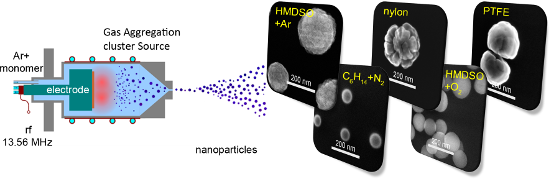
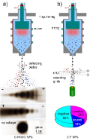
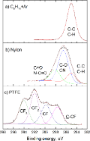
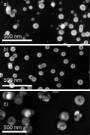
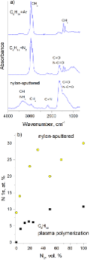
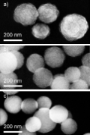
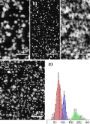
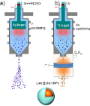
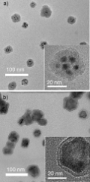
- correlations between the properties of the plasma (energy distribution functions, plasma density, floating and plasma potential), the gas phase composition and the gas flow dynamics. Therefore, future research work should join efforts of scientists with different expertise to cope effectively with these






Nonconservative current-driven dynamics: beyond the nanoscale
Beilstein J. Nanotechnol. 2015, 6, 2140–2147, doi:10.3762/bjnano.6.219
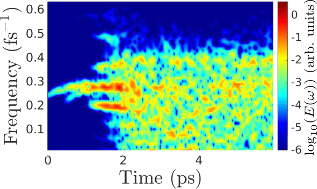
- -time Fourier transform on the ion trajectories (t) from the dynamical simulations and examine the evolution of the energy distribution across the phonon band. The Fourier transform uses a Blackman window, effectively suppressing data outside a particular time interval, while ensuring the data remains




The role of low-energy electrons in focused electron beam induced deposition: four case studies of representative precursors
Beilstein J. Nanotechnol. 2015, 6, 1904–1926, doi:10.3762/bjnano.6.194
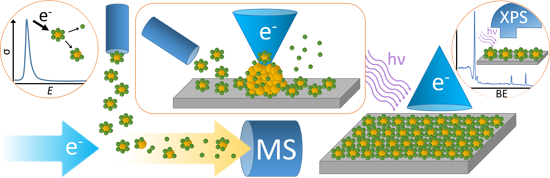
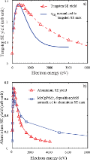
- surface of their sides (Figure 2b). In general, the SE energy distribution extends with appreciable intensities down to 0 eV, peaks well below 10 eV, and has a higher-energy tail stretching well above 50 eV. The actual form (peak position and width) of the SE energy distribution depends largely on the
- general, the SE yield reaches a distinct maximum well below 1 keV PE energy, before decreasing rapidly again, as is discussed in more detail in context to the commonly used FEBID precursor MeCpPtMe3 in section 4.1. Figure 3 shows the experimentally determined SE energy distribution for 400 eV PEs
- 5 eV [9]. Hence, it is clear that deposit formation in FEBID will be governed by a convolution of the efficiencies of the relevant electron-stimulated processes occurring at the surface and the SE energy distribution at the surface of the substrate. In the case of three-dimensional structures this








Continuum models of focused electron beam induced processing
Beilstein J. Nanotechnol. 2015, 6, 1518–1540, doi:10.3762/bjnano.6.157
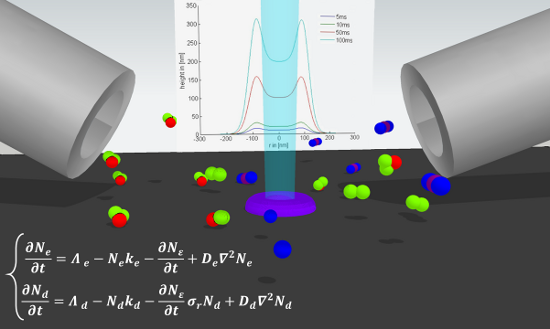
- contributions from primary, backscattered and secondary electrons, each of which has a unique spatial profile and a unique energy distribution [19]. Gas flow from a capillary-style gas injection system (GIS) FEBIP precursor gases are injected into a specimen chamber using one of two methods. In the first method


![[Graphic 37]](/bjnano/content/inline/2190-4286-6-157-i117.png?max-width=637&scale=1.18182) and chemisorbed
and chemisorbed ![[Graphic 38]](/bjnano/content/inline/2190-4286-6-157-i118.png?max-width=637&scale=1.18182) adsorbates versus pressure, calcul...
adsorbates versus pressure, calcul...


Optimization of phase contrast in bimodal amplitude modulation AFM
Beilstein J. Nanotechnol. 2015, 6, 1072–1081, doi:10.3762/bjnano.6.108
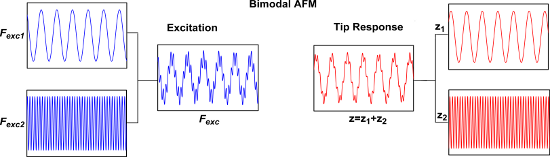
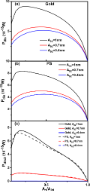
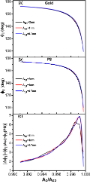
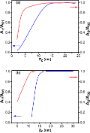
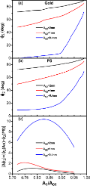
- kinetic energy distribution among the excited modes. However, the maximum contrast is obtained for a situation that minimizes the kinetic energy of the second mode with respect to the other two (Figure 8c). We also observe that the maximum contrast happens for an amplitude ratio about 0.5. This is far



Fabrication of high-resolution nanostructures of complex geometry by the single-spot nanolithography method
Beilstein J. Nanotechnol. 2015, 6, 976–986, doi:10.3762/bjnano.6.101
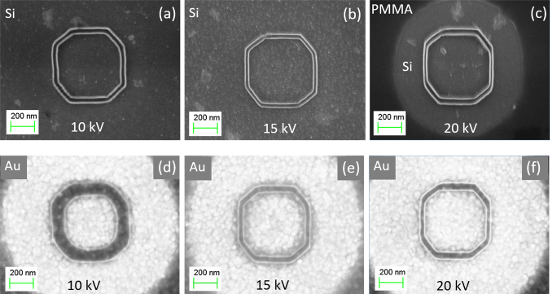
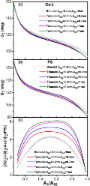
- penetrate the resist via forward scattering at small angles, which broadens the primary beam size (Figure 4a). The energy distribution of electrons in Figure 4b shows that the central part of the resist is overexposed. Afterwards, the electrons enter into the Si substrate, where they collide with the nuclei
- illustrated with results from Monte Carlo simulations, as presented in Figure 4 and Figure 10. There are no significant differences in the energy distribution of electrons penetrating the resist for the Si substrate (Figure 4b and Figure 10a,b). However, for the Au substrate (in the case of a 10 kV
- on 200 nm Au-coated substrates, respectively. (b,d) Electron energy distribution at 10 keV incident energy in a 75 nm thick PMMA layer on bulk Si and 200 nm Au-coated substrates, respectively. Trajectories that leave the sample represent backscattered electrons. AFM images of the ring, patterned on


In situ observation of biotite (001) surface dissolution at pH 1 and 9.5 by advanced optical microscopy
Beilstein J. Nanotechnol. 2015, 6, 665–673, doi:10.3762/bjnano.6.67
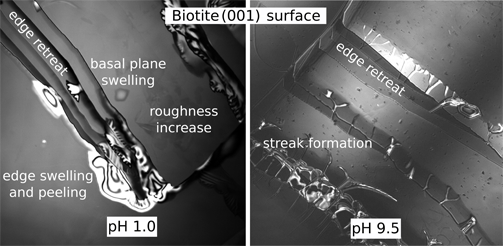
- the existence of a surface energy distribution. In agreement with the above consideration the variability of biotite reactivity is an intrinsic factor of its crystalline anisotropy, i.e., surface energy variance, and thermodynamic parameters, such as activation energy, are not representative of the


Cathode lens spectromicroscopy: methodology and applications
Beilstein J. Nanotechnol. 2014, 5, 1873–1886, doi:10.3762/bjnano.5.198

- LaB6 source is set by its operation temperature, reaching 1900 K at a current of 2.12 A. Figure 5a shows the energy distribution of the electron source at the SPELEEM instrument for an operation current of 1.75 A. In order the determine the emitter characteristics, we fitted the experimental data
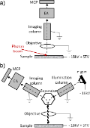
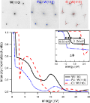
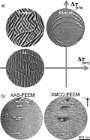
- superimposed onto the photograph. X-rays arrive from the right at 16° grazing angle to the sample surface. a) The energy distribution of the electron beam emitted from the LaB6 source acquired by keeping the sample below the MEM transition using a negative start voltage bias. The intensity-vs-energy curve is



Antimicrobial nanospheres thin coatings prepared by advanced pulsed laser technique
Beilstein J. Nanotechnol. 2014, 5, 872–880, doi:10.3762/bjnano.5.99
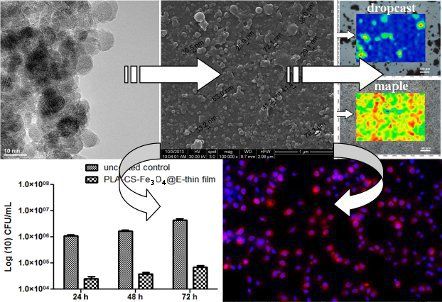
- nanosphere thin film deposition, the energy distribution of the laser spot was improved by using a laser beam homogenizer. During the deposition, the target was rotated with 0.4 Hz to avoid target heating and subsequent drilling. All depositions were conducted at room temperature under 0.1 Pa background




Fabrication of carbon nanomembranes by helium ion beam lithography
Beilstein J. Nanotechnol. 2014, 5, 188–194, doi:10.3762/bjnano.5.20
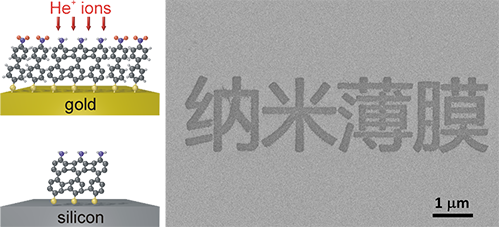
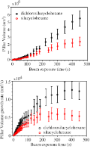
- times smaller than the corresponding electron irradiation dose. Most likely, this is due to the energy distribution of secondary electrons shifted to lower energies, which results in a more efficient dissociative electron attachment (DEA) process. Keywords: carbon nanomembranes; dissociative electron
- excitation by electrons at 100 eV, the energy distribution of secondary electrons shows a peak at about 5 eV [27]. It is known that secondary electrons at energies well below the ionization threshold could produce single strand and double strand breaks in DNA and thus induce genotoxic effects in living cells
- , this is due to the energy distribution of helium ion excited secondary electrons being shifted to lower energies. Experimental Preparation of self-assembled monolayers For the preparation of 4'-nitro-1,1'-biphenyl-4-thiol (NBPT) SAMs we used a 300 nm polycrystalline Au layer with (111) crystal planes


Quantum size effects in TiO2 thin films grown by atomic layer deposition
Beilstein J. Nanotechnol. 2014, 5, 77–82, doi:10.3762/bjnano.5.7
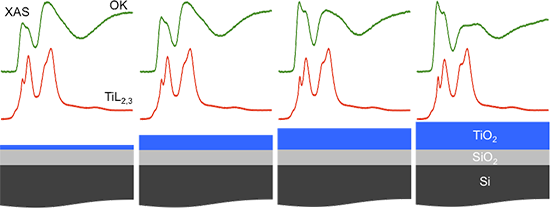
- with the substrate and the decreased ligand-field, which eventually modifies the Ti 3d/O 2p hybridization (defined by the pdσ parameter) because of the modified energy distribution of d-orbitals. Another way to consider covalency in the framework of atomic multiplets is related to the calculation of


Simulation of electron transport during electron-beam-induced deposition of nanostructures
Beilstein J. Nanotechnol. 2013, 4, 781–792, doi:10.3762/bjnano.4.89
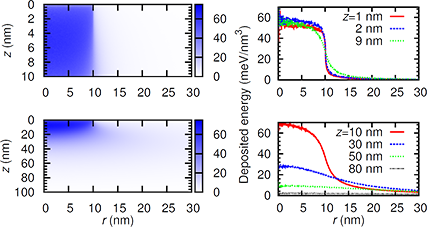
- affecting the substrate. A similar analysis has been carried out in [13]. Experimentally, similar conclusions were drawn from current measurements [25]. Figure 5a displays the energy distribution of electrons that backscattered and emitted per incoming electron from the substrate, (darkest curve) and from
- dWCO = 100 nm and dWCO = 200 nm, in which electrons are very unlikely to even reach the substrate, in accordance with the discussion of Figure 3. It is interesting to note that the intensity in the energy distribution of backscattered electrons increases with the sample thickness. Indeed, on the one
- the atomic number of the deposit material, the simulation was repeated while replacing the deposit with Co, a comparatively lighter material (Z = 27). Figure 5b displays the energy distribution of backscattered electrons for different Co-nanodeposit thicknesses, dCo. Notice that the increase in the



Mapping of plasmonic resonances in nanotriangles
Beilstein J. Nanotechnol. 2013, 4, 588–602, doi:10.3762/bjnano.4.66
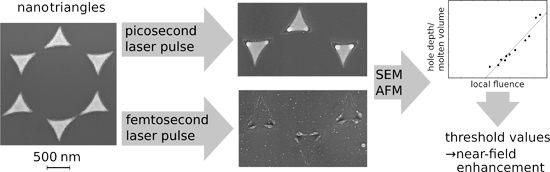
- ., ablation threshold) without near-field enhancement to one with a scattering nanostructure present during illumination (nanoscale ablation threshold). This route requires the precise knowledge of the fluence distribution of the illuminating laser spot. When a well-defined function describing the energy
- distribution of the laser spot is known, the determination of the local fluence is reduced to a measurement of the distance from the beam center in combination with a measurement of the total energy of the illuminating laser pulse. For a Gaussian intensity distribution on the sample surface, a simple method to


Hydrogen-plasma-induced magnetocrystalline anisotropy ordering in self-assembled magnetic nanoparticle monolayers
Beilstein J. Nanotechnol. 2013, 4, 164–172, doi:10.3762/bjnano.4.16
- randomly oriented cubic anisotropy, Kc = 30 kJ/m3. For each subplot, the upper part shows the in-plane magnetic component (color-code: disc) and the lower the out-of plane component (color-code: cone). The surfaces in the upper right corner of subplots (b) and (c) represent the angular energy distribution
- of 18 nm and a saturation magnetization of MS = 900 kA/m. Subplots show different anisotropy scenarios: (a) amorphous, (b) uniaxial and (c) cubic magnetocrystalline anisotropy. The surfaces in the upper-right corner of (b) and (c) represent the angular energy distribution of the respective anisotropy




Transmission eigenvalue distributions in highly conductive molecular junctions
Beilstein J. Nanotechnol. 2012, 3, 40–51, doi:10.3762/bjnano.3.5
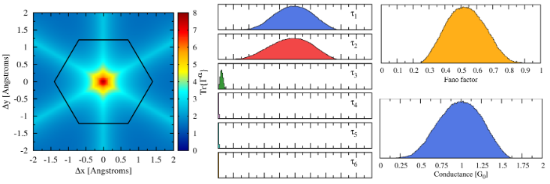
- used in all calculations. As indicated by the figure, the Tr{Γ}/6 distribution is roughly four times as broad as the charging-energy distribution. This fact justifies the use of the ensemble-average matrix for transport calculations [2], an approximation which makes the calculation of thousands of


![[Graphic 39]](/bjnano/content/inline/2190-4286-3-5-i64.png?max-width=637&scale=1.18182) (top panel) and Tr{Γ} (bottom panel) over the ensemble describ...
(top panel) and Tr{Γ} (bottom panel) over the ensemble describ...


Uniform excitations in magnetic nanoparticles
Beilstein J. Nanotechnol. 2010, 1, 48–54, doi:10.3762/bjnano.1.6
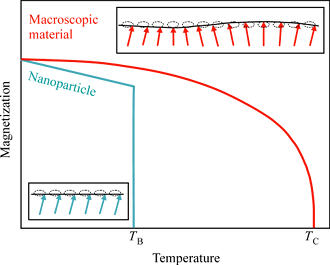
- uniform precession states in nanoparticles [19][20][21][22]. In inelastic neutron studies of magnetic dynamics of ferrimagnetic particles one can measure the energy distribution of neutrons that are diffracted at a scattering angle corresponding to a magnetic diffraction peak. This energy distribution is
- usually dominated by a large peak at zero energy, due to elastically scattered neutrons. The energy difference between neighboring precession states in the uniform mode results in satellite peaks in the energy distribution at energies ±ε0. These peaks are associated with transitions of the type n0 → n0


![[Graphic 3]](/bjnano/content/inline/2190-4286-1-6-i22.png?max-width=637&scale=1.18182) as a function of temperature for particles of magneti...
as a function of temperature for particles of magneti...





