Search results
Search for "energy transfer" in Full Text gives 153 result(s) in Beilstein Journal of Nanotechnology.
Intermodal coupling spectroscopy of mechanical modes in microcantilevers
Beilstein J. Nanotechnol. 2023, 14, 123–132, doi:10.3762/bjnano.14.13
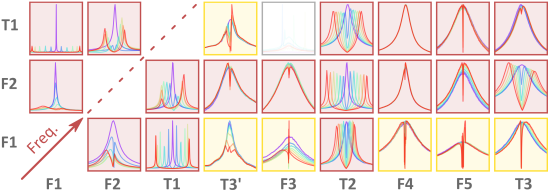
- asymmetrical coupling. This refers to an energy transfer either easier or harder from the first mode to the second compared to a transfer from second to first. Two directional coupling terms were introduced to account for this possibility, later to be investigated in detail. Equation 1 only shows the energy of


Studies of probe tip materials by atomic force microscopy: a review
Beilstein J. Nanotechnol. 2022, 13, 1256–1267, doi:10.3762/bjnano.13.104
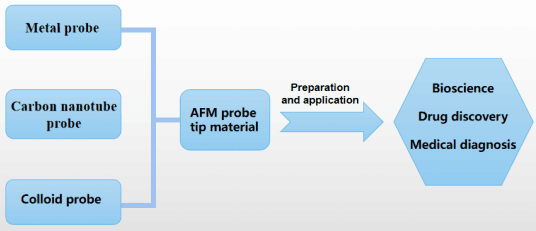
- nanoclusters while their fluorescence quantum yields and stability are improved to a larger extent. Gold-silver bimetallic nanoclusters (AuAgNCs) exhibit enhanced luminescence efficiency and photostability due to Förster resonance energy transfer (FRET) and synergistic effects. Zhang et al. [27] synthesized
- chloramphenicol based on a vesicular quantum dot-gold colloid composite probe. They successfully developed a fluorescence resonance energy transfer (FRET) based on chloramphenicol (CAP) detection in food. Vesicular nano tracers were prepared by labeling single-stranded DNA-binding proteins on single-stranded
Recent advances in green carbon dots (2015–2022): synthesis, metal ion sensing, and biological applications
Beilstein J. Nanotechnol. 2022, 13, 1068–1107, doi:10.3762/bjnano.13.93




Influence of water contamination on the sputtering of silicon with low-energy argon ions investigated by molecular dynamics simulations
Beilstein J. Nanotechnol. 2022, 13, 986–1003, doi:10.3762/bjnano.13.86
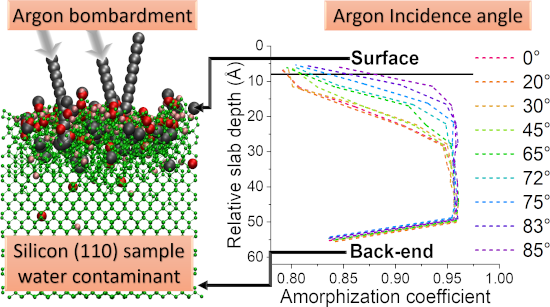
- , and this orientation is maintained for the energy transfer to the target atoms. Interestingly, the partial sputtering yields of hydrogen and oxygen atoms are the highest at incidence angles between 70 and 80° (i.e., above angles where the silicon sputtering yields are the highest), leading to the
- sputtering of approx. 75% of the adsorbed molecules. At these angles, most of the argon ions are backscattered. However, the energy transfer is still high enough to fragment the water molecules and induce the sputtering of hydrogen and oxygen atoms. Hence, if the implantation of surface contaminations is to
- molecules which is sputtered intact is the highest: since the argon ion is at grazing incidence, the energy transfer is efficient for molecular lift-off and far less for bond breaking, which predominantly happens towards normal incidence. This explains also the increased amount of sputtered O–H clusters at




Zinc oxide nanostructures for fluorescence and Raman signal enhancement: a review
Beilstein J. Nanotechnol. 2022, 13, 472–490, doi:10.3762/bjnano.13.40
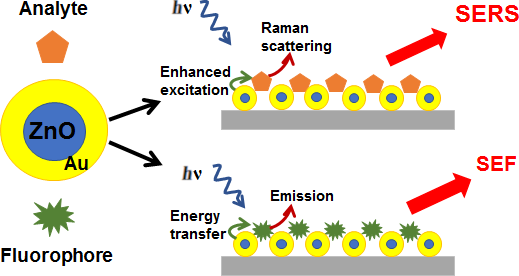
- ZnO. Time-resolved fluorescence measurements showed that increasing the Ag NP concentration in hybrid metal–ZnO nanocomposites resulted in an increase of non-radiative transitions and a decrease of the radiative emission of ZnO, indicating the energy transfer from ZnO excitons to the Ag NPs plasmons
- fluorescent molecules are essential. The values of quantum yield and lifetime could be influenced by non-radiative decay rates, which result from changes in the environment of the fluorophores, fluorescence quenching, or fluorescence resonance energy transfer (FRET) [112][116]. Engineered ZnO nanosubstrates
- first mechanism believed to be responsible for fluorescence enhancement is based on reducing the resonance energy transfer between fluorophores, which will prevent self-quenching. ZnO NRs have the ability to guide light [119] in and out of fluorophores and along nanorods and the ability to enhance the




Impact of device design on the electronic and optoelectronic properties of integrated Ru-terpyridine complexes
Beilstein J. Nanotechnol. 2022, 13, 219–229, doi:10.3762/bjnano.13.16
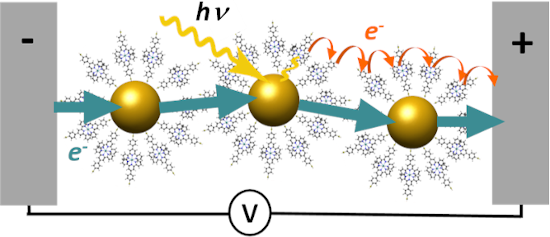
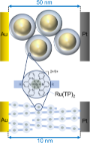
- to the AuNP surfaces is possible. Such a plasmon-induced resonance energy transfer is likely if a spectral overlap between the plasmon resonance and a molecular resonance, ideally of shorter wavelength, exists [41]. The transferred energy leads to the excitation of the redox center of the Ru(MPTP)2
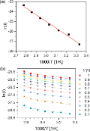
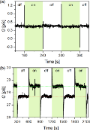
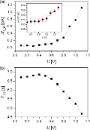
- current depends on this equilibrium. The difference between the current under light illumination and the dark current, ΔIL_D, corresponds to the current enabled by plasmon-induced energy transfer to the Ru(MPTP)2-complexes and charge separation in an electrical field. This finding is in analogy to the
- conductance mechanism based on sequential tunneling leading to a higher current, (II) the optical antennae effect of AuNPs, which allows for an energy transfer to the functional molecules, and (III) the ease and versatility of adopting the properties of the constituting elements according to the requirements


Effect of lubricants on the rotational transmission between solid-state gears
Beilstein J. Nanotechnol. 2022, 13, 54–62, doi:10.3762/bjnano.13.3
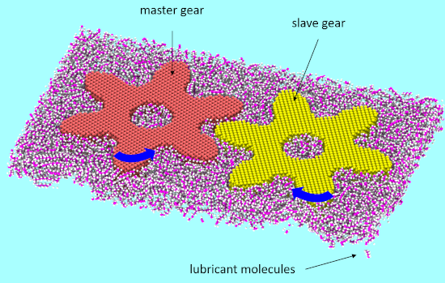
- , the lubricant molecules are subject to the canonical ensemble (NVT) implemented by the Nosé–Hoover thermostat [61][62] at T = 400 K (such that all lubricants are in liquid phase) and the gears are subject to the microcanonical ensemble (NVE) in order to explicitly monitor the energy transfer during


Irradiation-driven molecular dynamics simulation of the FEBID process for Pt(PF3)4
Beilstein J. Nanotechnol. 2021, 12, 1151–1172, doi:10.3762/bjnano.12.86
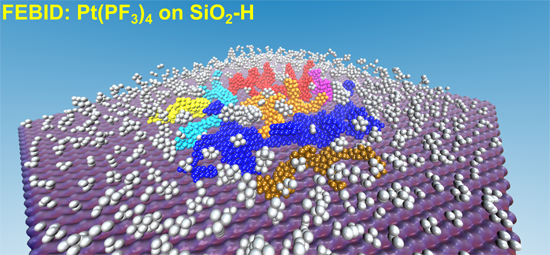
- point within the system per primary electron. The electronic collisions with precursor molecules lead to their electronic excitation followed by the fragmentation and energy transfer to the recoil fragments. In the following subsections these processes are discussed in detail. PE, SE, and BSE
- in the tabulated form for a 20 nm × 20 nm grid covering the simulation box (see Figure 3B) is used as input for the simulations of the irradiation phase of the FEBID process (see step 4). Energy transfer to the medium A projectile electron interacting with the precursor molecule transfers some amount








Self-assembly of amino acids toward functional biomaterials
Beilstein J. Nanotechnol. 2021, 12, 1140–1150, doi:10.3762/bjnano.12.85
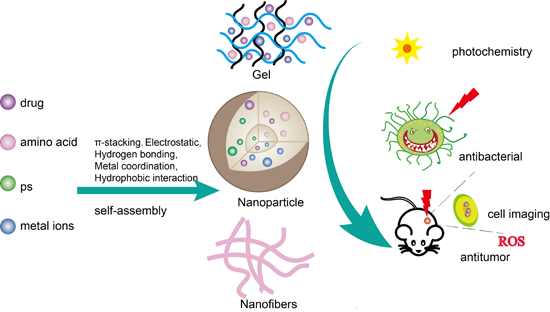
- that the nanofibers were assembled into sea-urchin-like microspheres. Fmoc-ʟ-Lys nanofibers act as templates to regulate the self-assembly of pigments. Sea-urchin-like structures facilitate light collection due to enhanced absorption cross sections and exciton energy transfer. In addition, Liu et al

Is the Ne operation of the helium ion microscope suitable for electron backscatter diffraction sample preparation?
Beilstein J. Nanotechnol. 2021, 12, 965–983, doi:10.3762/bjnano.12.73
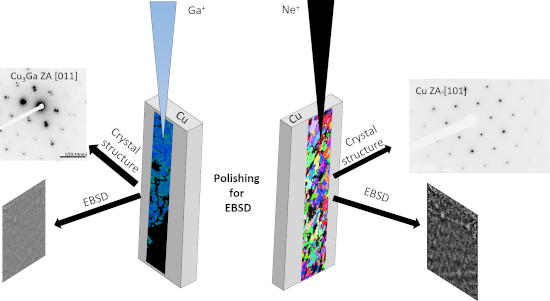
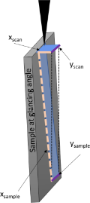
- induces sample alterations and material behavior changes due to doping [22]. Not all nuclear interactions lead to sputtering. If the sample atom cannot be removed from the sample because of insufficient energy transfer or because the sample atom cannot exit the sample due to its sub-surface position




Modification of a SERS-active Ag surface to promote adsorption of charged analytes: effect of Cu2+ ions
Beilstein J. Nanotechnol. 2021, 12, 902–912, doi:10.3762/bjnano.12.67
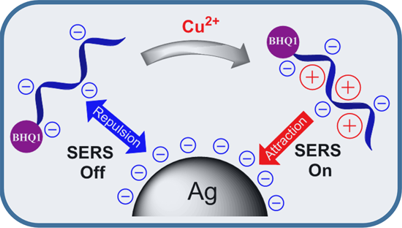
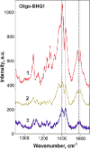
- minimizes additional effects related to SERS enhancement due to energy transfer to the support, which might occur when conductive or semi-conductive materials are used [31]. The immobilization of Ag NPs from sodium citrate solution was possible due to the poor adsorption of citrate ions on the Ag surface


Recent progress in magnetic applications for micro- and nanorobots
Beilstein J. Nanotechnol. 2021, 12, 744–755, doi:10.3762/bjnano.12.58
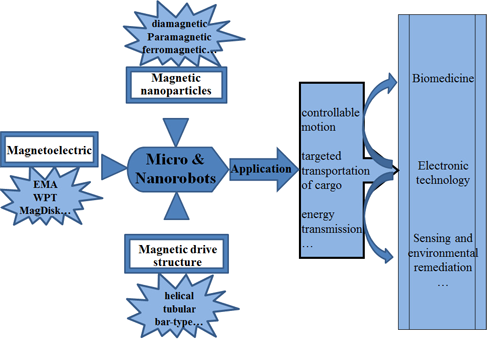
- device with embedded magnetic materials. The locomotion of MMRs is actuated and controlled through the principles of magnetism regarding energy transfer and the magnetoelectric effect. Magnetic materials have been widely used in the field of MNRs to control and drive the movement of robots, target the


The nanomorphology of cell surfaces of adhered osteoblasts
Beilstein J. Nanotechnol. 2021, 12, 242–256, doi:10.3762/bjnano.12.20
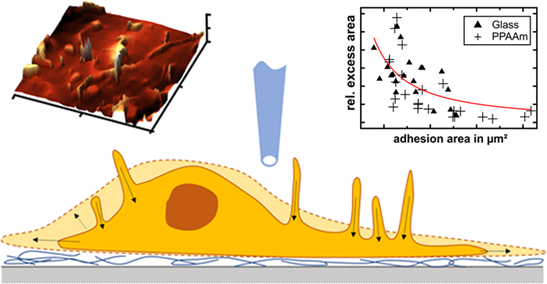
- including the gap. Apart from that, we find relatively high step edges of ca. 1 µm and above, which we attribute to ordinary or trailing edges of osteoblastic cells (Figure 9a). An elegant method to measure the cell–surface gap at confocal resolution is metal-induced energy transfer (MIET) where the


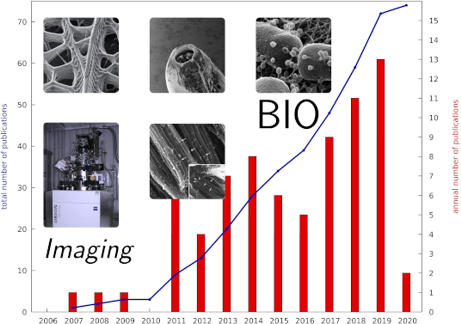
Bio-imaging with the helium-ion microscope: A review
Beilstein J. Nanotechnol. 2021, 12, 1–23, doi:10.3762/bjnano.12.1


The influence of an interfacial hBN layer on the fluorescence of an organic molecule
Beilstein J. Nanotechnol. 2020, 11, 1663–1684, doi:10.3762/bjnano.11.149
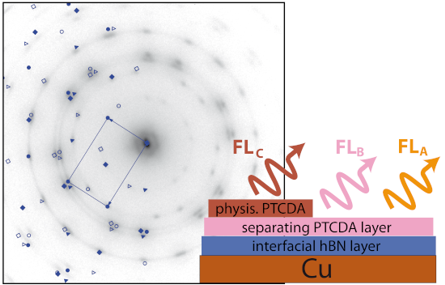
- energy transfer [6]. Here, CT is in our focus since energy transfer, although additionally present, varies less abruptly on the scale of single layers [7]. A simple energy diagram of the CT process of a fluorescent molecule across interfaces is depicted in Figure 1. As an example, we use the sample



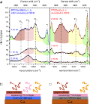
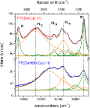


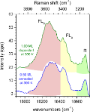
A few-layer graphene/chlorin e6 hybrid nanomaterial and its application in photodynamic therapy against Candida albicans
Beilstein J. Nanotechnol. 2020, 11, 1054–1061, doi:10.3762/bjnano.11.90
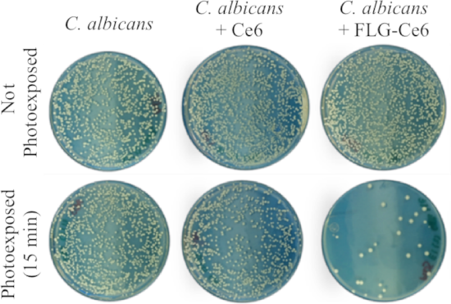
- nanomaterial can be activated by a synergistic mechanism of energy transfer of the absorbed light from Ce6 to FLG. The novel FLG-Ce6 hybrid nanomaterial in combination with the red LED light irradiation can be used in the development of a wide range of antinosocomial devices and coatings. Keywords: chlorin e6


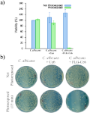
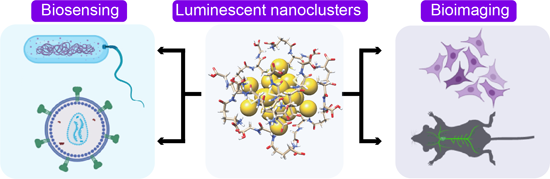
Luminescent gold nanoclusters for bioimaging applications
Beilstein J. Nanotechnol. 2020, 11, 533–546, doi:10.3762/bjnano.11.42
- ]. Luminescence can also be achieved via intramolecular energy transfer between an organic ligand and lanthanide metal ions through chelation [11]. Large Stokes shift, high quantum yield and long fluorescence lifetime make lanthanide complexes excellent candidates in imaging applications [12][13]. The lanthanide


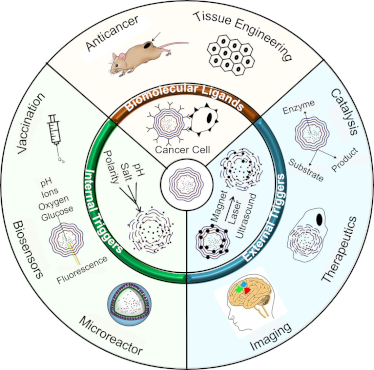
Multilayer capsules made of weak polyelectrolytes: a review on the preparation, functionalization and applications in drug delivery
Beilstein J. Nanotechnol. 2020, 11, 508–532, doi:10.3762/bjnano.11.41


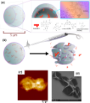

Interfacial charge transfer processes in 2D and 3D semiconducting hybrid perovskites: azobenzene as photoswitchable ligand
Beilstein J. Nanotechnol. 2020, 11, 466–479, doi:10.3762/bjnano.11.38
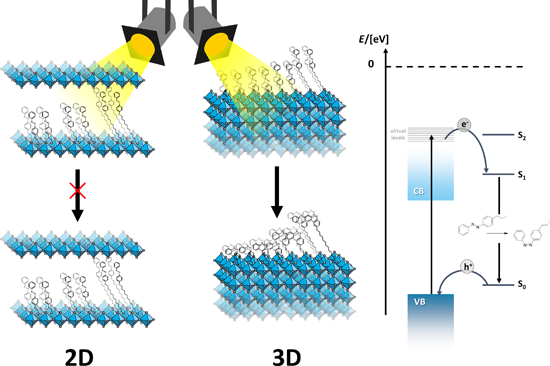
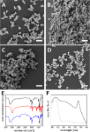
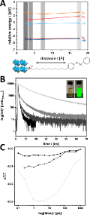
- synthesis of 2D and 3D hybrid perovskite phases. The energy transfer mechanisms are influenced by the length of the molecular spacer moiety, which determines the distance between the π system and the semiconductor surfaces. We find huge differences in the photoswitching behaviour between the free, surface
- -coordinated and integrated ligands between the perovskite layers. Photoswitching of azobenzene ligands incorporated in 2D phases is nearly quenched, while the same mechanism for surface-coordinating ligands is greatly improved, compared to the free ligands. The improvement originates from an energy transfer
- ]. In 1997, Era et al. first presented a chromophore-containing organic–inorganic perovskite [21]. They observed an enhanced phosphorescence of the included naphthalene [22], which was explained by an efficient energy transfer from Wannier excitons from the semiconducting perovskite layer to the triplet




Formation of nanoripples on ZnO flat substrates and nanorods by gas cluster ion bombardment
Beilstein J. Nanotechnol. 2020, 11, 383–390, doi:10.3762/bjnano.11.29
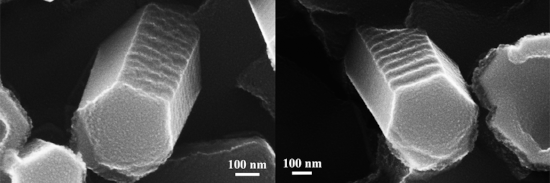
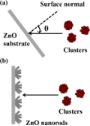
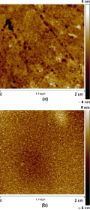
- explained by the smoothing effect, which is also observed at grazing incidence angles, when the cluster ion beam can effectively remove all surface irregularities [20]. Besides, at grazing incidence angles, due to a small transverse velocity the energy transfer from GCIB to the surface is reduced, which in



Using gold nanoparticles to detect single-nucleotide polymorphisms: toward liquid biopsy
Beilstein J. Nanotechnol. 2020, 11, 263–284, doi:10.3762/bjnano.11.20
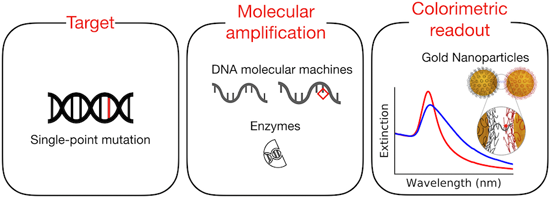
- capable of quenching fluorescence through Förster resonance energy transfer. By involving an isothermal circular amplification reaction of polymerase and NEase, the group of Chen [121] used gold nanoparticles to either quench or enhance the electrochemiluminescence of CdS films through the modulation of




Rational design of block copolymer self-assemblies in photodynamic therapy
Beilstein J. Nanotechnol. 2020, 11, 180–212, doi:10.3762/bjnano.11.15
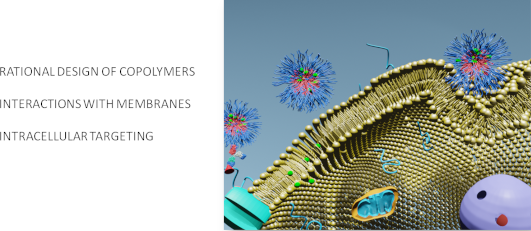
- therapy is a technique already used in ophthalmology or oncology. It is based on the local production of reactive oxygen species through an energy transfer from an excited photosensitizer to oxygen present in the biological tissue. This review first presents an update, mainly covering the last five years
- ]. Among them self-quenching and Förster resonance energy transfer (FRET) quenching are the most frequently used in self-assembled nanocarriers. An alternative possibility to avoid quenching is to mix the photosensitizer-conjugated polymer with a polymer without photosensitizers [82]. Interestingly, the
- , because of the photothermal effect, the shell shrinks thus bringing the photosensitizer closer to the core allowing for fluorescence resonance energy transfer and singlet oxygen production. In other proposed polymers, fluorescence quenching is not discussed, but in vitro studies prove the higher






Molecular architectonics of DNA for functional nanoarchitectures
Beilstein J. Nanotechnol. 2020, 11, 124–140, doi:10.3762/bjnano.11.11
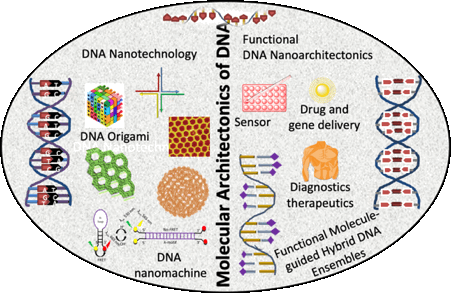
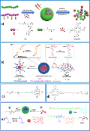
- tiles were separated by a helical turn, which triggered the switchable motion of the device through B-to-Z-form transition, and the relative changes in position and transformation were monitored by the fluorescence resonance energy transfer (FRET) technique. Zhao and co-workers reported the design and


Self-assembly of a terbium(III) 1D coordination polymer on mica
Beilstein J. Nanotechnol. 2019, 10, 2440–2448, doi:10.3762/bjnano.10.234
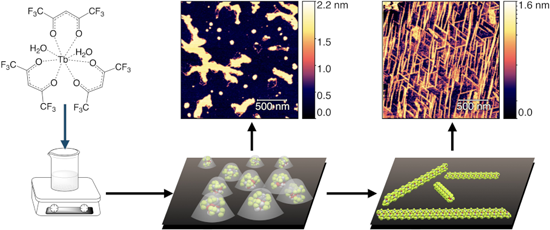
- nanochains of TbIII on the mica substrate are preserved [28], i.e., an efficient ligand-to-terbium energy transfer [29] is observed in the excitation spectra with a maximum of the excitation observed for the 1π→1π*/3π* absorption transitions coming from the ligand at around 339 nm in the solid state, at 343




Coating of upconversion nanoparticles with silica nanoshells of 5–250 nm thickness
Beilstein J. Nanotechnol. 2019, 10, 2410–2421, doi:10.3762/bjnano.10.231
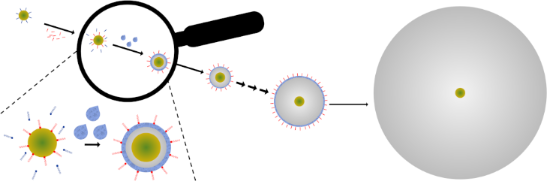
- ) light) and emit photons of higher energy (e.g., visible light) via a two- or multiphoton upconversion mechanism involving several energy transfer steps [2][3][4][5]. Advantages of UCNPs compared to organic dyes or other inorganic nanoscale reporters are the emission of a multitude of characteristic