Search results
Search for "filling" in Full Text gives 202 result(s) in Beilstein Journal of Nanotechnology. Showing first 200.
Electrospun nanofibers: building blocks for the repair of bone tissue
Beilstein J. Nanotechnol. 2024, 15, 941–953, doi:10.3762/bjnano.15.77
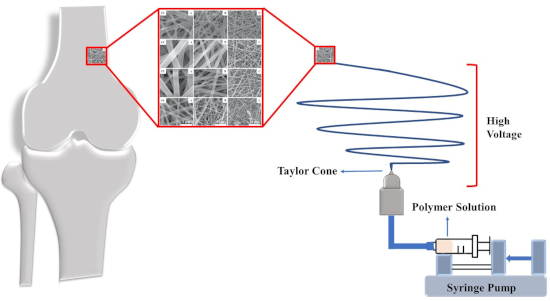
- Co. Ltd.)) [101]. The main polymeric nanofiber products on the market for bone regeneration are ReBOSSIS (Ortho Rebirth, Japan), a PLGA-based biomedical product for filling a synthetic bone cavity, poly-ʟ-lactic acid (PLLA) and collagen scaffolds (The Electrospinning Company, United Kingdom), and PCL
- -like nanofiber structure and the formulation components. Thus, ReBOSSIS provides ease of use in filling different shapes and sizes of bone voids during operations. In addition, unlike granular artificial bone material, it does not fall out of the bone cavities after the operation. During the patients


Synthesis of silver–palladium Janus nanoparticles using co-sputtering of independent sources: experimental and theorical study
Beilstein J. Nanotechnol. 2024, 15, 808–816, doi:10.3762/bjnano.15.67
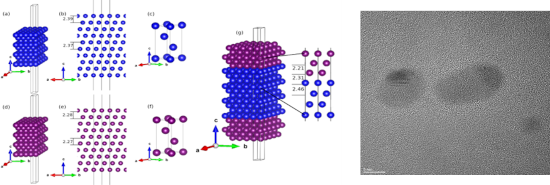
- ). (d) Simulated Z-contrast image of the model in (b). (a) Perspective view of the Ag surface space sphere filling model, (b) side view of the (111) Ag surface with the calculated (111) interplanar distance, (c) (111) Ag unit cell, (d) perspective view of (111) Pd surface space sphere filling model, (e




Ultrasensitive and ultrastretchable metal crack strain sensor based on helical polydimethylsiloxane
Beilstein J. Nanotechnol. 2024, 15, 270–278, doi:10.3762/bjnano.15.25
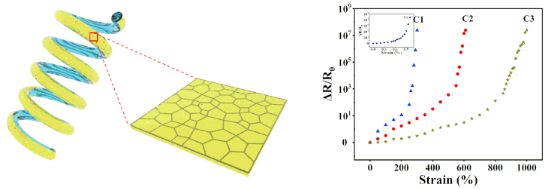
- hollow tube was employed for filling the PDMS. The elimination of air bubbles was accomplished through the application of a vacuum pump. Subsequently, the screw was inserted into the PDMS-filled straw by rotating it. The screw’s outer diameter and the straw’s inner diameter exhibit a favorable


Exploring disorder correlations in superconducting systems: spectroscopic insights and matrix element effects
Beilstein J. Nanotechnol. 2024, 15, 199–206, doi:10.3762/bjnano.15.19
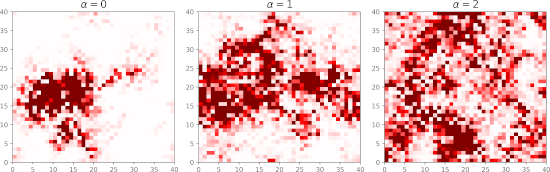
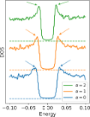
- ][64]. Additionally, we determine the chemical potential μ from the condition that the average electron density ne is fixed. In the calculations, we choose ne = 0.875. This is quite far from the half-filling condition ne = 1, at which a singular van Hove singularity appears in the DOS in the middle of


Ferromagnetic resonance spectra of linear magnetosome chains
Beilstein J. Nanotechnol. 2024, 15, 157–167, doi:10.3762/bjnano.15.15
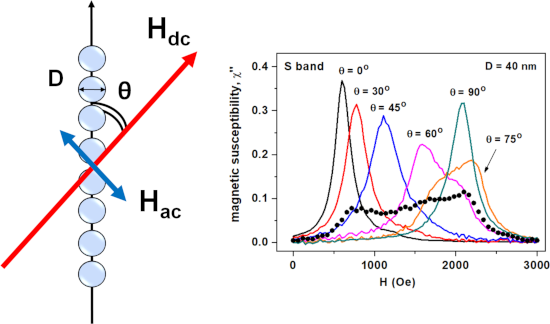
- that of random clusters of interacting spherical magnetite nanoparticles. The shape of FMR spectra of both assemblies is shown to differ appreciably even at sufficiently large values of filling density of random clusters. Keywords: chains of magnetosomes; ferromagnetic resonance spectra; magnetite
- assembly of chains shown in Figure 4a with the FMR spectra of a random assembly of clusters of interacting magnetite nanoparticles calculated for different cluster filling densities η = NpV/Vcl. Here, Vcl is the volume of a random cluster containing Np = 60 spherical magnetite nanoparticles of the same
- diameter D = 40 nm, randomly located in the cluster volume and having a random orientation of the cubic anisotropy axes. As Figure 4b shows, the width of the FMR spectra of dilute assemblies of random clusters increases with an increase in the filling density η because of an increase in the intensity of


Spatial variations of conductivity of self-assembled monolayers of dodecanethiol on Au/mica and Au/Si substrates
Beilstein J. Nanotechnol. 2023, 14, 1169–1177, doi:10.3762/bjnano.14.97
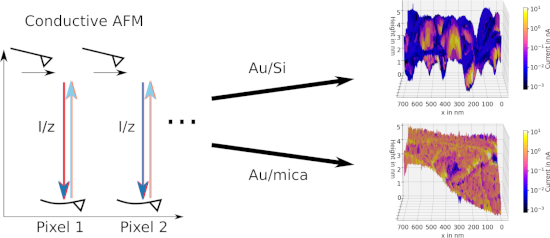
- substrate and the mercury electrode yields the conductivity of the SAM, averaged over the contact area of the mercury droplet. In such studies, one of the crucial problems was mercury filling out defects in the SAMs, which leads to short circuits and unreliable currents running through the microcontact


Hierarchically patterned polyurethane microgrooves featuring nanopillars or nanoholes for neurite elongation and alignment
Beilstein J. Nanotechnol. 2023, 14, 1157–1168, doi:10.3762/bjnano.14.96
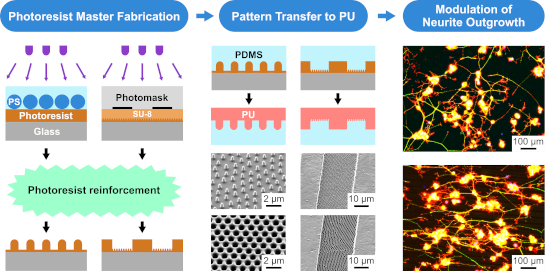
- PDMS molds (Figure 1B(iii) and 3B(iii)). To facilitate filling of the nano- and microstructures, a dilute 5 wt % PU solution in dimethylacetamide was first cast into the molds twice, with slow, partial drying at 80 °C in an oven for 10 min and 15 min in the first and second casting, respectively. Then


SERS performance of GaN/Ag substrates fabricated by Ag coating of GaN platforms
Beilstein J. Nanotechnol. 2023, 14, 552–564, doi:10.3762/bjnano.14.46
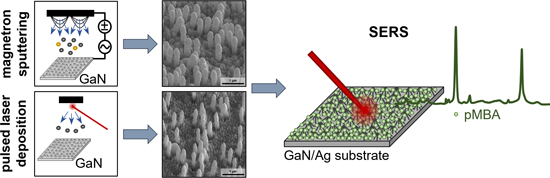
- absorption level for samples in a given series, it can be seen that an increase in the amount of deposited metal causes a decrease in light absorption, which is related to a decrease in surface roughness and the filling of the nanoporous GaN structure with silver. SERS performance of fabricated of GaN/Ag


Plasmonic nanotechnology for photothermal applications – an evaluation
Beilstein J. Nanotechnol. 2023, 14, 380–419, doi:10.3762/bjnano.14.33
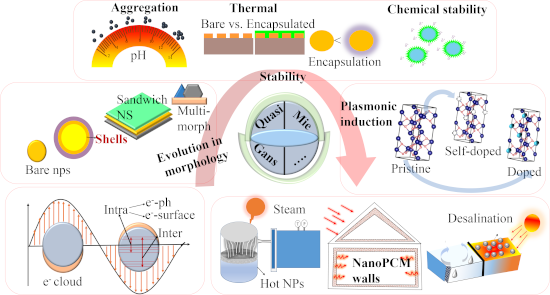
- shorter, such as 10–30 fs for Al [74]. Hot carrier lifetime and electron–phonon coupling of selected metals are shown in Figure 10 and Figure 11. From the representation of electron filling for the different materials shown in Figure 10, it can be seen that the carrier lifetimes (depicted by the curvature




Single-step extraction of small-diameter single-walled carbon nanotubes in the presence of riboflavin
Beilstein J. Nanotechnol. 2022, 13, 1564–1571, doi:10.3762/bjnano.13.130
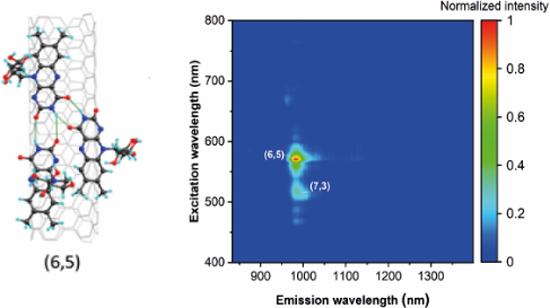
- separation columns. Allyl dextran Sephacryl S-200 gel was used as the separation medium. Columns were prepared by filling 5 mL of Sephacryl gel beads with subsequent equilibration with deionized water. The column was loaded with SWCNT dispersion in riboflavin, and target SWCNTs were eluted in the dead volume


Induced electric conductivity in organic polymers
Beilstein J. Nanotechnol. 2022, 13, 1551–1557, doi:10.3762/bjnano.13.128
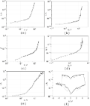
- a predominance of traps: trapped charge carriers in small traps limit the current; (c) the limit of trap filling: the quasi-Fermi level reaches the energy of the trap Et, the traps are filled and there is a steep increase in current. It should be noted that in a circuit with finite load resistance



Straight roads into nowhere – obvious and not-so-obvious biological models for ferrophobic surfaces
Beilstein J. Nanotechnol. 2022, 13, 1345–1360, doi:10.3762/bjnano.13.111
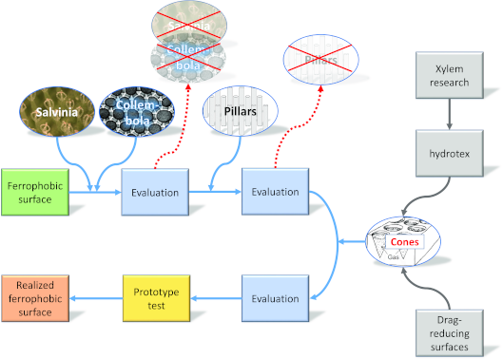
- conduits has become dysfunctional due to gas filling), the refilling conduit is separated from its still functional water-filled neighbour by an air pocket. This air space is stable due to the interfacial forces created by the shape of the pit chamber. Left: Closely arranged “ice cream cones” on the


Roll-to-roll fabrication of superhydrophobic pads covered with nanofur for the efficient clean-up of oil spills
Beilstein J. Nanotechnol. 2022, 13, 1228–1239, doi:10.3762/bjnano.13.102
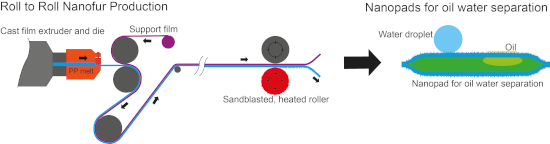
- each (Figure 8b, Figure 9a). After punching fifteen times, every circular nanofur film had about 600 holes. Afterwards two films are loosely connected with adhesive tape. This step simplifies filling the pad with a predetermined amount of oil-absorbing material (see Figure 9b). For the nanopads
- well as the number and diameter of the punched holes. Furthermore, it might be possible to increase absorption speed and amount via the filling or the holes of the nanopads. The filling material itself or its amount might be improved. Many other applications of thin nanofur, such as new kinds of food
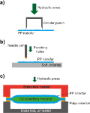
- 100 µm. (b) To simplify filling the pads with oil absorbent material, the two halves are held together by scotch tape. (c) Such a preprocessed pad is placed between two polyimide films to avoid cutting through the material while welding. The upper hollow cylinder is heated and then pressed onto the




Recent advances in nanoarchitectures of monocrystalline coordination polymers through confined assembly
Beilstein J. Nanotechnol. 2022, 13, 763–777, doi:10.3762/bjnano.13.67
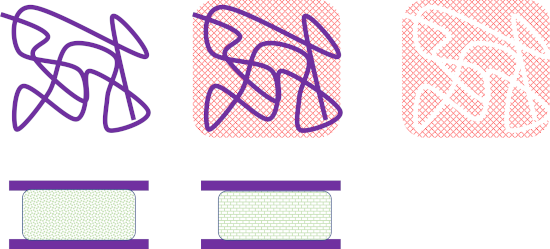
- related work was summarized into two main categories, namely confined crystallization and confined assembly of monocrystalline coordination polymers. When the crystallization of monocrystalline coordination polymers happened inside the networks, the process could be recognized as a filling process of the




Fabrication and testing of polymer microneedles for transdermal drug delivery
Beilstein J. Nanotechnol. 2022, 13, 629–640, doi:10.3762/bjnano.13.55
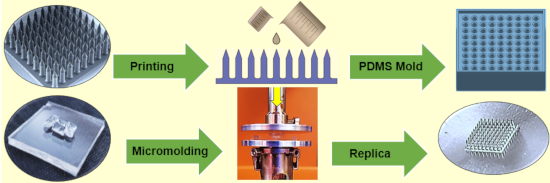
- adjust settings such as slicing, shell and scaffolding, laser power, and scanning speeds before converting to General Writing Language (GWL) codes. Parameters such as slicing distance of 2 µm, multiple base slide counts of 4 layers, shell and scaffolding filling method, null shear angle (0°), and laser



A new method for obtaining the magnetic shape anisotropy directly from electron tomography images
Beilstein J. Nanotechnol. 2022, 13, 590–598, doi:10.3762/bjnano.13.51
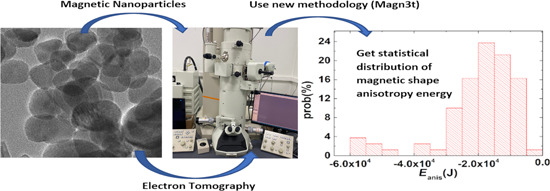
- image consisting only of the local maxima with a minimum height equal to the subtracted value. The local maxima are then labeled and used as seeds for the watershed algorithm [27]. Each particle is reconstructed filling the distance transform image from the voxel with the largest value down but


The role of sulfonate groups and hydrogen bonding in the proton conductivity of two coordination networks
Beilstein J. Nanotechnol. 2022, 13, 437–443, doi:10.3762/bjnano.13.36
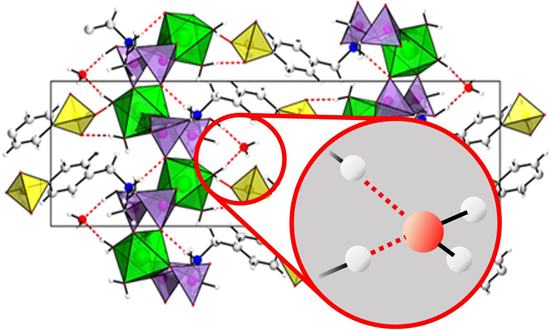
- the bridging ligands, for example, –OH, –COOH, –PO3H2 or –SO3H, (ii) by filling pores or channels with acidic guest molecules, such as oxonium ions, organic or inorganic acids, or ammonium cations, or (iii) by ligand substitution to increase the mobility of proton carriers [13][14][15][16]. Here we


Electrostatic pull-in application in flexible devices: A review
Beilstein J. Nanotechnol. 2022, 13, 390–403, doi:10.3762/bjnano.13.32
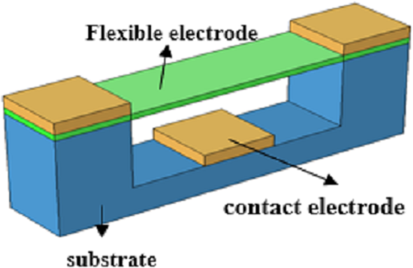
- . [45], Abdelrahman et al. [46], and Eltaher et al. [47][48] proposed a perforated-beam structure, based on cantilever and bridge structures. Their studies showed that the filling rate of holes significantly affected the resonant frequency of the beam. Guha et al. [49] and Sravani et al. [50] proposed a


Micro- and nanotechnology in biomedical engineering for cartilage tissue regeneration in osteoarthritis
Beilstein J. Nanotechnol. 2022, 13, 363–389, doi:10.3762/bjnano.13.31
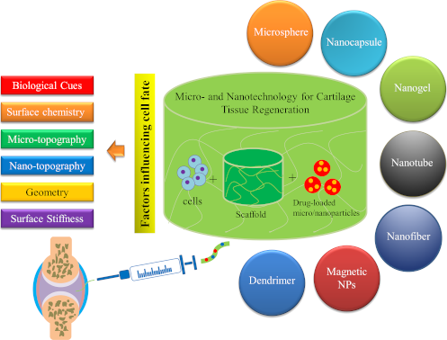
- preclinical efficacy of this system on full thickness osteochondral defects in a porcine model [70][71]. The results indicated that this system facilitated the filling of the defects and subchondral bone tissue repair as well as providing better therapeutic efficacy in full thickness chondral defects through
- that the PLLA/PDA/CS fibers considerably facilitated the filling of the defect site and the regeneration of hyaline-like cartilage [79]. The implantation of the hBMSCs-laden PCL nanofibrous scaffold in a swine model with 7 mm full thickness cartilage defects showed the most complete repair and


The effect of metal surface nanomorphology on the output performance of a TENG
Beilstein J. Nanotechnol. 2022, 13, 298–312, doi:10.3762/bjnano.13.25
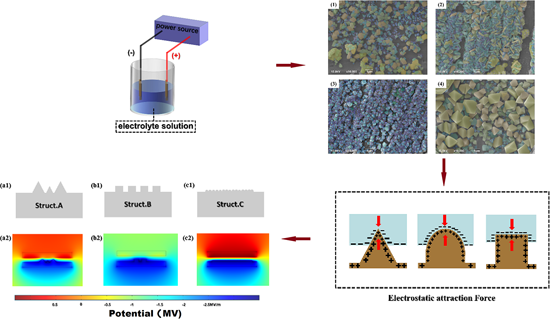
- pixel filling. The effect of particle density on the output performance was studied (Figure 10c). It can be seen from the fitting curve that the output performance increases with the increase of the substrate area fraction without nanoparticles, but when the substrate area fraction without nanoparticles




Systematic studies into uniform synthetic protein nanoparticles
Beilstein J. Nanotechnol. 2022, 13, 274–283, doi:10.3762/bjnano.13.22

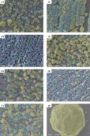
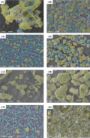
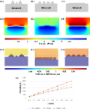
- with gold prior to evaluation in the SEM system. Care was taken to not overexpose the sample during gold preparation, as evidenced by a lack of melted particles or crevice filling in the final micrographs. The SEM PDI is a polydispersity index derived from image generated data. The method by which it


A photonic crystal material for the online detection of nonpolar hydrocarbon vapors
Beilstein J. Nanotechnol. 2022, 13, 127–136, doi:10.3762/bjnano.13.9
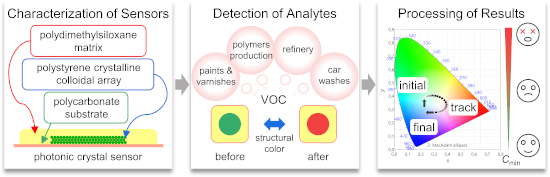
- filling of the structure, the structural heterogeneity within a volume, the presence of foreign chemical substances and the size variation of the matrix and particles during the chemical analysis process. However, one cannot ignore sensors based on molecularly imprinted polymers for the selective


Effect of lubricants on the rotational transmission between solid-state gears
Beilstein J. Nanotechnol. 2022, 13, 54–62, doi:10.3762/bjnano.13.3
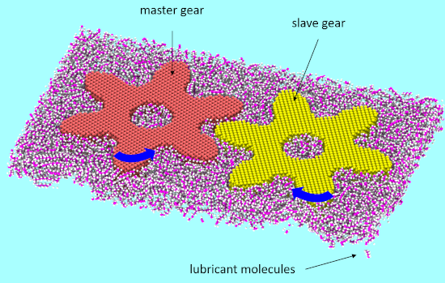
- for a system of two diamond solid-state gears with different lubricants (benzene, hexadecene and phenanthrene). We found that lubricants can be used to synchronize the collective rotations in both gears by filling the gap for better angular momentum transfer and this effect is independent of the type


Chemical vapor deposition of germanium-rich CrGex nanowires
Beilstein J. Nanotechnol. 2021, 12, 1365–1371, doi:10.3762/bjnano.12.100
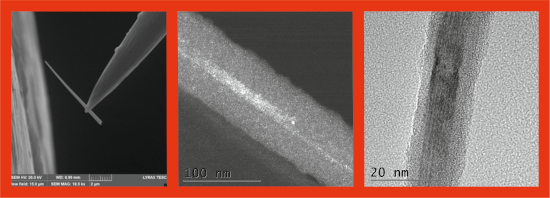
- structure of the prepared nanowires, unlike simple structures, enables further more extensive engineering of nanowire properties by specific technological steps (e.g., thermal annealing, etching, doping, and filling) in order to obtain, for example, catalytic nanowires with huge specific surface or hollow



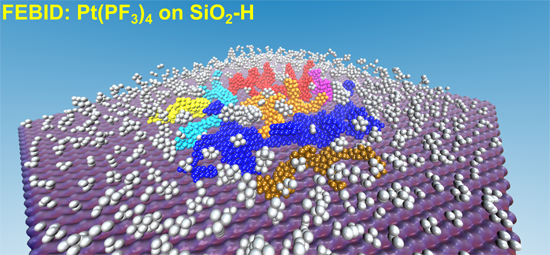
Irradiation-driven molecular dynamics simulation of the FEBID process for Pt(PF3)4
Beilstein J. Nanotechnol. 2021, 12, 1151–1172, doi:10.3762/bjnano.12.86