


Search results
Search for "glassy carbon" in Full Text gives 59 result(s) in Beilstein Journal of Nanotechnology.
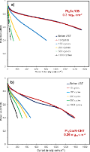
Tuning the performance of vanadium redox flow batteries by modifying the structural defects of the carbon felt electrode
Beilstein J. Nanotechnol. 2019, 10, 1698–1706, doi:10.3762/bjnano.10.165
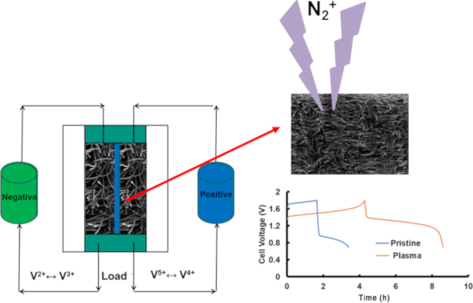
- attached to a glassy carbon rod were used as the WE. To achieve a better electrical contact, the punched-out felt was pierced through the middle by 5 cm long glassy carbon rod with a diameter of 1 mm. The positive half-cell reaction was measured in 0.1 molar vanadyl sulphate (Alfa Aeser) dissolved in 2


Synthesis of P- and N-doped carbon catalysts for the oxygen reduction reaction via controlled phosphoric acid treatment of folic acid
Beilstein J. Nanotechnol. 2019, 10, 1497–1510, doi:10.3762/bjnano.10.148
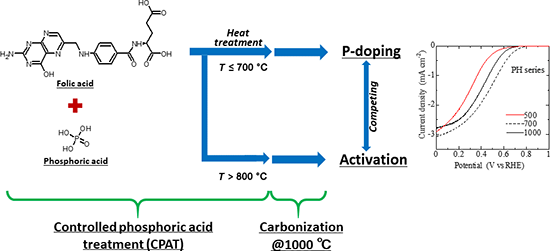
- voltammetry. The working electrode was prepared by loading the catalyst (200 μg·cm−2) on a glassy carbon disk electrode. The carbon ink was prepared in the following manner: 2.5 mg of the prepared sample was mixed with 25 μL of Nafion solution (5% solution of lower aliphatic alcohols, Aldrich), 75 μL of
- 200 μg·cm−2). A reversible hydrogen electrode (RHE) and a glassy carbon plate were employed as reference and counter electrodes, respectively. The electrolyte was a 0.5 M solution of H2SO4 in deionized water. Prior to the measurements, dissolved oxygen in the acid solution was purged by bubbling


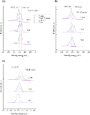

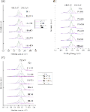


Hierarchically structured 3D carbon nanotube electrodes for electrocatalytic applications
Beilstein J. Nanotechnol. 2019, 10, 1475–1487, doi:10.3762/bjnano.10.146
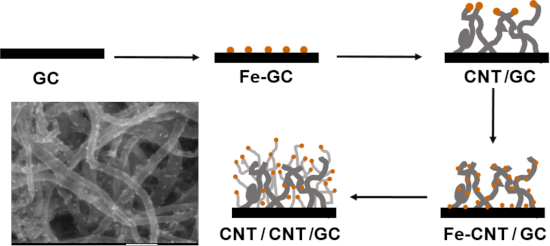
- a glassy carbon (GC) substrate in a sequence of electrodeposition and chemical vapor deposition (CVD) steps as follows: Primary CNTs are grown over electrodeposited iron by CVD followed by a second Fe deposition and finally the CVD growth of secondary CNTs. The prepared 3-dimensional CNT structures
- the preparation of hierarchically structured CNTs on glassy carbon (GC) based on a sequential CNT growth over electrodeposited Fe nanoparticles via chemical vapor deposition (CVD) with cyclohexane as the carbon precursor. Pt electrodeposition onto these hierarchical structures leads to active
- above results demonstrate that by choosing the appropriate experimental conditions, it is possible to tune the thickness and length of the primary CNTs grown on glassy carbon. Growth of secondary CNTs and Pt deposition After the growth of the primary CNTs, a subsequent Fe electrodeposition and growth of

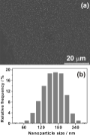

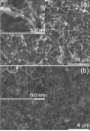

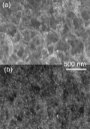


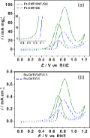
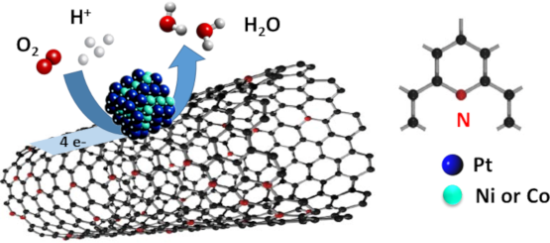
Alloyed Pt3M (M = Co, Ni) nanoparticles supported on S- and N-doped carbon nanotubes for the oxygen reduction reaction
Beilstein J. Nanotechnol. 2019, 10, 1251–1269, doi:10.3762/bjnano.10.125
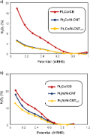
- the potentials are presented to the reversible hydrogen electrode (RHE). The measurements were carried out using a BIOLOGIC VSP potentiostat. The used RRDE is the model AFE7R9GCPT from PINE research, and the disk is glassy carbon with an area of 0.2475 cm2. The ring is in Pt with a collection factor
- alcohol) (80/19.5/0.5), and sonicated for 30 min. 30 µL of the prepared ink was deposited three times onto the polished glassy carbon disk electrode. A thin catalytic layer with a Pt loading of 100 µgPt/cm2 was obtained after evaporation of the solvent under air at room temperature. The electroactive








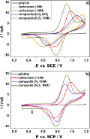
Porous N- and S-doped carbon–carbon composite electrodes by soft-templating for redox flow batteries
Beilstein J. Nanotechnol. 2019, 10, 1131–1139, doi:10.3762/bjnano.10.113
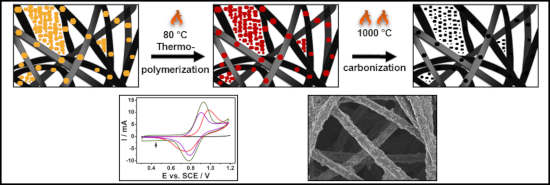
- respective carbon felts served as working electrodes and were pierced in their center with a 1 mm thick glassy carbon rod for contacting. For studying the VO2+/VO2+ redox reaction the electrolyte consisting of 100 mL of 0.2 mol/L vanadylsulfate (VOSO4, Sigma-Aldrich) dissolved in 2.0 mol/L sulfuric acid



Glucose-derived carbon materials with tailored properties as electrocatalysts for the oxygen reduction reaction
Beilstein J. Nanotechnol. 2019, 10, 1089–1102, doi:10.3762/bjnano.10.109
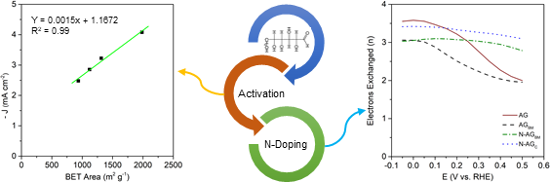
- a glassy carbon rod were used as reference and counter electrode, respectively. Working electrodes were prepared by depositing a suspension of the carbon samples on a glassy carbon rotating disk electrode (3 mm of diameter, Metrohm). These suspensions were prepared by dispersing 1 mg of the prepared


In situ AFM visualization of Li–O2 battery discharge products during redox cycling in an atmospherically controlled sample cell
Beilstein J. Nanotechnol. 2019, 10, 930–940, doi:10.3762/bjnano.10.94
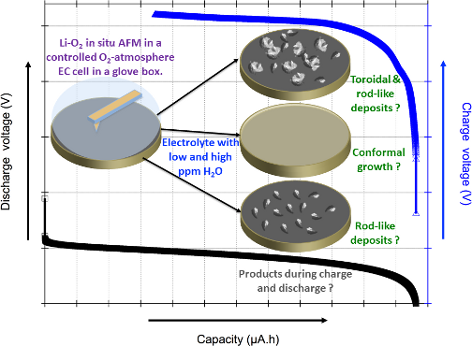
- cell design The Li/O2 cell consisted of a polyetheretherketone (PEEK) cell body (Figure 1a) with a stainless steel (SS) stub (Figure 1b) that allowed electrical contact to glassy carbon cathode (Figure 1c) as shown in Figure 1. For AFM experiments, the design challenge was to allow the AFM tip contact
- with the glassy carbon surface while simultaneously allowing the electrochemical reaction between Li+ and O2 to occur at the solvent–cathode interface. This was necessary to keep the glassy carbon surface available for the AFM tip, the lithium ions and oxygen at the same time. This necessitated the use
- moisture and oxygen exposure. The cell components were held together using Nylon screws outside of the glassy carbon discs, preventing any contact between screws and the electrolyte. It should be noted that the cell design was optimized to allow for the in situ study of the Li/O2 electrochemical reaction


Synthesis of novel C-doped g-C3N4 nanosheets coupled with CdIn2S4 for enhanced photocatalytic hydrogen evolution
Beilstein J. Nanotechnol. 2019, 10, 912–921, doi:10.3762/bjnano.10.92
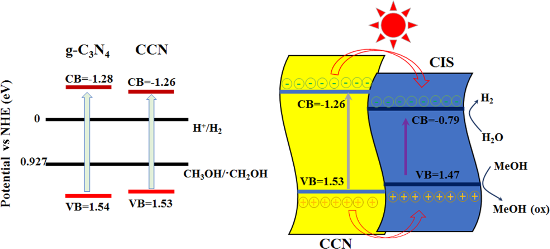
- and a Pt wire was used as the counter electrode, respectively. The electrolyte was a 1 M Na2SO4 aqueous solution. A glassy carbon electrode containing the as-prepared sample served as the working electrode. Photocatalytic H2 production reaction In this work, the activity of the photocatalyst was


Accurate control of the covalent functionalization of single-walled carbon nanotubes for the electro-enzymatically controlled oxidation of biomolecules
Beilstein J. Nanotechnol. 2018, 9, 2750–2762, doi:10.3762/bjnano.9.257
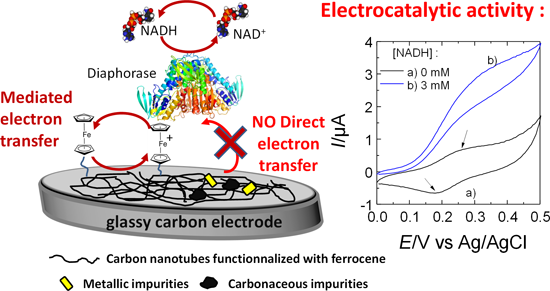
- modify electrodes (e.g., glassy carbon electrodes, GCEs) in order to decrease the overpotential value, increase sensitivity and reduce the occurrence of electrode fouling by degradation of the analyzed (bio)molecules [4]. They can increase the electron transfer rate between electrode and target molecules






Impact of the anodization time on the photocatalytic activity of TiO2 nanotubes
Beilstein J. Nanotechnol. 2018, 9, 2628–2643, doi:10.3762/bjnano.9.244
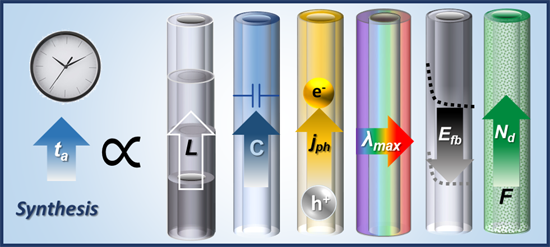
- electrochemical measurements were performed at 25 °C in a three-electrode cell equipped with a quartz window using a SP-300 Bio-logic potentiostat. A glassy carbon and a reversible hydrogen electrode (RHE) were used as counter and reference electrode, respectively. The photoelectrodes were fabricated with an


Electrodeposition of reduced graphene oxide with chitosan based on the coordination deposition method
Beilstein J. Nanotechnol. 2018, 9, 1200–1210, doi:10.3762/bjnano.9.111
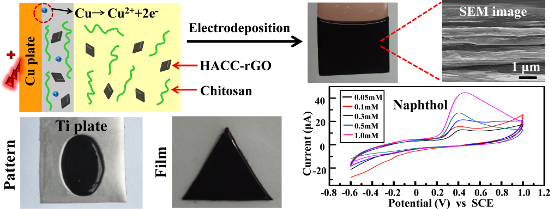
- et al. reported that after electrodeposition in the graphene oxide/chitosan solution, graphene nanosheets could be electrodeposited onto the glassy carbon electrode through the electrochemical reduction of graphene oxide [24]. However, it has been reported that the electrochemically reduced graphene
- film on a glassy carbon electrode (GCE) to detect 1-naphthol (as a model analyte) was explored. The electrochemical measurements were carried out using a three-electrode system with the GCE as the working electrode, a saturated calomel electrode as the reference electrode, and a platinum wire as the
- purchased from Nantong Green Biological Co., Ltd., China. The copper plates, silver plates, titanium plates, platinum foil, glassy carbon electrode and other chemicals were obtained from various commercial sources in China. All chemicals were of analytical grade and were not purified before use. Preparation


Synthesis and characterization of two new TiO2-containing benzothiazole-based imine composites for organic device applications
Beilstein J. Nanotechnol. 2018, 9, 721–739, doi:10.3762/bjnano.9.67
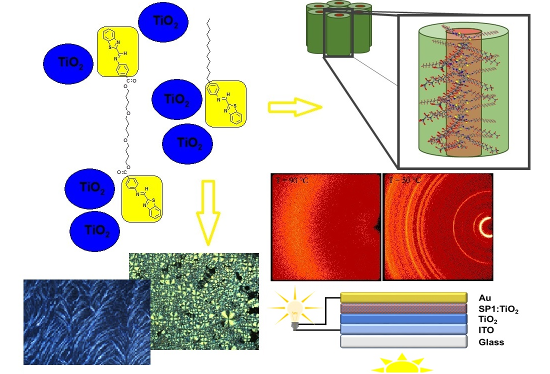
- ], electrochemical measurements were carried out using an Eco Chemie Autolab PGSTAT128n potentiostat, glassy carbon electrode (diameter 2 mm), platinum coil and silver wire as working, auxiliary and reference electrodes, respectively. The potentials are referenced with respect to ferrocene (Fc), which was used as






Kinetics of solvent supported tubule formation of Lotus (Nelumbo nucifera) wax on highly oriented pyrolytic graphite (HOPG) investigated by atomic force microscopy
Beilstein J. Nanotechnol. 2018, 9, 468–481, doi:10.3762/bjnano.9.45
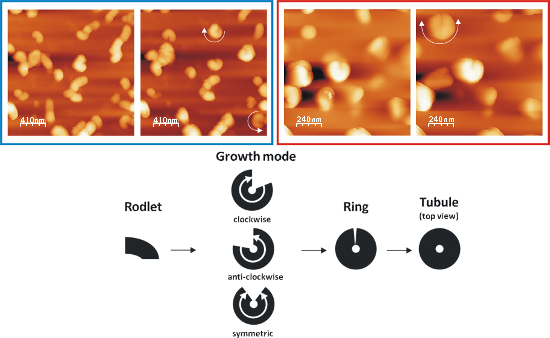
- ideas to other substrates, e.g. mica, glassy carbon and glass, having similar or different properties than HOPG in order to find out the effect of these substrates and how the above mentioned factors influence the tubule growth on these substrates. Consecutive AFM images of Lotus (Nelumbo nucifera) wax


Hierarchically structured nanoporous carbon tubes for high pressure carbon dioxide adsorption
Beilstein J. Nanotechnol. 2017, 8, 1135–1144, doi:10.3762/bjnano.8.115
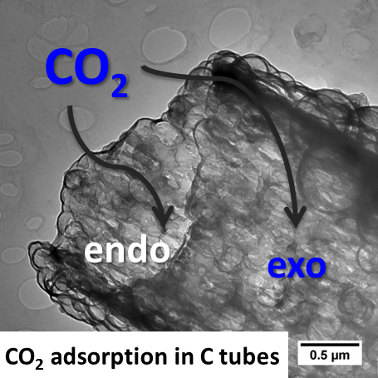
- areas (Figure 3c,d). These are typical for glassy carbon related materials as well as carbon structures containing fullerene- or carbon-onion-like fragments [41][42][43][44]. Figure 4 shows the Raman spectra of the carbon tubes (4) carbonized at different temperatures. The D-band at 1345 cm−1 is
- characteristic for sp³ carbon and the G-band at 1588 cm−1 for sp² carbon. The D/G ratio is characteristic for a low temperature glassy carbon type material [41]. Consistent with the TEM results, the G-band in the Raman spectrum (D/G = 1.18, 1.03, 1.02 for 950 °C, 1300 °C, 1600 °C, respectively) confirms the
- regime. The BET surface decreases drastically with the increasing carbonization temperature due to a lower amount of micropores. Meanwhile the mesopore content increases. This observation corresponds well with commercial glassy carbon materials which are processed at low temperature and obey a narrow


Growth, structure and stability of sputter-deposited MoS2 thin films
Beilstein J. Nanotechnol. 2017, 8, 1115–1126, doi:10.3762/bjnano.8.113
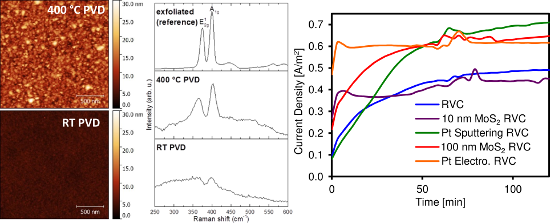
- cm length scale. In contrast, in many optimized device geometries the catalytically active MoS2 films are deposited onto highly conductive substrates, such as glassy carbon [18][20], where charge transport is then facilitated by current flowing only across the thin MoS2 film on a nm length scale into


Selective photodissociation of tailored molecular tags as a tool for quantum optics
Beilstein J. Nanotechnol. 2017, 8, 325–333, doi:10.3762/bjnano.8.35
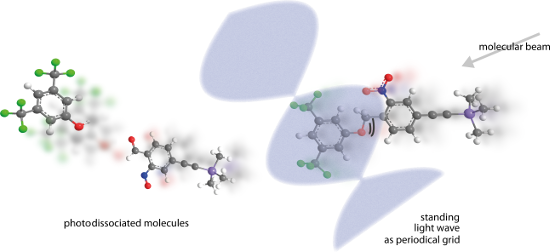
- supersonic neon seed gas jet [26]. The solid material was dissolved and spread on a glassy carbon wheel, from where it was desorbed by a 1064 nm laser pulse (10 ns duration, 38 mJ pulse energy, 10 Hz repetition rate, 3 mm beam waist). The laser pulse was synchronized with the opening of a pulsed Even–Lavie


Fundamental properties of high-quality carbon nanofoam: from low to high density
Beilstein J. Nanotechnol. 2016, 7, 2065–2073, doi:10.3762/bjnano.7.197
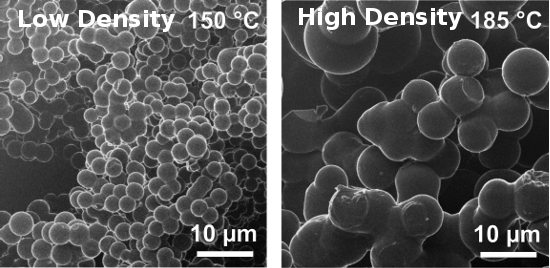
- sponges [17]. Carbon nanofoams have first been produced using pulsed laser ablation of glassy carbon in argon atmosphere [18] and later, as graphite in liquid nitrogen [19]. Pulsed-laser deposition has also been used for the fabrication of carbon nanofoam electrodes [20]. Carbon nanotube foam in the form


Voltammetric determination of polyphenolic content in pomegranate juice using a poly(gallic acid)/multiwalled carbon nanotube modified electrode
Beilstein J. Nanotechnol. 2016, 7, 1104–1112, doi:10.3762/bjnano.7.103
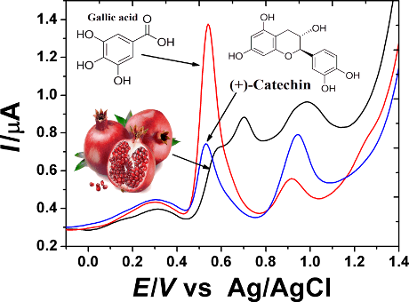
- Refat Abdel-Hamid Emad F. Newair Unit of Electrochemistry Applications (UEA), Chemistry Department, Faculty of Science, Sohag University, Sohag 82524, Egypt 10.3762/bjnano.7.103 Abstract A simple and sensitive poly(gallic acid)/multiwalled carbon nanotube modified glassy carbon electrode (PGA
- ] were utilized for determination of gallic acid. A sensor based on a carbon paste electrode modified with multiwalled carbon nanotubes was used for voltammetric determination of ellagic acid and gallic acid in an Myrtus communis, Punica granatum and Itriphal formulation [10]. Glassy carbon electrodes
- with thionine and nickel hexacyanoferrate [13]. A polyethyleneimine-functionalized graphene oxide modified glassy carbon electrode sensor was developed for sensitive detection of gallic acid [14]. A polyepinephrine modified glassy carbon electrode electrochemical sensor was developed for adsorptive


Charge carrier mobility and electronic properties of Al(Op)3: impact of excimer formation
Beilstein J. Nanotechnol. 2015, 6, 1107–1115, doi:10.3762/bjnano.6.112
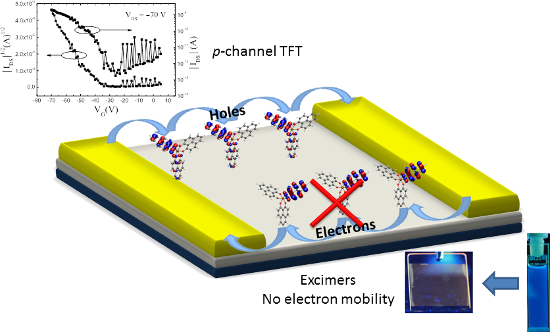
- Cyclic voltammetry was performed using an Autolab PGSTAT10 potentiostat in a three-electrode single-compartment cell with a glassy carbon working electrode, an Ag/AgCl pseudo-reference electrode and a platinum wire as an auxiliary electrode, in an inert argon atmosphere. Tetrabutylammonium


Fulleropeptide esters as potential self-assembled antioxidants
Beilstein J. Nanotechnol. 2015, 6, 1065–1071, doi:10.3762/bjnano.6.107
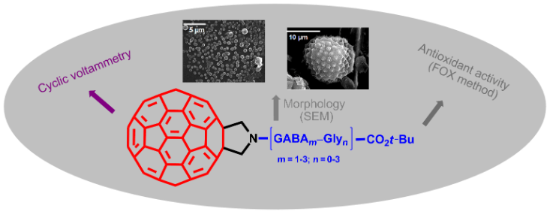
- potentiostat (CH Instruments, Austin, TX) by using a conventional three-electrode cell (5 cm3) equipped with a glassy carbon electrode, a silver wire (Ag/Ag+) (in contact with 0.01 M AgNO3 and 0.10 M TBAP in acetonitrile) and a platinum wire as the working, reference and auxiliary electrodes, respectively


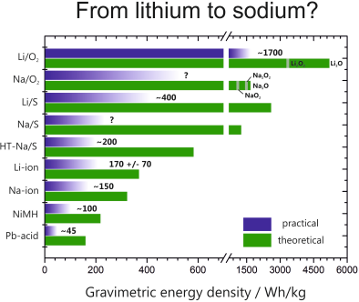
From lithium to sodium: cell chemistry of room temperature sodium–air and sodium–sulfur batteries
Beilstein J. Nanotechnol. 2015, 6, 1016–1055, doi:10.3762/bjnano.6.105


Simple approach for the fabrication of PEDOT-coated Si nanowires
Beilstein J. Nanotechnol. 2015, 6, 640–650, doi:10.3762/bjnano.6.65
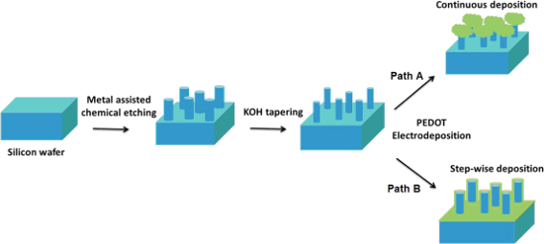
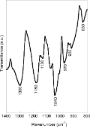
- oxidation current that appears between 0 and 1.3 V in both EDOT-free (curve c) and EDOT-containng solutions (curve b) (absent in the glassy carbon substate, Figure 4) can be related to the oxidation of SiNWs to silica. The absence of the nucleation loop previously observed during the first cycle on vitreous




Silica micro/nanospheres for theranostics: from bimodal MRI and fluorescent imaging probes to cancer therapy
Beilstein J. Nanotechnol. 2015, 6, 546–558, doi:10.3762/bjnano.6.57
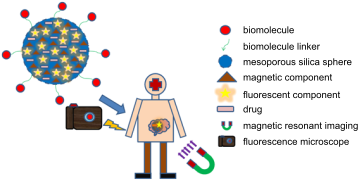
- superparamagnetic behavior for both iron oxide and the bifunctional nanocomposite with saturation magnetization values of 68.8 and 9.7 emu/g, respectively. To study the application of these NPs in an electrochemiluminescence sensor, these NPs were fabricated on a glassy carbon wafer in the presence of an external


Manganese oxide phases and morphologies: A study on calcination temperature and atmospheric dependence
Beilstein J. Nanotechnol. 2015, 6, 47–59, doi:10.3762/bjnano.6.6
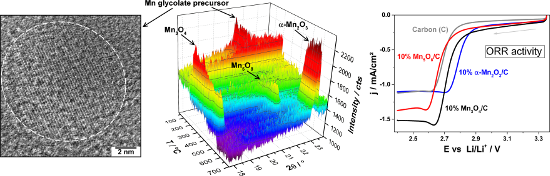
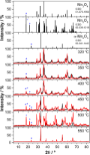
- powder with 10 mg of MnOx catalyst. This active material was dispersed in ethanol and ultrasonicated for 20 min. As a binder material, 0.1 wt % Nafion/water solution was added to the catalyst/carbon paste and ultrasonicated for another 20 min. A 10 µL drop of the ink was applied on a glassy carbon disc
- out on a rotating disc electrode (RDE) in a glove box in Ar atmosphere at ambient temperature. For the electrochemical setup, glassy carbon (Pine Research Instrumentation, electrode model no. AFE3T050GC) and carbon/catalyst-coated glassy carbon discs (see above) served as working electrodes. A





Magnesium batteries: Current state of the art, issues and future perspectives
Beilstein J. Nanotechnol. 2014, 5, 1291–1311, doi:10.3762/bjnano.5.143
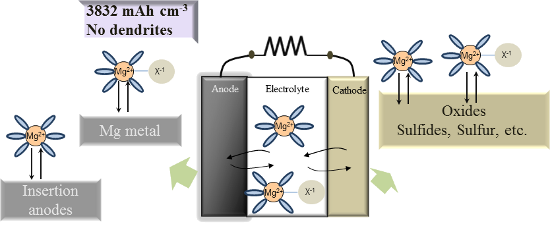
- oxidation was 1.7, 2.2 and 2.3 V (vs Mg) on platinum, stainless steel and glassy carbon electrodes, respectively. As the borohydride electrolytes are not corrosive, these stability trends are opposite of those observed for other magnesium electrolytes. The higher stability of the borohydride on a non-noble





