Search results
Search for "hexagonal boron nitride" in Full Text gives 38 result(s) in Beilstein Journal of Nanotechnology.
Remarkable electronic and optical anisotropy of layered 1T’-WTe2 2D materials
Beilstein J. Nanotechnol. 2019, 10, 1745–1753, doi:10.3762/bjnano.10.170
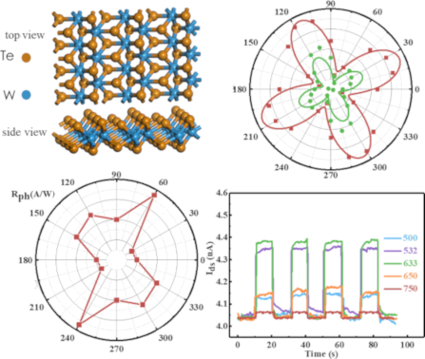
- phosphorus (BP) [2][3], hexagonal boron nitride (h-BN) [4][5] and transition metal dichalcogenides (TMDCs) with a common chemical formula MX2 [6][7][8][9][10]. Due to the many excellent electronic, mechanical and optoelectronic properties, TMDCs are highly attractive for fundamental studies of novel physical
- ’-WTe2 flake. In detail, first we mechanically exfoliated a few-layer hexagonal boron nitride (h-BN) flake onto a cleaned Si/SiO2 (400 μm/285 nm) substrate with pre-fabricated metal pads (20 nm Gr/180nm Au), then the same process was conducted to transfer a 1T’-WTe2 flake onto a h-BN film under an


Electronic properties of several two dimensional halides from ab initio calculations
Beilstein J. Nanotechnol. 2019, 10, 823–832, doi:10.3762/bjnano.10.82
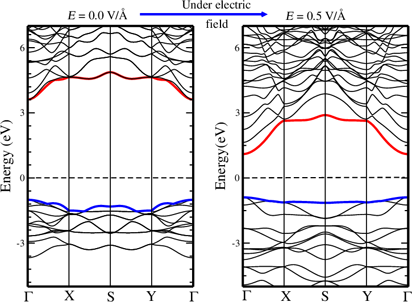
- transition-metal dichalcogenides (TMDs) [9], phosphorene [10][11], and hexagonal boron nitride (h-BN) [8], among others [12][13], which are suitable for applications in electronic and photonic devices. However, in order to improve performance and possibly access new properties, the quest for new 2D compounds
- earlier studies [42] that 2D materials can display a much larger sunlight absorption than commonly employed semiconductors. Also, the materials studied here can be employed in heterostructures to complement or replace other large-bandgap 2D materials, such as hexagonal boron nitride, or to dissociate


Light–Matter interactions on the nanoscale
Beilstein J. Nanotechnol. 2018, 9, 2125–2127, doi:10.3762/bjnano.9.201

- , such as transition-metal dichalcogenides (TMDCs) or hexagonal boron nitride (hBN) [10] have also emerged as interesting platforms for nanophotonics. TMDCs, with their intrinsically broken inversion symmetry in crystal structure, have shown many advanced optical properties with potential applications
Recent highlights in nanoscale and mesoscale friction
Beilstein J. Nanotechnol. 2018, 9, 1995–2014, doi:10.3762/bjnano.9.190
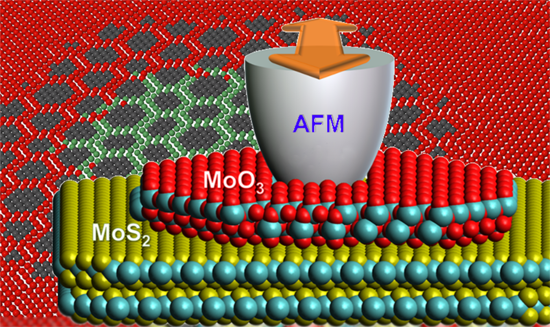
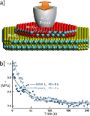
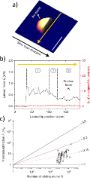
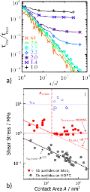
- heterogeneous contacts formed between hexagonal boron nitride clusters and graphene, a recent study has pointed out how kinetic friction can drastically decrease when the slider enters a regime of soliton-supported smooth sliding beyond a certain contact area [79]. Confined systems and lubrication Several


Design of photonic microcavities in hexagonal boron nitride
Beilstein J. Nanotechnol. 2018, 9, 102–108, doi:10.3762/bjnano.9.12
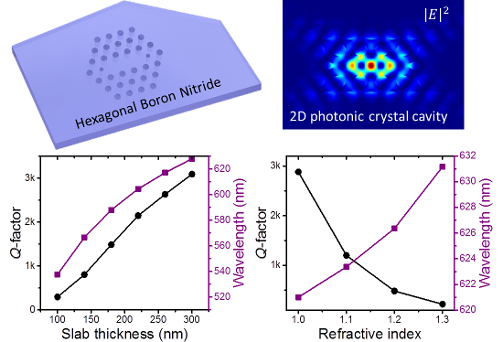
- Sejeong Kim Milos Toth Igor Aharonovich School of Mathematical and Physical Sciences, University of Technology Sydney, Ultimo, NSW 2007, Australia 10.3762/bjnano.9.12 Abstract We propose and design photonic crystal cavities (PCCs) in hexagonal boron nitride (hBN) for diverse photonic and quantum
- . Keywords: anisotropic optical materials; boron nitride; photonic crystals; Introduction Hexagonal boron nitride (hBN) has recently emerged as an interesting platform for nanophotonics. This is mainly due to its promising hyperbolic properties [1][2] as well as the ability to host a range of single photon


Adsorption and diffusion characteristics of lithium on hydrogenated α- and β-silicene
Beilstein J. Nanotechnol. 2017, 8, 1742–1748, doi:10.3762/bjnano.8.175
- attention [1][2]. This family consists of a large variety of materials such as hexagonal boron nitride (hBN) [3][4], silicene [5][6][7], germanene [8], transition-metal dichalcogenides (TMDs) [9][10][11][12][13][14], transition-metal trichalcogenides (TMTs) [15][16], phosphorene [17] and gallium


Adsorption and electronic properties of pentacene on thin dielectric decoupling layers
Beilstein J. Nanotechnol. 2017, 8, 1388–1395, doi:10.3762/bjnano.8.140
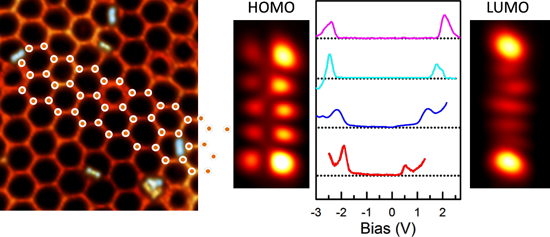
- gap of the molecules. In spite of the enhanced interaction, the molecular orbitals are evident in scanning tunnelling spectroscopy (STS) and their shapes can be resolved by spectroscopic mapping. Keywords: hexagonal boron nitride (h-BN); metal insulating organic interface; pentacene; potassium
- of pentacene on a monoatomic layer of hexagonal boron nitride (h-BN) and compare it to its properties on KCl layers grown on various low-index noble-metal surfaces. Results and Discussion Here we start with a detailed discussion of the properties of pentacene deposited onto h-BN grown on Rh(111). Due


The integration of graphene into microelectronic devices
Beilstein J. Nanotechnol. 2017, 8, 1056–1064, doi:10.3762/bjnano.8.107
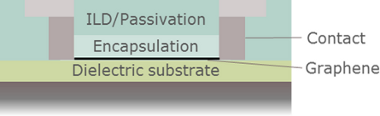
- technology. The fascinating properties of graphene, such as extremely high charge carrier mobility of more than 200,000 cm2·V−1·s−1 [3], was consistently shown in academic research. For instance, a sheet of high-quality graphene sandwiched between two exfoliated single-crystalline hexagonal boron nitride (h
- crucial for commercializing graphene for microelectronics. Additionally, substrate interactions are strongly degrading the graphene quality. Hexagonal boron nitride has been identified as the ideal substrate material, but it is not available yet in the required quality for producing wafers. In order to


Optical absorption signature of a self-assembled dye monolayer on graphene
Beilstein J. Nanotechnol. 2016, 7, 862–868, doi:10.3762/bjnano.7.78
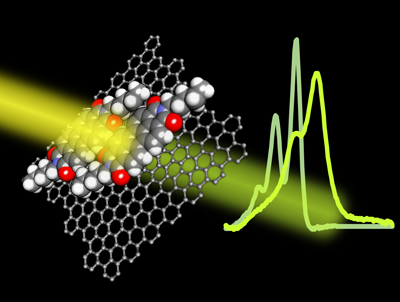
- have been reported to induced drastic changes in optical spectra, attributed to new electronic transitions [16]. Less pronounced rigid spectral shifts have been reported previously for molecules deposited on crystalline dielectrics such as hexagonal boron nitride (h-BN) [9][19]. The cited possible
- deposited on a dielectric substrate [18], in which case no significant spectral shift was observed. An exciting perspective could be given by hexagonal boron nitride (h-BN) monolayers, which combine a dielectric nature with an atomic-scale template similar to that of graphene [41]. Conclusion In conclusion



Imaging of carbon nanomembranes with helium ion microscopy
Beilstein J. Nanotechnol. 2015, 6, 1712–1720, doi:10.3762/bjnano.6.175
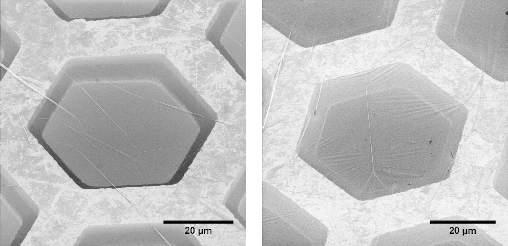
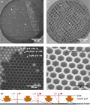
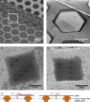
- hexagonal boron nitride (h-BN), an insulating material that shares similarities with graphene, were imaged in a comparative study [23]. Therein, it is shown that HIM is more sensitive and consistent than SEM for characterizing the number of layers and the morphology of 2D materials. It was also shown that




Attenuation, dispersion and nonlinearity effects in graphene-based waveguides
Beilstein J. Nanotechnol. 2015, 6, 1221–1228, doi:10.3762/bjnano.6.125
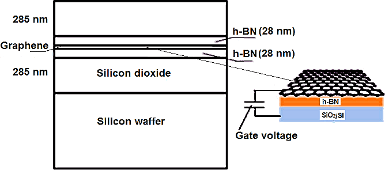
- substrate, it should be free from wrinkles or distortions. However, the thermal SiO2 deposition process often results in high surface roughness, such that graphene on SiO2 shows no charge homogeneity along its surface [19]. Hexagonal boron nitride (h-BN, also known as white graphite) is a graphite


Simulation of bonding effects in HRTEM images of light element materials
Beilstein J. Nanotechnol. 2011, 2, 394–404, doi:10.3762/bjnano.2.45
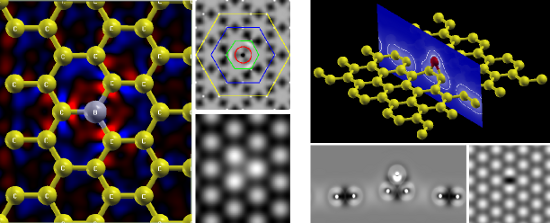
- target materials, in contrast, are two dimensional crystals such as graphene and hexagonal boron nitride as they offer an outstanding specimen quality that has not been achieved for bulk materials so far: Their thickness is perfectly defined (one atomic layer) and it is possible to find areas without
- , we were able to measure the influence of charge redistribution on the HRTEM image contrast experimentally for two different materials, namely nitrogen doped graphene and single-layer hexagonal boron nitride [13]. This result has two important implications: First, chemical bonding gives small
- boron nitride monolayers, the DFT based simulation scheme turned out to be necessary to prevent misinterpretation of weak signals, such as the identification of nitrogen substitutions in a graphene network. Furthermore, this implies that the HRTEM image does not only contain structural information (atom


On the reticular construction concept of covalent organic frameworks
Beilstein J. Nanotechnol. 2010, 1, 60–70, doi:10.3762/bjnano.1.8
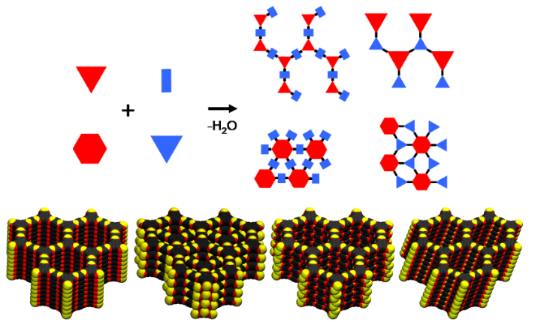
- in serrated and inclined forms are not uniform everywhere. A known example of this is that in eclipsed hexagonal boron nitride (h-BN), boron atoms in one layer serve as nearest neighbours to nitrogen atoms in adjacent layers (AB stacking). The Coulomb interaction rules out possible interlayer eclipse