


Search results
Search for "image processing" in Full Text gives 84 result(s) in Beilstein Journal of Nanotechnology.
Ion mobility and material transport on KBr in air as a function of the relative humidity
Beilstein J. Nanotechnol. 2019, 10, 2084–2093, doi:10.3762/bjnano.10.203
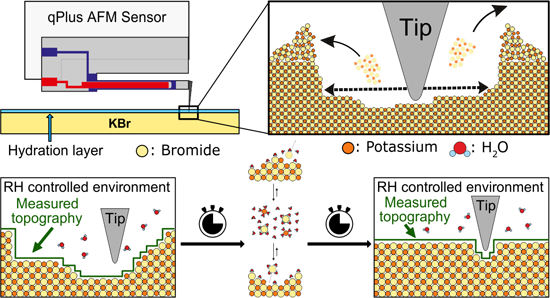
- amplitude A = 500 pm and a frequency-shift set point of Δf = +10 to +25 Hz. Data and image processing was performed with MATLAB (The MathWorks, Inc.) and WSxM [28]. Results and Discussion Initial experiments with poking holes This experiment shall investigate qualitatively how the material transport rate


Nanoarchitectonics meets cell surface engineering: shape recognition of human cells by halloysite-doped silica cell imprints
Beilstein J. Nanotechnol. 2019, 10, 1818–1825, doi:10.3762/bjnano.10.176
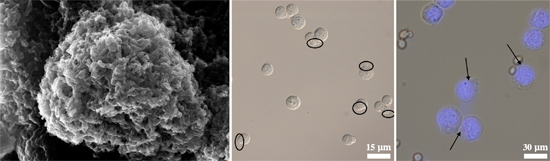
- equipped with a fluorite 100× objective and Dage xL (Dage-MTI) CCD camera. Images were obtained using Exponent 7 software (Dage-MTI). The dark-field images were overlapped with transmission fluorescence images using the image processing software GIMP. Cell proliferative activity was examined by flow


Toxicity and safety study of silver and gold nanoparticles functionalized with cysteine and glutathione
Beilstein J. Nanotechnol. 2019, 10, 1802–1817, doi:10.3762/bjnano.10.175
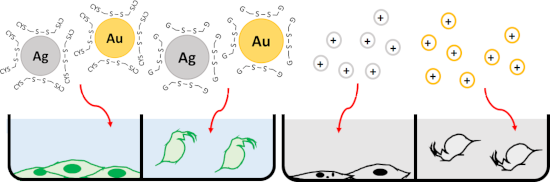
- examination and the images were recorded with a Spot RT Slider camera (Diagnostic Instruments, Sterling Heights, MI, USA). The image processing was performed in Adobe Photoshop 6.0. Statistical analysis Statistical analysis was carried out using DellTM StatisticaTM 13.2 software (StatSoft, Tulsa, USA). The


Lipid nanostructures for antioxidant delivery: a comparative preformulation study
Beilstein J. Nanotechnol. 2019, 10, 1789–1801, doi:10.3762/bjnano.10.174
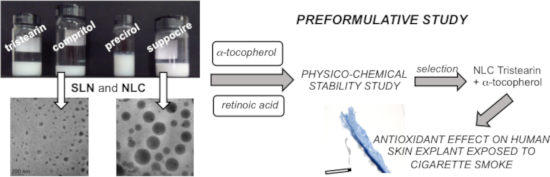
- e/nm2 at 200 kV. The images were digitally recorded by a CCD camera (Ultrascan 1000, Gatan) using an image processing system (GMS 1.9 software, Gatan). In addition, the size distribution of the nanoparticles was performed by measuring 1000 nanoparticles for each cryo-TEM image by the digital

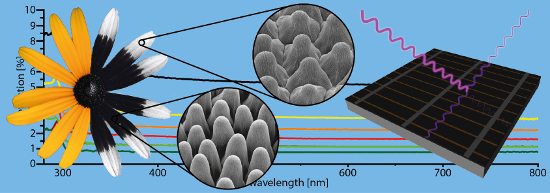
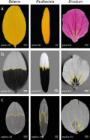
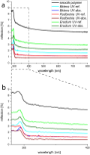
Ultraviolet patterns of flowers revealed in polymer replica – caused by surface architecture
Beilstein J. Nanotechnol. 2019, 10, 459–466, doi:10.3762/bjnano.10.45
- injection resin (RECKLI Injektionsharz EP, RECKLI GmbH, Herne, Germany). Scanning electron microscopy (SEM) Images were recorded using a Cambridge Stereoscan 200 SEM (Zeiss GmbH, Oberkochen, Germany). A digital image processing system (DISS 5, Version 5.4.17.0, Point Electronic GmbH, Halle, Germany) was


In situ characterization of nanoscale contaminations adsorbed in air using atomic force microscopy
Beilstein J. Nanotechnol. 2018, 9, 2925–2935, doi:10.3762/bjnano.9.271
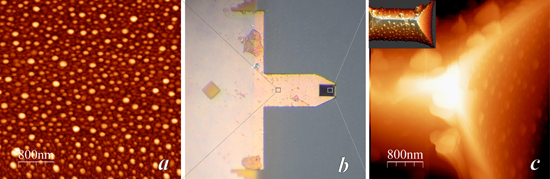
- kHz. Further details of how DAFM and Kelvin probe microscopy (KPM) [14] are implemented in our experiments is described elsewhere [42][50][51][52]. WSxM software was used for image processing [56]. Typically, a plane filter was applied to topography images; no filter is applied to the electrostatic


Comparative biological effects of spherical noble metal nanoparticles (Rh, Pd, Ag, Pt, Au) with 4–8 nm diameter
Beilstein J. Nanotechnol. 2018, 9, 2763–2774, doi:10.3762/bjnano.9.258
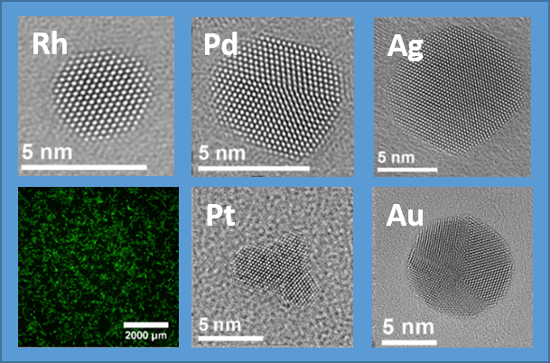
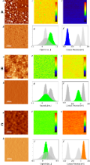
- cells were treated with 2.5 to 50 µg mL−1 for 24 h under cell culture conditions. Viable cells were quantified by digital image processing (phase analysis). The data are expressed as mean ± SD (n = 5 independent experiments) given as the percentage of the control (cells cultured without nanoparticles


High-throughput micro-nanostructuring by microdroplet inkjet printing
Beilstein J. Nanotechnol. 2018, 9, 2372–2380, doi:10.3762/bjnano.9.222
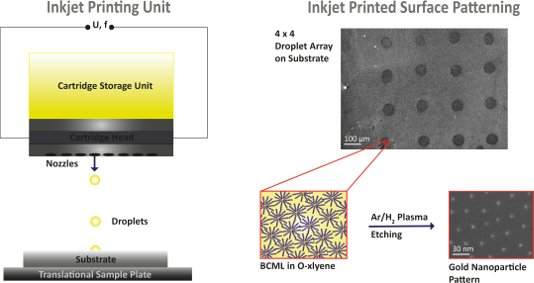
- .). Image processing was carried out with JPK SPM Data Processing. (A) Schematic representation of the operational principle of the Fuji Dimatix DMP-2800 printing head. 4 mL of gold-loaded micelle solution (BMCL) is stored in the cartridge storage unit that is connected to the cartridge head. Via the
- all nanoparticles, the particle analyzer was used (included in ImageJ) and the image was converted to a binary image. Finally, a freely accessible nearest-neighbor detection algorithm was employed for the determination of the nanoparticle distances [36]. Atomic force microscopy (AFM) imaging and image
- processing Atomic force microscopy (AFM) topographic imaging was employed to measure the roughness of the samples. Imaging was performed on a JPK NanoWizard 3 (JPK Instruments AG) operated in ac mode using ACTA cantilevers (spring constant ≈40 N/m, resonance frequency ≈300 kHz; Applied NanoStructuresInc


The structural and chemical basis of temporary adhesion in the sea star Asterina gibbosa
Beilstein J. Nanotechnol. 2018, 9, 2071–2086, doi:10.3762/bjnano.9.196
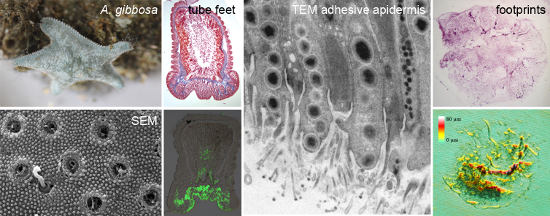
- pixels/line using the Nanoscope software (Version 9.4). The scan rate was kept at 0.5 Hz. The Nanoscope Analysis image processing software (Version 1.90) was used for image analysis. The images were not filtered and only a 2nd order flattening procedure was applied to the raw data. Immunohistochemistry


Fabrication of photothermally active poly(vinyl alcohol) films with gold nanostars for antibacterial applications
Beilstein J. Nanotechnol. 2018, 9, 2040–2048, doi:10.3762/bjnano.9.193
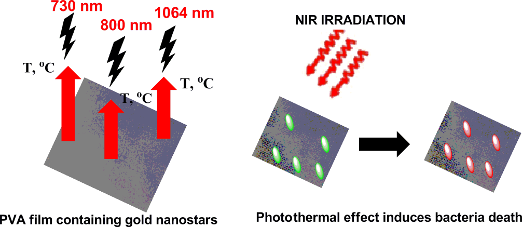
- , open source image processing software). By taking into account 20 consecutive planes, the total number of spots contained in a volume V = 25.8 × 25.8 × 1 μm × 20 = 13313 μm3 is obtained. A correction was applied since each spot can be counted for four consecutive planes due to the extension of the


Direct AFM-based nanoscale mapping and tomography of open-circuit voltages for photovoltaics
Beilstein J. Nanotechnol. 2018, 9, 1802–1808, doi:10.3762/bjnano.9.171
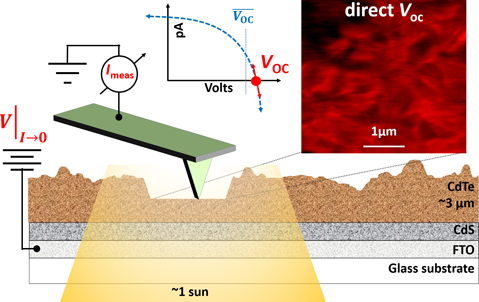
- current (Figure 2a) and open-circuit voltage (Figure 2b) images. These signals are uniquely colored for simultaneous visualization when superimposed (Figure 2c), based on a simple 1:1 overlay of the two distinct color images using conventional image processing software (FIJI). Viewed in this manner, most


Evaluation of replicas manufactured in a 3D-printed nanoimprint unit
Beilstein J. Nanotechnol. 2018, 9, 1573–1581, doi:10.3762/bjnano.9.149
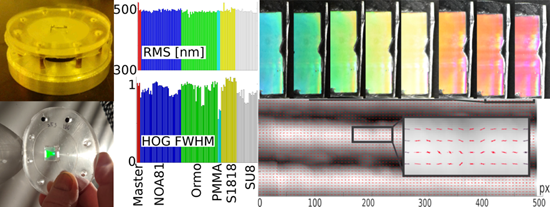
- specific procedures for measuring these magnitudes. The underlying clue is to gather some simple numbers qualifying the samples. The original idea was to propose a single figure of merit, but this turned out unfeasible, since many parameters are derived from numerical data through image processing of an
- parameters proposed in this work, taken from AFM image processing, are a map of RMS differences from theoretical to actual heights, a histogram of oriented gradients (HOG), the average height, and the average height-to-pitch ratio. All these parameters are explained in the next sections. Numerical Parameters
- , as shown in Figure 2. Analogously to the pitch case, the mean master angle is considered the maximum achievable value. The lowest value is 0°. Image Processing Parameters The second script is written and executed on a MatLab interface employing the MatLab Computer Vision Toolbox. It utilizes the


Graphene composites with dental and biomedical applicability
Beilstein J. Nanotechnol. 2018, 9, 801–808, doi:10.3762/bjnano.9.73
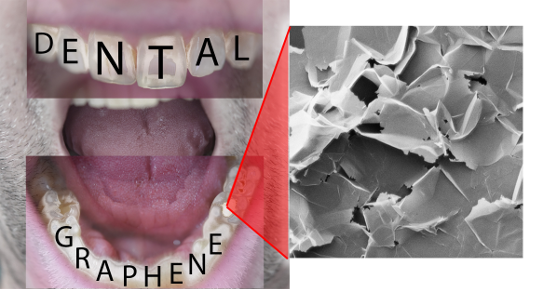
- of 40 N/m. Image processing was carried out using the Nanoscope software. The X-ray photoelectron spectroscopy (XPS) measurements were performed on a Theta Probe spectrometer (Thermo Electron Co., Germany) using monochromatic Al Kα radiation (photon energy of 15 keV with maximum energy resolution of


Hyperthermic intracavitary nanoaerosol therapy (HINAT) as an improved approach for pressurised intraperitoneal aerosol chemotherapy (PIPAC): Technical description, experimental validation and first proof of concept
Beilstein J. Nanotechnol. 2017, 8, 2729–2740, doi:10.3762/bjnano.8.272
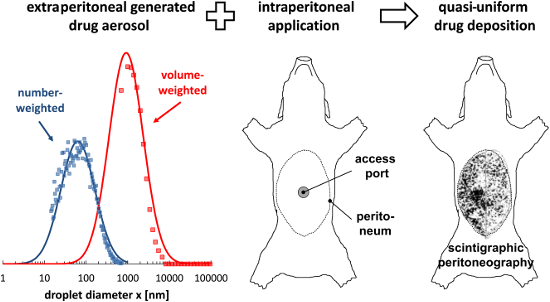
- tomography (CT) was performed at 130 kV that led to a slice thickness of 5 mm. Three-dimensional images were iteratively reconstructed based on four iterations and eight subsets (Flash 3D). Afterwards, the images were transferred into image processing software (Siemens Syngo.Via, Siemens Healthcare GmbH




Exploring wear at the nanoscale with circular mode atomic force microscopy
Beilstein J. Nanotechnol. 2017, 8, 2662–2668, doi:10.3762/bjnano.8.266
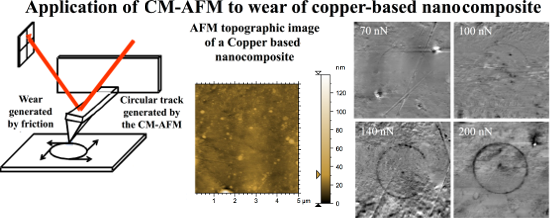
- . Finally, we describe the advantages of this method and we report a relevant application example addressing a Cu/Al2O3 nanocomposite material used in industrial applications. Keywords: circular mode atomic force microscopy; composite materials; image processing; nanowear; wear mechanisms; Introduction
- track. The minimum and maximum wear volume values of these different results are determined in order to estimate the uncertainties. The image processing is fundamental for obtaining a clear description of the wear process. It is clearly illustrated in Figure 4 where the wear track on the image before
- the image processing (image B in Figure 4) is hardly distinguishable from the background. After having applied the image processing (image C), the circular wear track clearly contrasts with the background and details such as wear debris accumulation (not visible on the topographic image A before the


Comparing postdeposition reactions of electrons and radicals with Pt nanostructures created by focused electron beam induced deposition
Beilstein J. Nanotechnol. 2017, 8, 2410–2424, doi:10.3762/bjnano.8.240
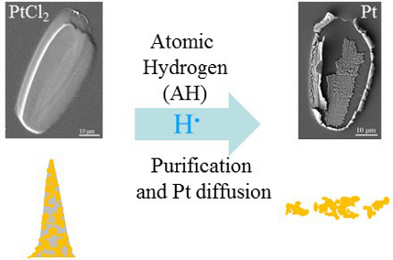
- (L) = 10−6 Torr·s. Atomic force microscopy Deposits created by FEBID from cis-Pt(CO)2Cl2 were imaged before and after AH cleaning by atomic force microscopy (AFM) in noncontact mode with a 75 ± 15 kHz HQ:NCS18 probe (Mikromasch USA, Watsonville, CA) on a PicoSPM SE AFM. Image processing of line-by




Involvement of two uptake mechanisms of gold and iron oxide nanoparticles in a co-exposure scenario using mouse macrophages
Beilstein J. Nanotechnol. 2017, 8, 2396–2409, doi:10.3762/bjnano.8.239
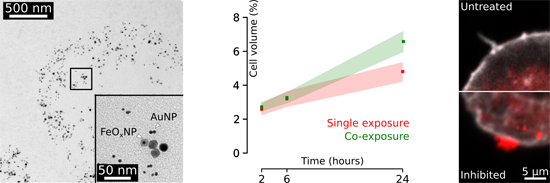
- nm laser lines. The analysis was performed using a 63×/NA 1.4 immersion oil lens. Image processing routines Analytical data were retrieved from the laser scanning micrographs (stacks of bright field and fluorescence channels) by means of dedicated ImageJ macro scripts (see Supporting Information File



Methionine-mediated synthesis of magnetic nanoparticles and functionalization with gold quantum dots for theranostic applications
Beilstein J. Nanotechnol. 2017, 8, 1734–1741, doi:10.3762/bjnano.8.174
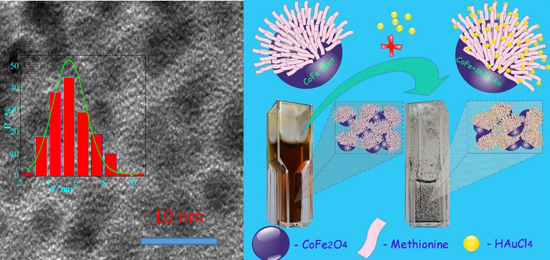
- resolution. Image processing included flattening (2nd order) to remove the background slope caused by the irregularities of the piezoelectric scanner. The analysis was performed using the SpmLabAnalysis software (Veeco Instruments Inc., USA). Magnetization measurements were accomplished using a vibrating


Uptake and intracellular accumulation of diamond nanoparticles – a metabolic and cytotoxic study
Beilstein J. Nanotechnol. 2017, 8, 1649–1657, doi:10.3762/bjnano.8.165
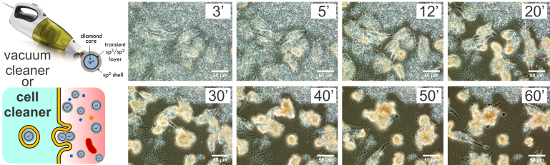
- . 12 micrographs were taken for each sample. The cell nuclei were automatically counted using open source ImageJ image processing software. Photoluminescence microphotographs of fixed cells co-cultivated with photoluminescent NDs (AR-40), 100 µg/mL (30 µg/cm2), were also taken using an IX71 microscope


Synthesis of [Fe(Leq)(Lax)]n coordination polymer nanoparticles using blockcopolymer micelles
Beilstein J. Nanotechnol. 2017, 8, 1318–1327, doi:10.3762/bjnano.8.133
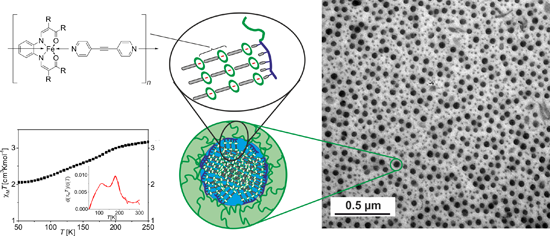
- with a MegaView III/iTEM image acquiring and processing system from Olympus Soft Imaging Systems (OSIS, Münster, Germany) and an Orius 830 SC200W/DigitalMicrograph system from Gatan (Munich, Germany). Particles size measurements were done with “ImageJ” image processing software by Wayne Rasband



Preparation of thick silica coatings on carbon fibers with fine-structured silica nanotubes induced by a self-assembly process
Beilstein J. Nanotechnol. 2017, 8, 1145–1155, doi:10.3762/bjnano.8.116
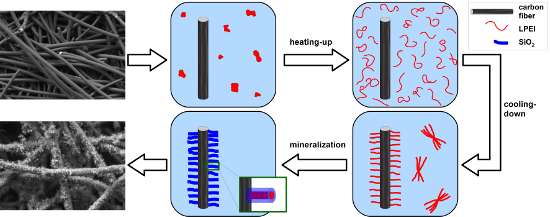
- equipped with a Gatan image filter. Holey carbon-coated copper grids were used for sample preparation. Atomic force topographic images were sampled by means of an Agilent 5500 AFM with MAC III controller operating in tapping mode. A polynomial background subtraction was applied for image processing


Bio-inspired micro-to-nanoporous polymers with tunable stiffness
Beilstein J. Nanotechnol. 2017, 8, 906–914, doi:10.3762/bjnano.8.92
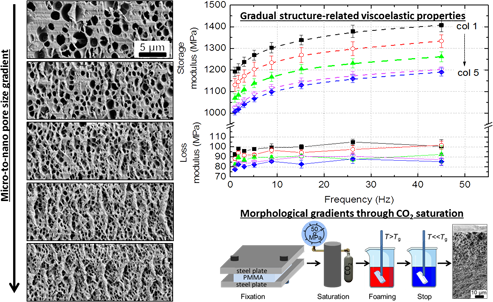
- . In order to account for this minimum pore size, Ramesh et al. [28] introduced a cut-off to a log-normal distribution of pore sizes, so the resulting distribution is cut around zero-values. As the pores were analysed based on automated image processing, we introduced a minimum detectable pore size of


Impact of air exposure and annealing on the chemical and electronic properties of the surface of SnO2 nanolayers deposited by rheotaxial growth and vacuum oxidation
Beilstein J. Nanotechnol. 2017, 8, 514–521, doi:10.3762/bjnano.8.55
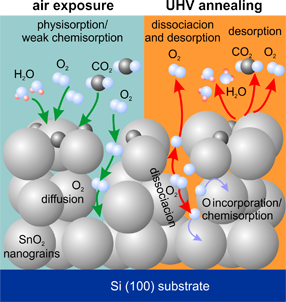
- using the PSIA XE-70 scanning microscope working in contact mode. Budget Sensors monolithic silicon probes ContAl-G (resonance frequency 13 kHz, force constant 0.2 N·m−1) were used. The XEI®, PSIA and Gwyddion® image processing software allowed us to correct sample inclination and distortions caused by



Structural and tribometric characterization of biomimetically inspired synthetic "insect adhesives"
Beilstein J. Nanotechnol. 2017, 8, 45–63, doi:10.3762/bjnano.8.6


Grazing-incidence optical magnetic recording with super-resolution
Beilstein J. Nanotechnol. 2017, 8, 28–37, doi:10.3762/bjnano.8.4
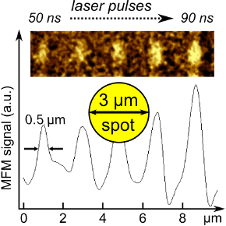
- ). The laser focus, slightly different for each image, might also contribute to differences in the feature intensity, as well as standard AFM image processing. The scale bars in (a) and (b) are chosen to be 3 μm to show the correlation to the laser beam, as in Figure 3. Power absorption per volume within





