


Search results
Search for "impedance" in Full Text gives 197 result(s) in Beilstein Journal of Nanotechnology.
Design, fabrication, and characterization of kinetic-inductive force sensors for scanning probe applications
Beilstein J. Nanotechnol. 2024, 15, 242–255, doi:10.3762/bjnano.15.23
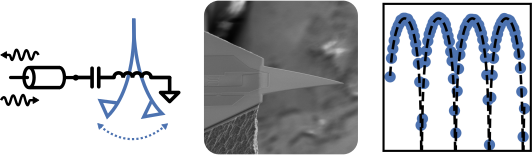
- excitation and read-out, the microwave resonator is coupled to the transmission line with impedance Z0 = 50 Ω, giving a measured (total) quality factor Qtot, where Qint and Qext are the internal and external quality factors of the microwave resonator. We introduce a shunt inductor with inductance Ls in order
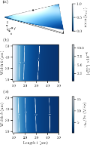
- lower resonant frequencies of the inductor and the series capacitor, the current is uniformly distributed inside the meandering nanowire, confirming that it behaves as a lumped-element inductor. We also see that, on resonance, the current in the impedance-transforming shunt inductor reaches a magnitude
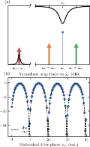
- transmission line with impedance Z0 = 50 Ω for low values of Ls. The external losses increase as the inductance of the shunt Ls increases. The circuit is first critically coupled for and then overcoupled for , indicated by the shaded area. The phase response is sharper when the circuit is slightly overcoupled



CdSe/ZnS quantum dots as a booster in the active layer of distributed ternary organic photovoltaics
Beilstein J. Nanotechnol. 2024, 15, 144–156, doi:10.3762/bjnano.15.14
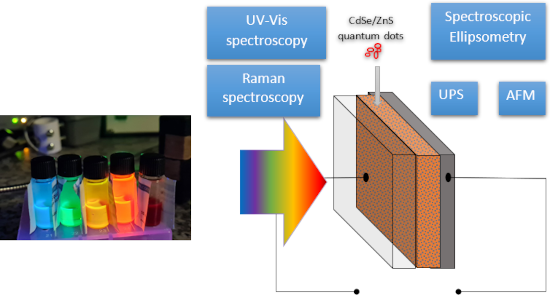
- was determined. The resistivity of the layers was determined using impedance spectroscopy. Simulations (General-Purpose Photovoltaic Device Model) showed a performance improvement in the cells with quantum dots of 0.36–1.45% compared to those without quantum dots. Keywords: efficiency; luminescence
- were applied to gold foils. A system equipped with a Solartron 1260A frequency response analyzer, a Solartron 1296A dielectric interface, and a supervisory computer was prepared to determine the impedance parameters of the obtained structures. The impedance characteristics of the obtained samples were
- determined in a wide frequency range from 10−1 to 106 Hz at room temperature. The amplitude of the alternating current signal was set to 0.1 V. The ZView software was used to analyze the recorded impedance spectra. Results and Discussion UV–vis spectroscopy The pure quantum dots exhibit absorption in the




Influence of conductive carbon and MnCo2O4 on morphological and electrical properties of hydrogels for electrochemical energy conversion
Beilstein J. Nanotechnol. 2024, 15, 57–70, doi:10.3762/bjnano.15.6
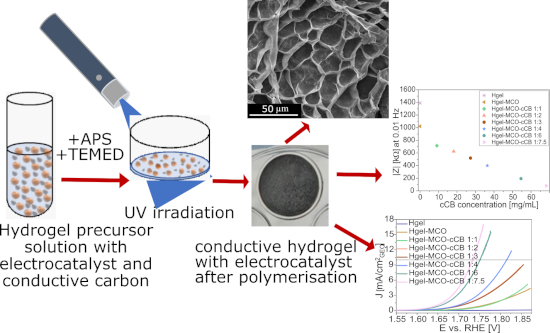
- were tested in terms of their electrical properties, showing that an increase in the concentration of conductive particles in the hydrogel structure translates into a lowering of the impedance modulus and an increase in the double-layer capacitance of the electrode. This, in turn, resulted in a higher
- (blocks) signals from other compounds. Electrical properties of hydrogel composites Electrochemical impedance spectroscopy was employed to characterise the electrical properties of hydrogel-based structures. The impedance modulus |Z| decreased with the increase in the amount of cCB contained in the
- hydrogel structure. The changes are within the range of 79.7–1390.5 kΩ at 0.01 Hz and 3.5–18.6 kΩ at 1 Hz. The trend of the electrochemical impedance spectroscopy (EIS) results shows the capacitive-dominant nature of the hydrogel for all analysed hydrogel-based electrodes. Three different regions were


In situ magnesiothermic reduction synthesis of a Ge@C composite for high-performance lithium-ion batterie anodes
Beilstein J. Nanotechnol. 2023, 14, 751–761, doi:10.3762/bjnano.14.62
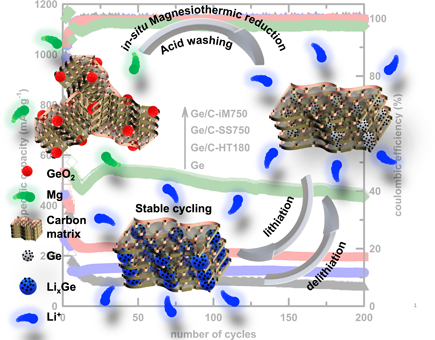
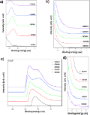
- , and σ (Ω·s−0.5) is the Warburg coefficient derived from the linear fit of the real part of the impedance (Z′, Ω) as a function of the angular frequency to the power of −0.5 (ω−0.5, s−0.5): As shown in Table 2, the value of Ge/C-iM750 is 2.37 × 10⁻¹⁶ cm2·s−1, 17.7 times higher than that of pure Ge
- . Electrochemical impedance spectroscopy (EIS) was carried out at the open-circuit voltage of the assembled cells after 6 h of resting on a Biologic VSP3 potentiostat. A sinusoidal signal with an amplitude of 10.0 mV and a frequency varying exponentially from 10 mHz to 100 kHz was used. (a) XRD patterns, (b) FTIR
- results of the real part of the impedance (Z′, Ω) as a function of the angular frequency to the power of −0.5 (ω−0.5, s−0.5). Summarized results of the electrochemical performance of all electrodes (the specific current was 100 mA·g−1 for the first five cycles and 1000 mA·g−1 for the subsequent cycles


A graphene quantum dots–glassy carbon electrode-based electrochemical sensor for monitoring malathion
Beilstein J. Nanotechnol. 2023, 14, 701–710, doi:10.3762/bjnano.14.56
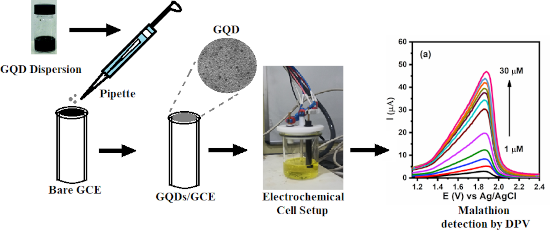
- , the sensor’s oxidation–reduction behavior was investigated. Electrochemical impedance spectroscopy was conducted to study the electrochemical properties of the modified the GQDs/GCE working electrode, which showed excellent charge transfer properties. We measured malathion in varying concentrations
- between 1 to 30 µM using differential pulse voltammetry, which resulted in a limit of detection of 0.62 nM. GQDs can thus be used to develop electrochemical sensors for the detection of pesticides in water. Keywords: cyclic voltammetry; differential pulse voltammetry; electrochemical impedance
- /reduction behavior and charge transfer resistance, cyclic voltammetry and electrochemical impedance spectroscopy were performed. An investigation of the relationship between concentrations and peak currents was conducted using differential pulse voltammetry (DPV). In this study, the modified GQD electrodes


Humidity-dependent electrical performance of CuO nanowire networks studied by electrochemical impedance spectroscopy
Beilstein J. Nanotechnol. 2023, 14, 683–691, doi:10.3762/bjnano.14.54
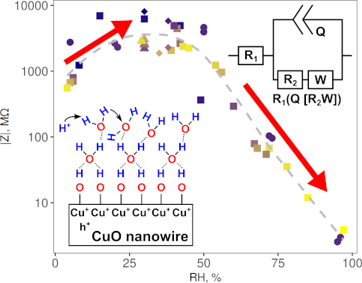
- , Riga, Latvia 10.3762/bjnano.14.54 Abstract Electrochemical impedance spectroscopy was applied for studying copper oxide (CuO) nanowire networks assembled between metallic microelectrodes by dielectrophoresis. The influence of relative humidity (RH) on electrical characteristics of the CuO nanowire
- -based system was assessed by measurements of the impedance Z. A slight increase of Z with increasing RH at low humidity was followed by a three orders of magnitude decrease of Z at RH above 50–60%. The two opposite trends observed across the range of the examined RH of 5–97% can be caused by water
- equivalent circuit parameters obtained by fitting impedance spectra. The new investigation data can be useful to predict the behavior of nanostructured CuO in humid environments, which is favorable for advancing technology of nanowire-based systems suitable for sensor applications. Keywords: CuO


Metal-organic framework-based nanomaterials as opto-electrochemical sensors for the detection of antibiotics and hormones: A review
Beilstein J. Nanotechnol. 2023, 14, 631–673, doi:10.3762/bjnano.14.52
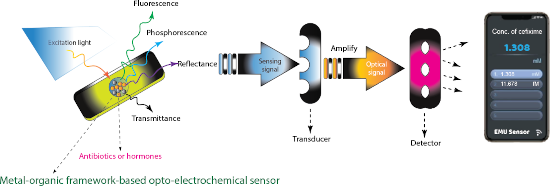
- identification of these emerging contaminants, such as chronoamperometry and electrochemical impedance spectroscopy, have also attracted a lot of interest [7]. Electrochemical biosensors are created by functionalizing the nanomaterial on the working electrode with biomolecules (e.g., nucleic acids, enzymes


ZnO-decorated SiC@C hybrids with strong electromagnetic absorption
Beilstein J. Nanotechnol. 2023, 14, 565–573, doi:10.3762/bjnano.14.47
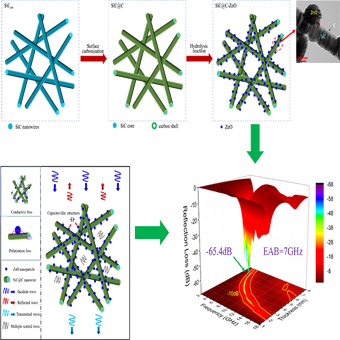
- samples is simulated based on the transmission line theory (Figure 4). The reflection loss of the hybrid/wax mixtures as a function of the frequency is determined from Z0 and Zin according to the following equation: where Z0 and Zin are the impedance of free space and the input impedance, respectively
- the highest value of dielectric tangent loss (Figure 5a), its impedance is not as high as that of the other SCZ samples (Figure 5b). A good EM absorber needs to exhibit high absorption and little reflection, which means an impedance matching is also necessary by controlling the values of ε′ and ε
- images derived from the red box area in image (b). XPS survey spectra of SCZ samples. 3D RL plots of the hybrids with different sample thicknesses in the range of 2–18 GHz with 30 wt % filler load. (a) SCZ0.5; (b) SCZ1; (c) SCZ2; (d) SCZ4. Dielectric tangent loss and impedance of SCZ/wax samples in the


Evaluation of electrosynthesized reduced graphene oxide–Ni/Fe/Co-based (oxy)hydroxide catalysts towards the oxygen evolution reaction
Beilstein J. Nanotechnol. 2023, 14, 420–433, doi:10.3762/bjnano.14.34
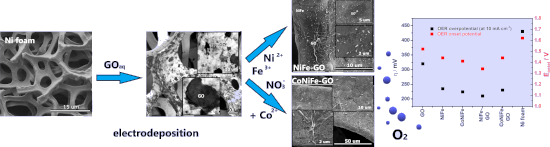
- the improvement in the OER of NiFe-GO with the higher Qdep of NiFe and GO resulted mainly from the NiFe structure and the electroactive surface area and the porosity of GO. Electrochemical impedance spectroscopy (EIS) was performed in order to determine the charge transfer resistance (Rct) of the




High–low Kelvin probe force spectroscopy for measuring the interface state density
Beilstein J. Nanotechnol. 2023, 14, 175–189, doi:10.3762/bjnano.14.18
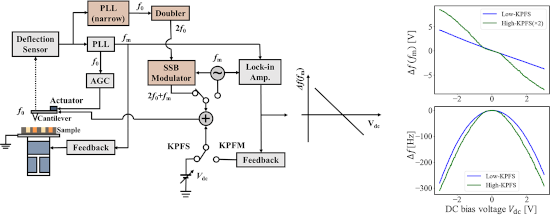
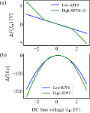
- probe is expressed as where CLF is the low-frequency tip–sample capacitance. The equivalent circuit for this capacitance CLF is shown in Figure 3b. Note that this equivalent circuit is equal to the equivalent circuit of the impedance model (SRH model) of the MIS structure (Figure 3a), neglecting the
- resistance component Rit. This result suggests a similarity between conventional impedance measurements and electrostatic force measurements in semiconductor surface and interface evaluation techniques. The average distance between the tip and the sample is zto, and the amplitude and frequency of the
- capacitance. The equivalent circuit for this capacitance CHF is shown in Figure 3c. Note that this equivalent circuit is equal to the equivalent circuit of the impedance of the MIS structure derived from the SRH model (Figure 3a), neglecting the capacitance component Cit and resistance component Rit due to



A distributed active patch antenna model of a Josephson oscillator
Beilstein J. Nanotechnol. 2023, 14, 151–164, doi:10.3762/bjnano.14.16
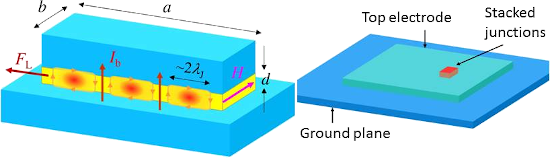
- large impedance mismatch between a Josephson junction (JJ) and free space [10][16][17]. But there is no consensus about the value of the junction impedance: Is it very small [16] or, in contrast, very large [10]? At present, there is no clear understanding about what causes the impedance mismatch and
- radiative impedance, Zrad. For a patch with a very thin insulator (as is the case for a tunnel JJ), the radiative admittance of one slot, 1/Zrad1 = G1 + iB1, contains a large imaginary part B1, caused by the large capacitance. However, at the cavity mode resonance the imaginary contributions from the two
- slots cancel out [34][36][39] and the radiative impedance becomes real. Therefore, at the resonance the radiation power from one slot is where |v(0,a)| is the amplitude of voltage oscillations at the slot (x = 0,a) and G1 is the radiative conductance of the single slot. Low-Tc JJs are operating at sub


Characterisation of a micrometer-scale active plasmonic element by means of complementary computational and experimental methods
Beilstein J. Nanotechnol. 2023, 14, 110–122, doi:10.3762/bjnano.14.12
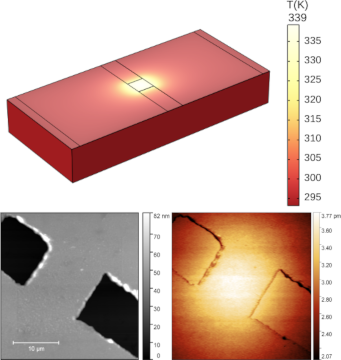
- deposition substrate for a thin silver film of 48 nm. The incident angles were referenced to the air–prism interface. The sinusoidal current was generated using a function generator with a current buffer to ensure impedance matching to the system under investigation. A transimpedance-amplified photodiode


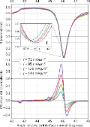


Observation of collective excitation of surface plasmon resonances in large Josephson junction arrays
Beilstein J. Nanotechnol. 2022, 13, 1578–1588, doi:10.3762/bjnano.13.132
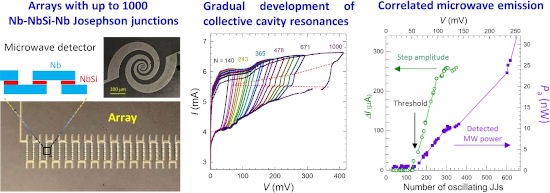
- ][15][16][17][18]. The performance of Josephson oscillators is limited by impedance mismatch [18][19] and self-heating [13][17][20][21]. Proper device engineering can obviate these obstacles and improve the performance [18]. A single JJ is able to emit EMWs, but with a low power [22]. Therefore
- resonant step in the I–Vs, implying that the emission is facilitated by the cavity modes [9][32][33][34]. We conclude that the long electrodes in the studied arrays are acting both as external resonators and microwave antennas. The large length (approx. 1 cm) of the electrodes facilitates good impedance
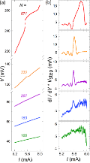
- using photolithography and reactive ion etching. The JJ sensor with variable thickness and a width of ≈100 nm is made by Ga+ focused ion beam etching. The JJ is made small in order to increase its resistance Rn to approx. 50 Ω, which is needed for a good impedance matching with the antenna. In order to




Photoelectrochemical water oxidation over TiO2 nanotubes modified with MoS2 and g-C3N4
Beilstein J. Nanotechnol. 2022, 13, 1541–1550, doi:10.3762/bjnano.13.127
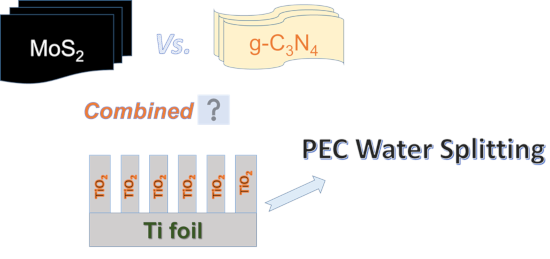
- with previous publications [50][51][52]. Figure 5 shows the results of electrochemical impedance spectroscopy (EIS), that is, Nyquist and Mott–Schottky plots of the materials, which give information about the charge transfer mechanism at the interface. In Figure 5a, the Nyquist plots of the samples all


A TiO2@MWCNTs nanocomposite photoanode for solar-driven water splitting
Beilstein J. Nanotechnol. 2022, 13, 1520–1530, doi:10.3762/bjnano.13.125
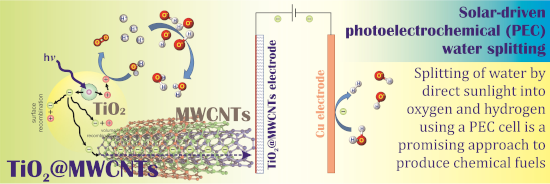
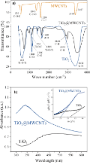
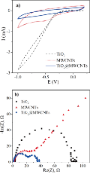
- electrode [35]. Based on the cyclic voltammetry results, it could be suggested that the TiO2@MWCNTs electrode is superior regarding photoelectrochemical application compared to TiO2 and MWCNTs electrodes. Electrochemical impedance spectroscopy (EIS) is applied to characterize the electron-transfer property



Structural studies and selected physical investigations of LiCoO2 obtained by combustion synthesis
Beilstein J. Nanotechnol. 2022, 13, 1473–1482, doi:10.3762/bjnano.13.121
- investigated by using impedance spectroscopy. Comparison of the effect of annealing temperature on electrical conductivity shows a very interesting behavior. As the annealing temperature increases, the DC conductivity value increases, reaching a maximum at a temperature of 500 °C. However, further increase in
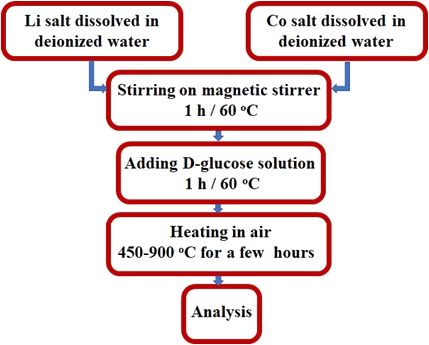
- conductivity and comparison of electrical properties of LCO powders) by using impedance spectroscopy (IS). Our studies provide important information on the mechanism of formation, particle growth, size, shape, and the control of these parameters during synthesis. Materials and Methods Synthesis of LiCoO2
- with Mn were studied using impedance spectroscopy. For conductivity measurements, pellets of ca. 1.5 mm thickness and 5.15 mm in diameter were prepared from the synthesized material. The powder was pressed at 20 MPa pressure for 1 min at room temperature. The round surfaces of the samples were covered




Rapid and sensitive detection of box turtles using an electrochemical DNA biosensor based on a gold/graphene nanocomposite
Beilstein J. Nanotechnol. 2022, 13, 1458–1472, doi:10.3762/bjnano.13.120
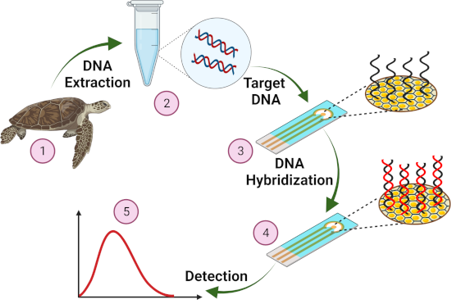
- electrochemical impedance spectroscopy. The thiol-modified synthetic DNA probe was immobilised on modified SPCEs to facilitate hybridisation with the reverse complementary DNA. The turtle DNA was distinguished based on hybridisation-induced electrochemical change in the presence of methylene blue compared to
- the applications of impedance DNA hybridisation biosensors for the detection of a number of analytes [31][32][33][34]. Nanomaterials may significantly enhance biosensor performance, stability, repeatability, and sensitivity [35][36][37][38][39]. Among various nanomaterials, graphene (Gr) [40] and gold
- using electrochemical impedance spectroscopy (EIS) measurements. In 2.0 mM [Fe(CN)6]3−/4− containing 0.2 M KCl as the supporting electrolyte, the Nyquist plots of the SPCE, Gr/SPCE, AuNPs/SPCE, and AuNPs/Gr/SPCE are shown in Figure 3d. The inset is the equivalent circuit indicating the charge transfer



Coherent amplification of radiation from two phase-locked Josephson junction arrays
Beilstein J. Nanotechnol. 2022, 13, 1445–1457, doi:10.3762/bjnano.13.119
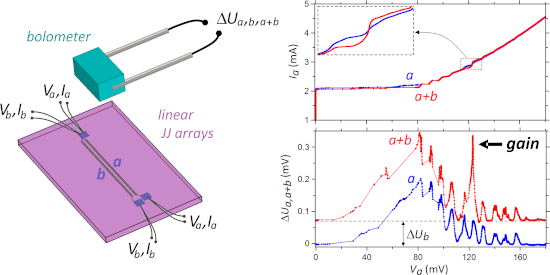
- ° to 360°. Thus, the differential impedance Z of most of the junctions acquires a capacitive character. When array-b is biased within the current step, and array-a is inactive (point 1 in Figure 6b), the distributions Pn and φn along array-b become structured. As seen from Figure 7c,d, they have an
- generate a power of Pn = 4–6 nW. Regarding the phase shift, the junctions in the antinodes have φn 180° (Figure 7d), which is characteristic for a generator with small capacitance. However, when moving towards the nodes, φn decreases down to 110–120°, that is, the differential impedance Z of the JJs


LED-light-activated photocatalytic performance of metal-free carbon-modified hexagonal boron nitride towards degradation of methylene blue and phenol
Beilstein J. Nanotechnol. 2022, 13, 1380–1392, doi:10.3762/bjnano.13.114
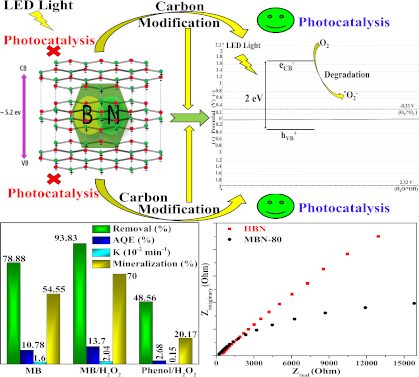
- . The Mott–Schottky (MS) analysis was performed at a frequency of 1 kHz while the electrochemical impedance spectroscopy (EIS) studies were conducted at 0 V DC under a frequency range of 105 to 100 Hz. The open circuit potential as a function of time (OCPT) was performed under alternating light and dark



Near-infrared photoactive Ag-Zn-Ga-S-Se quantum dots for high-performance quantum dot-sensitized solar cells
Beilstein J. Nanotechnol. 2022, 13, 1337–1344, doi:10.3762/bjnano.13.110
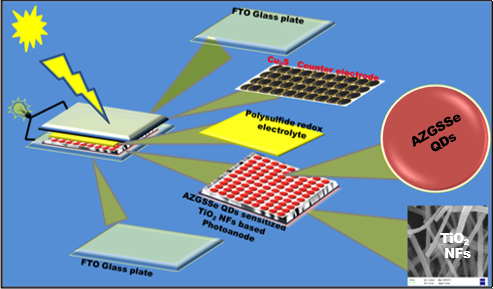
- nanocrystals. The X-ray diffraction pattern confirms the hexagonal structure. Due to the near-infrared light absorption capability, the synthesized QDs were used as the sensitizer to fabricate QDSCs. The fabricated QDSCs were characterized by using electrochemical impedance spectroscopy and photovoltaic
- ) and a photoluminescence spectrofluorometer (Jobin Yvon Horiba Nanolog). Impedance analysis of the fabricated QDSCs was conducted by using a CH instruments 760 A electrochemical workstation at applied frequencies of 100 kHz to 1 MHz with 10 mV AC voltage recording the Nyquist plots. The J–V curves were
- AZGSSe QDs to TiO2 NFs with minimized charge recombination rate [35][36][37]. PV cell studies The electron transfer mechanism of the fabricated QDSC was examined by using impedance analysis. The impedance spectrum plotted in the form of a Nyquist plot (Figure 7) was fitted with the equivalent circuit


Recent trends in Bi-based nanomaterials: challenges, fabrication, enhancement techniques, and environmental applications
Beilstein J. Nanotechnol. 2022, 13, 1316–1336, doi:10.3762/bjnano.13.109
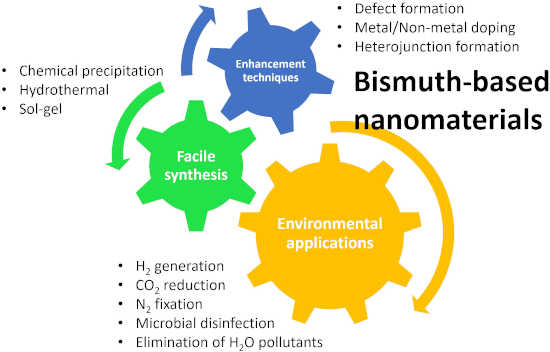
- , is more sensitive to photocurrent, and has a lower electrochemical impedance rate. This is because of surface plasmon resonances (SPRs) and the electron transport capabilities of Bi. The photocatalytic activity for the breakdown of phenol was significantly improved, compared to pristine Bi2WO6 under




Studies of probe tip materials by atomic force microscopy: a review
Beilstein J. Nanotechnol. 2022, 13, 1256–1267, doi:10.3762/bjnano.13.104
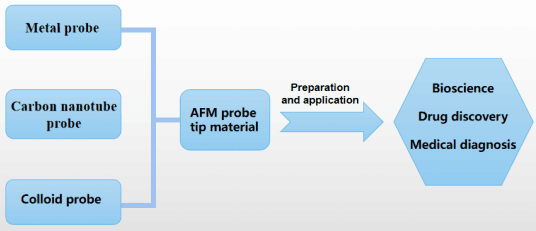
- such as electrochemical impedance spectroscopy, where the AC potential is applied to eCPs, and where such first tests are promising. Most importantly, eCPs are extremely stable and can be applied to electrochemically controlled tribology or nanoindentation experiments. With these foundations, eCPs will
Spindle-like MIL101(Fe) decorated with Bi2O3 nanoparticles for enhanced degradation of chlortetracycline under visible-light irradiation
Beilstein J. Nanotechnol. 2022, 13, 1038–1050, doi:10.3762/bjnano.13.91
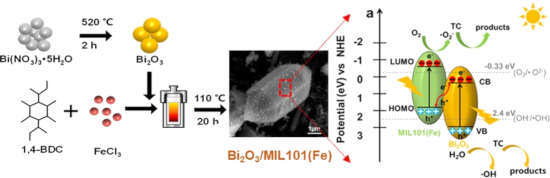
- ) with BaSO4 as a reference. The photoluminescence spectrum (PL) was obtained from a luminescence spectrometer at an excitation wavelength of 446 nm (RF-530IPC, Shimadzu, Japan). The photocurrent response and electrochemical impedance spectra (EIS) were measured by an electrochemical workstation


Electrocatalytic oxygen reduction activity of AgCoCu oxides on reduced graphene oxide in alkaline media
Beilstein J. Nanotechnol. 2022, 13, 1020–1029, doi:10.3762/bjnano.13.89
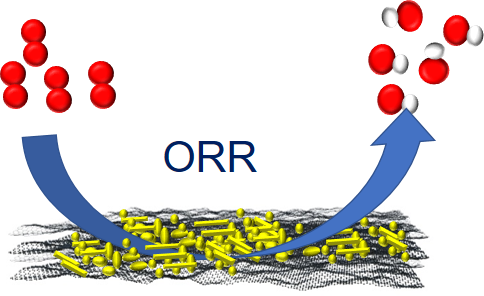
- the electrode/electrolyte interface during the ORR, electrochemical impedance spectroscopy was performed. The Nyquist plot was acquired at 5 mV as AC amplitude between 100 kHz and 100 mHz with 0 V as a bias potential (Figure 4d). It is important to note that the prepared electrocatalysts displayed a


Hierarchical Bi2WO6/TiO2-nanotube composites derived from natural cellulose for visible-light photocatalytic treatment of pollutants
Beilstein J. Nanotechnol. 2022, 13, 745–762, doi:10.3762/bjnano.13.66
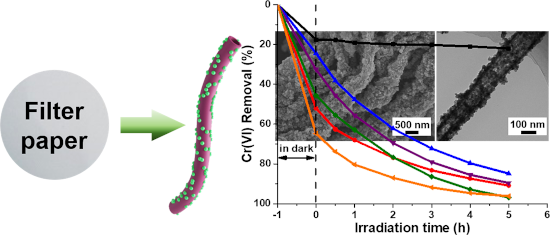
- , respectively. The transient photocurrent responses and electrochemical impedance spectroscopy (EIS) Nyquist plots (frequency: 0.01 Hz−100 kHz, alternate current: 5 mV) of a given sample were obtained on a CHI 760D (Shanghai, China) electrochemical workstation using a three-electrode system. The Pt plate (1.0





