


Search results
Search for "lead" in Full Text gives 1359 result(s) in Beilstein Journal of Nanotechnology. Showing first 200.
Nanoinformatics: spanning scales, systems and solutions
Beilstein J. Nanotechnol. 2026, 17, 423–427, doi:10.3762/bjnano.17.28

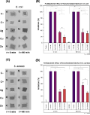
- with periodic-table-based descriptors such as an increase in oxygen count, electronegativity, and formation of a cationic charge, all influence cell membrane damage, and had the potential to influence oxidative damage through free radical accumulation, which could lead to changes in the survival rate

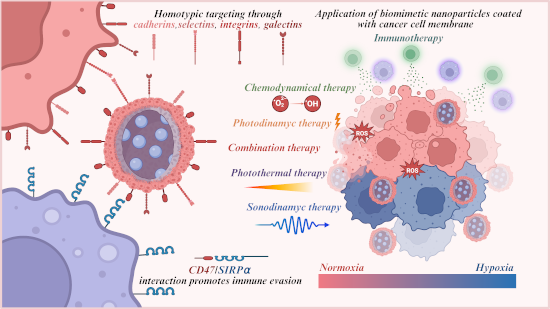
Biomimetic nanoparticles in cancer photodynamic therapy: a review of targeted delivery systems and therapeutic outcomes
Beilstein J. Nanotechnol. 2026, 17, 396–422, doi:10.3762/bjnano.17.27


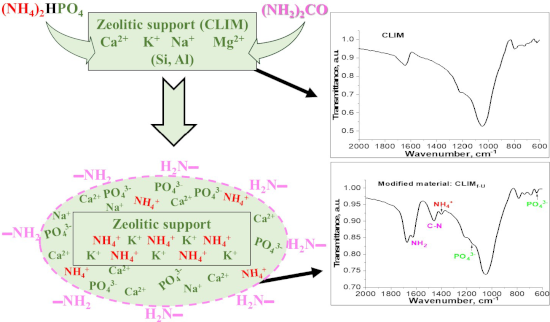
Eco-efficient materials for agricultural crops based on a mineral rich in MOR- and HEU-type zeolites
Beilstein J. Nanotechnol. 2026, 17, 381–395, doi:10.3762/bjnano.17.26
- essential mainly during the early stages of crop development. This scenario could lead to impeded diffusion and consequent slow release of nutrients from the zeolitic material into the soil solution. This late delivery of nutrients is consistent with the concept of slow or controlled release and increases



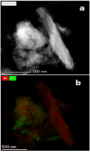
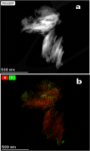

Polycatecholamine nanocoatings on stainless steel: the effect on attachment of human fibroblasts and platelets
Beilstein J. Nanotechnol. 2026, 17, 365–380, doi:10.3762/bjnano.17.25
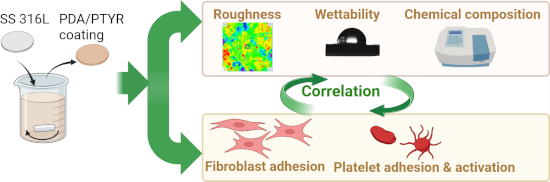
- integrins and, at the same time, high Rku with sharp nanofeatures hindered cell migration. As a result, there was no sufficient cell–cell interaction, which may lead to the detachment of cells [34]. It was reported that surfaces characterized by low CA values do not support fibroblast adhesion. Kim et al
- -thrombogenic plasma proteins, such as fibrinogen, which is present in PRP and was used for the study [46]. This can lead to the formation of fibrin clots on the biomaterial surface [47]. To date, PDA coatings prepared using a traditional way (slow air oxidation) have been known for increasing the adhesion of




Ferroelectric nanodot reservoir for neuromorphic computing
Beilstein J. Nanotechnol. 2026, 17, 352–364, doi:10.3762/bjnano.17.24
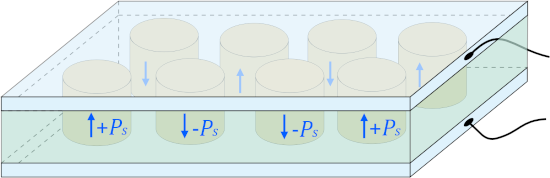
- fields. Figure 4b extends this analysis to a four-nanodot system with initial configuration (), and coercive fields ordered as hc1 < hc2 < hc3 < hc4. Here, multiple pulse sequences lead to distinct final polarization states depending on their magnitude and order. The sequence (−q,+q) results in whereas
- even simple temporal inputs are transformed into complex, spatially structured responses that can be linearly separated by a readout layer. (iv) History dependence and non-commutativity. Because switching paths depend on the temporal order of inputs, the same final field value may lead to different


Beam shaping techniques for pulsed laser ablation in liquids: Unlocking tunable control of nanoparticle synthesis in liquids
Beilstein J. Nanotechnol. 2026, 17, 309–342, doi:10.3762/bjnano.17.22
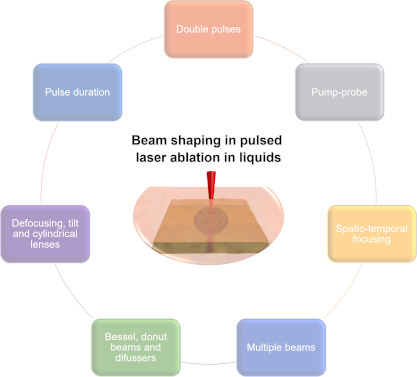
- surfaces. However, they are specifically designed for a single wavelength, and their use with ultrashort pulses can lead to substantial temporal pulse broadening [101]. Laser beam shaping technologies can be also categorised into static and dynamic systems. Static systems include components such as
- lenses in PLAL can lead to the formation of nanoribbons [140], and this may be attributed to two main mechanisms. First, the initially formed Ag nanospheres could undergo nanowelding under the influence of a line-shaped light sheet produced by cylindrical focusing, leading to chain- or ribbon-like
- energy continuously, it can lead to the suppression of the cavitation bubble and monodisperse NP size distributions [160][161]. However, the constant emission of CW lasers heats the target, inducing boiling of the surrounding liquid. The boiling liquid and the generated bubbles scatter the incident beam







Fast vortex dynamics and relaxation times in NbRe-based heterostructures
Beilstein J. Nanotechnol. 2026, 17, 292–302, doi:10.3762/bjnano.17.20
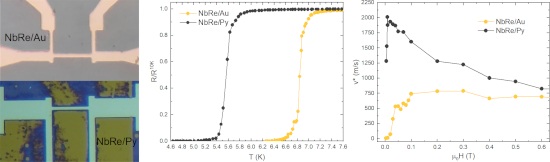
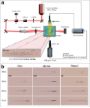
- /N [26][27][28][29][30] or S/F [31][32][33][34] systems, different mechanisms can influence the vortex dynamics depending on the thickness and conductivity of the capping layer. In particular, a sufficiently thick metallic overlayer may lead to a damping of vortex motion due to eddy currents induced
- to their lower energy, they will relax faster. This implies smaller τE and higher critical velocity. Based on these considerations, it is expected that coupling the superconductor with a ferromagnetic material should lead to a further increase in critical velocity, as experimentally observed [31][32
- relaxation channel, promoting faster quasiparticle recombination. However, this effect competes with additional spin-related relaxation channels due to the splitting of the electronic band, which can lead to a slower recovery of the superconducting condensate. Therefore, in general, the net effect of a


Advancing nanolithography: a comprehensive review of materials for local anodic oxidation with AFM
Beilstein J. Nanotechnol. 2026, 17, 275–291, doi:10.3762/bjnano.17.19
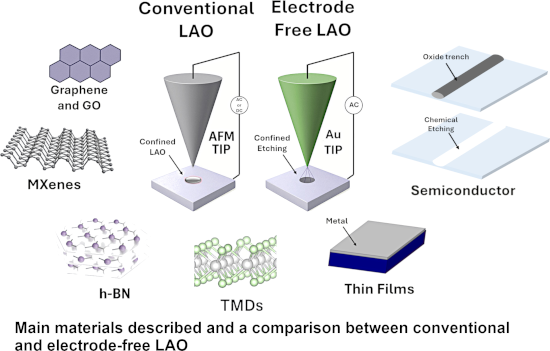
- applied is fixed (i.e., tens of milliseconds) oxide size increases linearly with pulse amplitude but logarithmically with pulse width [59]. As expected, higher voltages and longer oxidation times increase oxide thickness but may lead to tip wear and reduced lateral resolution. During LAO, the tip
- contact-mode conditions with applied forces around 1500 nN, which may lead to tip coating wear if the ohmic contact is not facilitated by the presence of a water meniscus. Despite this, the authors demonstrate consistent and reproducible patterning over hundreds of micrometers, achieved at writing speeds
- surfaces), and environmental factors, such as humidity, which can impact reproducibility. LAO-grown oxide is less dense than thermally grown oxide, and mechanical stress between the substrate and oxide layer may lead to defects. In addition, the insulating nature of SiO2 limits its versatility compared to


Durable antimicrobial activity of fabrics functionalized with zeolite ion-exchanged nanomaterials against Staphylococcus aureus and Escherichia coli
Beilstein J. Nanotechnol. 2026, 17, 262–274, doi:10.3762/bjnano.17.18
- are currently explored for various biomedical applications, including disease prevention, diagnosis, and the improvement of antiviral drug delivery systems [5][6]. In some cases, the antimicrobial properties of NPs lead to creation of new “nano-antimicrobial” materials [7]. The mechanism by which
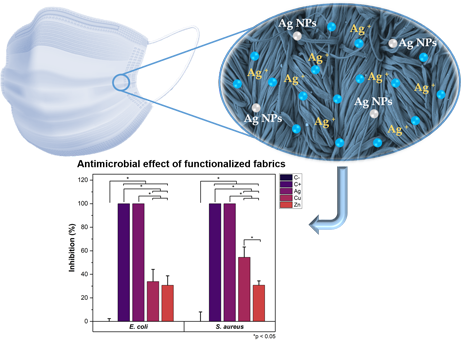
- increased inhibition of E. coli and S. aureus using washed Cu/CBV-600-bramante may be attributed to the removal of excess material, which could lead to an increase in surface area and active sites [45]. Most importantly, these results demonstrate that the fabrics retain their antimicrobial activity even




Multilayered hyperbolic Au/TiO2 nanostructures for enhancing the nonlinear response around the epsilon-near-zero point
Beilstein J. Nanotechnol. 2026, 17, 251–261, doi:10.3762/bjnano.17.17
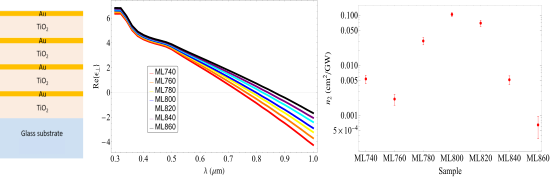
- has been found that layers of gold with a thickness below 10 nm would lead to an inhomogeneous layer with separated gold “islands” throughout the surface rather than a continuous layer [28]. Because of this, we chose to use a gold layer thickness of 10 nm, the limit to have uniform layers found in
- glass substrate, then a dip in the visible region, and finally an increase towards the IR region. We can observe a relatively high absorbance around 800 nm with transmittances down to 40%, which could lead to losses and undesired thermal effects. The complex permittivity of single layers of the


Gold nanoparticle-decorated reduced graphene oxide as a highly effective catalyst for the selective α,β-dehydrogenation of N-alkyl-4-piperidones
Beilstein J. Nanotechnol. 2026, 17, 218–238, doi:10.3762/bjnano.17.15
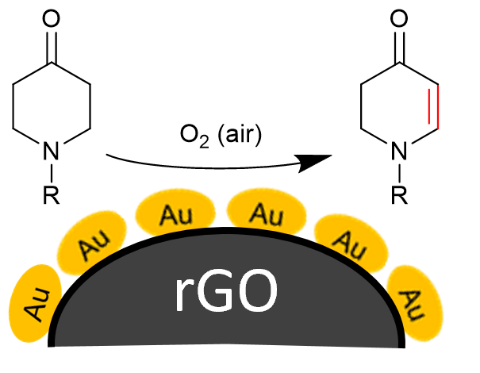
- vicinity to prevent aggregation. Uneven precursor distribution can lead to localized high concentrations of Au species, resulting in less controlled nucleation and the formation of larger clusters. Surface roughness and heterogeneity of the support influence the size and distribution, leading to increased
- ) surface area can be attributed to the additional ≈10 wt % mass of the Au nanoparticles with the additional mass of their citrate or SiW9 conjugate, which are non-porous, but add to the mass of the composite and thereby lead to an inherently lower specific surface area. However, even when assuming a mass
- solely dependent on the amount of gold, but rather on the dispersion of gold nanoparticles, which increases the number of accessible active sites and reduces the need for excessive gold loading. In fact, increasing gold content can be detrimental, as it may lead to particle aggregation, thereby reducing


Time of flight secondary ion mass spectrometry imaging of contaminant species in chemical vapour deposited graphene on copper
Beilstein J. Nanotechnol. 2026, 17, 200–213, doi:10.3762/bjnano.17.13
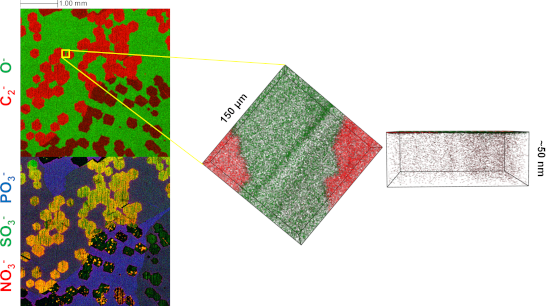
- of the material and lead to a step change in terms of high speed [11][12][13], transparent [14] and flexible electronic devices [15], membranes [16][17], and sensors [18][19]. A large amount of work has been dedicated to the optimisation of the growth process to aid in the formation of large area
- diffusion of material present in the copper foil before growth [36][37], which could lead to variations in the properties of graphene once transferred from the Cu foil to an alternative substrate. We also explore the gas permeation properties of the CVD graphene on Cu [38] by examining the oxygen detected
- Cs+ ions. Due to the polycrystalline nature of the Cu foils, which can lead to variations in the sputter yield for different crystal orientations, the depth profiles were referenced relative to either the total ion intensity to provide a comparison of the oxygen distribution underneath the graphene





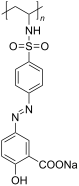
Structure-dependent thermochromism of PAZO thin films: theory and experiment
Beilstein J. Nanotechnol. 2026, 17, 186–199, doi:10.3762/bjnano.17.12
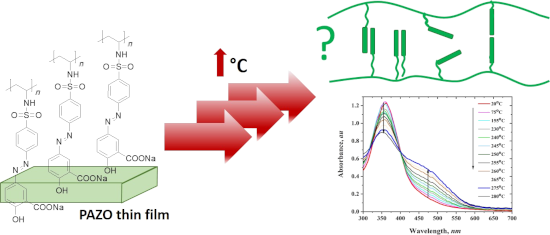
- , optoelectronics, memory devices, and sensors [12]. The birefringence phenomenon results from multiple cycles of trans–cis–trans (E–Z–E) photoisomerization stimulated by the polarized light impact [13][14][15][16]. The E–Z–E transitions lead to an alignment of the photoreactive azo chromophores perpendicularly
- hypsochromic). Conversely, neighboring chromophores, arranged in a head-to-tail fashion, give a negative value for the Coulomb coupling and lead to the occurrence of aggregation-induced redshift (they are called “J”-aggregates after E.E. Jelley, who discovered the phenomenon in 1936). Packing geometries in the


From shield to spear: Charge-reversible nanocarriers in overcoming cancer therapy barriers
Beilstein J. Nanotechnol. 2026, 17, 159–175, doi:10.3762/bjnano.17.10
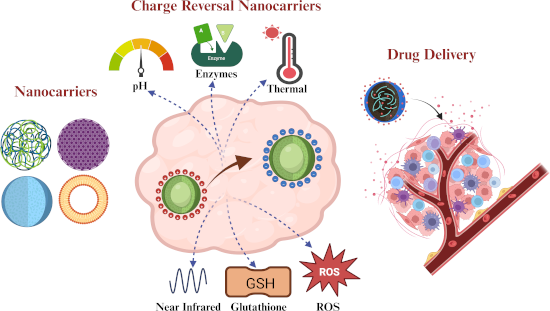
- reproducibility among various formulations [97]. In addition, the synthesis of CRNs often involves elaborate multistep processes to achieve accurate charge-switching properties, which can lead to inconsistencies between production batches and create scalability challenges [98]. The inclusion of diverse functional


Capabilities of the 3D-MLSI software tool in superconducting neuron design
Beilstein J. Nanotechnol. 2026, 17, 122–138, doi:10.3762/bjnano.17.8

- superconducting strip lines [53][54]. It can be noted that the connection of the “B” source to the SQUID is asymmetric in Figure 13a, which can lead to asymmetry in the voltage–flux curve. This does not affect inductance measurements since the period of the voltage–flux curve corresponds to one quantum of applied



Functional surface engineering for cultural heritage protection: the role of superhydrophobic and superoleophobic coatings – a comprehensive review
Beilstein J. Nanotechnol. 2026, 17, 63–96, doi:10.3762/bjnano.17.6
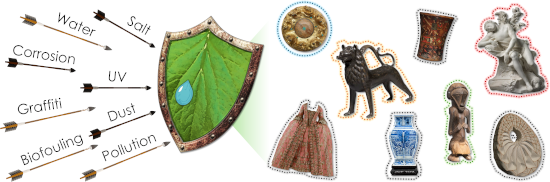
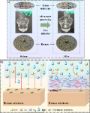
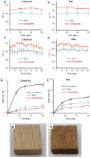
- using Paraloid® B72 solutions with 1–4% silica dioxide nanoparticles to enhance durability and reduce moisture sensitivity (mostly to face the biotic and abiotic factors that usually lead to wood damage). The treatment improved dimensional stability, hydrophobicity, and resistance to artificial




Microscopic study of the intermediate mixed state in intertype superconductors
Beilstein J. Nanotechnol. 2026, 17, 57–62, doi:10.3762/bjnano.17.5
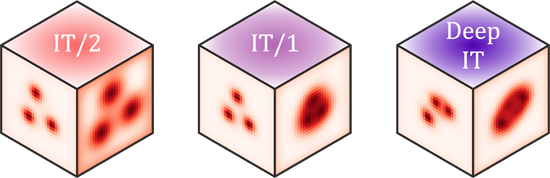
- by complex, non-pairwise vortex interactions that lead to irregular vortex patterns. This finding emphasizes the many-body nature of vortex matter in this regime and highlights the limitations of simplified models based on pairwise interaction. In general, this study establishes a microscopic


Subdigital integumentary microstructure in Cyrtodactylus (Squamata: Gekkota): do those lineages with incipiently expressed toepads exclusively exhibit adhesive setae?
Beilstein J. Nanotechnol. 2026, 17, 38–56, doi:10.3762/bjnano.17.4
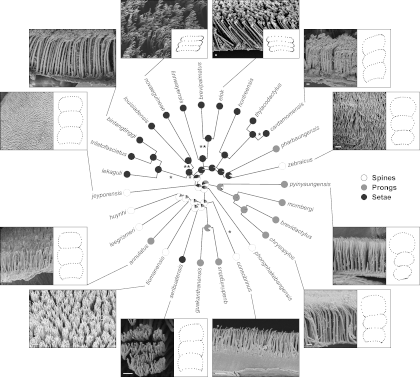
- scales (Figure 2). Thus, setae likely precede the changes in scale dimensions that lead to the recognition of incipient (and ultimately fully expressed) toepads. The first stages of adhesive competency likely begin when microstructure density and filament modification as prongs or spines enable
- stronger adhesive interactions). In theory, this would lead to the elaboration of incipient and ultimately fully expressed toepads. Given the gradual nature of the evolutionary assembly of complex structures such as adhesive toepads, terms like incipient toepads necessarily remain incremental. Therefore


Reduced graphene oxide paper electrode for lithium-ion cells – towards optimized thermal reduction
Beilstein J. Nanotechnol. 2026, 17, 24–37, doi:10.3762/bjnano.17.3
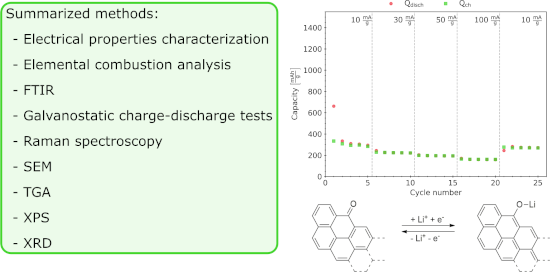
- [31] and flake edge exposition on the rGO paper surface, improving accessibility of the redox sites for electrolyte and lithium ions. Microwave methods, which also lead to changes in morphology (i.e., expansion) of the material, require thermal pre-treatment since GO weakly absorbs incident microwaves
- that the interlayer spacing remains relatively stable, while higher temperatures, particularly 800 °C, may lead to partial degradation and increased structural disorder. The obtained rGO paper sheets underwent electrochemical properties characterization; galvanostatic charge–discharge tests were



Competitive helical bands and highly efficient diode effect in F/S/TI/S/F hybrid structures
Beilstein J. Nanotechnol. 2026, 17, 15–23, doi:10.3762/bjnano.17.2
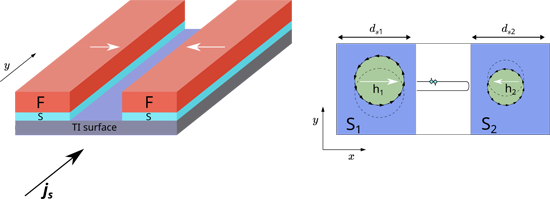
- the same in the whole system. Obviously, this is not the case if L ≫ ξ because, in this case, the Josephson coupling between the S1 and S2 leads is absent, and they do not “feel” each other. In each lead, a distinct phase gradient q1,2 = −2hi/α is established to satisfy the zero spontaneous current


![[Graphic 16]](/bjnano/content/inline/2190-4286-17-2-i31.svg?max-width=637&scale=1.18182)
![[Graphic 17]](/bjnano/content/inline/2190-4286-17-2-i32.svg?max-width=637&scale=1.18182)


Quantitative estimation of nanoparticle/substrate adhesion by atomic force microscopy
Beilstein J. Nanotechnol. 2026, 17, 1–14, doi:10.3762/bjnano.17.1

- adhesion energies, the model still highlights a key point: A higher impact energy does not necessarily lead to stronger NP adhesion. Conclusion In this study, we examined the adhesion properties of Cu nanoparticles (NPs) on Si substrates, with a focus on varying landing conditions affected by the applied



Internal 3D temperature mapping in biological systems using ratiometric light-sheet imaging and lipid-coated upconversion nanothermometers
Beilstein J. Nanotechnol. 2025, 16, 2306–2316, doi:10.3762/bjnano.16.159
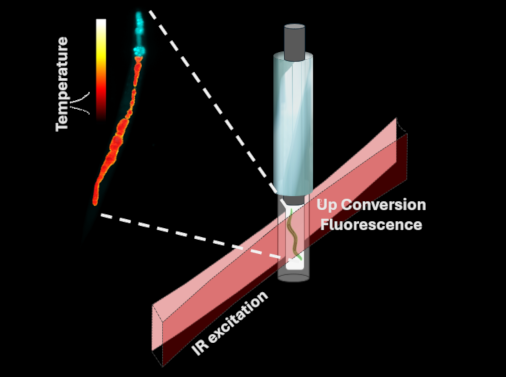
- to electrostatic repulsion with the negatively charged glycocalyx of the intestinal cell membranes, thereby hindering endocytosis [58]. This contrasts with cationic coatings like polyethyleneimine (PEI), which promote endocytosis and lead to UCNP internalization into intestinal cells [59]. This


Improving magnetic properties of Mn- and Zn-doped core–shell iron oxide nanoparticles by tuning their size
Beilstein J. Nanotechnol. 2025, 16, 2285–2295, doi:10.3762/bjnano.16.157
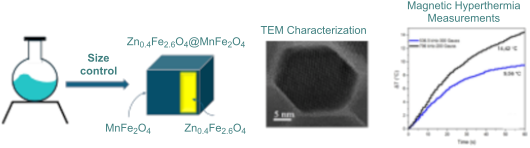
- ± 1.7, and 45.0 ± 1.2 nm exhibited Ms values of 0.012, 0.031, 0.12, and 7 A·m2·kg−1, respectively (Table 3). Similar trends have been reported in the literature, where larger particle sizes lead to higher Ms values due to the reduction of surface spin canting and the improved alignment of magnetic



Chiral plasmonic nanostructures fabricated with circularly polarized light
Beilstein J. Nanotechnol. 2025, 16, 2245–2264, doi:10.3762/bjnano.16.154
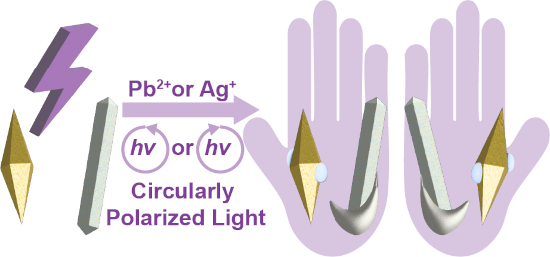
- can lead to a significant displacement of the polymer backbone, with the degree of displacement being dependent on the strength of the electric field under CPL. Chiral topographic changes due to the polymer displacement were observed using atomic force microscopy (AFM). Similar observations were made
- studied, while the material is an achiral, periodically ordered surface (Figure 7c) [64]. Its strength depends on the angle of light incidence. Ignoring extrinsic chirality may lead to the misinterpretation of CD or ORD spectra. It is also essential to consider morphological inhomogeneity when analyzing
- distribution when exposed to CPL. Additionally, the local thermal effects that may lead to isotropic photochemical deposition on the achiral PNSs require further investigation and must be taken into account. Furthermore, the interactions between the achiral PNS seeds and the substrates on which they are





Optical bio/chemical sensors for vitamin B12 analysis in food and pharmaceuticals: state of the art, challenges, and future outlooks
Beilstein J. Nanotechnol. 2025, 16, 2207–2244, doi:10.3762/bjnano.16.153
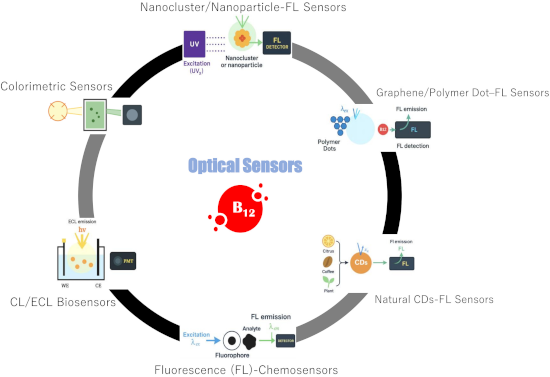
- lead to several health issues such as pernicious anemia (PA), anemia, fatigue, nausea, and weight loss [2][8]. In contrast, excessive intake of VB12 may contribute to conditions like liver disease, neurotoxicity, kidney failure, or myeloproliferative disorders [2][9][10]. Consequently, monitoring the





