Search results
Search for "low temperature" in Full Text gives 390 result(s) in Beilstein Journal of Nanotechnology. Showing first 200.
Vortex lattices of layered HTSCs at different vortex–vortex interaction potentials
Beilstein J. Nanotechnol. 2025, 16, 362–370, doi:10.3762/bjnano.16.27
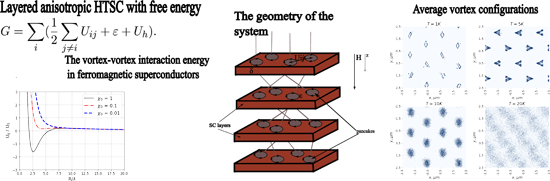
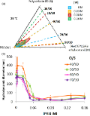
- discovered. Indications were also obtained that the second peak on the magnetization curve (second magnetization peak) at low temperature (less than 0.55Tc) coincides with the transition between the regimes of the flow of the vortex lattice. The measurements were also performed in a magnetic field inclined


Enhancing mechanical properties of chitosan/PVA electrospun nanofibers: a comprehensive review
Beilstein J. Nanotechnol. 2025, 16, 286–307, doi:10.3762/bjnano.16.22

- blending of functional agents in the polymer solution, wet chemical methods, surface graft polymerization, and plasma treatment [160]. Low-temperature plasma offers advantages over other techniques in terms of lower energy consumption, faster processing, and minimal solvent use [161]. By appropriately
- , wet chemical procedures, low-temperature plasma treatment, and co-electrospinning with surface-active chemicals and polymers [160]. Among these methods, low-temperature plasma treatment is particularly popular because it can modify the surface properties of the nanofibers without affecting their bulk


Orientation-dependent photonic bandgaps in gold-dust weevil scales and their titania bioreplicates
Beilstein J. Nanotechnol. 2025, 16, 1–10, doi:10.3762/bjnano.16.1
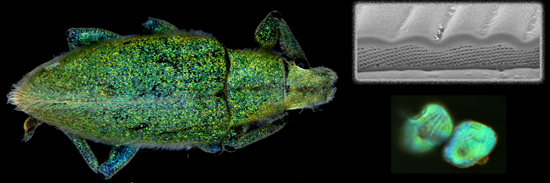
- interesting for their use as templates. The work of Galusha and colleagues demonstrated a double-imprint templating process to create a positive titania replica of beetle scales with high refractive index. This showed the effectiveness of a sol–gel process at relatively low temperature (130 °C) in replicating


Heterogeneous reactions in a HFCVD reactor: simulation using a 2D model
Beilstein J. Nanotechnol. 2024, 15, 1627–1638, doi:10.3762/bjnano.15.128
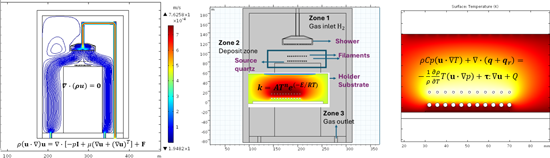
- chemical vapor deposition reactor for the growth of polycrystalline SiO2 [23]. Most of these models describe CVD reactors at low pressure and low temperature, but there are not enough models regarding CVD systems at high temperature (>800 K) and high pressure (atmospheric pressure). In this investigation


Effect of radiation-induced vacancy saturation on the first-order phase transformation in nanoparticles: insights from a model
Beilstein J. Nanotechnol. 2024, 15, 1453–1472, doi:10.3762/bjnano.15.117

- cubic (bcc) Fe lattice it is about 1.5–2.0 eV; the energy of interstitial formation ranges from 2 to 4 eV. It is accepted that interstitials are mobile at room (low) temperature because of significantly less migration energies of 0.01–0.50 eV, whereas vacancies are mobile at very high temperatures


Ion-induced surface reactions and deposition from Pt(CO)2Cl2 and Pt(CO)2Br2
Beilstein J. Nanotechnol. 2024, 15, 1427–1439, doi:10.3762/bjnano.15.115

- at low temperature and exposed to ion irradiation (Figure 2). Discussion MS and XPS data support the idea that, upon ion beam exposure, the initial process to occur is Pt–CO bond dissociation, evolving both CO ligands as the first volatile product. The volatilization of CO is readily identified in



Investigation of Hf/Ti bilayers for the development of transition-edge sensor microcalorimeters
Beilstein J. Nanotechnol. 2024, 15, 1353–1361, doi:10.3762/bjnano.15.108

- . Otherwise, the critical temperature of the structures would vary significantly, which we do not observe, as shown below. Cryogenic Measurement Results Low-temperature measurements of the chips with structures were performed in a Triton 200 dilution cryostat. The chips were placed in a 16-pin sample holder


A low-kiloelectronvolt focused ion beam strategy for processing low-thermal-conductance materials with nanoampere currents
Beilstein J. Nanotechnol. 2024, 15, 1197–1207, doi:10.3762/bjnano.15.97

- for any type of instrument and ion species, which includes gallium FIBs, plasma FIBs, helium ion microscopy FIBs, as well as low-temperature ion source and magneto-optical trap ion source FIBs. Results and Discussion SRIM simulations SRIM simulations were carried out to evaluate the interactions of 5



Bolometric IR photoresponse based on a 3D micro-nano integrated CNT architecture
Beilstein J. Nanotechnol. 2024, 15, 1030–1040, doi:10.3762/bjnano.15.84
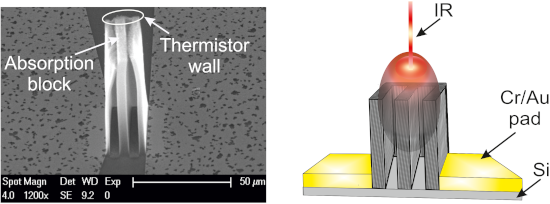
- comparable to the responsivity of a vertically aligned MWCNT design obtained at very low temperature (84 K) and under vacuum conditions [25]. The responsivity of our miniaturized architecture in sample 2 was also competitive with larger bolometer architectures using suspended MWCNTs [23][24] and SWCNTs [22


Atomistic insights into the morphological dynamics of gold and platinum nanoparticles: MD simulations in vacuum and aqueous media
Beilstein J. Nanotechnol. 2024, 15, 995–1009, doi:10.3762/bjnano.15.81
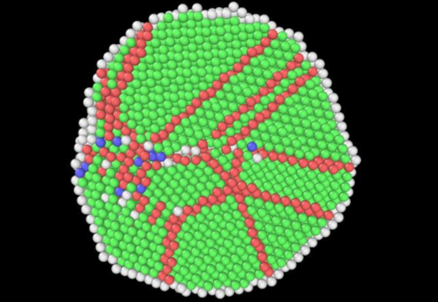
- diameters of 2 and 8 nm are presented. A simple visual inspection confirms the formation of a multifaceted crystal surface at low temperature, while a smoother and uniform surface is seen at high temperature. The temperature dependence of the average coordination number as a function of the NP diameter is


Recent progress on field-effect transistor-based biosensors: device perspective
Beilstein J. Nanotechnol. 2024, 15, 977–994, doi:10.3762/bjnano.15.80
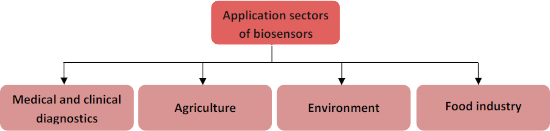
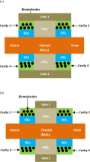
- precisely etched to create separated nanocavity regions for enhancing the detection of biomolecule species. It has been reported that the SE SB FET-based biosensor structure offers a significant improvement in sensitivity at low-temperature values. Additionally, the SE SB FET-based biosensor provides




Effects of cutting tool geometry on material removal of a gradient nanograined CoCrNi medium entropy alloy
Beilstein J. Nanotechnol. 2024, 15, 925–940, doi:10.3762/bjnano.15.76
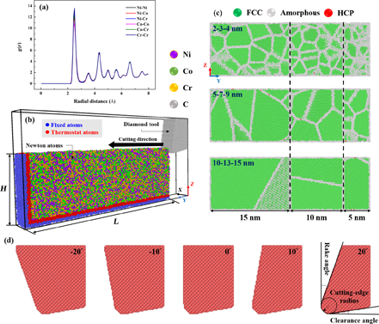
- structure of such substrates is more prone to generating twinning boundaries with hexagonally close-packed (HCP) phases during the deformation process, which enables better performance in low-temperature environments, such as industry in cold areas and aerospace. Ke et al. fabricated a high-quality MEA
- (NiCoCr)95V5, which achieved an excellent strength and plasticity product exceeding 86 GPa·% at low temperatures [7]. Qiu et al. investigated the effects of adding Al, Ti, Mo, and W on low-temperature phase stability, mechanical properties, and deformation behavior of CoCrNi-based MEAs [8]. Strengthening








Facile synthesis of Fe-based metal–organic frameworks from Fe2O3 nanoparticles and their application for CO2/N2 separation
Beilstein J. Nanotechnol. 2024, 15, 897–908, doi:10.3762/bjnano.15.74
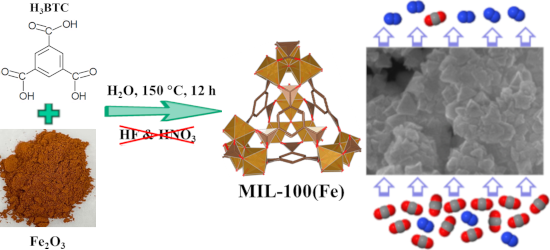
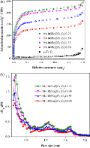
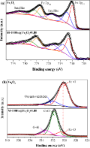
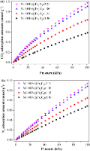
- , yielding 82% and a BET surface area of 2050 m2·g−1 [20]. Since then, various green synthetic routes from ferric nitrate and metallic iron powder have been developed for generating MIL-100(Fe), including low-temperature synthesis [21], solvent-free synthesis [22], and dry gel conversion pathway [23]. It
- (ethanol and water) inside the pore system were released at low temperature around 100 °C. Subsequently, the ligands (water and/or –OH ligands) connected to Fe sites of the iron oxo-clusters were removed, leaving unsaturated metal sites inside the framework. Finally, a significant weight loss (approx. 41.8





Elastic modulus of β-Ga2O3 nanowires measured by resonance and three-point bending techniques
Beilstein J. Nanotechnol. 2024, 15, 704–712, doi:10.3762/bjnano.15.58
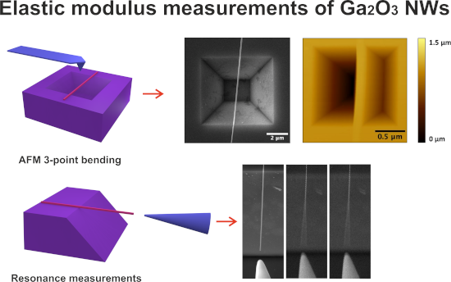
- a carrier gas mixture of Ar/H2 5%, maintaining this temperature and flow for 30 min to allow NW growth. Subsequently, the reactor was naturally cooled to room temperature. Ga2O3 NWs, up to 100 μm in length, grew on SiO2/Si substrates downstream in the low-temperature zone maintained around 850–900


Stiffness calibration of qPlus sensors at low temperature through thermal noise measurements
Beilstein J. Nanotechnol. 2024, 15, 580–602, doi:10.3762/bjnano.15.50
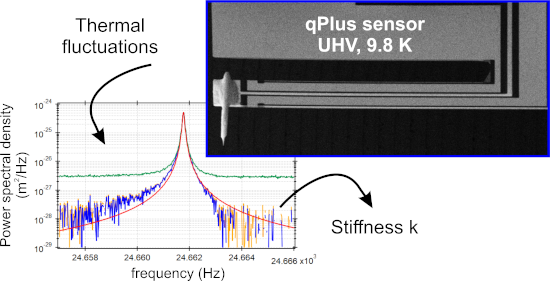
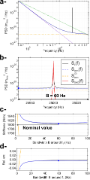
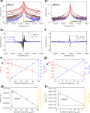
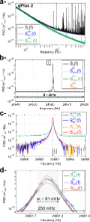
- little precision. An accurate stiffness calibration is therefore mandatory if accurate force measurements are targeted. In nc-AFM, the probe may either be a silicon cantilever, a quartz tuning fork (QTF), or a length extensional resonator (LER). When used in ultrahigh vacuum (UHV) and at low temperature
- the framework focuses on a particular kind of sensor, it may be adapted to any high-k, high-Q nc-AFM probe used under similar conditions, such as silicon cantilevers and LERs. Keywords: low temperature; non-contact atomic force microscopy; qPlus sensors; quartz tuning fork; stiffness calibration
- and at room temperature, nc-AFM experiments are mostly carried out with silicon cantilevers, similar to those used during AFM experiments in air or in liquid. Their stiffness rarely exceeds 100 N/m. In UHV and at low temperature, the use of cantilevers is more tedious because of the required in situ

Electron-induced deposition using Fe(CO)4MA and Fe(CO)5 – effect of MA ligand and process conditions
Beilstein J. Nanotechnol. 2024, 15, 500–516, doi:10.3762/bjnano.15.45
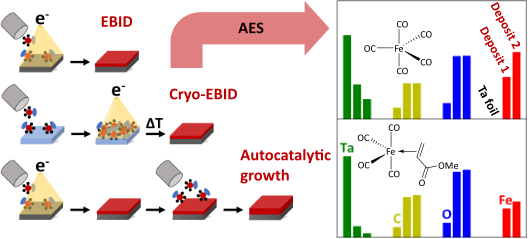
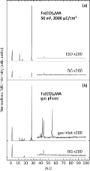
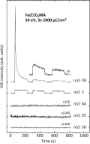
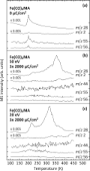
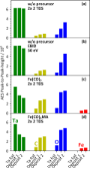
- ]. Autocatalytic growth (AG) of high-purity deposits leads to formation of individual crystallites as a consequence of precursor surface mobility at room temperature [21][24][25]. This mobility is suppressed when the surface is held at sufficiently low temperature. This was demonstrated by UHV experiments that
- performed FEBID from Fe(CO)5 at 200 K, which produced a continuous deposit [21]. More recently, such an approach was applied more extensively and introduced as cryo-FEBID [28][29]. For cryo-FEBID, the precursor is condensed at multilayer coverage onto a surface held at low temperature. The electron beam
- . As an important finding, desorption of the intact MA ligand does not occur during electron irradiation under cryogenic conditions. Assuming that MA as a neutral ligand dissociates readily from the Fe(CO)4MA complex, the low temperature would prevent MA from desorbing. This explanation is supported by



Aero-ZnS prepared by physical vapor transport on three-dimensional networks of sacrificial ZnO microtetrapods
Beilstein J. Nanotechnol. 2024, 15, 490–499, doi:10.3762/bjnano.15.44
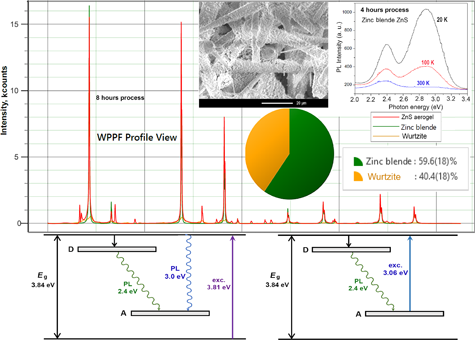
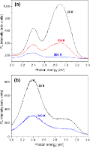
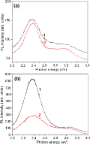
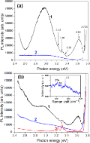
- measured at low temperature in the near-bandgap region, as shown in Figure 6. Apart from that, a narrow emission peak is observed at 3.726 eV. This peak is assigned to multiphonon resonant Raman scattering (RRS) in ZnS since the quantum energy difference between the excitation laser line (3.814 eV) and the
- eV in the spectra of Figure 6 measured at low temperature. The features come from residual ZnO related to the sacrificial network of microtetrapods. To demonstrate this assumption, the PL spectrum measured for the initial ZnO template is presented in Figure 6b (curve 3). This spectrum consists of a



Unveiling the nature of atomic defects in graphene on a metal surface
Beilstein J. Nanotechnol. 2024, 15, 416–425, doi:10.3762/bjnano.15.37
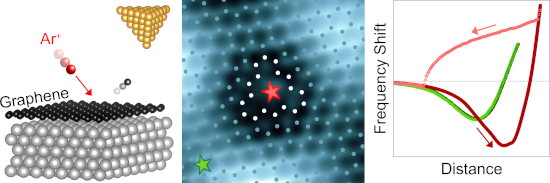
- of defects. Experimental A combined STM-AFM was operated in ultrahigh vacuum (5 × 10⁻⁹ Pa) and at low temperature (5 K). Surfaces of Ir(111) were cleaned by Ar+ ion bombardement and annealing. The epitaxial growth of graphene proceeded by exposing the heated (1300 K) Ir(111) surface to the gaseous


Modulated critical currents of spin-transfer torque-induced resistance changes in NiCu/Cu multilayered nanowires
Beilstein J. Nanotechnol. 2024, 15, 360–366, doi:10.3762/bjnano.15.32
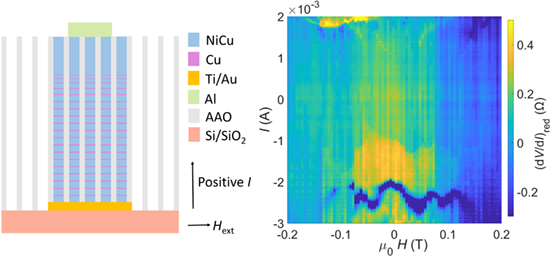
- of STT-assisted resistance switching in multilayered nanowires, raw data before the background subtraction, a schematic diagram of the four-point measurements at low temperature, 2D color maps of (dV/dI)red over a larger current range and under upsweep of the magnetic field, the potential influence


Design, fabrication, and characterization of kinetic-inductive force sensors for scanning probe applications
Beilstein J. Nanotechnol. 2024, 15, 242–255, doi:10.3762/bjnano.15.23
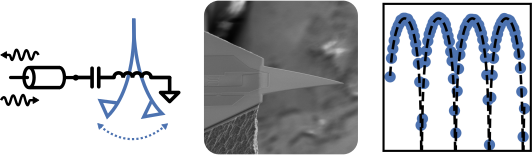
- August K. Roos Ermes Scarano Elisabet K. Arvidsson Erik Holmgren David B. Haviland Department of Applied Physics, KTH Royal Institute of Technology, Hannes Alfvéns väg 12, SE-114 19 Stockholm, Sweden 10.3762/bjnano.15.23 Abstract We describe a transducer for low-temperature atomic force
- the internal losses. To decrease η while remaining overcoupled, the shunt inductor Ls should satisfy 50 Ω > iωcLs > R. As a final consideration, the temperature when operating low-temperature AFMs is typically around 1 K. For temperatures closer to Tc, the internal losses of the microwave circuit
- described our approach to designing cantilever force sensors with integrated microwave cavity electromechanical sensing of flexural motion, based on the strain-dependent kinetic inductance of a superconducting nanowire. This type of force sensor is potentially interesting for low-temperature AFM as the



Influence of conductive carbon and MnCo2O4 on morphological and electrical properties of hydrogels for electrochemical energy conversion
Beilstein J. Nanotechnol. 2024, 15, 57–70, doi:10.3762/bjnano.15.6
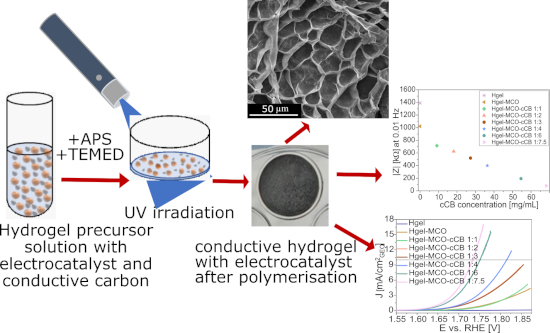
- elevated temperatures at the synthesis stage, which is an essential step in most of the conventional synthesis paths of conductive hydrogels described in the literature [23][24][26][27][28]. These two features, the one-stage process, and the low-temperature needed, are used for synthesising the polymer


Low temperature atomic layer deposition of cobalt using dicobalt hexacarbonyl-1-heptyne as precursor
Beilstein J. Nanotechnol. 2023, 14, 951–963, doi:10.3762/bjnano.14.78
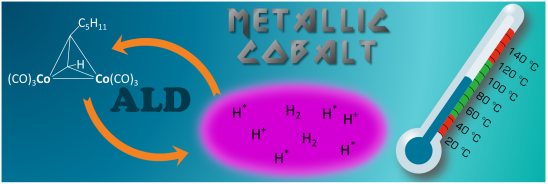
- saturation behaviour of the process was investigated. X-ray photoelectron spectroscopy measurements could show that the deposited cobalt is in the metallic state. The finally established process in ALD mode shows a homogeneous coating at the wafer level. Keywords: atomic layer deposition (ALD); cobalt; low
- -temperature ALD; PEALD; plasma-enhanced ALD; XPS; Introduction The atomic layer deposition (ALD) of cobalt films is an ongoing topic of interest [1]. Cobalt thin and ultrathin films play an important role in current generations of integrated circuits [2]. Compared to copper, the metal offers a greater


Molecular nanoarchitectonics: unification of nanotechnology and molecular/materials science
Beilstein J. Nanotechnol. 2023, 14, 434–453, doi:10.3762/bjnano.14.35
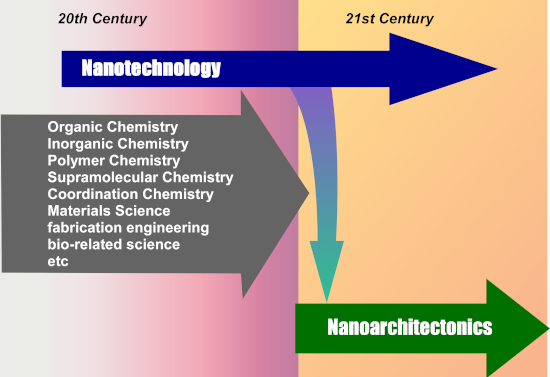
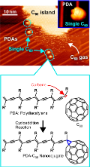
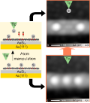
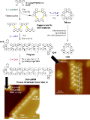
- . Unlike conventional solution synthesis, low-temperature local probe chemistry allows for a free control of the radical state. This kind of local probe chemistry as a synthesis technique opens up the possibility of nanoarchitectonics synthesis of carbon nanomaterials. The tip-induced addition of single
- other words, a controlled addition reaction in a single molecule adsorbed on a surface by a local probe at low temperature was demonstrated. Long-lived radicals could be obtained, and C60 molecules could be selectively added to the sites. Such direct addition reactions enable the synthesis of single
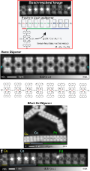
- . Foster, Kawai, and co-workers have investigated the zero-bias peak at the center of an armchair-type graphene nanoribbon on a AuSix/Au(111) surface using a combination of low-temperature scanning tunneling microscopy/spectroscopy and density functional theory calculations [116]. The zero-bias peak at the





Polymer nanoparticles from low-energy nanoemulsions for biomedical applications
Beilstein J. Nanotechnol. 2023, 14, 339–350, doi:10.3762/bjnano.14.29
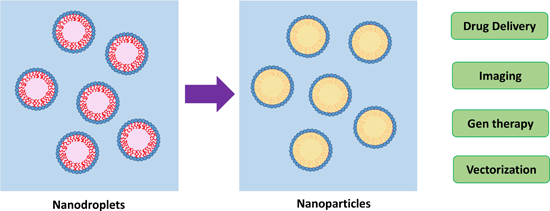
- temperature [9]. At low temperature, that is, below the so-called hydrophilic/lipophilic balance (HLB) temperature (THLB), the poly(oxyethylene) (POE) chain is highly hydrated, and therefore these surfactants self-assemble at interfaces with positive curvature and are able to form O/W droplets. At
- formulate a hydrophobic (oil) phase with the polymer of choice dissolved in a volatile solvent. Then, the volatile solvent can be evaporated from the nanoemulsion droplets under vacuum (that is, at relatively low temperature), and polymer nanoparticles are obtained in the suspension. It is to be noted that




Upper critical magnetic field in NbRe and NbReN micrometric strips
Beilstein J. Nanotechnol. 2023, 14, 45–51, doi:10.3762/bjnano.14.5
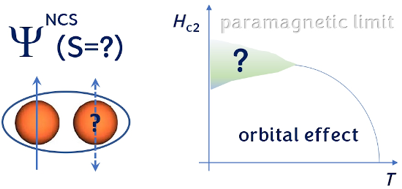
- case of NbReN. Keywords: non-centrosymmetric superconductors; Pauli and orbital contribution; upper critical fields; Werthamer–Helfand–Hohenberg theory; Introduction Superconducting films of NbRe and NbReN have recently received great attention in the field of low-temperature electronics as suitable
- resistance at 10 K. Results and Discussion Figure 1 displays the normalized resistive transitions in zero magnetic field of the NbRe and NbReN microstrips. The critical temperature, the low-temperature resistivity, and the residual resistivity ratio (RRR) are reported for both microstrips in Table 1. The RRR