Search results
Search for "mathematical model" in Full Text gives 46 result(s) in Beilstein Journal of Nanotechnology.
The effect of the electrical double layer on hydrodynamic lubrication: a non-monotonic trend with increasing zeta potential
Beilstein J. Nanotechnol. 2017, 8, 1515–1522, doi:10.3762/bjnano.8.152
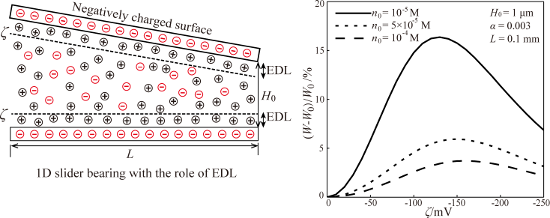
- mainly obtained on the basis of solving the linear Poisson–Boltzmann equation (PBE), which is a simplified mathematical model under the assumption of the Debye–Hückel approximation (DHA) [6][7][8][9][10][11]. It should be noted that zeta potential must be strictly limited to a small range (normally, the


Optical response of heterogeneous polymer layers containing silver nanostructures
Beilstein J. Nanotechnol. 2017, 8, 1065–1072, doi:10.3762/bjnano.8.108
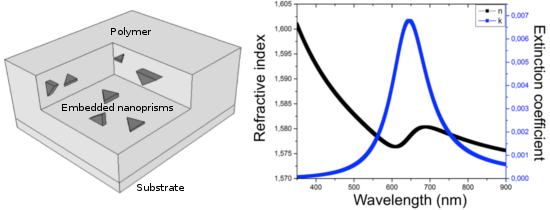
- [19][20][25][26]. The optical modeling was developed using SEA (WinElli3) software. This software uses the Levenberg−Marquardt algorithm [27] to minimize the mean squared error (MSE) between the measured and calculated ellipsometric data, Ψ and Δ. To verify the validity of our mathematical model


Modeling adsorption of brominated, chlorinated and mixed bromo/chloro-dibenzo-p-dioxins on C60 fullerene using Nano-QSPR
Beilstein J. Nanotechnol. 2017, 8, 752–761, doi:10.3762/bjnano.8.78
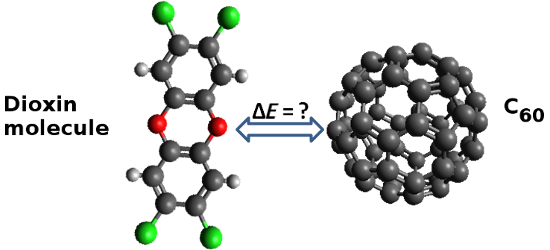
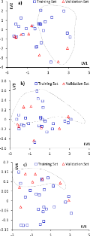
- compounds is determined by the variance in their molecular structures. Therefore, it is possible to predict the missing data from the calculated molecular parameters and a suitable mathematical model established for a group of similar chemicals [29]. For details of the QSPR procedure please see Supporting



Modeling of the growth of GaAs–AlGaAs core–shell nanowires
Beilstein J. Nanotechnol. 2017, 8, 506–513, doi:10.3762/bjnano.8.54
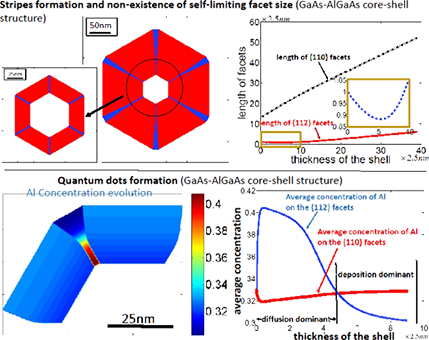
- the Al-poor dots form directly following the Al-rich stripes. These problems are solved in [7] and [8], respectively. For simplicity, at first a pure material is deposited around the hexagonal core to investigate the mechanisms governing the morphological evolution. In [7], we proposed a mathematical
- model for the deposition of pure materials onto a faceted nanowire. In the model, the growth of each facet is due to the deposition of atoms from the vapor and surface–atom diffusion from its neighbouring facets (Figure 2). It is suggested in experiments that bulk diffusion is negligible relative to


Prediction of the mechanical properties of zeolite pellets for aerospace molecular decontamination applications
Beilstein J. Nanotechnol. 2016, 7, 1761–1771, doi:10.3762/bjnano.7.169
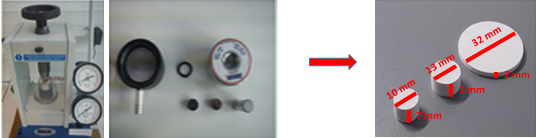
- describes a mathematical model to predict the mechanical properties (uniaxial and diametric compression) of these pellets for arbitrary dimensions (height and diameter) using a design of experiments (DOE) methodology. A second-degree polynomial equation including interactions was used to approximate the


Advanced atomic force microscopy techniques III
Beilstein J. Nanotechnol. 2016, 7, 1052–1054, doi:10.3762/bjnano.7.98

- modification by using a Cu-catalyzed alkyne–azide cycloaddition reaction [26]. To quantify the performed measurements in a reproducible way is still a challenging topic in all AFM measurements. In amplitude modulation AFM higher harmonic signals can be used, Kfir Kuchuk and Uri Sivan presented a mathematical
- model to derive an accurate and explicit formulae for both conservative and dissipative forces in terms of an arbitrary single harmonic [27], while Luca Costa and Mario S. Rodrigues derived formulas for the tip–sample interactions and investigated the effect of spurious resonances on the measured
Electroviscous effect on fluid drag in a microchannel with large zeta potential
Beilstein J. Nanotechnol. 2015, 6, 2207–2216, doi:10.3762/bjnano.6.226
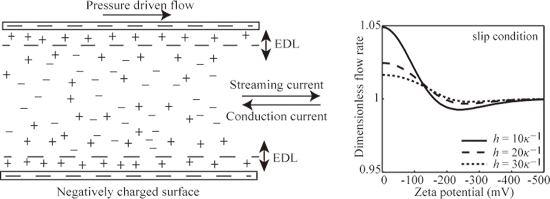
- considered when studying the electroviscous effect. Further, there is a complicated coupling relationship between the surface charge and boundary slip at the solid–liquid interface. Joly et al. [32] theoretically analyzed the effect of surface charge on the slip and established a mathematical model using


A simple method for the determination of qPlus sensor spring constants
Beilstein J. Nanotechnol. 2015, 6, 1733–1742, doi:10.3762/bjnano.6.177
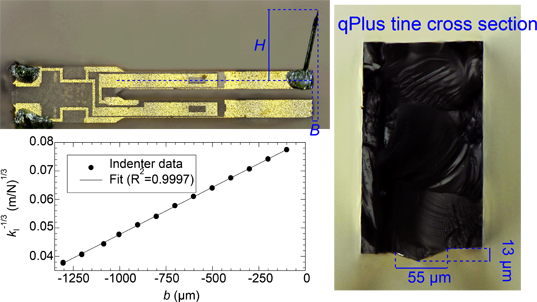
- , we develop a rigorous mathematical model for the qPlus sensor with a finite tip. The effect of the parasitic tip motion on the reconstructed interaction force is examined quantitatively from the perspective of two-dimensional grid spectroscopy. In addition, we use a traceable nanoindenter to




![[Graphic 9]](/bjnano/content/inline/2190-4286-6-177-i28.png?max-width=637&scale=1.18182) vs b is plotted where kI is the spring constan...
vs b is plotted where kI is the spring constan...
How decision analysis can further nanoinformatics
Beilstein J. Nanotechnol. 2015, 6, 1594–1600, doi:10.3762/bjnano.6.162
- of completing an MCDA can be divided into four steps: (1) identifying the problem, the stakeholders, and the criteria relevant to the decision; (2) extracting weights, thresholds, and other parameters to be inputs in the mathematical model, and assigning measurements for each alternative; (3
Stiffness of sphere–plate contacts at MHz frequencies: dependence on normal load, oscillation amplitude, and ambient medium
Beilstein J. Nanotechnol. 2015, 6, 845–856, doi:10.3762/bjnano.6.87
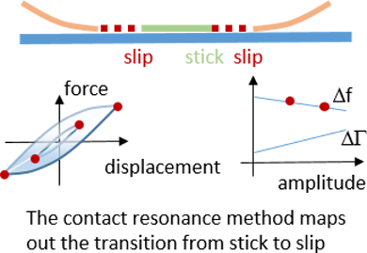
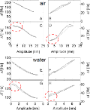
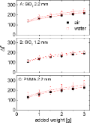
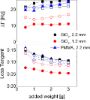
- can be backed up with a rigorous mathematical model. We briefly recapitulate the mathematics in the modeling section. In previous work [10], we have reported details of the experimental setup and elaborated on the mathematical details of what the Cattaneo–Mindlin model and the Savkoor model predict




Graphene quantum interference photodetector
Beilstein J. Nanotechnol. 2015, 6, 726–735, doi:10.3762/bjnano.6.74
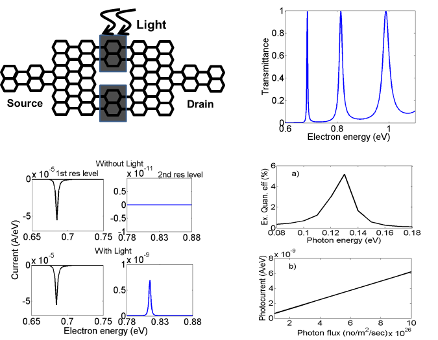
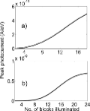
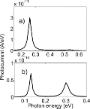
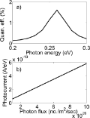
- lattice constant was set at 0.142 nm. Mathematical model A non-equilibrium Green’s function (NEGF) formalism was used to calculate the current through the device [9][21][22][23]. Here, the Green’s function, GR, is the impulse response of the device and non-equilibrium implies that some voltage is applied




Filling of carbon nanotubes and nanofibres
Beilstein J. Nanotechnol. 2015, 6, 508–516, doi:10.3762/bjnano.6.53
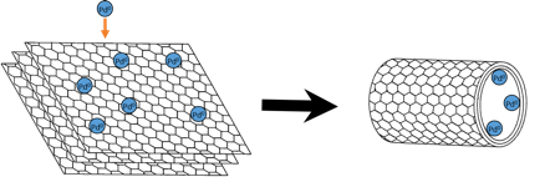
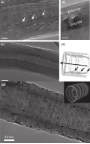
- [90]. In addition, the effect of the molecular weight of a polymer on the capillary action has also been investigated [91]. Microscopy has been used to visualize the filling of a MWCNT with gold via Joule heating and capillary action [92]. A mathematical model has been developed to evaluate the


Functionalized polystyrene nanoparticles as a platform for studying bio–nano interactions
Beilstein J. Nanotechnol. 2014, 5, 2403–2412, doi:10.3762/bjnano.5.250
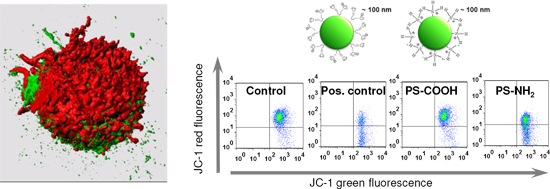
- this size occurs in a specific, receptor-mediated manner, which is characterized by the polymerization of clathrin units, membrane deformation, and intracellular signaling, which could all be integrated into a mathematical model describing these processes [28]. Of note, depending on the nature of the


Nanoparticle interactions with live cells: Quantitative fluorescence microscopy of nanoparticle size effects
Beilstein J. Nanotechnol. 2014, 5, 2388–2397, doi:10.3762/bjnano.5.248
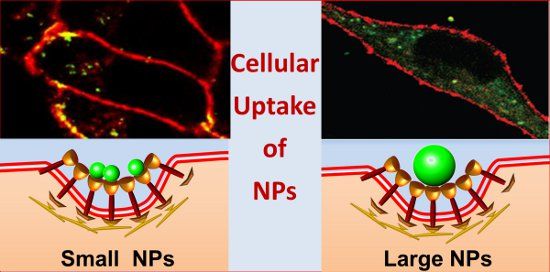
- . Based on studies of the uptake of carboxydextran-coated superparamagnetic iron oxide NPs of 20 and 60 nm by human macrophages, Lunov et al. [49] developed a mathematical model that predicts the wrapping times of different NPs. In addition, the relation between membrane elasticity, cytoskeletal forces


Anticancer efficacy of a supramolecular complex of a 2-diethylaminoethyl–dextran–MMA graft copolymer and paclitaxel used as an artificial enzyme
Beilstein J. Nanotechnol. 2014, 5, 2293–2307, doi:10.3762/bjnano.5.238
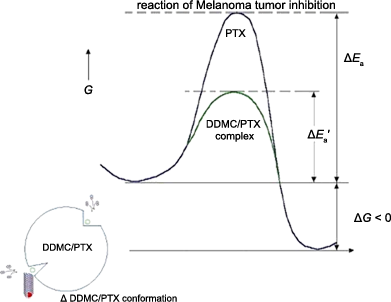
- DNA microarrays and dynamic Bayesian analyses. A mathematical model was generated by dynamic Bayesian networks and nonparametric regression analysis using a supercomputer with 1024 cores. One hour after the administration of PTX, the RBM23 gene, which is a known target of PTX, acted as a hub and
- interacted with the TUBA4A gene encoded the tubulin α-4A chain. Two hours after administration, TXNIP became a hub gene, which was found to act as a key gene in the treatment of breast cancer that was not responsive to PTX. Four hours after administration, the mathematical model for the DNA microarray data


Carbon-based smart nanomaterials in biomedicine and neuroengineering
Beilstein J. Nanotechnol. 2014, 5, 1849–1863, doi:10.3762/bjnano.5.196
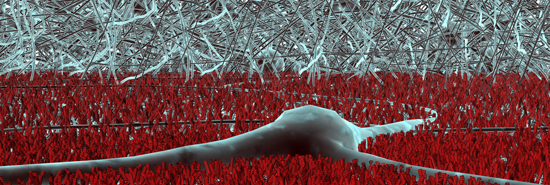
- characterised and explored this phenomenon by culturing hippocampal neurons on pristine SWCNT-substrates. They also stimulated neurons electrically through the CNTs film and devised a mathematical model for the description of the electrical interface between neurons and CNTs. This work confirmed the improved


On the structure of grain/interphase boundaries and interfaces
Beilstein J. Nanotechnol. 2014, 5, 1603–1615, doi:10.3762/bjnano.5.172
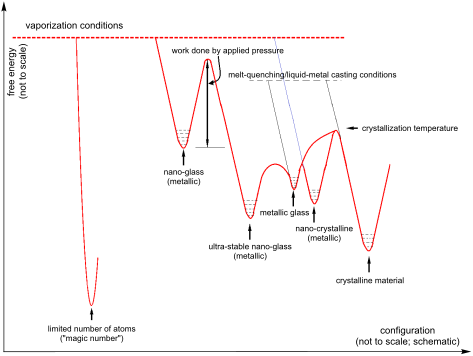
- describe the numerous general high-angle boundaries of differing misorientations in terms of a unique representative volume, an oblate spheroid, was made to develop a deterministic mathematical model. In reality, the basic units of sliding are numerous and are likely to have different shapes (even


An analytical approach to evaluate the performance of graphene and carbon nanotubes for NH3 gas sensor applications
Beilstein J. Nanotechnol. 2014, 5, 726–734, doi:10.3762/bjnano.5.85
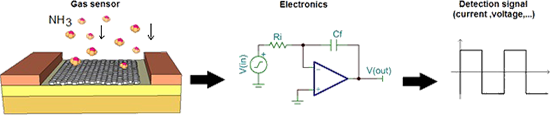
- structure of these allotropes. A mathematical model is proposed with a clear purpose to acquire an analytical understanding of the field-effect-transistor (FET) based gas detection mechanism. The conductance change in the CNT/graphene channel resulting from the chemical reaction between the gas and channel


Challenges in realizing ultraflat materials surfaces
Beilstein J. Nanotechnol. 2013, 4, 875–885, doi:10.3762/bjnano.4.99
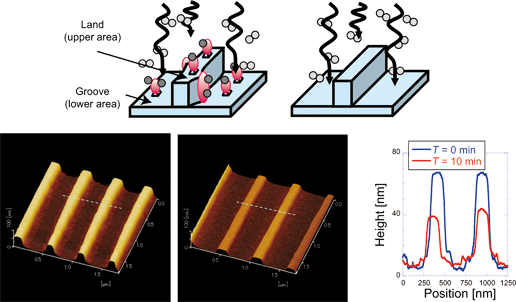
- a simplified mathematical model to describe the scale-dependent DPP effect. The value of Ra is determined as where |z(xi)| are the absolute deviations from the best-fitting plane, L is the evaluation length, dx is the spatial resolution of z(x), and n (= sL/dx) is the number of pixels in the
- phonon. Then, we review several recent developments based on DPP-photochemical etching and desorption processes, which have resulted in angstrom-scale flat surfaces. To confirm that the superior flatness of these surfaces that originated from the DPP process, we also review a simplified mathematical
- model that describes the scale-dependent effects of optical near-fields. Finally, we present the future outlook for these technologies. Keywords: dressed photon–phonon; phonon-assisted process; polishing; self-organized process; Review Introduction In order to improve device performance and to

Size-dependent characteristics of electrostatically actuated fluid-conveying carbon nanotubes based on modified couple stress theory
Beilstein J. Nanotechnol. 2013, 4, 771–780, doi:10.3762/bjnano.4.88
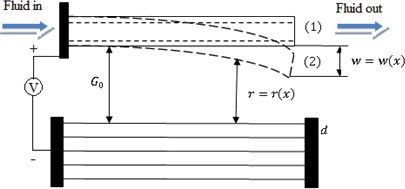
- 10.3762/bjnano.4.88 Abstract The paper presents the effects of fluid flow on the static and dynamic properties of carbon nanotubes that convey a viscous fluid. The mathematical model is based on the modified couple stress theory. The effects of various fluid parameters and boundary conditions on the pull


Calculation of the effect of tip geometry on noncontact atomic force microscopy using a qPlus sensor
Beilstein J. Nanotechnol. 2013, 4, 10–19, doi:10.3762/bjnano.4.2
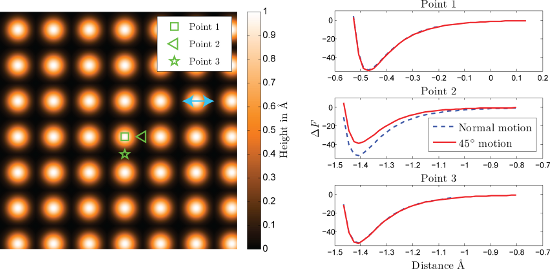
- qPlus atomic force microscopy the tip length can in principle approach the length of the cantilever. We present a detailed mathematical model of the effects this has on the dynamic properties of the qPlus sensor. The resulting, experimentally confirmed motion of the tip apex is shown to have a large