Search results
Search for "mechanism of action" in Full Text gives 36 result(s) in Beilstein Journal of Nanotechnology.
Rational design of block copolymer self-assemblies in photodynamic therapy
Beilstein J. Nanotechnol. 2020, 11, 180–212, doi:10.3762/bjnano.11.15


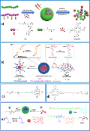




Doxorubicin-loaded human serum albumin nanoparticles overcome transporter-mediated drug resistance in drug-adapted cancer cells
Beilstein J. Nanotechnol. 2019, 10, 1707–1715, doi:10.3762/bjnano.10.166
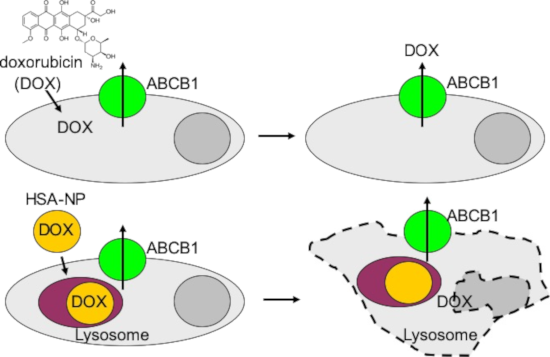
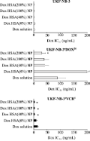
- level of UKF-NB-3 cells. This suggests that UKF-NB-3rDOX20 cells have developed multiple doxorubicin resistance mechanisms. In contrast, adaptation of UKF-NB-3rVCR1 cells to vincristine, a tubulin-binding agent with an anticancer mechanism of action that is not related to that of the topoisomerase II


Enhanced inhibition of influenza virus infection by peptide–noble-metal nanoparticle conjugates
Beilstein J. Nanotechnol. 2019, 10, 1038–1047, doi:10.3762/bjnano.10.104
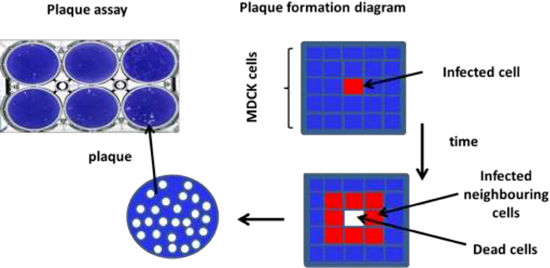
- timely manner. Currently there are two common types of anti-influenza drugs, based on their mechanism of action. The first class are neuraminidase inhibitors such as Oseltamivir (Tamiflu). The second class are virus ion-channel blockers, such as Amantadine (Symetrel). The effectiveness of Tamiflu has




Targeting strategies for improving the efficacy of nanomedicine in oncology
Beilstein J. Nanotechnol. 2019, 10, 168–181, doi:10.3762/bjnano.10.16
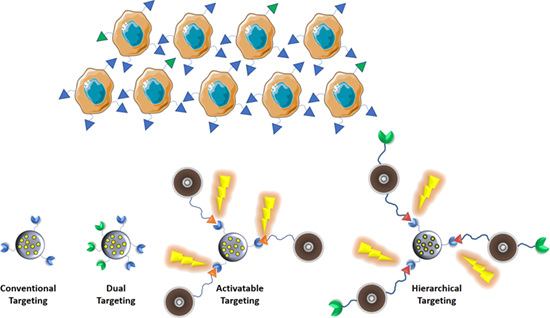
- may also bind to the “secreted protein, acidic and rich in cysteine” (SPARC) present in the extracellular matrix, facilitating the approximation to tumoral cells. This is the postulated mechanism of action of Abraxane®, one of the most commonly administered nanomedicines based on albumin today (Figure


Cyclodextrin inhibits zinc corrosion by destabilizing point defect formation in the oxide layer
Beilstein J. Nanotechnol. 2018, 9, 936–944, doi:10.3762/bjnano.9.86
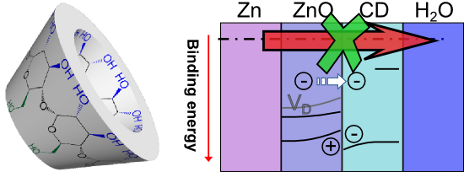
- , 7491 Trondheim, Norway 10.3762/bjnano.9.86 Abstract Corrosion inhibitors are added in low concentrations to corrosive solutions for reducing the corrosion rate of a metallic material. Their mechanism of action is typically the blocking of free metal surface by adsorption, thus slowing down dissolution


Green synthesis of fluorescent carbon dots from spices for in vitro imaging and tumour cell growth inhibition
Beilstein J. Nanotechnol. 2018, 9, 530–544, doi:10.3762/bjnano.9.51
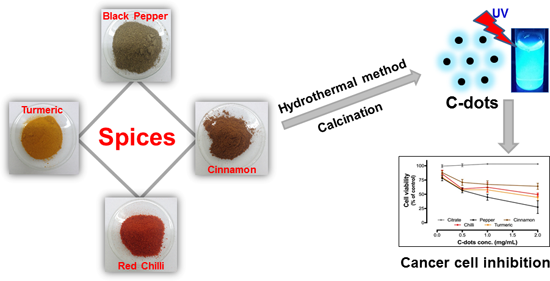
- glioblastoma cells, and excellent tolerability by non-cancerous cells, suggest great potential for a biomedical applicability of the spice C-dots as theranostic agents. Further studies would be necessary to achieve a better understanding of the mechanism of action of these C-dots, and to clarify the pathways
- %, respectively, whereas there was no significant growth inhibition to non-cancerous cells. Our preliminary results showed that this effect might be attributed to the presence of active molecules within the C-dot nanostructure, and more studies should be performed to understand the mechanism of action. Although


Phospholipid arrays on porous polymer coatings generated by micro-contact spotting
Beilstein J. Nanotechnol. 2017, 8, 715–722, doi:10.3762/bjnano.8.75
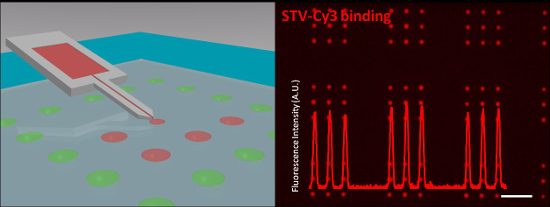
- mechanism of action of this receptor new approaches are needed to facilitate studies with AR. Embedding AR in a lipid layer within HEMA-EDMA mesh might facilitate studies relying not only on fluorescence microscopy techniques but also on spectroscopy, to evaluate coactivators, co-chaperones [22] and even


Chitosan-based nanoparticles for improved anticancer efficacy and bioavailability of mifepristone
Beilstein J. Nanotechnol. 2016, 7, 1861–1870, doi:10.3762/bjnano.7.178
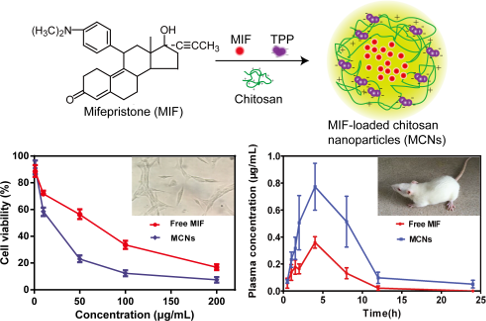
- mechanism of action. However, application of MIF is limited by its poor water solubility and low oral bioavailability. In this work, we developed a drug delivery system based on chitosan nanoparticles (CNs) to improve its bioavailability and anticancer activity. The MIF-loaded chitosan nanoparticles (MCNs


NanoE-Tox: New and in-depth database concerning ecotoxicity of nanomaterials
Beilstein J. Nanotechnol. 2015, 6, 1788–1804, doi:10.3762/bjnano.6.183
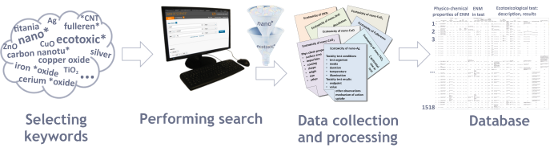
- [116][133][191] and TiO2 [153][154][155][156][192] was usually reported as particle-driven mechanical membrane damage. NanoE-Tox database contains only one study suggesting the mechanism of toxicity of fullerenes (oxidative stress) [193] and there are no data about possible mechanism of action of FeOx


Nanodiamond-DGEA peptide conjugates for enhanced delivery of doxorubicin to prostate cancer
Beilstein J. Nanotechnol. 2014, 5, 937–945, doi:10.3762/bjnano.5.107
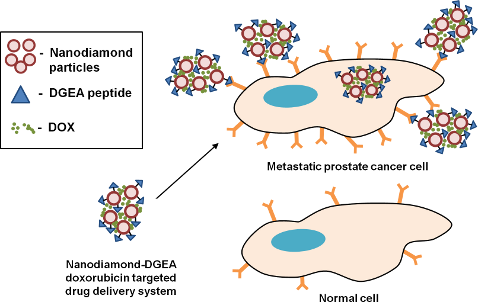
- superior efficacy and improved drug delivery, it is assumed that DOX has to detach in order to maintain the functionality of its mechanism of action. The mechanism of action for DOX involves the crosslinking of DNA, inhibiting DNA replication. In release studies (not shown), 85% of DOX was retained to the


Extracellular biosynthesis of gadolinium oxide (Gd2O3) nanoparticles, their biodistribution and bioconjugation with the chemically modified anticancer drug taxol
Beilstein J. Nanotechnol. 2014, 5, 249–257, doi:10.3762/bjnano.5.27

- anticancer effect of taxol is mainly attributed to its mechanism of action. It stabilizes microtubules by preventing their depolymerization [19][20]. However, taxol is a hydrophobic drug and less specific to certain tumors due to its low solubility in water. To counter these problems, we carried out the