


Search results
Search for "optical absorption" in Full Text gives 137 result(s) in Beilstein Journal of Nanotechnology.
Concentration-dependent photothermal conversion efficiency of gold nanoparticles under near-infrared laser and broadband irradiation
Beilstein J. Nanotechnol. 2023, 14, 205–217, doi:10.3762/bjnano.14.20
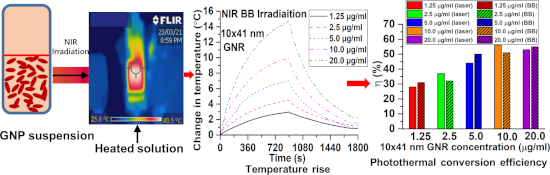
- optical absorption characteristics of the nanoparticles. Thus, a broadband irradiation source may be useful in which the full width half maximum of the optical output can be tuned to suit the optical absorption characteristics of the nanoparticles. To the best of our knowledge, the measurement of the
- is no change in the optical absorption of the nanoparticles and that they are stable. Photothermal conversion efficiency of GNPs The photothermal conversion efficiency (η) of the GNPs was evaluated based on the obtained heating and cooling temperature profiles. The measured temperature profiles for




A TiO2@MWCNTs nanocomposite photoanode for solar-driven water splitting
Beilstein J. Nanotechnol. 2022, 13, 1520–1530, doi:10.3762/bjnano.13.125
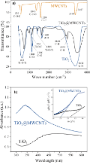
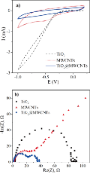
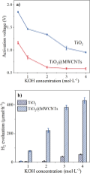
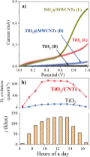
- spectra of the prepared catalysts are shown in Figure 6b. The optical absorption of TiO2 is in the UV region, while the light absorption edge of TiO2@MWCNTs redshifts to the visible-light region. As seen from the Tauc plots (inset of Figure 6b), the optical band gap of TiO2 and TiO2@MWCNTs catalysts are



Rapid fabrication of MgO@g-C3N4 heterojunctions for photocatalytic nitric oxide removal
Beilstein J. Nanotechnol. 2022, 13, 1141–1154, doi:10.3762/bjnano.13.96
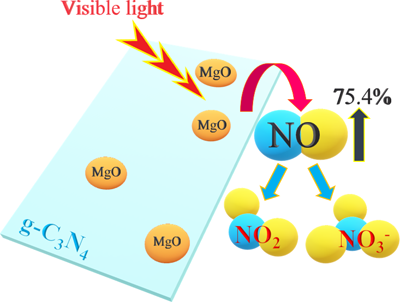
- -C3N4 are too weak. Optical properties DRS spectra have been measured to understand the optical absorption characteristics of the materials (Figure 9). The g-C3N4 sample significantly absorbs light at a peak around 440 nm, corresponding to the direct and the indirect bandgap of 2.83 and 2.68 eV





Revealing local structural properties of an atomically thin MoSe2 surface using optical microscopy
Beilstein J. Nanotechnol. 2022, 13, 572–581, doi:10.3762/bjnano.13.49
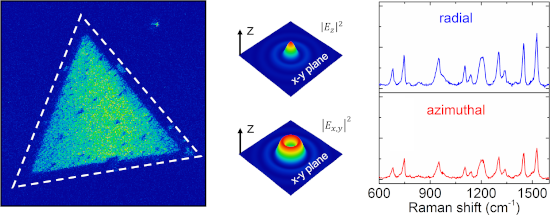
- fascinating optical and electronic properties [1]. In particular, the optical absorption, direct bandgap, and broken inversion symmetry of 2D transition-metal dichalcogenide (2D-TMDC) monolayers make these materials promising candidates for light-emitting diodes, photodetectors, field-effect transistors


Selected properties of AlxZnyO thin films prepared by reactive pulsed magnetron sputtering using a two-element Zn/Al target
Beilstein J. Nanotechnol. 2022, 13, 344–354, doi:10.3762/bjnano.13.29
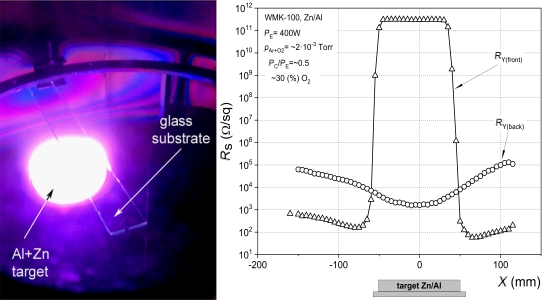
- presented. In the area directly above the target (X = 0–50 mm), the position of the optical absorption edge of thin films is quite similar (Figure 5b). Moving away from the axis beyond the area above the target (X = 50–100 mm), the optical absorption edge of the spectra shifts in the direction towards



First-principles study of the structural, optoelectronic and thermophysical properties of the π-SnSe for thermoelectric applications
Beilstein J. Nanotechnol. 2021, 12, 1101–1114, doi:10.3762/bjnano.12.82
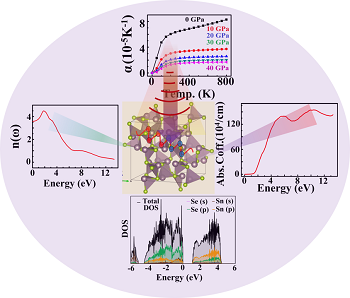
- , such as the Seebeck coefficient, electrical and electronic conductivity, and power factor. At room temperature, the Seebeck coefficient and power factor have values of 146.37 µV·K−1 and 0.63 ×10¹¹ W·K−2·m−1·s−1, respectively. The π-SnSe phase features a strong optical absorption onset and an intraband


Revealing the formation mechanism and band gap tuning of Sb2S3 nanoparticles
Beilstein J. Nanotechnol. 2021, 12, 1021–1033, doi:10.3762/bjnano.12.76
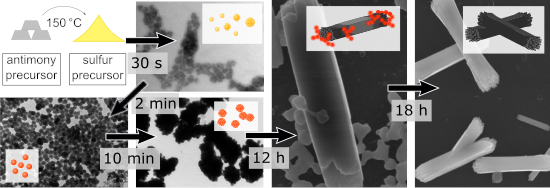
- receive the band gap values of the material [37][38]. As shown in Equation 1, the absorption coefficient α is expressed by the Planck constant h, the photon frequency ν, a constant B, which Davis and Mott described as the magnitude of the optical absorption constant [38], and a transition factor γ: The


Unravelling the interfacial interaction in mesoporous SiO2@nickel phyllosilicate/TiO2 core–shell nanostructures for photocatalytic activity
Beilstein J. Nanotechnol. 2020, 11, 1834–1846, doi:10.3762/bjnano.11.165
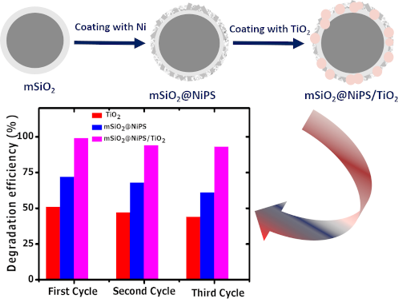
- photocatalysts is rarely reported. Nickel-based nanomaterials are of great interest for photocatalytic activity owing to their low cost, high optical absorption coefficients, and low bandgap energies [29][30][31]. Most importantly, the formation of a Schottky barrier between nickel species and titania can


Absorption and photoconductivity spectra of amorphous multilayer structures
Beilstein J. Nanotechnol. 2020, 11, 1757–1763, doi:10.3762/bjnano.11.158
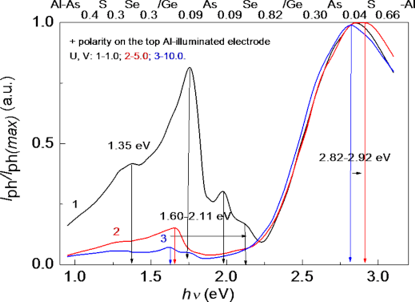
- Oxana Iaseniuc Mihail Iovu Institute of Applied Physics, No. 5 Academiei Str., Chisinau, MD-2028, R. Moldova 10.3762/bjnano.11.158 Abstract The experimental results regarding optical absorption and steady-state photoconductivity of amorphous single-layer structures (Al–As0.40S0.30Se0.30–Al, Al
- experimental results regarding optical absorption and steady-state photoconductivity of both amorphous single-layer structures, Al–As0.40S0.30Se0.30–Al, Al–Ge0.09As0.09Se0.82–Al, and Al–Ge0.30As0.04S0.66–Al and the heterostructure Al–As0.40S0.30Se0.30/Ge0.09As0.09Se0.82/Ge0.30As0.04S0.66–Al have been discussed


The influence of an interfacial hBN layer on the fluorescence of an organic molecule
Beilstein J. Nanotechnol. 2020, 11, 1663–1684, doi:10.3762/bjnano.11.149
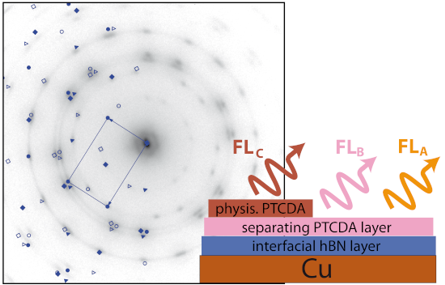
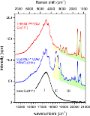
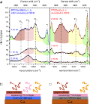
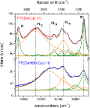
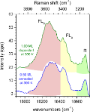
- al. [23] investigated the optical absorption properties of PTCDA on hBN/Rh(111) and hBN/Pt(111). Here, we report a direct comparison of FL spectra of PTCDA/hBN/Cu(111) and PTCDA/Cu(111), which allows for a relative determination of the efficiency of the hBN layer to decouple the excited states of





High-responsivity hybrid α-Ag2S/Si photodetector prepared by pulsed laser ablation in liquid
Beilstein J. Nanotechnol. 2020, 11, 1596–1607, doi:10.3762/bjnano.11.142
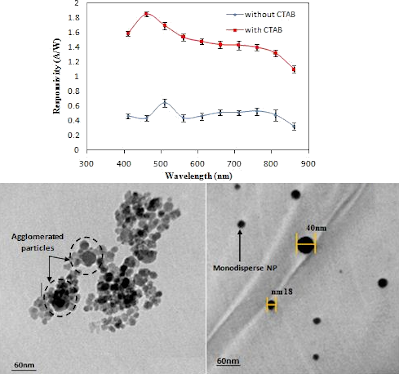
- (SEM), energy-dispersive X-ray spectroscopy (EDX), and UV–vis spectroscopy. The optical absorption decreased and the optical energy gap of α-Ag2S increased from 1.5 to 2 eV after the CTAB surfactant was added to the Tu solution. XRD studies revealed that the synthesized Ag2S NPs were polycrystalline
- narrow direct optical energy gap, which ranges from 0.96 to 1.1 eV at room temperature. Ag2S has good chemical stability, low toxicity, and high optical absorption [4]. According to the growth temperature, Ag2S has three phases: monoclinic α-Ag2S (acanthite), β-Ag2S (argentite), and the stable γ-Ag2S [5
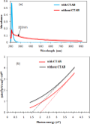
- observed at 125, 484 and 730 cm−1. Figure 5a shows the effect of adding CTAB on the UV–vis absorption spectrum of colloidal Ag2S NPs. The optical absorption was measured immediately after laser ablation. The addition of the cationic surfactant CTAB to the Tu solution led to a decrease in the optical




Hybridization vs decoupling: influence of an h-BN interlayer on the physical properties of a lander-type molecule on Ni(111)
Beilstein J. Nanotechnol. 2020, 11, 1168–1177, doi:10.3762/bjnano.11.101
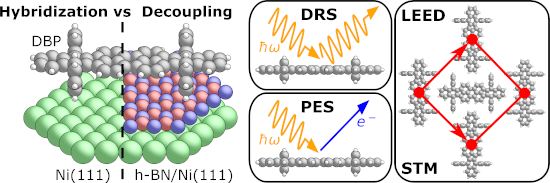
- charge transfer [1][2]. Some applications, however, require to preserve the intrinsic properties of the molecules such as the typically rather narrow optical absorption and/or emission bands. To achieve this, one needs to electronically decouple the molecules from the substrate, which can be achieved
- of both DBP layers on h-BN/Ni(111). The numerical algorithm is described in [28]. In the following, we will focus on the imaginary part of the dielectric function (ε'') only, which is depicted in Figure 2, as this physical quantity is indicative of the optical absorption. The comparison between DBP


Excitonic and electronic transitions in Me–Sb2Se3 structures
Beilstein J. Nanotechnol. 2020, 11, 1045–1053, doi:10.3762/bjnano.11.89
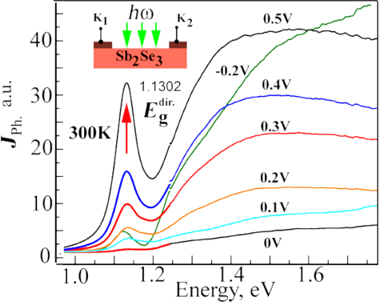
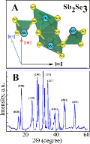
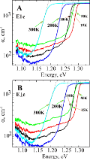
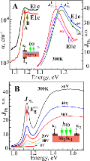
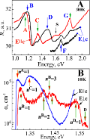
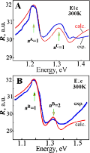
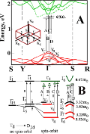
- the Brillouin zone space are also ambiguous [6][8][10][19][20]. The crystalline properties of Sb2Sе3, such as optical absorption, reflection, and photoconductivity, were studied in this work. In order to determine the bandgap, the nature of electronic transitions, among other properties, the


A new photodetector structure based on graphene nanomeshes: an ab initio study
Beilstein J. Nanotechnol. 2020, 11, 1036–1044, doi:10.3762/bjnano.11.88
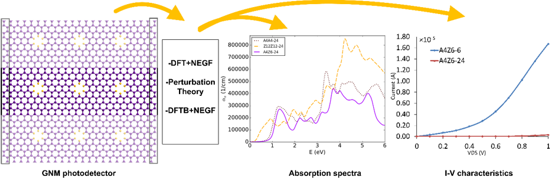
- atomic orbitals (LCAO) basis set. Generalized gradient approximation (GGA) is used for the exchange–correlation functional. A 9 × 9 k-point grid and a cutoff energy of 160 Ry are used to perform these calculations. All nanostructure geometries are relaxed. To evaluate optical absorption, the


Band tail state related photoluminescence and photoresponse of ZnMgO solid solution nanostructured films
Beilstein J. Nanotechnol. 2020, 11, 899–910, doi:10.3762/bjnano.11.75
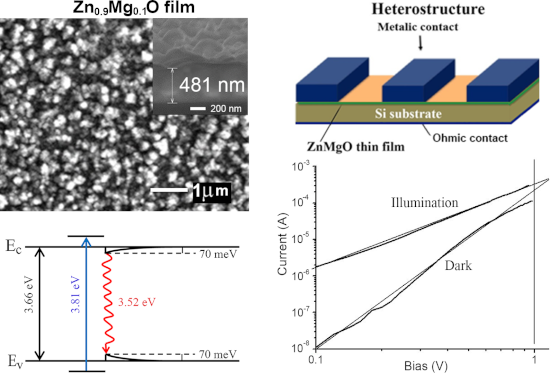
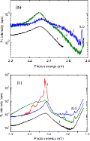
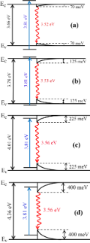
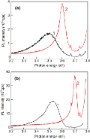
- optical absorption (OA) spectroscopy investigations in w-ZnMgO films produced by RF-MBE in the composition range x = 0.00–0.37 [36] and x = 0.27–0.55 [10], respectively. The observed Stokes shifts were indicative of the presence of band tail states introduced by alloying, while the “S-shaped” temperature

Hexagonal boron nitride: a review of the emerging material platform for single-photon sources and the spin–photon interface
Beilstein J. Nanotechnol. 2020, 11, 740–769, doi:10.3762/bjnano.11.61




Effect of Ag loading position on the photocatalytic performance of TiO2 nanocolumn arrays
Beilstein J. Nanotechnol. 2020, 11, 717–728, doi:10.3762/bjnano.11.59
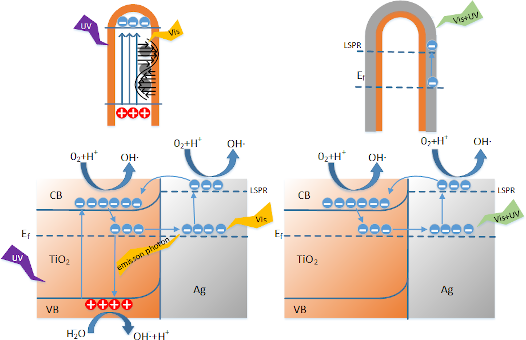
- structure of Ag in the sample is simple. Therefore, the results of the XPS analysis confirm that the sample is composed of TiO2 and Ag. In order to investigate the absorption properties of the different arrays, the optical absorption tests of all samples were carried out, as shown in Figure 6. Figure 6a is
- the optical absorption spectra of TNC and AFT structure samples. It can be seen that the absorption peak of TiO2 is located at 276 nm and the absorption of the samples in the visible light portion increase as the thickness of Ag increases. Moreover, the increase of the Ag thickness does not hinder the
- absorption of TiO2 in the ultraviolet region. Figure 6b is the optical absorption spectra of ACT structure samples. It can be seen that, with the increase of Ag deposition, the visible absorption intensity of the samples increases gradually, but the absorption peak of TiO2 at 276 nm decreases obviously. The


Size effects of graphene nanoplatelets on the properties of high-density polyethylene nanocomposites: morphological, thermal, electrical, and mechanical characterization
Beilstein J. Nanotechnol. 2020, 11, 167–179, doi:10.3762/bjnano.11.14
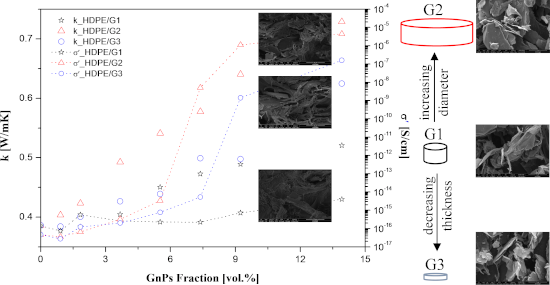
- used by a Gauss–Newton algorithm to simultaneously adjust the experimental amplitude and phase of the PTR signal analyzed by the lock-in amplifier to extract the thermal diffusivity and optical absorption coefficient of the studied samples. The tensile tests were conducted using an Instron 4301 tensile



Fabrication of Ag-modified hollow titania spheres via controlled silver diffusion in Ag–TiO2 core–shell nanostructures
Beilstein J. Nanotechnol. 2020, 11, 141–146, doi:10.3762/bjnano.11.12
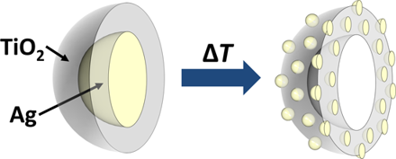
- fabrication step. The synthesized nanostructures exhibit a broadband optical absorption in the UV–vis range. Keywords: core–shell nanostructures; hollow spheres; silver diffusion; silver-modified titanium dioxide; titania; Findings In recent years, nanometer- to micrometer-sized inorganic hollow spheres
- aware of any articles reporting the possibility to control the optical properties of plasmonic NP-modified TiO2 HSs by means of changes in their morphologies. In this work, we present the results of studies on the fabrication of Ag-modified TiO2 HSs with broadband optical absorption through controlled
- nanostructures with a variable amount of AgNPs on the shell surface and with different optical properties resulting from the structural differences can be fabricated simply by control of the annealing time. Fabricated Ag-TiO2 hollow nanostructures exhibit a broader and larger optical absorption in the UV–vis



Long-term stability and scale-up of noncovalently bound gold nanoparticle-siRNA suspensions
Beilstein J. Nanotechnol. 2019, 10, 2568–2578, doi:10.3762/bjnano.10.248
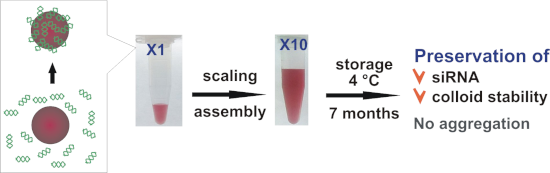
- buffers with different pH values by analyzing the optical absorption spectra in the range of 400–800 nm (Figure 2). We did not observe a wide peak in the range of 650–700 nm, which would indicate nanoparticle aggregation. This peak appeared only in the case of mixing of the AuNP-siRNA suspension with the


pH-Controlled fluorescence switching in water-dispersed polymer brushes grafted to modified boron nitride nanotubes for cellular imaging
Beilstein J. Nanotechnol. 2019, 10, 2428–2439, doi:10.3762/bjnano.10.233
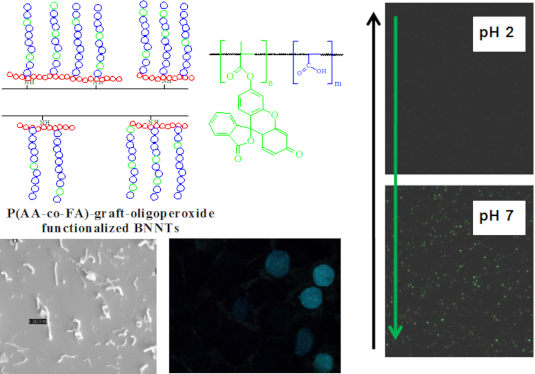
- the excitation and emission wavelengths were selected at 490 nm and 520 nm, respectively, and the fluorescently labeled nanomaterial was viewed. Ultraviolet–visible spectrometry (UV–vis) The optical absorption spectra of the BNNT suspension were registered on a double-beam UV–vis spectrophotometer



Semitransparent Sb2S3 thin film solar cells by ultrasonic spray pyrolysis for use in solar windows
Beilstein J. Nanotechnol. 2019, 10, 2396–2409, doi:10.3762/bjnano.10.230
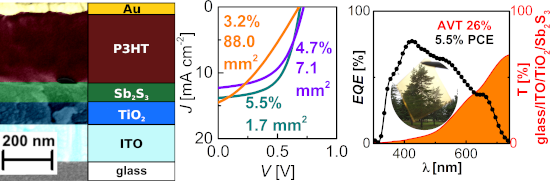
- Road, Berkeley, California, 94720, USA 10.3762/bjnano.10.230 Abstract The integration of photovoltaic (PV) solar energy in zero-energy buildings requires durable and efficient solar windows composed of lightweight and semitransparent thin film solar cells. Inorganic materials with a high optical
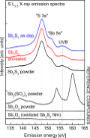
- absorption coefficient, such as Sb2S3 (>105 cm−1 at 450 nm), offer semitransparency, appreciable efficiency, and long-term durability at low cost. Oxide-free throughout the Sb2S3 layer thickness, as confirmed by combined studies of energy dispersive X-ray spectroscopy and synchrotron soft X-ray emission



Design of a nanostructured mucoadhesive system containing curcumin for buccal application: from physicochemical to biological aspects
Beilstein J. Nanotechnol. 2019, 10, 2304–2328, doi:10.3762/bjnano.10.222
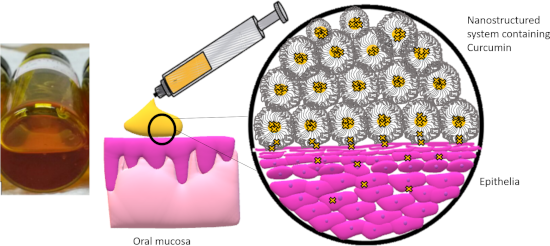
- be permeated. The permeation of CUR from polymer blends containing P407 and C974P® were performed in porcine mucosa by photoacoustic spectroscopy and the photoacoustic spectra of the formulations, tissues and permeation of CUR are shown in Figure 11. The optical absorption spectra of CUR and


Nontoxic pyrite iron sulfide nanocrystals as second electron acceptor in PTB7:PC71BM-based organic photovoltaic cells
Beilstein J. Nanotechnol. 2019, 10, 2238–2250, doi:10.3762/bjnano.10.216
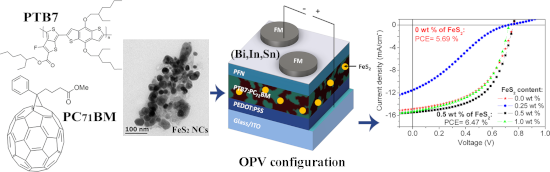
- ][8], a high optical absorption coefficient (2 × 105 cm−1) [4], high carrier mobility (2 to 80 cm2/Vs) [4][9] and a large charge carrier lifetime (200 ps) [10]. Therefore, FeS2 nanoparticles (NPs) can be a good alternative for PV applications [11]. Nanostructures of FeS2 have been used as counter


Nonlinear absorption and scattering of a single plasmonic nanostructure characterized by x-scan technique
Beilstein J. Nanotechnol. 2019, 10, 2182–2191, doi:10.3762/bjnano.10.211
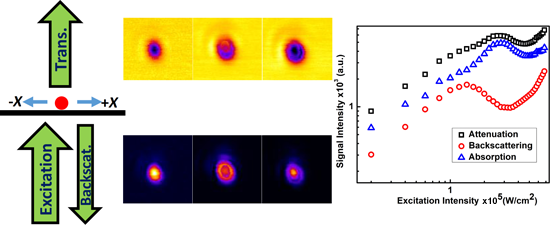
- characterize the nonlinearity of the optical absorption and scattering of single nanostructures. Currently, the common method to quantify optical nonlinearity is the z-scan technique, which yields real and imaginary parts of the permittivity by moving a thin sample with a laser beam. However, z-scan typically





