Search results
Search for "phase separation" in Full Text gives 76 result(s) in Beilstein Journal of Nanotechnology.
Growth of a self-assembled monolayer decoupled from the substrate: nucleation on-command using buffer layers
Beilstein J. Nanotechnol. 2020, 11, 1291–1302, doi:10.3762/bjnano.11.113
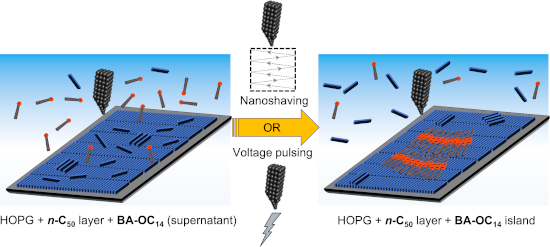
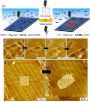
- of the buffer layer still appear to be in registry with the graphite symmetry axes. This begs a question whether the BA-OC14 is indeed formed on the top of the buffer layer? To confirm the bilayer formation and to rule out phase separation of the two components in 2D, we reversed the sequence of


Structure and electrochemical performance of electrospun-ordered porous carbon/graphene composite nanofibers
Beilstein J. Nanotechnol. 2020, 11, 1280–1290, doi:10.3762/bjnano.11.112
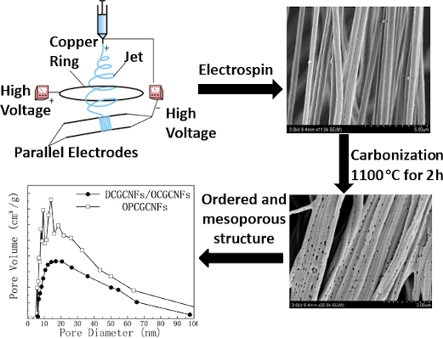
- are incompatible with PAN, such as polystyrene (PS), poly(ʟ-lactic acid) (PLLA) and poly(methyl methacrylate) (PMMA) [20][21][22][23]. During the carbonization process at a high temperature, PAN and the blended polymers undergo phase separation, forming a large number of pores which increases the
- square shape (e.g., 3 cm × 3 cm), put into a muffle furnace (KSY-D-16, Longkou Precision Instrument Co., Ltd., China), and submitted to a preoxidation step at 280 °C for 8 h under air at a heating rate of 1 °C·min−1. The high temperature during the oxidation process induced phase separation between PAN


Gas sorption porosimetry for the evaluation of hard carbons as anodes for Li- and Na-ion batteries
Beilstein J. Nanotechnol. 2020, 11, 1217–1229, doi:10.3762/bjnano.11.106
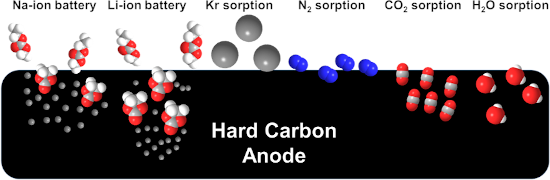
- phase separation during the preparation [28][29]. After grinding for preparation of the electrodes, however, the monolithic structure was lost (Supporting Information File 1, Figure S6). The reason why HT6 (Figure 1f) shows smaller particle diameters than the other carbons (Figure 1a–e) can be explained


Multilayer capsules made of weak polyelectrolytes: a review on the preparation, functionalization and applications in drug delivery
Beilstein J. Nanotechnol. 2020, 11, 508–532, doi:10.3762/bjnano.11.41

- al. by using a combination of theory, simulation and experiments on the arbitrary sequence of charges [41]. The results indicated that an increase in charge fraction and blockiness generally leads to an increase in the two-phase region of the phase diagram, thereby showing enhanced phase separation



Implementation of data-cube pump–probe KPFM on organic solar cells
Beilstein J. Nanotechnol. 2020, 11, 323–337, doi:10.3762/bjnano.11.24
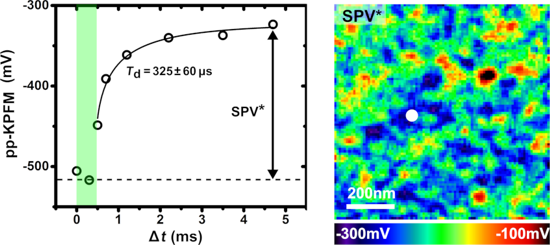
- of the solvent and additives used for the film deposition from solution. The use of PTB7:PC71BM is widely documented. It is now well established that films of good morphology, namely with a nanoscale phase separation, can be obtained from solutions containing 1,8-diiodooctane (DIO) as solvent




Microbubbles decorated with dendronized magnetic nanoparticles for biomedical imaging: effective stabilization via fluorous interactions
Beilstein J. Nanotechnol. 2019, 10, 2103–2115, doi:10.3762/bjnano.10.205
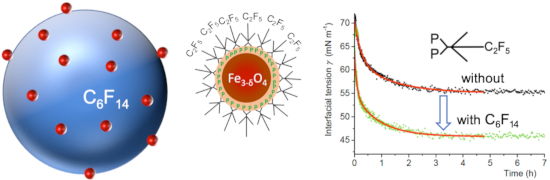
- phase separation in fluorocarbon/hydrocarbon mixtures [45][46]. These results tell us that the dendronized IONPs fitted with a C2F5 group have a higher affinity for the phospholipid film than those grafted with C2H5. Conclusion We report that small and highly stable magnetic MBs incorporating IONPs in


Fabrication and characterization of Si1−xGex nanocrystals in as-grown and annealed structures: a comparative study
Beilstein J. Nanotechnol. 2019, 10, 1873–1882, doi:10.3762/bjnano.10.182
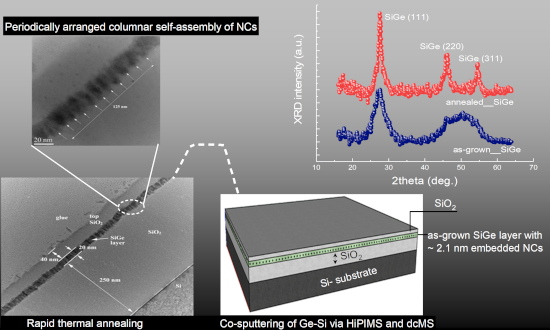
- consists of core–shell NCs/NPs with the core being Ge-rich Si1−xGex NCs (crystallographic peak (111) position, shifts from 27.87° to 27.75° for MLs in as-grown and annealed at 800 °C states, respectively) surrounded by a shell of crystalline Si in amorphous SiGeO. This behavior can be explained by phase
- separation in the SiGe nanoparticles due to Ge segregation [34][35] at higher temperatures (i.e., Ge-rich SiGe core), which leaves a crystalline Si shell. A similar GIXRD diffractogram was observed by Tuğay et al. [6], for a comparable structure composed of SiGe NCs embedded in a SiO2 matrix fabricated via


Materials nanoarchitectonics at two-dimensional liquid interfaces
Beilstein J. Nanotechnol. 2019, 10, 1559–1587, doi:10.3762/bjnano.10.153
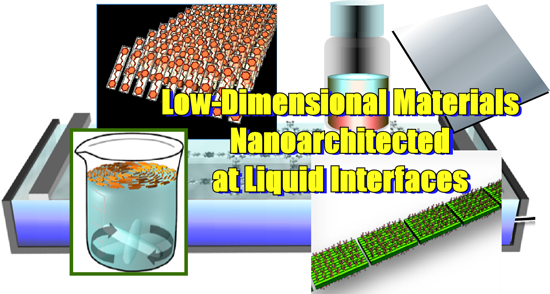
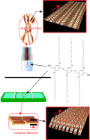
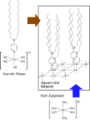
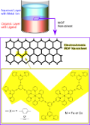
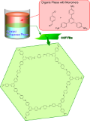
- the balance between two competitive interactions, the phase separation of fluorocarbons and hydrocarbons and the attractive interaction between guanidiuium and carboxylate, to fabricate nanoscopic domains within a two-dimensional mixture of hydrocarbon guanidinium and fluorocarbon carboxylic acid [198













Ceria/polymer nanocontainers for high-performance encapsulation of fluorophores
Beilstein J. Nanotechnol. 2019, 10, 522–530, doi:10.3762/bjnano.10.53
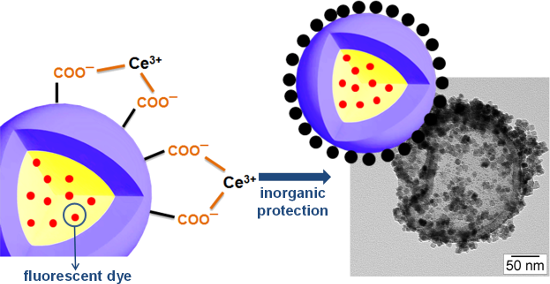
- dissolved in the liquid hexadecane core before polymerization of the shell. The nanocapsule formation takes place by phase separation between the formed polymer and hexadecane [46]. The surface of the nanocapsules was negatively charged, as proven by polyelectrolyte titration (surface charge density of 1.6


Colloidal chemistry with patchy silica nanoparticles
Beilstein J. Nanotechnol. 2018, 9, 2989–2998, doi:10.3762/bjnano.9.278
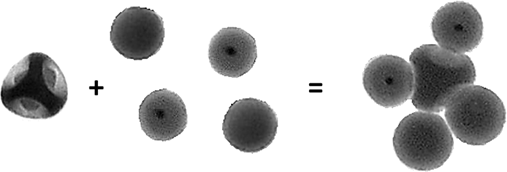
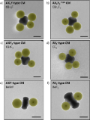
- Ravensteijn has also reported asymmetric dumbbell-like particles, i.e., with two nodules of different chemical compositions, obtained through a phase separation process during the styrene emulsion polymerization seeded with cross-linked polystyrene (PS) particles coated with a thin layer of poly(vinylbenzyl


Ternary nanocomposites of reduced graphene oxide, polyaniline and hexaniobate: hierarchical architecture and high polaron formation
Beilstein J. Nanotechnol. 2018, 9, 2936–2946, doi:10.3762/bjnano.9.272
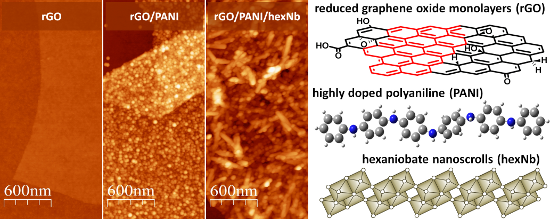
- range of rGO flakes coated with PANI and decorated with hexNb nanoparticles. Such organization was attributed to the good stability of the dispersion, which does not present major aggregation and phase separation. The dispersions of the ternary rGO/PANI/hexNb sample can be deposited on surfaces by


Site-controlled formation of single Si nanocrystals in a buried SiO2 matrix using ion beam mixing
Beilstein J. Nanotechnol. 2018, 9, 2883–2892, doi:10.3762/bjnano.9.267
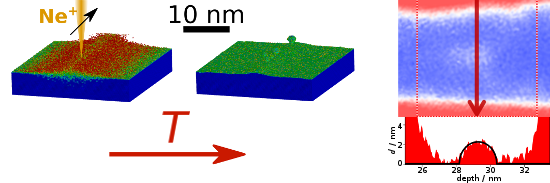
- + or Ne+ ion beam mixing of Si into a buried SiO2 layer followed by thermally activated phase separation. Binary collision approximation and kinetic Monte Carlo methods are conducted to gain atomistic insight into the influence of relevant experimental parameters on the Si NC formation process. Energy
- between the SiO2 layers and perpendicular to the incident Ne+ beam. Keywords: helium ion microscopy; ion beam mixing; Monte Carlo simulations; phase separation; single electron transistor; Introduction Silicon has been the main material in the semiconductor industry for almost all use cases with the
- is supported by computer simulations of the ion beam mixing and phase separation process. Second, a systematic study of Si+ NC formation is reported, to define optimized irradiation and annealing parameters. Third, these parameters are adapted to the FIB approach using the HIM. For this scenario


Block copolymers for designing nanostructured porous coatings
Beilstein J. Nanotechnol. 2018, 9, 2332–2344, doi:10.3762/bjnano.9.218
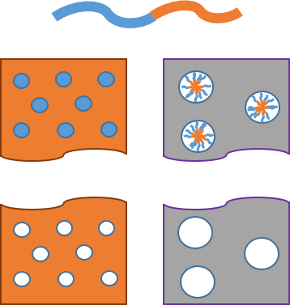
- /homopolymer formulations [81][82]. The microdomain arrangement is affected by heating, since BCs can exhibit phase mixing upon heating, due to the increase in the translational (or combinatorial) entropy and subsequent decrease of the phases interaction area. It can also exhibit phase separation as a result


Electrospun one-dimensional nanostructures: a new horizon for gas sensing materials
Beilstein J. Nanotechnol. 2018, 9, 2128–2170, doi:10.3762/bjnano.9.202
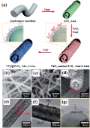
- template is removed by annealing. The morphology of the NFs is dependent on sputtering time, resulting in uniformly distributed branches all over stem. Jun et al. [77] developed polypyrrole (PPy)-coated SnO2 tube-in-tube structures using single-nozzle electrospinning with a phase separation solvent method
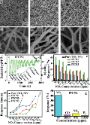
- , respectively (Figure 8k,l) [183]. Similarly, a very low concentration of acetone (120 ppb) can be detected with a fast response/recovery time (11/6s) using thin-walled wrinkled layer SnO2 NTs functionalized with Pt by a controlled phase separation technique [163]. The selectivity of SnO2 NFs is also improved






Nanoconjugates of a calixresorcinarene derivative with methoxy poly(ethylene glycol) fragments for drug encapsulation
Beilstein J. Nanotechnol. 2018, 9, 2057–2070, doi:10.3762/bjnano.9.195
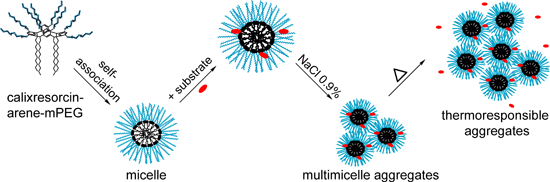
- fragments [32] and appear due to the reaction conditions (see Experimental section). Because of the presence of mPEG groups, compound 3 can be considered a non-ionic surfactant. It is known, that in aqueous solutions of non-ionic surfactants increasing temperatures leads to phase separation. There are two
- a phase separation up to 90 °C, while solutions of 3 in a physiological solution of sodium chloride (0.9% NaCl) solution or in phosphate-buffered saline (PBS, pH 7.4) clouded at 60 °C (Figure 4a). DLS method showed that an increase of the particle size of 3 in the presence of salts occurred already


Nanocomposites comprised of homogeneously dispersed magnetic iron-oxide nanoparticles and poly(methyl methacrylate)
Beilstein J. Nanotechnol. 2018, 9, 1613–1622, doi:10.3762/bjnano.9.153
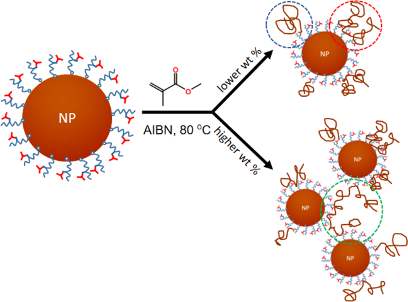
- in toluene resulted in the rapid flocculation of the iron-oxide nanoparticles, which was macroscopically visible as a phase separation (Figure 1). This phase separation was more pronounced when a small permanent magnet was placed beside the container, as shown in Figure 1. The flocculation is most
- conducted in the suspension of NP-RA in toluene to which methacrylic anhydride and pyridine were added. At the beginning of the polymerization the suspension was colloidal; however, after a short time of polymerization, the macroscopic phase separation was clearly visible. In contrast, the suspension of NP


Absence of free carriers in silicon nanocrystals grown from phosphorus- and boron-doped silicon-rich oxide and oxynitride
Beilstein J. Nanotechnol. 2018, 9, 1501–1511, doi:10.3762/bjnano.9.141
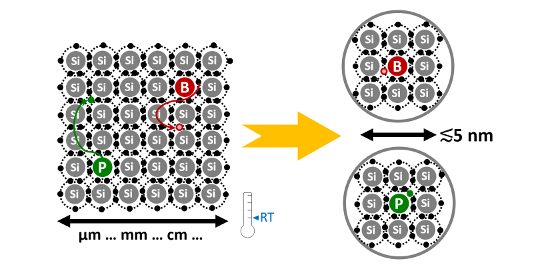
- broad overview of all available techniques and approaches [11]. Here, we focus on the Si NC growth via phase separation of PECVD-deposited, P- or B-doped silicon-rich oxide thin films via annealing at high temperatures. Additionally, we focus on comparatively lowly doped samples (on the order of 0.1–1


Patterning of supported gold monolayers via chemical lift-off lithography
Beilstein J. Nanotechnol. 2017, 8, 2648–2661, doi:10.3762/bjnano.8.265
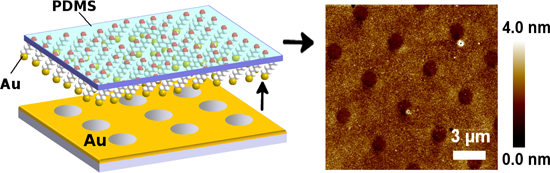
- measured by electron diffraction [55][56]. At molecular resolution, scanning probe measurements have revealed the rearrangement of Au surface atoms [57][58][59], diffusion and alignment of adatom–adsorbate complexes [50][60], and phase separation of SAMs composed of molecules with different backbones or
- terminal functionalities [61][62][63]. Phase separation is driven by stronger intermolecular interactions between one type of SAM molecule vs another in mixed SAMs. The rearrangement and displacement of molecules in mixed monolayers can also be manipulated by choosing other head groups, such as selenols


Changes of the absorption cross section of Si nanocrystals with temperature and distance
Beilstein J. Nanotechnol. 2017, 8, 2315–2323, doi:10.3762/bjnano.8.231
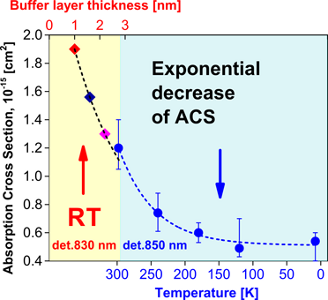
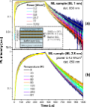
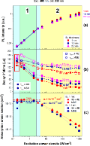
- displays [3]. A device fabrication process demands an effective control of size, shape and density of Si NCs. All those requirements can be met via the superlattice approach in combination [4] with the phase-separation of sub-stoichiometric oxides (SiOx) where the NC spacing in all three dimensions can be


Advances and challenges in the field of plasma polymer nanoparticles
Beilstein J. Nanotechnol. 2017, 8, 2002–2014, doi:10.3762/bjnano.8.200
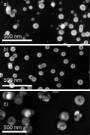
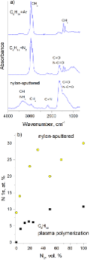
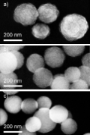
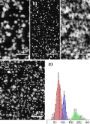
- prove advantageous, especially if more reactive metals are considered. For example, titanium is known to form strong TiC bonds when sputtered in organic plasma [74]. Carbidization of titanium atoms may hinder metal–polymer phase separation and it may even change the properties of titanium inclusions






Nanotopographical control of surfaces using chemical vapor deposition processes
Beilstein J. Nanotechnol. 2017, 8, 1250–1256, doi:10.3762/bjnano.8.126
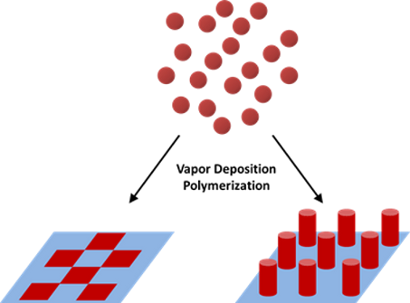
- , condensable species into the gas feed mixture ensures phase separation simultaneously with the polymerization and crosslinking reactions. The porogen is removed in a post-deposition process using vacuum or solvent treatment. Gupta and co-workers demonstrated that in the iCVD process the monomer itself can act




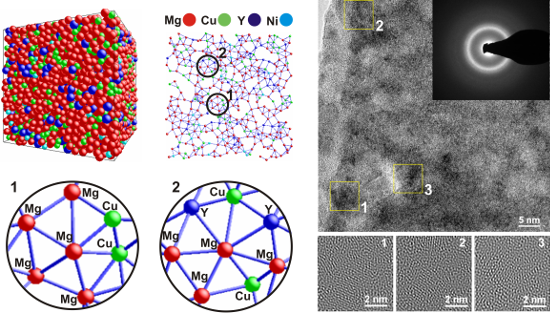
Atomic structure of Mg-based metallic glass investigated with neutron diffraction, reverse Monte Carlo modeling and electron microscopy
Beilstein J. Nanotechnol. 2017, 8, 1174–1182, doi:10.3762/bjnano.8.119
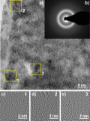
- -sized fine particles. The black and grey particles are dispersed randomly and densely in the amorphous matrix. The high-angle annular dark-field (HAADF) results were used to observe phase separation in the studied glass after heat treatment. The image collected in HAADF mode allows randomly distributed
- al. [34] used the HAADF technique to indicate a local compositional fluctuation caused by nanoscale phase separation in Zr–Cu–Ni–Al–Ti bulk metallic glasses. They achieved bright contrast regions with size above 2 nm. The authors also stated that the identified contrasts are in good agreement with
- high-angle annular dark-field (HAADF) observation was used to observe phase separation. The HAADF mode allowed randomly distributed, dark contrasts regions with size from 4 to 6 nm to be observed. The value of the first coordination shell radius was found to be similar to the interplanar spacings




Bio-inspired micro-to-nanoporous polymers with tunable stiffness
Beilstein J. Nanotechnol. 2017, 8, 906–914, doi:10.3762/bjnano.8.92
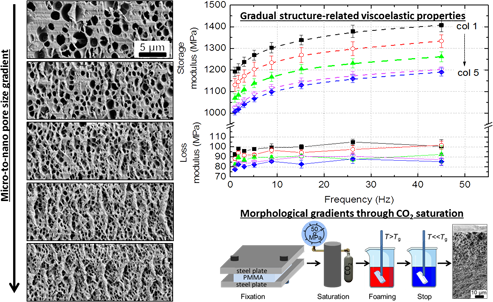
- -CO2 to form a homogeneous solution; (ii) pore nucleation and phase separation induced by a thermodynamic instability, which is usually caused by a temperature increase or a pressure decrease, and (iii) pore growth due to diffusion of SC-CO2 from the polymer matrix to the pores [20]. When the polymer


Analysis and modification of defective surface aggregates on PCDTBT:PCBM solar cell blends using combined Kelvin probe, conductive and bimodal atomic force microscopy
Beilstein J. Nanotechnol. 2017, 8, 579–589, doi:10.3762/bjnano.8.62
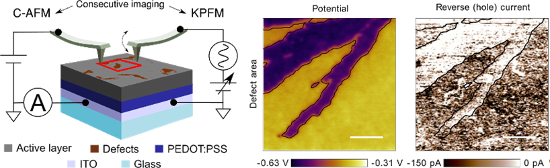
- the majority of modern PSCs consist of nanoscale bulk heterojunction (BHJ) structures [7], changes in the internal structures, such as local crystallization of polymers or phase separation of donor and acceptor mixtures, greatly affect the device performance [8][9]. Extensive research has been


In situ formation of reduced graphene oxide structures in ceria by combined sol–gel and solvothermal processing
Beilstein J. Nanotechnol. 2016, 7, 1815–1821, doi:10.3762/bjnano.7.174
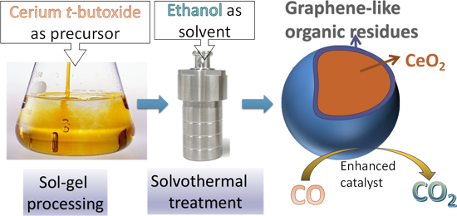
- 0.05 and 0.02 g, the Raman mapping showed no obvious phase separation, indicating that rGO and CeO2 were homogeneously dispersed. However, when the GO proportion was 0.2 g, phase separation (agglomeration of rGO) was observed by partial disappearance of the CeO2 signal and the enhancement of the rGO