Search results
Search for "photocatalytic properties" in Full Text gives 67 result(s) in Beilstein Journal of Nanotechnology.
Unravelling the interfacial interaction in mesoporous SiO2@nickel phyllosilicate/TiO2 core–shell nanostructures for photocatalytic activity
Beilstein J. Nanotechnol. 2020, 11, 1834–1846, doi:10.3762/bjnano.11.165
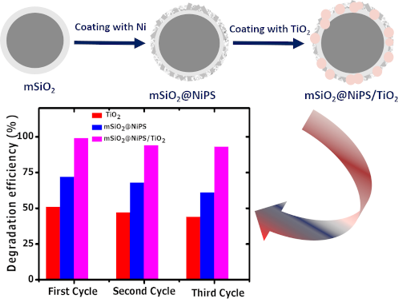
- the core–shell nanostructure and yielded superior photocatalytic properties. Keywords: bandgap energy; core–shell; dye degradation; nickel phyllosilicate; photocatalysts; Introduction Textile dyes and organic compounds are major water pollutants, which create an environmental hazard to aquatic
- NiPS with a sheet-like morphology, which was then used as a catalyst for the hydrogenation of styrene. More recently, Ghiat et al. [39] reported on the photocatalytic properties of nickel phyllosilicates for hydrogen production. Their nickel phyllosilicate, displaying a surface area of 95 m2·g−1, was
- photodegradation of methyl violet dye. For comparison, the photocatalytic properties of pristine TiO2 were also investigated. It is postulated that the controlled surface area of the mesoporous SiO2 as well as the formation of a core–shell network with a flake-like NiPS structure on the surface aided in creating a


Effect of Ag loading position on the photocatalytic performance of TiO2 nanocolumn arrays
Beilstein J. Nanotechnol. 2020, 11, 717–728, doi:10.3762/bjnano.11.59
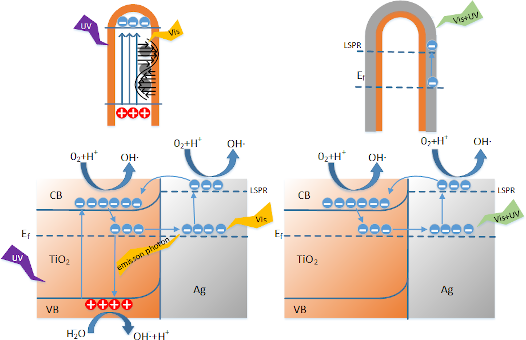
- deposition (ALD) and vacuum evaporation. The effects of the Ag loading position and deposition thickness, and the morphology, structure and composition of Ag-deposited TNC arrays on its optical and photocatalytic properties were studied. The Ag-filled TiO2 (AFT) nanocolumn arrays exhibited higher removal


Fabrication of Ag-modified hollow titania spheres via controlled silver diffusion in Ag–TiO2 core–shell nanostructures
Beilstein J. Nanotechnol. 2020, 11, 141–146, doi:10.3762/bjnano.11.12
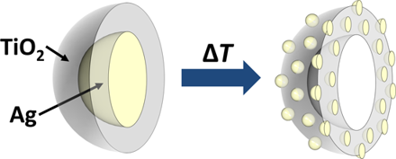
- photocatalytic properties of TiO2 and the optical properties of plasmonic NPs [2]. This combination has been shown to extent the photocatalytic activity of TiO2, which is initially limited to UV light [8], to the visible or even to the NIR range of radiation [9]. Recent examples of the fabrication of plasmonic
- obtained composite catalyst exhibits a synergistic effect between the anatase crystalline shell and the AuNPs as well as superb thermal and mechanical stability of the highly dispersed AuNPs. TiO2 HSs decorated with ultrasmall Ag nanocrystallites and exhibiting excellent photocatalytic properties were


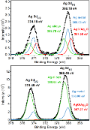

Improved adsorption and degradation performance by S-doping of (001)-TiO2
Beilstein J. Nanotechnol. 2019, 10, 2116–2127, doi:10.3762/bjnano.10.206
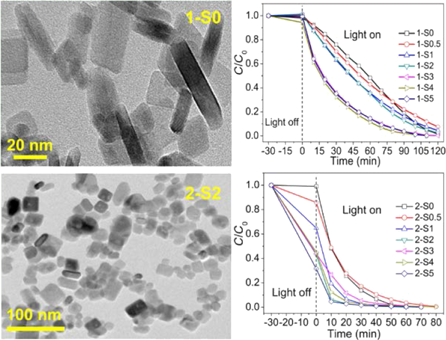
- increase in the amount of •OH and •O2− radicals. Keywords: anatase; chemical state; degradation; photocatalytic properties; S-doping; thermal chemical vapor deposition; titanium dioxide (TiO2); Introduction Anatase TiO2 with a tetragonal symmetry has widely been used for the degradation of organic
- pollutants, as well as in electrocatalysis, solar cells and self-cleaning applications. Its wide use is based on its physicochemical properties, abundance, nontoxicity, environment-friendliness and low cost [1][2][3][4][5][6][7]. The photocatalytic properties of anatase TiO2 crystals are anisotropic since
- state and photocatalytic properties of undoped TiO2, indicating that the temperature is not high enough to effectively achieve S-doping. The effects of S-doping at 250 °C are as follows: (1) S-doping induces a crystal lattice distortion, and the ratio of the lattice parameters c/a varies with the RS/Ti


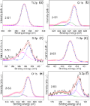


BiOCl/TiO2/diatomite composites with enhanced visible-light photocatalytic activity for the degradation of rhodamine B
Beilstein J. Nanotechnol. 2019, 10, 1412–1422, doi:10.3762/bjnano.10.139
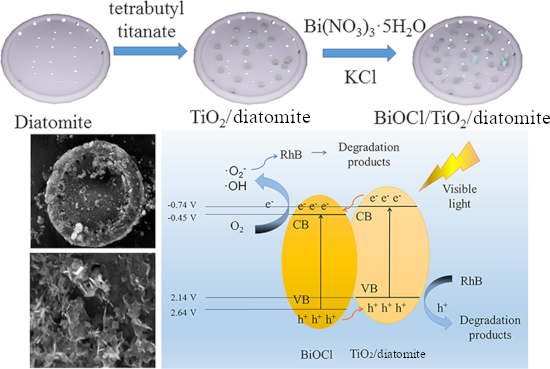
- degradation product and visible light (λ > 400 nm) was used as the light source for the evaluation of the photocatalytic properties of the prepared BTD composite. The results show that the catalytic performance of the BTD composite under visible-light irradiation is much higher than that of TiO2 or BiOCl
- change to Bi2O3, and Bi2SiO5 and Bi2Ti2O7 will be formed (Figure 1b). At the same time, TiO2 will gradually change from anatase to rutile, resulting in significant degradation of photocatalytic properties [31]. We speculate that the existence of BiOCl leads to the change of the crystal transition


Electronic properties of several two dimensional halides from ab initio calculations
Beilstein J. Nanotechnol. 2019, 10, 823–832, doi:10.3762/bjnano.10.82
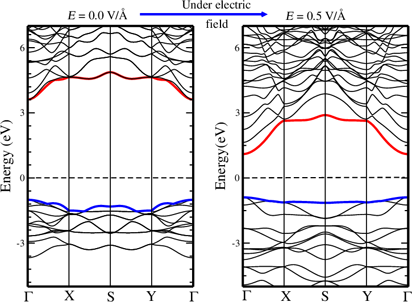
- synthesis and the photocatalytic properties of BiOX compounds under three different exposure conditions. Also, transition-metal oxychlorides MOCl (M = Sc, Ti, V, Cr, Fe) systems possess interesting electronic and magnetic properties [21][22][23][24]. Bismuth oxyhalides have been investigated as catalysts


Impact of the anodization time on the photocatalytic activity of TiO2 nanotubes
Beilstein J. Nanotechnol. 2018, 9, 2628–2643, doi:10.3762/bjnano.9.244
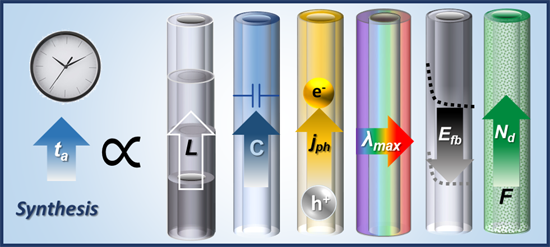
- anodization produces vertically oriented, well-ordered nanotubular arrays with high aspect ratio. TiO2 nanotubes (TNTs) produced in this way have been preferred by several groups since they are expected to exhibit better photocatalytic properties than nanoparticles, due to the short electron-diffusion path
- mirrored also in the O 1s spectra. The main peak (O 1s I, 530 eV) is usually attributed to Ti–O bonds, while the secondary one is attributed to surface hydroxy groups, Ti–OH, (O 1s II, 531.6 eV) and is often described as a characteristic of systems with enhanced photocatalytic properties [35]. An increased


Hierarchical heterostructures of Bi2MoO6 microflowers decorated with Ag2CO3 nanoparticles for efficient visible-light-driven photocatalytic removal of toxic pollutants
Beilstein J. Nanotechnol. 2018, 9, 2297–2305, doi:10.3762/bjnano.9.214
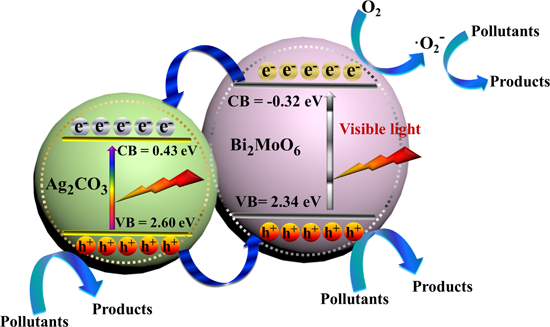
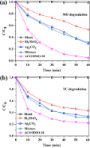
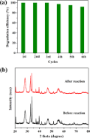
- . Herein, we synthesized flower-like Ag2CO3/Bi2MoO6 heterostructures, in which Ag2CO3 nanoparticles were evenly anchored on Bi2MoO6 microflowers to construct novel hierarchical heterojunction photocatalysts by via in situ precipitation. The photocatalytic properties of Ag2CO3/Bi2MoO6 was measured regarding




Recent highlights in nanoscale and mesoscale friction
Beilstein J. Nanotechnol. 2018, 9, 1995–2014, doi:10.3762/bjnano.9.190
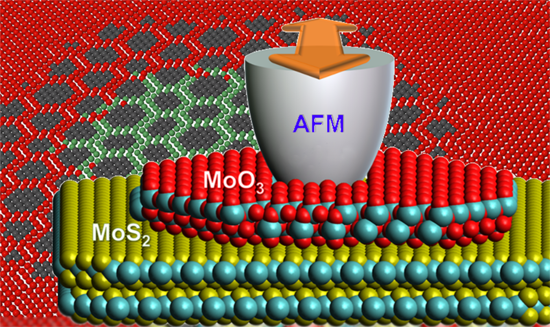
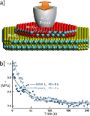
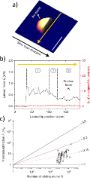
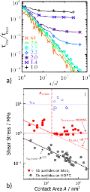
- assemble more complex nanodevices. Prospects in tuning friction with photo-assisted reactions The influence of light exposure on properties such as friction and adhesion is rarely explored. For instance, it is known that certain surfaces, such as titanium oxide, exhibit photocatalytic properties and might


A visible-light-controlled platform for prolonged drug release based on Ag-doped TiO2 nanotubes with a hydrophobic layer
Beilstein J. Nanotechnol. 2018, 9, 1793–1801, doi:10.3762/bjnano.9.170
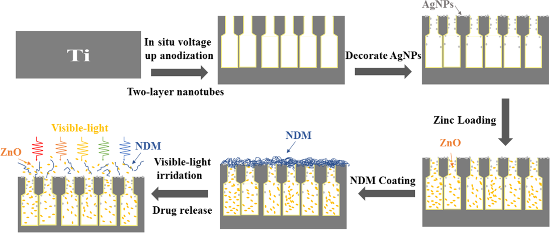
- from getting into tubes and removing the drugs from the tubes and linkers. Making use of its excellent photocatalytic properties, the organic layer could then be destroyed, allowing the drugs to escape from the linkers and tubes more easily and quickly. Nevertheless, only 2–4% of solar energy is




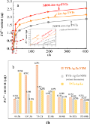

Perovskite-structured CaTiO3 coupled with g-C3N4 as a heterojunction photocatalyst for organic pollutant degradation
Beilstein J. Nanotechnol. 2018, 9, 671–685, doi:10.3762/bjnano.9.62
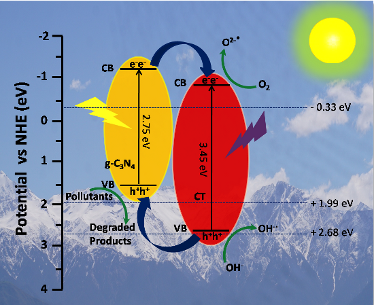
- activity is limited to UV excitation only [35]. Recently, our group has reported a novel RGO–N–CaTiO3 (RGO-NCT) bifunctional photocatalyst which comprises both adsorption and photocatalytic properties [36]. The photocatalytic activity of RGO-NCT photocatalysts was evaluated by studying the degradation of


Fabrication and photoactivity of ionic liquid–TiO2 structures for efficient visible-light-induced photocatalytic decomposition of organic pollutants in aqueous phase
Beilstein J. Nanotechnol. 2018, 9, 580–590, doi:10.3762/bjnano.9.54
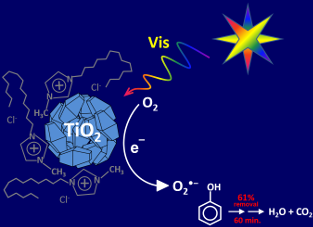
- IL:TBOT (see Table 1). First of all, the samples were analyzed in terms of specific surface area, optical and photocatalytic properties (in a model reaction of phenol degradation in the aqueous phase under visible-light irradiation). The description of all prepared photocatalysts, including the selected
- physicochemical and photocatalytic properties, is shown in Table 1. To understand the nature of the visible-light-induced activity (IL:TBOT molar ratio equal to 1:3 and 1:10), the photocatalysts possessing the highest and lowest activity have been selected for further detailed study (SEM, XPS and XRD). Moreover
- or during synthesis and preparation. Photocatalytic activity The photocatalytic activity of the IL–TiO2 samples was evaluated by phenol degradation induced by visible-light irradiation (using an optical filter with λ > 420 nm). All photocatalysts exhibited better photocatalytic properties than the


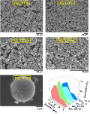


Influence of the preparation method on the photocatalytic activity of Nd-modified TiO2
Beilstein J. Nanotechnol. 2018, 9, 447–459, doi:10.3762/bjnano.9.43
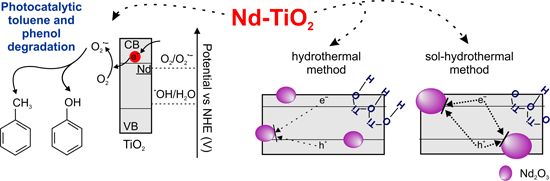
- visible light irradiation [8][9][10]. In recent years, the modification with rare earth (RE) metals has proven to be an efficient method to improve the photocatalytic properties of TiO2 and to broaden its absorption to the solar spectrum [8][11][12]. Various Lewis bases can form complexes with RE-modified
- , we presented experimental studies concerning the effect of synthesis methods on lanthanide-modified TiO2. In these studies we compared hydrothermal and sol–gel method. The synthesis method significantly affects the structure, optical, luminescence and photocatalytic properties. It was found that all
- in the corresponding 0.25% Nd-TiO2(SHT) sample (Table 3). The XPS data correspond well with the highest photocatalytic activity exhibited by the 0.25% Nd-TiO2 photocatalyst prepared via HT method (described in detail in the next section). Photocatalytic properties The photocatalytic properties of




Photocatalytic and adsorption properties of TiO2-pillared montmorillonite obtained by hydrothermally activated intercalation of titanium polyhydroxo complexes
Beilstein J. Nanotechnol. 2018, 9, 364–378, doi:10.3762/bjnano.9.36
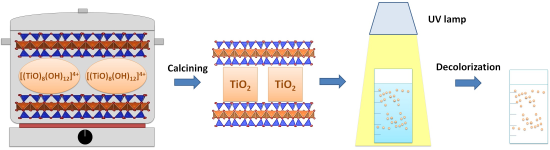
- , we have successfully used this advantage in the preparation of TiO2 particles by the biotemplate technique while impregnating cellulose with a concentrated solution of titanium polyhydroxo complexes [17]. In order to improve the textural and photocatalytic properties of pillared MM, researchers have
- to anionic ones. The pillared materials prepared using hydrothermal treatment combine sorptive and photocatalytic properties and can be recommended for mineralization and decomposition of organic contaminants, even in highly acidic media. Experimental Montmorillonite A fraction of MM particles with a






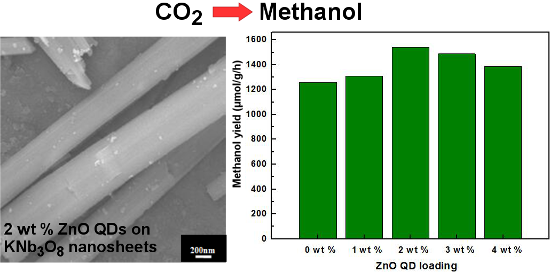
Hydrothermal synthesis of ZnO quantum dot/KNb3O8 nanosheet photocatalysts for reducing carbon dioxide to methanol
Beilstein J. Nanotechnol. 2017, 8, 2264–2270, doi:10.3762/bjnano.8.226
- excellent nonlinear optical, piezoelectric, ferroelectric, ionic conductivity, selective-ion exchange and photocatalytic properties [6][7][8][9]. Zhang et al. prepared K4Nb6O17 with a sheet-like nanostructure by hydrothermal synthesis and found its photocatalytic activity for degrading acidic red G to be




Evaluating the toxicity of TiO2-based nanoparticles to Chinese hamster ovary cells and Escherichia coli: a complementary experimental and computational approach
Beilstein J. Nanotechnol. 2017, 8, 2171–2180, doi:10.3762/bjnano.8.216

- University, Umultowska 85, 61-614 Poznan, Poland 10.3762/bjnano.8.216 Abstract Titania-supported palladium, gold and bimetallic nanoparticles (second-generation nanoparticles) demonstrate promising photocatalytic properties. However, due to unusual reactivity, second-generation nanoparticles can be


Synthesis and characterization of noble metal–titania core–shell nanostructures with tunable shell thickness
Beilstein J. Nanotechnol. 2017, 8, 2083–2093, doi:10.3762/bjnano.8.208
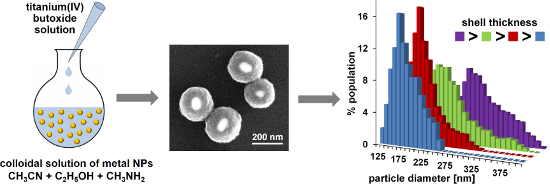
- number of e−/h+ pairs should also result in improved photocatalytic properties of titania-based plasmonic nanostructures. Conclusion In this paper, we have shown that by using a general and simple approach it is possible to synthesize Ag@TiO2 and Au@TiO2 CSNs with shell thickness of ≈40–70 nm and 90 nm


Two-dimensional carbon-based nanocomposites for photocatalytic energy generation and environmental remediation applications
Beilstein J. Nanotechnol. 2017, 8, 1571–1600, doi:10.3762/bjnano.8.159


Synthesis of graphene–transition metal oxide hybrid nanoparticles and their application in various fields
Beilstein J. Nanotechnol. 2017, 8, 688–714, doi:10.3762/bjnano.8.74
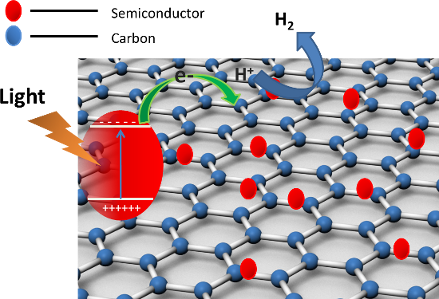
- bond interactions and suppresses the charge recombination in the semiconductor materials [30]. As a consequence, improved photocatalytic properties of the hybrid system have been demonstrated. Synthesis of graphene The first free-standing single-layer graphene was obtained in 2004 by the isolation of
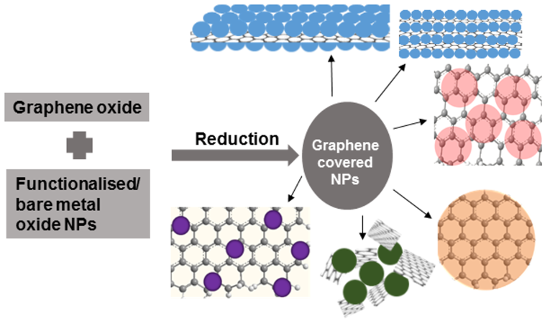
- having improved photocatalytic properties due to the effective charge anti-recombination of graphene and the high catalytic activity of the facets [88]. An anionic surfactant-mediated growth of the self-assembled TiO2–graphene hybrid nanostructure synthesis was introduced by Wang et al., which shows






Photocatalysis applications of some hybrid polymeric composites incorporating TiO2 nanoparticles and their combinations with SiO2/Fe2O3
Beilstein J. Nanotechnol. 2017, 8, 272–286, doi:10.3762/bjnano.8.30
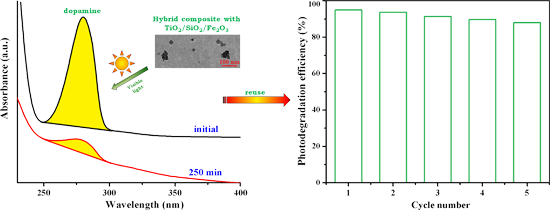
- , Li-ion batteries, sensors, photodynamic cancer therapy or in biomaterials [1][2][3][4][5][6][7]. Since 1972, when Fujishima and Honda published their seminal work [8], much work has been focused on investigating the photocatalytic properties of TiO2 [9]. Titanium dioxide catalysts proved to be better


Optical and photocatalytic properties of TiO2 nanoplumes
Beilstein J. Nanotechnol. 2017, 8, 190–195, doi:10.3762/bjnano.8.20
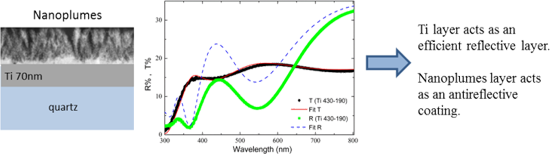
- Ti films as an easy, rapid, and low-cost method to synthesize hydrogenated TiO2 nanoplumes with significant photocatalytic properties under UV and visible light irradiation. Here we report the optical properties of the TiO2 nanoplumes and their correlation with the efficiency of UV photodegradation
- ) exhibits a high exposed surface area due to the longer chemical etching and the lowest reflectivity in the UV-A region. Both parameters affect the photocatalytic properties of the sample making it particularly active in the presence of MB. As shown before [21], the defects introduced in the material by the
- optical characterization was obtained by extracting both the total transmittance (T) and the total reflectance (R) spectra in the 200–800 nm wavelength range, by using a spectrophotometer Perkin-Elmer Lambda 35 equipped with an integrating sphere (RSA-PE-20, Perking-Elmer). The photocatalytic properties


Nanocrystalline TiO2/SnO2 heterostructures for gas sensing
Beilstein J. Nanotechnol. 2017, 8, 108–122, doi:10.3762/bjnano.8.12
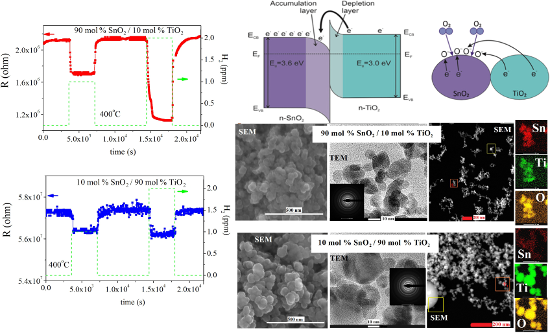
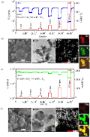
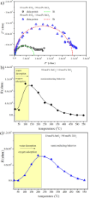
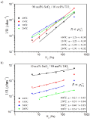
- –SnO2 system prepared by flame spray synthesis with application to gas sensing. Flame spray synthesis is a well-known and efficient method for the synthesis of crystallized metal oxide nanopowders with particular morphology, e.g., spherical, monodispersed nanoparticles of TiO2 with good photocatalytic
- properties [21][22][23]. However, its application to nano-heterostructures for gas sensing is not known. The aim of the current work is to study the role of nanocrystalline TiO2/SnO2 n–n heterojunctions for hydrogen sensing. Within this work the detailed study on crystallographic structure, morphology




Role of RGO support and irradiation source on the photocatalytic activity of CdS–ZnO semiconductor nanostructures
Beilstein J. Nanotechnol. 2016, 7, 1684–1697, doi:10.3762/bjnano.7.161
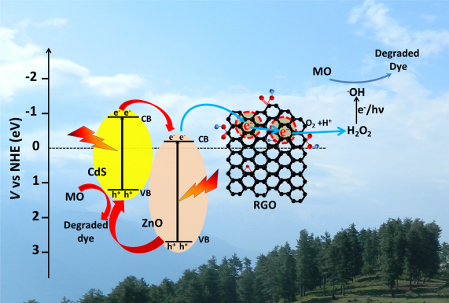
- the conduction band (CB) of CdS to that of ZnO [22][27]. The CdS–ZnO semiconductor nanostructures can be further supported on graphene/reduced graphene oxide (RGO) materials to improve their photocatalytic properties. Ideally, graphene is a single layer carbon sheet, which consists of a two





Hydrophilic silver nanoparticles with tunable optical properties: application for the detection of heavy metals in water
Beilstein J. Nanotechnol. 2016, 7, 1654–1661, doi:10.3762/bjnano.7.157
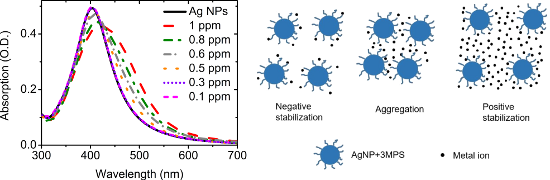
- become very popular in the last years in many fields because of their unique electronic, optical, magnetic and photocatalytic properties and for their large surface-to-volume ratio, which allows very good interaction with the external environment [1][2][3][4][5][6]. These properties can be exploited in


High performance Ce-doped ZnO nanorods for sunlight-driven photocatalysis
Beilstein J. Nanotechnol. 2016, 7, 1338–1349, doi:10.3762/bjnano.7.125
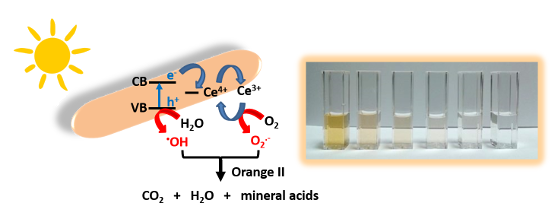
- , electronic and photocatalytic properties have been investigated. Our results demonstrate that Ce-doping improves the optical absorption ability toward visible light wavelengths and thus the photocatalytic performances. ZnO:Ce rods allow the complete degradation of the Orange II dye in ca. 80 min under solar