Search results
Search for "sedimentation" in Full Text gives 84 result(s) in Beilstein Journal of Nanotechnology.
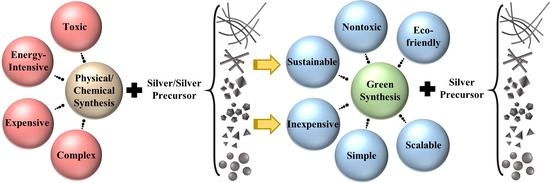
A review on the green and sustainable synthesis of silver nanoparticles and one-dimensional silver nanostructures
Beilstein J. Nanotechnol. 2021, 12, 102–136, doi:10.3762/bjnano.12.9


Fusion of purple membranes triggered by immobilization on carbon nanomembranes
Beilstein J. Nanotechnol. 2021, 12, 93–101, doi:10.3762/bjnano.12.8
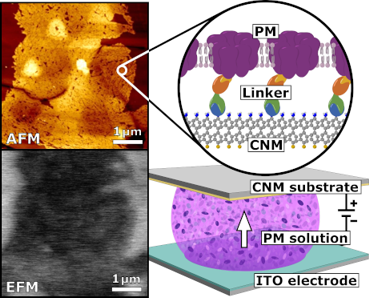
- (NTA) terminal groups for the interaction with the His-tagged PMs forming a quasi-monolayer of His-tagged PM on top of the CNM-NTA. The formation of the Ni-NTA/His-tag complex leads to the unidirectional orientation of PM on the CNM substrate. Electrophoretic sedimentation was employed to optimize the
- ; electrophoretic sedimentation; proton pump; purple membrane; Introduction The so-called purple membrane (PM) has attracted large attention in the scientific literature after this light-driven proton pump was first discovered in the 1970s [1][2]. The membrane patches of about 1 µm in diameter, consisting of the
- optical properties as well as their chemical [39], thermal [40], and mechanical stability [41]. PM patches were deposited by electrophoretic sedimentation from a suspension as a quasi-monolayer on a 4′-nitro-1,1′-biphenyl-4-thiol (NBPT) CNM [42][43]. We use the term quasi-monolayer to express that there


One-step synthesis of carbon-supported electrocatalysts
Beilstein J. Nanotechnol. 2020, 11, 1419–1431, doi:10.3762/bjnano.11.126

- techniques [11] and laser ablation [12]) are surfactant-free and scalable. However, these approaches typically require multiple-step procedures in which the support and catalytic nanoparticles (NPs) are first produced individually and then combined in a third step (i.e., NP sedimentation in liquid phase [13


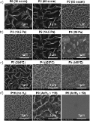


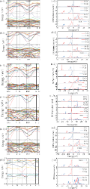
Structural and electronic properties of SnO2 doped with non-metal elements
Beilstein J. Nanotechnol. 2020, 11, 1321–1328, doi:10.3762/bjnano.11.116
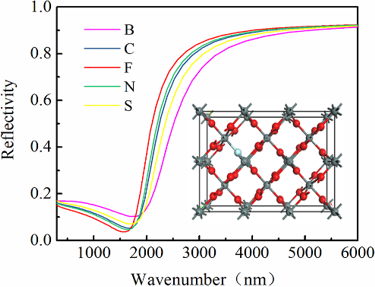
- . Nguyen successfully prepared p-type N-doped SnO2 films using magnetron sputtering [9]. The results show that the SnO2 films were n-type semiconductors, and the concentration of free carriers in the film increased as the temperature for sedimentation increased. Also, p-type semiconductors were



Influence of the magnetic nanoparticle coating on the magnetic relaxation time
Beilstein J. Nanotechnol. 2020, 11, 1207–1216, doi:10.3762/bjnano.11.105
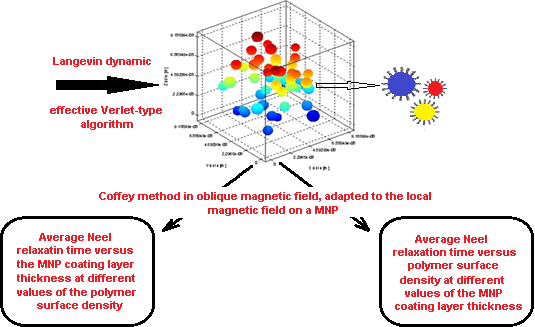
- absence of an external magnetic field [11][12]. This can be a potential problem when ferrofluids are used in medical applications, since nanoparticle agglomeration and sedimentation can create thrombi inside the blood vessels [13]. Controlling nanoparticle agglomeration is essential to improve the


Interfacial charge transfer processes in 2D and 3D semiconducting hybrid perovskites: azobenzene as photoswitchable ligand
Beilstein J. Nanotechnol. 2020, 11, 466–479, doi:10.3762/bjnano.11.38
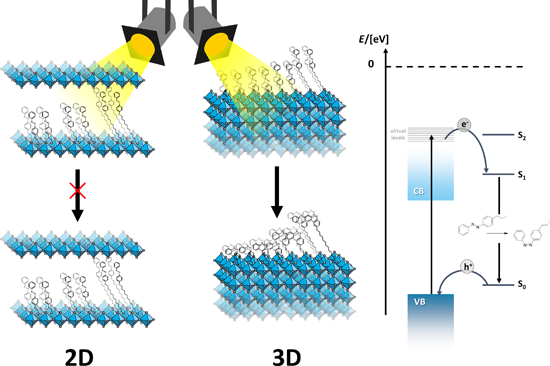
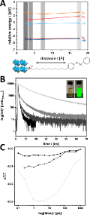
- a partial destabilization of the particles and sedimentation, which can be seen by a general loss of absorption over the time (Figure 5B). Even without the conformational change of the surface-bound azo ligands, the particles are large enough to show slow sedimentation in Earth’s gravitational field




Development of a new hybrid approach combining AFM and SEM for the nanoparticle dimensional metrology
Beilstein J. Nanotechnol. 2019, 10, 1523–1536, doi:10.3762/bjnano.10.150
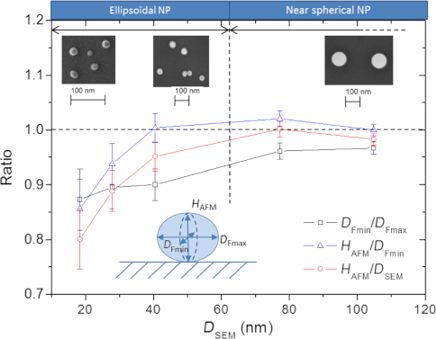
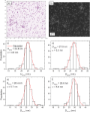
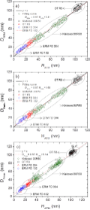
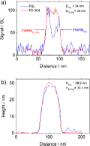
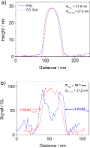
- NP dimensional measurement and the meter definition in the international system (SI) of units [1]. The involved measurand is then a geometrical size. Unlike microscopy-based techniques, all other NP sizing techniques, for instance, dynamic light scattering, centrifugal liquid sedimentation, and
- ) and 84 nm with a 2.1 nm uncertainty (k = 2) for a second size class (called size class B) [15]. Concerning ERM-FD304, the certification only covers dynamic light scattering and centrifugal liquid sedimentation as measuring methods. It also gives an indicative value for microscopy-based techniques (SEM




Gas sensing properties of individual SnO2 nanowires and SnO2 sol–gel nanocomposites
Beilstein J. Nanotechnol. 2019, 10, 1380–1390, doi:10.3762/bjnano.10.136
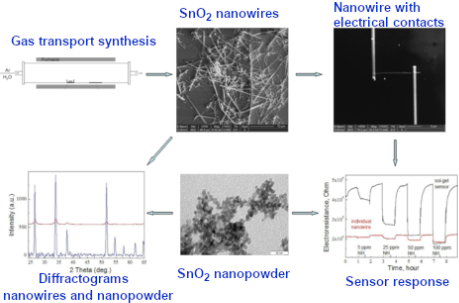
- crystallites obtained by sedimentation (Figure 2) should lead to a considerable dispersion of sorption enthalpies at the different sites. It is commonly thought that this fact results in an increase in the b factor. A second factor, which may lead to an increase in the b parameter value for sol–gel sensors is




Multicomponent bionanocomposites based on clay nanoarchitectures for electrochemical devices
Beilstein J. Nanotechnol. 2019, 10, 1303–1315, doi:10.3762/bjnano.10.129
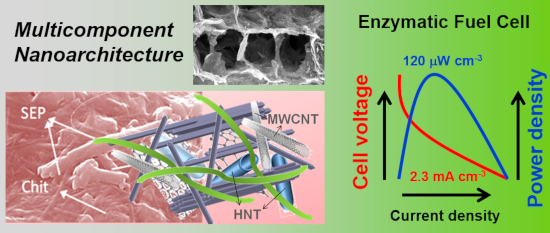
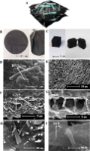
- sedimentation. These dispersions remained stable for more than five months (Figure 2B) and proved to be suitable for preparing self-supported, flexible films by solvent-casting (Figure 3B) as well as foams by freeze-casting (Figure 3C). The lamellar arrangement of the bionanocomposite films is schematized in



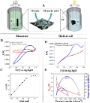
Scavenging of reactive oxygen species by phenolic compound-modified maghemite nanoparticles
Beilstein J. Nanotechnol. 2019, 10, 1073–1088, doi:10.3762/bjnano.10.108
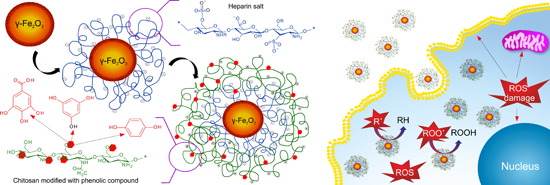
- -Fe2O3@Hep-CS-H, and γ-Fe2O3@Hep-CS-P particles (100 μg/mL) for 3 h in the absence or presence of an NdFeB magnet (ca. 3.4 kG) placed underneath the cells [41]. A magnetic field was applied for 5 min after the addition of nanoparticles to facilitate particle sedimentation. The cells were then harvested





Tailoring the stability/aggregation of one-dimensional TiO2(B)/titanate nanowires using surfactants
Beilstein J. Nanotechnol. 2019, 10, 1024–1037, doi:10.3762/bjnano.10.103
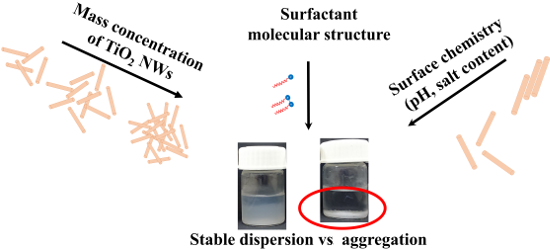
- , magnetic stirring was applied in order to prevent sedimentation. The experiments were carried out under inert N2 atmosphere and at θ = 25 °C. Surface complexation modelling The charging behavior and surface protonation constants for the TNWs in the absence and presence of surfactants have been previously


An iridescent film of porous anodic aluminum oxide with alternatingly electrodeposited Cu and SiO2 nanoparticles
Beilstein J. Nanotechnol. 2019, 10, 735–745, doi:10.3762/bjnano.10.73
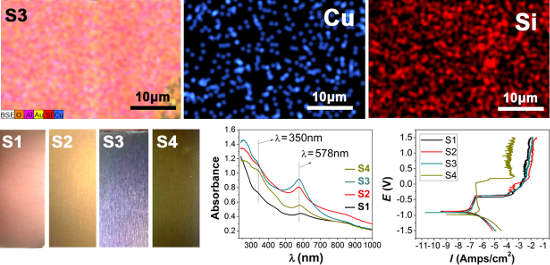
- resulting fibers exhibited structural colors of blue, green, and red when the PS spheres with a diameter of 185, 230 and 290 nm, respectively, were employed [33][34][35]. A natural sedimentation method was also used to prepare a structurally colored SiO2 photonic crystal film. Changing the incident light


Layered calcium phenylphosphonate: a hybrid material for a new generation of nanofillers
Beilstein J. Nanotechnol. 2018, 9, 2906–2915, doi:10.3762/bjnano.9.269
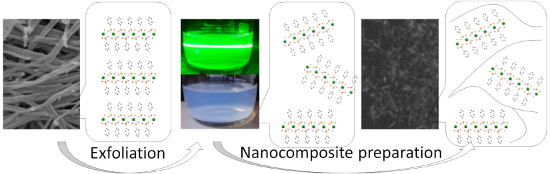
- cylinders are used to break down the agglomerates. This dispersion is stable for months without sedimentation and visible changes. In the case of exfoliated lamellas, a nice dispersion without visible agglomerates was obtained even by mixing it with an ordinary dispersing disc. The particle distribution


Comparative biological effects of spherical noble metal nanoparticles (Rh, Pd, Ag, Pt, Au) with 4–8 nm diameter
Beilstein J. Nanotechnol. 2018, 9, 2763–2774, doi:10.3762/bjnano.9.258
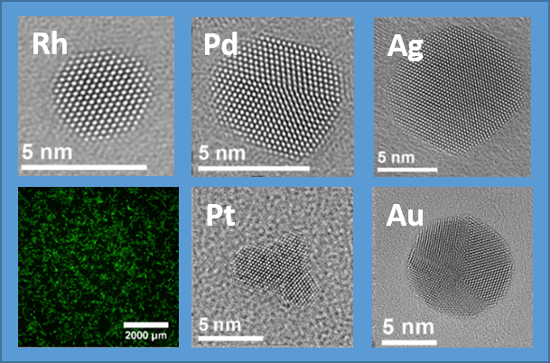
- functionalization were all the same. Size and morphology of the nanoparticles were determined by dynamic light scattering (DLS), analytical disc centrifugation (differential centrifugal sedimentation, DCS), and high-resolution transmission electron microscopy (HRTEM). Cell-biological experiments were performed to
- tube furnace according to DIN EN ISO/IEC 17025:2005) after dissolving the particles in aqua regia (Rh, Pd, Pt, Au) and nitric acid (Ag), respectively. Analytical disc centrifugation (differential centrifugal sedimentation; DCS) was performed with a CPS Instruments DC 24000 disc centrifuge (24,000 rpm
- ), analytical disc centrifugation (differential centrifugal sedimentation, DCS), ultraviolet (UV) spectroscopy, and high-resolution transmission electron microscopy (HRTEM). All characterization data are summarized in Table 2. All nanoparticles have a neutral or negative zeta potential. This is probably due to


ZnO-nanostructure-based electrochemical sensor: Effect of nanostructure morphology on the sensing of heavy metal ions
Beilstein J. Nanotechnol. 2018, 9, 2421–2431, doi:10.3762/bjnano.9.227
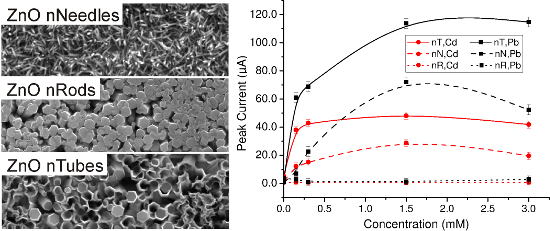
- nanoplates), whereas the lowest sensitivity corresponded to ZnO nanorods with a large diameter (i.e., low surface-to-volume ratio). The efficiency of sedimentation is also related to the electronegativity of adsorbate: it has been shown that all observed ZnO morphologies exhibited significantly higher
- outlined in Figure 4b. There is an asymmetry between the upper (oxidation) and the lower (reduction) components of the CV loop, which confirms that the process is irreversible: strong forces of attraction occur between metal ions and the ZnO nanostructure surface, resulting in sedimentation containing a
- covalent bonding. The presence of metallic lead in the sedimentation can be explained by the electrostatic attraction between Pb2+ and ZnO nanotube defects formed in large amount during the etching process. The quantitative dependence of the concentration is also traceable: the size of the peak correlates


Facile chemical routes to mesoporous silver substrates for SERS analysis
Beilstein J. Nanotechnol. 2018, 9, 880–889, doi:10.3762/bjnano.9.82
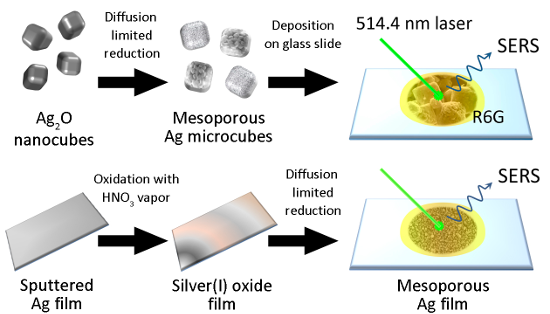
- minutes after deposition. (a,b) SEM micrographs of Ag2O crystallites produced by alkaline sedimentation in excess of PVP, namely, (a) AgNO3/PVP 1:10 and (b) AgNO3/PVP 1:5. (c,d) SEM micrographs of the samples obtained by Ag2O reduction using NaBH4 with the following molar ratios: (c) Ag2O/NaBH4 1:2 and (d


Optimisation of purification techniques for the preparation of large-volume aqueous solar nanoparticle inks for organic photovoltaics
Beilstein J. Nanotechnol. 2018, 9, 649–659, doi:10.3762/bjnano.9.60
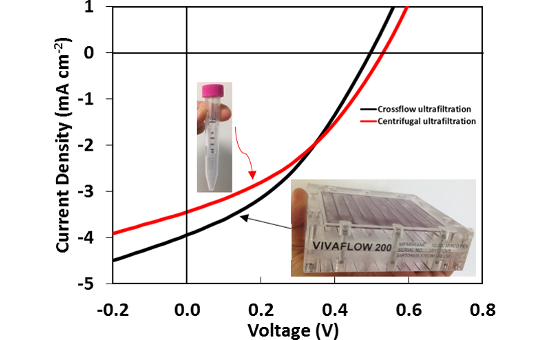
- greatly influences the efficiency of the prepared devices [24]. Aggregation and sedimentation of ASNP inks as a function of free SDS concentration and applied forces were investigated by measuring the particle size at different dilution factors for inks from both centrifugal and crossflow ultrafiltration


Photocatalytic and adsorption properties of TiO2-pillared montmorillonite obtained by hydrothermally activated intercalation of titanium polyhydroxo complexes
Beilstein J. Nanotechnol. 2018, 9, 364–378, doi:10.3762/bjnano.9.36
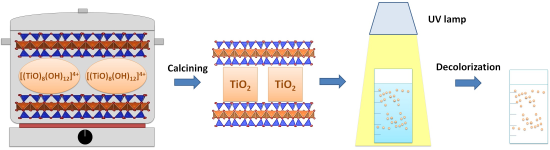
- size of <2 micrometers, which was isolated by the sedimentation method from natural bentonite of the Dash-Salakhly deposit [56], was used as a starting material. The extracted MM fraction was subjected to drying at a temperature of 60 °C. Original MM (Figure 13) has a characteristic layered structure






Thermo- and electro-optical properties of photonic liquid crystal fibers doped with gold nanoparticles
Beilstein J. Nanotechnol. 2017, 8, 2790–2801, doi:10.3762/bjnano.8.278
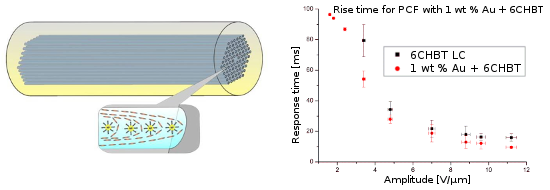
- the N–I transition temperature. This technique allowed us to obtain a uniform mixture without any sedimentation, which could plug the microchannels of the PCF and hinder (or even prevent) the infiltration process. Synthesis of liquid crystal–Au nanoparticle composites The Au NP-doped LC mixture was
- nanoparticles (NPs): particle size distribution of Au NPs obtained by using a disc centrifuge sedimentation method (a) and UV–vis spectrum of Au NPs in an organic solvent (b). Cross-section of the PCF 061221 (a) and experimental setup for measuring the propagation spectra in PLCF (b). Experimental setup for


The role of ligands in coinage-metal nanoparticles for electronics
Beilstein J. Nanotechnol. 2017, 8, 2625–2639, doi:10.3762/bjnano.8.263
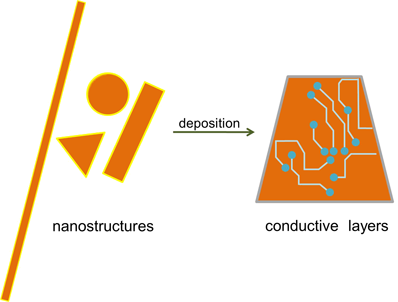
- increasing length of the alkanethiol chain. Shorter alkanethiols (C2–C8) could not prevent aggregation and sedimentation of the nanoparticles; longer thiols (C12 & C14) resulted in higher colloidal stability. The effect was interpreted using an extended Derjaguin–Landau–Verwey–Overbeek (DLVO) theory that


Involvement of two uptake mechanisms of gold and iron oxide nanoparticles in a co-exposure scenario using mouse macrophages
Beilstein J. Nanotechnol. 2017, 8, 2396–2409, doi:10.3762/bjnano.8.239
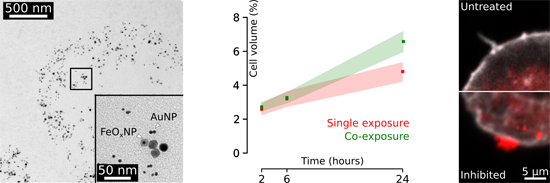
- ]. The colloidal stability was preserved in both tests, and aggregation did not occur. Therefore, given the effective mass densities and hydrodynamic diameters, the transport-to-cell process was dominated by diffusion, while sedimentation was negligible. Our model assumes that upon reaching the cell, the



Synthesis and characterization of noble metal–titania core–shell nanostructures with tunable shell thickness
Beilstein J. Nanotechnol. 2017, 8, 2083–2093, doi:10.3762/bjnano.8.208
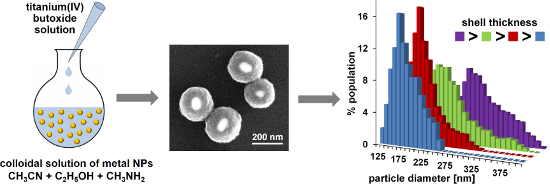
- resolution of this technique. Recently, it has been demonstrated that of the various particle sizing techniques, two of them (differential centrifugal sedimentation (DCS) and tunable resistive pulse sensing (TRPS) [58][59]) are capable of achieving resolution similar to the TEM technique. Both techniques


Evaluation of preparation methods for suspended nano-objects on substrates for dimensional measurements by atomic force microscopy
Beilstein J. Nanotechnol. 2017, 8, 1774–1785, doi:10.3762/bjnano.8.179
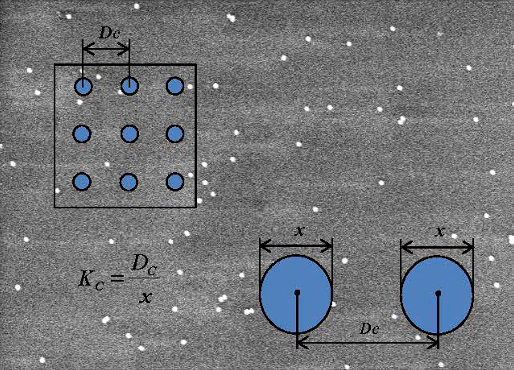
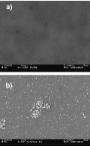
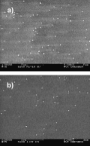
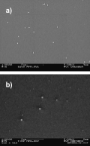
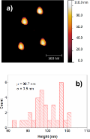
- microscopy, see Figure 3 and Figure 4. On the other hand, poorer results were achieved regarding homogeneity of deposition caused by drying rings, surface effects, dispersion errors and sedimentation within the droplet. A SEM overview image for inhomogeneous deposited spherical SiO2 particles (100 nm) is


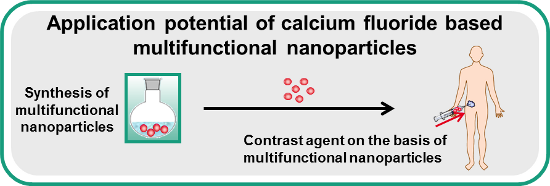
Calcium fluoride based multifunctional nanoparticles for multimodal imaging
Beilstein J. Nanotechnol. 2017, 8, 1484–1493, doi:10.3762/bjnano.8.148
- time constant and consequently a lower relaxivity. On average, all batches decrease about 11.6% after nine months. Through an examination of the vertical distribution of the T1 relaxation time constants in the probing tubes a sedimentation of the NPs or a decrease of the relaxivity can be excluded
- redispersed in DMEM with 10% FCS. The sedimentation studies over 24 h were carried out by monitoring the absorbance at 700 nm as a function of time (Shimadzu, UV-3100). The sample (5 mg·mL−1 NPs in DMEM with 10% FCS, with or without Melpers®2450) was placed into a polystyrene micro cuvette and the absorbance
- of each batch can be observed. Sedimentation study of the CaF2:(Tb3+,Gd3+) NPs (5 mg·mL−1) in Dulbecco’s Modified Eagle’s Medium (DMEM) with 10% FCS stabilized with Melpers®2450 and non-stabilized: a) photographs of the stabilized NPs and the non-stabilized NPs 24 h after dispersing the NPs in FCS


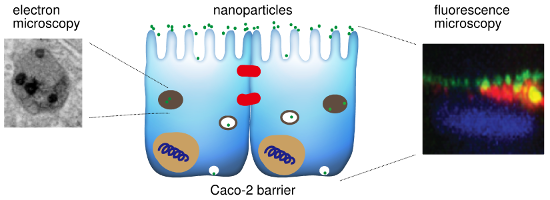
Low uptake of silica nanoparticles in Caco-2 intestinal epithelial barriers
Beilstein J. Nanotechnol. 2017, 8, 1396–1406, doi:10.3762/bjnano.8.141
- state of agglomeration in the different media of interest were determined by differential centrifugal sedimentation (DCS). The characterisation of one batch is summarised in Table 1 (Supporting Information File 1, Figures S2 and S3 show corresponding distributions). DCS of both nanoparticles suspended
- particles were also measured in water. Further characterisation was performed using differential centrifugal sedimentation (DCS) on a CPS Disk Centrifuge DC 24,000. A disc speed of 18,500 revolutions per minute (RPM) was used and an 8–24% water or HBSS buffer sucrose gradient was injected (settings
- . Nanoparticle dispersion (100 µg/mL) in water, serum free HBSS and HBSS supplemented with 10% foetal bovine serum (FBS) were characterised by differential centrifugal sedimentation (DCS) and dynamic light scattering (DLS) as described in the Experimental section. The table shows the apparent diameter and peak