


Search results
Search for "shear" in Full Text gives 188 result(s) in Beilstein Journal of Nanotechnology.
Assessing phytotoxicity and tolerance levels of ZnO nanoparticles on Raphanus sativus: implications for widespread adoptions
Beilstein J. Nanotechnol. 2024, 15, 115–125, doi:10.3762/bjnano.15.11

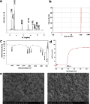
- microvoids in the liquid. This exerted a shear force on NP agglomerates, effectively overcoming the van der Waals force that holds them together [56]. The effect of ZnO NPs on soluble protein and IAA contents Plants grown in coir medium treated with 10,000 mg/L did not survive. Therefore, protein and IAA


Elasticity, an often-overseen parameter in the development of nanoscale drug delivery systems
Beilstein J. Nanotechnol. 2023, 14, 1149–1156, doi:10.3762/bjnano.14.95
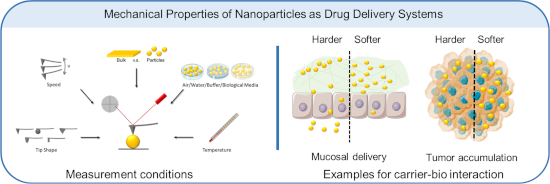
- determined by the Young’s modulus, bulk modulus or shear modulus, viscoelastic properties or deformability) as well as the measurement method to quantify these properties. Anselmo et al. as well as Nie et al. gave comprehensive overviews and definitions of different measurements of mechanical properties [16


A multi-resistance wide-range calibration sample for conductive probe atomic force microscopy measurements
Beilstein J. Nanotechnol. 2023, 14, 1141–1148, doi:10.3762/bjnano.14.94
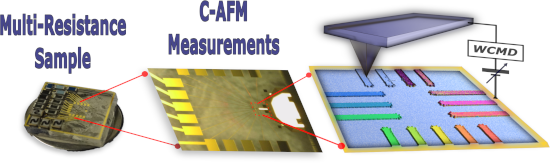
- commonly observed in C-AFM because of highly localized electric fields at the tip apex leading to structural damage considerably affecting the measurement reliability. These effects are further amplified during scanning in contact mode due to shear forces and strong mechanical stress imposed on the tip


Exploring internal structures and properties of terpolymer fibers via real-space characterizations
Beilstein J. Nanotechnol. 2023, 14, 1004–1017, doi:10.3762/bjnano.14.83
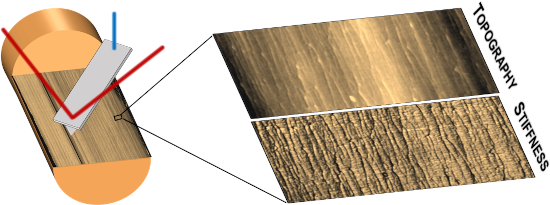
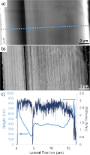
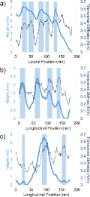
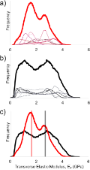
- ® and UHMWPE [9][10][11][12][13]. Here we extend this technique to Technora® by notching individual fibers (Figure 1b), gently opening them along shear planes to expose internal surfaces, and then scanning across those surfaces using an atomic force microscope (AFM) (Figure 1c). AFM scans yield internal
- ), extending halfway up or down the fiber diameter on opposing ends. This creates a shear plane that readily splits the fiber under slight tension, exposing internal surfaces that can be probed with AFM. Notches were obtained using a gallium ion beam inside an FEI NanoV600 dual beam system, with ion beam
- it laterally cuts through half of the diameter, or slightly more. Undercutting prevents a shear plane from forming, yielding a highly fibrillated internal surface that cannot be characterized with AFM, as stray fibrils protrude from the surface and move when contacted by the tip. In contrast






Antibody-conjugated nanoparticles for target-specific drug delivery of chemotherapeutics
Beilstein J. Nanotechnol. 2023, 14, 912–926, doi:10.3762/bjnano.14.75

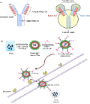
- antigen binding ability. Improper antibody conjugation influences antigen binding affinity and specificity. Once injected into the body, the ACNPs face both physical and biological barriers (such as diffusion, flow and shear forces, aggregation, protein adsorption, phagocytic sequestration, and clearance



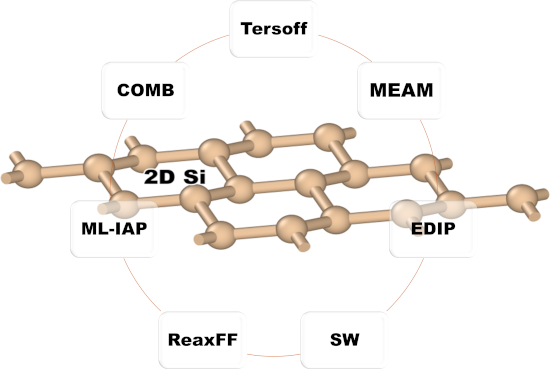
Transferability of interatomic potentials for silicene
Beilstein J. Nanotechnol. 2023, 14, 574–585, doi:10.3762/bjnano.14.48
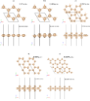
- quantify the potentials under examination. For 2D materials, directional 2D Young’s moduli, 2D Poisson’s ratios, and the 2D shear modulus, are often used instead of elastic constants Cij. Because of the symmetry of hexagonal lattices, these reduce to one 2D Young’s modulus E and one 2D Poisson’s ratio ν
![[Graphic 3]](/bjnano/content/inline/2190-4286-14-48-i7.svg?max-width=637&scale=1.18182)

Intermodal coupling spectroscopy of mechanical modes in microcantilevers
Beilstein J. Nanotechnol. 2023, 14, 123–132, doi:10.3762/bjnano.14.13
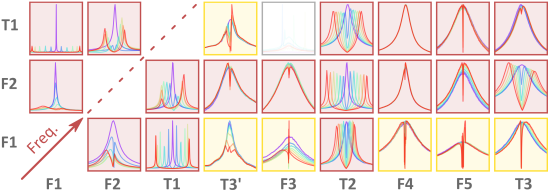
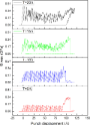
- minimum decreases with the pump as expected, yet the two hybridized peaks are asymmetric in their lineshape. The one on the left exhibits a shear drop in amplitude towards the dip, while the right one misses such feature. Last, T1–F4 has a frequency shift. This is not uncommon in the measured data as F1


Liquid phase exfoliation of talc: effect of the medium on flake size and shape
Beilstein J. Nanotechnol. 2023, 14, 68–78, doi:10.3762/bjnano.14.8
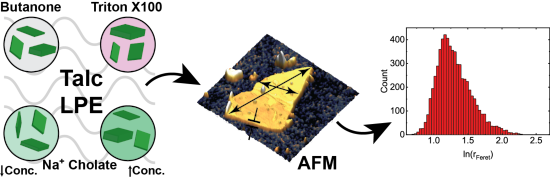
- nanosheets [6]. The energy may be provided by an ultrasonic bath, a shear force mixer, or a tip sonicator. The solution serves three purposes: it provides a medium to propagate the mechanical energy, suspends the exfoliated nanosheets, and prevents them from agglomerating again. The versatility of the method



Bending and punching characteristics of aluminum sheets using the quasi-continuum method
Beilstein J. Nanotechnol. 2022, 13, 1303–1315, doi:10.3762/bjnano.13.108
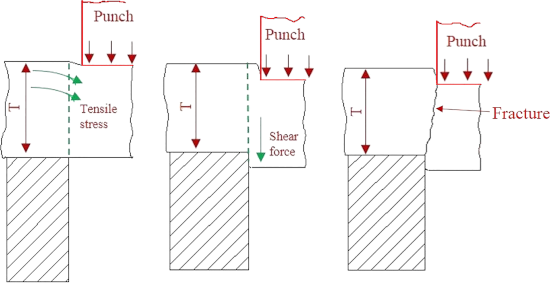
- -continuum (QC) method. Four variables (i.e., crystal orientation, workpiece thickness, clearance between the punch and the substrate, and the taper angle of punch) are used to explore their effect during the nano-punching process. The shear stress distribution is used to express the punching effect on the
- friction behaviors of different models [52]. Moreover, the QC method based on the embedded-atom method (EAM) potential was adopted to observe the fatigue crack growth and expansion characteristics of single-crystal metals under cyclic loading processes. The results showed that after compressive or shear
- retaining the efficiency of continuum models. A nickel punch and a single-crystalline Al workpiece were used as the punching materials. Models with different crystal orientations, workpiece thicknesses, clearances, and taper punch angles were established. The results of the stress–displacement curve, shear





Growing up in a rough world: scaling of frictional adhesion and morphology of the Tokay gecko (Gekko gecko)
Beilstein J. Nanotechnol. 2022, 13, 1292–1302, doi:10.3762/bjnano.13.107
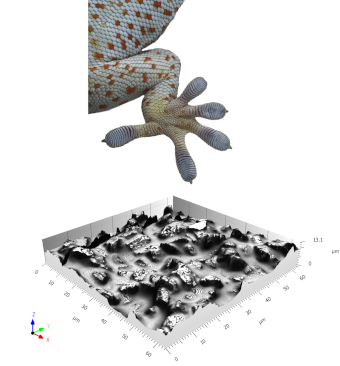
- , and the compliance of the system [28]. However, most studies use widely varying surfaces [1] or uniform 3D printed surfaces [29] that do not capture the random fine-scale roughness that is likely apparent in natural habitats. For example, Huber et al. [26] measured the shear adhesive force of a single
- that shear adhesion was significantly reduced (up to 95% reduction of force produced on acrylic glass) on surfaces where the surface structure was close to matching the animal’s adhesive structure, highlighting the importance of considering length-scale and the impact it has on gecko adhesion when
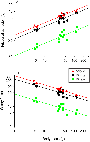
- ., larger toepad area leads to greater area for surface contact). In a study of geckos, skinks, and anoles, Irschick et al. [45] found a strong correlation between shear adhesive force and toepad area. However, the slope of the relationship between toepad area and body mass was lower than that of clinging



Laser-processed antiadhesive bionic combs for handling nanofibers inspired by nanostructures on the legs of cribellate spiders
Beilstein J. Nanotechnol. 2022, 13, 1268–1283, doi:10.3762/bjnano.13.105
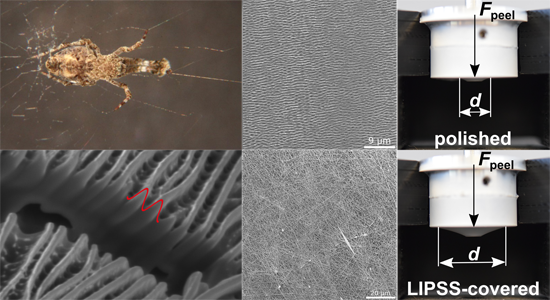
- act longitudinal in the nonwoven. This force is split vectorial at the point of contact in a vertical peel off force and a local horizontal shear force. Due to the rotational symmetry the total horizontal forces cancel out. When exceeding a critical threshold value, the peel-off forces separates the







A cantilever-based, ultrahigh-vacuum, low-temperature scanning probe instrument for multidimensional scanning force microscopy
Beilstein J. Nanotechnol. 2022, 13, 1120–1140, doi:10.3762/bjnano.13.95
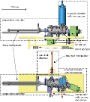
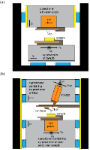
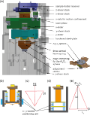
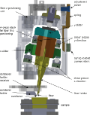
- inside a z-positioning unit, permitting the approach of the tip to the sample. Typically, shear piezo stacks are activated with a triangular voltage-versus-time signal to obtain a stick–slip motion of the slider of the positioning unit. In most instruments, the shear piezo stacks are mounted on the
- applied to all shear piezo stacks simultaneously. In order to minimize the instrument volume and to maximize its mechanical rigidity, the scan piezo is integrated into the xy-positioning unit, which is contained inside the z-positioning unit, which moves inside the instrument body. Different to
- conventional z-positioning units as, for example, used in the work of Schwenk et al. [13] and Hug et al. [49], here the shear piezo stacks are attached to the sliding unit. This is one of the many design steps we have undertaken to improve the stability of the tip–sample gap. Because the shear piezos move






Bioselectivity of silk protein-based materials and their bio-inspired applications
Beilstein J. Nanotechnol. 2022, 13, 902–921, doi:10.3762/bjnano.13.81
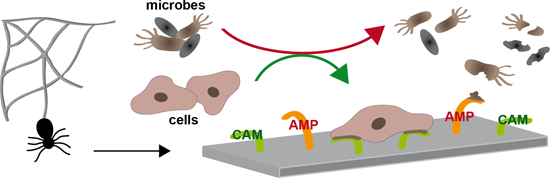
- stored as highly concentrated silk dope solutions in specialized glands and solidify in a spinning process often associated with shear forces accompanied by their folding into a single dominant secondary structure [112]. Due to both convergent evolution (i.e., silks have been “invented” independently


Recent advances in nanoarchitectures of monocrystalline coordination polymers through confined assembly
Beilstein J. Nanotechnol. 2022, 13, 763–777, doi:10.3762/bjnano.13.67
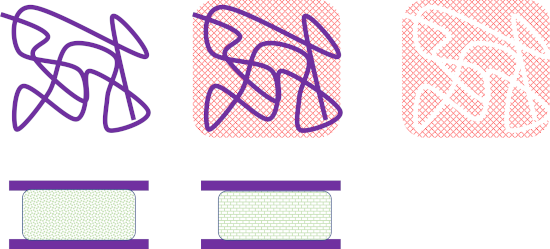
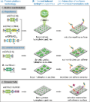
- eventually leads to nanoarchitectures [28][29][30][31][32][33][34][35][36][37][38][39][40][41][42][43][44][45][46]. For instance, faster growth can be realized in polyelectrolyte solution with the help of shear flow [28]. The crystal fronts move very fast. Thus, the networks hindering movement of the crystal
- are less periodic than those of isotropic crystals, because the movement of 1D or 2D crystals during evaporation of the droplets is often hindered due to steric effects. Confined assembly helps to optimize the alignment of 1D or 2D crystals by introducing additional flow, that is, shear flow or
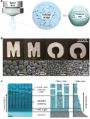
- the space between sandwiched substrates [146][147]. Evaporation of water could be confined at the edges of the suspension, forming local flows to arrange the nanoflakes parallelly. As a result, the dried nanoflakes stacked laminarly, working as glue to bond the glass slides (Figure 8) [147]. The shear





Reliable fabrication of transparent conducting films by cascade centrifugation and Langmuir–Blodgett deposition of electrochemically exfoliated graphene
Beilstein J. Nanotechnol. 2022, 13, 666–674, doi:10.3762/bjnano.13.58
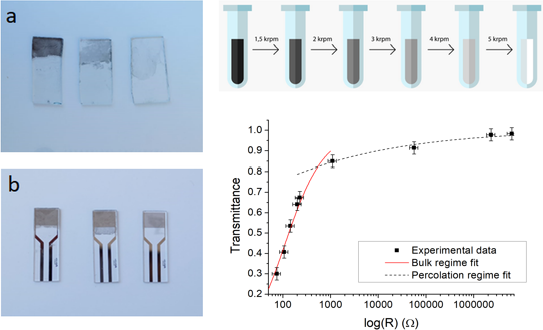
- the range of 1–10 layers, in a range of different liquids, at a wide range of concentrations [13][14]. The mechanism of ultrasonic exfoliation involves ultrasonic waves in liquid media creating bubbles or voids in the liquid, which generate shear forces or cavitation bubbles upon collapsing, which
- shear mixing [26], or the duration of exfoliation [27]. Using LPE for 2D materials that are size-selected during exfoliation limits their use to research groups with expertise in this method. After exfoliation, sizes can be selected by centrifugal processing, which narrows the nanosheet size and


Fabrication and testing of polymer microneedles for transdermal drug delivery
Beilstein J. Nanotechnol. 2022, 13, 629–640, doi:10.3762/bjnano.13.55
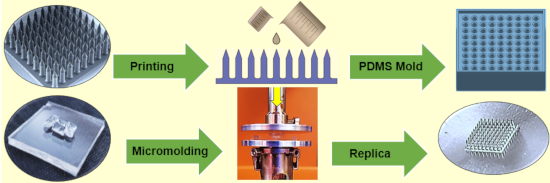
- adjust settings such as slicing, shell and scaffolding, laser power, and scanning speeds before converting to General Writing Language (GWL) codes. Parameters such as slicing distance of 2 µm, multiple base slide counts of 4 layers, shell and scaffolding filling method, null shear angle (0°), and laser
- which results in lateral shear loads. This horizontal shear force component () that is perpendicular to the axis of each MN may cause fracture at an approximate distance x from the base where the yield stress of the material is exceeded. Therefore, for MNs having a cylindrical shaft of radius a, with
- horizontal shear stress forces, and buckling failure, which occurred at the axial applied force of 1.29 N. Figure 5b illustrates the experimental force-displacement diagram for the theoretical prediction of the moment of critical buckling load. The peak on the graph indicated the MN failure. However, due to



Quantitative dynamic force microscopy with inclined tip oscillation
Beilstein J. Nanotechnol. 2022, 13, 610–619, doi:10.3762/bjnano.13.53
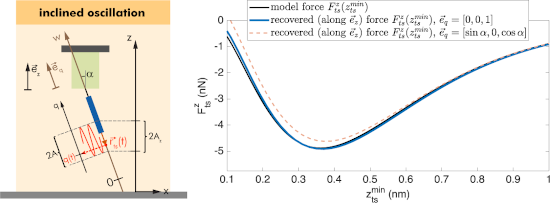
- for the investigation of in-plane material properties, such as the in-plane shear modulus [16]. Last, the influence of the inclination between oscillation direction and surface plane has been used in lateral force microscopy to determine the probe oscillation amplitude [17]. Here, we extend the


![[Graphic 38]](/bjnano/content/inline/2190-4286-13-53-i79.svg?max-width=637&scale=1.18182) and the axis w....
and the axis w....


Effects of substrate stiffness on the viscoelasticity and migration of prostate cancer cells examined by atomic force microscopy
Beilstein J. Nanotechnol. 2022, 13, 560–569, doi:10.3762/bjnano.13.47
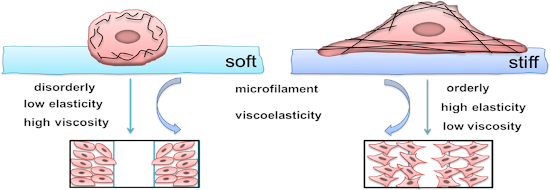
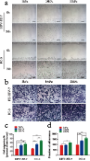
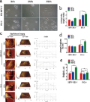
- factors, but also provides a suitable mechanical environment for cells, including physical signals such as substrate stiffness, hydrostatic pressure, shear stress, strain, pressure, and tension [7][8][9]. These mechanical factors play an important role in regulating normal cellular physiological functions



Micro- and nanotechnology in biomedical engineering for cartilage tissue regeneration in osteoarthritis
Beilstein J. Nanotechnol. 2022, 13, 363–389, doi:10.3762/bjnano.13.31
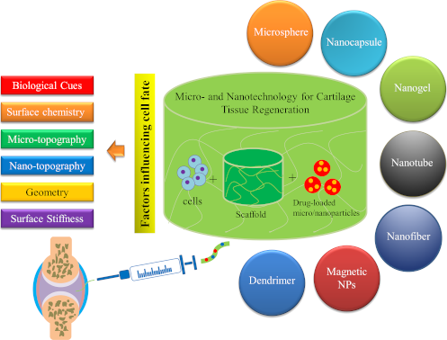
- supports deeper layers from shear stresses [5]. The middle or transitional zone constitutes the thickest portion of articular cartilage (40–60%) and has fewer chondrocytes with a more rounded morphology [6]. In this layer, the collagen fibrils are arranged randomly and obliquely and the cells synthesize


Relationship between corrosion and nanoscale friction on a metallic glass
Beilstein J. Nanotechnol. 2022, 13, 236–244, doi:10.3762/bjnano.13.18
- , pitting is always distributed along a line. Wang et al. [26] found that pitting occurs preferentially at the shear offsets on a pre-deformed Zr-based MG due to the higher chemical activity of offset sites compared with the surrounding flat region. This influence of surface morphology was also shown for
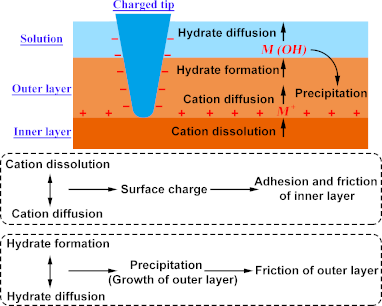
- area of the inner layer and tip apex at a higher normal load [34][35]. The friction force of the outer layer reveals the lateral plowing resistance of the outer layer to the sliding tip, which must depend on the shear strength of the layer and its structure. The friction data for each respective load
- immersion time due to the development of defects in the surface film [40][41]. The increase in the friction coefficient of the outer layer indicates the growth of the outer layer with increasing immersion time. More material of possibly higher shear strength is in contact with the sliding tip, which


Theoretical understanding of electronic and mechanical properties of 1T′ transition metal dichalcogenide crystals
Beilstein J. Nanotechnol. 2022, 13, 160–171, doi:10.3762/bjnano.13.11
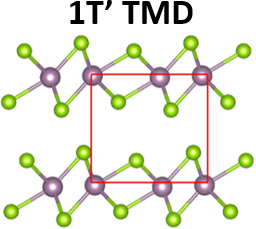
- ′ polytype; anisotropy; density functional theory; layered transition metal dichalcogenide crystals; shear modulus; Young’s modulus; Introduction Layered transition metal dichalcogenides (TMDs) have received increasing attention as important and versatile materials for new applications in different sectors
- TMDs, the properties of which are more similar to those of TMD crystals, have also been widely used in engineering and practical applications [7][21][28][29]. Moreover, shear modes and interlayer breathing of bulk TMDs are crucial parameters regarding their mechanical characteristics and directly
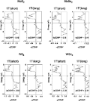
- ability to predict the mechanical characteristics of 1T′ TMD materials [33]. In this comparative study, the electronic and mechanical properties including shear modulus (G), bulk modulus (B), Young’s modulus (Y), Poisson’s ratio (ν), and microhardness (H), of MoS2, MoSe2, WS2, and WSe2 crystals with the



Effect of lubricants on the rotational transmission between solid-state gears
Beilstein J. Nanotechnol. 2022, 13, 54–62, doi:10.3762/bjnano.13.3
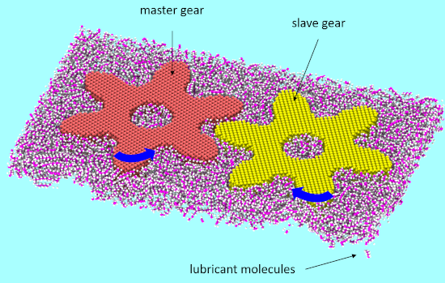
- fluid. One obtains several fluid properties such as pressure, velocity, shear stress, density and strain rate. In the case of the gear–oil–gear system, several studies based on the CFD simulation have been reported [11][12][13][14][15][16][17][18]. However, most of the simulations for this type of
- account by, for example, Lennard-Jones potentials [50]. Several works based on MD simulations were performed to study the shear viscosity in either bulk lubricants [51][52][53] or lubricants confined by two surfaces [54][55]. However, to date, MD simulations for the gear–lubricant–gear case are still


A review on slip boundary conditions at the nanoscale: recent development and applications
Beilstein J. Nanotechnol. 2021, 12, 1237–1251, doi:10.3762/bjnano.12.91
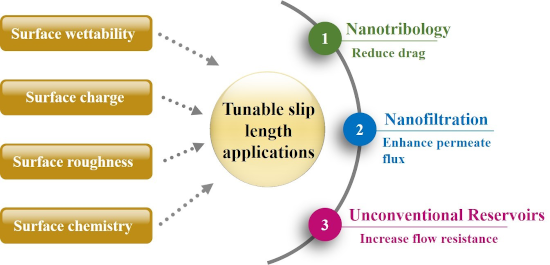
- other properties with a high resolution [43]. Finally, when the flow systems are under extreme conditions, such as at high shear rates, it has also been proven that numerical simulations are more efficient than experimental methods [45]. Therefore, in this review we mainly focus on the numerical
- zero (see Figure 1a). The relationship between slip length b and liquid slip velocity νs at the surface can be expressed as follows: where ν is liquid velocity and h is the channel height. When the liquid is at equilibrium, the viscous shear stress is exerted by the liquid on the wall, where η is the
- shear viscosity of the liquid, equal to the friction stress suffered by the liquid from the wall, which is expressed as σ = λνs, where λ represents the interfacial friction coefficient [46]. Therefore, the slip length can be expressed as , which indicates that the slip length is reduced with the


Effects of temperature and repeat layer spacing on mechanical properties of graphene/polycrystalline copper nanolaminated composites under shear loading
Beilstein J. Nanotechnol. 2021, 12, 863–877, doi:10.3762/bjnano.12.65
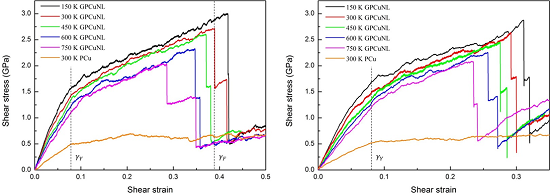
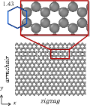
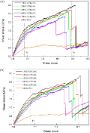
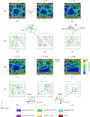
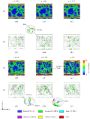
- ) composites under shear loading are investigated by molecular dynamics simulations. The effects of different temperatures, graphene chirality, repeat layer spacing, and grain size on the mechanical properties, such as failure mechanism, dislocation, and shear modulus, are observed. The results indicate that
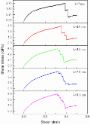
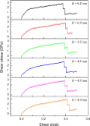
- as the temperature increases, the content of Shockley dislocations will increase and the maximum shear stress of the zigzag and armchair directions also decreases. The mechanical strength of the zigzag direction is more dependent on the temperature than that of the armchair direction. Moreover, self
- -healing occurs in the armchair direction, which causes the shear stress to increase after failure. Furthermore, the maximum shear stress and the shear strength of the composites decrease with an increase of the repeat layer spacing. Also, the shear modulus increases by increasing the grain size of copper










Comprehensive review on ultrasound-responsive theranostic nanomaterials: mechanisms, structures and medical applications
Beilstein J. Nanotechnol. 2021, 12, 808–862, doi:10.3762/bjnano.12.64
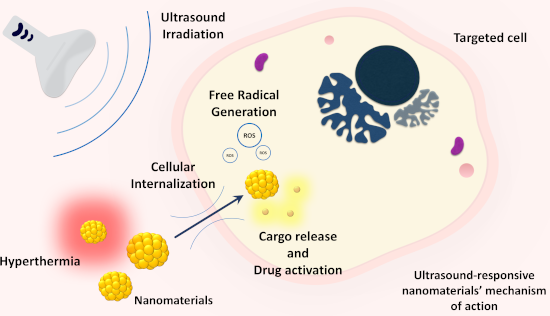
- the MBs, leading to the term “microstream”. Depending on the US intensity, the oscillating MBs come into close proximity with the cells and induce stresses on the cell membrane [75]. Consequently, the triggered shear forces cause disruption of the cell membrane and increase intracellular uptake of
- . reported that when the distance between the cell and the MB was increased to 5.5 µm, the exerted shear stress on the cell membrane suddenly decreased [78]. Schlicher et al. exposed prostate cancer cells (DU145) to 24 kHz US irradiation to investigate the cavitation events and the changes in the cell





