Search results
Search for "size control" in Full Text gives 35 result(s) in Beilstein Journal of Nanotechnology.
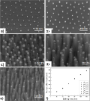
Observing the morphology of single-layered embedded silicon nanocrystals by using temperature-stable TEM membranes
Beilstein J. Nanotechnol. 2015, 6, 964–970, doi:10.3762/bjnano.6.99

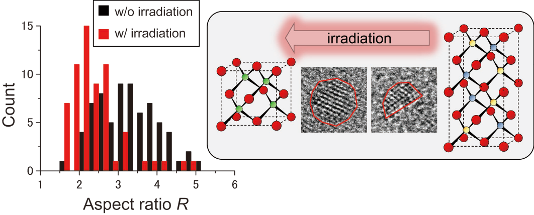
- thickness and stoichiometry are below a critical value. Keywords: electron irradiation damage; energy-filtered transmission electron microscopy; membrane; plane view; silicon nanocrystals; size control; size distribution; Introduction Si nanocrystals (Si NC) are interesting for applications in third


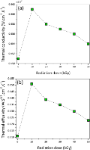
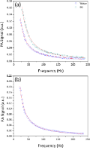
Structural, optical, opto-thermal and thermal properties of ZnS–PVA nanofluids synthesized through a radiolytic approach
Beilstein J. Nanotechnol. 2015, 6, 529–536, doi:10.3762/bjnano.6.55
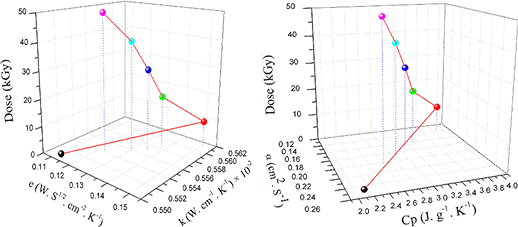
- ], sol–gel [12], solid state synthesis [13] and gamma irradiation [14]. Among these methods, gamma irradiation has been considerably employed in various works because it can be applied under ambient conditions and at room temperature. In addition, this method provides size control and avoids impurities


Nanoparticle shapes by using Wulff constructions and first-principles calculations
Beilstein J. Nanotechnol. 2015, 6, 361–368, doi:10.3762/bjnano.6.35
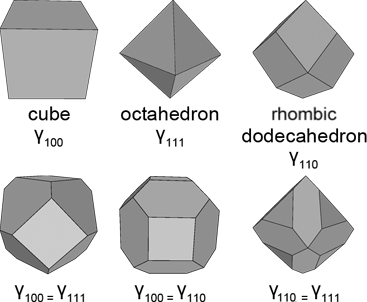
- degree in nanoparticle size control was achieved very early. This is demonstrated by the famous Lycurgus cup, that changes color due to directional light scattering combined with adsorption by the nanoparticle plasmon resonances, or the colorful windows in the facades of medieval cathedrals. Therefore



Hybrid spin-crossover nanostructures
Beilstein J. Nanotechnol. 2014, 5, 2230–2239, doi:10.3762/bjnano.5.232
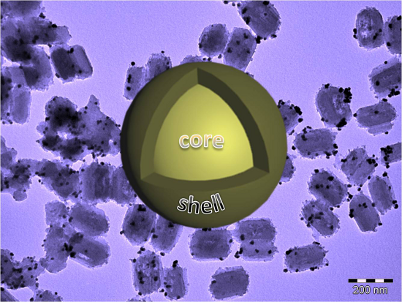
- [FeIICrIII(CN)6]@CsI[NiIICrIII(CN)6] systems [26]. These core–multishell coordination nanoparticles were fabricated using a straightforward, surfactant-free manipulation with precise size control of the sample by controlling the addition rate and the concentration of the components. It is worth noting that



Controlling the optical and structural properties of ZnS–AgInS2 nanocrystals by using a photo-induced process
Beilstein J. Nanotechnol. 2014, 5, 1767–1773, doi:10.3762/bjnano.5.187
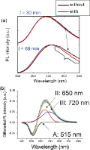
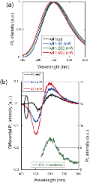
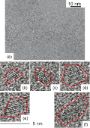
- required for the color display to tune the color rendering index. To meet this requirement, size control at the scale of single atoms is required [12]. We performed laser-assisted synthesis of ZAIS nanocrystals to meet those requirements. Results and Discussion Photo-induced synthesis Defects or impurities




Current state of laser synthesis of metal and alloy nanoparticles as ligand-free reference materials for nano-toxicological assays
Beilstein J. Nanotechnol. 2014, 5, 1523–1541, doi:10.3762/bjnano.5.165
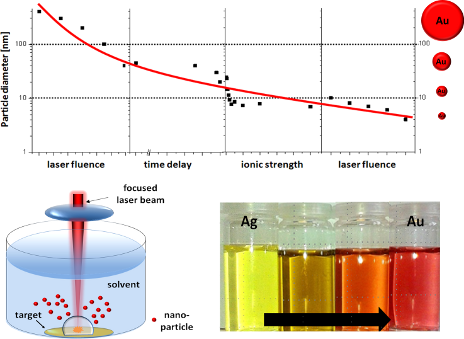
- toxicological studies. Nanoparticles synthesized by pulsed laser ablation in liquid are a promising alternative as this synthesis route provides totally ligand-free nanoparticles. The first part of this article reviews recent methods that allow the size control of laser-fabricated nanoparticles, focusing on
- , mammalian cells and bacteria are considered. Keywords: albumin; gold-silver; implant alloy; laser ablation; nickel-titanium; size control; wear debris; Introduction The widespread use of medical implants consisting of metals (e.g., gold coatings [1]) and alloys (e.g., NiTi, CoCr, stainless steel) [2][3][4
- controlled independently while their uniquely high purity is retained. Hence, this article will highlight totally surfactant-free size control strategies for laser-fabricated nanoparticles and will comment on the stability of these particles in biological fluids. Additionally, laser-based synthesis methods


Protein-coated pH-responsive gold nanoparticles: Microwave-assisted synthesis and surface charge-dependent anticancer activity
Beilstein J. Nanotechnol. 2014, 5, 1452–1462, doi:10.3762/bjnano.5.158
- unique characteristics that include precise size control and ease of fuctionalisation [13][14][15]. The change in color of colloidal gold solutions provides information about processes that take place in the nano-size range, which has been used in detection studies based on the study by Mirkin et. al [16


Preparation of NiS/ZnIn2S4 as a superior photocatalyst for hydrogen evolution under visible light irradiation
Beilstein J. Nanotechnol. 2013, 4, 949–955, doi:10.3762/bjnano.4.107
- the poor separation efficiency and migration ability of the photo-excited charge carriers. A variety of effects have been made to enhance the photocatalytic performance of ZnIn2S4. For example, by size control on ZnIn2S4 [20], doping with transition metals [21] and incorporation of metal sulfides [22


Cyclic photochemical re-growth of gold nanoparticles: Overcoming the mask-erosion limit during reactive ion etching on the nanoscale
Beilstein J. Nanotechnol. 2013, 4, 886–894, doi:10.3762/bjnano.4.100
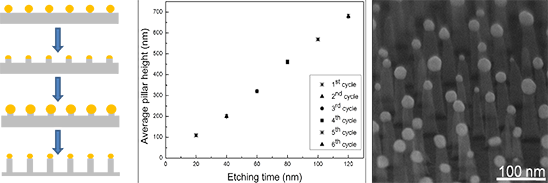
- distributions of the final Au NP. Experimentally, a size window of 2 nm ≤ diameter ≤ 12 nm for Au NP can be realized if the monomer number especially of the P2VP block is properly adjusted [6]. Thus, size control as required in 1) above is principally given by the micellar approach. In practice, however, with


Magnetic nanoparticles for biomedical NMR-based diagnostics
Beilstein J. Nanotechnol. 2010, 1, 142–154, doi:10.3762/bjnano.1.17
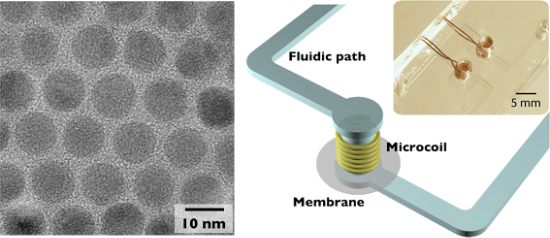
- the size, composition, and crystallinity of the nanoparticles. While high-temperature decomposition markedly improves size control, size distribution and crystallinity of MNPs, the resulting particles are encased in a hydrophobic coating. In order to achieve nanoparticle stability in aqueous media