Search results
Search for "soft materials" in Full Text gives 44 result(s) in Beilstein Journal of Nanotechnology.
Nanoscale isoindigo-carriers: self-assembly and tunable properties
Beilstein J. Nanotechnol. 2017, 8, 313–324, doi:10.3762/bjnano.8.34
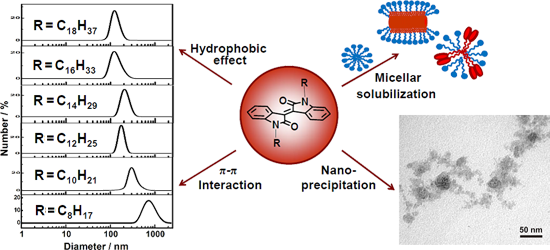
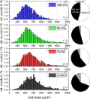
- do not decrease the surface tension of the solvent (52 mN/m). They are surface-inactive compounds (Figure S9, Supporting Information File 1). The study of the entrapment of hydrophobic probes is a generally accepted assay for the potential of soft materials to be used as nanocontainers for
- toxicity as well as to minimize drug degradation and to provide a controllable drug release [51][52][53]. The modification of nanostructures with conjugated π–π fragments leads to the absorption of anticancer drugs via π–π stacking interaction and increases the drug-loading capacity of nanoscale soft
- materials [54]. The latter feature is essential for designing novel antitumor drugs. The second stage of the work was devoted to solubilize amphiphilic isoindigo derivatives using surfactants that are widely used in pharmaceutical industry. The aim of the present work was to investigate the ability of




Solvent-mediated conductance increase of dodecanethiol-stabilized gold nanoparticle monolayers
Beilstein J. Nanotechnol. 2016, 7, 2057–2064, doi:10.3762/bjnano.7.196
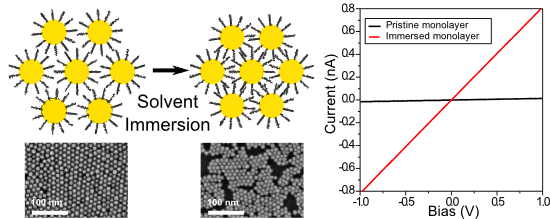
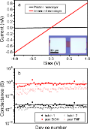
- Patrick A. Reissner Jean-Nicolas Tisserant Antoni Sanchez-Ferrer Raffaele Mezzenga Andreas Stemmer ETH Zürich, Nanotechnology Group, Säumerstrasse 4, CH-8803 Rüschlikon, Switzerland ETH Zürich, Laboratory of Food and Soft Materials, Schmelzbergstrasse 9, CH-8092 Zürich, Switzerland 10.3762/bjnano

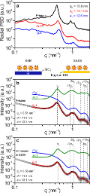


Correlative infrared nanospectroscopic and nanomechanical imaging of block copolymer microdomains
Beilstein J. Nanotechnol. 2016, 7, 605–612, doi:10.3762/bjnano.7.53
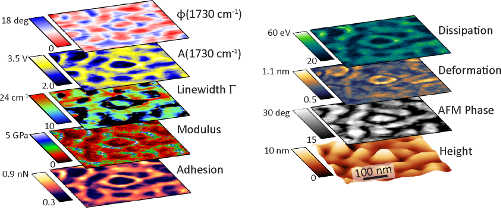
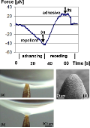
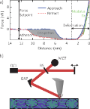
- Omar Khatib and Eric Muller for valuable discussions at various stages of the data analysis. Funding is gratefully acknowledged from the National Science Foundation (CHE 1306398). This work was also supported by the Soft Materials Research Center under NSF MRSEC Grant DMR-1420736. (a) Example force
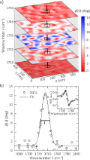
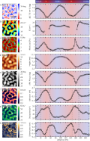


![[Graphic 9]](/bjnano/content/inline/2190-4286-7-53-i10.png?max-width=637&scale=1.18182) (1730 ...
(1730 ...
Hydration of magnesia cubes: a helium ion microscopy study
Beilstein J. Nanotechnol. 2016, 7, 302–309, doi:10.3762/bjnano.7.28
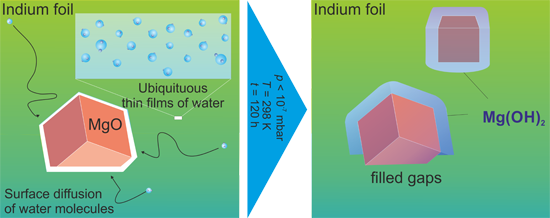
- [17]. However, shrinkage of PMMA after helium ion imaging at 30 kV was reported [18], showing that also helium ions may damage soft materials by radiolysis just like low-energy (below 1 keV) electron beams. Thus, without additional damage to soft materials, HIM facilitates high resolution imaging


Mapping of elasticity and damping in an α + β titanium alloy through atomic force acoustic microscopy
Beilstein J. Nanotechnol. 2015, 6, 767–776, doi:10.3762/bjnano.6.79
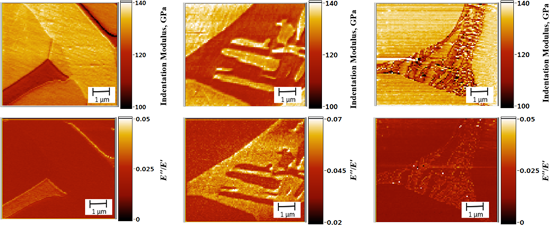
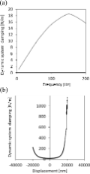
- properties in living cells [15], proteins [16] and polymers [17][18]. They have been found to be useful in probing material properties with enhanced sensitivity, less surface damage and also at larger distances [18][19]. However, these techniques were developed for soft materials with moduli smaller than 10


Filling of carbon nanotubes and nanofibres
Beilstein J. Nanotechnol. 2015, 6, 508–516, doi:10.3762/bjnano.6.53
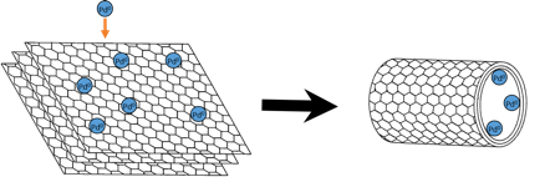
- Reece D. Gately Marc in het Panhuis Soft Materials Group, School of Chemistry, University of Wollongong, Wollongong, NSW 2522, Australia Intelligent Polymer Research Institute, ARC Centre of Excellence for Electromaterials Science, AIIM Facility, University of Wollongong, Wollongong, NSW 2522


Dynamic force microscopy simulator (dForce): A tool for planning and understanding tapping and bimodal AFM experiments
Beilstein J. Nanotechnol. 2015, 6, 369–379, doi:10.3762/bjnano.6.36
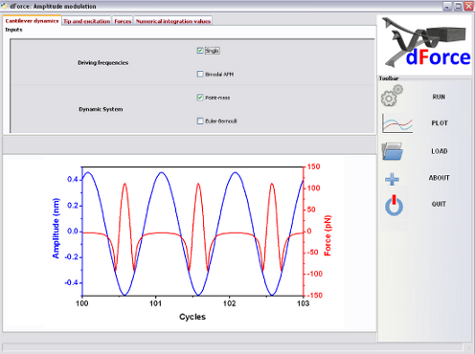
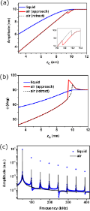
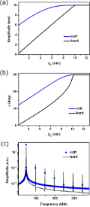
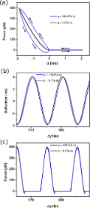
- (dots) are also shown in (a) and (b) for Q = 255. AM-AFM comparison of cantilever dynamics, hard versus soft materials. (a) Amplitude versus average tip–surface distance curves for hard and soft surfaces. (b) Corresponding phase shift curves. (c) Spectra of the amplitude components taken at zc = 5 nm




Influence of the PDMS substrate stiffness on the adhesion of Acanthamoeba castellanii
Beilstein J. Nanotechnol. 2014, 5, 1393–1398, doi:10.3762/bjnano.5.152
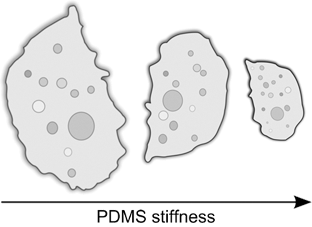
- the PDMS substrates and the work of adhesion with the Johnson–Kendall–Roberts (JKR) model [25]. This model is used to characterize the mechanical properties of soft materials in the presence of adhesion, since it takes into account the attractive forces between the microindenter tip and the sample



Antimicrobial nanospheres thin coatings prepared by advanced pulsed laser technique
Beilstein J. Nanotechnol. 2014, 5, 872–880, doi:10.3762/bjnano.5.99
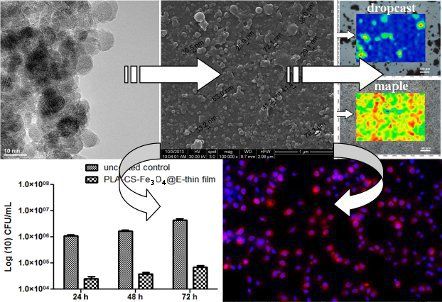
- and coatings of soft materials, organic and polymeric materials, and complex molecules [19][20][21][22][23][24][25][26][27][28][29][30][31][32][33][34][35]. Furthermore, the compatibility of MAPLE processing has been demonstrated for inorganic systems such as TiO2 [36], and Fe3O4 nanoparticle-based




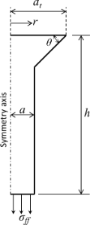
The optimal shape of elastomer mushroom-like fibers for high and robust adhesion
Beilstein J. Nanotechnol. 2014, 5, 630–638, doi:10.3762/bjnano.5.74
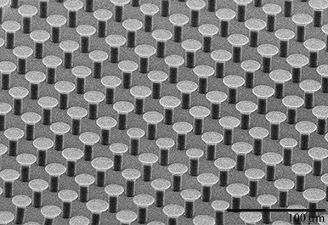
- . While conventional adhesives rely on very soft materials or viscous liquids, nature offers a unique system composed of adhesive elements made of relatively rigid materials. These adhesive elements are comprised of millions of tiny fibers varying in size and geometrical complexity depending on the animal



Energy dissipation in multifrequency atomic force microscopy
Beilstein J. Nanotechnol. 2014, 5, 494–500, doi:10.3762/bjnano.5.57
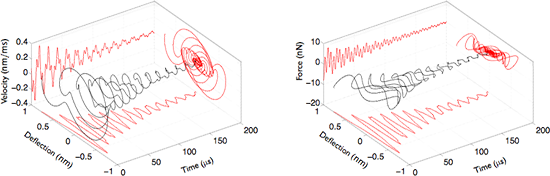
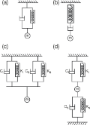
- energy dissipation is a fundamental aspect of the tip–sample interaction, allowing to quantify compositional contrast variations at the nanoscale [2]. The applied forces and the energy delivered to the sample are relevant for the imaging and the manipulation of soft materials in a variety of environments


Peak forces and lateral resolution in amplitude modulation force microscopy in liquid
Beilstein J. Nanotechnol. 2013, 4, 852–859, doi:10.3762/bjnano.4.96
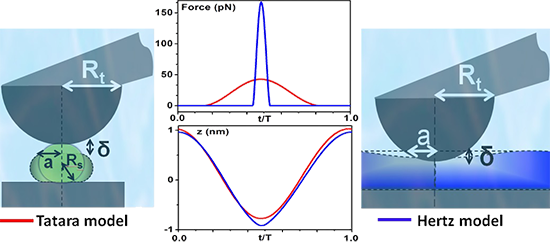
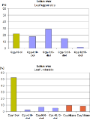
- expressions are not in good quantitative agreement with the simulations when the Young modulus and the set-point amplitude are varied. The only exception is the parametrized approximation that matches the results given by Hertz contact mechanics for soft materials and small free amplitudes. We also study the
- elastic deformation of the sample as a function of the imaging conditions for materials with a Young modulus between 25 MPa and 2 GPa. High lateral resolution images are predicted by using both small free amplitudes (less than 2 nm for soft materials) and high set-point amplitudes. Keywords: force
- microscopy; lateral resolution; nanomechanics; peak force; Introduction The high-resolution imaging of heterogeneous materials, in particular soft materials in liquid, by amplitude modulation atomic force microscopy (AM-AFM) is an active area of research in nanotechnology [1][2][3][4][5][6][7][8][9][10][11


Dynamic nanoindentation by instrumented nanoindentation and force microscopy: a comparative review
Beilstein J. Nanotechnol. 2013, 4, 815–833, doi:10.3762/bjnano.4.93

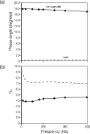
- reliable characterization of force and a larger dynamic force range for the former and a better force and displacement sensitivity and a superior imaging/placement for the latter [45][46][47]. For soft materials, in which an insensitivity to the initial contact can lead to a severe underestimation of the




Multiple regimes of operation in bimodal AFM: understanding the energy of cantilever eigenmodes
Beilstein J. Nanotechnol. 2013, 4, 385–393, doi:10.3762/bjnano.4.45
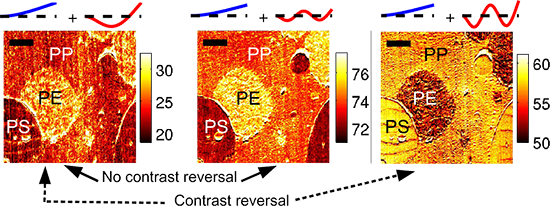
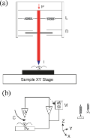
- widespread usage, especially among soft materials such as biological materials and polymers, bimodal AFM has demonstrated its capability to provide new contrast and information in the higher order mode [4][5][6][7][8]. The traditional choice in bimodal AFM is to oscillate the cantilever at its first two


![[Graphic 3]](/bjnano/content/inline/2190-4286-4-45-i5.png?max-width=637&scale=1.18182) . In the top row (a, b) the first eigen...
. In the top row (a, b) the first eigen...



Mapping mechanical properties of organic thin films by force-modulation microscopy in aqueous media
Beilstein J. Nanotechnol. 2012, 3, 464–474, doi:10.3762/bjnano.3.53
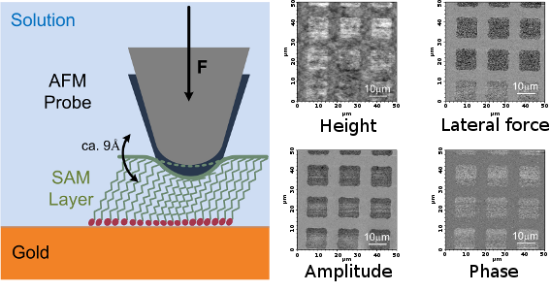
- our knowledge, only a few studies report the use of acoustic AFM on molecularly thin films or soft materials in liquid [7][36]. Here we show that force-modulation microscopy (FMM) is a powerful acoustic AFM method for mapping surface mechanical properties in fluids. In a typical FMM setup, the tip

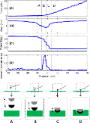


Conducting composite materials from the biopolymer kappa-carrageenan and carbon nanotubes
Beilstein J. Nanotechnol. 2012, 3, 415–427, doi:10.3762/bjnano.3.48
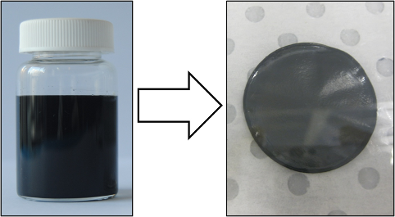
- Ali Aldalbahi Jin Chu Peter Feng Marc in het Panhuis Soft Materials Group, School of Chemistry, and ARC Centre of Excellence for Electromaterials Science, University of Wollongong, Wollongong, NSW 2522, Australia Institute of Functional Nanomaterials and Department of Physics, University of Puerto


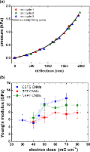
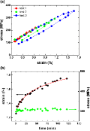
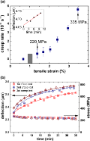
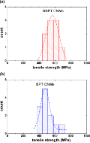
Mechanical characterization of carbon nanomembranes from self-assembled monolayers
Beilstein J. Nanotechnol. 2011, 2, 826–833, doi:10.3762/bjnano.2.92
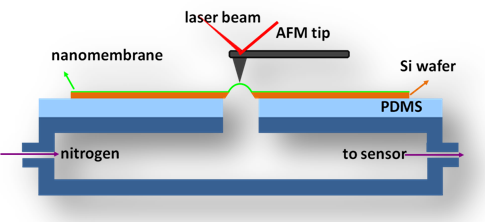
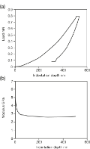
- . Viscoelasticity Macroscopic viscoelasticity and local viscoelastic properties of soft materials have been intensively studied, for example in polymer networks or in nuclei of biological cells [22][23]. Gaining new insights into the viscoelastic behavior of one-nanometer-thick membranes requires a method with

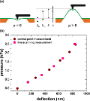
Self-organizing bioinspired oligothiophene–oligopeptide hybrids
Beilstein J. Nanotechnol. 2011, 2, 525–544, doi:10.3762/bjnano.2.57
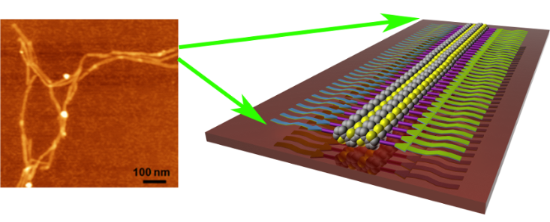
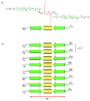
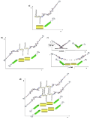
- offers a means to construct new ordered supramolecular nanostructures and soft materials through self-organization, and such structures may exhibit a rich polymorphism over nanometer length-scales. The design of such hybrid molecules is a unique strategy, which aims to create smart nanomaterials that




Superhydrophobicity in perfection: the outstanding properties of the lotus leaf
Beilstein J. Nanotechnol. 2011, 2, 152–161, doi:10.3762/bjnano.2.19
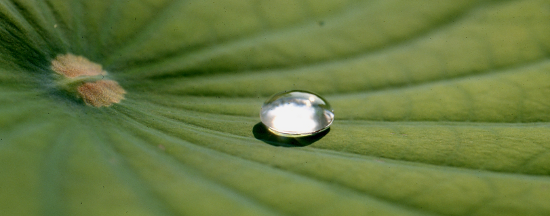
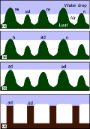
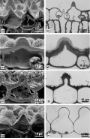
- papillae: The highest water repellency occurs when the water drops touch the tips of the epicuticular wax crystals only. Thus, the best properties are found on leaves with an intact coating of wax crystals on the epidermal cells (Figure 6). The waxes are, however, relatively soft materials so that older