


Search results
Search for "spatial distribution" in Full Text gives 123 result(s) in Beilstein Journal of Nanotechnology.
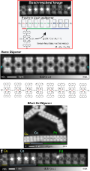
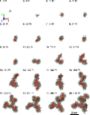
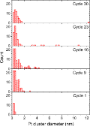
TEM sample preparation of lithographically patterned permalloy nanostructures on silicon nitride membranes
Beilstein J. Nanotechnol. 2024, 15, 1–12, doi:10.3762/bjnano.15.1
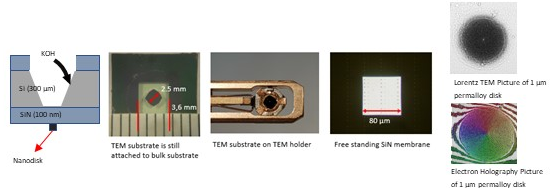
- imaging; nanodisk; nanofabrication; permalloy; Introduction The ability to study the spatial distribution of magnetization in ferromagnetic nanostructures is important for developing nanoelectronics, particularly for data storage and information processing. A vortex spin configuration has been observed


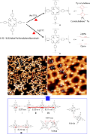
A combined gas-phase dissociative ionization, dissociative electron attachment and deposition study on the potential FEBID precursor [Au(CH3)2Cl]2
Beilstein J. Nanotechnol. 2023, 14, 1178–1199, doi:10.3762/bjnano.14.98
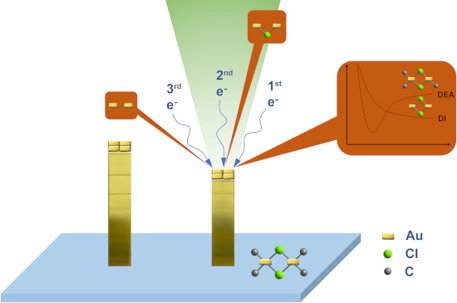
- the HAADF-STEM measurements, a lamella was prepared with a thickness of approx. 100 nm and a width of approx. 4 µm (Supporting Information File 1, Figure S1). In Figure 2a, the HAADF-STEM image of deposited nanoparticles is shown, revealing a nearly uniform spatial distribution of nanoparticles with a



Control of morphology and crystallinity of CNTs in flame synthesis with one-dimensional reaction zone
Beilstein J. Nanotechnol. 2023, 14, 741–750, doi:10.3762/bjnano.14.61
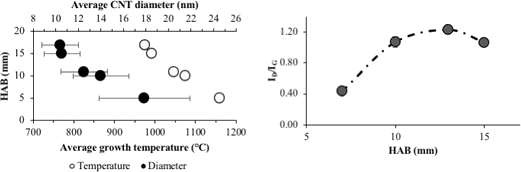
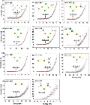
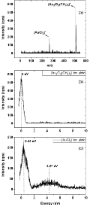
- present study are characterized regarding flame shape, spatial distribution of the reaction zone, and temperature distribution. Figure 1a,b compares line-of-sight images of the diffusion flame and the flat premixed flame burning at rich combustion with equivalence ratios of 1.16 and 1.8, respectively


Specific absorption rate of randomly oriented magnetic nanoparticles in a static magnetic field
Beilstein J. Nanotechnol. 2023, 14, 485–493, doi:10.3762/bjnano.14.39
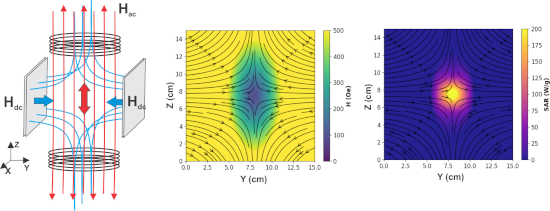
- = 0–800 Oe. The specific absorption rate (SAR) of the assemblies is calculated depending on the angle between the directions of the ac and dc magnetic fields. For the case of an inhomogeneous dc magnetic field created by two opposite magnetic fluxes, the spatial distribution of the SAR in the vicinity
- combination will make it possible to monitor the distribution of nanoparticles in living tissues during MH. In addition, by controlling the spatial distribution of a non-uniform dc magnetic field, it is possible to suppress the SAR in the entire range of action of the ac magnetic field in a biological
- of non-interacting magnetic nanoparticles of iron oxide is considered in a wide range of particle diameters, D = 18–50 nm. The SAR of the assembly is calculated depending on the amplitude and direction of the dc magnetic field in the range Hdc = 0–800 Oe. The spatial distribution of the assembly SAR


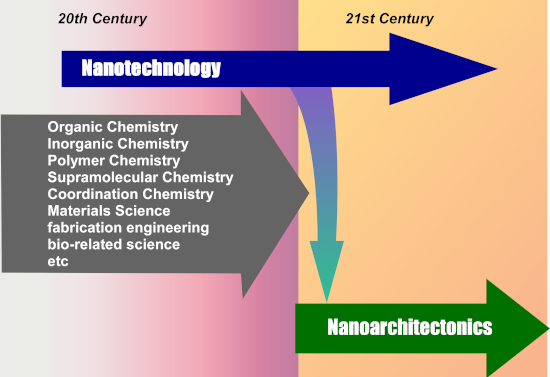
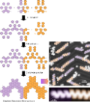
Molecular nanoarchitectonics: unification of nanotechnology and molecular/materials science
Beilstein J. Nanotechnol. 2023, 14, 434–453, doi:10.3762/bjnano.14.35
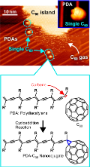
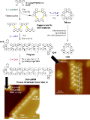
- -workers used 1,4,5,8-tetrabromonaphthalene as a molecular precursor and sequential dehalogenation reactions under mild conditions to synthesize very thin (five carbon atoms wide) armchair graphene nanoribbons on a Au(111) surface [122]. The spatial distribution of the electronic structure and other





Plasmonic nanotechnology for photothermal applications – an evaluation
Beilstein J. Nanotechnol. 2023, 14, 380–419, doi:10.3762/bjnano.14.33
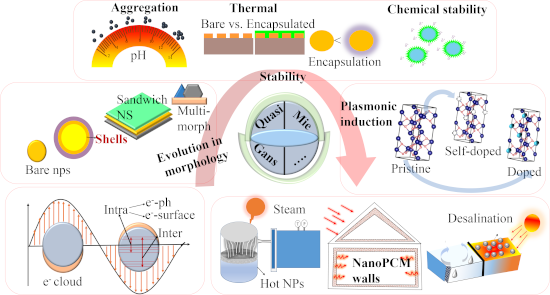
- controlled due to extremely localised heating [38]. For increasing the spatial distribution of the generated heat, compared to an individual nanoparticle, nanoparticle assemblies and/or increased interfaces (by including constructions such as holes and other scattering centres) within a single nanostructure




A distributed active patch antenna model of a Josephson oscillator
Beilstein J. Nanotechnol. 2023, 14, 151–164, doi:10.3762/bjnano.14.16
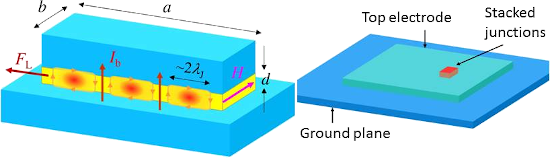
- spatial distribution of the input current density in a JJ, described by the perturbed sine-Gordon equation. In the presence of a magnetic field and fluxons, the oscillating current is distributed nonuniformly within the junction. This nonuniformity is essential for the FFO operation. It determines the


Characterisation of a micrometer-scale active plasmonic element by means of complementary computational and experimental methods
Beilstein J. Nanotechnol. 2023, 14, 110–122, doi:10.3762/bjnano.14.12
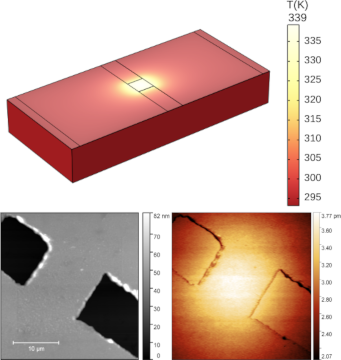
- fully model the spatial distribution of the induced electric field changes. While this investigation focused on the behaviour of a single active plasmonic element, the combination of high localisation and the ability to modulate individual plasmonic elements at unique frequencies enables the design of




The influence of structure and local structural defects on the magnetic properties of cobalt nanofilms
Beilstein J. Nanotechnol. 2023, 14, 23–33, doi:10.3762/bjnano.14.3
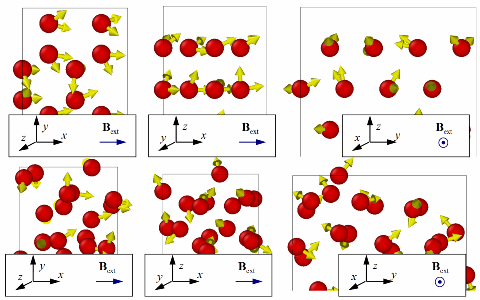
- substrate and a group of cobalt atoms was cut out to simulate the magnetic properties (b). The image shown in (a) was adapted from [37] (© 2020 A. Vakhrushev et al., distributed under the terms of the Creative Commons Attribution License (http://creativecommons.org/licenses/by/4.0)). Spatial distribution of
- nanomaterial is proposed. This model reflects the response of an external magnetic field on the behavior of individual atoms, and considers the internal structure and features of structural defects at the nanoscale when calculating the macroscopic magnetic characteristics of a material. The spatial
- distribution of cobalt atom spins for an ideal crystalline hexagonal close-packed lattice was studied. The structure of the nanofilm formed in a numerical experiment during deposition on a substrate maintained at a constant temperature of 300 K shows that the spin directions are significantly dependent on the


Recent trends in Bi-based nanomaterials: challenges, fabrication, enhancement techniques, and environmental applications
Beilstein J. Nanotechnol. 2022, 13, 1316–1336, doi:10.3762/bjnano.13.109
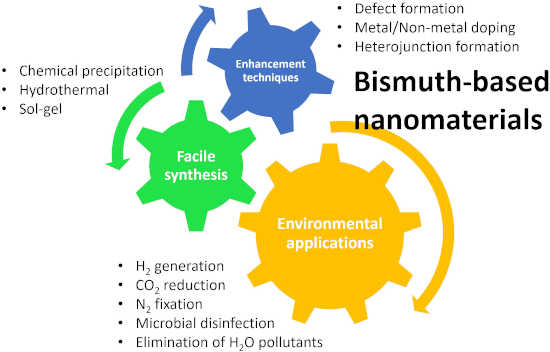
- superoxide radicals because of the more negative CB position (−1.39 V). This finding demonstrated the spatial distribution of oxidation sites (BiVO4) and reduction sites (MoS2) via an S-scheme charge transfer path and significantly aided in the inactivation of bacteria under illumination. In another work, a




Investigation of electron-induced cross-linking of self-assembled monolayers by scanning tunneling microscopy
Beilstein J. Nanotechnol. 2022, 13, 462–471, doi:10.3762/bjnano.13.39
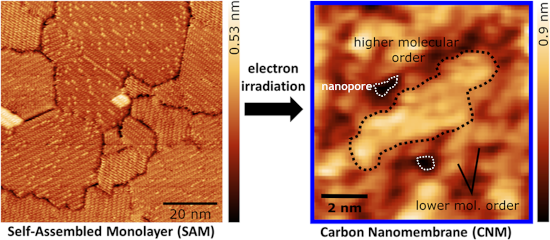
- cannot completely rule out the possibility of single-molecule desorption. The apparent depth of these dark spots is 1.4 ± 0.1 Å and the spatial distribution can be approximated by a Poisson distribution (Figure S5 in Supporting Information File 1), implying that these dark spots are random and
- boundaries were omitted. The size distribution of the dark spots was plotted as a function of the spot area, which is represented in units of 0.288 nm2, corresponding to the molecular area in the β-phase. The spatial distribution of the dark spots was evaluated by dividing the STM image into equal sections


Tunable superconducting neurons for networks based on radial basis functions
Beilstein J. Nanotechnol. 2022, 13, 444–454, doi:10.3762/bjnano.13.37
- proximity effect. The typical spin valve [55][56][57] is a hybrid structure containing at least a pair of ferromagnetic (FM) layers with different coercive forces. Variations in the relative orientation of their magnetizations change the spatial distribution of the superconducting order parameter. In the
- valve), providing a propagation of Cooper pairs to the outlying layers of the hybrid structure. The switching between the open and closed states of the valve leads to a noticeable change in the spatial distribution of Cooper pairs. The implementation of a thin superconducting spacer (s) between the FM
- function, F, permits one to estimate the ability to influence the propagation of the superconducting correlations (screening properties) for the hybrid structure. The spatial distribution of the screening length λ(x) directly depends on the proximization of the superconducting order parameter in the system


Low-energy electron interaction and focused electron beam-induced deposition of molybdenum hexacarbonyl (Mo(CO)6)
Beilstein J. Nanotechnol. 2022, 13, 182–191, doi:10.3762/bjnano.13.13
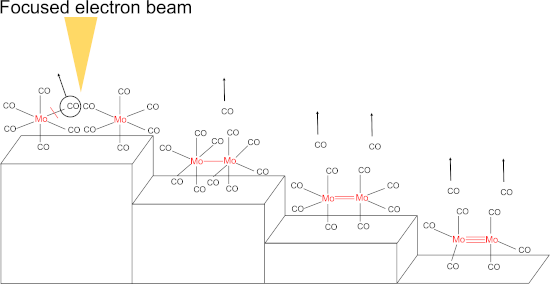
- molecules in FEBID is primarily attributed to these [8][11]. Furthermore, the spatial distribution of the scattered electrons exceeds that of the focal area of the primary beam causing deposition broadening [8][12] and the incomplete decomposition of the precursors makes composition control difficult [12


Sputtering onto liquids: a critical review
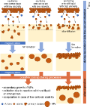
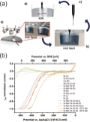
Beilstein J. Nanotechnol. 2022, 13, 10–53, doi:10.3762/bjnano.13.2







Heating ability of elongated magnetic nanoparticles
Beilstein J. Nanotechnol. 2021, 12, 1404–1412, doi:10.3762/bjnano.12.104
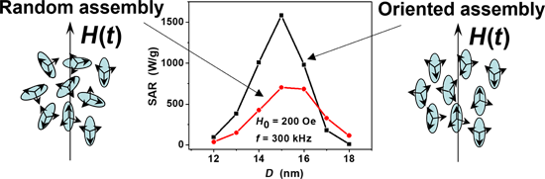
- concentration and spatial distribution of nanoparticles in a tumor. Nevertheless, which type of magnetic nanoparticles might be most effective in magnetic hyperthermia has been the subject of debates so far [1][2][3][4][24][27]. For example, the use of magnetic nanoparticles with increased value of magnetic


Nonmonotonous temperature dependence of Shapiro steps in YBCO grain boundary junctions
Beilstein J. Nanotechnol. 2021, 12, 1279–1285, doi:10.3762/bjnano.12.95
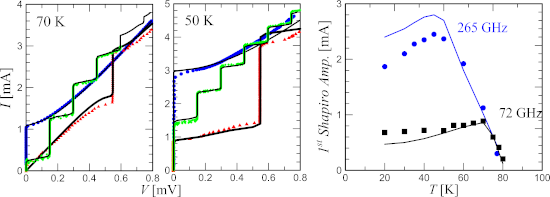
- increases, and for 20 K, in the general case, Equation 1 becomes invalid, that is, the dynamics of the spatial distribution of the phase and the magnetic field inside the junction becomes important [39][40][41]. In the case of long JJs it is necessary to consider the sine-Gordon equation, taking into


A review on slip boundary conditions at the nanoscale: recent development and applications
Beilstein J. Nanotechnol. 2021, 12, 1237–1251, doi:10.3762/bjnano.12.91
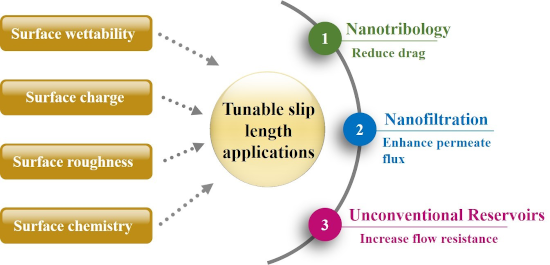
- liquid water can still slip even when the attraction between water and the solid wall is strong [67][68]. Besides the solid–water interaction energy, water slippage is also determined by the spatial distribution of water molecules within the contact layer on solid surfaces [68][69]. Under the condition


Irradiation-driven molecular dynamics simulation of the FEBID process for Pt(PF3)4
Beilstein J. Nanotechnol. 2021, 12, 1151–1172, doi:10.3762/bjnano.12.86
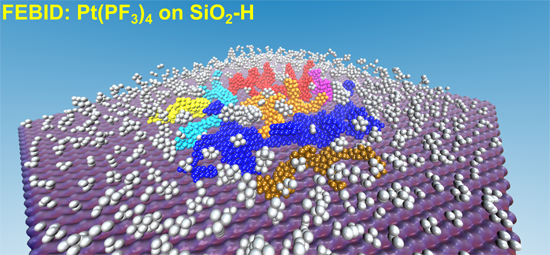
- evaluated by means of analytical models [41]. The obtained spatial and energetic distributions of PE, SE, and BSE are tabulated. The spatial distribution of electrons is defined on a cubic grid covering the whole simulation box; the grid consists of voxels with the size of 1 nm. The energy distribution of
- , discussed further in the text. Figure 3B shows a spatial distribution of the fragmentation probability of Pt(PF3)4 per PE, calculated using the electron distributions and the Pt(PF3)4 fragmentation cross section. Fragmentation cross section An overview of the electron interactions with precursor molecules
- steady-state concentration. Similarly to the creation of the initial precursor layer (see step 3), the replenishment phase is simulated to reproduce the physical state of the system after the replenishment, which is characterized by a certain number of desorbed fragments and the spatial distribution of








A review of defect engineering, ion implantation, and nanofabrication using the helium ion microscope
Beilstein J. Nanotechnol. 2021, 12, 633–664, doi:10.3762/bjnano.12.52
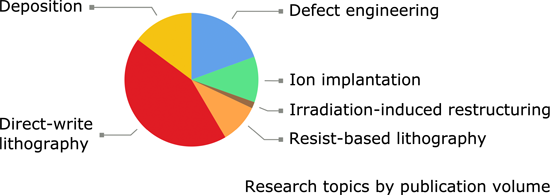
- HSQ resist [106] (Figure 5a). These results showcased both (1) the high patterning resolution of individual features, made possible by the subnanometer probe, minimal lateral scatter of ions in the resist, and associated narrow spatial distribution of secondary electrons, as well as (2) the greatly
- Winston et al. in Figure 5b [107]. Modeling and experimental measurements of the 2D point-spread function for HIBL (i.e., the spatial distribution of energy deposition, which determines the proximity effect) can be found in the same reference. Cai et al. extended this work to a 3D visualization of the


Stability and activity of platinum nanoparticles in the oxygen electroreduction reaction: is size or uniformity of primary importance?
Beilstein J. Nanotechnol. 2021, 12, 593–606, doi:10.3762/bjnano.12.49
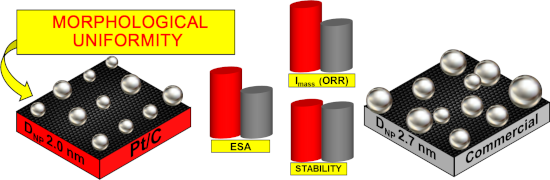
- . Keywords: durability; electrocatalysts; morphology control; oxygen reduction reaction; platinum nanoparticles; size distribution; spatial distribution; Introduction Nowadays, low-temperature proton-exchange membrane fuel cells (PEMFC) are gaining a wider application. This is due to their environmental
- regard, of particular interest are the methods for the synthesis of catalysts, which make it possible to obtain materials that combine small size of the nanoparticles, their narrow dimensional and uniform spatial distribution over the surface, and pores of support. This study was based on the hypothesis
- that Pt/C catalysts containing small nanoparticles, which are similar in size and uniformly distributed over the surface of a carbon support, can be both more active and more stable than catalysts based on larger particles, but with less uniformity of dimensional and spatial distribution. Thus, the aim
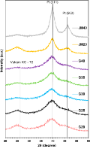
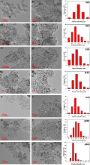


Properties of graphene deposited on GaN nanowires: influence of nanowire roughness, self-induced nanogating and defects
Beilstein J. Nanotechnol. 2021, 12, 566–577, doi:10.3762/bjnano.12.47
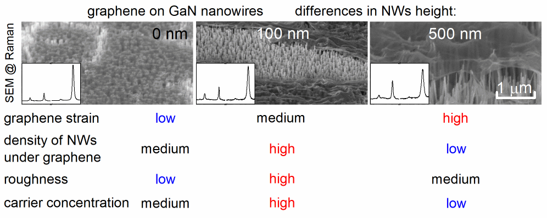
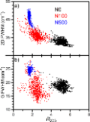
- but also graphene deformation itself create defects in graphene and influence their spatial distribution. A very low density of supporting NWs also decreases the number of defects in graphene. The intensity of both defect bands D and D’ (RDD’) depends on defect density and parameters describing the




Rapid controlled synthesis of gold–platinum nanorods with excellent photothermal properties under 808 nm excitation
Beilstein J. Nanotechnol. 2021, 12, 462–472, doi:10.3762/bjnano.12.37
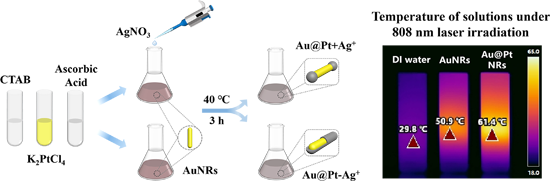
- during heating [15][16]. Pt nanoparticles have better light and thermal stability then Au nanoparticles [17]. Au–Pt bimetal nanoparticles may not only further enrich the functions of nanostructures, but the spatial distribution of both elements also plays an important role in adjusting the properties


The role of gold atom concentration in the formation of Cu–Au nanoparticles from the gas phase
Beilstein J. Nanotechnol. 2021, 12, 72–81, doi:10.3762/bjnano.12.6
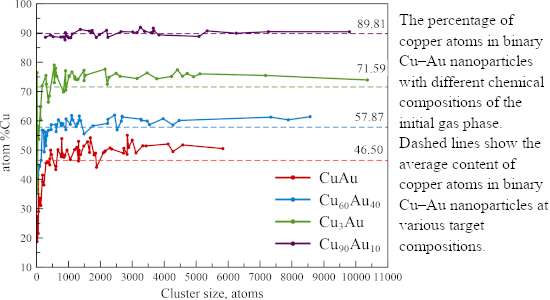
- ) were found in the spatial distribution shown in [3] and a pure copper cluster melts at 1100 K [21], even with a size of 2200 atoms, the temperature of the system should be equivalent to the higher melting point (Tm = 1358 K for copper). Therefore, a comparative analysis between the spatial distribution
- simulation and the data on the size distribution of Cu3Au clusters obtained by laser deposition [3]. An analysis of the shape and distribution of the Cu3Au clusters on the substrate indicates that the agglomeration processes were suppressed in this case [3]. The reason for that may be the wide spatial
- distribution of the evaporated primary fragments of the cluster due to the high ambient temperature. This interferes with the combination of the resulting clusters as a result of the high kinetic energy of the atoms, and, possibly, also of the short time of approach to the substrate. As a result, in the case


Bulk chemical composition contrast from attractive forces in AFM force spectroscopy
Beilstein J. Nanotechnol. 2021, 12, 58–71, doi:10.3762/bjnano.12.5
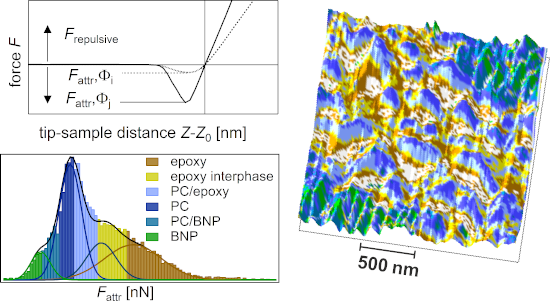
- statistically. This is done by plotting them as histograms, individually or correlated as kr(xi,yi) as a function of Fattr(xi,yi), which leads to the kr/Fattr diagram, as shown in Figure 2c. By plotting the results in the kr/Fattr diagram, the information about the spatial distribution is lost. However, insight


Molecular dynamics modeling of the influence forming process parameters on the structure and morphology of a superconducting spin valve
Beilstein J. Nanotechnol. 2020, 11, 1776–1788, doi:10.3762/bjnano.11.160
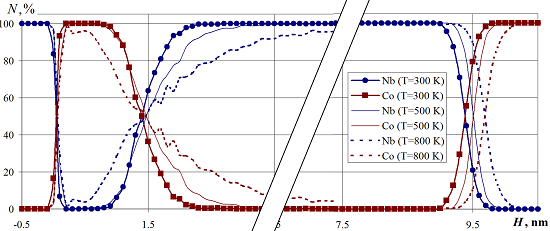
- superconductor nanolayers. The aim was to study the influence of the main technological parameters including temperature, concentration and spatial distribution of deposited atoms over the nanosystem surface on the atomic structure and morphology of the nanosystem. The studies were carried out using the
- technological parameters (substrate temperature, concentration and spatial distribution of the deposited atoms over the interface) on the structure and morphology of the layered nanosystem. Mathematical Model and Theoretical Foundations The formation processes and the structure of multilayer systems for
- neighbors in a nanosystem, and therefore on its structure and properties. A significant decrease in the coordination number in the outer layers of the last nanofilm is associated with the surface effects and boundary phenomena appearance in that region. The spatial distribution of this parameter is shown in





