


Search results
Search for "surface chemistry" in Full Text gives 221 result(s) in Beilstein Journal of Nanotechnology. Showing first 200.
Impact of adsorbate–substrate interaction on nanostructured thin films growth during low-pressure condensation
Beilstein J. Nanotechnol. 2025, 16, 473–483, doi:10.3762/bjnano.16.36

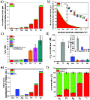
- , crystallinity, and surface chemistry of the films is crucial for optimizing performance in these applications. In adsorption–desorption processes, where materials are deposited from the gas phase, experimental techniques enable the study the formation of clusters or islands of adsorbed molecules/atoms, which


Engineered PEG–PCL nanoparticles enable sensitive and selective detection of sodium dodecyl sulfate: a qualitative and quantitative analysis
Beilstein J. Nanotechnol. 2025, 16, 385–396, doi:10.3762/bjnano.16.29
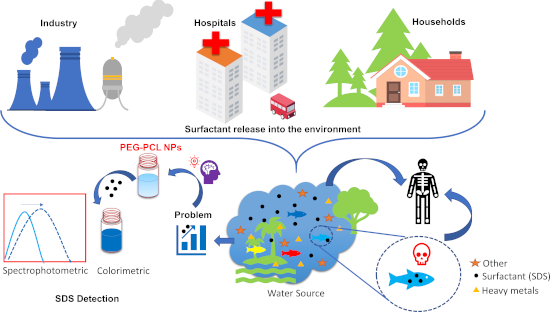
- larger estimate than the dry measurements obtained from TEM and SEM [32]. X-ray photoelectron spectroscopy, also known as electron spectroscopy for chemical analysis (ESCA), was used to analyze the surface chemistry of the PEG–PCL NPs. XPS is a powerful surface-sensitive technique that provides detailed


Emerging strategies in the sustainable removal of antibiotics using semiconductor-based photocatalysts
Beilstein J. Nanotechnol. 2025, 16, 264–285, doi:10.3762/bjnano.16.21
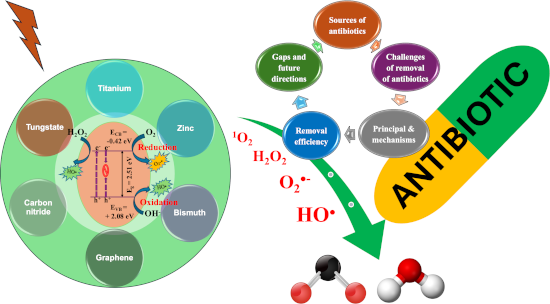
- sites, slow kinetics of surface reactions, and the reduced mobility of charges, resulting in electron delocalization [99][100]. The molecular rearrangement of g-C3N4 has been the subject of recent research because of its potential to alter the surface chemistry and textural structure [101]. This



Preferential enrichment and extraction of laser-synthesized nanoparticles in organic phases
Beilstein J. Nanotechnol. 2025, 16, 254–263, doi:10.3762/bjnano.16.20
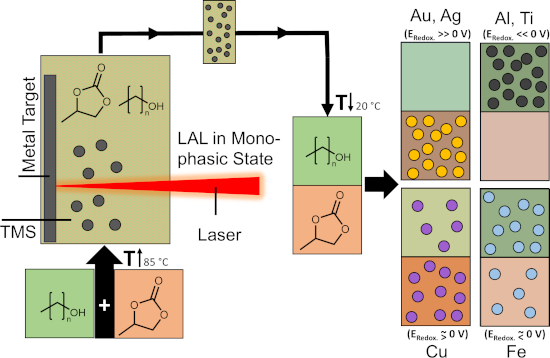
- properties and surface chemistry of the gained colloids. The use of organic solvents as liquid may result in reactive LAL processes [1][10] that cause elements from the solvent molecules (and solutes) to be part of the final nanoparticle’s composition. The solvent decomposition induced by laser-based
- their surface chemistry will affect the particles’ wettability or hydrophobicity, the phase transfer between two liquid phases with different polarities has not been investigated previously. We approached this issue by using thermomorphic multiphase systems (TMSs), switchable mixtures that can change
- rates also lead to different reactivity with the cooling solvent molecules that set the final surface chemistry of the particles and, thereby, affect their phase preference. Since the standard electrochemical reduction potential of Cu and Fe is close to 0 V, the different polarities of propylene




Recent advances in photothermal nanomaterials for ophthalmic applications
Beilstein J. Nanotechnol. 2025, 16, 195–215, doi:10.3762/bjnano.16.16
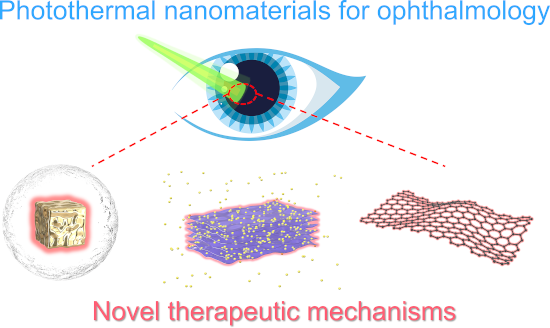
- therapeutic effects in humans [213]. The safety profile of photothermal nanomaterials is influenced by various factors, including their morphology, structure, concentration, photothermal stability, mechanical strength, and surface chemistry [214]. Enhancements in biocompatibility and stability can be achieved


Nanocarriers and macrophage interaction: from a potential hurdle to an alternative therapeutic strategy
Beilstein J. Nanotechnol. 2025, 16, 97–118, doi:10.3762/bjnano.16.10

- influence PC formation and NC clearance, including NP size, surface charge, hydrophobicity, surface chemistry, and the encountered biological fluid [37][38][39]. NPs larger than 200 nm in size tend to accumulate in the liver and spleen, while those with a diameter of less than 10 nm are rapidly eliminated


Instance maps as an organising concept for complex experimental workflows as demonstrated for (nano)material safety research
Beilstein J. Nanotechnol. 2025, 16, 57–77, doi:10.3762/bjnano.16.7

- properties can be tailored by changing their size, shape, surface chemistry, and functionality, have led to the designation of nanomaterials as a key enabling technology and to their subsequent inclusion in the broader categorisation of advanced materials [1][2]. Applications of nanomaterials derive in many



Bioinspired nanofilament coatings for scale reduction on steel
Beilstein J. Nanotechnol. 2025, 16, 25–34, doi:10.3762/bjnano.16.3

- polymerization of a polysiloxane on the material surface [18]. The polysiloxane methyl groups lower the surface energy and render the surface hydrophobic. Clearly, the surface chemistry of steel surfaces is very different from the previously used materials such as glass [11][12][13][18], polymers [10][11][12


Liver-targeting iron oxide nanoparticles and their complexes with plant extracts for biocompatibility
Beilstein J. Nanotechnol. 2024, 15, 1593–1602, doi:10.3762/bjnano.15.125
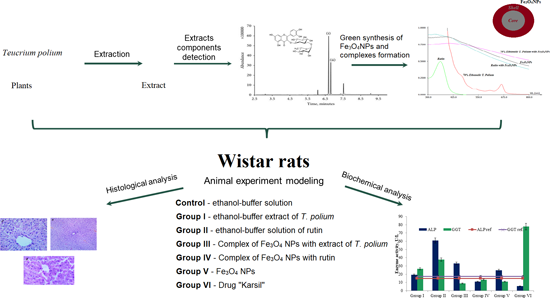
- and toxicity effects; as of May 2024, the website clinicaltrials.gov listed data on the development of 51 clinical protocols involving iron oxides NPs [25][26][27]. Surface chemistry and delivery route of MNPs affect their biodistribution patterns and circulation time in the body [28]. It is known


Facile synthesis of size-tunable L-carnosine-capped silver nanoparticles and their role in metal ion sensing and catalytic degradation of p-nitrophenol
Beilstein J. Nanotechnol. 2024, 15, 1576–1592, doi:10.3762/bjnano.15.124
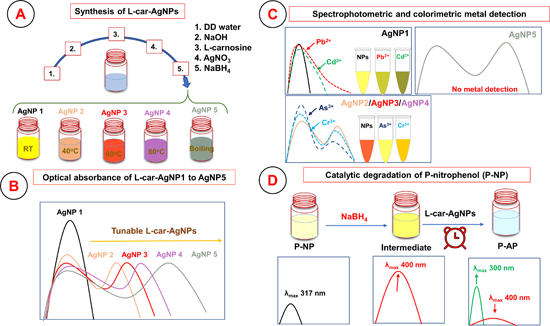
- through surface chemistry and other parameters such as size and shape [13]. Kästner and Thünemann described the catalytic degradation of P-NP using silver nanoparticles with the activity depending on the capping agents [14]. To design a dual-functional system for environmental applications, a potential




Polymer lipid hybrid nanoparticles for phytochemical delivery: challenges, progress, and future prospects
Beilstein J. Nanotechnol. 2024, 15, 1473–1497, doi:10.3762/bjnano.15.118
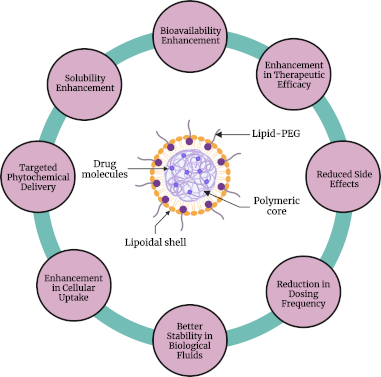
- ., erythrocytes) to develop membrane-camouflaged PLHNPs. These hybrid nanocarriers are also called biomimetic hybrid nanocarriers because their surface chemistry mimics natural cell membranes [57]. The PLHNPs are coated with cell membranes via the extrusion technique. The coating of PLHNPs with red blood cells


A biomimetic approach towards a universal slippery liquid infused surface coating
Beilstein J. Nanotechnol. 2024, 15, 1376–1389, doi:10.3762/bjnano.15.111
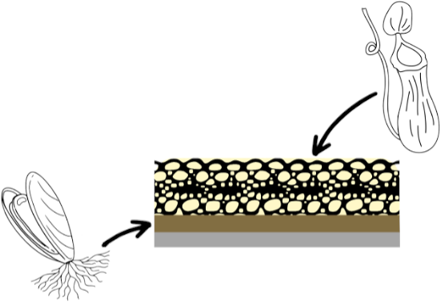
- is anchored to a substrate, creating a smooth liquid layer that is energetically favored to interact with the solid surface. The surface chemistry of the anchoring layer is crucial to the viability of the overall coating as the lubricant must have a greater affinity for the substrate surface than for


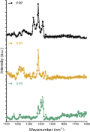


Nanoarchitectonics with cetrimonium bromide on metal nanoparticles for linker-free detection of toxic metal ions and catalytic degradation of 4-nitrophenol
Beilstein J. Nanotechnol. 2024, 15, 1312–1332, doi:10.3762/bjnano.15.106
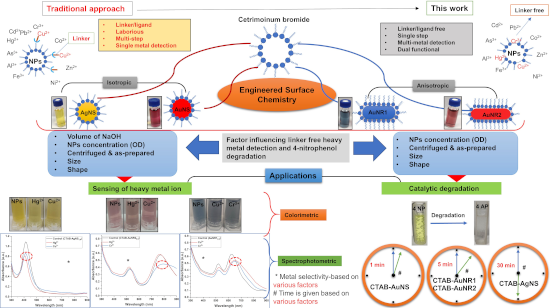
- that is rapid and affordable for the detection of heavy metal ions as well as for the degradation of organic pollutants such as 4-nitrophenol. Developing a robust sensing platform based on metal nanoparticles requires a modulation of the surface chemistry, which is governed by the choice of capping


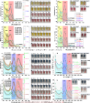


Interaction of graphene oxide with tannic acid: computational modeling and toxicity mitigation in C. elegans
Beilstein J. Nanotechnol. 2024, 15, 1297–1311, doi:10.3762/bjnano.15.105
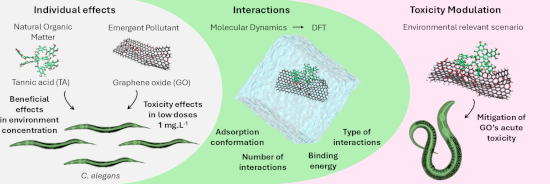
- interaction of GO with tannic acid (TA) and its consequences for GO toxicity. We focused on understanding how TA interacts with GO, its impact on the material surface chemistry, colloidal stability, as well as, toxicity and biodistribution using the Caenorhabditis elegans model. Employing computational
- , carboxyl, ether, and carbonyl groups. The sheets present different levels of oxidation as well as specific structures such as edges, wrinkles, and holes. Because of its surface chemistry, GO has better water solubility than graphene; furthermore, it is straightforward to be functionalized and synthesized
- understand how GO’s toxicity changes regarding surface modifications such as interactions with biomolecules. In this study, we investigate the interaction of GO with TA linked to its impacts on surface chemistry, colloidal stability, lethality, and biodistribution in the C. elegans model for the first time


Mn-doped ZnO nanopowders prepared by sol–gel and microwave-assisted sol–gel methods and their photocatalytic properties
Beilstein J. Nanotechnol. 2024, 15, 1283–1296, doi:10.3762/bjnano.15.104
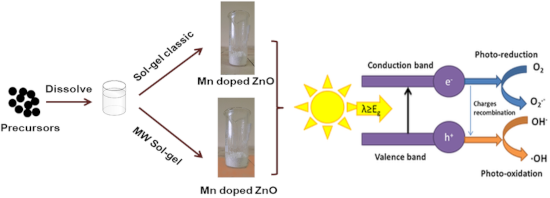
- fluorescent compound, namely umbelliferone, a coumarin degradation product obtained in the presence of hydroxyl radicals. Figure 11a–c clearly shows that ·OH radicals are photogenerated to a greater extent by the MW catalyst. This could be the result of specific differences in surface chemistry of the two
- catalyst bandgap and its surface chemistry relative to reactant adsorption and photocatalytic activity were also clearly shown [56]. According to the abovementioned data, the possible routes for the present photocatalytic process can be described as follows: The main question to be answered is which of
- synthesis techniques are effective in producing photocatalytically active materials based on manganese-doped ZnO. Despite the similar start composition, obvious morphological differences, structural defects, and surface chemistry particularities were revealed for the investigated samples, which affected the


Realizing active targeting in cancer nanomedicine with ultrasmall nanoparticles
Beilstein J. Nanotechnol. 2024, 15, 1208–1226, doi:10.3762/bjnano.15.98
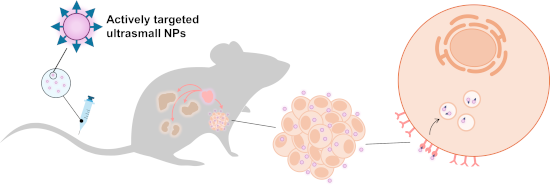
- , indicating the formation of a “permanently” bound (hard) protein corona. Moreover, given the appropriate combination of size and surface chemistry, nonspecific interactions between usNPs and proteins can be virtually eliminated (Figure 2C). Notably, achieving highly stable and “stealth” usNPs is feasible
- , usNPs are therefore more biocompatible than larger NPs. However, it is important to emphasize that the physicochemical and biological properties of usNPs are highly sensitive to NP size and surface chemistry [64][67][68], and usNPs can still impact protein activity, biochemical pathways, and cellular
- potential for tumor accumulation though passive targeting [76]. Fortunately, strategies to slow down renal clearance and extend the blood half-life of usNPs for more efficient tumor uptake are feasible, including fine-tuning hydrodynamic diameter (HD) through surface chemistry [77], controlling core density


Laser synthesis of nanoparticles in organic solvents – products, reactions, and perspectives
Beilstein J. Nanotechnol. 2024, 15, 638–663, doi:10.3762/bjnano.15.54
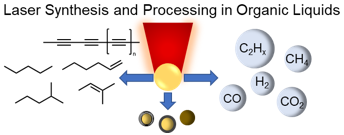
- mechanisms of organic liquid decomposition and carbon shell formation are highlighted and discussed regarding current challenges and future perspectives of LSPC using organic liquids instead of water. Keywords: alloy; photochemistry; pyrolysis; radicals; surface chemistry; Introduction Since the first





Comparative analysis of the ultrastructure and adhesive secretion pathways of different smooth attachment pads of the stick insect Medauroidea extradentata (Phasmatodea)
Beilstein J. Nanotechnol. 2024, 15, 612–630, doi:10.3762/bjnano.15.52
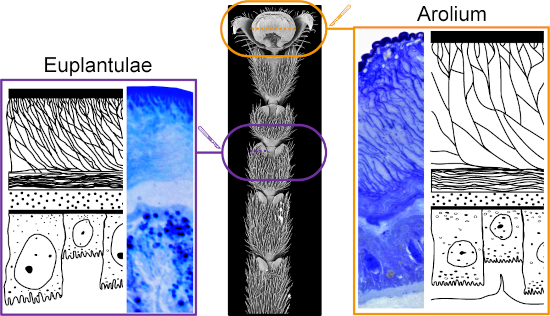
- particles together into larger complexes for easier removal [25][26]. It can also improve attachment to surfaces with different surface chemistry by mediating between the two surfaces in contact [27][28]. The lipid-containing pad secretion protects the insect from additional water loss through the thin







Classification and application of metal-based nanoantioxidants in medicine and healthcare
Beilstein J. Nanotechnol. 2024, 15, 396–415, doi:10.3762/bjnano.15.36
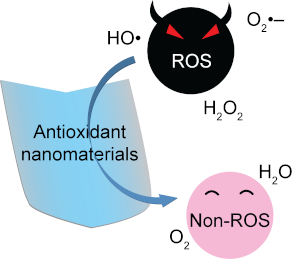
- thyroid hormone disruption in zebrafish larvae co-exposed to tetrabromobisphenol A by promoting its bioaccumulation and bioavailability [192]. Xu et al. demonstrated that TiO2 nanoparticles can promote damage to adipose derived stromal cells at low concentrations [193]. Accordingly, the surface chemistry



Multiscale modelling of biomolecular corona formation on metallic surfaces
Beilstein J. Nanotechnol. 2024, 15, 215–229, doi:10.3762/bjnano.15.21
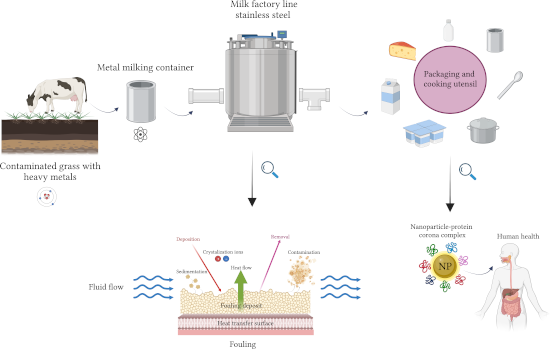
- the outer surface of macroscropic and micro- and nano-sized particulate after packaging. It also highlights the dynamic interactions at the bionano interface associated with potential human health hazards. Through biomolecule adsorption, change of conformation, and surface chemistry, foreign materials





Fluorescent bioinspired albumin/polydopamine nanoparticles and their interactions with Escherichia coli cells
Beilstein J. Nanotechnol. 2023, 14, 1208–1224, doi:10.3762/bjnano.14.100
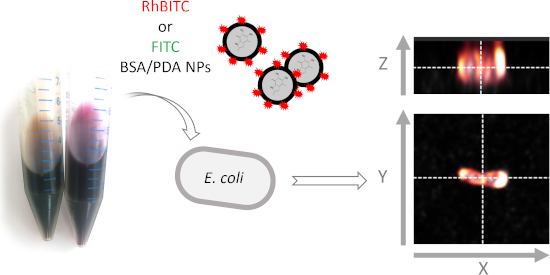
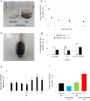
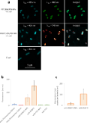
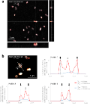
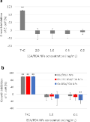
- been designed to allow for the modification of their fluorescence properties. This also modified the outer surface chemistry; thus, the ability of the NPs to pass through the cell membrane was possibly facilitated. The localization of the fluorescent BSA/PDA NPs related to the cells was investigated by



Elasticity, an often-overseen parameter in the development of nanoscale drug delivery systems
Beilstein J. Nanotechnol. 2023, 14, 1149–1156, doi:10.3762/bjnano.14.95
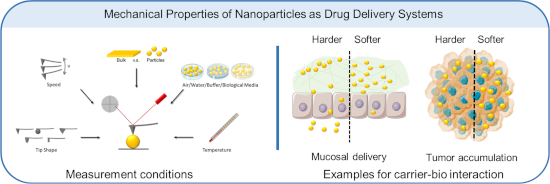
- , translation to the clinics or even market approval often fails. So far, the reason for this discrepancy is manifold. Physicochemical properties such as size, surface potential, and surface chemistry are in focus of research for many years. Other equally important parameters, influencing whether a successful


Properties of tin oxide films grown by atomic layer deposition from tin tetraiodide and ozone
Beilstein J. Nanotechnol. 2023, 14, 1085–1092, doi:10.3762/bjnano.14.89
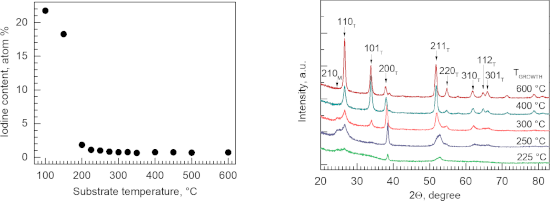
- ]. The SnO2 films grown at 300 and 500 °C, that is, those with low residual iodine content, were analysed ex situ in terms of surface chemistry using soft X-ray spectroscopy methods. The Sn 3d XPS data (Figure 10a) show almost identical spectra for the samples deposited at 300 and 500 °C, and the narrow


Nanoarchitectonics of photothermal materials to enhance the sensitivity of lateral flow assays
Beilstein J. Nanotechnol. 2023, 14, 988–1003, doi:10.3762/bjnano.14.82
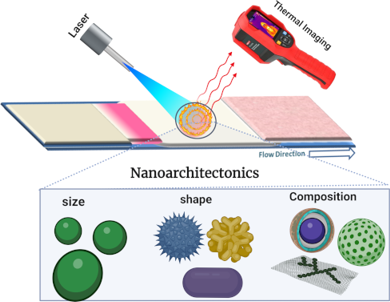
- application in photothermal LFA. Size-dependent photothermal properties Gold nanoparticles have benefits in the field of diagnostics because of their high absorption cross section, LSPR, ease of preparation, stability, and variable surface chemistry [48]. Most importantly, the high number of synthesis methods
- and for efficient light-to-heat conversion. The surface chemistry of the selected photothermal material should facilitate the successful immobilization of biomolecules, such as antibodies, aptamers, peptides, or affinity molecules. Finally, an efficient thermal energy readout system is needed for the


Metal-organic framework-based nanomaterials as opto-electrochemical sensors for the detection of antibiotics and hormones: A review
Beilstein J. Nanotechnol. 2023, 14, 631–673, doi:10.3762/bjnano.14.52
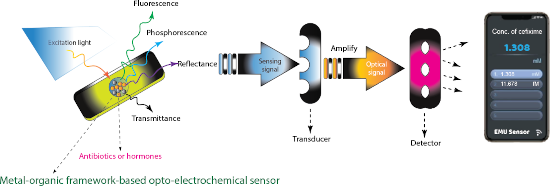
- surface chemistry, enabling nanosensors to achieve extremely low detection limits. Numerous nanomaterials shown in Figure 3 have different functionalities, including high conductivity, good catalytic activity, and optical and plasmonic properties, making them attractive candidates for opto-electrochemical





