


Search results
Search for "surface plasmon resonance (SPR)" in Full Text gives 65 result(s) in Beilstein Journal of Nanotechnology.
Luminescent gold nanoclusters for bioimaging applications
Beilstein J. Nanotechnol. 2020, 11, 533–546, doi:10.3762/bjnano.11.42
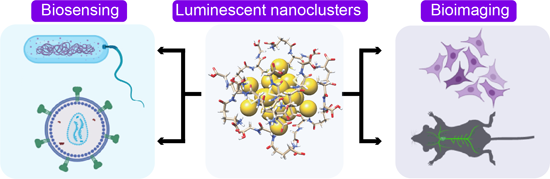
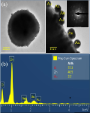
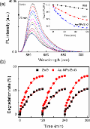
- single atom. Additionally, due to covalently bound ligands, the NCs show extraordinary stability under ambient conditions. While plasmonic AuNPs display size-dependent surface plasmon resonance (SPR), NCs display characteristic molecule-like electronic spectra. This is attributed to the small size and


The role of Ag+, Ca2+, Pb2+ and Al3+ adions in the SERS turn-on effect of anionic analytes
Beilstein J. Nanotechnol. 2019, 10, 2338–2345, doi:10.3762/bjnano.10.224
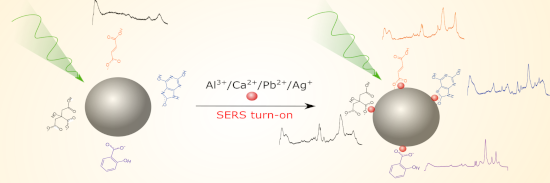
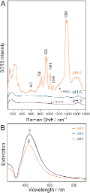
- surface of the AgNPs. Therefore, the observed blue shift and damping of the surface plasmon resonance (SPR) peak, which is observed only after the formation of Ag+ adions, indicates an electronic contact between the AgNPs and citrate (Figure 1B) [28][29][30]. No SERS spectra of citrate were obtained at pH


Nonlinear absorption and scattering of a single plasmonic nanostructure characterized by x-scan technique
Beilstein J. Nanotechnol. 2019, 10, 2182–2191, doi:10.3762/bjnano.10.211
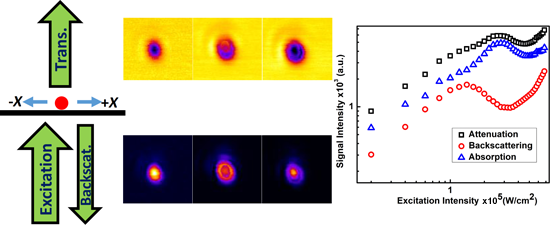
- properties of plasmonic nanostructures differ significantly from those of the corresponding bulk materials, mainly because of two reasons, i.e., the enhancement in the surface-to-volume ratio and the appearance of resonance effects such as surface plasmon resonance (SPR). For example, the color, or more


Highly ordered mesoporous silica film nanocomposites containing gold nanoparticles for the catalytic reduction of 4-nitrophenol
Beilstein J. Nanotechnol. 2019, 10, 1368–1379, doi:10.3762/bjnano.10.135
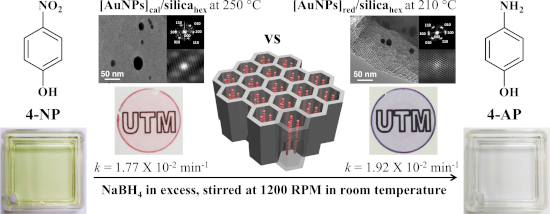
- TEM 3D tomography at low accelerating voltage with topography-based reconstruction to show the pore orientation at the various angles with the presence of AuNPs (see Supporting Information File 1 for the movie). Optical properties of AuNPs Surface plasmon resonance (SPR) peaks in the UV–vis spectrum
- 140 minutes. Summary of the d100 XRD peaks, d-spacing of mesoporous silica, the crystallite size based on calculations using Scherrer’s equation, and the surface plasmon resonance (SPR) peak maxima of the AuNPs after both types of heat treatments. Supporting Information Supporting Information File


Construction of a 0D/1D composite based on Au nanoparticles/CuBi2O4 microrods for efficient visible-light-driven photocatalytic activity
Beilstein J. Nanotechnol. 2019, 10, 1360–1367, doi:10.3762/bjnano.10.134
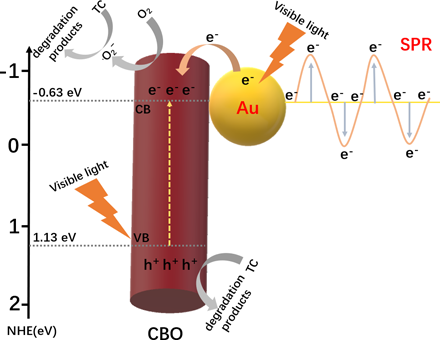
- the carriers migrating to the surface of the semiconductor to participate in the photoreactions [15]. Decorating semiconductors with noble metals, such as Ag, Au, and Pt, is a strategy to enhance the photocatalytic performance. Certain noble metals exhibiting surface plasmon resonance (SPR) can


Correlation of surface-enhanced Raman scattering (SERS) with the surface density of gold nanoparticles: evaluation of the critical number of SERS tags for a detectable signal
Beilstein J. Nanotechnol. 2019, 10, 1016–1023, doi:10.3762/bjnano.10.102
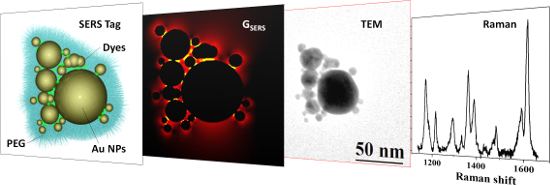
- suitability of plasmonic SERS labels for ultrasensitive analytical and biomedical applications is evident. Keywords: discrete dipole approximation (DDA); gold nanoparticles (AuNPs); nanotags; surface-enhanced Raman scattering (SERS); surface plasmon resonance (SPR); Introduction In surface-enhanced Raman


Comparative biological effects of spherical noble metal nanoparticles (Rh, Pd, Ag, Pt, Au) with 4–8 nm diameter
Beilstein J. Nanotechnol. 2018, 9, 2763–2774, doi:10.3762/bjnano.9.258
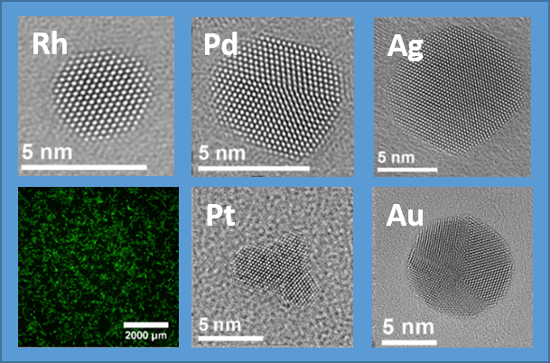
- properties of nanoparticles, e.g., surface plasmon resonance (SPR) effects (Figure 5). While the dispersions of platinum group nanoparticles (Rh, Pd, Pt) were all brown-black and had no distinct absorption in the visible range, silver and gold showed the typical surface plasmon resonance (SPR) absorption


Electrospun one-dimensional nanostructures: a new horizon for gas sensing materials
Beilstein J. Nanotechnol. 2018, 9, 2128–2170, doi:10.3762/bjnano.9.202
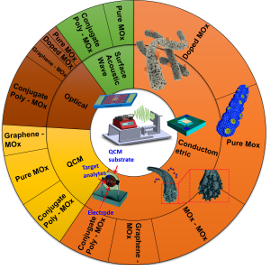


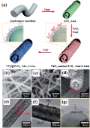


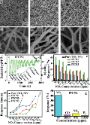


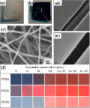
A visible-light-controlled platform for prolonged drug release based on Ag-doped TiO2 nanotubes with a hydrophobic layer
Beilstein J. Nanotechnol. 2018, 9, 1793–1801, doi:10.3762/bjnano.9.170
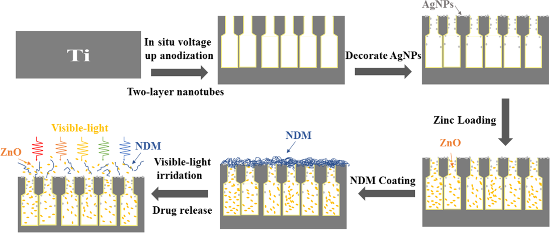
- -TNTs and NDM-Zn-Ag-TNTs samples, respectively. Obviously, the absorbance of TNTs decorated with Ag is higher than bare TNTs within the visible light range (450–800 nm). The loading of AgNPs promotes surface plasmon resonance (SPR) scattering into the TNT layer, which further increases the nearby





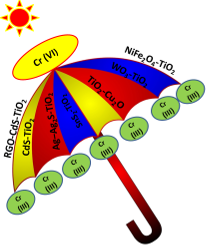
Cr(VI) remediation from aqueous environment through modified-TiO2-mediated photocatalytic reduction
Beilstein J. Nanotechnol. 2018, 9, 1448–1470, doi:10.3762/bjnano.9.137


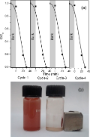
Colorimetric detection of Cu2+ based on the formation of peptide–copper complexes on silver nanoparticle surfaces
Beilstein J. Nanotechnol. 2018, 9, 1414–1422, doi:10.3762/bjnano.9.134
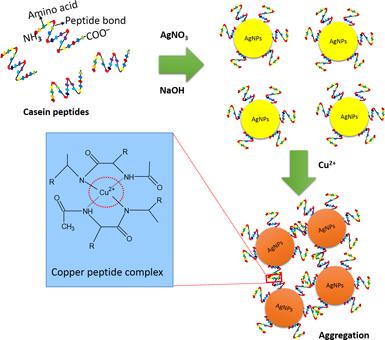
- Cu2+-binding casein peptide ligands. The solution of aggregates was incubated for 20 min to allow for the coordination to occur. Results and Discussion Synthesis and characterization of casein peptide-capped AgNPs The surface plasmon resonance (SPR) of spherical AgNPs immediately caused an absorbance


Surface-plasmon-enhanced ultraviolet emission of Au-decorated ZnO structures for gas sensing and photocatalytic devices
Beilstein J. Nanotechnol. 2018, 9, 771–779, doi:10.3762/bjnano.9.70
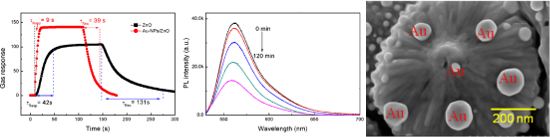
- response/recovery times. The various origins of these properties are commonly assigned to the following two phenomena: (i) a surface plasmon resonance (SPR) effect of plasmonic gold nanoparticles (Au NPs) could certainly take place and contribute to the electrical transport behavior for Au-decorated ZnO




Colloidal solution of silver nanoparticles for label-free colorimetric sensing of ammonia in aqueous solutions
Beilstein J. Nanotechnol. 2018, 9, 499–507, doi:10.3762/bjnano.9.48
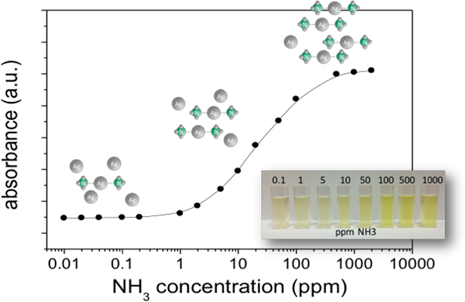
- particular silver nanoparticles (AgNPs), are often considered for analytical application because of their peculiar optical and electrical properties [13]. The surface plasmon resonance (SPR) properties of metal nanoparticles are considered very useful for the use of colloidal solutions in the field of



Near-infrared-responsive, superparamagnetic Au@Co nanochains
Beilstein J. Nanotechnol. 2017, 8, 1680–1687, doi:10.3762/bjnano.8.168
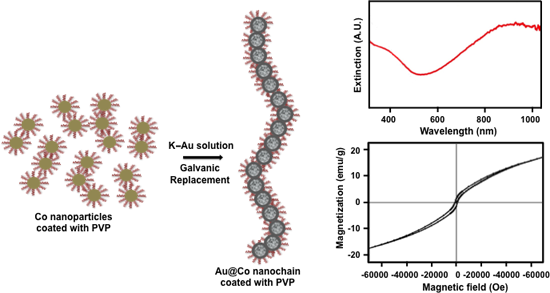
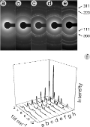
- nanoparticles not only renders the nanoparticles biocompatible but also gives rise to distinct optical properties [18][19]. Noble metal nanoparticles, such as gold and silver, possess the unique property of surface plasmon resonance (SPR); the latter exhibit a strong extinction band in the visible region [19


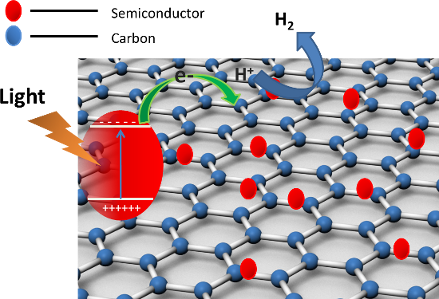
Two-dimensional carbon-based nanocomposites for photocatalytic energy generation and environmental remediation applications
Beilstein J. Nanotechnol. 2017, 8, 1571–1600, doi:10.3762/bjnano.8.159


Thin SnOx films for surface plasmon resonance enhanced ellipsometric gas sensing (SPREE)
Beilstein J. Nanotechnol. 2017, 8, 522–529, doi:10.3762/bjnano.8.56
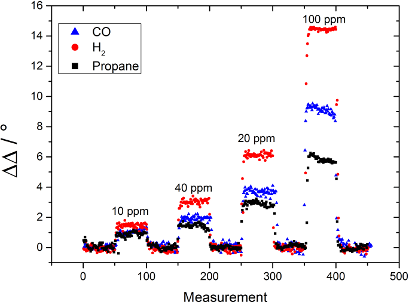
- the problems of cross sensitivity of the MOS concept. Results: Undoped tin oxide (SnOx) and iron doped tin oxide (Fe:SnOx) thin add-on films were prepared by magnetron sputtering on the top of the actual surface plasmon resonance (SPR) sensing gold layer. The films were tested for their sensitivity to


Influence of hydrofluoric acid treatment on electroless deposition of Au clusters
Beilstein J. Nanotechnol. 2017, 8, 183–189, doi:10.3762/bjnano.8.19
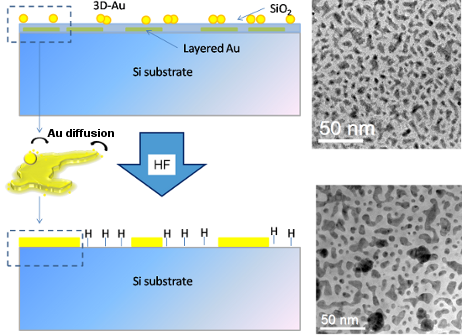
- shown quite interesting applications in the fields of Si nanowire (SiNW) catalysis [1][2][3], metal-assisted etching (MAE) [4] or even as electrical contacts in standard miniaturized devices [5]. Their ability to display enhanced surface plasmon resonance (SPR) at optical frequencies makes them


Streptavidin-coated gold nanoparticles: critical role of oligonucleotides on stability and fractal aggregation
Beilstein J. Nanotechnol. 2017, 8, 1–11, doi:10.3762/bjnano.8.1
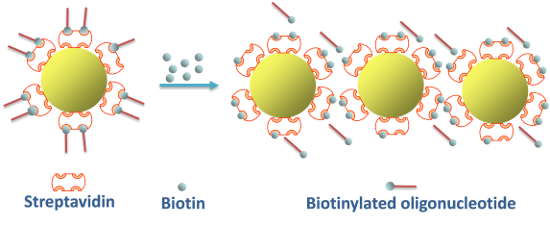
- relevant ligands has led to dramatic progresses in both living cells as well as biomolecular diagnostic assays [3][4][5]. In particular, optical sensing exploiting the surface plasmon resonance (SPR) effect has been widely investigated and plays a significant role in biomolecular detection [6][7]. In this




Functionalized platinum nanoparticles with surface charge trigged by pH: synthesis, characterization and stability studies
Beilstein J. Nanotechnol. 2016, 7, 1822–1828, doi:10.3762/bjnano.7.175
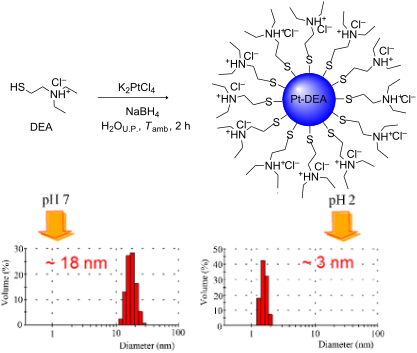
- interest for many technological applications [1][2]. For example PtNPs are of interest due to their catalytic activity [3][4], electrochemical applications [5], chemical sensing [6][7][8][9] and optical features related to surface plasmon resonance (SPR) that occurs in the ultraviolet range of


Hydrophilic silver nanoparticles with tunable optical properties: application for the detection of heavy metals in water
Beilstein J. Nanotechnol. 2016, 7, 1654–1661, doi:10.3762/bjnano.7.157
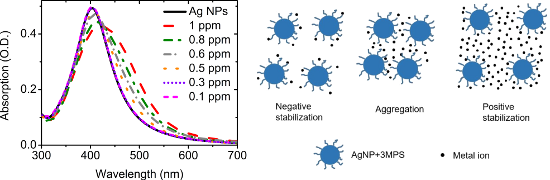
- nitrate as precursor molecules, hydrophilic thiol (3-mercapto-1-propanesulfonic acid sodium salt, 3MPS) and sodium borohydride as capping and reducing agents, respectively. The AgNPs were characterized using techniques such as surface plasmon resonance (SPR) spectroscopy, dynamic light scattering (DLS
- the field of sensors for specific analytes [7][8][9][10]. In particular, given their flexible and easy preparation, large specific surface area, and surface plasmon resonance (SPR) properties, metal nanoparticles are excellent candidates for a wide variety of applications ranging from catalysis [11


Highly compact refractive index sensor based on stripe waveguides for lab-on-a-chip sensing applications
Beilstein J. Nanotechnol. 2016, 7, 751–757, doi:10.3762/bjnano.7.66
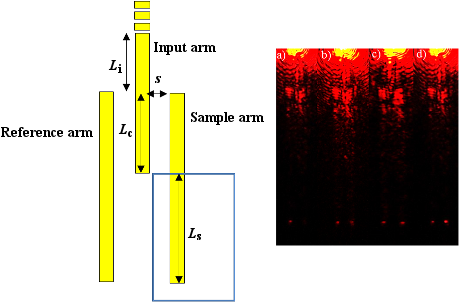
- highly sensitive to the surrounding dielectric environment. This unique property is incredibly useful in sensing applications. Mach–Zehnder (MZ) interferometry [1][2][3][4][5], surface enhanced Raman spectroscopy (SERS) [6][7][8][9], ring resonators [10] and surface plasmon resonance (SPR) [11][12][13



Gold nanoparticles covalently assembled onto vesicle structures as possible biosensing platform
Beilstein J. Nanotechnol. 2016, 7, 655–663, doi:10.3762/bjnano.7.58
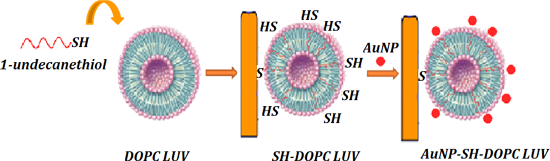
- ]. Note, that when the AuNPs are formed after 8 and 13 min of UV irradiation, bands corresponding to the surface plasmon resonance (SPR) around 520 or 550 nm appeared. This maximum wavelength (λmax) is in accordance with other reported studies [26][29][30], and the small differences founded in the λmax


Investigating organic multilayers by spectroscopic ellipsometry: specific and non-specific interactions of polyhistidine with NTA self-assembled monolayers
Beilstein J. Nanotechnol. 2016, 7, 544–553, doi:10.3762/bjnano.7.48
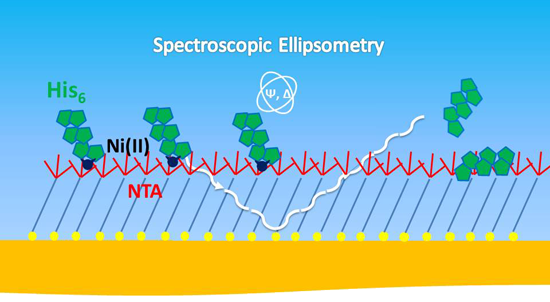
- . Optical methods based on optical reflectivity, such as surface plasmon resonance (SPR) and ellipsometry, allow for label-free, non-invasive, in situ monitoring of molecular adsorption/desorption at surfaces [34][35][36][37][38][39][40]. While SPR-based methods require supports with specific plasmonic




Characterisation of thin films of graphene–surfactant composites produced through a novel semi-automated method
Beilstein J. Nanotechnol. 2016, 7, 209–219, doi:10.3762/bjnano.7.19
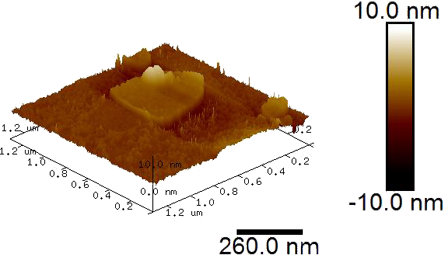
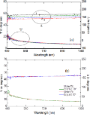
- similar manner. TIRE study The surface plasmon resonance (SPR) phenomenon in graphene films deposited on thin films of gold was studied in more detail using the method of total internal reflection ellipsometry (TIRE), which was developed in the last decade [12][13][14]. TIRE experimental set-up (shown




Self-organization of gold nanoparticles on silanated surfaces
Beilstein J. Nanotechnol. 2015, 6, 2345–2353, doi:10.3762/bjnano.6.242
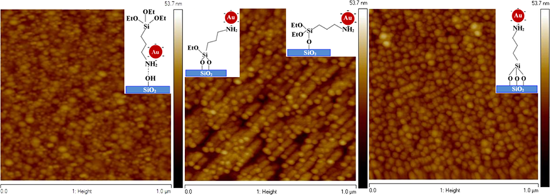
- structures [8]. AuNPs have been studied intensively for a wide range of applications such as catalysis [9], biosensing [10], colorimetric sensing [11], optical sensing (surface plasmon resonance (SPR) and surface-enhanced Raman scattering (SERS)) [12][13], photonics [13][14], photovoltaic devices [15] and
- driving force for migrating on the surface during annealing process leading to no specific reorganisation of AuNPs. Figure 8 shows ultraviolet–visible absorption spectra of AuNPs deposited on APTES-functionalized glass substrates (before and after annealing in air and vacuum). Surface plasmon resonance
- (SPR) signals show band broadening in as deposited sample and the sample annealed in vacuum. A shoulder observed at 672 nm (marked as a region) for the sample annealed in vacuum is due to the alignment of the AuNPs on the glass substrate (see Figure 7b). Moreover, some AuNPs combined in a specific





