


Search results
Search for "titanium dioxide" in Full Text gives 139 result(s) in Beilstein Journal of Nanotechnology.
A super-oscillatory step-zoom metalens for visible light
Beilstein J. Nanotechnol. 2022, 13, 1220–1227, doi:10.3762/bjnano.13.101
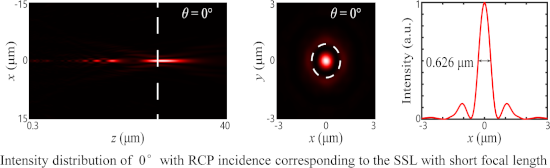
- , the higher the refractive index of the material in the visible band is, the weaker the coupling among the unit cells will be, which leads to a higher efficiency of the metasurface. Thus, rectangular nanopillars composed of titanium dioxide (the refractive index is 2.87 at a wavelength of 632.8 nm) are
- summary, we have proposed a super-oscillatory step-zoom lens composed of titanium dioxide nanopillars. The device operates at a wavelength of 632.8 nm and has two working modes with long or short focal lengths, corresponding to the telescopic and wide-angle application scenarios, respectively. In the


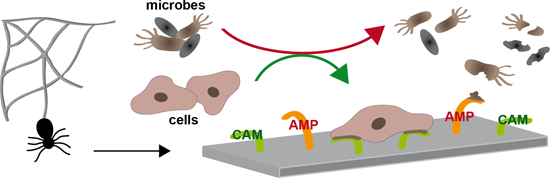
Bioselectivity of silk protein-based materials and their bio-inspired applications
Beilstein J. Nanotechnol. 2022, 13, 902–921, doi:10.3762/bjnano.13.81


Direct measurement of surface photovoltage by AC bias Kelvin probe force microscopy
Beilstein J. Nanotechnol. 2022, 13, 712–720, doi:10.3762/bjnano.13.63
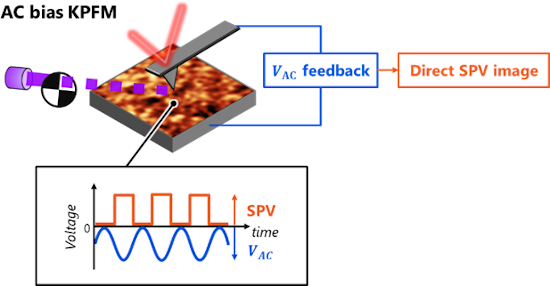
- modulated external disturbances. Keywords: atomic force microscopy; Kelvin probe force microscopy; photocatalyst; surface photovoltage; titanium dioxide; Introduction Surface photovoltage (SPV) is the change in surface potential caused by light illumination [1][2] and is measured to determine such


Sodium doping in brookite TiO2 enhances its photocatalytic activity
Beilstein J. Nanotechnol. 2022, 13, 599–609, doi:10.3762/bjnano.13.52
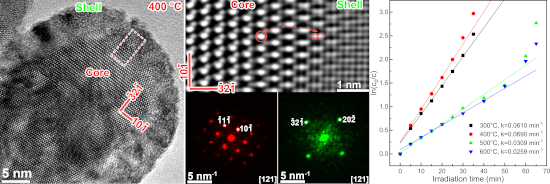
- structure and produce microstructures such as the core–shell structure, local lattice distortion, interstitial atoms, and atomic vacancies, which are critical to its excellent photocatalytic activity. Keywords: brookite titanium dioxide; core–shell structure; photocatalytic activity; sodium doping; twins
- ; Introduction Titanium dioxide (TiO2) has been extensively studied for many potential applications in the environmental and energy fields, such as treatment of polluted water [1][2], air purification [3][4], and water splitting [5][6]. In recent years, the interest in the brookite phase of TiO2 has been
- titanium dioxide, 7 g of the precipitate from different batches was uniformly mixed and divided into seven parts, which were then calcinated at 300–900 °C for 2 h to obtain the products. Photocatalytic activity measurement The photocatalytic activity of the products was examined by photodegrading the


Micro- and nanotechnology in biomedical engineering for cartilage tissue regeneration in osteoarthritis
Beilstein J. Nanotechnol. 2022, 13, 363–389, doi:10.3762/bjnano.13.31
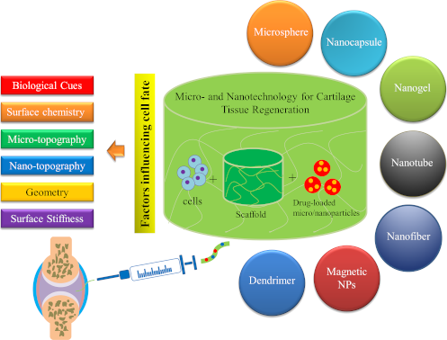
- nanotubes exhibit considerable results regarding bone TE due to their ability to provide a surface with proper roughness, which facilitates osteoblast attachment and proliferation, and can provide an active site for the deposition of inorganic calcium apatite [138]. In addition to silica, titanium dioxide


Engineered titania nanomaterials in advanced clinical applications
Beilstein J. Nanotechnol. 2022, 13, 201–218, doi:10.3762/bjnano.13.15
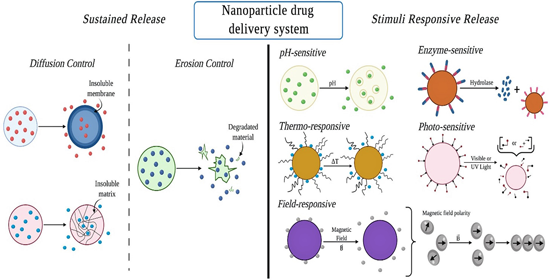
- systems for theranostic purposes. Titanium dioxide (titanium(IV) oxide/titania/TiO2) has garnered considerable attention as one of the most extensively studied metal oxides in clinical applications. Owing to the unique properties of titania, such as photocatalytic activity, excellent biocompatibility
- review aims to present a comprehensive and up-to-date overview of TiO2-based nanotherapeutics and the corresponding future challenges. Keywords: clinical application; nanostructures; physicochemical; theranostics; titanium dioxide (TiO2); Introduction Nanomaterials can be described as any organic
- of hydroxy groups elicits hydrophobicity [24]. The primary physical properties of titanium dioxide that contribute to its biocompatibility are high corrosion resistance, the thermodynamic state at low physiological pH values, the isoelectric point of 5–6, the low ion formation tendency in aqueous


Plasmon-enhanced photoluminescence from TiO2 and TeO2 thin films doped by Eu3+ for optoelectronic applications
Beilstein J. Nanotechnol. 2021, 12, 1271–1278, doi:10.3762/bjnano.12.94
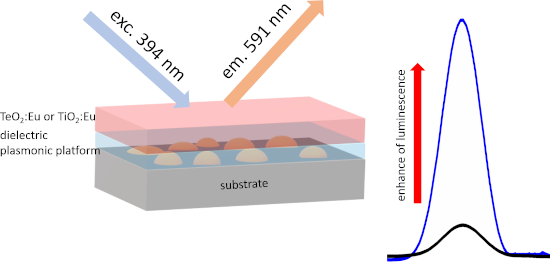
- luminescence properties of europium-doped titanium dioxide and tellurium oxide thin films enhanced by gold plasmonic nanostructures. We propose a new type of plasmon structure with an ultrathin dielectric film between plasmonic platform and luminescent material. Plasmonic platforms were manufactured through
- , so-called plasmonic platforms, and thin films. Among different plasmonic materials, gold nanostructures exhibit resonance in the visible range and have been extensively studied as a material for light absorption and emission improvement [4][5][6][7][8]. Titanium dioxide seems to be one of the most
- ) transitions (intra-configurational 4f transitions), observed in the range of 570–840 nm [21][22][23]. As a red light emitter, Eu3+ may be employed in various optical devices. In this work we compare two types of matrix for europium ions, namely titanium dioxide and tellurium dioxide. We show possibilities to


Comprehensive review on ultrasound-responsive theranostic nanomaterials: mechanisms, structures and medical applications
Beilstein J. Nanotechnol. 2021, 12, 808–862, doi:10.3762/bjnano.12.64
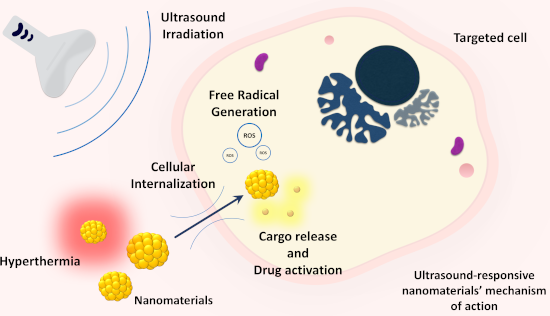
- ]. Titanium-based NPs have been investigated for sonodynamic therapy [149][154]. You et al. produced hydrophilized titanium dioxide NPs (HTiO2) and demonstrated its cytotoxic potential and ROS generation under US treatment. Results showed a 29.7-fold increase in 1O2 concentration in the treated sample


Interface interaction of transition metal phthalocyanines with strontium titanate (100)
Beilstein J. Nanotechnol. 2021, 12, 485–496, doi:10.3762/bjnano.12.39
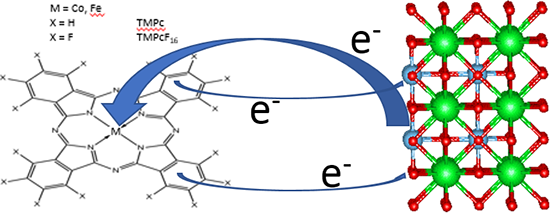
- cells, field-effect transistors (FETs), and sensors [1][2]. Possibly, one of the most extensively studied oxide material in this context is rutile titanium dioxide [3]. However, also interfaces between SrTiO3 (STO) and organic molecules are studied increasingly using both experimental [4][5] and


A review on the biological effects of nanomaterials on silkworm (Bombyx mori)
Beilstein J. Nanotechnol. 2021, 12, 190–202, doi:10.3762/bjnano.12.15
- to generate more reactive oxygen species (ROS) and to induce oxidative stress could be a reason for their antibacterial activity against R. solanacearum in tobacco plants [23]. Aside from MgO NPs, other nanomaterials, including titanium dioxide (TiO2 NPs), zinc oxide (ZnO NPs), copper oxide (CuO NPs
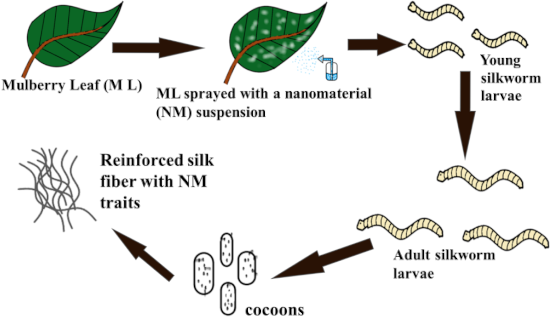
- ][158]. Improving the luster and the quality of silkworm silk is imperative and studies are being carried out in this direction. Feeding silkworms with nanomaterials, such as carbon nanotubes (CNTs), titanium dioxide, copper, and graphene has been reported to improve the mechanical properties and


Atomic layer deposited films of Al2O3 on fluorine-doped tin oxide electrodes: stability and barrier properties
Beilstein J. Nanotechnol. 2021, 12, 24–34, doi:10.3762/bjnano.12.2
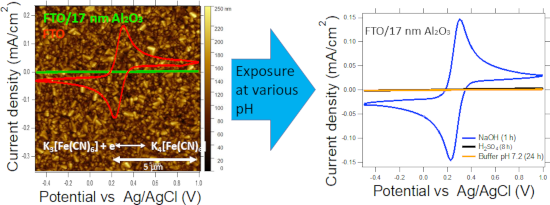
- of electrified interfaces is particularly challenging, because electron or hole transport through the coating must be maintained. Previously, ALD and other coating techniques have been shown to protect a semiconducting hematite electrode against corrosion and photocorrosion by using titanium dioxide


Unravelling the interfacial interaction in mesoporous SiO2@nickel phyllosilicate/TiO2 core–shell nanostructures for photocatalytic activity
Beilstein J. Nanotechnol. 2020, 11, 1834–1846, doi:10.3762/bjnano.11.165
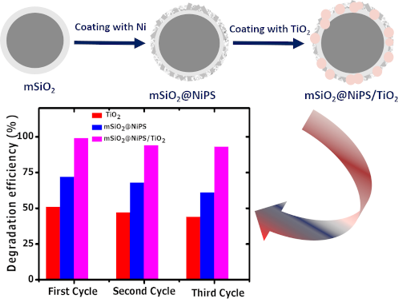
- inertness, low cost, and non-toxicity, titanium dioxide (TiO2) has been widely used as a photocatalyst in the degradation of dyes in textile industries as well as in water-treatment systems [5][6]. There are three different phases of TiO2, namely anatase, rutile, and brookite. Compared to the rutile and


Antimicrobial metal-based nanoparticles: a review on their synthesis, types and antimicrobial action
Beilstein J. Nanotechnol. 2020, 11, 1450–1469, doi:10.3762/bjnano.11.129
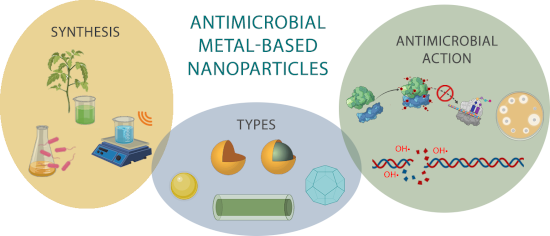
- , Lopez de Dicastillo et al. (2018, 2019) have recently developed hollow titanium dioxide nanotubes and nanospheres through the deposition of tetrakis(dimethylamide) titanium and water, as precursors, on polymeric structures obtained via electrospinning. The resulting hollow nanotubes and nanospheres had
- nanomaterials which have also presented relevant antimicrobial properties against several pathogenic microorganisms. Zinc oxide, titanium dioxide, copper oxide, and nickel oxide are the most typical metal-oxide NPs with potential antibacterial, antifungal and antiviral activities [127][128]. These oxides have
- antibacterial activity against Bacillus subtilis and Enterobacter aerogenes bacteria [109]. Titanium dioxide is also an inorganic material that is widely used in several products, including cosmetics and orthodontic composites, due to its excellent whitening, photocatalytic, and antimicrobial properties [131


High permittivity, breakdown strength, and energy storage density of polythiophene-encapsulated BaTiO3 nanoparticles
Beilstein J. Nanotechnol. 2020, 11, 1190–1197, doi:10.3762/bjnano.11.103
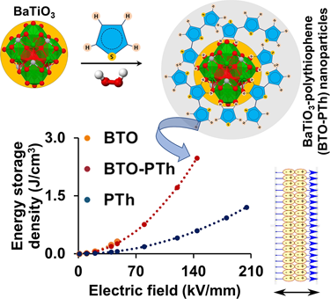
- storage density. We believe BTO-PTh nanoparticles are a promising material and this design is a noteworthy strategy for future research and advanced microelectronic and energy storage applications. Experimental Barium hydroxide octahydrate (Ba(OH)2·8H2O, ≥98%, Sigma-Aldrich) and fine-grained titanium
- dioxide (TiO2 Tronox, 99.5%, Tronox Pigments GmbH) are used as Ba and Ti precursors for the hydrothermal synthesis of BTO nanoparticles. Ba(OH)2·8H2O also acts as the mineralizer and prevents the use of NaOH or KOH for controlling the pH value of the reaction mixture [12]. Equimolar amounts of Ba and Ti




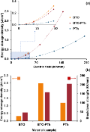
Gram-scale synthesis of splat-shaped Ag–TiO2 nanocomposites for enhanced antimicrobial properties
Beilstein J. Nanotechnol. 2020, 11, 1119–1125, doi:10.3762/bjnano.11.96

- . The improvement in the antibacterial activity was attributed to the synergistic effect of the hybrid nature of TiO2 nanoparticles in the presence of Ag. Keywords: antimicrobial properties; biomaterials; nanocomposites; silver nanoparticles; titanium dioxide; Introduction The rapid industrial


Adsorption behavior of tin phthalocyanine onto the (110) face of rutile TiO2
Beilstein J. Nanotechnol. 2020, 11, 821–828, doi:10.3762/bjnano.11.67

- tunneling microscopy (STM); tin phthalocyanine (SnPc); titanium dioxide (TiO2); Introduction Phthalocyanines (Pcs) are aromatic molecules that can form metal complexes with a variety of elements, which can be used to tune molecular properties, such as position or shape of adsorption bands. Therefore, Pcs
- stability. Since metal oxides are commonly used as support for the growth of molecular layers in many technological solutions, it is not surprising that Pcs on titanium dioxide faces have been widely studied. Most studies of phthalocyanine adsorption on rutile (110) and (011) faces consider flat Pcs (CoPc
- [6], CuPc [7][8][9][10], ZnPc [11], FePc [12] and H2Pc [13]), while their nonplanar counterparts such as SnPc have been rarely probed [14]. Spectroscopy studies or density functional theory (DFT) calculations of molecular species adsorbed onto titanium dioxide can be an arduous task, especially for


Effect of Ag loading position on the photocatalytic performance of TiO2 nanocolumn arrays
Beilstein J. Nanotechnol. 2020, 11, 717–728, doi:10.3762/bjnano.11.59
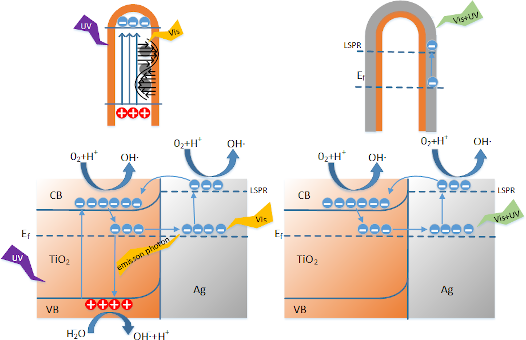
- Since 1972, when Shimada and Honda discovered the photocatalysis of titanium dioxide (TiO2) under ultraviolet light, research in this field has continued to grow [1]. Recently, TiO2 has been utilized in the fields of photocatalytic water decomposition [2], photocatalytic organic degradation [3], and


A novel dry-blending method to reduce the coefficient of thermal expansion of polymer templates for OTFT electrodes
Beilstein J. Nanotechnol. 2020, 11, 671–677, doi:10.3762/bjnano.11.53
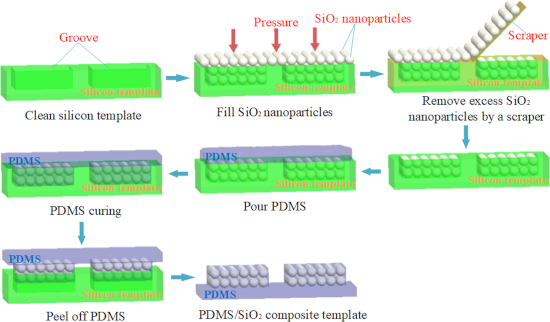
- . González-Benito et al. [11] used high-energy ball cryomilling to uniformly disperse 5 wt % of titanium dioxide (TiO2) nanoparticles with a size of 65 nm within poly(ethylene-co-vinyl acetate) (EVA) to subsequently obtain a film of the composite with lower CTE by hot pressing. Ren et al. [12] first prepared


Atomic-resolution imaging of rutile TiO2(110)-(1 × 2) reconstructed surface by non-contact atomic force microscopy
Beilstein J. Nanotechnol. 2020, 11, 443–449, doi:10.3762/bjnano.11.35
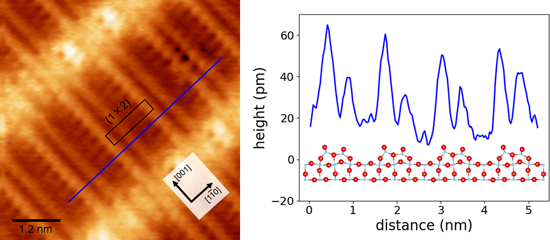
- force microscopy; (1 × 2) reconstruction; rutile; surface structure; titanium dioxide (TiO2); Introduction Titanium dioxide (TiO2) is a well-known photocatalyst and has been studied for applications in water splitting and the coating of materials [1]. To optimize the photocatalytic function, it is


Fabrication of Ag-modified hollow titania spheres via controlled silver diffusion in Ag–TiO2 core–shell nanostructures
Beilstein J. Nanotechnol. 2020, 11, 141–146, doi:10.3762/bjnano.11.12
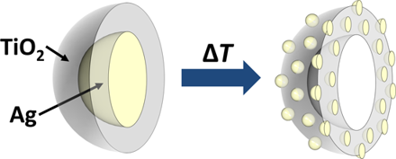
- fabrication step. The synthesized nanostructures exhibit a broadband optical absorption in the UV–vis range. Keywords: core–shell nanostructures; hollow spheres; silver diffusion; silver-modified titanium dioxide; titania; Findings In recent years, nanometer- to micrometer-sized inorganic hollow spheres


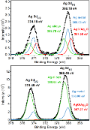

Improved adsorption and degradation performance by S-doping of (001)-TiO2
Beilstein J. Nanotechnol. 2019, 10, 2116–2127, doi:10.3762/bjnano.10.206
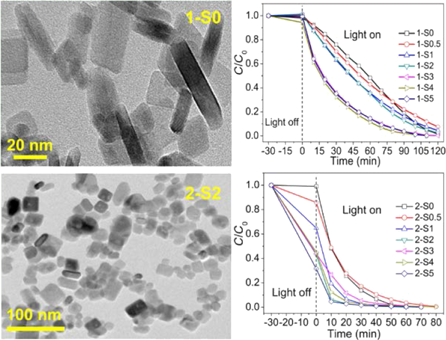
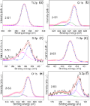
- increase in the amount of •OH and •O2− radicals. Keywords: anatase; chemical state; degradation; photocatalytic properties; S-doping; thermal chemical vapor deposition; titanium dioxide (TiO2); Introduction Anatase TiO2 with a tetragonal symmetry has widely been used for the degradation of organic




Novel hollow titanium dioxide nanospheres with antimicrobial activity against resistant bacteria
Beilstein J. Nanotechnol. 2019, 10, 1716–1725, doi:10.3762/bjnano.10.167
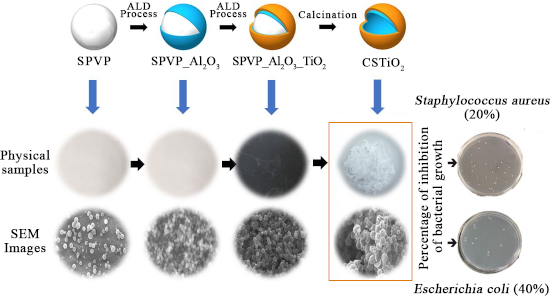
- this work, novel, hollow, calcined titanium dioxide nanospheres (CSTiO2) were successfully synthesized for the first time through the combination of electrospinning and atomic layer deposition techniques. Poly(vinylpyrrolidone) (PVP) electrosprayed spherical particles were double-coated with alumina
- and titanium dioxide, and after a calcination process, hollow nanospheres were obtained with a radius of approximately 345 nm and shell thickness of 17 nm. The structural characterization was performed using electron microscopy, and X-ray diffraction and small-angle X-ray diffraction evidenced an
- anatase titanium dioxide crystalline structure. Thermogravimetric analysis and Fourier-transform infrared spectroscopy studies demonstrated the absence of polymer residue after the calcination process. The antimicrobial properties of the developed CSTiO2 hollow nanospheres were evaluated against different


Kelvin probe force microscopy work function characterization of transition metal oxide crystals under ongoing reduction and oxidation
Beilstein J. Nanotechnol. 2019, 10, 1596–1607, doi:10.3762/bjnano.10.155
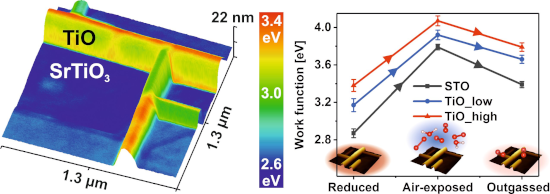
- differences in the range of 70 meV were reported in the case of titanium dioxide (110) and (100) faces [35]. In the present case, the differences could be higher because the whole sample with TiO nanostructures was annealed up to 1150 °C and thus a possible reduction-driven non-stoichiometry occurs. From a


BiOCl/TiO2/diatomite composites with enhanced visible-light photocatalytic activity for the degradation of rhodamine B
Beilstein J. Nanotechnol. 2019, 10, 1412–1422, doi:10.3762/bjnano.10.139
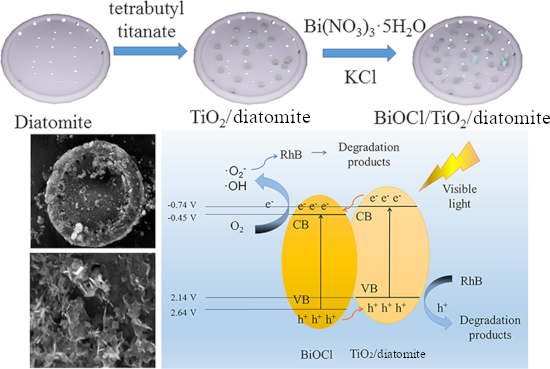
- a carrier to support a layer of titanium dioxide (TiO2) nanoparticles and bismuth oxychloride (BiOCl) nanosheets. The results show that TiO2 nanoparticles and BiOCl nanosheets uniformly cover the surface of diatomite and bring TiO2 and BiOCl into close proximity. Rhodamine B was used as the target
- [10]. As one of the most promising photocatalysts, in terms of its chemical stability, non-toxicity, photo-corrosion resistance in aqueous media and advanced oxidation properties, titanium dioxide (TiO2) has been widely studied [11][12] and employed for water splitting [13], energy storage [14], and


Imaging the surface potential at the steps on the rutile TiO2(110) surface by Kelvin probe force microscopy
Beilstein J. Nanotechnol. 2019, 10, 1228–1236, doi:10.3762/bjnano.10.122
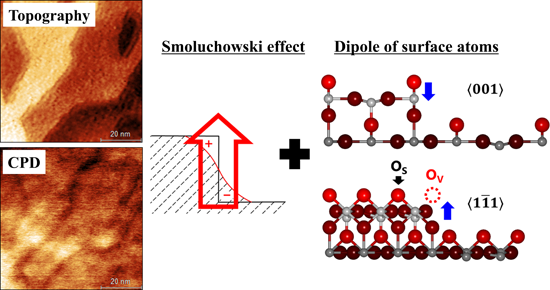
- steps in the catalytic reaction. Keywords: catalyst; Kelvin probe force microscopy; Smoluchowski effect; step; titanium dioxide; Introduction Titanium dioxide (TiO2) has attracted considerable interest for its promising applications as a photocatalyst and as catalyst support, as well as in gas sensors
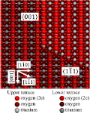
![[Graphic 16]](/bjnano/content/inline/2190-4286-10-122-i16.svg?max-width=637&scale=1.18182) and
and ![[Graphic 17]](/bjnano/content/inline/2190-4286-10-122-i17.svg?max-width=637&scale=1.18182) .
.
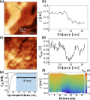

![[Graphic 38]](/bjnano/content/inline/2190-4286-10-122-i38.svg?max-width=637&scale=1.18182) and
and ![[Graphic 39]](/bjnano/content/inline/2190-4286-10-122-i39.svg?max-width=637&scale=1.18182) steps. (a) Topographic image...
steps. (a) Topographic image...


![[Graphic 72]](/bjnano/content/inline/2190-4286-10-122-i72.svg?max-width=637&scale=1.18182) , b)
, b) ![[Graphic 73]](/bjnano/content/inline/2190-4286-10-122-i73.svg?max-width=637&scale=1.18182) , c) reduced
, c) reduced ![[Graphic 74]](/bjnano/content/inline/2190-4286-10-122-i74.svg?max-width=637&scale=1.18182) , and d)
, and d) ![[Graphic 75]](/bjnano/content/inline/2190-4286-10-122-i75.svg?max-width=637&scale=1.18182) steps. B...
steps. B...



