


Search results
Search for "trisodium citrate" in Full Text gives 30 result(s) in Beilstein Journal of Nanotechnology.
In vitro toxicity and bioimaging studies of gold nanorods formulations coated with biofunctional thiol-PEG molecules and Pluronic block copolymers
Beilstein J. Nanotechnol. 2014, 5, 546–553, doi:10.3762/bjnano.5.64
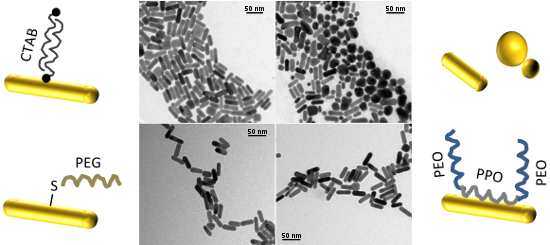
- have minimal cytotoxicity and they can be used for long term in vitro and in vivo imaging study. Experimental Materials: Hydrogen tetrachloroaurate(III) trihyrate (HAuCl4·3H2O), cetylmethylammonium bromide (CTAB), sodium borohydride (NaBH4), silver nitrate (AgNO3), L-ascorbic acid, trisodium citrate


Dye-sensitized Pt@TiO2 core–shell nanostructures for the efficient photocatalytic generation of hydrogen
Beilstein J. Nanotechnol. 2014, 5, 360–364, doi:10.3762/bjnano.5.41
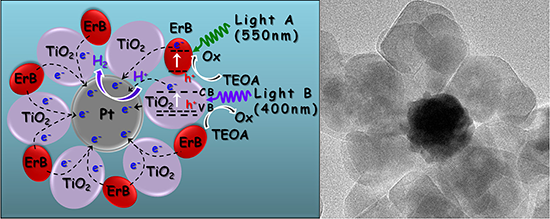
- Pt nanoparticles: Seed Pt nanoparticles were prepared first. Typically, an aqueous solution of H2PtCl6 (3.8 mM, 7 mL) was added into 90 mL deionized (DI) water and heated to boil under stirring. After that, 2.2 mL aqueous solution containing 1% trisodium citrate and 0.05% citrate acid was added
- seed solution for further growth into 30 nm Pt nanoparticles. In a typical run, 4 mL of the 16 nm Pt particle solution was mixed with 26 mL DI water. Then 0.09 mL solution of H2PtCl6 (0.2 M) was added, followed by addition of 0.5 mL solution containing 1% trisodium citrate and 1.25% L-ascorbic acid


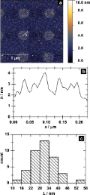
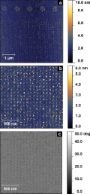
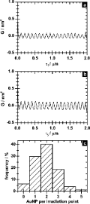
Guided immobilisation of single gold nanoparticles by chemical electron beam lithography
Beilstein J. Nanotechnol. 2013, 4, 336–344, doi:10.3762/bjnano.4.39
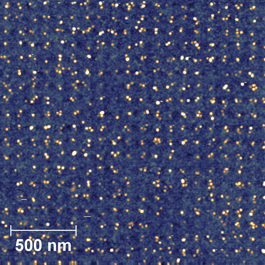
- prepared by using a Purelab Ultra from Elga. Hydrogen tetrachloroaurate(III) trihydrate, sodium borohydride, and trisodium citrate dihydrate were purchased from Sigma Aldrich or Merck. Unless stated otherwise, all substances were used without any further purification. Sample cleaning and silanisation Prior
- with a diameter of 16 nm were synthesised according to known procedures from Turkevich and Frens by using 0.056 mM of tetrachloroaurate(III) trihydrate and 0.178 mM of trisodium citrate dehydrate [19][20][21]. Afterwards, the pH value was adjusted to 4.7 by centrifugation and redispersion in 10 mM
- ) was reduced by dropwise addition of 4.5 mL of a 48.5 mM solution of sodium borohydride. The red solution was stirred for 5 min and 2.5 mL of a 50 mM solution of trisodium citrate dihydrate was added as a capping agent. Finally, the solution was stirred for an additional 5 min. In order to adjust the


Effect of deposition temperature on the structural and optical properties of chemically prepared nanocrystalline lead selenide thin films
Beilstein J. Nanotechnol. 2012, 3, 438–443, doi:10.3762/bjnano.3.50
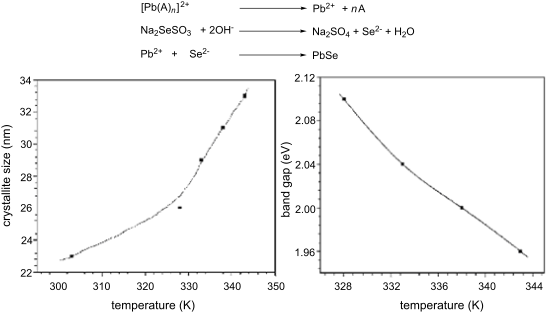
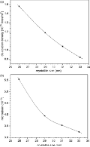
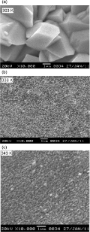
- (Na2SeSO3) as a source of Se2− ions, and lead acetate as a source of Pb2+ ions. Trisodium citrate (TSC) was used as a complexing agent. PbSe films were prepared at various deposition temperatures while the pH value was kept fixed at 11, and the effect on the resulting film properties was studied by X-ray
- the deposition temperature. Experimental Lead selenide thin films were deposited by using lead acetate (Pb(CH3COO)2) and freshly prepared sodium selenosulfate (Na2SeSO3) as Pb2+ and Se2− ions source, respectively, in the presence of trisodium citrate (TSC) as a complexing agent. The Na2SeSO3 solution
- ]. The deposition process is based on the slow release of Pb2+ and Se2− ions in the solution. The complexing agent trisodium citrate controls the Pb2+ concentration and slowly releases Pb2+ ions into the solution. The proposed reaction mechanism for formation of PbSe thin films is as follows, where A is




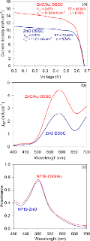
Highly efficient ZnO/Au Schottky barrier dye-sensitized solar cells: Role of gold nanoparticles on the charge-transfer process
Beilstein J. Nanotechnol. 2011, 2, 681–690, doi:10.3762/bjnano.2.73
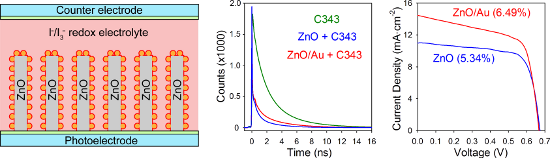
- , and the photoelectrodes with ZnO nanorods were dipped into this diluted HAuCl4·H2O solution for 1 h. Separately, another diluted solution of 1.85 mM of trisodium citrate (TSC, C6H5Na3O7·2H2O, Merck) was prepared by adding 2 mL of 25 mM aqueous solution of TSC to 25 mL of DI water under continuous



Other Beilstein-Institut Open Science Activities



