Search results
Search for "van der Waals" in Full Text gives 369 result(s) in Beilstein Journal of Nanotechnology. Showing first 200.
Electronic and optical properties of chloropicrin adsorbed ZnS nanotubes: first principle analysis
Beilstein J. Nanotechnol. 2025, 16, 1184–1196, doi:10.3762/bjnano.16.87
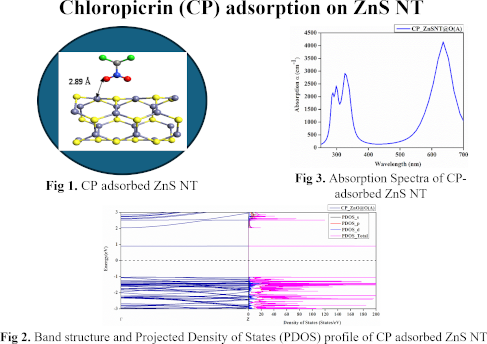
- in altering the electronic and optical properties of ZnS NT. A higher charge transfer improves sensor sensitivity, allowing the detection of CP at lower concentrations, whereas the weak physisorption led by the van der Waals forces may help with the reusability of sensor devices. Table 2 highlights
- . This suggests that the interaction between CP molecules and ZnS NT in Orientation D is minimal, resulting in negligible modifications to the electronic structure. Such weak adsorption effects are consistent with configurations where molecular interactions are dominated by van der Waals forces rather
- ), indicating weaker interaction. Orientation C shows multiple peaks across the ultraviolet and visible ranges, suggesting complex adsorption behavior. Orientation D exhibits negligible shifts, dominated by van der Waals forces. These findings demonstrate the anisotropic optical behavior of ZnS NTs, with


Piezoelectricity of hexagonal boron nitrides improves bone tissue generation as tested on osteoblasts
Beilstein J. Nanotechnol. 2025, 16, 1068–1081, doi:10.3762/bjnano.16.78
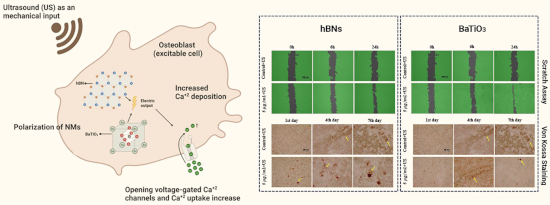
- alternating boron and nitrogen atoms, with a bond length of ≈1.45 Å and an AA stacking arrangement held together by σ bonds. Between adjacent hBN layers, the B–N atoms are bound by weak van der Waals forces, contributing to a wide bandgap of 3.9–4.6 eV, influenced by significant electronegativity differences
- [30][31]. The piezoelectric property of 2D hBN arises from its noncentrosymmetric structure, supported by these van der Waals interactions [32]. The excellent biocompatibility of hBN makes it attractive for diverse applications, including cosmetics, drug delivery, cancer treatment, orthopedic implants


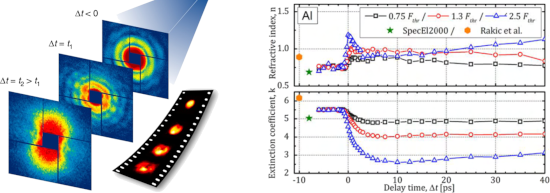
Time-resolved probing of laser-induced nanostructuring processes in liquids
Beilstein J. Nanotechnol. 2025, 16, 968–1002, doi:10.3762/bjnano.16.74


Synchrotron X-ray photoelectron spectroscopy study of sodium adsorption on vertically arranged MoS2 layers coated with pyrolytic carbon
Beilstein J. Nanotechnol. 2025, 16, 847–859, doi:10.3762/bjnano.16.64
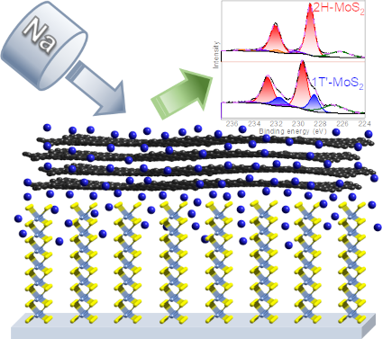
- spacing of 0.62 nm and weak van der Waals interactions between them. At a sodium ion intercalation potential of about 1.4 V vs Na/Na+, the thermodynamically preferred 2H-MoS2 phase transforms into the metastable 1T-MoS2 phase [3][4]. With further increase in the intercalated sodium concentration


Supramolecular hydration structure of graphene-based hydrogels: density functional theory, green chemistry and interface application
Beilstein J. Nanotechnol. 2025, 16, 806–822, doi:10.3762/bjnano.16.61
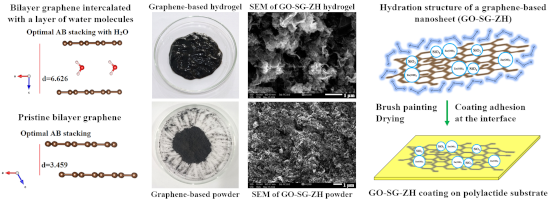
- supramolecular hydration structures that preserve graphene nanosheets from the restacking through hydrophobic force, van der Waals force, and π–π interaction. In this manuscript, density functional theory and high-performance computing (HPC) are used for modeling and calculating van der Waals force between
- graphene nanosheets in water-intercalated AB bilayer graphene structures. A layer of water molecules significantly decreases the intersheet van der Waals force. A novel hydrogel of graphene oxide–silica gel–zinc hydroxide (GO-SG-ZH) is experimentally synthesized to demonstrate the advantages of hydrated
- plays an important role in the stability and functionality of nanoscale structures. Van der Waals forces are supramolecular intermolecular interactions that govern the agglomeration of nanomaterials. Carbon nanostructures with π-conjugated systems (fullerene, carbon nanotube, and graphene) have π–π


Morphology and properties of pyrite nanoparticles obtained by pulsed laser ablation in liquid and thin films for photodetection
Beilstein J. Nanotechnol. 2025, 16, 785–805, doi:10.3762/bjnano.16.60
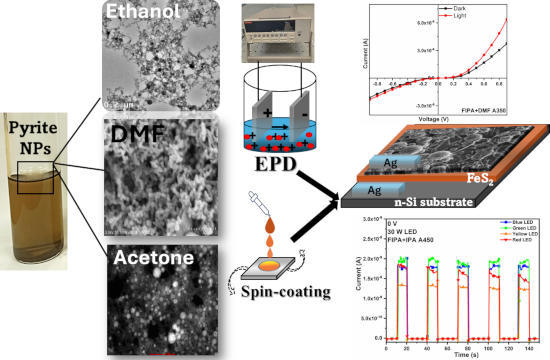
- increased dipole moment. The interaction between nanoparticles and the plume depends on all attractive and repulsive forces, including the attractive van der Waals forces which cause growth and aggregation, and the electrostatic repulsive forces that are generated as a result of the overlap of electrical






Synthesis of a multicomponent cellulose-based adsorbent for tetracycline removal from aquaculture water
Beilstein J. Nanotechnol. 2025, 16, 728–739, doi:10.3762/bjnano.16.56
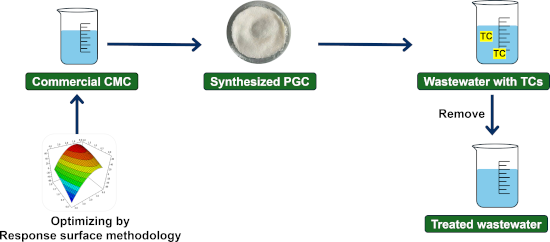
- , electrostatic forces, and van der Waals forces, adsorbed antibiotics may desorb and reenter aquatic environments [12]. Moreover, activated carbon exhibits low selectivity and adsorption capacity. Among novel adsorbents, metal-organic frameworks [13] and molecularly imprinted polymers (MIPs) [14] are
- involves van der Waals forces, which primarily represent electrostatic interactions. Notably, TC is an aromatic organic compound with an amino group that can accept protons (H+) from the environment, acquiring a positive charge. The CMC network within PGC includes oxygen-containing functional groups (‒OH


Water in nanoporous hexagonal boron nitride nanosheets: a first-principles study
Beilstein J. Nanotechnol. 2025, 16, 510–519, doi:10.3762/bjnano.16.39
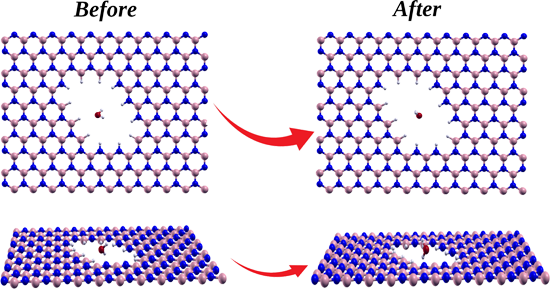
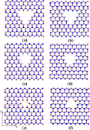
- BH van der Waals functional [30]. We make use of norm-conserving Troullier–Martins [31] pseudopotentials in the Kleinman–Bylander [32] factorized form. Also, we have used as basis set the standard double-ζ plus polarizations orbitals (DZP). The basis functions and the electron density were projected
- energies for the different initial conditions. It can be observed that calculations using the BH functional result in significantly higher adsorption energies compared to those obtained using the PBE functional. For orientations 1–3, calculations with the van der Waals-corrected BH functional yield similar
- 0.337 eV for B–N- and N–H-terminated triangles, respectively). Nevertheless, using the BH van der Waals-corrected functional, we found negative values, that is, −1.36 and −1.03 eV for B–N- and N–H-terminated triangles, respectively. The results indicate that the shape of the pore can significantly




Impact of adsorbate–substrate interaction on nanostructured thin films growth during low-pressure condensation
Beilstein J. Nanotechnol. 2025, 16, 473–483, doi:10.3762/bjnano.16.36

- , subsequent growth kinetics, and final structural properties of thin films. These interactions are influenced by factors such as surface energetics, lattice matching, van der Waals forces, and chemical bonding configurations [20][21]. Strong interactions can lead to ordered nucleation and the formation of


Development of a mucoadhesive drug delivery system and its interaction with gastric cells
Beilstein J. Nanotechnol. 2025, 16, 371–384, doi:10.3762/bjnano.16.28

- ; after 1 h this value increased to (69 ± 1)%, which is not statistically significant. This suggests that the surface of the nanoparticle is saturated with mucin within the first 15 min because of the formation of weak interactions such as hydrogen bonds, van der Waals forces, and ionic interactions


Radiosensitizing properties of dual-functionalized carbon nanostructures loaded with temozolomide
Beilstein J. Nanotechnol. 2025, 16, 229–251, doi:10.3762/bjnano.16.18
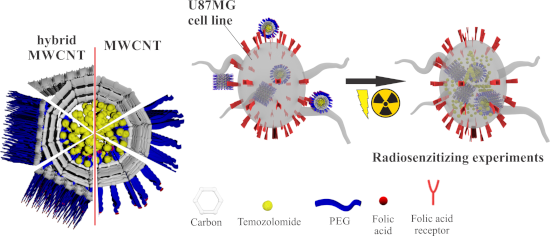
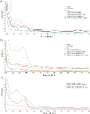
- -FA-TMZ (Figure 4d), but are slightly shifted to 3346, 3389, 3423, 2921, and 2853 cm−1, serving as a spectroscopic evidence for the existence of non-covalent interactions (electrostatic, hydrogen bond, and/or van der Waals forces) between CNs and TMZ. From comparison of the ATR-FTIR spectrum of TMZ




Precursor sticking coefficient determination from indented deposits fabricated by electron beam induced deposition
Beilstein J. Nanotechnol. 2025, 16, 35–43, doi:10.3762/bjnano.16.4

- the free surface sites. Such an event can be pictured as an interaction where no van der Waals “bond” is established and where the molecule leaves the surface at a time scale much shorter than the residence time τ [4]. In the continuum model, s is one of the model parameters entering the diffusion


Natural nanofibers embedded in the seed mucilage envelope: composite hydrogels with specific adhesive and frictional properties
Beilstein J. Nanotechnol. 2024, 15, 1603–1618, doi:10.3762/bjnano.15.126
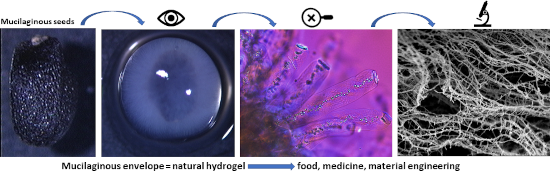
- features with synthetic hydrogels [2][9][10][11]. Hydrogels are 3D networks of polymers (i.e., polysaccharides in plant seeds) interacting via chemical bonds (ionic and covalent), physical interactions (hydrogen bonds), or van der Waals forces [3][11][12]. The ability to produce the mucilage envelope is a


The round-robin approach applied to nanoinformatics: consensus prediction of nanomaterials zeta potential
Beilstein J. Nanotechnol. 2024, 15, 1536–1553, doi:10.3762/bjnano.15.121
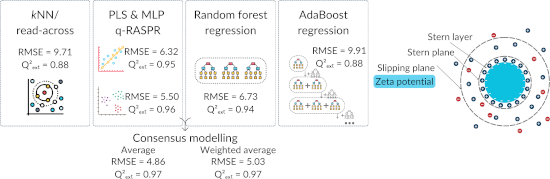
- the NanoSolveIT Hamaker tool (https://hamaker.cloud.nanosolveit.eu/). The Hamaker constant is a material-specific value that quantifies the strength of van der Waals interactions between NPs, depending on the materials and the surrounding medium. A higher (positive) Hamaker constant indicates stronger
- attractive forces, while a negative value suggests repulsive interactions between the NPs, preventing aggregation or agglomeration. These calculations were performed considering spherical and uncoated NMs. The balance between the Hamaker constants (expressing van der Waals attraction between particles) and


A biomimetic approach towards a universal slippery liquid infused surface coating
Beilstein J. Nanotechnol. 2024, 15, 1376–1389, doi:10.3762/bjnano.15.111
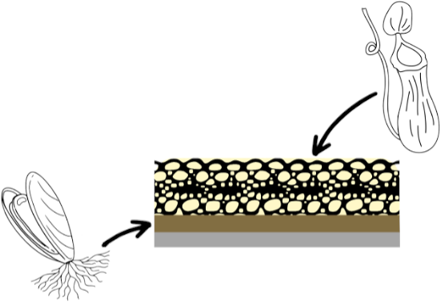
- through van der Waals forces, and capillary forces if there is a rough surface, forces which give way to conditions that are energetically favorable to the retention of the infused liquid as opposed to a foreign one. The preparation of SLIPS substrates include plasma treatments [4][12], acid/base soaks [1




Out-of-plane polarization induces a picosecond photoresponse in rhombohedral stacked bilayer WSe2
Beilstein J. Nanotechnol. 2024, 15, 1362–1368, doi:10.3762/bjnano.15.109
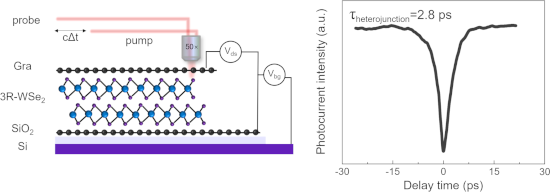
- .15.109 Abstract Constructing van der Waals materials with spontaneous out-of-plane polarization through interlayer engineering expands the family of two-dimensional ferroelectrics and provides an excellent platform for enhancing the photoelectric conversion efficiency. Here, we reveal the effect of
- photodetectors. Keywords: broken inversion symmetry; out-of-plane polarization; picosecond photoresponse; time-resolved photocurrent measurement (TRPC); WSe2; Introduction Two-dimensional (2D) van der Waals (vdW) ferroelectrics with dangling-bond-free surfaces exhibit ferroelectricity by effectively resisting


Interaction of graphene oxide with tannic acid: computational modeling and toxicity mitigation in C. elegans
Beilstein J. Nanotechnol. 2024, 15, 1297–1311, doi:10.3762/bjnano.15.105
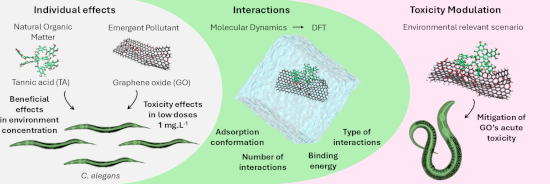
- modeling, including reactive classical molecular dynamics and ab initio calculations, we reveal that TA preferentially binds to the most reactive sites on GO surfaces via the oxygen-containing groups or the carbon matrix; van der Waals interaction forces dominate the binding energy. TA exhibits a dose
- , phototransformation, and degradation [8]. Furthermore, because of the presence of sites for different types of interaction mechanisms (i.e., hydrogen bonding, van der Waals interaction, and π–π stacking), its structure favors the adsorption of different molecules (i.e., biomolecules and organic pollutants) and metal
- , we calculated the charge transfer of the system using Bader charge analysis, which was 0.1e− from GO to TA. The low value of charge transfer indicates that van der Waals (vdW) interaction forces dominate the binding between GO and TA. This is confirmed by the unfavorable binding energy (i.e


Quantum-to-classical modeling of monolayer Ge2Se2 and its application in photovoltaic devices
Beilstein J. Nanotechnol. 2024, 15, 1153–1169, doi:10.3762/bjnano.15.94
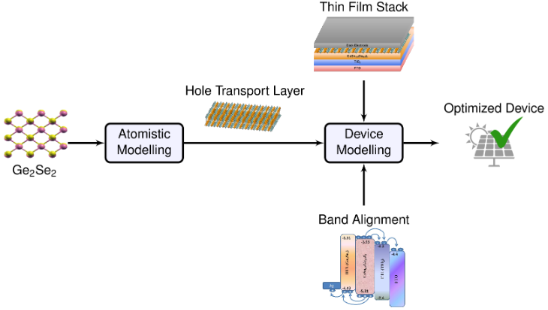
- materials, including MXene’s, transition-metal dichalcogenides (TMDCs) and van der Waals structures [21]. Among the various sets of 2D materials, TMDCs (with the general formula of MX2, where M is a transition metal and X is a chalcogen) attract the broad attention of the research community regarding their




Can neutral clusters: a two-step G0W0 and DFT benchmark
Beilstein J. Nanotechnol. 2024, 15, 1010–1016, doi:10.3762/bjnano.15.82
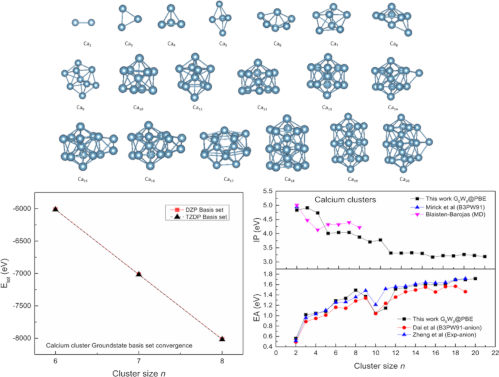
- . Apart from the accuracy of the functional, there can be a van der Waals interaction effect for clusters, which can be calculated by semi-empirical corrections added to the conventional density functional approximation and needs detailed assessment for small clusters (n = 2–10). In such cases, DFT-D
- difference can be due to two reasons. First is the use of a different functional and second are the basis sets and accuracy, which are different for the reported data compared with our work. In addition, van der Waals dispersion effects can also affect the binding energies of clusters, which need semi


Beyond biomimicry – next generation applications of bioinspired adhesives from microfluidics to composites
Beilstein J. Nanotechnol. 2024, 15, 965–976, doi:10.3762/bjnano.15.79
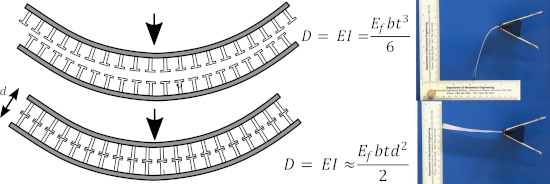
- lithography; Perspective As of the time of this writing, it has been 24 years since the seminal work by Kellar Autumn and his colleagues demonstrated how a single gecko foot hair could generate adhesion [1]. Autumn’s discovery that van der Waals forces were the primary mechanism behind the extraordinary
- and high performance that it would be possible to build laminates, composites, clothing, and protective equipment out of these adhesive materials. We can ideally enable a type of van der Waals-based construction set for manufacturing products with strong, reversibly adhered laminates to improve


Exfoliation of titanium nitride using a non-thermal plasma process
Beilstein J. Nanotechnol. 2024, 15, 631–637, doi:10.3762/bjnano.15.53
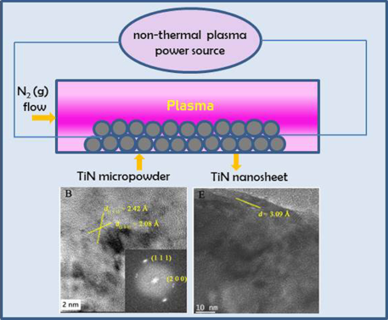
- -dimensional (2D) materials with exceptional physical and chemical properties. These materials are typically exfoliated from three-dimensional (3D) layered crystals characterized by atomically thin layers held together by strong in-plane covalent bonds and weak out-of-plane van der Waals (vdW) forces. Apart
- a distinct class of 2D materials. These novel materials consist of ultrathin nanosheets but are synthesized from non-van der Waals (n-vdW) bulk crystals featuring strong chemical bonds in all directions [5]. In general, n-vdW crystals combine the 2D structural characteristics with properties



Directed growth of quinacridone chains on the vicinal Ag(35 1 1) surface
Beilstein J. Nanotechnol. 2024, 15, 556–568, doi:10.3762/bjnano.15.48
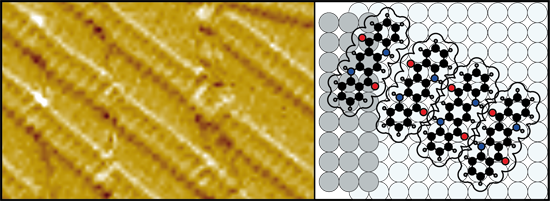
- [30]. The shown hard-sphere models of QA use bond lengths [31] and van der Waals radii [27] from the literature. Results and Discussion The Ag(35 1 1) surface The Ag(35 1 1) surface is vicinal (i.e., tilted by an angle of 2.3°) with respect to the Ag(100) surface. The step direction is along the [10
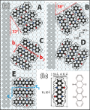
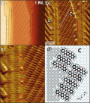
- der Waals radii used for the molecular models were taken from [27]. QA on the Ag(35 1 1) surface deposited at a sample temperature of 300 K. (a) STM image (UBias = −1.55 V, I = 40 pA) showing many parallel QA chains with the two azimuthal orientations A and D. The left-hand side of a step edge
- ). For the chain orientation E there exists the energetically equivalent chain with molecules of the opposite chirality. The color code of the atoms is: black = carbon, gray = hydrogen, blue = nitrogen, and red = oxygen. (b) Structural formula and hard-sphere model with dimensions of QA. The nominal van


On the additive artificial intelligence-based discovery of nanoparticle neurodegenerative disease drug delivery systems
Beilstein J. Nanotechnol. 2024, 15, 535–555, doi:10.3762/bjnano.15.47
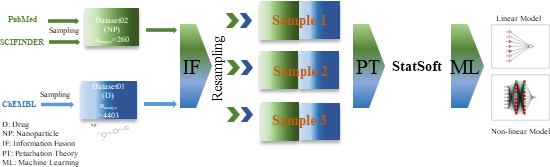
- donor atoms from P_VSA-like descriptors), Dn17 = Vxcoat (McGowan volume), Dn18 = VvdwMGcoat (van der Waals volume from McGowan volume), Dn19 = VvdwZAZcoat (van der Waals volume from the Zhao–Abraham–Zissimos equation), and Dn20 = PDIcoat (packing density index). PT data preprocessing Apart from the



Investigating structural and electronic properties of neutral zinc clusters: a G0W0 and G0W0Г0(1) benchmark
Beilstein J. Nanotechnol. 2024, 15, 310–316, doi:10.3762/bjnano.15.28
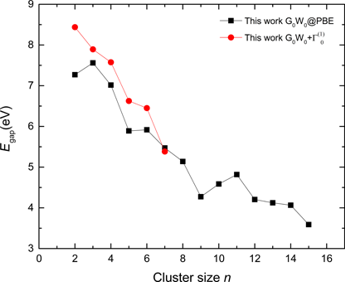
- trend, which follows the behavior of metallic bandgaps. One exception is the zinc dimer, for which our bandgap from calculations is relatively high, which may be attributed to the van der Waals forces. The HOMO–LUMO gap trend shows that, at larger sizes, the behavior of the cluster becomes close to


![[Graphic 14]](/bjnano/content/inline/2190-4286-15-28-i15.svg?max-width=637&scale=1.18182)
Multiscale modelling of biomolecular corona formation on metallic surfaces
Beilstein J. Nanotechnol. 2024, 15, 215–229, doi:10.3762/bjnano.15.21
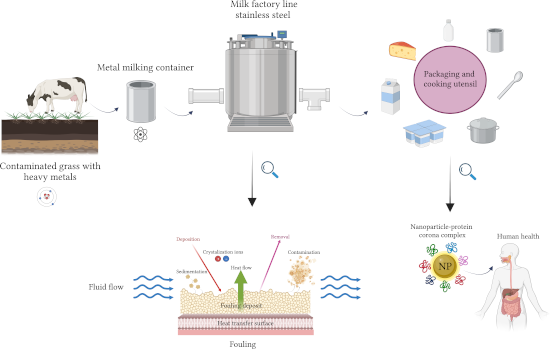
- -bonded potential () (including van der Waals (vdW) repulsion and solvent effects), a long-range core vdW potential (), and an electrostatic potential (Uel). Through interaction potentials for specific AAs with the NP, the overall interaction potential between the NP and the complete protein (Up−NP) is