


Search results
Search for "vesicles" in Full Text gives 104 result(s) in Beilstein Journal of Nanotechnology.
Ferromagnetic resonance spectra of linear magnetosome chains
Beilstein J. Nanotechnol. 2024, 15, 157–167, doi:10.3762/bjnano.15.15
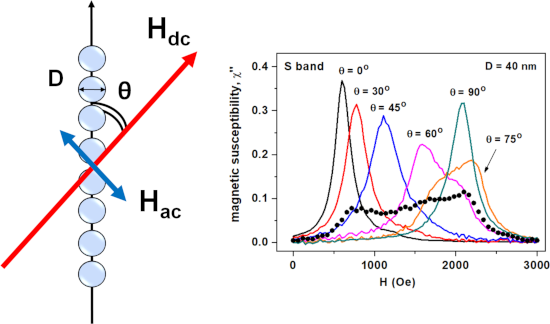
- along the chain axis. In contrast, it was shown [39] that the formation of magnetosomes in a bacterium can occur simultaneously in many germ vesicles along its length. In this case, it is not clear what reason can lead to the occurrence of E-type anisotropy in the chain. Rather, one would expect a


Curcumin-loaded nanostructured systems for treatment of leishmaniasis: a review
Beilstein J. Nanotechnol. 2024, 15, 37–50, doi:10.3762/bjnano.15.4
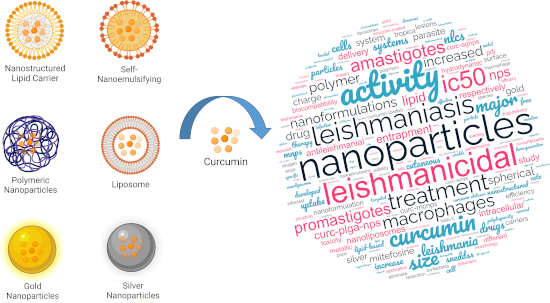
- ]. Although this nanostructured system is a promising carrier, further in vitro and in vivo studies are necessary to evaluate such improvements for curc or other leishmanicidal drugs. Nanoliposomes Nanoliposomes are nanoscale lipid bilayer vesicles mainly composed of phospholipids. These systems (small
- nanoliposomes promoting increased antiparasitic activity. Recently, Bafghi and collaborators produced nanoliposomes for curc delivery as a new alternative for leishmaniasis treatment [89]. Briefly, the nanoliposomes were prepared by thin-film hydration, resulting in spherical vesicles with 176.5 nm of diameter


Nanotechnological approaches in the treatment of schistosomiasis: an overview
Beilstein J. Nanotechnol. 2024, 15, 13–25, doi:10.3762/bjnano.15.2
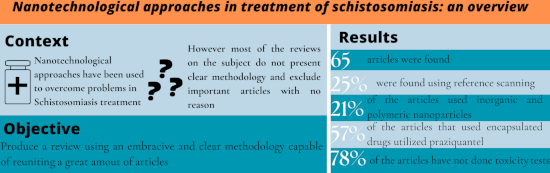
- homogenization); (2) low-energy methods, which requires the precipitation of nanoparticles from homogeneous systems (such as microemulsions); and (3) methods based on organic solvents (emulsification–diffusion method) [35]. Liposomes are vesicles composed of a phospholipid and cholesterol with an aqueous core


Elasticity, an often-overseen parameter in the development of nanoscale drug delivery systems
Beilstein J. Nanotechnol. 2023, 14, 1149–1156, doi:10.3762/bjnano.14.95
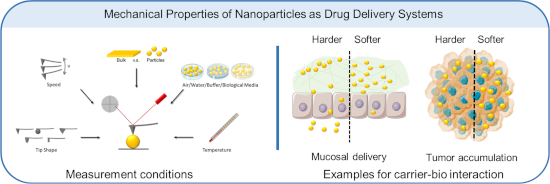
- with a model hydrogel that there is a higher penetration for more deformable extracellular vesicles from mouse mesenchymal stromal cells [37]. A second study, from Yu et al., shows rigidity-dependent penetration of lipid NPs in the mucus layer of rat intestinal mucus. Liposomes were either hollow or


Green SPIONs as a novel highly selective treatment for leishmaniasis: an in vitro study against Leishmania amazonensis intracellular amastigotes
Beilstein J. Nanotechnol. 2023, 14, 893–903, doi:10.3762/bjnano.14.73
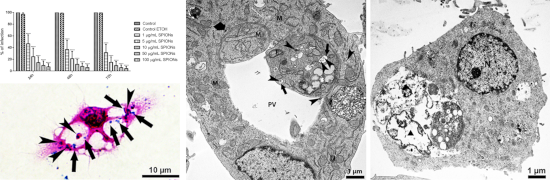
- ultrastructural changes were observed in intracellular amastigotes: (1) many lipid bodies (A–C, thin arrows), (2) increased secretion of extracellular vesicles (A–C, broad arrows), (3) intracellular vacuolization (A–C, arrows), (4) myelin-like figures (A, arrowhead), (5) mitochondrial swelling (C, star), and (6


The steep road to nonviral nanomedicines: Frequent challenges and culprits in designing nanoparticles for gene therapy
Beilstein J. Nanotechnol. 2023, 14, 351–361, doi:10.3762/bjnano.14.30
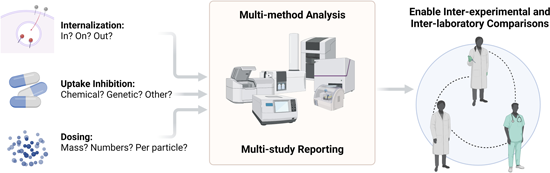
- measurement. For NTA, ASTM 2834 provides workflows for planning NP experiments. Through the study of nanoscale extracellular vesicles, Bachurski et al. [68] provide some additional insights comparing the performance of different NTA systems to cryo-TEM and single-particle interferometric reflectance imaging

Recent progress in cancer cell membrane-based nanoparticles for biomedical applications
Beilstein J. Nanotechnol. 2023, 14, 262–279, doi:10.3762/bjnano.14.24
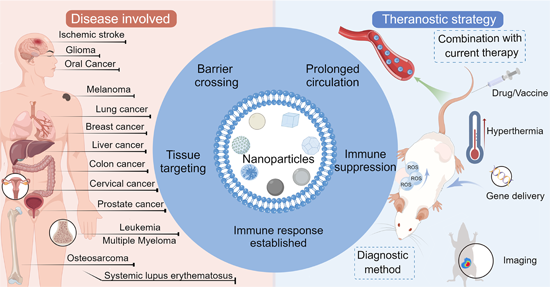
- membranes have been exploited for the development of novel membrane NP-based therapies, such as erythrocytes [10], platelets [11], cancer cells [14], stem cells [12], immune cells [13], central nervous system-derived cells [17], bacterial outer membrane vesicles [18], and extracellular vesicles [19]. Cancer


Nanotechnology – a robust tool for fighting the challenges of drug resistance in non-small cell lung cancer
Beilstein J. Nanotechnol. 2023, 14, 240–261, doi:10.3762/bjnano.14.23
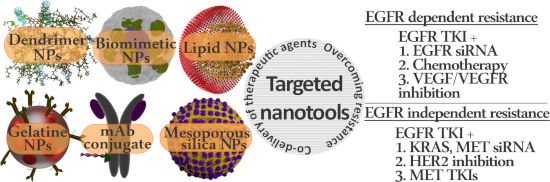
- surface, triggered by protease degradation after tumor homing by the EPR effect [112]. Mesoporous silica vesicles (MSVs; dav = 3 μm) with high affinity to tumor vasculature were also described by Blanco et al. as a platform for the triggered release of various therapeutic nanoscale vectors (liposomes


Ethosomal (−)-epigallocatechin-3-gallate as a novel approach to enhance antioxidant, anti-collagenase and anti-elastase effects
Beilstein J. Nanotechnol. 2022, 13, 491–502, doi:10.3762/bjnano.13.41
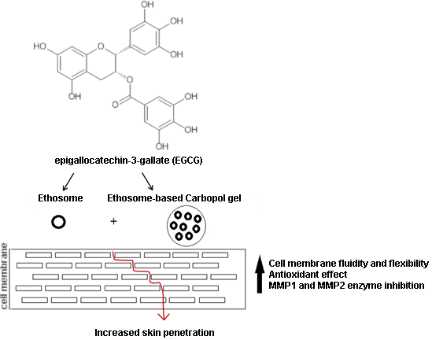
- 2). El Kayal et al. conducted a study that provided the basis for the development of formulations as ETHs, transfersomes, and transethosomes to maximize the therapeutic efficacy of EGCG. The formulation compositions were optimized to produce vesicles with acceptable physical properties for these
- liposomes, which have limited skin penetration and mostly remain in the upper layer of the stratum corneum. The release of the therapeutic agent occurs by the fusion of these vesicles with the cell membranes in the deeper layers of the skin [11]. ETHs have been reported to help many active substances to be
- min followed by sonication using an ultrasonic bath (Wise Clean, Korea, 210 W, 40 kHz), at 40% sonication strength, and three cycles of 30 min to obtain monodisperse vesicles and to enhance encapsulation efficiency [44][45]. Then, ETHs were collected by centrifugation at 10.000 rpm for 30 min. For the



pH-driven enhancement of anti-tubercular drug loading on iron oxide nanoparticles for drug delivery in macrophages
Beilstein J. Nanotechnol. 2021, 12, 1127–1139, doi:10.3762/bjnano.12.84
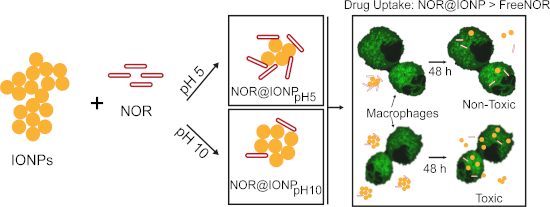
- Intracellular pathogens are often contained in vesicles within phagocytic cells like the macrophages. These vesicles are known to present an acidic environment [42], while the normal physiological pH of the cell remains neutral [43]. Thus, nanoparticles used in drug delivery to macrophages would experience both



Use of nanosystems to improve the anticancer effects of curcumin
Beilstein J. Nanotechnol. 2021, 12, 1047–1062, doi:10.3762/bjnano.12.78
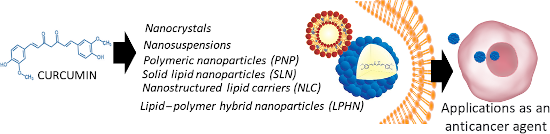
- . Liposomes are one of the most well-studied nanosystems. They are self-assembled vesicles with at least one phospholipid bilayer with a diameter size in the range of 50–450 nm when used for medical purposes, and are often used to deliver both hydrophilic and hydrophobic molecules [71][72]. Their main


The role of convolutional neural networks in scanning probe microscopy: a review
Beilstein J. Nanotechnol. 2021, 12, 878–901, doi:10.3762/bjnano.12.66








Comprehensive review on ultrasound-responsive theranostic nanomaterials: mechanisms, structures and medical applications
Beilstein J. Nanotechnol. 2021, 12, 808–862, doi:10.3762/bjnano.12.64
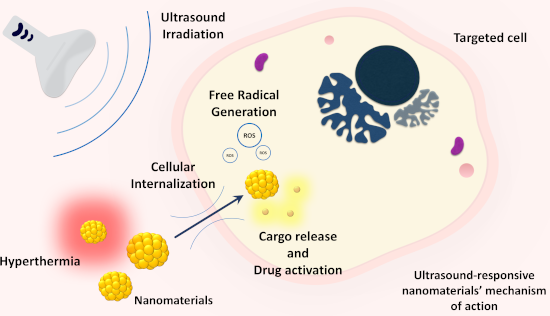
- on triggering exocytosis leading to the release of extracellular vesicles [187]. Microbubbles were first developed as contrast agents and then were used in cargo delivery. Nowadays, they play a role as theranostic agents [178][188]. Many studies have shown that the concurrent use of MBs and US


The impact of molecular tumor profiling on the design strategies for targeting myeloid leukemia and EGFR/CD44-positive solid tumors
Beilstein J. Nanotechnol. 2021, 12, 375–401, doi:10.3762/bjnano.12.31
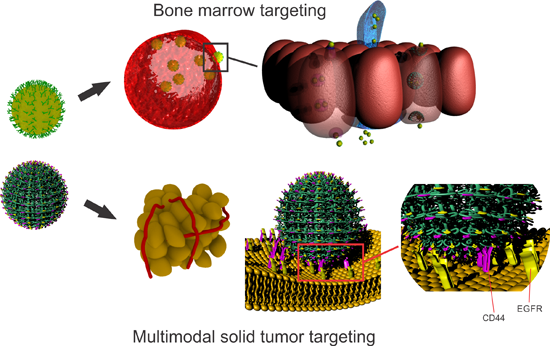
- vesicles, and phagosomes could be employed as a gateway for endocytosis-mediated transcellular transport across the MBB [19]. Since there is no lymphatic drainage, the BM tissue relies on these pathways for bidirectional transport of a variety of molecules across the MBB. The capability of the sinusoidal
- NALM-6 cell membrane vesicles that were further decorated with aTGFβRII antibodies, attached via hypoxia-sensitive azobenzene linker. The membrane coating plays a dual role in the formulation. It guides the drug to the BM via receptor–ligand interaction between CXCR4 (a chemokine receptor expressed on


Differences in surface chemistry of iron oxide nanoparticles result in different routes of internalization
Beilstein J. Nanotechnol. 2021, 12, 270–281, doi:10.3762/bjnano.12.22
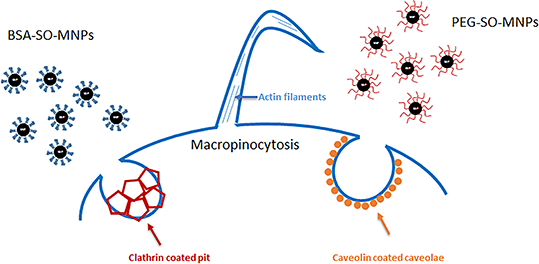
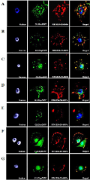
- through CavME or lipid rafts. Co-localization studies confirmed the entrapment of fluorescently labeled RITC-BSA-SO-MNPs in clathrin-coated vesicles in A549 cells stably expressing green fluorescent protein (GFP)-clathrin. The results indicate that tuning of the MNP surface chemistry can potentially



The nanomorphology of cell surfaces of adhered osteoblasts
Beilstein J. Nanotechnol. 2021, 12, 242–256, doi:10.3762/bjnano.12.20
- Osteoblasts are bone-mineralizing cells situated inside the matrix boundaries of the osteoid. They can release matrix vesicles containing calcium and phosphate, eventually leading to precipitation and growth of bone mineral [1][2]. They adhere to and spread on a wide spectrum of pristine and coated material
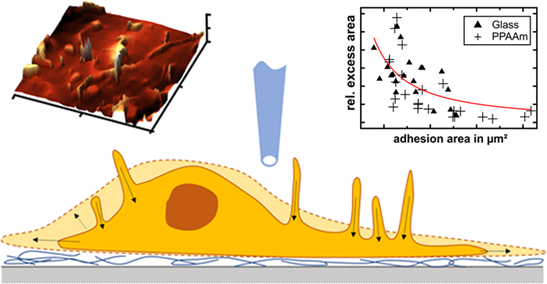
- the initial phase of adhesion well before the release of matrix vesicles in the collagen matrix. Our results include characteristic sheet-like protrusions, so-called ruffles. Their appearance on the osteoblast cell rims mostly vanishes when a large adhesion area is established, resulting in a smooth


Imaging of SARS-CoV-2 infected Vero E6 cells by helium ion microscopy
Beilstein J. Nanotechnol. 2021, 12, 172–179, doi:10.3762/bjnano.12.13
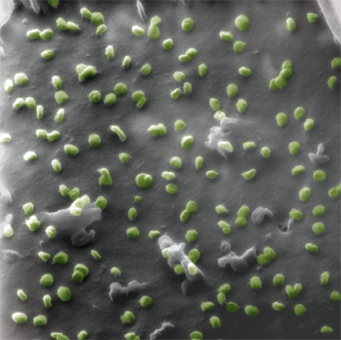
- infection of approximately 1 (MOI 1) and an incubation time of 18 h. The surface of the infected cells is covered by a number of micrometer-sized vesicles and segments of cell membranes, which is a first indication that apoptosis occurred during viral replication. Regularly shaped particles below 100 nm


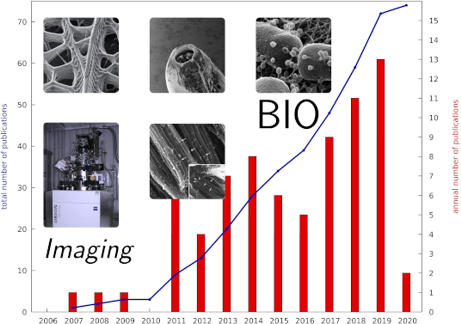
Bio-imaging with the helium-ion microscope: A review
Beilstein J. Nanotechnol. 2021, 12, 1–23, doi:10.3762/bjnano.12.1


Cardiomyocyte uptake mechanism of a hydroxyapatite nanoparticle mediated gene delivery system
Beilstein J. Nanotechnol. 2020, 11, 1685–1692, doi:10.3762/bjnano.11.150
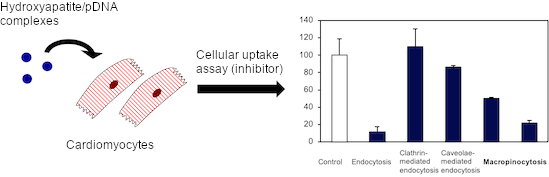
- . The physiological mechanism of macropinocytosis has been recently elucidated [28][29]. In previous reports, macropinosomes have been considered to be inherently leaky vesicles comparable to other types of endosomes [21][30][31][32]. In this study, since lysosomal degradation of pDNA was low, the


Key for crossing the BBB with nanoparticles: the rational design
Beilstein J. Nanotechnol. 2020, 11, 866–883, doi:10.3762/bjnano.11.72
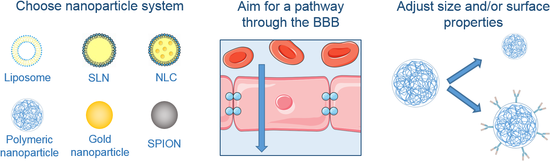
- endocytosis is initiated. The receptor–ligand complex is invaginated, which leads to the formation of intracellular transport vesicles. The vesicles are then sorted and the ones sorted for exocytosis cross the cell to release the ligand to its basolateral side. The receptor is then recycled [41]. Some of the
- endocytic vesicles have been identified and described in the brain endothelial cells: clathrin-coated pits, caveolae and macropinocytosis vesicles. Clathrin-coated pits are involved in most of the internalization processes mediated by receptors such as TfR or insulin receptors [39][40]. After endocytosis
- , the vesicles converge in the early endosome network, which functions as an intracellular sorting station. From there, cargo can be transported via sorting tubules to the basolateral side of the cells for exocytosis. Cargo can also stay in the early endosomes, which can mature in late endosomes and


Integrated photonics multi-waveguide devices for optical trapping and Raman spectroscopy: design, fabrication and performance demonstration
Beilstein J. Nanotechnol. 2020, 11, 829–842, doi:10.3762/bjnano.11.68
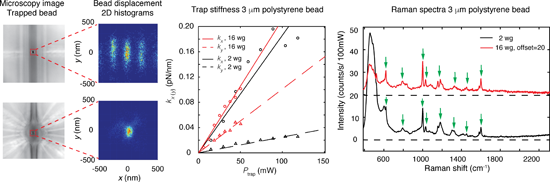
- scale) and the mass producibility. In [6], we presented a detailed simulation study of the trapping capabilities for extracellular vesicles (EVs) of the dual-waveguide trap we used in [5]. EVs are small cell-derived particles (diameter ranging from 30 to 1000 nm) and are important as potential
- powers of several milliwatts. Thus, we have quite some power left for making the transition to stable trapping of, for example, bacteria, human cells or extracellular vesicles. The 16-waveguide device is the better choice in this respect, since Table 1 indicates that it clearly has a higher trap


Multilayer capsules made of weak polyelectrolytes: a review on the preparation, functionalization and applications in drug delivery
Beilstein J. Nanotechnol. 2020, 11, 508–532, doi:10.3762/bjnano.11.41
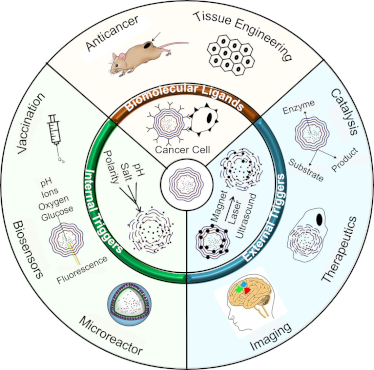
- 5 peptide grafted PGA [107]. The homogeneous adsorption of charged lipids such as dipalmitoyldiphosphatidic acid (DPPA), dipalmitoyldiphosphatidylcholine (DPPC) and sphingosine over a capsule surface has been achieved in two ways: 1) the adsorption of lipid vesicles via electrostatic interactions



Interactions at the cell membrane and pathways of internalization of nano-sized materials for nanomedicine
Beilstein J. Nanotechnol. 2020, 11, 338–353, doi:10.3762/bjnano.11.25
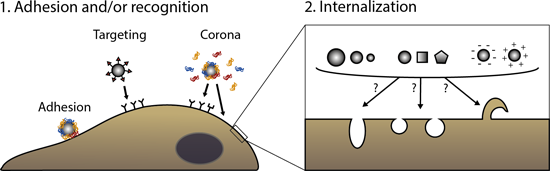
- required for uptake to occur are (Figure 3): a specific lipid composition of the cell membrane at the site of endocytosis (such as the presence of sphingolipids or cholesterol) [70][72][74][75][76], cargo recognition at the cell membrane (receptor-mediated or not) and capture (into coated vesicles or
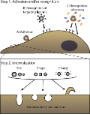


Rational design of block copolymer self-assemblies in photodynamic therapy
Beilstein J. Nanotechnol. 2020, 11, 180–212, doi:10.3762/bjnano.11.15
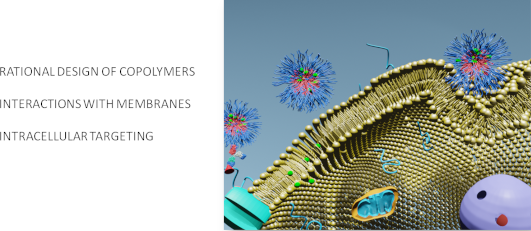
- micelles or vesicles. The driving forces of this assembly are a loss of entropy during the self-assembly and different interactions acting on the monomer units of the polymer. Whereas polymer/polymer interactions are favored for the hydrophobic block, interactions between the hydrophobic block and water
- , part 1 of this review showed the large variety of polymers used for PDT, going from aliphatic polyesters, polyacrylates to peptides or polysaccharides. The chemical structure will influence the crystallinity of the vector, its morphology (micelles, vesicles, or worm-like micelles), its stability ((bio
- includes both the assessment of the shape and the difference between micelles and vesicles, both being spherical but, respectively, hydrophobic or hydrophilic at their core. This is very rapidly linked to the vector size, since micelles will exhibit a typical size of 10–30 nm, vesicles will be typically






Internalization mechanisms of cell-penetrating peptides
Beilstein J. Nanotechnol. 2020, 11, 101–123, doi:10.3762/bjnano.11.10
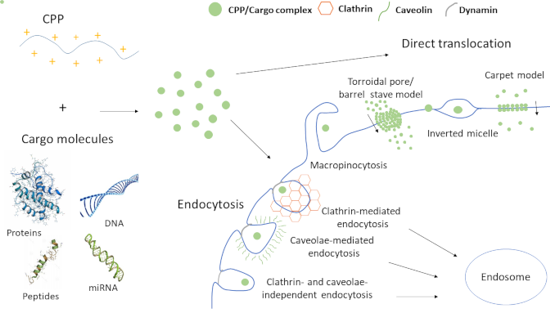
- of integral membrane protein pumps and channels. Macromolecules, however, require a different machinery in order to traverse the cellular membrane, which usually needs energy. Endocytosis is the active process in which macromolecules are carried into the cell in vesicles or vacuoles pinched-off of
- involves an actin-driven membrane protrusion that results in an increase in fluid-phase uptake [61]. These protrusions do not ‘envelop’ a ligand-coated particle, but instead they collapse onto and fuse with the plasma membrane to generate large endocytic vesicles called macropinosomes [52]. Although
- rim transforms into an hourglass-like membrane neck. Eventually, the neck undergoes fission [79]. For this step, dynamin, a kind of GTPase, is required. In subsequent steps, the released clathrin-coated vesicles (CCVs) are rapidly uncoated and delivered to early endosomes, which mature to late





