


Search results
Search for "Ni" in Full Text gives 384 result(s) in Beilstein Journal of Nanotechnology. Showing first 200.
Ni, Co, Zn, and Cu metal-organic framework-based nanomaterials for electrochemical reduction of CO2: A review
Beilstein J. Nanotechnol. 2023, 14, 904–911, doi:10.3762/bjnano.14.74
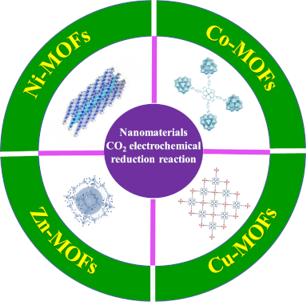
- pertaining to the implementation of MOF-based nanomaterials for the electrochemical conversion of CO2. First, the reaction pathway of the CO2 reduction is described for the production of different chemicals. Then, various structures, including Ni-, Co-, Zn-, and Cu-based MOFs for electrochemical CO2RR are
- products, as shown in Figure 1. In addition to the properties of the catalyst material, other parameters, such as potential, pH, solvent, and temperature, also determine the formation of desired products. MOFs nanomaterials for electrocatalytic reduction of CO2 Ni-based MOFs nanomaterials Two-dimensional
- (2D) MOFs represent a novel addition to the family of 2D materials. Particularly, 2D MOF nanolayers with several outstanding characteristics, such as high surface area and abundant exposed active sites, have been studied for CO2RR. As a case in point, Wu et al. prepared 2D Ni-based zeolitic imidazole


A wearable nanoscale heart sound sensor based on P(VDF-TrFE)/ZnO/GR and its application in cardiac disease detection
Beilstein J. Nanotechnol. 2023, 14, 819–833, doi:10.3762/bjnano.14.67
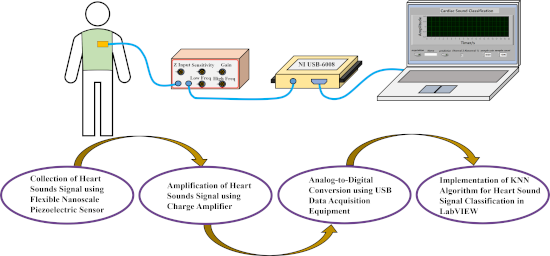
- pC/V. The open-circuit voltage was then measured using the NI USB-6008 data acquisition card and displayed on a computer via LabVIEW software. LabVIEW is a programming environment that utilizes graphical programming language for designing virtual instruments for experiments using the “G” language
- . The program designed in this article primarily uses the “DAQ Assistant”, which is the driver programming assistant of the NI acquisition card, to receive and process the collected data. During the experiment, the test subjects affixed the heart sound sensor onto the mitral valve auscultation area with


Control of morphology and crystallinity of CNTs in flame synthesis with one-dimensional reaction zone
Beilstein J. Nanotechnol. 2023, 14, 741–750, doi:10.3762/bjnano.14.61
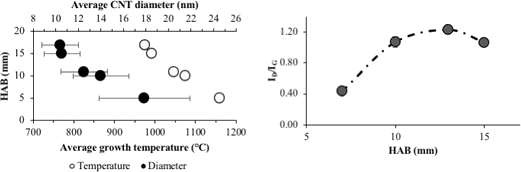
- Muhammad Hilmi Ibrahim Norikhwan Hamzah Mohd Zamri Mohd Yusop Ni Luh Wulan Septiani Mohd Fairus Mohd Yasin Department of Thermo-Fluids, Faculty of Mechanical Engineering, Universiti Teknologi Malaysia, 81310 Johor Bahru, Malaysia High Speed Reacting Flow Laboratory (HiREF), Universiti Teknologi


Metal-organic framework-based nanomaterials as opto-electrochemical sensors for the detection of antibiotics and hormones: A review
Beilstein J. Nanotechnol. 2023, 14, 631–673, doi:10.3762/bjnano.14.52


Mixed oxides with corundum-type structure obtained from recycling can seals as paint pigments: color stability
Beilstein J. Nanotechnol. 2023, 14, 467–477, doi:10.3762/bjnano.14.37
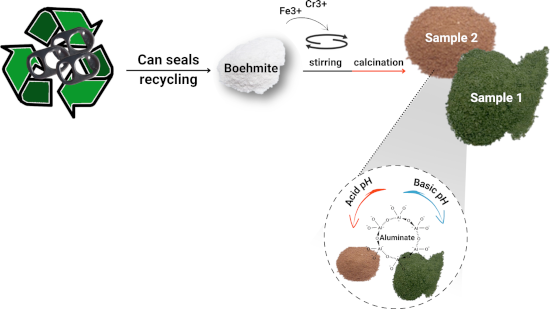
- assignment is based on the intrinsic light absorption characteristics of the pigment due to the presence of a chromophore ion [8]. Different transition metals such as V, Cr, Mn, Fe, Co, Ni, and Cu have been used for this purpose [9]. Using inorganic compounds in the synthesis tends to increase the chemical




Evaluation of electrosynthesized reduced graphene oxide–Ni/Fe/Co-based (oxy)hydroxide catalysts towards the oxygen evolution reaction
Beilstein J. Nanotechnol. 2023, 14, 420–433, doi:10.3762/bjnano.14.34
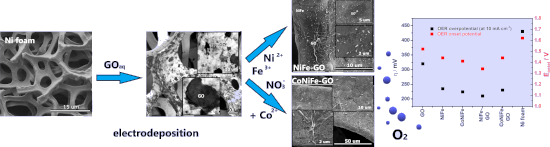
- friendly nature [11]. Even though transition-metal-based catalysts still suffer from low surface areas [12], dissolution and aggregation of metallic phase and metal oxides during the active OER process occurs [13]. Hence, Ni-, Fe- and/or Co-based catalysts have been synthesized as hybrid catalysts with
- graphene material with Ni-, Fe- and/or Co-based oxides/hydroxides with high chemical reactivity provides both an effective electron pathway through the catalyst [20] and high specific surface area [21], which is desirable for the OER process [13]. The overall electrocatalytic performance of the hybrid
- electrode can also be improved by choosing a conductive and/or high surface area substrate, such as porous nickel foam [22][23]. In the literature, some research has been performed to evaluate the OER electrocatalytic performance of hybrid materials of Ni-, Fe- and/or Co-based oxides/(oxy)hydroxides and Gr




Plasmonic nanotechnology for photothermal applications – an evaluation
Beilstein J. Nanotechnol. 2023, 14, 380–419, doi:10.3762/bjnano.14.33
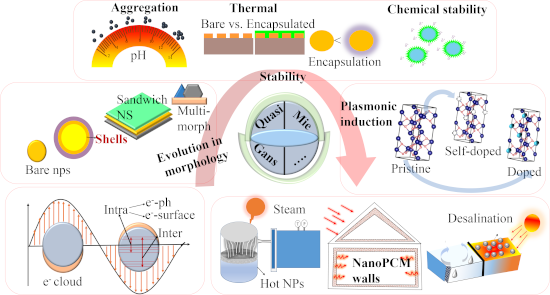
- (larger than 50 nm) acted more as absorbers than as scatterers for wavelengths of 200–500 nm for Au, 400–1000 nm for Pt, 600–1000 nm for Pd, Co, and Zn, 500–1000 nm for Mo, 200–600 nm for Cu, 300–1000 nm for Ni, 450–1000 nm for V, and 200–1000 nm for Ti. Al and Ag were inefficient absorbers and




Bismuth-based nanostructured photocatalysts for the remediation of antibiotics and organic dyes
Beilstein J. Nanotechnol. 2023, 14, 291–321, doi:10.3762/bjnano.14.26
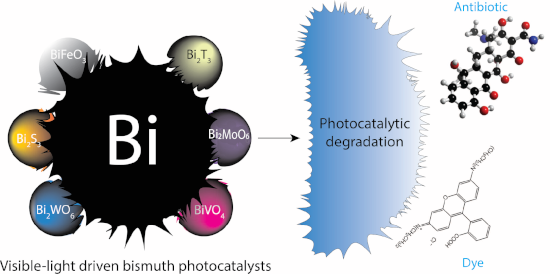
- /and surface defects are created without destroying the crystal structure (though it might be distorted), effectively separating photogenerated carriers. Doping with metallic (Mg, Ag, Ni, Fe, Li, Co, and Ni) and non-metallic ions (F, C, N, and O), can introduce an intraband close to the conduction band


Concentration-dependent photothermal conversion efficiency of gold nanoparticles under near-infrared laser and broadband irradiation
Beilstein J. Nanotechnol. 2023, 14, 205–217, doi:10.3762/bjnano.14.20
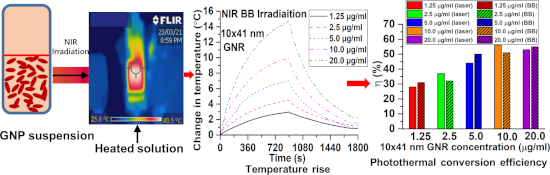
- data acquisition system (NI-myDAQ 9214, National Instruments). The schematic of the photothermal experimental setup is shown in Figure 1. The collimated input beam of 9 mm diameter was generated by using a plano convex lens of 15 mm focal length. The thermocouple tip was placed just above the path of




High–low Kelvin probe force spectroscopy for measuring the interface state density
Beilstein J. Nanotechnol. 2023, 14, 175–189, doi:10.3762/bjnano.14.18
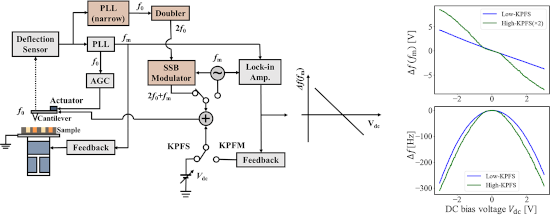
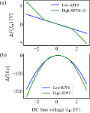
- states as follows: Here, we consider the charge Qs due to the surface potential Vs. In the case of an n-type semiconductor, the charge Qs as a function of the surface potential Vs is expressed as follows [23][24]: where ND is the dopant density, ni is the intrinsic carrier density, and ε is the



Formation of nanoflowers: Au and Ni silicide cores surrounded by SiOx branches
Beilstein J. Nanotechnol. 2023, 14, 133–140, doi:10.3762/bjnano.14.14
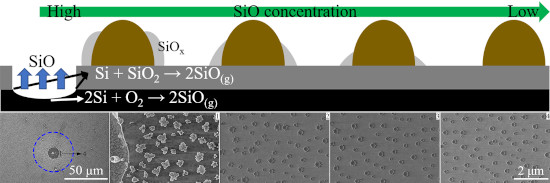
- This work reports the formation of nanoflowers after annealing of Au/Ni bilayers deposited on SiO2/Si substrates. The cores of the nanoflowers consist of segregated Ni silicide and Au parts and are surrounded by SiOx branches. The SiO2 decomposition is activated at 1050 °C in a reducing atmosphere, and
- it can be enhanced more by Au compared to Ni. SiO gas from the decomposition of SiO2 and the active oxidation of Si is the source of Si for the growth of the SiOx branches of the nanoflowers. The concentration of SiO gas around the decomposition cavities is inhomogeneously distributed. Closer to the
- to the strong ability of Au to enhance SiO2 decomposition, and nanoflowers with less difference in their branches can be observed across the whole sample. Keywords: Au/Ni bilayers; dewetting; vapor–liquid–solid; SiO2 decomposition; SiOx nanowires; Introduction Substantial efforts have been devoted


Electrical and optical enhancement of ITO/Mo bilayer thin films via laser annealing
Beilstein J. Nanotechnol. 2022, 13, 1589–1595, doi:10.3762/bjnano.13.133
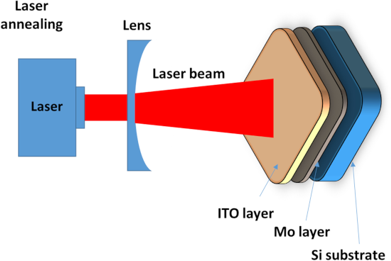
- ] who used ITO/Ag and ITO/Ni bilayers. The figure of merit (FOM) is a quantitative value that can evaluate the performance of the device. From the sheet resistance (Rs) and the optical transmittance (T), the quality of the thin film can be calculated using the FOM relation in Equation 5 [33][34][35]: It


In search of cytotoxic selectivity on cancer cells with biogenically synthesized Ag/AgCl nanoparticles
Beilstein J. Nanotechnol. 2022, 13, 1505–1519, doi:10.3762/bjnano.13.124
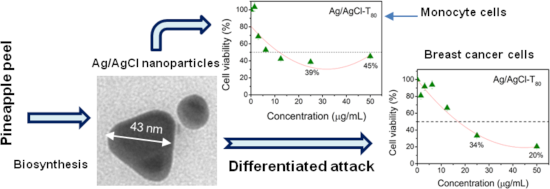
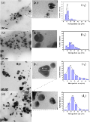
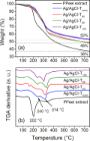
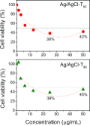
- before drying to be characterized by UV–vis spectroscopy. Characterization X-ray diffraction patterns were obtained in a Bruker AXS D8 Advance diffractometer, at 30 mA and 40 kV, with a Ni filter and a Cu Kα radiation generator. Diffraction patterns were acquired at a scan rate of 1 °/min from 10 to 90





Structural studies and selected physical investigations of LiCoO2 obtained by combustion synthesis
Beilstein J. Nanotechnol. 2022, 13, 1473–1482, doi:10.3762/bjnano.13.121
- decreases, and, hence, the size of the crystallites increases. XRD analysis showed that phase-pure LiCoO2 material was maintained without additional phases. EPR studies revealed the presence of two Ni3+ complexes resulting from Ni impurities. The electrical properties of the studied LiCoO2 samples were
- discussion below), (ii) the substitution of Co ions with other metal ions, such as Mg, Al, Fe, Ni, Mn, V [10][11][12][13][14][15][16][17][18][19][20][21][22], or (iii) the surface modification by carbon, metal, or oxide coatings [15][16]. Nanomaterials are preferred for the use in energy storage and
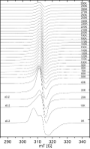
- simulation of the experimental spectra, we obtained the parameters of the spectroscopic coefficients of the g-tensor for the two Ni3+ ions, which are presented in Figure 8. The spin-Hamiltonian parameters indicate that complex Ni(I) has axial symmetry and complex Ni(II) is non-axial. The values of the




Recent trends in Bi-based nanomaterials: challenges, fabrication, enhancement techniques, and environmental applications
Beilstein J. Nanotechnol. 2022, 13, 1316–1336, doi:10.3762/bjnano.13.109
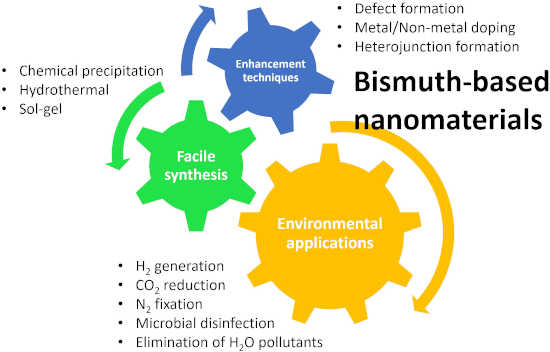
- semiconductor surface. SPRs can potentially boost quantum yield by broadening the spectral response range of semiconductors. Fe, Au, Co, Ag, Ni, Bi, Al, and other metallic elements are often deposited and doped. For example, a nanostructure composite based on plasmonic Ag metal nanoclusters and monoclinic BiVO4




Bending and punching characteristics of aluminum sheets using the quasi-continuum method
Beilstein J. Nanotechnol. 2022, 13, 1303–1315, doi:10.3762/bjnano.13.108
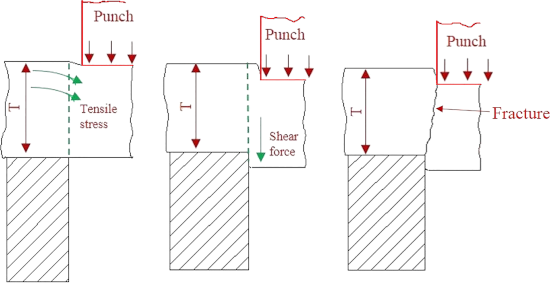
- . The punch is assumed as an ideal rigid Ni with crystal orientation of X[−110]-Y[111]. The dimensions of the Al substrates are 100 Å (width) × 100 Å (height), and the width of the Al workpiece is 200 Å, as shown in Figure 1a. A periodic boundary condition (PBC) was applied for the z-axis of the
- program error termination. The atoms at the bottom of the Al substrates were the fixed atoms, and the atoms on the top of the Ni punch were the actuation atoms. The nano-punching process was performed by implementing a constant displacement of the Ni punch, which was set to 0.2 Å per step, and the
- . Conclusion In this work, the effects of workpiece orientation, thickness, clearance, and punch taper angle on the nano-punching process of Al workpieces and Ni punches were studied. According to the results shown, several conclusions were obtained. For instance, the crystal orientation of the Al workpiece

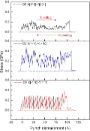


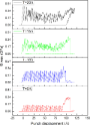


Studies of probe tip materials by atomic force microscopy: a review
Beilstein J. Nanotechnol. 2022, 13, 1256–1267, doi:10.3762/bjnano.13.104
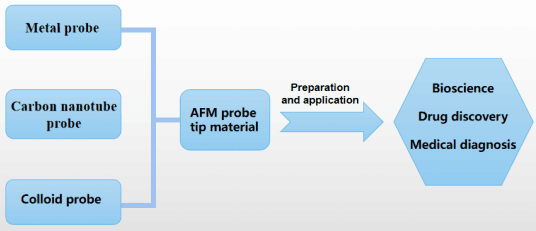
- attractive platform, offering more possibilities for sharpening tips in a controlled manner. These metal clusters can be easily generated with various metals (e.g., Ir, Au, Ni, Co, Pb, or Sn), allowing the generation of nano-tips with different functionalities. The good point is that these clusters were
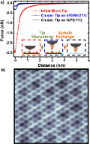
Design of surface nanostructures for chirality sensing based on quartz crystal microbalance
Beilstein J. Nanotechnol. 2022, 13, 1201–1219, doi:10.3762/bjnano.13.100
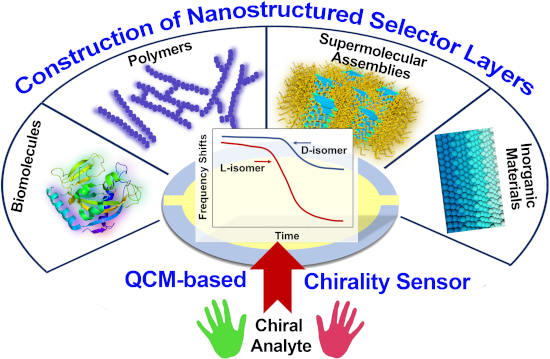
- enantiospecific adsorption on a ferromagnetic Ni surface was proven to arise from the adsorption kinetics rather than from thermodynamic stabilization. The adsorption rate of ᴅ-Cys and ʟ-Cys onto a ferromagnetic substrate showed a significantly different behavior according to the magnetic field direction and


Application of nanoarchitectonics in moist-electric generation
Beilstein J. Nanotechnol. 2022, 13, 1185–1200, doi:10.3762/bjnano.13.99
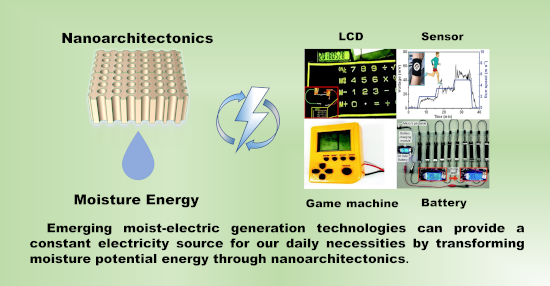
- can be easily grown on substrates to form nanoscale networks and perform well in MEGs due to their unique electron transport properties [2][47][48]. This includes Al2O3 [49], MoS2 [50][51], Ni–Al layered double hydroxide (LDH) [52], MoS2/SiO2 composites [53], TiO2 [54], and Ti3C2Tx MXene nanosheets
- [55]. A hydroelectric conversion device prepared by suction filtration of 200 nm Al2O3 nanoparticles provided an instantaneous electrical output of 4 V and 18 μA (Figure 4a). The Ni–Al layered double hydroxide material has a high specific surface area and provided a constant electrical output with a
- is the highest instantaneous current measured in nanomaterial MEG devices. Moreover, the preparation method of metal compound nanomaterials is mature, and different morphologies can be obtained, such as nanoparticles of Al2O3, nanowires of TiO2, Ni–Al layered structures, and nanosheets of MXene


Theoretical investigations of oxygen vacancy effects in nickel-doped zirconia from ab initio XANES spectroscopy at the oxygen K-edge
Beilstein J. Nanotechnol. 2022, 13, 975–985, doi:10.3762/bjnano.13.85
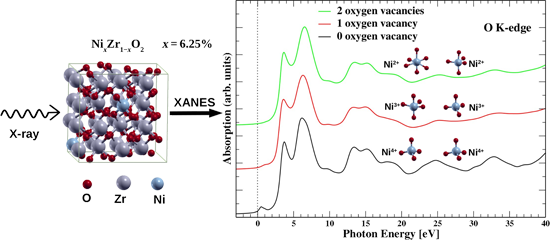
- Nanotechnologies, Institut National de Recherche en Sciences Exactes et Naturelles (IRSEN), Brazzaville, Congo 10.3762/bjnano.13.85 Abstract In this study, we present theoretical X-ray absorption near-edge structure (XANES) spectra at the K-edge of oxygen in zirconia containing Ni dopant atoms and O vacancies at
- vacancies. In this system, each Ni atom is surrounded by two shells of O with tetrahedral geometry, in a similar way as in bulk cubic zirconia. The oxygen K-edge XANES spectrum of this configuration shows a pre-edge peak, which is attributable to dipole transitions from O 1s to O 2p states that are
- hybridized with unoccupied Ni 3d states. The intensity of this pre-edge peak, however, reduces upon the introduction of a single vacancy in the 2Ni-doped zirconia matrix. The corresponding ground state remains ferromagnetic, while one of the nickel atoms adopts a trigonal bipyramidal geometry, and the other


Solar-light-driven LaFexNi1−xO3 perovskite oxides for photocatalytic Fenton-like reaction to degrade organic pollutants
Beilstein J. Nanotechnol. 2022, 13, 882–895, doi:10.3762/bjnano.13.79
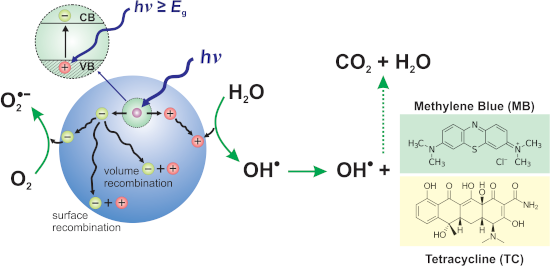
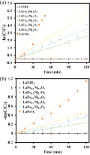
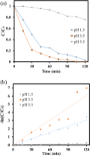
- ), Chengalpattu district, Kelambakkam, Tamil Nadu, 603103, India 10.3762/bjnano.13.79 Abstract LaFexNi1−xO3 perovskite oxides were prepared by the sol–gel method under various conditions, including different pH values (pH 0 and pH 7) and different calcination temperatures (500–800 °C) as well as different Fe/Ni
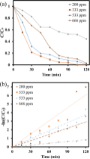
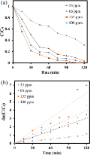
- decompose the methylene blue molecules. Accordingly, the synthesis condition of pH 0, calcination temperature at 700 °C, and Fe/Ni ratio = 7/3 could form LaFe0.7Ni0.3O3 perovskite oxides as highly efficient photocatalysts. Moreover, various conditions during the photocatalytic degradation were verified
- , methylene blue, and rhodamine B under visible light irradiation. Their optimal sample was LaFe0.85Cu0.15O3, which could remove dyes much more efficiently due to more generation of hydroxyl radicals than pure LaFeO3 [31]. Ni-doped LaFeO3 was ubiquitously employed as a photo/thermal catalyst or a catalyst



Optimizing PMMA solutions to suppress contamination in the transfer of CVD graphene for batch production
Beilstein J. Nanotechnol. 2022, 13, 796–806, doi:10.3762/bjnano.13.70
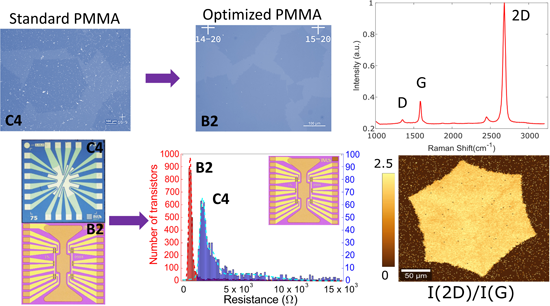
- ., Cu or Ni) to the desired target substrate (e.g., SiO2/Si, glass, or flexible polymers) often introduces inconsistencies among devices [10]. Various approaches have been developed to address this issue and establish a reproducible transfer process [11][12][13][14][15][16][17]. Among the many, the poly
- be considered: (i) metallic particles from the Cu or Ni etching process and (ii) PMMA residues after the removal and rinsing processes. Both contaminations are leading causes of undesired p-type doping in CVD graphene, accompanied by a deterioration of its electrical properties [19][20][21][22]. The




Recent advances in nanoarchitectures of monocrystalline coordination polymers through confined assembly
Beilstein J. Nanotechnol. 2022, 13, 763–777, doi:10.3762/bjnano.13.67
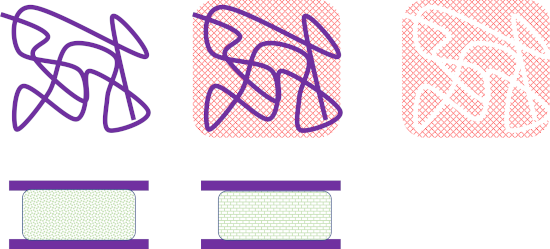
- function is quite attractive because this function is versatile even for nanoparticles. Electrodes of sodium-ion batteries can be fabricated by using the Ni–CN–Ni colloids as glue. The contribution to the adhesion strength among 2D coordination polymers was generally considered to be van der Waals forces
- [147]. However, the adhesion strength varied over time, sometimes reaching values even close to 100 N·cm−2, which is higher than to be expected from van der Waals forces. The non-uniform deposition of Ni–CN–Ni nanosheets caused by Marangoni flow was an important reason for the unstable value of the
- . Illustration of the possible structure of water inside the Ni–CN–Ni nanosheets. The green balls represent carbon. The red balls represent nickel. The yellow balls represent nitrogen. The blue balls represent oxygen. The gray balls represent hydrogen. Figure 9 was used with permission of The Royal Society of






Nanoarchitectonics of the cathode to improve the reversibility of Li–O2 batteries
Beilstein J. Nanotechnol. 2022, 13, 689–698, doi:10.3762/bjnano.13.61
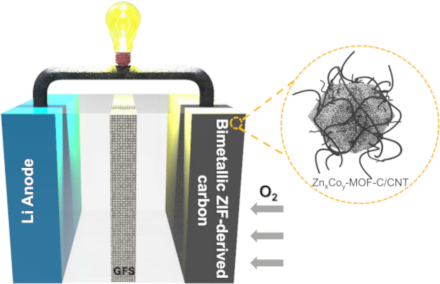
- deionized water by horn sonication for 1 h. The suspension was filtered through a glass-fiber membrane (pore diameter of 1.2 μm) without any polymeric binder and conductive agent. The active area and mass loading of the cathode were 0.785 cm2 and 1.0 mg·cm−2, respectively. Porous Ni foam was placed on the


Approaching microwave photon sensitivity with Al Josephson junctions
Beilstein J. Nanotechnol. 2022, 13, 582–589, doi:10.3762/bjnano.13.50
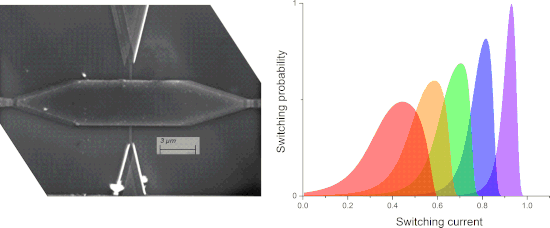
- , the bias current of the junction was ramped up at a constant rate. The voltage was measured using a low-noise room-temperature differential amplifier AD745 and was fed to a high-speed NI ADC card. The switching current histograms were collected in the temperature range between 1 K and 30 mK. The





