


Search results
Search for "X-ray" in Full Text gives 1084 result(s) in Beilstein Journal of Nanotechnology. Showing first 200.
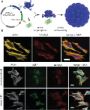
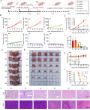
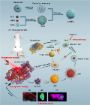
Ferroptosis induction by engineered liposomes for enhanced tumor therapy
Beilstein J. Nanotechnol. 2025, 16, 1325–1349, doi:10.3762/bjnano.16.97
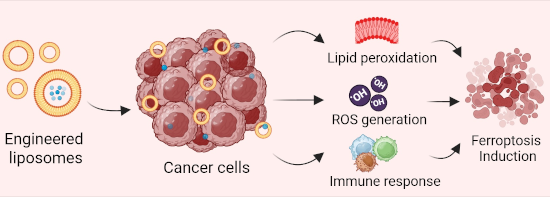
- and 31P NMR are used to evaluate the lamellarity of liposomes, which refers to the number of bilayers of lipids in the vesicles [122]. 31P NMR provides information on membrane fluidity and phase transitions, while cryo-TEM allows for direct observation of the number of lipid bilayers [110]. X-ray


Wavelength-dependent correlation of LIPSS periodicity and laser penetration depth in stainless steel
Beilstein J. Nanotechnol. 2025, 16, 1302–1315, doi:10.3762/bjnano.16.95
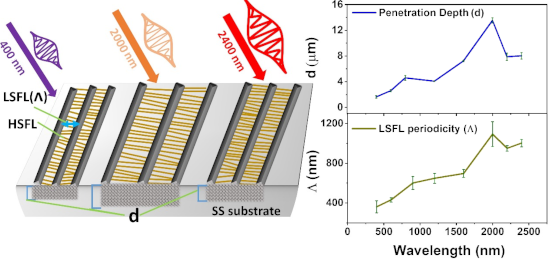
- investigate this, we conducted energy-dispersive X-ray spectroscopy (EDS) analysis on laser-treated stainless steel samples across different wavelengths alongside untreated stainless steel for comparison, as outlined in Table 3. Specifically, we examined the weight percentage of Cr, Fe, and Ni in three




Enhancing the photoelectrochemical performance of BiOI-derived BiVO4 films by controlled-intensity current electrodeposition
Beilstein J. Nanotechnol. 2025, 16, 1289–1301, doi:10.3762/bjnano.16.94
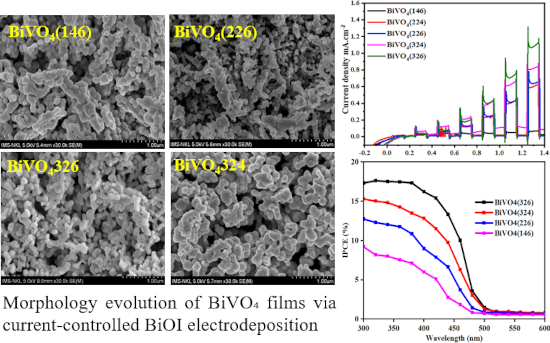
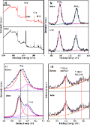
- . Characteristics of materials X-ray diffraction (XRD, Bruker D8 Advance) and Raman spectroscopy (LabRAM Odyssey Semiconductor) were used to analyze the crystal structures of photoanodes. UV–vis absorption spectra were obtained using a Cary 60 spectrophotometer. X-ray photoelectron spectroscopy (XPS, VG ESCALAB250
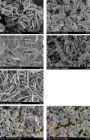
- analysis (XRD) X-ray diffraction (XRD) measurements were conducted to investigate the crystal structures of the BiVO4 photoanodes under various deposition conditions (BiVO4(146), BiVO4(224), BiVO4(226), BiVO4(324), and BiVO4(326)), as shown Figure 1. The diffraction peaks of all photoanodes matched those
- kinetics. The average crystallite size (grain size) of the BiVO4 films was estimated using the Scherrer equation based on the full width at half maximum (FWHM) of the (121) diffraction peak. The Scherrer equation to calculate average crystallite size (grain size) [24][25] is where λ is the X-ray wavelength



Better together: biomimetic nanomedicines for high performance tumor therapy
Beilstein J. Nanotechnol. 2025, 16, 1246–1276, doi:10.3762/bjnano.16.92
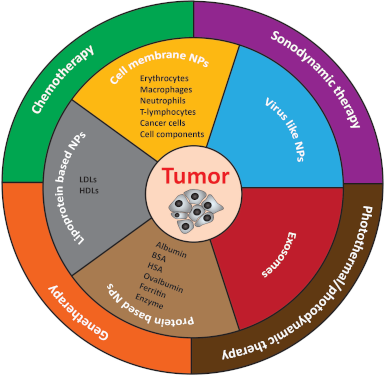
- cavity provided subcellular localization of payload in the nucleus subsequent to cellular internalization. The whole nanosystem demonstrated a significant anti-tumor activity. Shao et al. established X-ray-responsive CCM-covered mesoporous organosilica nanoparticles for the controlled release of DOX [135







Functional bio-packaging enhanced with nanocellulose from rice straw and cinnamon essential oil Pickering emulsion for fruit preservation
Beilstein J. Nanotechnol. 2025, 16, 1234–1245, doi:10.3762/bjnano.16.91
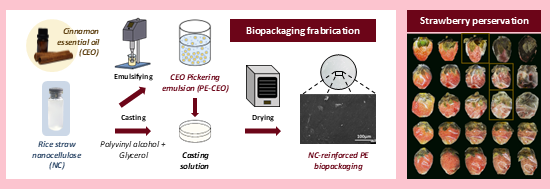
- resolution of 4 cm−1. Thermal stability was determined using thermogravimetric analysis (TGA) and differential thermogravimetric analysis (DTG). Samples were heated from 25 to 500 °C at a rate of 10 K·min−1 under N2 atmosphere (50 mL·min−1) in a METTLER TOLEDO 3+ Large furnace (Switzerland). X-ray



Crystalline and amorphous structure selectivity of ignoble high-entropy alloy nanoparticles during laser ablation in organic liquids is set by pulse duration
Beilstein J. Nanotechnol. 2025, 16, 1141–1159, doi:10.3762/bjnano.16.84
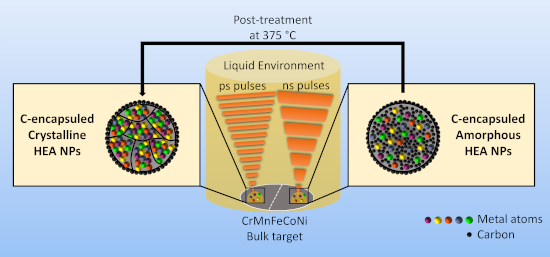
- in organic solvents (acetone, ethanol, acetonitrile). In a systematic experimental series using high-resolution transmission electron microscopy, scanning transmission electron microscopy with energy-dispersive X-ray spectroscopy, selected-area electron diffraction, X-ray diffraction, electron energy
- solution; EELS; electron energy loss spectroscopy; laser processing in liquids; multicomponent alloy; STEM-EDX; selected area electron diffraction; X-ray diffraction; Introduction High-entropy alloys (HEAs), also referred to as compositionally complex solid solutions (CCSS) [1], are of great interest in
- . Nanoparticle characterization is done by high-resolution transmission electron microscopy (HRTEM), energy-dispersive X-ray spectroscopy (STEM-EDX), selected-area electron diffraction (SAED), X-ray diffraction (XRD), and electron energy loss spectroscopy (EELS), complemented by tempering and laser post




Towards a quantitative theory for transmission X-ray microscopy
Beilstein J. Nanotechnol. 2025, 16, 1113–1128, doi:10.3762/bjnano.16.82
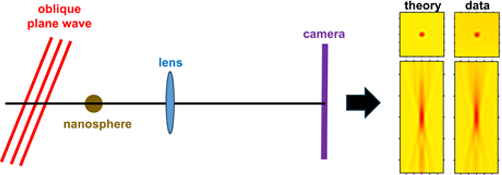
- Transmission X-ray microscopes (TXMs) are now increasingly used for quantitative analysis of samples, most notably in the spectral analysis of materials. Validating such measurements requires quantitatively accurate models for these microscopes, but current TXM models have only been tested qualitatively. Here
- ; transmission X-ray microscope; Introduction Transmission X-ray microscopes (TXMs) operating in the soft and tender X-ray energy range are valuable tools for structural analysis in both biomedical and materials science research [1][2][3][4]. These microscopes yield images at a lateral resolution approaching 25
- various 3D microscope models and their assumptions, we first describe the key features of the BESSY II soft TXM. The microscope’s X-ray source begins at the undulator, which produces largely incoherent light (<2% coherence for the BESSY II third generation synchrotron, p. 32 in [23]). This X-ray light is



Single-layer graphene oxide film grown on α-Al2O3(0001) for use as an adsorbent
Beilstein J. Nanotechnol. 2025, 16, 1082–1087, doi:10.3762/bjnano.16.79
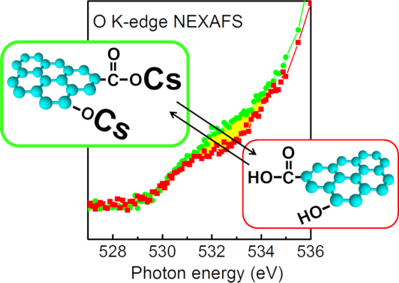
- deposition; electronic state analysis; graphene oxide; X-ray absorption fine structure; Introduction Graphene oxide (GO) is oxidized graphene and its surface and periphery are partially modified by epoxy, hydroxy, and carboxy functional groups [1][2]. GO can be thinned to a monolayer of one carbon atom and
- Figure 1 shows an atomic force microscopy (AFM) image of SLG and SLGO on α-Al2O3(0001) substrates. The as-grown SLG film has an atomically flat surface and wrinkles with its height less than 0.4 nm [18]. The single layer of graphene was confirmed through X-ray photoelectron spectroscopy (XPS) peak
- intensity analysis and profiles of normal-incidence X-ray standing wave (NIXSW) spectroscopy [18]. In the SLGO film, the wrinkles disappeared and the surface roughness increased. The root mean square surface roughness (RMS) of the SLGO film is estimated to be less than 0.13 nm. The changes of the local


Time-resolved probing of laser-induced nanostructuring processes in liquids
Beilstein J. Nanotechnol. 2025, 16, 968–1002, doi:10.3762/bjnano.16.74
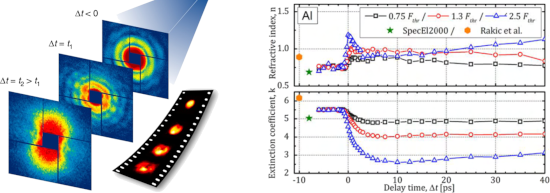
- . Ultrafast time-resolved probing approaches are key to revealing the transient states and pathways that govern material transformation in LSPC. Keywords: electron diffraction; laser processing in liquids; optical imaging; optical spectroscopy; pump–probe; single objects; time-resolved probing; X-ray
- -particle imaging” describes the processes initiated by laser-excitation of an individual NP probed by X-ray scattering up to delay times of a few tens of picoseconds. The second chapter “Structural dynamics in liquids” reports on the application of ultrafast time-resolved electron scattering to investigate
- and continuously evolving [26][60][61][62][63][64]. X-ray or electron diffraction techniques (Figure 2), implemented via pump–probe schemes and combined with femtosecond ultrashort pulses, have enabled the observation of ultrafast atomic-scale motions [65]. During these transitions, transient and


Synthesis of biowaste-derived carbon-dot-mediated silver nanoparticles and the evaluation of electrochemical properties for supercapacitor electrodes
Beilstein J. Nanotechnol. 2025, 16, 933–943, doi:10.3762/bjnano.16.71
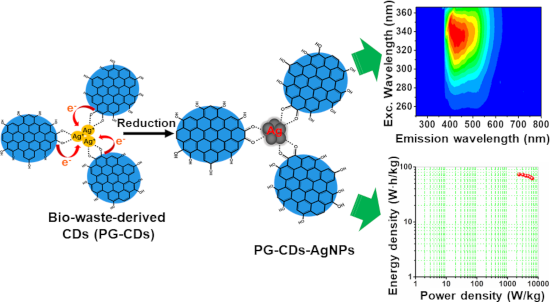
- contour map of PG-CDs-AgNPs, which suggests the PL emission in the blue range. The crystalline nature of the PG-CDs-AgNPs was established from the X-ray diffraction pattern. Figure 2a displays an XRD pattern of the PG-CDs-AgNPs synthesized via PG-CDs mediated reduction. According to the XRD pattern, the


Structural and magnetic properties of microwave-synthesized reduced graphene oxide/VO2/Fe2O3 nanocomposite
Beilstein J. Nanotechnol. 2025, 16, 921–932, doi:10.3762/bjnano.16.70
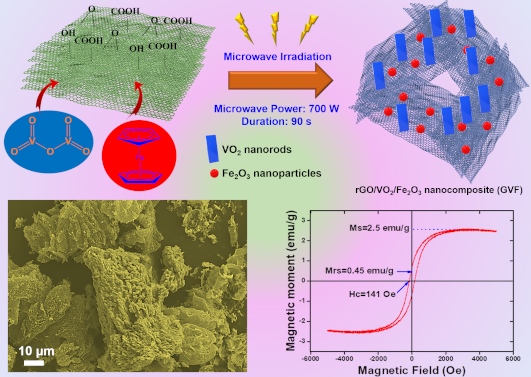
- graphite oxide to form rGO, the reduction of V2O5 to form VO2, and the formation of Fe2O3 from ferrocene. X-ray diffraction and X-ray photoelectron spectroscopy analyses confirm the formation of distinct metal oxides in the presence of rGO. Furthermore, the morphological analysis reveals the deposition of
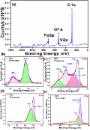
- the NCs. The Raman spectra of rGO and the related NCs were recorded through the “XploRA plus HORIBA” instrument with a laser excitation of 532 nm. Additionally, the surface analysis was performed using X-ray photoelectron spectroscopy measurements (XPS, Thermofisher Scientific) functioning at 12 kV



Focused ion beam-induced platinum deposition with a low-temperature cesium ion source
Beilstein J. Nanotechnol. 2025, 16, 910–920, doi:10.3762/bjnano.16.69
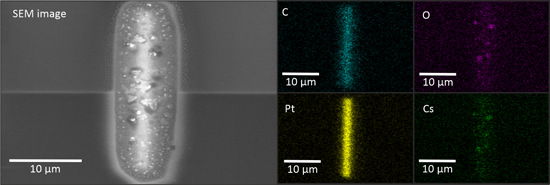
- energy-dispersive X-ray spectroscopy (EDS), lamellas for transmission electron microscopy (TEM) were prepared. Experimental The Ga+ FIB is a ThermoFisher Helios NanoLab 650 and uses a gas injection system (GIS). ZeroK NanoTech Corporation has created commercially available Cs+ FIB systems based on


Characterization of ion track-etched conical nanopores in thermal and PECVD SiO2 using small angle X-ray scattering
Beilstein J. Nanotechnol. 2025, 16, 899–909, doi:10.3762/bjnano.16.68
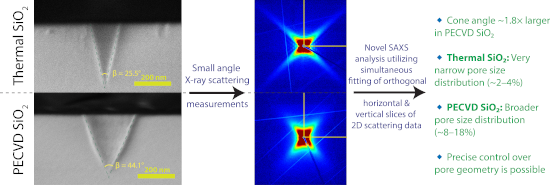
- nanopores in thermal and plasma-enhanced chemical vapor-deposited (PECVD) SiO2 using synchrotron-based small-angle X-ray scattering (SAXS). The nanopores were fabricated by irradiating the samples with 89 MeV, 185 MeV, and 1.6 GeV Au ions, followed by hydrofluoric acid etching. We present a new approach for
- nanopores in different materials, which is essential for optimizing membrane performance in applications that require precise pore geometry. Keywords: etched ion tracks; SiO2; small angle X-ray scattering (SAXS); swift heavy ion irradiation; track-etched nanopores; Introduction Solid-state nanopores have
- , including selectivity, throughput, and molecular capture. Small-angle X-ray scattering (SAXS) has proven to be an invaluable tool for characterizing nanopore membranes, offering nondestructive analytical capabilities that yield statistical information of more than 106 pores [6][13][29][40]. With a beam size


Heat-induced transformation of nickel-coated polycrystalline diamond film studied in situ by XPS and NEXAFS
Beilstein J. Nanotechnol. 2025, 16, 887–898, doi:10.3762/bjnano.16.67
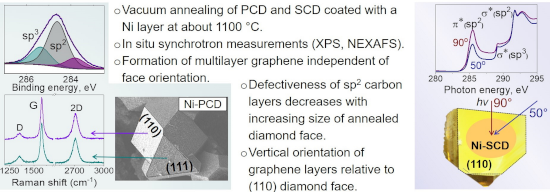
- thin nickel film deposited by thermal evaporation. The graphitization of diamond with and without a nickel coating as a result of high-vacuum annealing at a temperature of about 1100 °C was studied in situ using synchrotron-based X-ray photoelectron spectroscopy (XPS) and near-edge X-ray absorption
- . Keywords: graphitization; near-edge X-ray absorption fine structure spectroscopy; nickel coating; polycrystalline diamond film; single-crystal diamond; X-ray photoelectron spectroscopy; Introduction Diamond and graphite, both composed entirely of carbon atoms, exhibit vastly different properties due to
- requires a detailed study. HRTEM has proven very useful for investigating the graphite–diamond interface [19][24]. However, it provides information about local morphology and ordering of diamond surface and graphite layers. X-ray photoelectron spectroscopy (XPS) and near-edge X-ray absorption fine


Ar+ implantation-induced tailoring of RF-sputtered ZnO films: structural, morphological, and optical properties
Beilstein J. Nanotechnol. 2025, 16, 872–886, doi:10.3762/bjnano.16.66
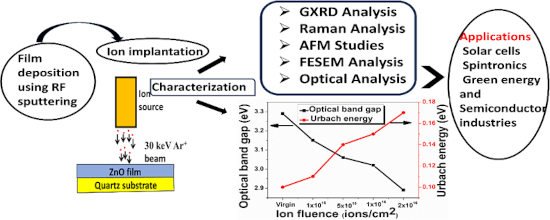
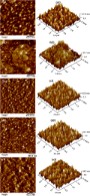
- in grazing incidence angle X-ray diffraction patterns. Atomic force microscopy images show grain size reduction and a fall in the surface roughness value of films after implantation. The implantation-induced structural modifications are further correlated with the variation in diffuse reflectance
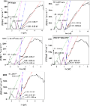
- crystalline structure is studied using a Bruker AXS D8 Advance X-ray diffractometer operating in grazing incidence geometry using Cu Kα radiation (λ = 1.5406 Å). The scans are obtained at an incidence angle of 0.5°. The Raman spectra of ZnO films before and after implantation are recorded at room temperature
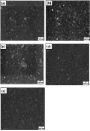
- studied using field-emission scanning electron microscopy (FESEM) along with energy dispersive X-ray spectroscopy (EDS). Cross-sectional images are also obtained to evaluate the thickness of ZnO film. The optical properties of pristine and implanted ZnO films are investigated using a Shimadzu UV–visible






Insights into the electronic and atomic structures of cerium oxide-based ultrathin films and nanostructures using high-brilliance light sources
Beilstein J. Nanotechnol. 2025, 16, 860–871, doi:10.3762/bjnano.16.65

- light sources, such as synchrotrons and free-electron lasers, allow researchers to probe the structural, electronic, and dynamic properties of functional materials at an unprecedented level of detail. Techniques like X-ray photoelectron spectroscopy and X-ray absorption spectroscopy, can reveal atomic
- applications, examining the application of high-brilliance light sources on model systems such as supported thin films and epitaxial nanostructures. We review selected studies exploiting the high energy resolution and sensitivity of synchrotron radiation-based X-ray photoelectron spectroscopy and X-ray
- perspectives offered by the ultrahigh brilliance and ultrashort free-electron laser pulses for dynamic studies of the processes that take place upon photoexcitation are discussed. Keywords: cerium oxide; free-electron lasers; thin films; X-ray absorption spectroscopy; X-ray photoelectron spectroscopy


Synchrotron X-ray photoelectron spectroscopy study of sodium adsorption on vertically arranged MoS2 layers coated with pyrolytic carbon
Beilstein J. Nanotechnol. 2025, 16, 847–859, doi:10.3762/bjnano.16.64
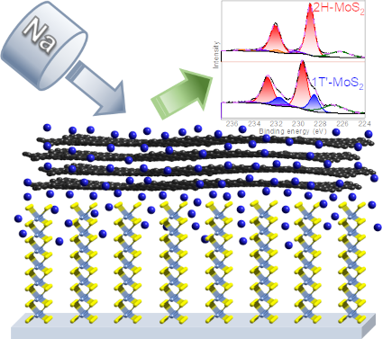
- . In this work, to reveal the effect of carbon coating on the interaction of sodium with the MoS2 layers located vertically relative to the substrate, model experiments were carried out using synchrotron-radiation-induced X-ray photoelectron spectroscopy (XPS). Sodium vapor obtained by heating a sodium
- surface correspond to Pt nanoparticles, the presence of which is confirmed by energy-dispersive X-ray (EDX) spectroscopy (Supporting Information File 1, Figure S1). These nanoparticles have a uniform size and are densely distributed on the sample surface, in contrast to the polysulfide particles of


Facile one-step radio frequency magnetron sputtering of Ni/NiO on stainless steel for an efficient electrode for hydrogen evolution reaction
Beilstein J. Nanotechnol. 2025, 16, 837–846, doi:10.3762/bjnano.16.63
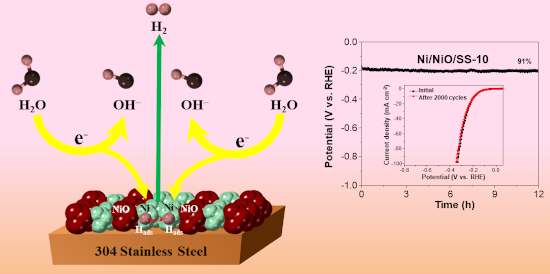
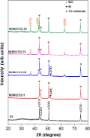
- potential regarding industrial application. Results and Discussion Crystal structure and phase of the as-synthesized electrodes were verified by X-ray diffraction (XRD) measurements with 2θ ranging from 20° to 80°. Figure 1 displays the XRD patterns of SS, Ni/NiO/SS-5, Ni/NiO/SS-10, Ni/NiO/SS-15, and Ni/NiO
- is increased, determined by energy-dispersive X-ray spectroscopy (EDX), as shown in Table 1. Ni/NiO/SS-5 displayed the lowest O content (4.69 wt %). In contrast, Ni/NiO/SS-20 showed the highest O content (22.69 wt %), attributed to the highest O2 flow rate in the sputtering process. Ni/NiO/SS-10
- distribution of the primary elements (Ni, O) in the Ni/NiO/SS-10 sample. This outcome revealed that catalytic sites were also uniformly distributed on the electrode’s surface. Figure 5a exhibits the X-ray photoelectron spectroscopy (XPS) survey of the Ni/NiO/SS-10 sample. It can be seen that Ni/NiO/SS gives Ni


Synthesis and magnetic transitions of rare-earth-free Fe–Mn–Ni–Si-based compositionally complex alloys at bulk and nanoscale
Beilstein J. Nanotechnol. 2025, 16, 823–836, doi:10.3762/bjnano.16.62
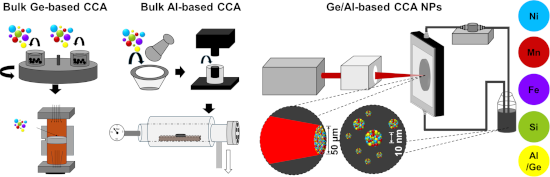
- ground, polished, and analyzed by SEM (JEOL JSM-7600 F, Japan). The chemical composition was determined using energy-dispersive X-ray spectroscopy (EDX) with an Oxford Inca spectrometer. The crystal structure of bulk CCAs was characterized by X-ray diffraction (XRD) using a DRON-4–07 diffractometer with
- chamber. (a, c) SEM (SE) and EDX elemental maps of Mn, Fe, Ni, Ge, and Si obtained for bulk the Ge-based CCA and Mn, Fe, Ni, Al, and Si, obtained for bulk Ge-based CCA. (b, d) X-ray diffraction (XRD) patterns of the bulk Ge-based CCA and the bulk Al-based CCA, showing the presence of side phases. Particle


Supramolecular hydration structure of graphene-based hydrogels: density functional theory, green chemistry and interface application
Beilstein J. Nanotechnol. 2025, 16, 806–822, doi:10.3762/bjnano.16.61
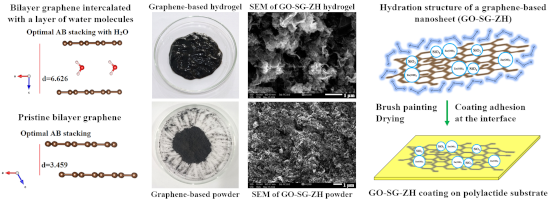
- GO-SG-ZH powder. The graphene-based nanocomposites in hydrogel form and in powder form were comparatively characterized using moisture analysis, scanning electron microscopy (SEM), energy-dispersive X-ray spectroscopy (EDS), and aqueous dispersibility. Brush coating of graphene oxide–nanosilica–zinc
- microscopy and energy-dispersive X-ray spectroscopy were performed using a JSM-IT200 system (JEOL). Samples were coated with Pt before the SEM-EDS analysis. X-ray diffraction was performed on a D8 Advance instrument (Bruker). Fourier-transform infrared spectroscopy (FTIR) was characterized with a FT/IR-6600


Morphology and properties of pyrite nanoparticles obtained by pulsed laser ablation in liquid and thin films for photodetection
Beilstein J. Nanotechnol. 2025, 16, 785–805, doi:10.3762/bjnano.16.60
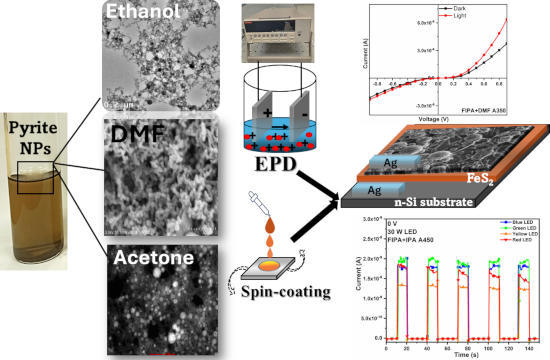
- microscopy, scanning electron microscopy, X-ray photoelectron spectroscopy, and ultraviolet–visible spectroscopy. The morphology of the NPs in different solvents varied from spherical, rice-like to rod-like particles which demonstrates the effect of the solvent on the morphology/composition of NPs
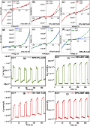
- crystalline structure of the films was characterized by X-ray diffraction (XRD). The UV–vis–NIR photodetection properties of p-n junction-based thin films composed of FeS2 nanoparticles are reported. Additionally, the results of various light-sensing parameters evaluated in these photodetectors are also
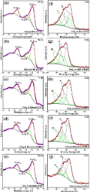
- SEM analysis of pyrite thin films was performed using a Hitachi Model SU 8020. The NPs were deposited on carbon-coated copper grids for TEM analysis and on silicon substrates for SEM analysis. Using monochromatic Al Kα radiation with an energy of 1486.68 eV, X-ray photoelectron spectroscopy (XPS






Changes of structural, magnetic and spectroscopic properties of microencapsulated iron sucrose nanoparticles in saline
Beilstein J. Nanotechnol. 2025, 16, 762–784, doi:10.3762/bjnano.16.59
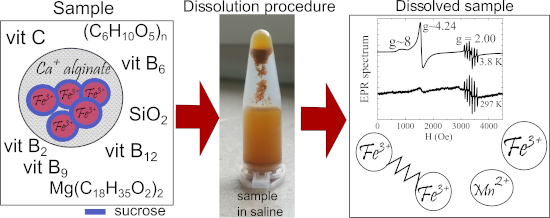
- AC) performed on the undissolved sample revealed the presence of a low temperature blocking process (
≈ 10 K), and confirmed its superparamagnetic state between 70– 250 K. X-ray photoelectron spectroscopy and Raman studies showed a varied composition of the undissolved sample in which organic
- discrepancies are mainly a consequence of difficulties with analysis of structural and morphological measurement results (e.g., signal obtained in X-ray diffraction (XRD) experiments is dominated by the carbohydrate). This results in very broad, hard to interpret, or even uninterpretable lines (see XRD patterns
- , the question of the iron phase present in the FS0 sample appears to be unresolved based on the TEM results; however, the presence of the iron oxyhydroxide is highly probable. The energy-dispersive X-ray spectroscopy (EDS) spectrum (Figure 3f) of the FS0 sample collected from the area visible in Figure


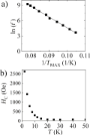


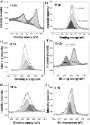

Thickness dependent oxidation in CrCl3: a scanning X-ray photoemission and Kelvin probe microscopies study
Beilstein J. Nanotechnol. 2025, 16, 749–761, doi:10.3762/bjnano.16.58
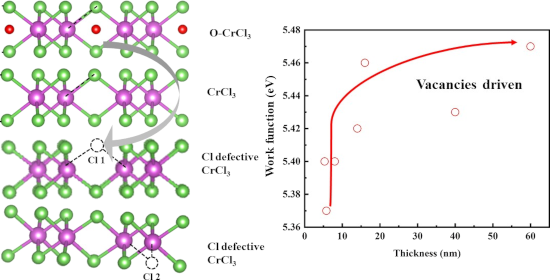
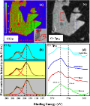
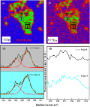
- effect) [19][20][21]. A well-known and suitable technique to investigate the electronic structure of surfaces is X-ray photoemission spectro-microscopy [22][6]; in order to obtain the necessary spatial resolution, the beam size must be reduced to tens of nanometers. The Electron Spectroscopy for Chemical
- silicon oxide substrate would help the determination of flakes thickness, we used also a more conductive substrate to measure photoemission under X-ray irradiation, that is, 1 nm thick native oxide Si substrates. Another convenient substrate for SPEM was 190 nm thick indium-doped tin oxide on glass

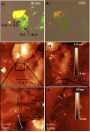




Nanostructured materials characterized by scanning photoelectron spectromicroscopy
Beilstein J. Nanotechnol. 2025, 16, 700–710, doi:10.3762/bjnano.16.54
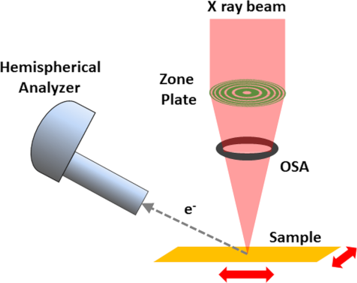
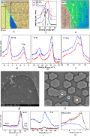
- , environmental reliability, and operando capabilities. Scanning photoelectron spectromicroscopy (SPEM) is one of the characterization tools that combine high spectral resolution X-ray photoelectron spectroscopy with submicron spatial resolution. In particular, the SPEM equipment hosted at the ESCA microscopy
- enhanced sensitivities are examples of capabilities that modern techniques of characterization in nanotechnology must possess. X-ray photoelectron spectroscopy (XPS) is still one of the fundamental tools for chemical and electronic characterization of surfaces and subsurface layers. In the last three to
- several improvements have been developed at synchrotron light facilities where unique properties of X-ray radiation can be found. Scanning photoelectron microscopy (SPEM) combines XPS analysis with lateral resolution; chemical imaging as well as XPS spectroscopy at nanoscale sized areas can be performed


High-temperature epitaxial growth of tantalum nitride thin films on MgO: structural evolution and potential for SQUID applications
Beilstein J. Nanotechnol. 2025, 16, 690–699, doi:10.3762/bjnano.16.53
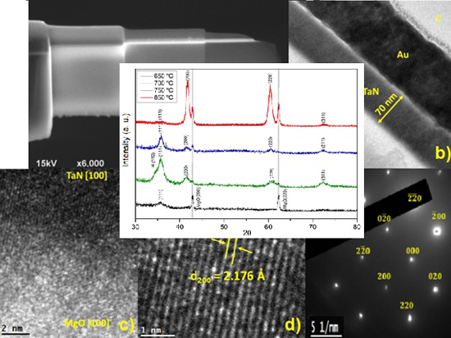
- using pulsed laser deposition (PLD). This research investigates the influence of varying deposition parameters, including substrate temperature and ambient gas composition, on the structural, morphological, and superconducting properties of the films. X-ray photoelectron spectroscopy, X-ray diffraction
- dynamics and superconducting characteristics of the films. X-ray diffraction (XRD) analysis revealed that the TaN thin films exhibited excellent crystallinity, with sharp diffraction peaks indicating well-defined structural phases. The deposition process was optimized by systematically adjusting substrate
- nitrogen pressure between 10 and 90 mTorr. The experiment was performed in a laser ablation system “RIBER LDM 32”. It consists of three stainless steel ultrahigh-vacuum (UHV) chambers for sample introduction, PLD deposition, and X-ray photoelectron spectroscopy (XPS) analysis, isolated by UHV gate valves





