


Search results
Search for "aggregate" in Full Text gives 194 result(s) in Beilstein Journal of Nanotechnology.
Sputtering onto liquids: a critical review
Beilstein J. Nanotechnol. 2022, 13, 10–53, doi:10.3762/bjnano.13.2
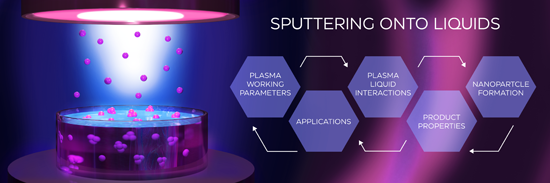
- species (Mz+) to metal atoms (M0), which aggregate until the critical nucleus size ((M0)n) is reached. The future growth of the formed nuclei is limited by the autocatalytic reduction of metallic species on their surface (Equation 5). NPs formed via these steps are called primary particles according to






Alteration of nanomechanical properties of pancreatic cancer cells through anticancer drug treatment revealed by atomic force microscopy
Beilstein J. Nanotechnol. 2021, 12, 1372–1379, doi:10.3762/bjnano.12.101
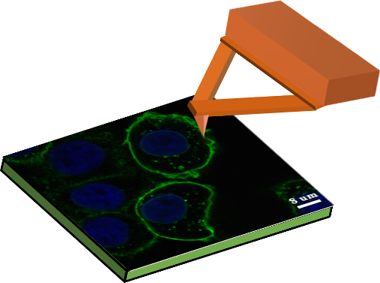
- cells aggregate and grow in a round shape (Figure 2b), which is quite different from HDPE6-C7 cells. However, the morphology of AsPC-1 cells (Figure 2c) and MIA-PaCa-2 cells (Figure 2d) is not significantly different from that of HDPE6-C7. Therefore, it is not feasible to identify cancer cells only by


Cantilever signature of tip detachment during contact resonance AFM
Beilstein J. Nanotechnol. 2021, 12, 1286–1296, doi:10.3762/bjnano.12.96
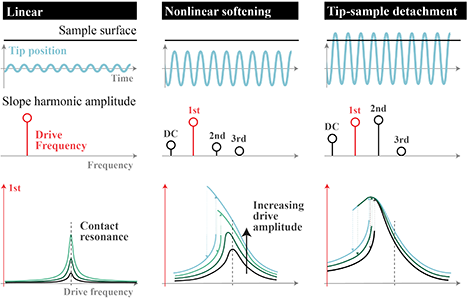
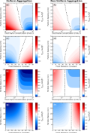
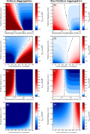
- measurements. We also explore the aggregate numerical simulation data of Figure 1 by way of the phase space representation in Figure 3. The phase space has as many dimensions as state variables, but we restrict our viewing to the dominant contributors of the first three basis function modal coordinates


Morphology-driven gas sensing by fabricated fractals: A review
Beilstein J. Nanotechnol. 2021, 12, 1187–1208, doi:10.3762/bjnano.12.88
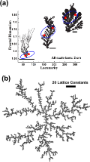
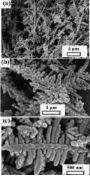
- length scales depicting the change in fractal geometry as a function of the fractal dimensions D and L. Figure 2a was adapted with permission from [48], © 2009 Geological Society of Malaysia. This content is not subject to CC BY 4.0 (b) Diffusion-limited aggregation. Random aggregate of 3600 particles on










Self-assembly of amino acids toward functional biomaterials
Beilstein J. Nanotechnol. 2021, 12, 1140–1150, doi:10.3762/bjnano.12.85
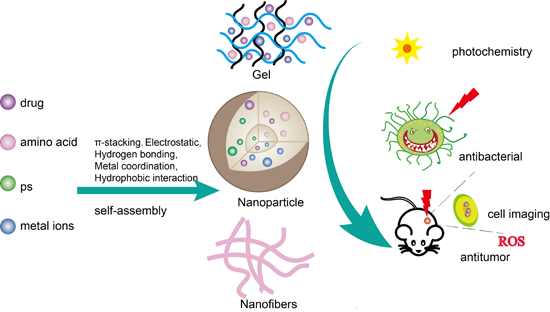
- assemblies at the nanoscale. This component exhibits regular aggregate properties through hydrogen bonding and ion interaction, which are highly similar to those of amyloid components, suggesting that it may be associated with the etiology of amyloid-related diseases. Besides, the resulting structure is as

pH-driven enhancement of anti-tubercular drug loading on iron oxide nanoparticles for drug delivery in macrophages
Beilstein J. Nanotechnol. 2021, 12, 1127–1139, doi:10.3762/bjnano.12.84
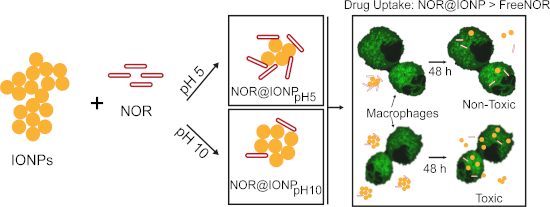
- distribution of these particles was also high, i.e., FWHM of 670.94 nm, resulting from the variation in particle aggregate sizes. The XRD pattern obtained for the synthesized particles were in accordance with the pattern observed in the XRD database for iron oxide (COD: 9013529) [32] (Figure 2c). The zeta
- individual nanoparticles (Figure 3b), clearly indicating a reduced aggregate size in comparison to the UIONPs which was also indicated by the reduced FWHM, i.e., 40.72 nm. The XRD pattern confirmed the presence of iron oxide nanoparticles (Figure 3c). The FTIR spectrum of NOR@IONPpH5 indicated the presence
- also observed to be 46.97 nm exhibiting a narrower size distribution in comparison to UIONPs but a slightly broader in comparison to NOR@IONPpH10. Thus, coating at pH 10 also promoted a reduction in the nanoparticle aggregate size. A slight shoulder in the hydrodynamic size distribution at 32–40 nm is



Revealing the formation mechanism and band gap tuning of Sb2S3 nanoparticles
Beilstein J. Nanotechnol. 2021, 12, 1021–1033, doi:10.3762/bjnano.12.76
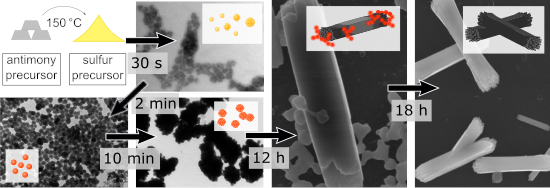
- nm in diameter, which began to aggregate again into spherical structures of about 200 nm in size. At this point, the chemical composition of the particles complied with Sb2S3. The color became darker and started to turn red (≈20 min) since the aggregates merged into type II particles, which seemed to


Recent progress in magnetic applications for micro- and nanorobots
Beilstein J. Nanotechnol. 2021, 12, 744–755, doi:10.3762/bjnano.12.58
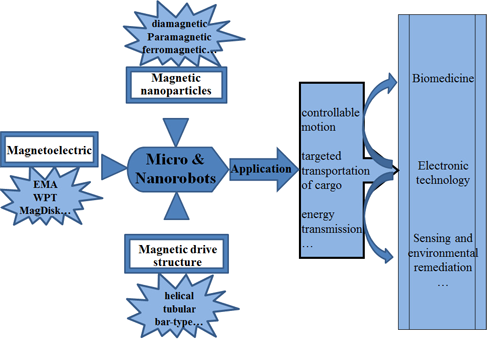
- and could be applied to MNRs. MaBiDZ is mainly composed of three parts, that is, the DZb strand, MaB1, and MaB2. MaB1 is conjugated with DZa, and MaB2 is conjugated with a DNA hook strand complementary to F-sub. An external magnetic field will make MAb1 and MAb2 aggregate, so that the activated BiDz


Fate and transformation of silver nanoparticles in different biological conditions
Beilstein J. Nanotechnol. 2021, 12, 665–679, doi:10.3762/bjnano.12.53
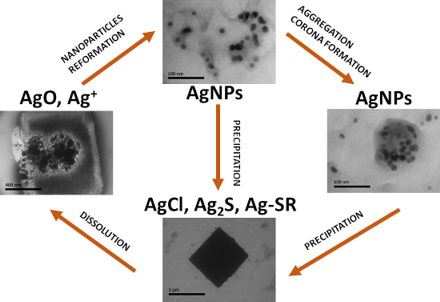
- drug abuse [21]. Animal experiments demonstrated Ag accumulation in the liver, kidneys, brain, and testis after oral exposure to AgNPs; however, the chemical form of Ag remained undefined in these cases [22]. In media of high ionic strength and low pH the AgNPs aggregate and/or dissolve [23]. Under
- AgNPs enter the body where they gain a protein corona, aggregate, and dissolve to Ag+. Ionic silver may precipitate in the anion-rich environment of different tissues, where Ag binds to S, resulting in nanocrystals. Aggregation and corona–NP destabilisation can also lead to precipitation. Whole blood




Boosting of photocatalytic hydrogen evolution via chlorine doping of polymeric carbon nitride
Beilstein J. Nanotechnol. 2021, 12, 473–484, doi:10.3762/bjnano.12.38
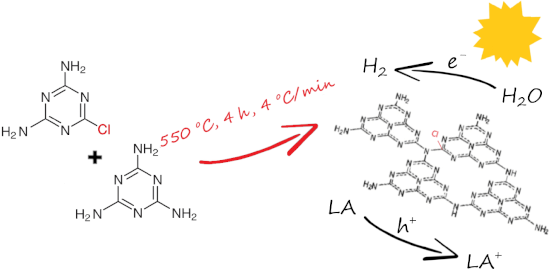
- the morphology of the prepared materials, presented in Figure 1, was performed by transmission electron microscopy (TEM). The images of pristine PCN demonstrate the layered structure with a tendency to fold and aggregate. They also show several stacking layers, indicating the planar graphitic-like


A review on nanostructured silver as a basic ingredient in medicine: physicochemical parameters and characterization
Beilstein J. Nanotechnol. 2021, 12, 440–461, doi:10.3762/bjnano.12.36
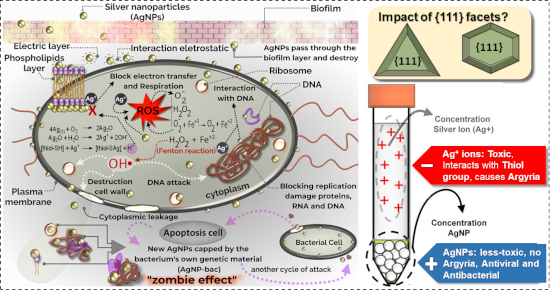
- particles aggregate and the conducting electrons closer to each particle surface are relocated and shared between neighboring particles. This causes a change in surface plasmon resonance which can be observed from the absorption spectrum. It is also conceivable to evaluate a possible dissolution of AgNPs
- scattering spectra by UV–vis (extinction spectrum = absorption + scattering) for AgNPs in water, calculated by using the Mie scattering theory [63]. UV–vis spectroscopy is a simple and safe method to monitor the stability of AgNPs. When particles aggregate, dissociate, or change shape, the original


Colloidal particle aggregation: mechanism of assembly studied via constructal theory modeling
Beilstein J. Nanotechnol. 2021, 12, 413–423, doi:10.3762/bjnano.12.33
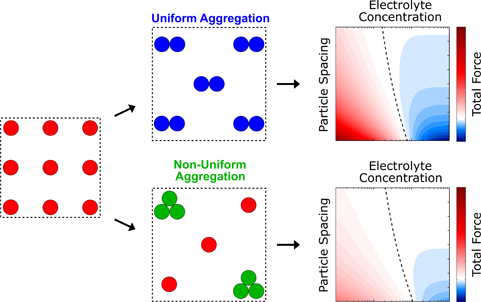
- neighboring particles aggregate about a shared, central particle (blue arrows in Figure 4a). A new uniform hexagonal lattice is formed with clusters of seven particles separated by a triangular spacing of (Figure 4b), while the total force of the system increases by a factor of 49 (F = 49F4()). Alternatively
- of a transient system – not the final state of the system –, which will continue to evolve and form new aggregates until equilibrium is reached. The approaches outlined above are recursive and can continue to be carried out as the particle spacing and aggregate size changes. Results and Discussion
- a uniform square lattice undergo non-uniform aggregation when four neighboring particles aggregate about a center particle (green arrows). (d) The resulting non-uniform aggregation from (c) leads to a new lattice of five-particle clusters surrounded by singlets. A single particle at the origin feels


High-responsivity hybrid α-Ag2S/Si photodetector prepared by pulsed laser ablation in liquid
Beilstein J. Nanotechnol. 2020, 11, 1596–1607, doi:10.3762/bjnano.11.142
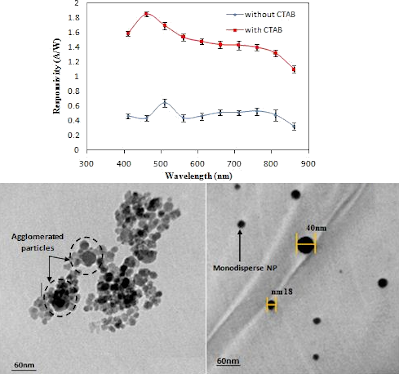
- show a strong tendency to agglomerate and aggregate and consequently form large particles. In this context, extensive studies have been conducted to obtain monodisperse and single-morphology Ag2S NPs. Dong et al. prepared faceted and cubic Ag2S nanocrystals using a cost-effective cetyltrimethylammonium
- mixture of Tu and CTAB were monodisperse NPs with purely spherical shapes, and the average particle size was approximately 30 ± 5 nm. Figure 6b shows monodisperse NPs, which did not agglomerate or aggregate after the CTAB surfactant was added. These observations confirmed the effective capping of CTAB on




Magnetic-field-assisted synthesis of anisotropic iron oxide particles: Effect of pH
Beilstein J. Nanotechnol. 2020, 11, 1230–1241, doi:10.3762/bjnano.11.107
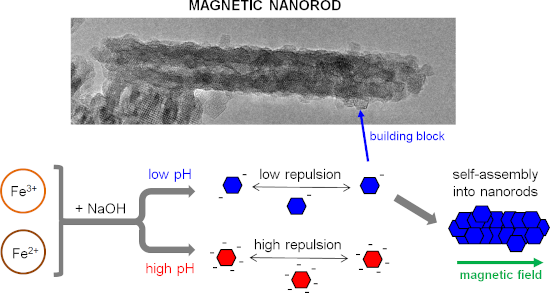
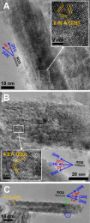
- bind to each other and position themselves in a column-like orientation, which gives a rod-like shape to the aggregate. Further recrystallization of the aggregates leads to the formation of single-crystal nanorods (Figure 7). The formation of single-crystal nanorods may be facilitated by the hexagonal





Influence of the magnetic nanoparticle coating on the magnetic relaxation time
Beilstein J. Nanotechnol. 2020, 11, 1207–1216, doi:10.3762/bjnano.11.105
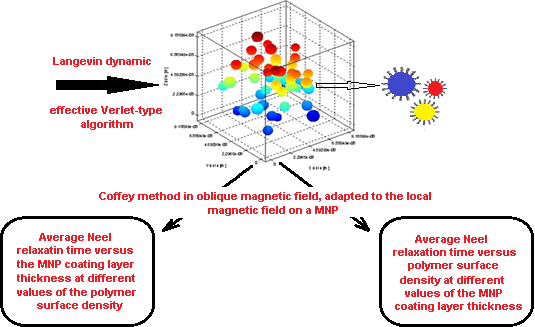
- values are given in Table 1. The external magnetic field intensity was set along the z-axis. A random nanoparticle arrangement in a face-centred-cubic grid was initially considered. By using the Langevin dynamics stochastic method, an aggregate structure was obtained. After obtaining the aggregate
- influences how the nanoparticles aggregate. To study how the thickness of the nanoparticle coating layer and the polymer surface density influence the magnetic behaviour of the nanoparticles, for different values of the polymer surface density, the thickness of the nanoparticle coating layer was varied from


Applications of superparamagnetic iron oxide nanoparticles in drug and therapeutic delivery, and biotechnological advancements
Beilstein J. Nanotechnol. 2020, 11, 1092–1109, doi:10.3762/bjnano.11.94
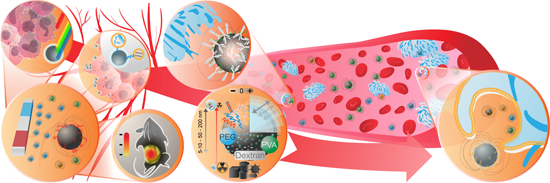
- downside of cubic nanoparticles is that they have a higher tendency to aggregate at high concentrations than spherical SPIONs, which eventually affects the hyperthermia efficacy. Despite this, cubic SPIONs are more effective in hyperthermia [63]. This was proved in vitro [144] reaching local temperatures


Simulations of the 2D self-assembly of tripod-shaped building blocks
Beilstein J. Nanotechnol. 2020, 11, 884–890, doi:10.3762/bjnano.11.73
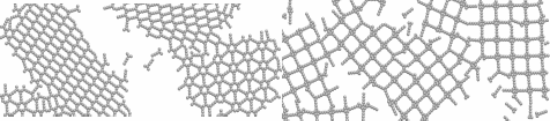
- networks, we observe small defects, which are artifacts of the cooling process. These can also be observed very often in experiments. For model WT111 (Figure 2c) the formation of a different structure occurs. Also, there is only one aggregate built of almost all molecules in the system. It is surprising


Identification of physicochemical properties that modulate nanoparticle aggregation in blood
Beilstein J. Nanotechnol. 2020, 11, 550–567, doi:10.3762/bjnano.11.44
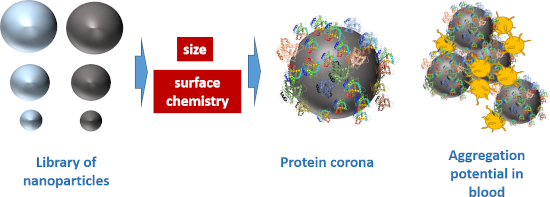
- haemostatic platelets to aggregate and thrombus formation [38]. Fibrinogen plays a key role in platelet aggregation, forming bridges between platelets and acting as an aggregation glue. On the other hand, fibrinogen also has a key role in NP aggregation. Fibrinogen has a high affinity for surfaces [39], and




Luminescent gold nanoclusters for bioimaging applications
Beilstein J. Nanotechnol. 2020, 11, 533–546, doi:10.3762/bjnano.11.42
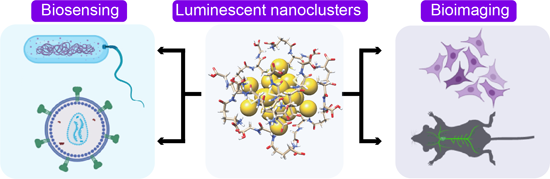
- 6D–F). Interestingly, the NC frameworks led to a higher cell viability compared to [Au25(SG)18]. This is attributed to the fact that smaller nanoparticles produce reactive oxygen species and possibly aggregate in the cellular medium. The superstructures were also found to show excellent


Using gold nanoparticles to detect single-nucleotide polymorphisms: toward liquid biopsy
Beilstein J. Nanotechnol. 2020, 11, 263–284, doi:10.3762/bjnano.11.20
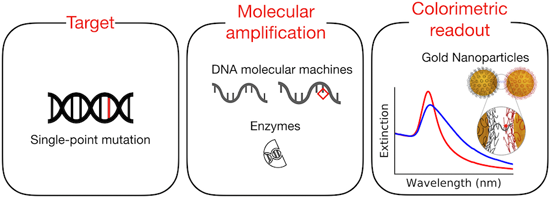
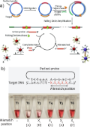
- gradual aggregation. This method allows for a sensitivity of 500 nM in the discrimination of single-base mutation. Rothberg and Li proposed the use of citrate-stabilized gold nanoparticles instead of DNA-coated nanoparticles, which are prone to aggregate at a high salt concentration [63]. The working
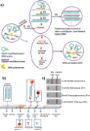
- colorimetric assay for the detection of EGFR mutants in long DNA sequences. The presence of a target releases the catalyst oligonucleotide initiating CHA, which in turn progressively aggregate gold nanoparticles. Reprinted with permission from [81], copyright 2018 John Wiley and Sons. The combination of




Rational design of block copolymer self-assemblies in photodynamic therapy
Beilstein J. Nanotechnol. 2020, 11, 180–212, doi:10.3762/bjnano.11.15
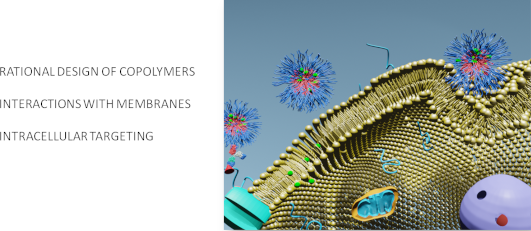
- use of irradiation to promote drug delivery (photochemical internalization). Block copolymers used for vectorization of photosensitizers Most of the used photosensitizers are highly hydrophobic and have the tendency to aggregate in aqueous environments, which is detrimental for their effectiveness in






Size effects of graphene nanoplatelets on the properties of high-density polyethylene nanocomposites: morphological, thermal, electrical, and mechanical characterization
Beilstein J. Nanotechnol. 2020, 11, 167–179, doi:10.3762/bjnano.11.14
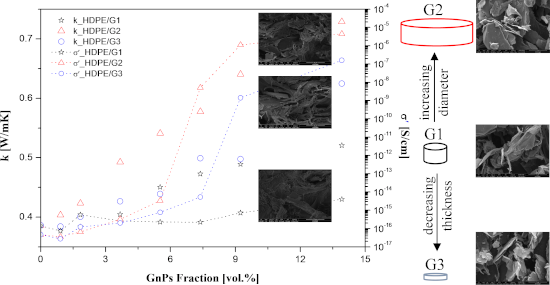
- displays that the thermal conductivity of HDPE/G3 nanocomposites slightly decreased up to 1.84 vol % GnPs loading. The explanation is that G3 tended to aggregate, resulting in a decreased contact area between HDPE and G3, as mentioned by Huang and co-workers [5]. Subsequently, the enhancement of the


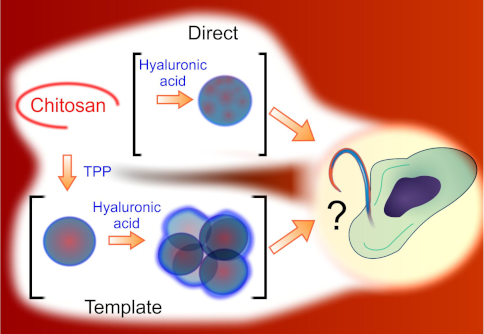
The different ways to chitosan/hyaluronic acid nanoparticles: templated vs direct complexation. Influence of particle preparation on morphology, cell uptake and silencing efficiency
Beilstein J. Nanotechnol. 2019, 10, 2594–2608, doi:10.3762/bjnano.10.250
- colloidal suspensions typically produces objects for which the mass can be expressed as fractal power of the size (mass fractals [25][26]), i.e., where Dm (≤3) is the so-called mass fractal dimension of the particle aggregate system [27]. For instance, this parameter takes values greater than 2.5 for



Microbubbles decorated with dendronized magnetic nanoparticles for biomedical imaging: effective stabilization via fluorous interactions
Beilstein J. Nanotechnol. 2019, 10, 2103–2115, doi:10.3762/bjnano.10.205
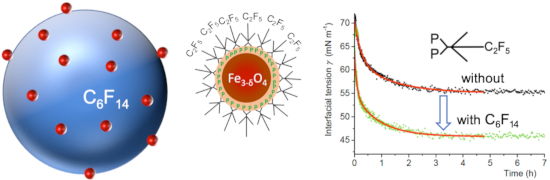
- , due to the dampening effect of the polymer shell or oil contained in the phospholipid coating [24][25]. One important difficulty encountered in the preparation of such magnetic MBs is that IONPs rapidly aggregate in aqueous media [25]. Commercially available 50 nm magnetic IONPs coated with
- aggregate. The profile (Figure 11Ac) measured on the magnified image (Figure 11Ab) clearly shows that the fluorinated IONPs are incorporated into the 1.5 nm thick DPPC monolayer. A different morphology is observed for the mixed film of DPPC and IONPs grafted with the hydrogenated dendron C2H5OEG8Den. In


Growth dynamics and light scattering of gold nanoparticles in situ synthesized at high concentration in thin polymer films
Beilstein J. Nanotechnol. 2019, 10, 1768–1777, doi:10.3762/bjnano.10.172
- to aggregate yielding nanoparticles. These steps are enhanced by annealing the films at a temperature higher than the glass transition temperature of the polymer. In practice, the in situ synthesis allowed us to obtain relatively thin films (300–500 nm) with an absorbance equivalent to that measured





